Personal Effectiveness
Anup K Singh
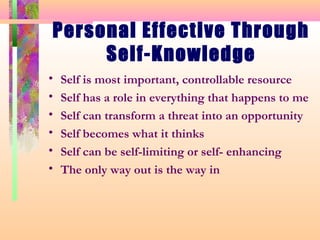
Personal Effective Through
Self-Knowledge
• Self is most important, controllable resource
• Self has a role in everything that happens to me
• Self can transform a threat into an opportunity
• Self becomes what it thinks
• Self can be self-limiting or self- enhancing
• The only way out is the way in
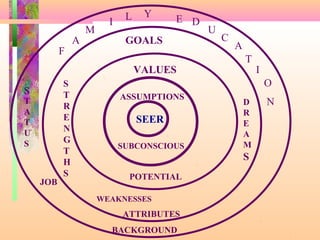
SEER
ASSUMPTIONS
SUBCONSCIOUS
VALUES
POTENTIAL
WEAKNESSES
ATTRIBUTES
GOALS
S
T
R
E
N
G
T
H
S
D
R
E
A
M
S
F
A
M
I
L Y E D
U
C
A
T
I
O
N
JOB
BACKGROUND
SS
T
A
T
U
S
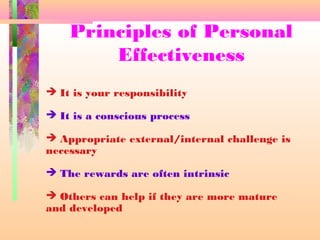
Principles of Personal
Effectiveness
 It is your responsibility
 It is a conscious process
 Appropriate external/internal challenge is
necessary
 The rewards are often intrinsic
 Others can help if they are more mature
and developed
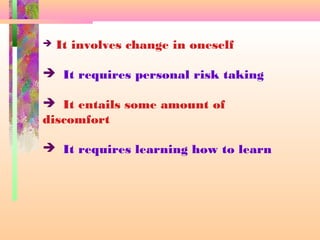
 It involves change in oneself
 It requires personal risk taking
 It entails some amount of
discomfort
 It requires learning how to learn
ARENA BLIND
CLOSED DARK
KNOWN TO
OTHERS
NOT KNOWN
TO
OTHERS
JOHARI WINDOW
KNOWN
TO
SELF
NOT
KNOWN
TO
SELF
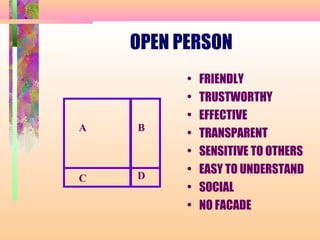
OPEN PERSON
• FRIENDLY
• TRUSTWORTHY
• EFFECTIVE
• TRANSPARENT
• SENSITIVE TO OTHERS
• EASY TO UNDERSTAND
• SOCIAL
• NO FACADE
A B
C D
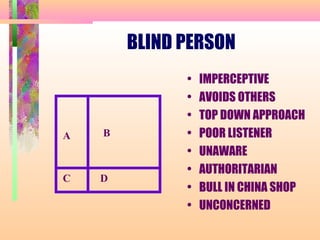
BLIND PERSON
• IMPERCEPTIVE
• AVOIDS OTHERS
• TOP DOWN APPROACH
• POOR LISTENER
• UNAWARE
• AUTHORITARIAN
• BULL IN CHINA SHOP
• UNCONCERNED
A B
C D
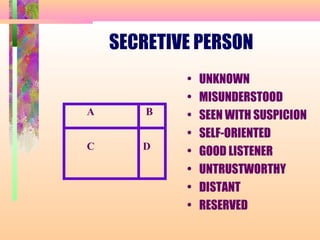
SECRETIVE PERSON
• UNKNOWN
• MISUNDERSTOOD
• SEEN WITH SUSPICION
• SELF-ORIENTED
• GOOD LISTENER
• UNTRUSTWORTHY
• DISTANT
• RESERVED
A B
C D
GROWTH TOWARDS MATURITY
• Dependence to Interdependence
• Behaving in a Few to Many Ways
• Casual, Shallow, Quickly Developed
Interests to Deeper Interests
• Short Term to Long Term Perspective
• Subordinate Position to Equal Position
• Poor Awareness of Self to Control Over Self
SELF-CONCEPT AND COMMUNICATION
(PATTERN FOR HIGH SELF-CONCEPT)
• Talk firmly, without hesitation
• Comfortable with others they view as
superior
• Perform well when being watched
• Have assured and open non-verbal
communication
• Expect to be accepted by others
• Listening and empathizing skills
• Open to criticism
• Likely to think well of others
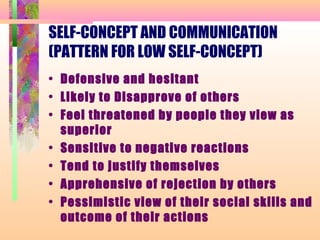
SELF-CONCEPT AND COMMUNICATION
(PATTERN FOR LOW SELF-CONCEPT)
• Defensive and hesitant
• Likely to Disapprove of others
• Feel threatened by people they view as
superior
• Sensitive to negative reactions
• Tend to justify themselves
• Apprehensive of rejection by others
• Pessimistic view of their social skills and
outcome of their actions
CLUES TO DEFENSIVE BEHAVIOURS
• HOLD TO MY POSITION
• DON’T LISTEN TO OTHERS
• MISINTERPRET WHAT OTHERS SAY
• STOP TALKING AND BEGIN WITHDRAWING
• FEELS THAT NO ONE UNDERSTANDS ME
• GET EASILY IRRITATED
• DON’T WANT TO TALK ABOUT CERTAIN THINGS
• BECOME INDIGNANT WHEN CHALLENGED
• LOSE SENSE OF HUMOUR
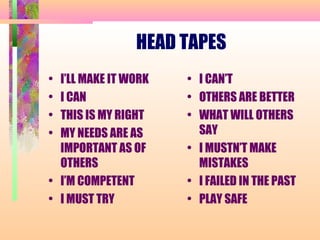
HEAD TAPES
• I’LL MAKE IT WORK
• I CAN
• THIS IS MY RIGHT
• MY NEEDS ARE AS
IMPORTANT AS OF
OTHERS
• I’M COMPETENT
• I MUST TRY
• I CAN’T
• OTHERS ARE BETTER
• WHAT WILL OTHERS
SAY
• I MUSTN’T MAKE
MISTAKES
• I FAILED IN THE PAST
• PLAY SAFE
SAFETY I GROWTH
SELF-AWARENESS
RISK TAKING
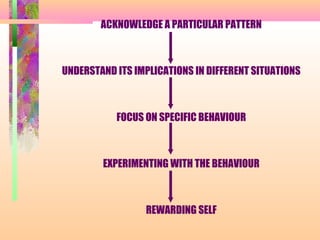
ACKNOWLEDGE A PARTICULAR PATTERN
UNDERSTAND ITS IMPLICATIONS IN DIFFERENT SITUATIONS
FOCUS ON SPECIFIC BEHAVIOUR
EXPERIMENTING WITH THE BEHAVIOUR
REWARDING SELF

Personal effectiveness

  • 1.
  • 2.
    Personal Effective Through Self-Knowledge •Self is most important, controllable resource • Self has a role in everything that happens to me • Self can transform a threat into an opportunity • Self becomes what it thinks • Self can be self-limiting or self- enhancing • The only way out is the way in
  • 3.
  • 4.
    Principles of Personal Effectiveness It is your responsibility  It is a conscious process  Appropriate external/internal challenge is necessary  The rewards are often intrinsic  Others can help if they are more mature and developed
  • 5.
     It involveschange in oneself  It requires personal risk taking  It entails some amount of discomfort  It requires learning how to learn
  • 6.
    ARENA BLIND CLOSED DARK KNOWNTO OTHERS NOT KNOWN TO OTHERS JOHARI WINDOW KNOWN TO SELF NOT KNOWN TO SELF
  • 7.
    OPEN PERSON • FRIENDLY •TRUSTWORTHY • EFFECTIVE • TRANSPARENT • SENSITIVE TO OTHERS • EASY TO UNDERSTAND • SOCIAL • NO FACADE A B C D
  • 8.
    BLIND PERSON • IMPERCEPTIVE •AVOIDS OTHERS • TOP DOWN APPROACH • POOR LISTENER • UNAWARE • AUTHORITARIAN • BULL IN CHINA SHOP • UNCONCERNED A B C D
  • 9.
    SECRETIVE PERSON • UNKNOWN •MISUNDERSTOOD • SEEN WITH SUSPICION • SELF-ORIENTED • GOOD LISTENER • UNTRUSTWORTHY • DISTANT • RESERVED A B C D
  • 10.
    GROWTH TOWARDS MATURITY •Dependence to Interdependence • Behaving in a Few to Many Ways • Casual, Shallow, Quickly Developed Interests to Deeper Interests • Short Term to Long Term Perspective • Subordinate Position to Equal Position • Poor Awareness of Self to Control Over Self
  • 11.
    SELF-CONCEPT AND COMMUNICATION (PATTERNFOR HIGH SELF-CONCEPT) • Talk firmly, without hesitation • Comfortable with others they view as superior • Perform well when being watched • Have assured and open non-verbal communication • Expect to be accepted by others • Listening and empathizing skills • Open to criticism • Likely to think well of others
  • 12.
    SELF-CONCEPT AND COMMUNICATION (PATTERNFOR LOW SELF-CONCEPT) • Defensive and hesitant • Likely to Disapprove of others • Feel threatened by people they view as superior • Sensitive to negative reactions • Tend to justify themselves • Apprehensive of rejection by others • Pessimistic view of their social skills and outcome of their actions
  • 13.
    CLUES TO DEFENSIVEBEHAVIOURS • HOLD TO MY POSITION • DON’T LISTEN TO OTHERS • MISINTERPRET WHAT OTHERS SAY • STOP TALKING AND BEGIN WITHDRAWING • FEELS THAT NO ONE UNDERSTANDS ME • GET EASILY IRRITATED • DON’T WANT TO TALK ABOUT CERTAIN THINGS • BECOME INDIGNANT WHEN CHALLENGED • LOSE SENSE OF HUMOUR
  • 14.
    HEAD TAPES • I’LLMAKE IT WORK • I CAN • THIS IS MY RIGHT • MY NEEDS ARE AS IMPORTANT AS OF OTHERS • I’M COMPETENT • I MUST TRY • I CAN’T • OTHERS ARE BETTER • WHAT WILL OTHERS SAY • I MUSTN’T MAKE MISTAKES • I FAILED IN THE PAST • PLAY SAFE
  • 15.
  • 16.
    ACKNOWLEDGE A PARTICULARPATTERN UNDERSTAND ITS IMPLICATIONS IN DIFFERENT SITUATIONS FOCUS ON SPECIFIC BEHAVIOUR EXPERIMENTING WITH THE BEHAVIOUR REWARDING SELF