The distal continuation of the adductor canal
Dr.Murali.M.S; M.B.A.
Prof. of Surgery
DY Patil Medical College
Mauritius.
 Superolaterally —
biceps tendon
 Superomedially —
semimembranosus
reinforced by
semitendinosus
 Inferomedially and
Inferolaterally — the
medial and lateral
heads of
gastrocnemius.
Fascia lata which is
pierced by the short
saphenous vein as this
enters the popliteal
vein & posterior
femoral cutaneous
nerve.
Small
Saphenous
Vein
Popliteal
Vein
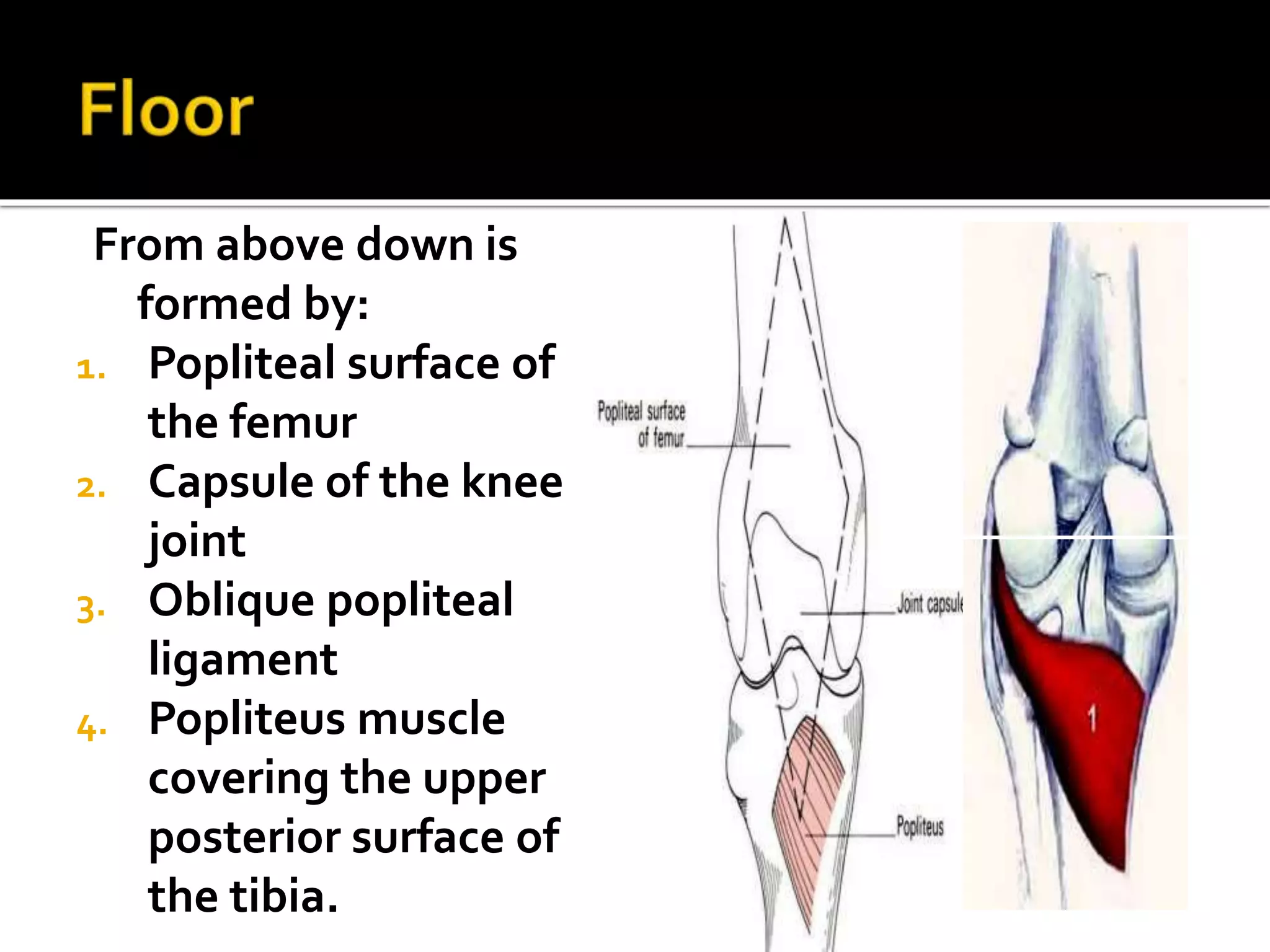
From above down is
formed by:
1. Popliteal surface of
the femur
2. Capsule of the knee
joint
3. Oblique popliteal
ligament
4. Popliteus muscle
covering the upper
posterior surface of
the tibia.
LM
 By a tendon from
anterior end
of popliteal groove on
lateral femoral condyle.
 Its tendon passes under
lateral collateral
ligament of knee
Origin :
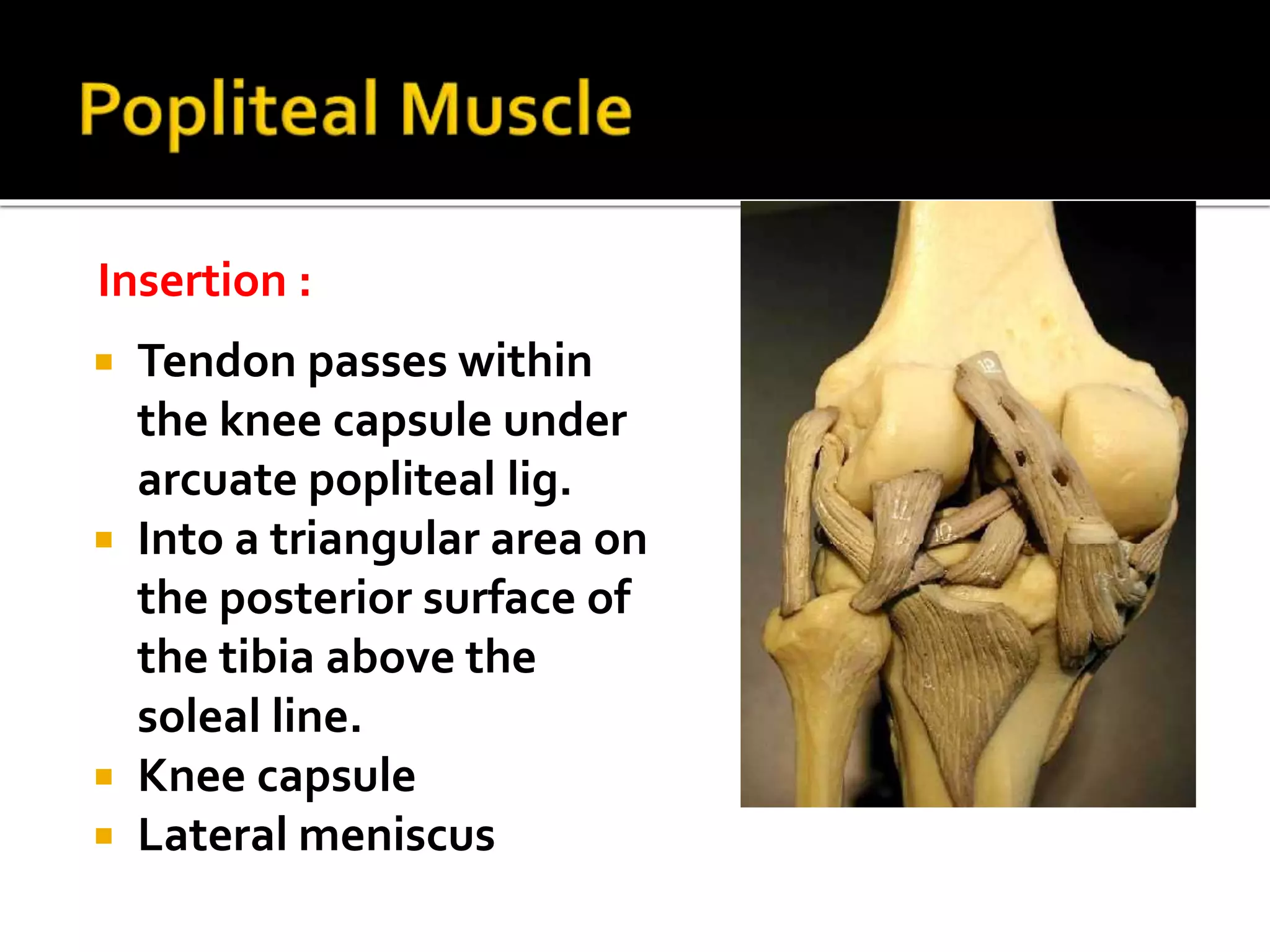
 Tendon passes within
the knee capsule under
arcuate popliteal lig.
 Into a triangular area on
the posterior surface of
the tibia above the
soleal line.
 Knee capsule
 Lateral meniscus
Insertion :
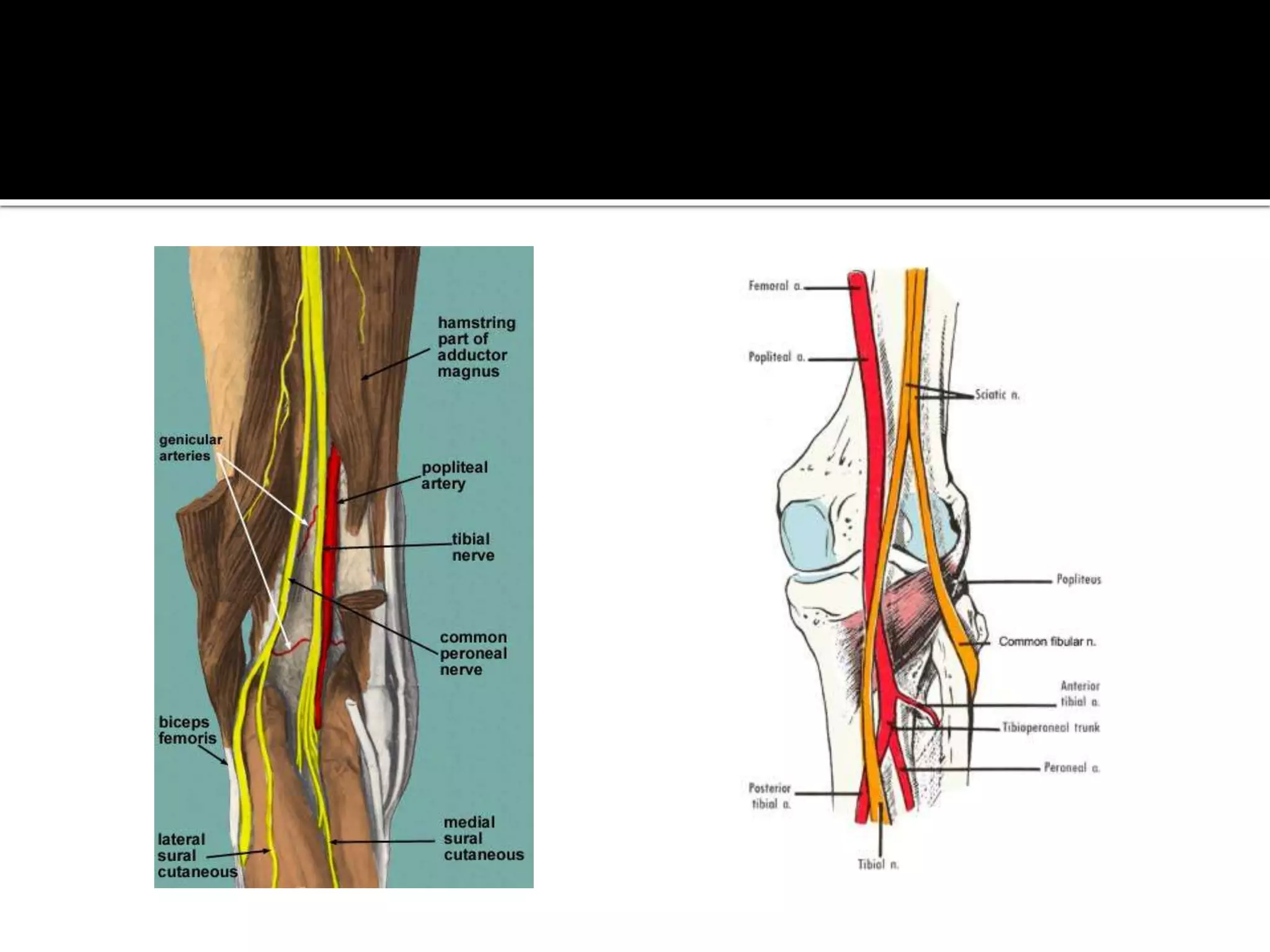
1. The common peroneal
nerve passes out of the
fossa along the medial
border of the biceps
tendon
2. The tibial nerve is first
lateral to the popliteal
vessels and then
crosses superficially to
these vessels to lie on
their medial side.
PoplitealV.
Tibial N.
PoplitealA.
Common
Fibular N
1. The popliteal vein lies
immediately
superficial to the
artery;
2. The popliteal artery
itself lies deepest of all
in the fossa.
3. Fat
4. Popliteal lymph nodes.
PoplitealV.
Tibial N.
PoplitealA.
Common
Fibular N
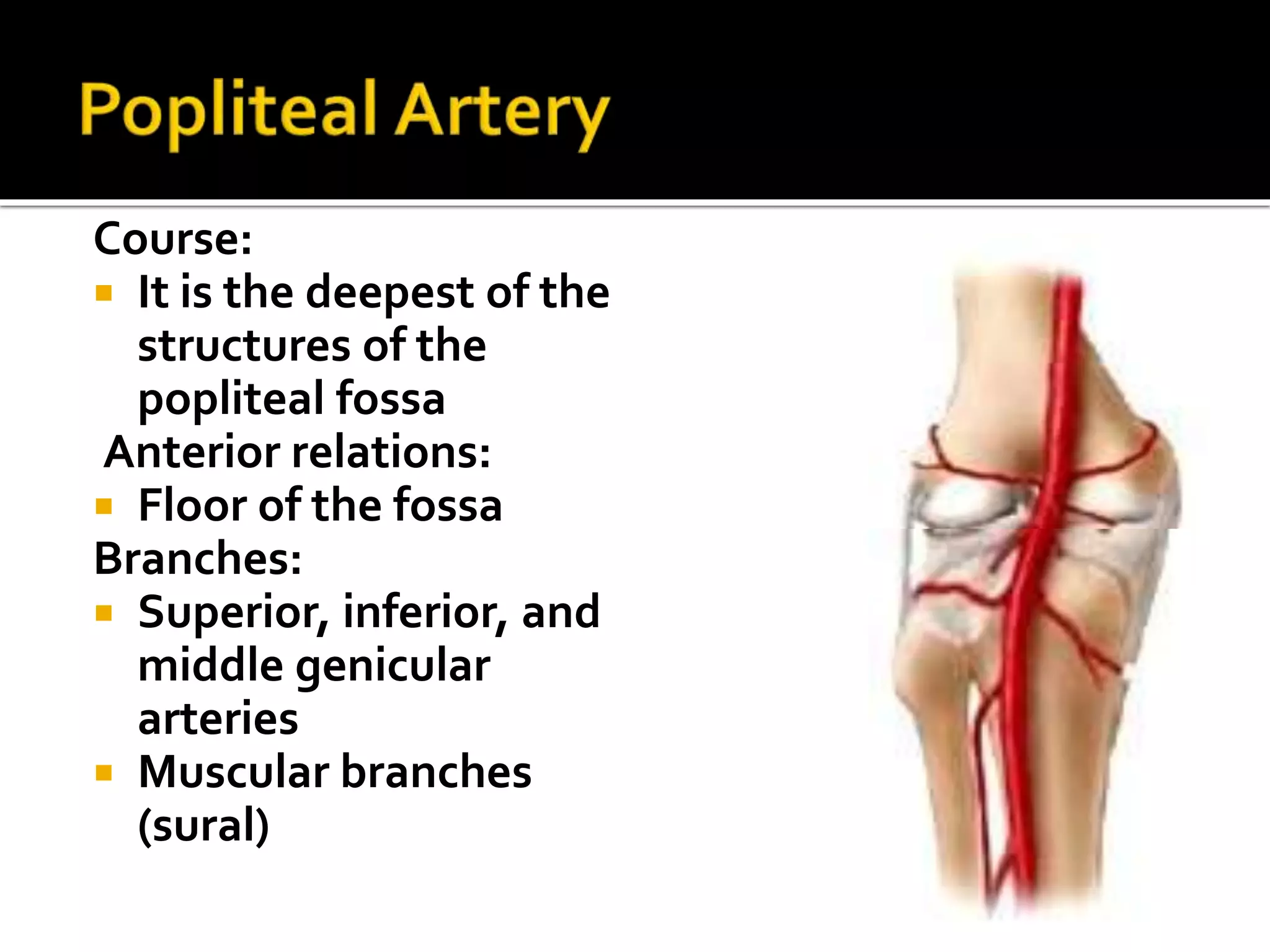
Beginning:
 Continuation of
femoral a. @
 adductor magnus
hiatus
Termination:
 Divide into anterior
and posterior tibial
arteries @ lower
border of popliteus
Course:
 It is the deepest of the
structures of the
popliteal fossa
Anterior relations:
 Floor of the fossa
Branches:
 Superior, inferior, and
middle genicular
arteries
 Muscular branches
(sural)
Course:
 Along its course, lies
between popliteal
artery and tibial nerve
Tributaries:
 Veins that accompany
the branches of the
artery
 Small saphenous vein
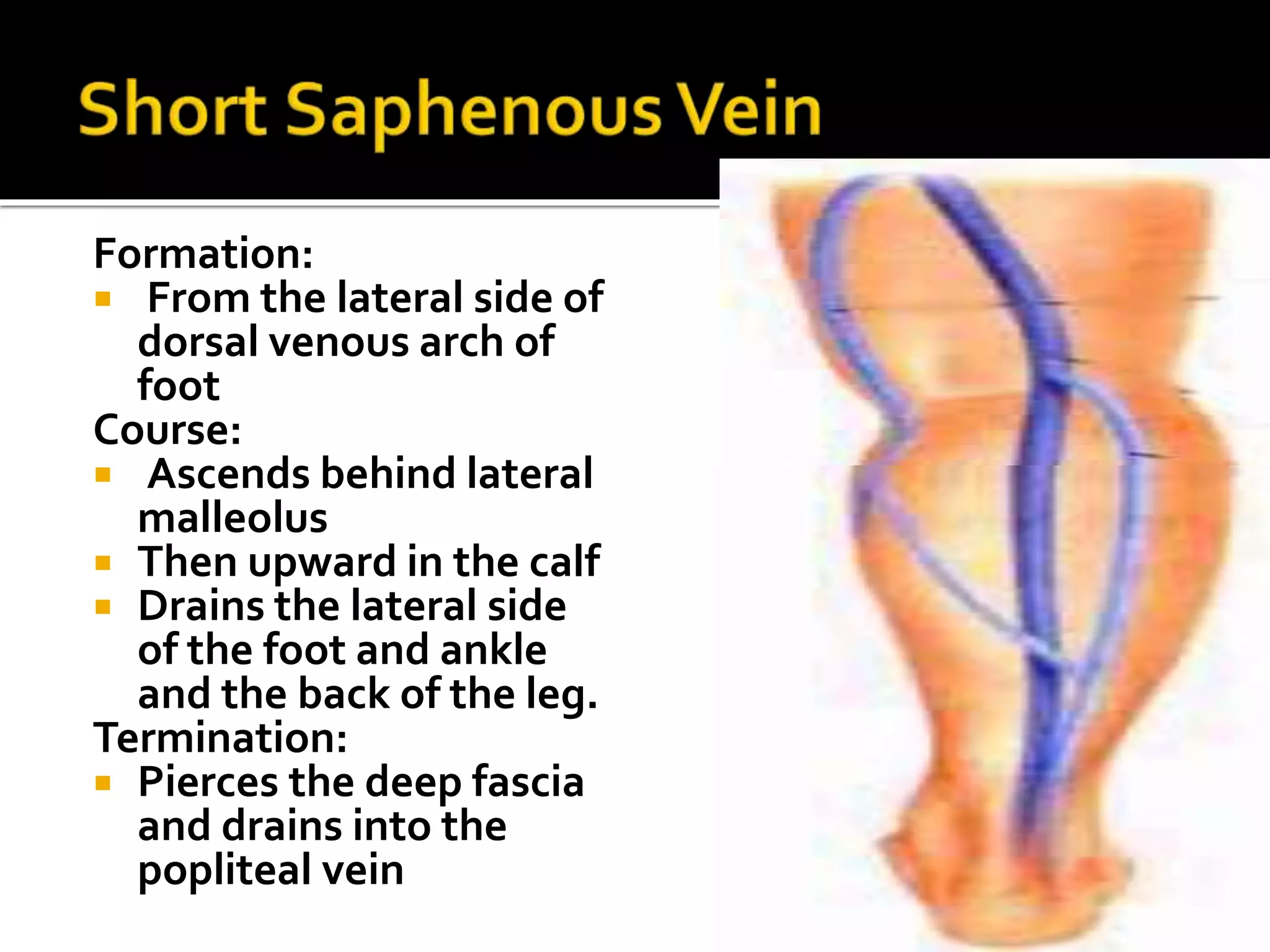
Formation:
 From the lateral side of
dorsal venous arch of
foot
Course:
 Ascends behind lateral
malleolus
 Then upward in the calf
 Drains the lateral side
of the foot and ankle
and the back of the leg.
Termination:
 Pierces the deep fascia
and drains into the
popliteal vein
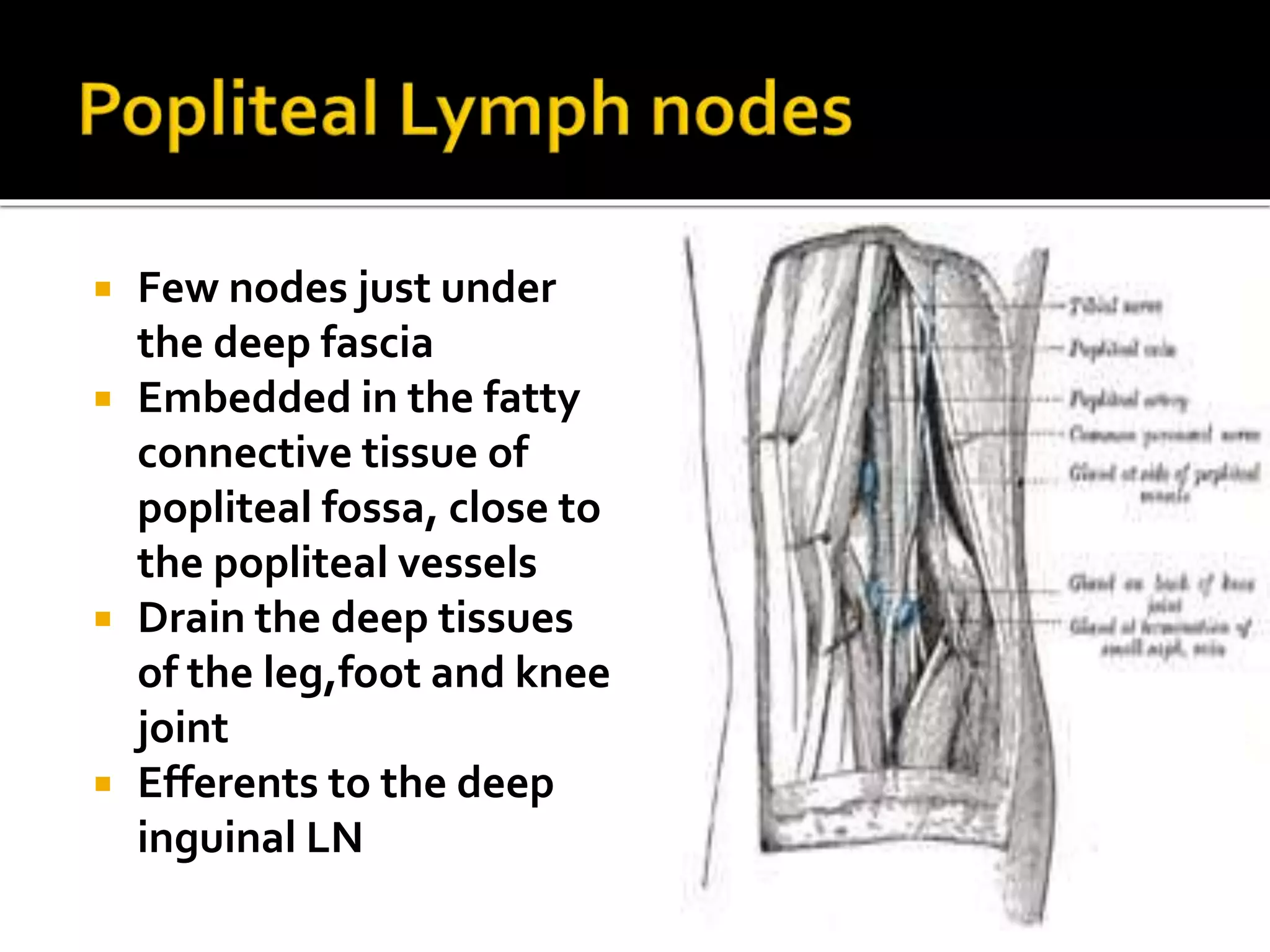
 Few nodes just under
the deep fascia
 Embedded in the fatty
connective tissue of
popliteal fossa, close to
the popliteal vessels
 Drain the deep tissues
of the leg,foot and knee
joint
 Efferents to the deep
inguinal LN
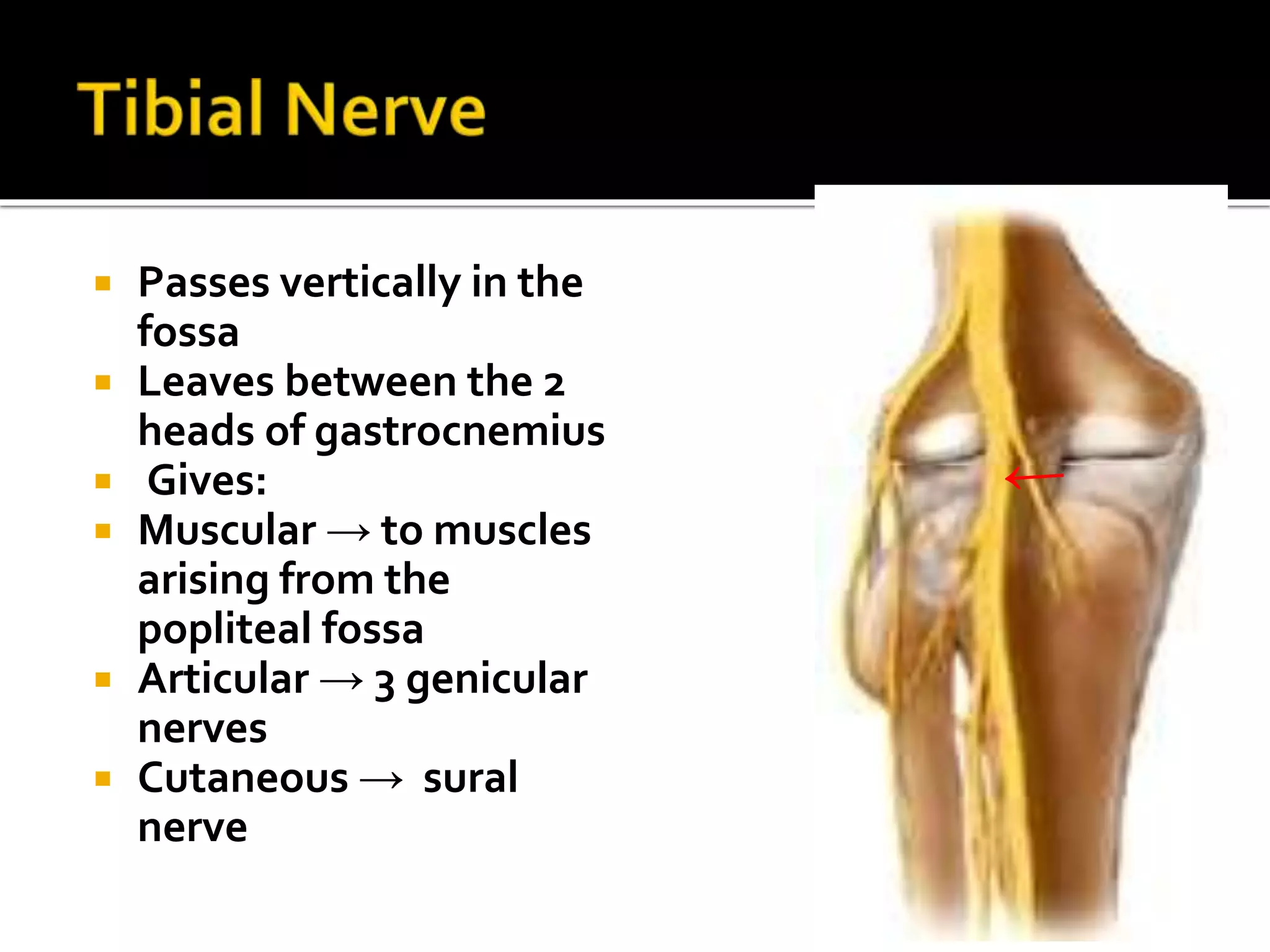
 Passes vertically in the
fossa
 Leaves between the 2
heads of gastrocnemius
 Gives:
 Muscular → to muscles
arising from the
popliteal fossa
 Articular → 3 genicular
nerves
 Cutaneous → sural
nerve
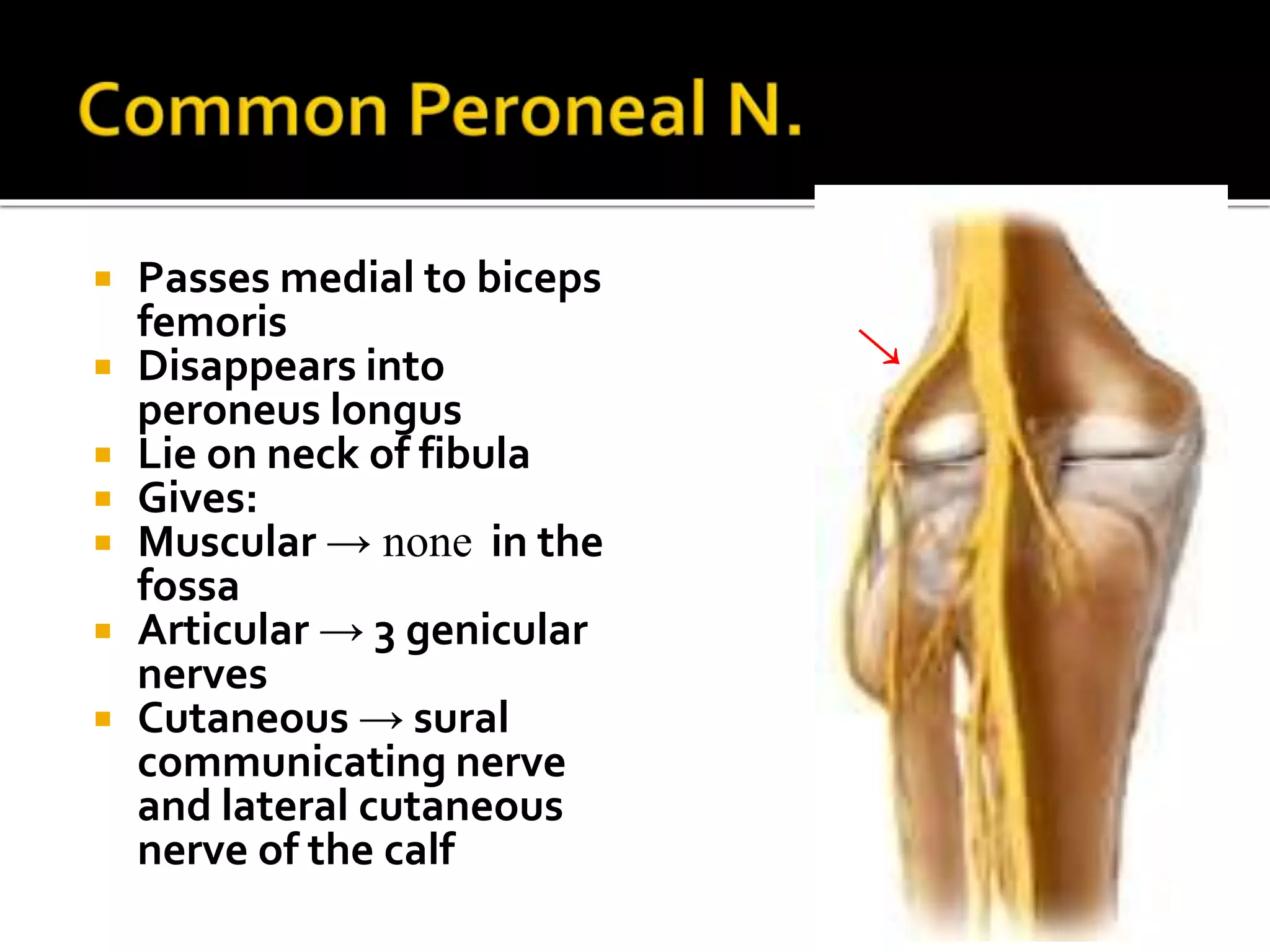
 Passes medial to biceps
femoris
 Disappears into
peroneus longus
 Lie on neck of fibula
 Gives:
 Muscular → none in the
fossa
 Articular → 3 genicular
nerves
 Cutaneous → sural
communicating nerve
and lateral cutaneous
nerve of the calf
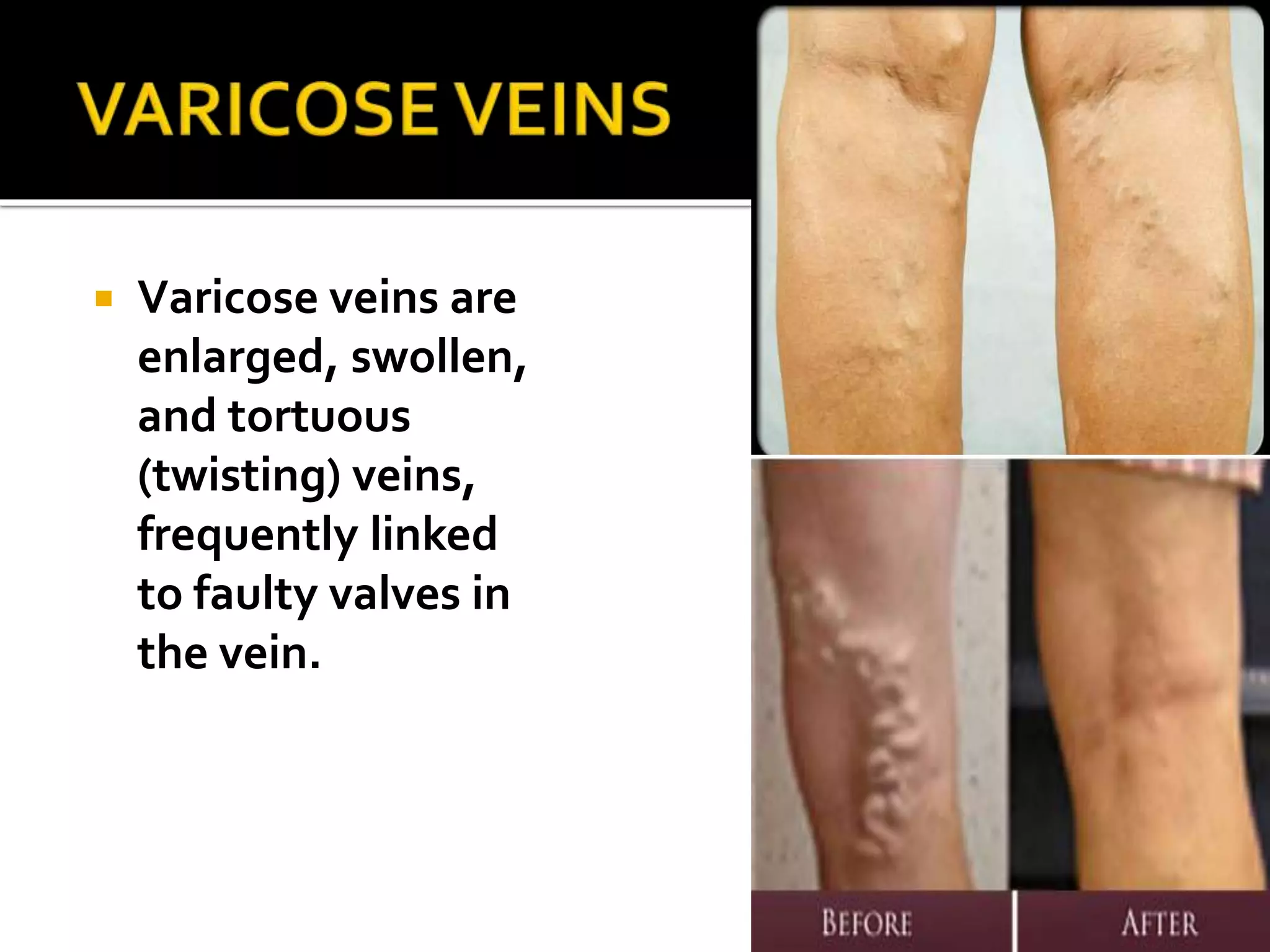
 Varicose veins are
enlarged, swollen,
and tortuous
(twisting) veins,
frequently linked
to faulty valves in
the vein.
 Popliteal artery
entrapment is an
uncommon clinical
entity that occurs due
to compression of the
popliteal artery by
adjacent muscle and
tendinous structures
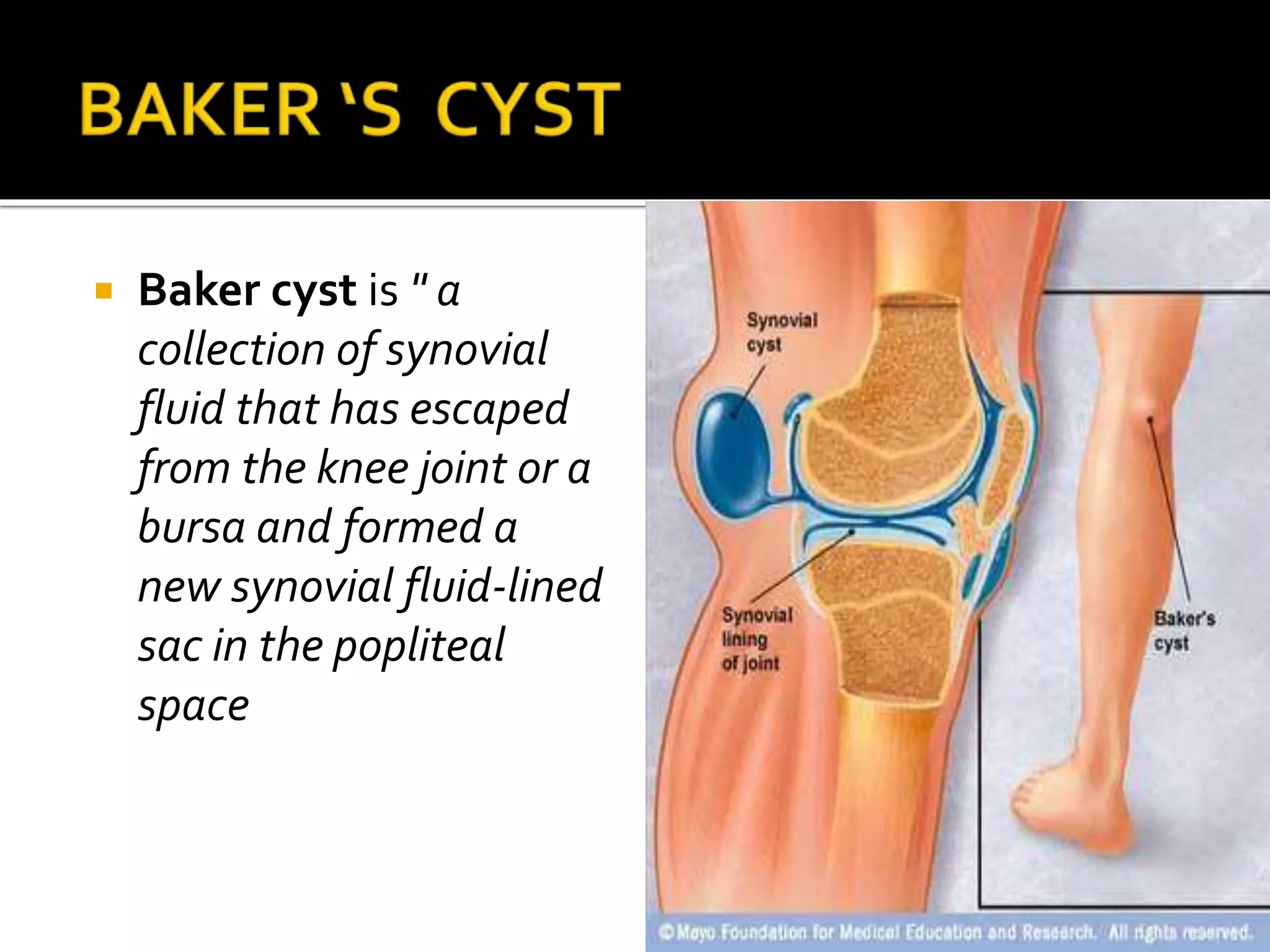
 Baker cyst is " a
collection of synovial
fluid that has escaped
from the knee joint or a
bursa and formed a
new synovial fluid-lined
sac in the popliteal
space
Popliteal fossa

Popliteal fossa

  • 1.
    The distal continuationof the adductor canal Dr.Murali.M.S; M.B.A. Prof. of Surgery DY Patil Medical College Mauritius.
  • 2.
     Superolaterally — bicepstendon  Superomedially — semimembranosus reinforced by semitendinosus  Inferomedially and Inferolaterally — the medial and lateral heads of gastrocnemius.
  • 3.
    Fascia lata whichis pierced by the short saphenous vein as this enters the popliteal vein & posterior femoral cutaneous nerve. Small Saphenous Vein Popliteal Vein
  • 4.
    From above downis formed by: 1. Popliteal surface of the femur 2. Capsule of the knee joint 3. Oblique popliteal ligament 4. Popliteus muscle covering the upper posterior surface of the tibia. LM
  • 5.
     By atendon from anterior end of popliteal groove on lateral femoral condyle.  Its tendon passes under lateral collateral ligament of knee Origin :
  • 6.
     Tendon passeswithin the knee capsule under arcuate popliteal lig.  Into a triangular area on the posterior surface of the tibia above the soleal line.  Knee capsule  Lateral meniscus Insertion :
  • 7.
    1. The commonperoneal nerve passes out of the fossa along the medial border of the biceps tendon 2. The tibial nerve is first lateral to the popliteal vessels and then crosses superficially to these vessels to lie on their medial side. PoplitealV. Tibial N. PoplitealA. Common Fibular N
  • 9.
    1. The poplitealvein lies immediately superficial to the artery; 2. The popliteal artery itself lies deepest of all in the fossa. 3. Fat 4. Popliteal lymph nodes. PoplitealV. Tibial N. PoplitealA. Common Fibular N
  • 10.
    Beginning:  Continuation of femorala. @  adductor magnus hiatus Termination:  Divide into anterior and posterior tibial arteries @ lower border of popliteus
  • 11.
    Course:  It isthe deepest of the structures of the popliteal fossa Anterior relations:  Floor of the fossa Branches:  Superior, inferior, and middle genicular arteries  Muscular branches (sural)
  • 12.
    Course:  Along itscourse, lies between popliteal artery and tibial nerve Tributaries:  Veins that accompany the branches of the artery  Small saphenous vein
  • 13.
    Formation:  From thelateral side of dorsal venous arch of foot Course:  Ascends behind lateral malleolus  Then upward in the calf  Drains the lateral side of the foot and ankle and the back of the leg. Termination:  Pierces the deep fascia and drains into the popliteal vein
  • 14.
     Few nodesjust under the deep fascia  Embedded in the fatty connective tissue of popliteal fossa, close to the popliteal vessels  Drain the deep tissues of the leg,foot and knee joint  Efferents to the deep inguinal LN
  • 15.
     Passes verticallyin the fossa  Leaves between the 2 heads of gastrocnemius  Gives:  Muscular → to muscles arising from the popliteal fossa  Articular → 3 genicular nerves  Cutaneous → sural nerve
  • 16.
     Passes medialto biceps femoris  Disappears into peroneus longus  Lie on neck of fibula  Gives:  Muscular → none in the fossa  Articular → 3 genicular nerves  Cutaneous → sural communicating nerve and lateral cutaneous nerve of the calf
  • 18.
     Varicose veinsare enlarged, swollen, and tortuous (twisting) veins, frequently linked to faulty valves in the vein.
  • 19.
     Popliteal artery entrapmentis an uncommon clinical entity that occurs due to compression of the popliteal artery by adjacent muscle and tendinous structures
  • 20.
     Baker cystis " a collection of synovial fluid that has escaped from the knee joint or a bursa and formed a new synovial fluid-lined sac in the popliteal space