VENOUS AND LYMPHATIC
DRAINAGE OF LOWER LIMB
VENOUS DRAINAGE
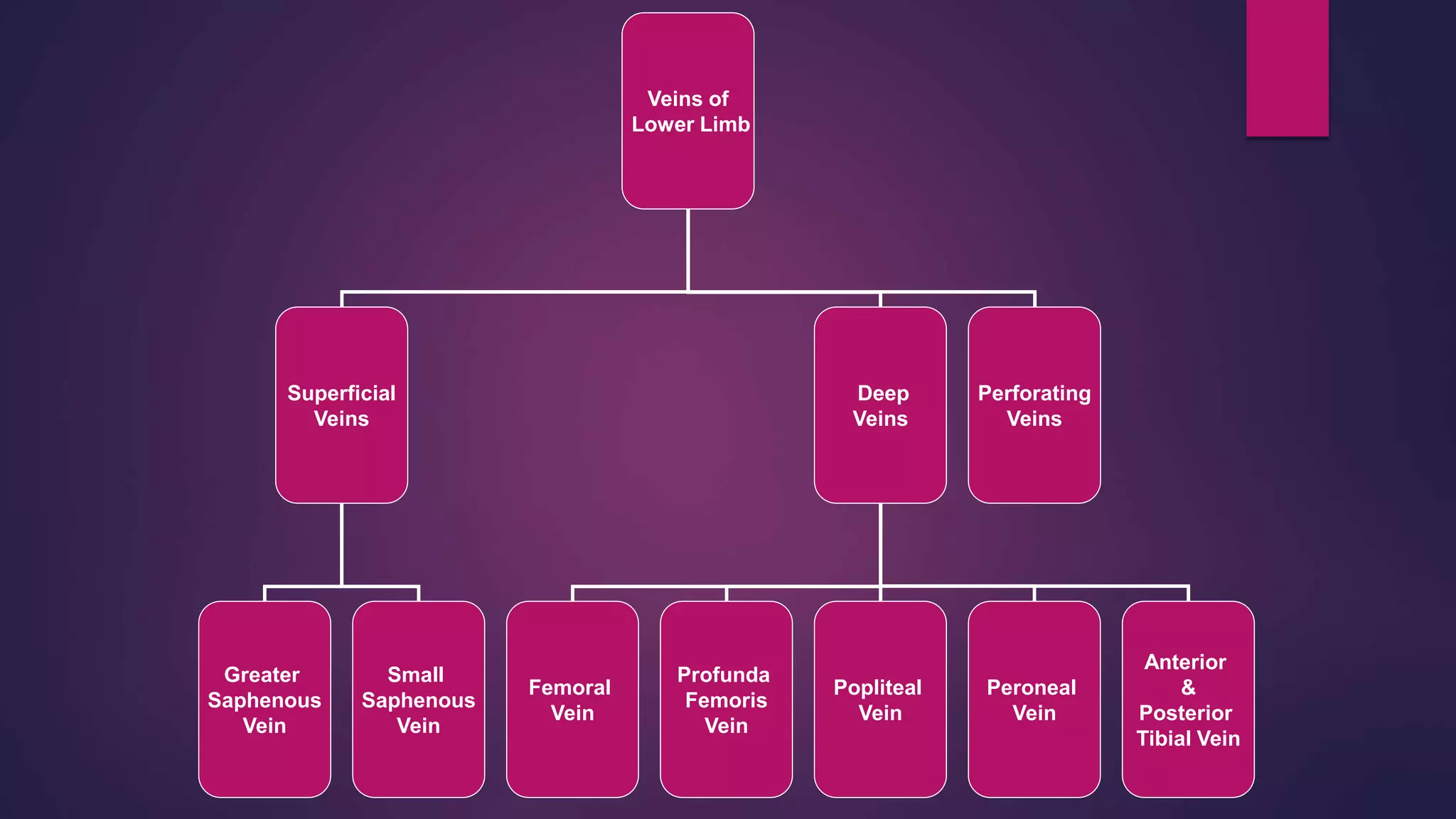
Veins of
Lower Limb
Superficial
Veins
Deep
Veins
Perforating
Veins
Greater
Saphenous
Vein
Small
Saphenous
Vein
Femoral
Vein
Profunda
Femoris
Vein
Popliteal
Vein
Peroneal
Vein
Anterior
&
Posterior
Tibial Vein
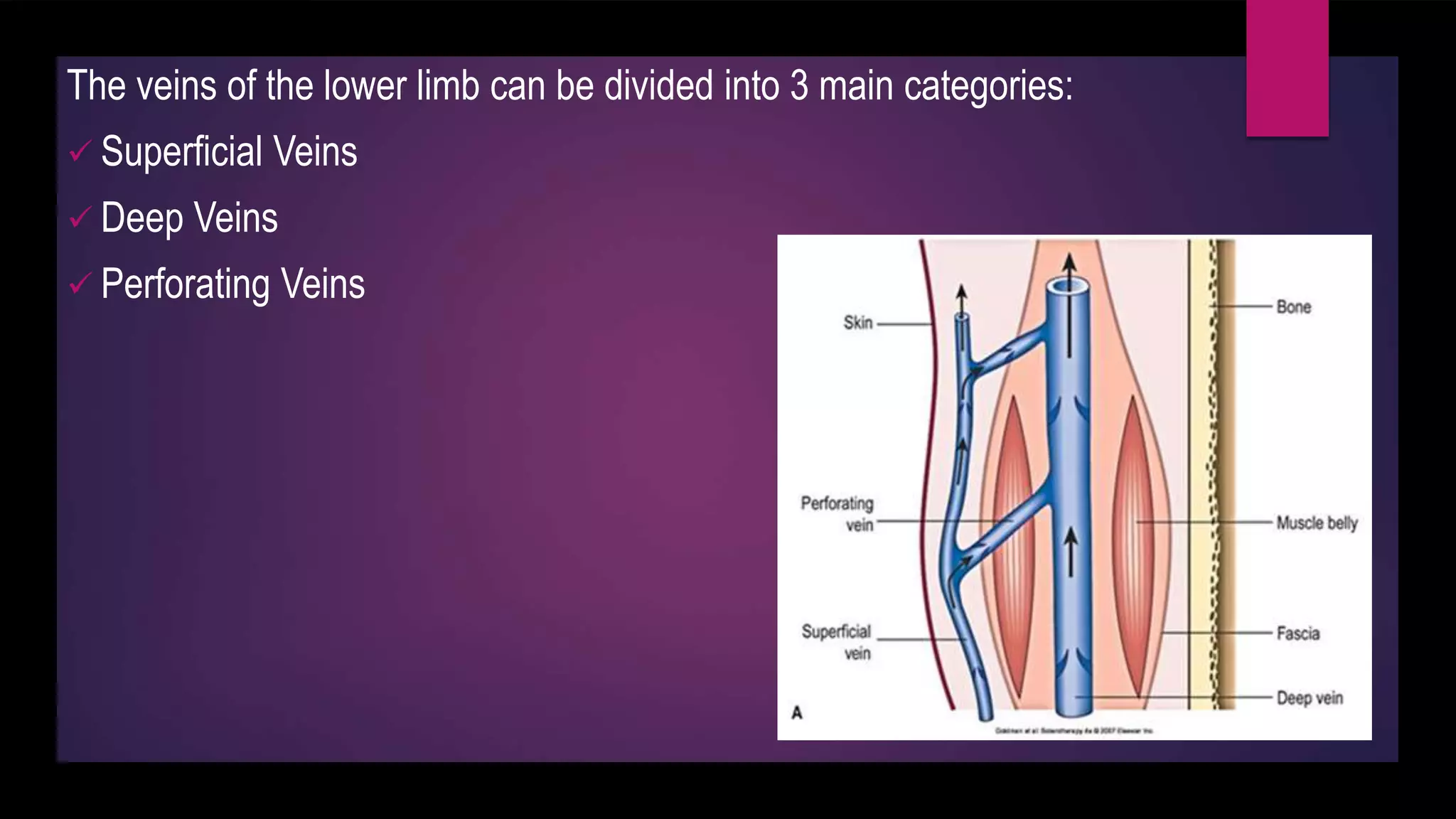
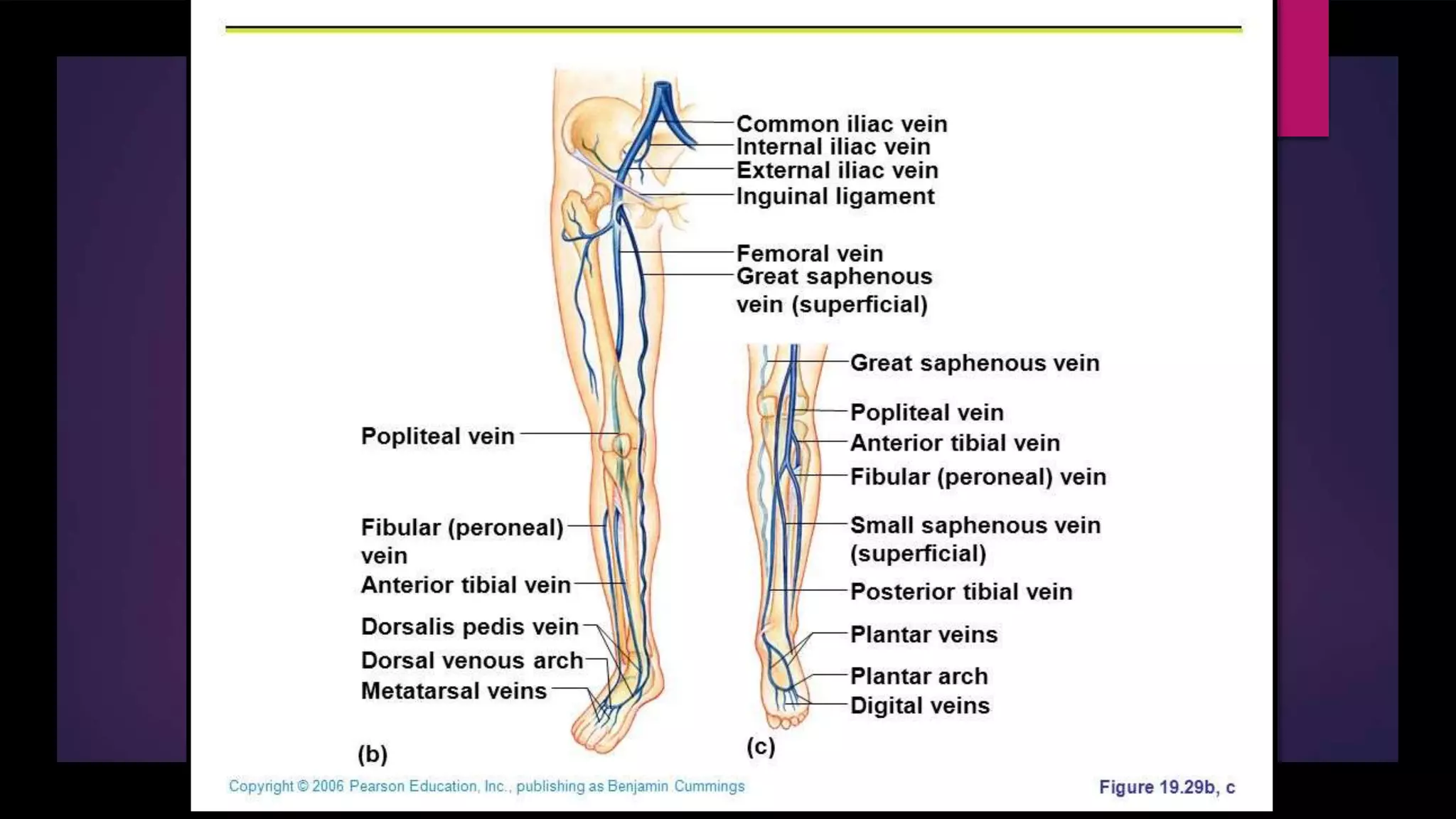
The veins of the lower limb can be divided into 3 main categories:
 Superficial Veins
 Deep Veins
 Perforating Veins
SUPERFICIAL VEINS
These are beneath the skin in the superficial fascia, named as:
 Great Saphenous Vein
 Short Saphenous Vein
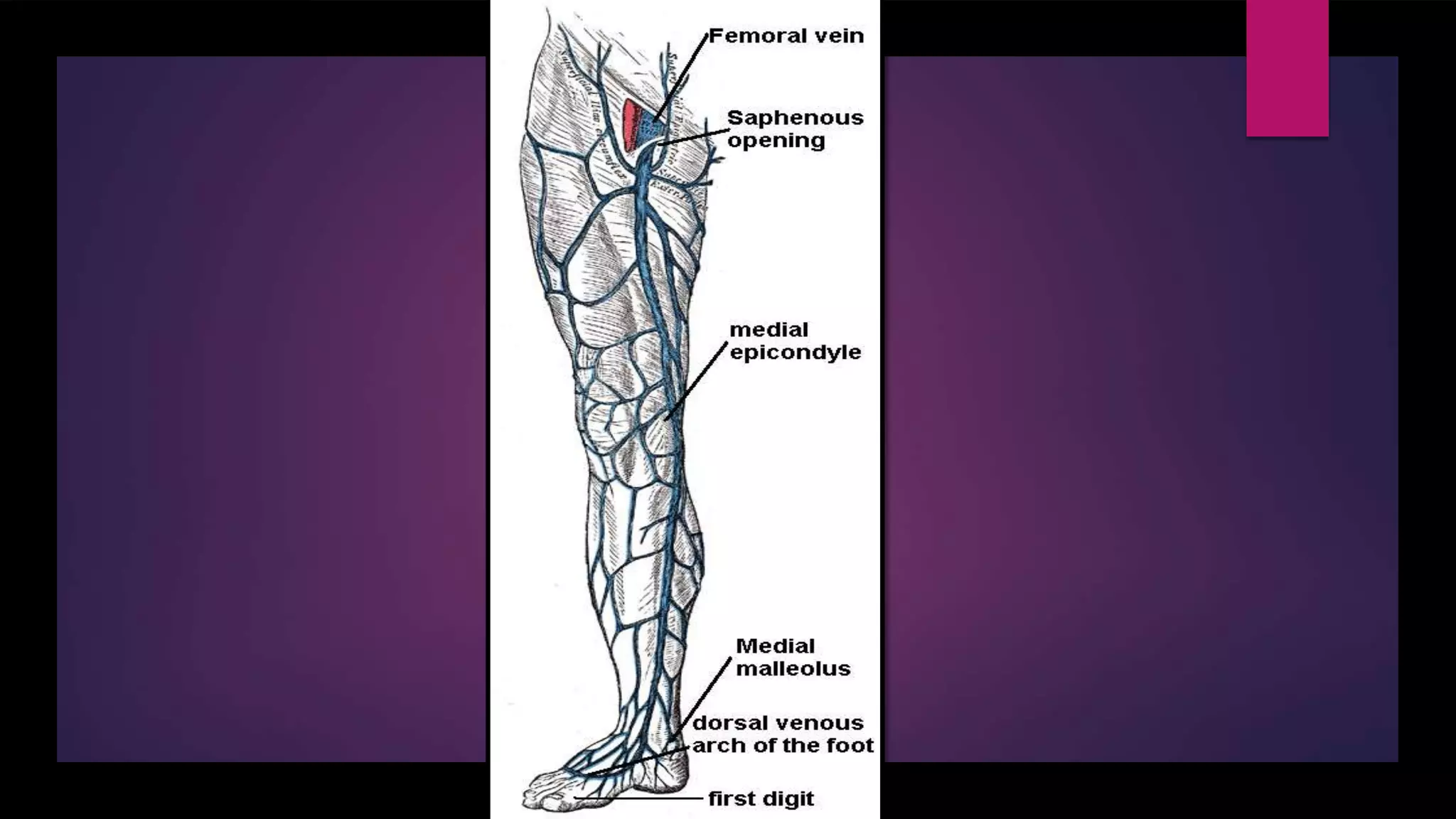
GREAT SAPHENOUS VEIN
 Arises at medial aspect of dorsal venous arch when it merges with the dorsal vein of the big
toe
 Passes anterior to medial malleolus
 Courses superiorly in medial aspect of leg
 Runs over the posterior border of the medial condyle of the femur
 It traverses the saphenous opening in the fascia lata 1.5 inches or 4cm below and lateral to the
pubic tubercle
 It also anastomoses with the small saphenous vein
 Empties into femoral vein
TRIBUTARIES
 In the sole: medial marginal vein
 In the lower leg : anastomoses freely with the small saphenous vein
 In the knee: popliteal vein
 In the thigh: posteromedial aspect gives accessory saphenous vein
 Lateral and anterior r cutaneous veins of the thigh
 At the saphenous opening, it receives: superficial epigastric vein
superficial circumflex iliac vein
superficial external pudendal vein
SHORT SAPHENOUS VEIN
 Arises at lateral side of dorsal venous arch when it merges with
the dorsal vein of the little digit
 Passes posterior to lateral malleolus
 Passes superiorly at posterior aspect of calf
 Ascends between the heads of gastrocnemius muscle
 Pierces fascia of popliteal fossa
 Drains into popliteal vein
PERFORATING VEINS
 Allows the blood to flow only from superficial to deep veins.
 To achieve compression, these veins have an oblique angle so that the back flow of blood is
prevented when the muscle contracts
 Superficial to deep venous blood flow is important because it propels the blood to the heart
against gravity.
DEEP VEINS
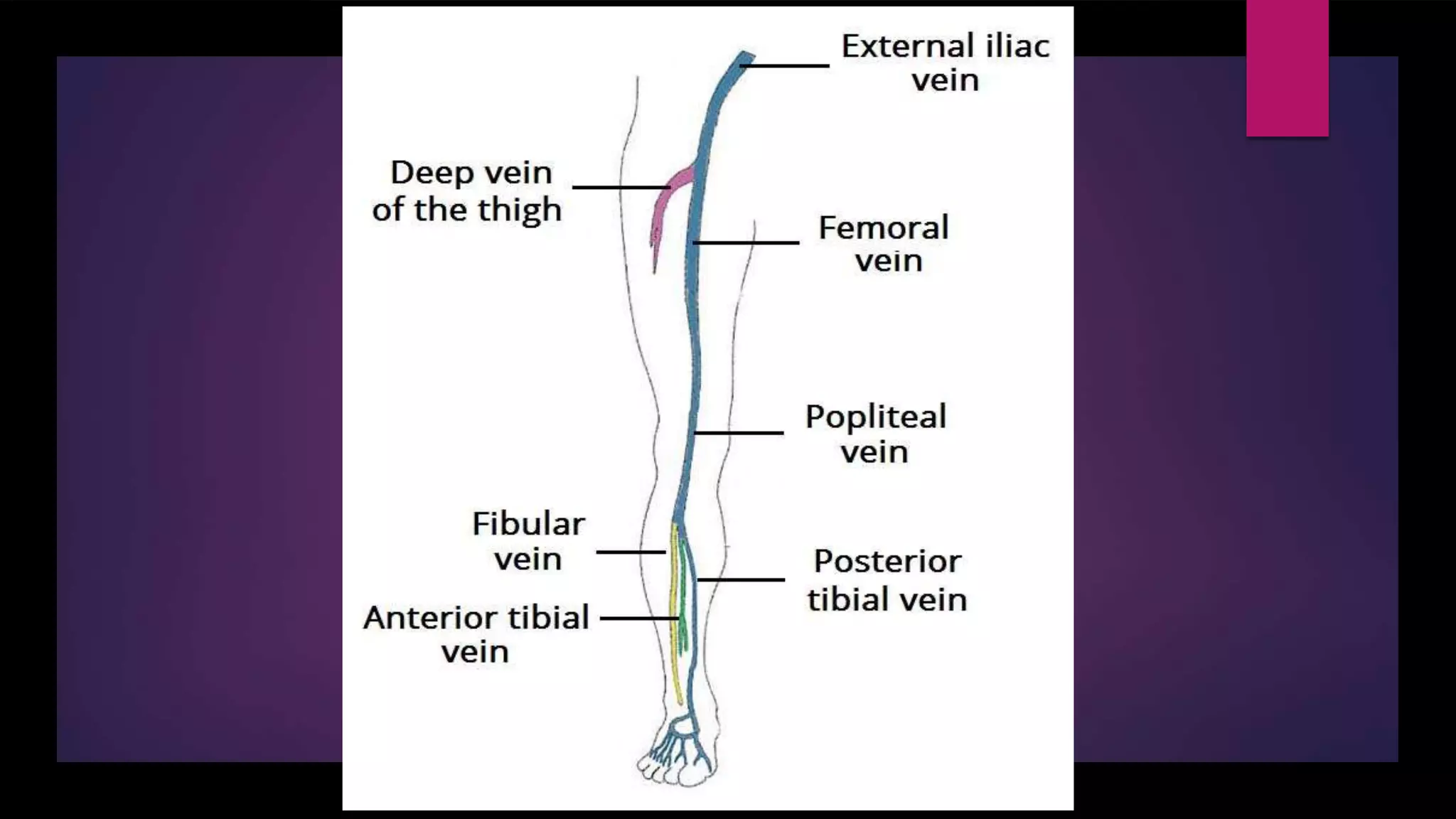
ANTERIOR TIBIAL VEIN
 The anterior tibial vein of the lower limb carries blood from the anterior compartment of the
leg to the popliteal vein which is formed when it joins with the posterior tibial vein.
 The anterior tibial vein is accompanied by an anterior tibial artery.
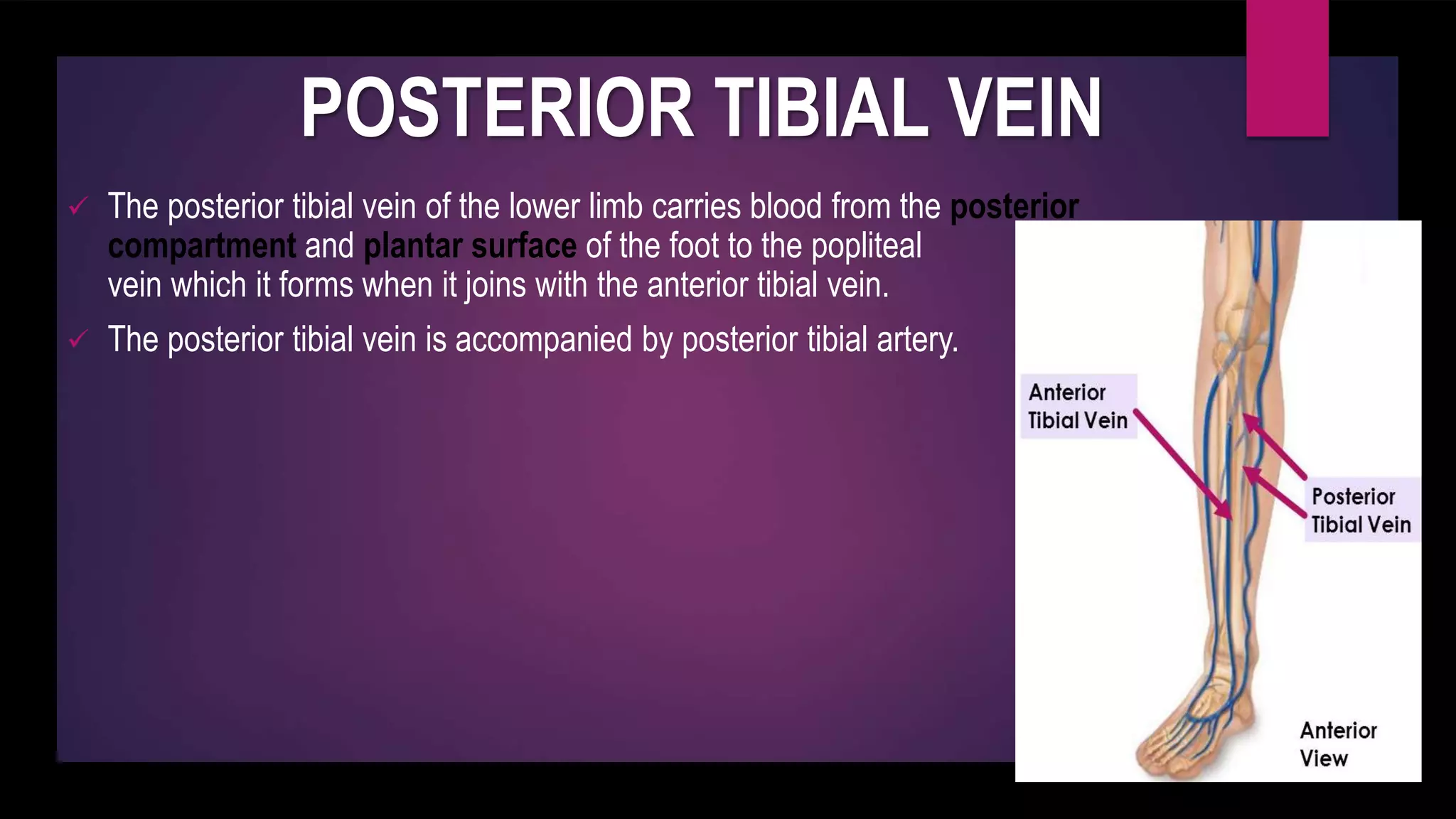
POSTERIOR TIBIAL VEIN
 The posterior tibial vein of the lower limb carries blood from the posterior
compartment and plantar surface of the foot to the popliteal
vein which it forms when it joins with the anterior tibial vein.
 The posterior tibial vein is accompanied by posterior tibial artery.
PERONEAL VEIN
 The fibular veins are deep veins that help carry blood from the lateral compartment of the leg.
 They drain into the posterior tibial veins, which will in turn drain into the popliteal vein.
 The fibular veins accompany the fibular artery.
POPLITEAL VEIN
 Formed at the lower border of the popliteus muscle by the union of the anterior and posterior
tibial veins and continues as the femoral vein
PROFUNDA FEMORIS VEIN
 Profunda femoris vein (or deep femoral vein) is a large deep vein in the thigh.
 It receives blood from the inner thigh and proceeds superiorly and medially running alongside
the profunda femoris artery to join the femoral vein.
FEMORAL VEIN
 The femoral vein is a blood vessel that accompanies the femoral artery in the femoral sheath.
 It begins at the adductor canal (also known as hunter's canal) and is a continuation of
the popliteal vein.
 It ends at the inferior margin of the inguinal ligament, where it becomes the external iliac vein.
LYMPHATIC DRAINAGE OF
LOWER LIMB
Superficial inguinal lymph nodes
 Horizontal group
 Vertical group
Deep inguinal lymph nodes
SUPERFICIAL INGUINAL LYMPH
NODES
HORIZONTAL GROUP
Below the inguinal ligament
Medial members: These receive the lymph from:
 Anterior abdominal wall below the umbilicus
 Perineum
 Urethra
 Lower half of anal canal
Lateral members:
Receive the lymph from the back below the iliac crests
VERTICAL GROUP: Along the terminal part of great saphenous vein, receive lymph from:
 Lower limb
 Skin
 Fascia
DEEP INGUINAL LYMPH NODES
Lie beneath the deep fascia along the medial side of femoral vein, receive the lymph from:
 Superficial inguinal lymph nodes
 Popliteal nodes
THANK YOU
AND
BEST OF LUCK FOR SEND UPS AND PROF !

Venous and lymphatic drainage of lower limb

  • 1.
  • 2.
  • 3.
  • 4.
    The veins ofthe lower limb can be divided into 3 main categories:  Superficial Veins  Deep Veins  Perforating Veins
  • 5.
    SUPERFICIAL VEINS These arebeneath the skin in the superficial fascia, named as:  Great Saphenous Vein  Short Saphenous Vein
  • 6.
    GREAT SAPHENOUS VEIN Arises at medial aspect of dorsal venous arch when it merges with the dorsal vein of the big toe  Passes anterior to medial malleolus  Courses superiorly in medial aspect of leg  Runs over the posterior border of the medial condyle of the femur
  • 8.
     It traversesthe saphenous opening in the fascia lata 1.5 inches or 4cm below and lateral to the pubic tubercle  It also anastomoses with the small saphenous vein  Empties into femoral vein
  • 9.
    TRIBUTARIES  In thesole: medial marginal vein  In the lower leg : anastomoses freely with the small saphenous vein  In the knee: popliteal vein  In the thigh: posteromedial aspect gives accessory saphenous vein  Lateral and anterior r cutaneous veins of the thigh  At the saphenous opening, it receives: superficial epigastric vein superficial circumflex iliac vein superficial external pudendal vein
  • 10.
    SHORT SAPHENOUS VEIN Arises at lateral side of dorsal venous arch when it merges with the dorsal vein of the little digit  Passes posterior to lateral malleolus  Passes superiorly at posterior aspect of calf  Ascends between the heads of gastrocnemius muscle  Pierces fascia of popliteal fossa  Drains into popliteal vein
  • 11.
    PERFORATING VEINS  Allowsthe blood to flow only from superficial to deep veins.  To achieve compression, these veins have an oblique angle so that the back flow of blood is prevented when the muscle contracts  Superficial to deep venous blood flow is important because it propels the blood to the heart against gravity.
  • 12.
    DEEP VEINS ANTERIOR TIBIALVEIN  The anterior tibial vein of the lower limb carries blood from the anterior compartment of the leg to the popliteal vein which is formed when it joins with the posterior tibial vein.  The anterior tibial vein is accompanied by an anterior tibial artery.
  • 13.
    POSTERIOR TIBIAL VEIN The posterior tibial vein of the lower limb carries blood from the posterior compartment and plantar surface of the foot to the popliteal vein which it forms when it joins with the anterior tibial vein.  The posterior tibial vein is accompanied by posterior tibial artery.
  • 14.
    PERONEAL VEIN  Thefibular veins are deep veins that help carry blood from the lateral compartment of the leg.  They drain into the posterior tibial veins, which will in turn drain into the popliteal vein.  The fibular veins accompany the fibular artery.
  • 15.
    POPLITEAL VEIN  Formedat the lower border of the popliteus muscle by the union of the anterior and posterior tibial veins and continues as the femoral vein
  • 17.
    PROFUNDA FEMORIS VEIN Profunda femoris vein (or deep femoral vein) is a large deep vein in the thigh.  It receives blood from the inner thigh and proceeds superiorly and medially running alongside the profunda femoris artery to join the femoral vein.
  • 19.
    FEMORAL VEIN  Thefemoral vein is a blood vessel that accompanies the femoral artery in the femoral sheath.  It begins at the adductor canal (also known as hunter's canal) and is a continuation of the popliteal vein.  It ends at the inferior margin of the inguinal ligament, where it becomes the external iliac vein.
  • 20.
  • 21.
    Superficial inguinal lymphnodes  Horizontal group  Vertical group Deep inguinal lymph nodes
  • 22.
    SUPERFICIAL INGUINAL LYMPH NODES HORIZONTALGROUP Below the inguinal ligament Medial members: These receive the lymph from:  Anterior abdominal wall below the umbilicus  Perineum  Urethra  Lower half of anal canal
  • 23.
    Lateral members: Receive thelymph from the back below the iliac crests VERTICAL GROUP: Along the terminal part of great saphenous vein, receive lymph from:  Lower limb  Skin  Fascia
  • 24.
    DEEP INGUINAL LYMPHNODES Lie beneath the deep fascia along the medial side of femoral vein, receive the lymph from:  Superficial inguinal lymph nodes  Popliteal nodes
  • 25.
    THANK YOU AND BEST OFLUCK FOR SEND UPS AND PROF !