Veins of Lower Limb
Presented By.


   Sarang Suresh
   Haresh Kumar
   Babar Khuwaja
Veins
 Blood vessels which carry blood from
  tissues to heart
 Valves
 Venules
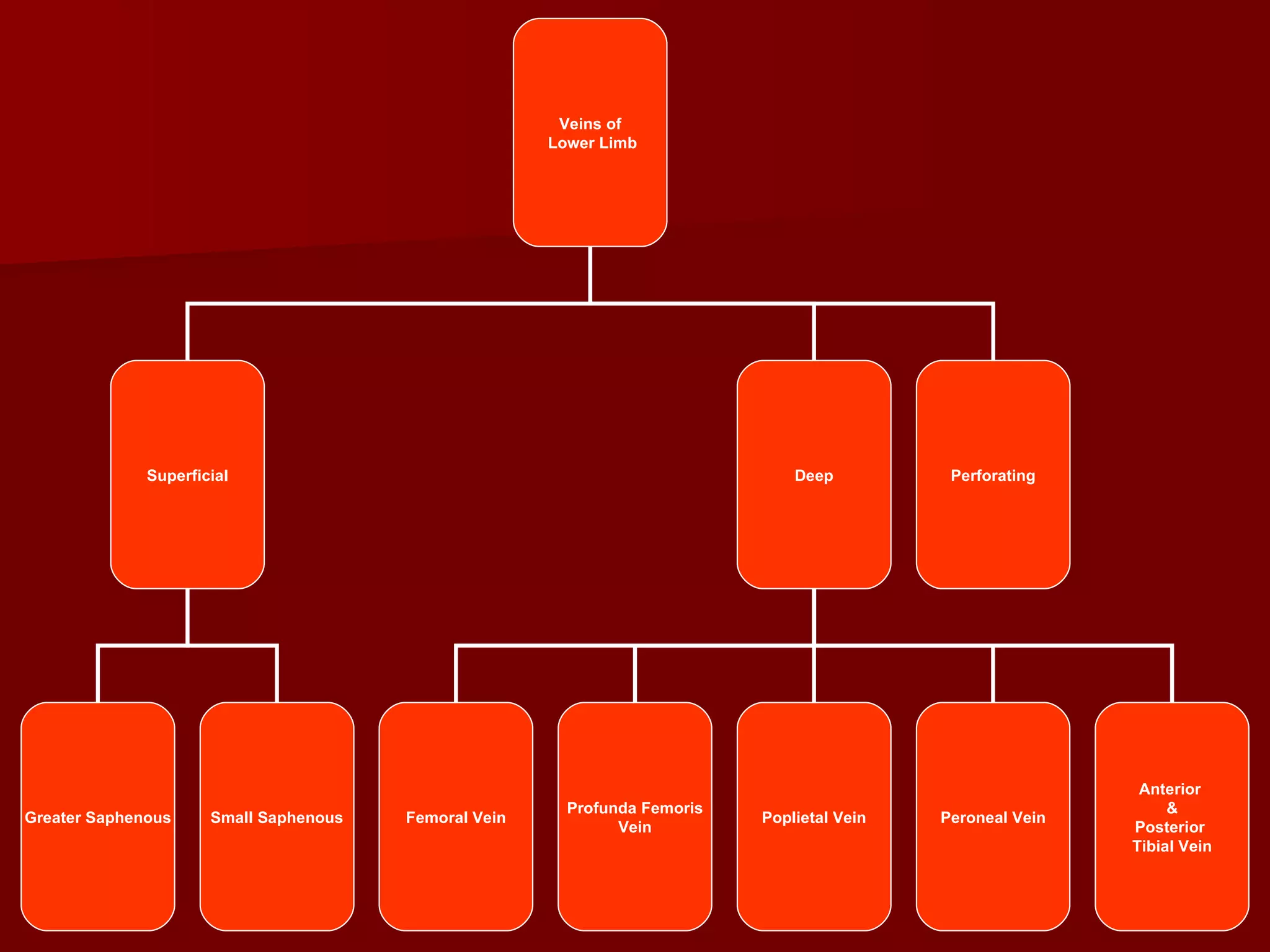
Veins of
                                                       Lower Limb


              Superficial                                                       Deep          Perforating


                                                                                                              Anterior
                                                         Profunda Femoris                                         &
Greater Saphenous     Small Saphenous   Femoral Vein                        Poplietal Vein   Peroneal Vein
                                                               Vein                                          Posterior
                                                                                                             Tibial Vein
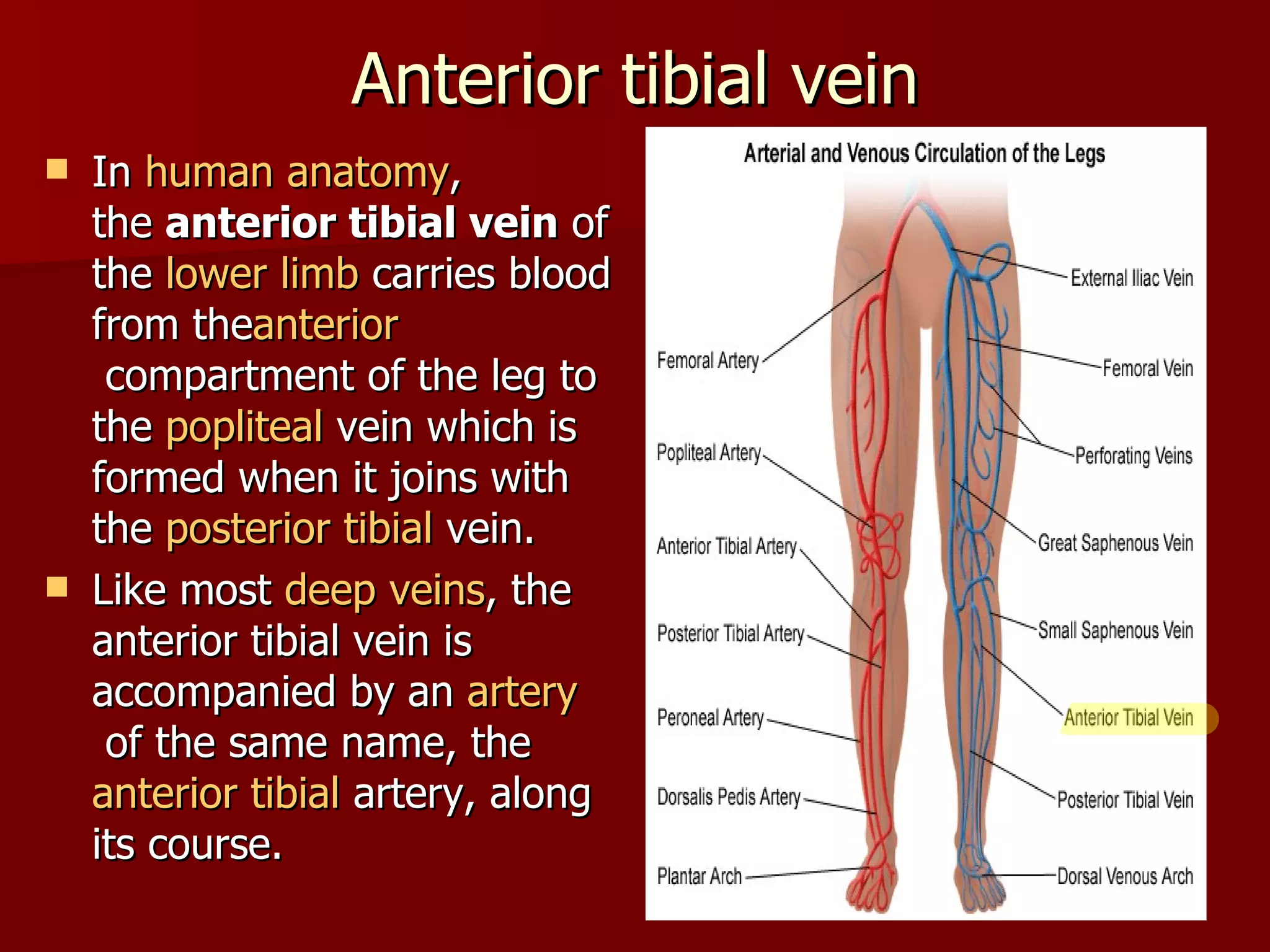
Anterior tibial vein
   In human anatomy,
    the anterior tibial vein of
    the lower limb carries blood
    from theanterior
     compartment of the leg to
    the popliteal vein which is
    formed when it joins with
    the posterior tibial vein.
   Like most deep veins, the
    anterior tibial vein is
    accompanied by an artery
     of the same name, the
    anterior tibial artery, along
    its course.
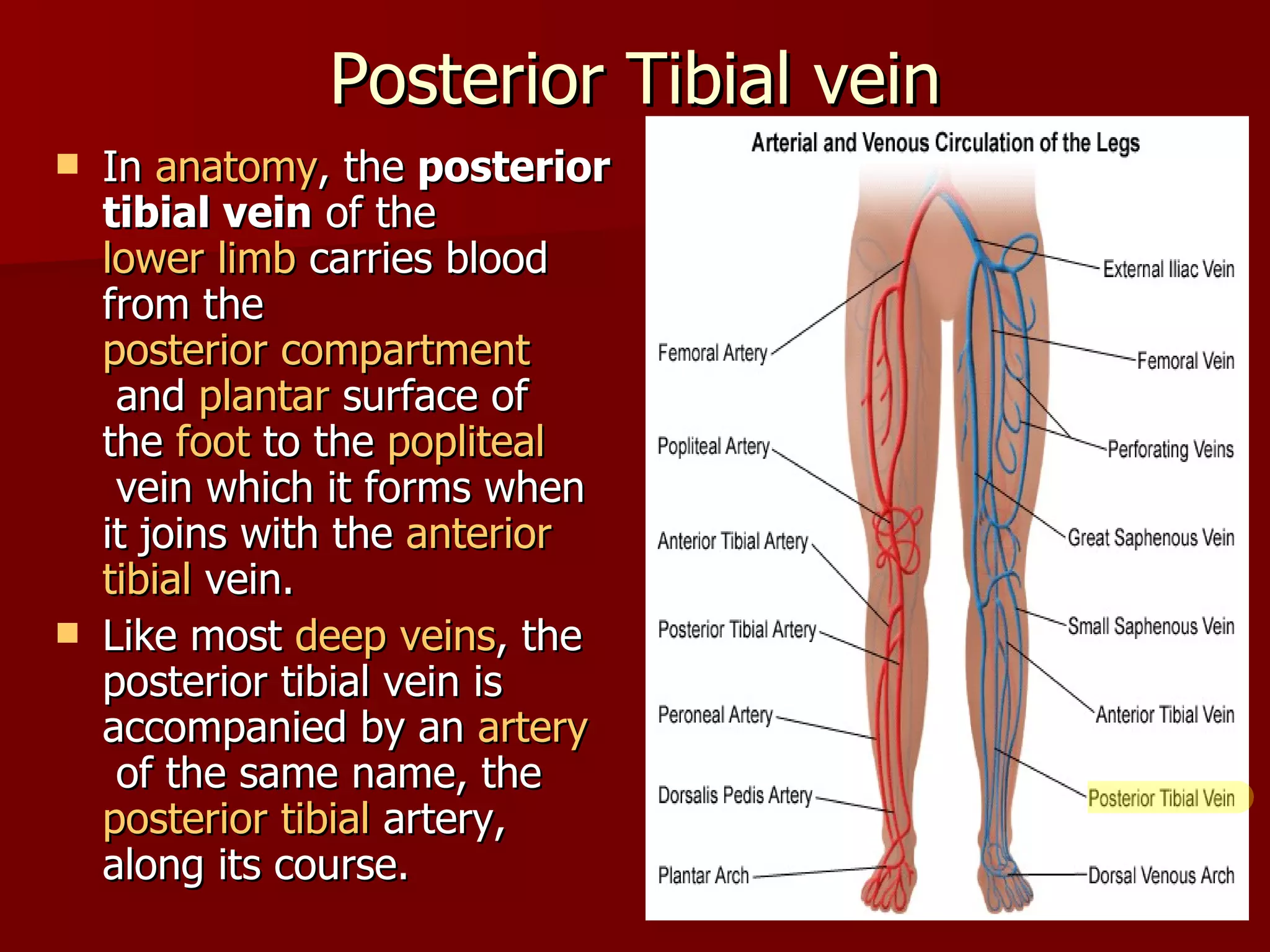
Posterior Tibial vein
   In anatomy, the posterior
    tibial vein of the
    lower limb carries blood
    from the
    posterior compartment
     and plantar surface of
    the foot to the popliteal
     vein which it forms when
    it joins with the anterior
    tibial vein.
   Like most deep veins, the
    posterior tibial vein is
    accompanied by an artery
     of the same name, the
    posterior tibial artery,
    along its course.
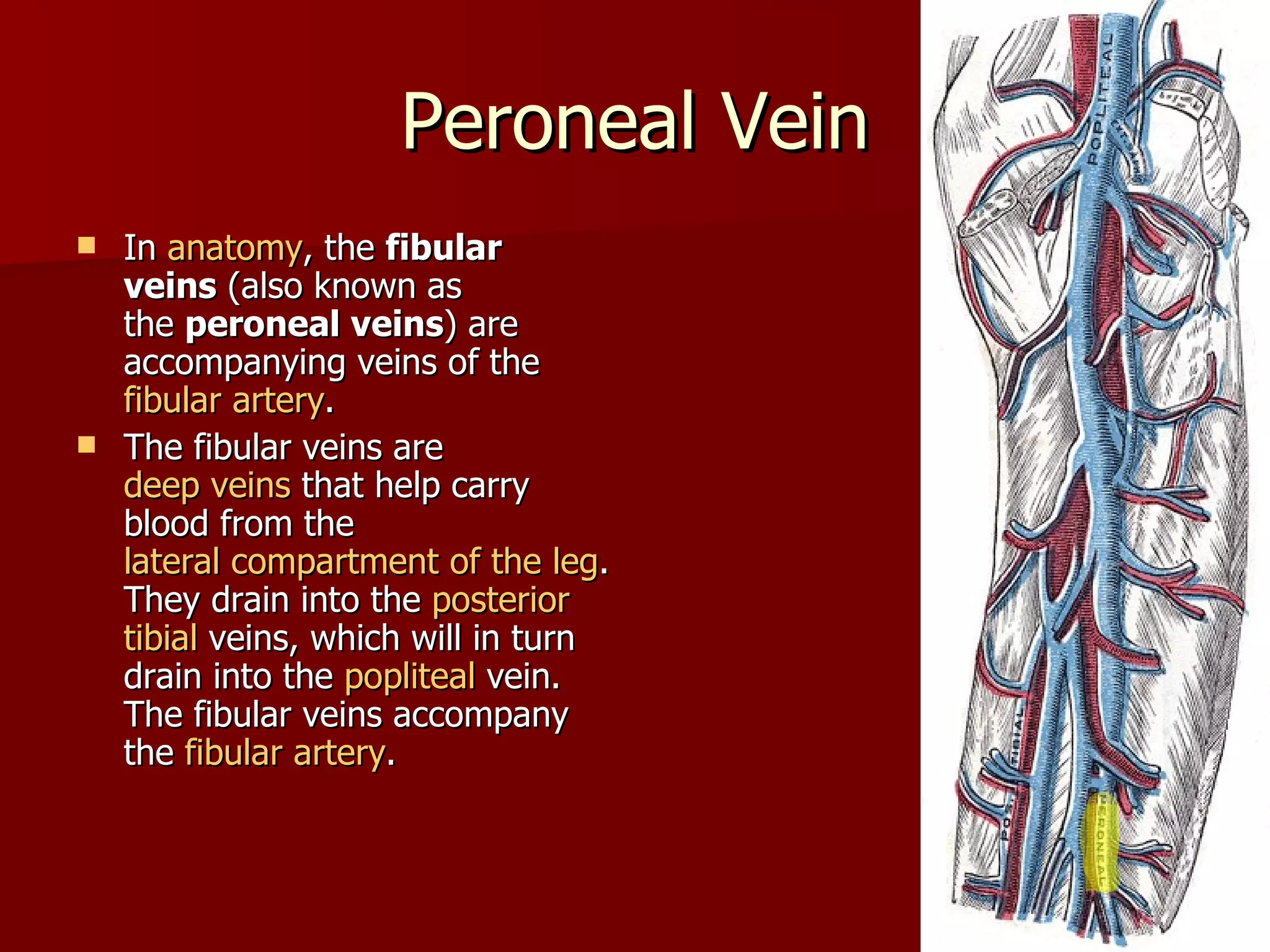
Peroneal Vein
 In anatomy, the fibular
  veins (also known as
  the peroneal veins) are
  accompanying veins of the
  fibular artery.
 The fibular veins are
  deep veins that help carry
  blood from the
  lateral compartment of the leg.
  They drain into the posterior
  tibial veins, which will in turn
  drain into the popliteal vein.
  The fibular veins accompany
  the fibular artery.
Popliteal vein

 The popliteal vein is located
  behind the knee. Its course runs
  alongside the popliteal artery, but
  carries the blood from the knee
  joint and muscles in the thigh and
  calf back to the heart.
 Its origin is defined by the
  junction of the posterior tibial vein
   and anterior tibial vein.
 It drains the peroneal vein before
  reaching the knee joint and turns
  into the femoral veinwhen leaving
  the adductor canal (also known
  as Hunter's canal).
 The popliteal artery extends from
  the femoral artery behind the
  popliteal fossa which is the space
  behind the knee.
Profunda femoris vein
   Profunda femoris
    vein (or deep femoral
    vein) is a large deep vein
     in the thigh. It receives
    blood from the inner thigh
    and proceeds superiorly
    and medially running
    alongside the profunda
    femoris artery to join with
    the femoral vein
     approximately at the level
    of the inferior-most portion
    of the ischial tuberosity.
Femoral Vein
   In the human body, the femoral
    vein is a blood vessel that
    accompanies the femoral artery
     in the femoral sheath. It begins
    at the adductor canal (also
    known as Hunter's canal) and is a
    continuation of the popliteal vein.
    It ends at the inferior margin of
    theinguinal ligament, where it
    becomes the external iliac vein.

Drainage

Several large veins drain into the
   femoral vein:
 popliteal vein
 profunda femoris vein
 great saphenous vein
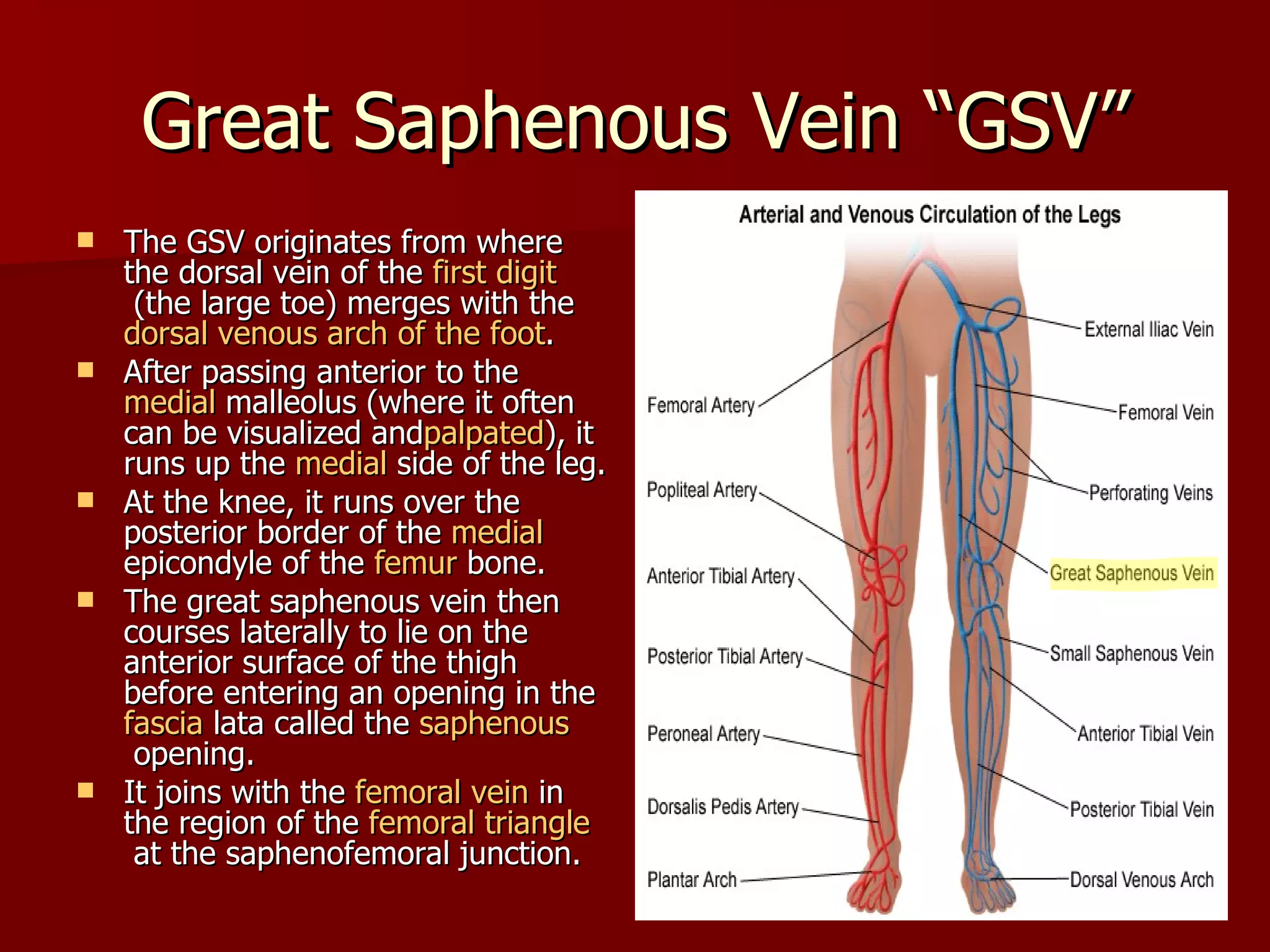
Great Saphenous Vein “GSV”
   The GSV originates from where
    the dorsal vein of the first digit
     (the large toe) merges with the
    dorsal venous arch of the foot.
   After passing anterior to the
    medial malleolus (where it often
    can be visualized andpalpated), it
    runs up the medial side of the leg.
   At the knee, it runs over the
    posterior border of the medial
    epicondyle of the femur bone.
   The great saphenous vein then
    courses laterally to lie on the
    anterior surface of the thigh
    before entering an opening in the
    fascia lata called the saphenous
     opening.
   It joins with the femoral vein in
    the region of the femoral triangle
     at the saphenofemoral junction.
Small Saphenous Vein
   The small saphenous
    vein (also short saphenous vein), is
    a relatively large vein of the superficial
    posterior leg.
   Its origin is where the dorsal vein from
    the fifth digit (smallest toe) merges
    with the dorsal venous arch of the foot
    , which attaches to the great
    saphenous vein. It is a considered a
    superficial vein and is subcutaneous
     (just under the skin).
   From its origin, it courses around the
    lateral aspect of the foot (inferior and
    posterior to thelateral malleolus) and
    runs along the posterior aspect of the
    leg (with the sural nerve), passes
    between the heads of the
    gastrocnemius muscle, and drains into
    the popliteal vein, approximately at or
    above the level of the knee joint.
Communicating vein

 Communicating veins (or perforator
  veins ) are veins that directly connect
  superficial veins to deep veins.
 Communicating veins have valves that
  only allow blood to flow from superficial to
  deep veins
Daring
Dentist

Vein of lower limb

  • 1.
    Veins of LowerLimb Presented By.  Sarang Suresh  Haresh Kumar  Babar Khuwaja
  • 2.
    Veins  Blood vesselswhich carry blood from tissues to heart  Valves  Venules
  • 3.
    Veins of Lower Limb Superficial Deep Perforating Anterior Profunda Femoris & Greater Saphenous Small Saphenous Femoral Vein Poplietal Vein Peroneal Vein Vein Posterior Tibial Vein
  • 4.
    Anterior tibial vein  In human anatomy, the anterior tibial vein of the lower limb carries blood from theanterior compartment of the leg to the popliteal vein which is formed when it joins with the posterior tibial vein.  Like most deep veins, the anterior tibial vein is accompanied by an artery of the same name, the anterior tibial artery, along its course.
  • 5.
    Posterior Tibial vein  In anatomy, the posterior tibial vein of the lower limb carries blood from the posterior compartment and plantar surface of the foot to the popliteal vein which it forms when it joins with the anterior tibial vein.  Like most deep veins, the posterior tibial vein is accompanied by an artery of the same name, the posterior tibial artery, along its course.
  • 6.
    Peroneal Vein  Inanatomy, the fibular veins (also known as the peroneal veins) are accompanying veins of the fibular artery.  The fibular veins are deep veins that help carry blood from the lateral compartment of the leg. They drain into the posterior tibial veins, which will in turn drain into the popliteal vein. The fibular veins accompany the fibular artery.
  • 7.
    Popliteal vein  Thepopliteal vein is located behind the knee. Its course runs alongside the popliteal artery, but carries the blood from the knee joint and muscles in the thigh and calf back to the heart.  Its origin is defined by the junction of the posterior tibial vein and anterior tibial vein.  It drains the peroneal vein before reaching the knee joint and turns into the femoral veinwhen leaving the adductor canal (also known as Hunter's canal).  The popliteal artery extends from the femoral artery behind the popliteal fossa which is the space behind the knee.
  • 8.
    Profunda femoris vein  Profunda femoris vein (or deep femoral vein) is a large deep vein in the thigh. It receives blood from the inner thigh and proceeds superiorly and medially running alongside the profunda femoris artery to join with the femoral vein approximately at the level of the inferior-most portion of the ischial tuberosity.
  • 9.
    Femoral Vein  In the human body, the femoral vein is a blood vessel that accompanies the femoral artery in the femoral sheath. It begins at the adductor canal (also known as Hunter's canal) and is a continuation of the popliteal vein. It ends at the inferior margin of theinguinal ligament, where it becomes the external iliac vein. Drainage Several large veins drain into the femoral vein:  popliteal vein  profunda femoris vein  great saphenous vein
  • 10.
    Great Saphenous Vein“GSV”  The GSV originates from where the dorsal vein of the first digit (the large toe) merges with the dorsal venous arch of the foot.  After passing anterior to the medial malleolus (where it often can be visualized andpalpated), it runs up the medial side of the leg.  At the knee, it runs over the posterior border of the medial epicondyle of the femur bone.  The great saphenous vein then courses laterally to lie on the anterior surface of the thigh before entering an opening in the fascia lata called the saphenous opening.  It joins with the femoral vein in the region of the femoral triangle at the saphenofemoral junction.
  • 11.
    Small Saphenous Vein  The small saphenous vein (also short saphenous vein), is a relatively large vein of the superficial posterior leg.  Its origin is where the dorsal vein from the fifth digit (smallest toe) merges with the dorsal venous arch of the foot , which attaches to the great saphenous vein. It is a considered a superficial vein and is subcutaneous (just under the skin).  From its origin, it courses around the lateral aspect of the foot (inferior and posterior to thelateral malleolus) and runs along the posterior aspect of the leg (with the sural nerve), passes between the heads of the gastrocnemius muscle, and drains into the popliteal vein, approximately at or above the level of the knee joint.
  • 12.
    Communicating vein  Communicatingveins (or perforator veins ) are veins that directly connect superficial veins to deep veins.  Communicating veins have valves that only allow blood to flow from superficial to deep veins
  • 13.