A H M A D S H A H A B D A L I
I N S T U T U T E O F H I G H E R
E D U C AT I O N
D E PA R T M E N T O F
I N T E R N A L M E D I C I N E
K H O S T - A F G H A N I S TA N
DR. ASMATULLAH SAPAND
POLYCYSTIC KIDNEY DISEASE
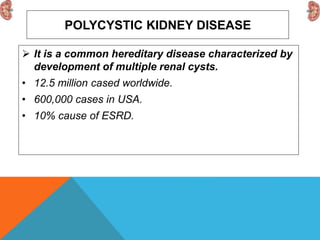
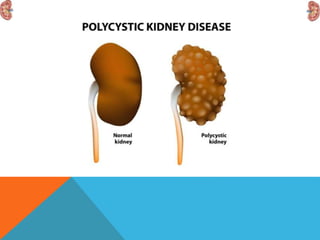
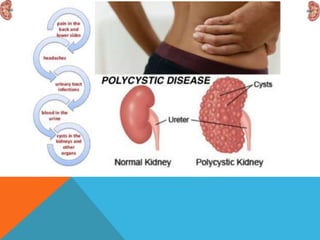
 It is a common hereditary disease characterized by
development of multiple renal cysts.
• 12.5 million cased worldwide.
• 600,000 cases in USA.
• 10% cause of ESRD.
POLYCYSTIC KIDNEY DISEASE
There are two genetically different forms of PKD.
• Autosomal recessive PKD (infantile type)
 Severe form of PKD
 fatal in infancy due to renal failure and hepatic fibrosis.
• Autosomal dominant PKD (Adult type)
 In 50% of cases cause of ESRD in age 60ys.
DEFINITION
Ault PCKD/ADPCKD: it is a common heriditary disease
inherited as an autosomal dominant trait, characterized
by development of multiple renal cysts.
GENERAL CONSIDERATIONS
• Age of onset: 20-40ys
• Male and females are equally affected.
• Family Hx is +tive in 75% of cases.
• May be associated with hepatic cysts(40-60%), intracranial
berry aneurysm(10-15%), mitral valve prolapse, splenic and
pancreatic cysts, colonic diverticular and abdominal wall
hernias.
• Gradual reduction of renal function resulting in ESRD(10%).
CLINICAL FEATURES
• Often asymtomatic until late in life.
• Insidious onset of HTN after 20ys(>50%), may or
maynot be associated with renal dysfunction.
• Acute loin pain and hematuria, due to hemorrhage into
cyst, cyst infection or urinary stone formation(20%).
• Loin or abdominal pain due to increasing size of the
kidneys. ………..cont……
………cont…….Clinical features
• Complications of HTN such as IHD, stoke, HF.
• Complications of hepatic cyst.
• Subarachnoid hemorrhage due to rupture of berry
aneurysm.
• Symptoms of uremia due to renal failure.
• On P/E: Palpable kidneys
INVESTIGATIONS
• Urinalysis: Hematuria and Proteinuria.
• U/S of Kidneys: diagnostic criteria for ADPCKD on
Ultrasound is as following:
 Two or more cysts in patients under age of 30ys.
 Two or more cysts in each kidney in patients aged 30-59ys.
 Four or more cysts in each kidney in patients aged 60 or
Over.
MANAGEMENT
Management of PCKD is actually the management of its
complications, which will be discussed as following:
• Abdominal/Flank pain: bed rest, analgesics for acute
pain and cyst decompression for chronic pain.
• Hematuria: gross hematuria results from rupture of the
cyst, renal stone or UTI, which usually resolves within
7-days with bed rest and hydration. Cont……..
Cont…… MANAGEMENT
• Renal infection: usually Fever, Flank pain and
Leukocytosis is present.
Fluoroquinolones are given parenterally for 2 weeks
then orally for long term.
• Kidney stones: about 20% of patients have kidney
stones of calcium oxalate.
Hydration is advised to prevent stone formation.
Cont…… MANAGEMENT
• Hypertension: cyst induced ischemia activates renin-
angiotensin system(RAS) which results in HTN and it
can be temporarily controlled by cyst decompression.
Anti-hypertensive medicine is used to control HTN and
its complications for longterm.
Cont…… MANAGEMENT
• Cerebral aneurysm: Screening angiography for
aneurysm in circle of Willis is not advised unless the
patients has family Hx of aneurysm or he is going for
elective surgery(in which there is high risk of -
developing hypertension).
• Other complications: mitral valve prolapse, aortic
aneurysm, aortic valve abnormalities and colonic
diverticula.
PROGNOSIS
• Renal failure cannot be prevented with medical
treatment. Treatment of HTN and low protein diet may
slow the progression of disease. Screening of the
family members with Ultasound of Kidneys is
recommended.
Polycystic kidney disease (PCKD)

Polycystic kidney disease (PCKD)

  • 1.
    A H MA D S H A H A B D A L I I N S T U T U T E O F H I G H E R E D U C AT I O N D E PA R T M E N T O F I N T E R N A L M E D I C I N E K H O S T - A F G H A N I S TA N DR. ASMATULLAH SAPAND
  • 2.
    POLYCYSTIC KIDNEY DISEASE It is a common hereditary disease characterized by development of multiple renal cysts. • 12.5 million cased worldwide. • 600,000 cases in USA. • 10% cause of ESRD.
  • 4.
    POLYCYSTIC KIDNEY DISEASE Thereare two genetically different forms of PKD. • Autosomal recessive PKD (infantile type)  Severe form of PKD  fatal in infancy due to renal failure and hepatic fibrosis. • Autosomal dominant PKD (Adult type)  In 50% of cases cause of ESRD in age 60ys.
  • 5.
    DEFINITION Ault PCKD/ADPCKD: itis a common heriditary disease inherited as an autosomal dominant trait, characterized by development of multiple renal cysts.
  • 6.
    GENERAL CONSIDERATIONS • Ageof onset: 20-40ys • Male and females are equally affected. • Family Hx is +tive in 75% of cases. • May be associated with hepatic cysts(40-60%), intracranial berry aneurysm(10-15%), mitral valve prolapse, splenic and pancreatic cysts, colonic diverticular and abdominal wall hernias. • Gradual reduction of renal function resulting in ESRD(10%).
  • 7.
    CLINICAL FEATURES • Oftenasymtomatic until late in life. • Insidious onset of HTN after 20ys(>50%), may or maynot be associated with renal dysfunction. • Acute loin pain and hematuria, due to hemorrhage into cyst, cyst infection or urinary stone formation(20%). • Loin or abdominal pain due to increasing size of the kidneys. ………..cont……
  • 9.
    ………cont…….Clinical features • Complicationsof HTN such as IHD, stoke, HF. • Complications of hepatic cyst. • Subarachnoid hemorrhage due to rupture of berry aneurysm. • Symptoms of uremia due to renal failure. • On P/E: Palpable kidneys
  • 10.
    INVESTIGATIONS • Urinalysis: Hematuriaand Proteinuria. • U/S of Kidneys: diagnostic criteria for ADPCKD on Ultrasound is as following:  Two or more cysts in patients under age of 30ys.  Two or more cysts in each kidney in patients aged 30-59ys.  Four or more cysts in each kidney in patients aged 60 or Over.
  • 11.
    MANAGEMENT Management of PCKDis actually the management of its complications, which will be discussed as following: • Abdominal/Flank pain: bed rest, analgesics for acute pain and cyst decompression for chronic pain. • Hematuria: gross hematuria results from rupture of the cyst, renal stone or UTI, which usually resolves within 7-days with bed rest and hydration. Cont……..
  • 12.
    Cont…… MANAGEMENT • Renalinfection: usually Fever, Flank pain and Leukocytosis is present. Fluoroquinolones are given parenterally for 2 weeks then orally for long term. • Kidney stones: about 20% of patients have kidney stones of calcium oxalate. Hydration is advised to prevent stone formation.
  • 13.
    Cont…… MANAGEMENT • Hypertension:cyst induced ischemia activates renin- angiotensin system(RAS) which results in HTN and it can be temporarily controlled by cyst decompression. Anti-hypertensive medicine is used to control HTN and its complications for longterm.
  • 14.
    Cont…… MANAGEMENT • Cerebralaneurysm: Screening angiography for aneurysm in circle of Willis is not advised unless the patients has family Hx of aneurysm or he is going for elective surgery(in which there is high risk of - developing hypertension). • Other complications: mitral valve prolapse, aortic aneurysm, aortic valve abnormalities and colonic diverticula.
  • 15.
    PROGNOSIS • Renal failurecannot be prevented with medical treatment. Treatment of HTN and low protein diet may slow the progression of disease. Screening of the family members with Ultasound of Kidneys is recommended.