Reno-Vascular
Diseases
Dr. Tushar
Introduction To Renovascular Disease (RVD)Introduction To Renovascular Disease (RVD)
• The Kidneys depend on systemic blood pressure (SBP) to
maintain adequate renal blood flow and hence adequate
GFR, tubular function and overall salt and water balance
• This explains the vulnerability of kidneys to diseases
involving the renal vasculature
• Vascular injury to kidneys is usually a manifestation of
generalized vascular pathology
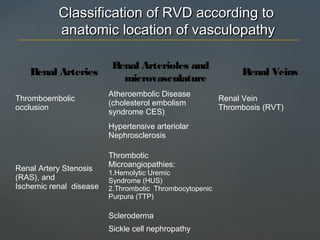
Classification of RVD according toClassification of RVD according to
anatomic location of vasculopathyanatomic location of vasculopathy
Renal Arteries
Renal Arterioles and
microvasculature
Renal Veins
Thromboembolic
occlusion
Atheroembolic Disease
(cholesterol embolism
syndrome CES)
Renal Vein
Thrombosis (RVT)
Renal Artery Stenosis
(RAS), and
Ischemic renal disease
Hypertensive arteriolar
Nephrosclerosis
Thrombotic
Microangiopathies:
1.Hemolytic Uremic
Syndrome (HUS)
2.Thrombotic Thrombocytopenic
Purpura (TTP)
Scleroderma
Sickle cell nephropathy
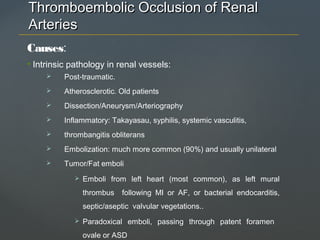
Thromboembolic Occlusion of RenalThromboembolic Occlusion of Renal
ArteriesArteries
Causes:
• Intrinsic pathology in renal vessels:
 Post-traumatic.
 Atherosclerotic. Old patients
 Dissection/Aneurysm/Arteriography
 Inflammatory: Takayasau, syphilis, systemic vasculitis,
 thrombangitis obliterans
 Embolization: much more common (90%) and usually unilateral
 Tumor/Fat emboli
 Emboli from left heart (most common), as left mural
thrombus following MI or AF, or bacterial endocarditis,
septic/aseptic valvular vegetations..
 Paradoxical emboli, passing through patent foramen
ovale or ASD
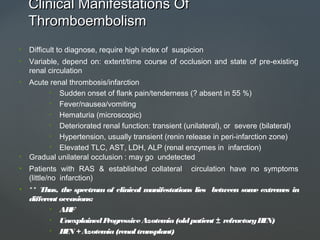
Clinical Manifestations OfClinical Manifestations Of
ThromboembolismThromboembolism
• Difficult to diagnose, require high index of suspicion
• Variable, depend on: extent/time course of occlusion and state of pre-existing
renal circulation
• Acute renal thrombosis/infarction
• Sudden onset of flank pain/tenderness (? absent in 55 %)
• Fever/nausea/vomiting
• Hematuria (microscopic)
• Deteriorated renal function: transient (unilateral), or severe (bilateral)
• Hypertension, usually transient (renin release in peri-infarction zone)
• Elevated TLC, AST, LDH, ALP (renal enzymes in infarction)
• Gradual unilateral occlusion : may go undetected
• Patients with RAS & established collateral circulation have no symptoms
(little/no infarction)
• ** Thus, the spectrum of clinical manifestations lies between some extremes in
different occasions:
• ARF
• UnexplainedProgressiveAzotemia(oldpatient ± refractoryHTN)
• HTN +Azotemia(renal transplant)
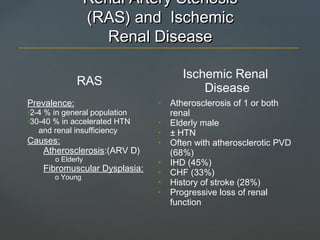
Renal Artery StenosisRenal Artery Stenosis
(RAS) and Ischemic(RAS) and Ischemic
Renal DiseaseRenal Disease
RAS
Ischemic Renal
Disease
Prevalence:
•2-4 % in general population
•30-40 % in accelerated HTN
and renal insufficiency
Causes:
Atherosclerosis:(ARV D)
o Elderly
Fibromuscular Dysplasia:
o Young
• Atherosclerosis of 1 or both
renal
• Elderly male
• ± HTN
• Often with atherosclerotic PVD
(68%)
• IHD (45%)
• CHF (33%)
• History of stroke (28%)
• Progressive loss of renal
function
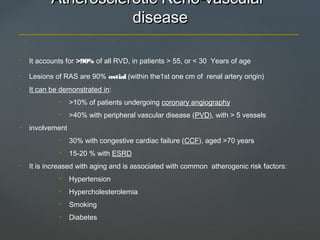
Atherosclerotic Reno-vascularAtherosclerotic Reno-vascular
diseasedisease
• It accounts for >90% of all RVD, in patients > 55, or < 30 Years of age
• Lesions of RAS are 90% ostial (within the1st one cm of renal artery origin)
• It can be demonstrated in:
• >10% of patients undergoing coronary angiography
• >40% with peripheral vascular disease (PVD), with > 5 vessels
• involvement
• 30% with congestive cardiac failure (CCF), aged >70 years
• 15-20 % with ESRD
• It is increased with aging and is associated with common atherogenic risk factors:
• Hypertension
• Hypercholesterolemia
• Smoking
• Diabetes
Clinical Presentations of ARVDClinical Presentations of ARVD
• Hypertension (HTN), with Chronic Kidney Disease (CKD), a pro-atherogenic state
make the incidental finding of ARVD, rather than being the cause of it..?
• Epi-gastric bruit
• Hypokalemia and metabolic alkalosis
• Flash pulmonary edema(5%):
 Sudden onset of acute heart failure in absence of myocardial ischemic event
 Commonly at night(due to posture-related redistribution of fluid or may be due to
diurnal variations of vasoactive peptides)
 Mechanism may be due to reduced natriuretic ability, coupled with LVH and
severe HTN in patients with severe bilateral RAS
• Acute Kidney Injury (AKI), due to arterial occlusion
• Ischemic ATN, orrelated to ACE-I (after 1-14 days)
Prognosis of ARVDPrognosis of ARVD
• Renal outcome is determined by the presence of parenchymal disease
giving the picture of ischemic nephropathy (intrarenal atheroma, or
cholesterol embolization)
• The correlation between the severity of proximal lesions(degree of
stenosis or occlusion) and renal function is poor.
• Poorprognosis (5-yearsurvival<20 %)
Fibromuscular DysplasiaFibromuscular Dysplasia
(FMD)(FMD)
• It accounts for 10% of all RVD
• Most commonly in young women (20-35 Ys)
• The stenotic lesions are distal and appear like
• “string of beads”, at angiography
• Clinically, presented with severe HTN, but renal failure is unusual
• It is usually associated with other arterial lesions (carotid stenosis in 10%
of cases)
• Revascularization cure the HTN and restores the kidney function
completely; because the kidney beyond the FMD, is usually healthy
• Fibromuscular dysplasia of the renal artery, medial type (elastic tissue
stain)
• The media shows marked fibrous thickening, and the lumen is stenotic.
Atheroembolic RVDAtheroembolic RVD
• Cholesterol embolisation syndrome (CES) is occurring in:
I. Elderly patients with widespread atherosclerosis (almost exclusively)
II. As complication of abdominal aorta/renal artery manipulation or surgery
III. As a consequence of angiography or PTRA
• Clinically:
I. Renal insufficiency &/or HTN
II. Livideo reticularis
III. Evidence of embolisation in other organs: Cerebrovascular events, retinal
artery occlusion, acute pancreatitis, ischemic bowels, gangrene of extremities
• Urine analysis:
I. Cholesterol crystals (not usually present)
II. Increased cellularity
III. Proteinuria (mild)
IV. Eosinophiluria
• Eosinophilia: 11-16 %
Atheroemboli with typical cholesterol clefs in an interlobar artery.
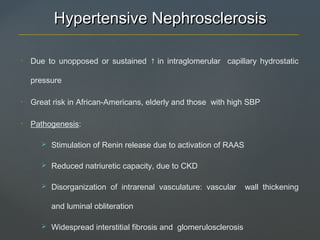
Hypertensive NephrosclerosisHypertensive Nephrosclerosis
• Due to unopposed or sustained ↑ in intraglomerular capillary hydrostatic
pressure
• Great risk in African-Americans, elderly and those with high SBP
• Pathogenesis:
 Stimulation of Renin release due to activation of RAAS
 Reduced natriuretic capacity, due to CKD
 Disorganization of intrarenal vasculature: vascular wall thickening
and luminal obliteration
 Widespread interstitial fibrosis and glomerulosclerosis
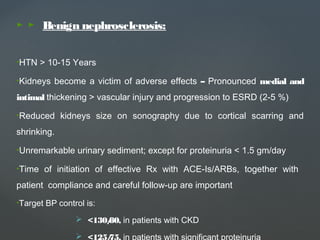
► ► Benign nephrosclerosis:
•HTN > 10-15 Years
•Kidneys become a victim of adverse effects – Pronounced medial and
intimal thickening > vascular injury and progression to ESRD (2-5 %)
•Reduced kidneys size on sonography due to cortical scarring and
shrinking.
•Unremarkable urinary sediment; except for proteinuria < 1.5 gm/day
•Time of initiation of effective Rx with ACE-Is/ARBs, together with
patient compliance and careful follow-up are important
•Target BP control is:
 <130/80, in patients with CKD
 <125/75, in patients with significant proteinuria
a. Gross appearance of benign nephrosclerosis - Fine, leathery granularity
b. Hyaline arteriolosclerosis. [arterioles with hyaline deposition, marked thickening of
walls and narrowed lumen] & interlobular and arcuate arteries show medial
hypertrophy, replication of internal elastic lamina and increased myofibroblastic
tissue in intima [Fibroelastic hyperplasia]
► ► Malignant (accelerated) HTN:
•Abrupt ↑ of DBP > 120 mmHg > renal ischemia and renin production > Intimal
injury > Severe tubular and glomerular ischemia > ARF
•Headaches, seizures/? Stroke, encephalopathy..
•Grade 3 or 4 retinopathy, with hemorrhages, exudates, papilledema
•Microangiopathic hemolytic anemia
•↑of serum urea and creatinine
•Enlarged kidneys on U/S
•Active urinary sediment: Proteinuria (Nephrotic range) and hematuria (gross, or
microscopic): AKI
•Emergency situation needing aggressive BP control can reverse renal functions:
Parenteral Na nitroprusside.. Smooth control over 36-48 Hs
a. Fibrinoid necrosis of afferent arteriole [PAS stain] – Cytologic detail lost,
Smudgy eosinophilic appearance of vessel wall.
b. Hyperplastic arteriolitis (onion-skin lesion) [intimal thickening by proliferation of
elongated, concentrically arranged smooth muscle cells, together with fine
concentric layering of collagen and accumulation of pale-staining material that
represents deposition of proteoglycan and plasma protein ]
Thrombotic MicroangiopathiesThrombotic Microangiopathies
I. Hemolytic Uremic Syndrome (HUS)
II. Thrombotic Thrombocytopenic Purpura (TTP)
In both conditions, there is:
• Microangiopathic hemolytic Anemia (MAHA), with anemia, RBCs
fragmentation, schistocytes, intravascular PLT clumping and hence
thrombocytopenia
• Typical renal histological lesions include intraglomerular platelet and
fibrin thrombi, with ischemia and arteriolar lesions
Fibrin stain showing platelet-fibrin thrombi in the glomerular capillaries [Characteristic
feature]
Hemolytic Uremic Syndrome (HUS)Hemolytic Uremic Syndrome (HUS)
• Commonest cause of AKI in children
1 . Typical, orDiarrhea-associated (D+ HUS):
 Onset is explosive, with AKI
 Verotoxin-producing E.Coli O157:H7 (VTEC), with damage to the vascular
endothelium
 ? Associated Shigella dysenteries
 90% - Good recovery, 40% - Decreased GFR, 5% - Mortality during acute illness
 Disease monitoring by: PLT count and RBCs fragmentation
1 . Atypical, or(D- HUS):
 Older children and adults, most of them have no diarrhea
 ? Familial, associated with factor H deficiency which limit cleavage of unusual
large von Willebrand; leading to continuing platelet activation
 Poorer prognosis, death in > 50 % of cases
Thrombotic ThrombocytopenicThrombotic Thrombocytopenic
PurpuraPurpura
• Explosive AKI is less prominent
• Neurological abnormalities are usual
• Two main Forms:
Acute TTP Relapsing TTP
90 % Adults are usually affected, with a
chronic form of the disease
Abrupt onset of fever, neurological
signs and purpura
Clinical condition similar to atypical
form of HUS
Survival now approaches 90 % ? Familial HUS / TTP
Treatment: FFP infusion and plasma exchange
Secondary Causes of HUS and
TTP
• Pregnancy-Associated Thrombotic Microangiopathy:
 TTP
 HELLP
 Post-partum HUS
• HIV - Associated Thrombotic Microangiopathy
• Cancer – Associated Thrombotic Microangiopathy
• Drugs : E.g. Ciclosporin
Systemic SclerosisSystemic Sclerosis
• Renal involvement (50 %), in longstanding disease > 20 Ys..
• Mild proteinuria is usually present ± HTN
• Sclerodermal renal crisis, in 10-25 % of type 3 scleroderma:
 Accelerated HTN
 Microangiopathic hemolytic anemia
 AKI
• Pathology:
 Intimal proliferation of interlobular arteries, with deposition of
mucoplysaccharides: Onion-Skin appearance
 Fibrinoid necrosis of afferent arterioles > Secondary Glomerular ischemia
• Treatment: RAA-blockade, ± Non-DHPs, ± Vasodilators (minoxidil) for HTN
control.. Renal function can recover
• Poor prognosis; because of other organ involvement, especially restrictive
cardiomyopathy
Sickle Cell Nephropathy
• Hypoxic/hypertonic medulla > Sickling > Recurrent papillary infarction >
Papillary necrosis:
 Often Silent
 ? Repeated UTI (chronic renal insufficiency)
 Hematuria (50 %)
• Vasa Recta Obliteration > Compromisation of medullary counter-current
system > Urinary concentrating ability↓ > Volume depletion
• Nephrotic syndrome (4 %)
• Distal RTA (type 4) > ↑K+ / ↑Cl- metabolic acidosis
• MPGN > FSGS
increased mesangium, but highlighting the sickled erythrocytes within glomerular capillary
lumens. Areas of erythrocyte congestion and sludging are also apparent.
Renal Vein Thrombosis (RVT)Renal Vein Thrombosis (RVT)
Causes of RVT
• Nephrotic Syndrome:
(Loss of antithrombin III in urine/Protein C & S deficiency)
• Renal Cell Carcinoma:
(Invasion of renal vein)
• Volume Depletion:
(Impaired RBF)
• Pregnancy/Estrogen therapy:
• Extrinsic Compression:
(L.Ns, tumors, aortic aneurysm, retroperitoneal fibrosis or abscess)
(Sluggish renal venous flow)
• Others:
(Sickle cell nephropathy, amyloidosis, diabetes, vasculitis, allograft
rejection)
Clinical Manifestations of RVTClinical Manifestations of RVT
• Depend on extent and rapidity of occlusion:
1. Acute:
o Nausea/vomiting
o Flank Pain
o Hematuria
o Leucocytosis
o Compromised renal functions
o Increased renal size on U/S
2. Chronic:
o Dramatic ↑of proteinuria
o Tubular Dysfunction: Glucosuria, aminoaciduria, phosphaturia and
impaired urinary acidification
THANK YOUTHANK YOU

Renovascular disease

  • 1.
  • 2.
    Introduction To RenovascularDisease (RVD)Introduction To Renovascular Disease (RVD) • The Kidneys depend on systemic blood pressure (SBP) to maintain adequate renal blood flow and hence adequate GFR, tubular function and overall salt and water balance • This explains the vulnerability of kidneys to diseases involving the renal vasculature • Vascular injury to kidneys is usually a manifestation of generalized vascular pathology
  • 3.
    Classification of RVDaccording toClassification of RVD according to anatomic location of vasculopathyanatomic location of vasculopathy Renal Arteries Renal Arterioles and microvasculature Renal Veins Thromboembolic occlusion Atheroembolic Disease (cholesterol embolism syndrome CES) Renal Vein Thrombosis (RVT) Renal Artery Stenosis (RAS), and Ischemic renal disease Hypertensive arteriolar Nephrosclerosis Thrombotic Microangiopathies: 1.Hemolytic Uremic Syndrome (HUS) 2.Thrombotic Thrombocytopenic Purpura (TTP) Scleroderma Sickle cell nephropathy
  • 4.
    Thromboembolic Occlusion ofRenalThromboembolic Occlusion of Renal ArteriesArteries Causes: • Intrinsic pathology in renal vessels:  Post-traumatic.  Atherosclerotic. Old patients  Dissection/Aneurysm/Arteriography  Inflammatory: Takayasau, syphilis, systemic vasculitis,  thrombangitis obliterans  Embolization: much more common (90%) and usually unilateral  Tumor/Fat emboli  Emboli from left heart (most common), as left mural thrombus following MI or AF, or bacterial endocarditis, septic/aseptic valvular vegetations..  Paradoxical emboli, passing through patent foramen ovale or ASD
  • 5.
    Clinical Manifestations OfClinicalManifestations Of ThromboembolismThromboembolism • Difficult to diagnose, require high index of suspicion • Variable, depend on: extent/time course of occlusion and state of pre-existing renal circulation • Acute renal thrombosis/infarction • Sudden onset of flank pain/tenderness (? absent in 55 %) • Fever/nausea/vomiting • Hematuria (microscopic) • Deteriorated renal function: transient (unilateral), or severe (bilateral) • Hypertension, usually transient (renin release in peri-infarction zone) • Elevated TLC, AST, LDH, ALP (renal enzymes in infarction) • Gradual unilateral occlusion : may go undetected • Patients with RAS & established collateral circulation have no symptoms (little/no infarction) • ** Thus, the spectrum of clinical manifestations lies between some extremes in different occasions: • ARF • UnexplainedProgressiveAzotemia(oldpatient ± refractoryHTN) • HTN +Azotemia(renal transplant)
  • 6.
    Renal Artery StenosisRenalArtery Stenosis (RAS) and Ischemic(RAS) and Ischemic Renal DiseaseRenal Disease RAS Ischemic Renal Disease Prevalence: •2-4 % in general population •30-40 % in accelerated HTN and renal insufficiency Causes: Atherosclerosis:(ARV D) o Elderly Fibromuscular Dysplasia: o Young • Atherosclerosis of 1 or both renal • Elderly male • ± HTN • Often with atherosclerotic PVD (68%) • IHD (45%) • CHF (33%) • History of stroke (28%) • Progressive loss of renal function
  • 7.
    Atherosclerotic Reno-vascularAtherosclerotic Reno-vascular diseasedisease •It accounts for >90% of all RVD, in patients > 55, or < 30 Years of age • Lesions of RAS are 90% ostial (within the1st one cm of renal artery origin) • It can be demonstrated in: • >10% of patients undergoing coronary angiography • >40% with peripheral vascular disease (PVD), with > 5 vessels • involvement • 30% with congestive cardiac failure (CCF), aged >70 years • 15-20 % with ESRD • It is increased with aging and is associated with common atherogenic risk factors: • Hypertension • Hypercholesterolemia • Smoking • Diabetes
  • 8.
    Clinical Presentations ofARVDClinical Presentations of ARVD • Hypertension (HTN), with Chronic Kidney Disease (CKD), a pro-atherogenic state make the incidental finding of ARVD, rather than being the cause of it..? • Epi-gastric bruit • Hypokalemia and metabolic alkalosis • Flash pulmonary edema(5%):  Sudden onset of acute heart failure in absence of myocardial ischemic event  Commonly at night(due to posture-related redistribution of fluid or may be due to diurnal variations of vasoactive peptides)  Mechanism may be due to reduced natriuretic ability, coupled with LVH and severe HTN in patients with severe bilateral RAS • Acute Kidney Injury (AKI), due to arterial occlusion • Ischemic ATN, orrelated to ACE-I (after 1-14 days)
  • 9.
    Prognosis of ARVDPrognosisof ARVD • Renal outcome is determined by the presence of parenchymal disease giving the picture of ischemic nephropathy (intrarenal atheroma, or cholesterol embolization) • The correlation between the severity of proximal lesions(degree of stenosis or occlusion) and renal function is poor. • Poorprognosis (5-yearsurvival<20 %)
  • 10.
    Fibromuscular DysplasiaFibromuscular Dysplasia (FMD)(FMD) •It accounts for 10% of all RVD • Most commonly in young women (20-35 Ys) • The stenotic lesions are distal and appear like • “string of beads”, at angiography • Clinically, presented with severe HTN, but renal failure is unusual • It is usually associated with other arterial lesions (carotid stenosis in 10% of cases) • Revascularization cure the HTN and restores the kidney function completely; because the kidney beyond the FMD, is usually healthy
  • 11.
    • Fibromuscular dysplasiaof the renal artery, medial type (elastic tissue stain) • The media shows marked fibrous thickening, and the lumen is stenotic.
  • 12.
    Atheroembolic RVDAtheroembolic RVD •Cholesterol embolisation syndrome (CES) is occurring in: I. Elderly patients with widespread atherosclerosis (almost exclusively) II. As complication of abdominal aorta/renal artery manipulation or surgery III. As a consequence of angiography or PTRA • Clinically: I. Renal insufficiency &/or HTN II. Livideo reticularis III. Evidence of embolisation in other organs: Cerebrovascular events, retinal artery occlusion, acute pancreatitis, ischemic bowels, gangrene of extremities • Urine analysis: I. Cholesterol crystals (not usually present) II. Increased cellularity III. Proteinuria (mild) IV. Eosinophiluria • Eosinophilia: 11-16 %
  • 13.
    Atheroemboli with typicalcholesterol clefs in an interlobar artery.
  • 14.
    Hypertensive NephrosclerosisHypertensive Nephrosclerosis •Due to unopposed or sustained ↑ in intraglomerular capillary hydrostatic pressure • Great risk in African-Americans, elderly and those with high SBP • Pathogenesis:  Stimulation of Renin release due to activation of RAAS  Reduced natriuretic capacity, due to CKD  Disorganization of intrarenal vasculature: vascular wall thickening and luminal obliteration  Widespread interstitial fibrosis and glomerulosclerosis
  • 15.
    ► ► Benignnephrosclerosis: •HTN > 10-15 Years •Kidneys become a victim of adverse effects – Pronounced medial and intimal thickening > vascular injury and progression to ESRD (2-5 %) •Reduced kidneys size on sonography due to cortical scarring and shrinking. •Unremarkable urinary sediment; except for proteinuria < 1.5 gm/day •Time of initiation of effective Rx with ACE-Is/ARBs, together with patient compliance and careful follow-up are important •Target BP control is:  <130/80, in patients with CKD  <125/75, in patients with significant proteinuria
  • 16.
    a. Gross appearanceof benign nephrosclerosis - Fine, leathery granularity b. Hyaline arteriolosclerosis. [arterioles with hyaline deposition, marked thickening of walls and narrowed lumen] & interlobular and arcuate arteries show medial hypertrophy, replication of internal elastic lamina and increased myofibroblastic tissue in intima [Fibroelastic hyperplasia]
  • 17.
    ► ► Malignant(accelerated) HTN: •Abrupt ↑ of DBP > 120 mmHg > renal ischemia and renin production > Intimal injury > Severe tubular and glomerular ischemia > ARF •Headaches, seizures/? Stroke, encephalopathy.. •Grade 3 or 4 retinopathy, with hemorrhages, exudates, papilledema •Microangiopathic hemolytic anemia •↑of serum urea and creatinine •Enlarged kidneys on U/S •Active urinary sediment: Proteinuria (Nephrotic range) and hematuria (gross, or microscopic): AKI •Emergency situation needing aggressive BP control can reverse renal functions: Parenteral Na nitroprusside.. Smooth control over 36-48 Hs
  • 18.
    a. Fibrinoid necrosisof afferent arteriole [PAS stain] – Cytologic detail lost, Smudgy eosinophilic appearance of vessel wall. b. Hyperplastic arteriolitis (onion-skin lesion) [intimal thickening by proliferation of elongated, concentrically arranged smooth muscle cells, together with fine concentric layering of collagen and accumulation of pale-staining material that represents deposition of proteoglycan and plasma protein ]
  • 19.
    Thrombotic MicroangiopathiesThrombotic Microangiopathies I.Hemolytic Uremic Syndrome (HUS) II. Thrombotic Thrombocytopenic Purpura (TTP) In both conditions, there is: • Microangiopathic hemolytic Anemia (MAHA), with anemia, RBCs fragmentation, schistocytes, intravascular PLT clumping and hence thrombocytopenia • Typical renal histological lesions include intraglomerular platelet and fibrin thrombi, with ischemia and arteriolar lesions
  • 20.
    Fibrin stain showingplatelet-fibrin thrombi in the glomerular capillaries [Characteristic feature]
  • 21.
    Hemolytic Uremic Syndrome(HUS)Hemolytic Uremic Syndrome (HUS) • Commonest cause of AKI in children 1 . Typical, orDiarrhea-associated (D+ HUS):  Onset is explosive, with AKI  Verotoxin-producing E.Coli O157:H7 (VTEC), with damage to the vascular endothelium  ? Associated Shigella dysenteries  90% - Good recovery, 40% - Decreased GFR, 5% - Mortality during acute illness  Disease monitoring by: PLT count and RBCs fragmentation 1 . Atypical, or(D- HUS):  Older children and adults, most of them have no diarrhea  ? Familial, associated with factor H deficiency which limit cleavage of unusual large von Willebrand; leading to continuing platelet activation  Poorer prognosis, death in > 50 % of cases
  • 22.
    Thrombotic ThrombocytopenicThrombotic Thrombocytopenic PurpuraPurpura •Explosive AKI is less prominent • Neurological abnormalities are usual • Two main Forms: Acute TTP Relapsing TTP 90 % Adults are usually affected, with a chronic form of the disease Abrupt onset of fever, neurological signs and purpura Clinical condition similar to atypical form of HUS Survival now approaches 90 % ? Familial HUS / TTP Treatment: FFP infusion and plasma exchange
  • 23.
    Secondary Causes ofHUS and TTP • Pregnancy-Associated Thrombotic Microangiopathy:  TTP  HELLP  Post-partum HUS • HIV - Associated Thrombotic Microangiopathy • Cancer – Associated Thrombotic Microangiopathy • Drugs : E.g. Ciclosporin
  • 24.
    Systemic SclerosisSystemic Sclerosis •Renal involvement (50 %), in longstanding disease > 20 Ys.. • Mild proteinuria is usually present ± HTN • Sclerodermal renal crisis, in 10-25 % of type 3 scleroderma:  Accelerated HTN  Microangiopathic hemolytic anemia  AKI • Pathology:  Intimal proliferation of interlobular arteries, with deposition of mucoplysaccharides: Onion-Skin appearance  Fibrinoid necrosis of afferent arterioles > Secondary Glomerular ischemia • Treatment: RAA-blockade, ± Non-DHPs, ± Vasodilators (minoxidil) for HTN control.. Renal function can recover • Poor prognosis; because of other organ involvement, especially restrictive cardiomyopathy
  • 25.
    Sickle Cell Nephropathy •Hypoxic/hypertonic medulla > Sickling > Recurrent papillary infarction > Papillary necrosis:  Often Silent  ? Repeated UTI (chronic renal insufficiency)  Hematuria (50 %) • Vasa Recta Obliteration > Compromisation of medullary counter-current system > Urinary concentrating ability↓ > Volume depletion • Nephrotic syndrome (4 %) • Distal RTA (type 4) > ↑K+ / ↑Cl- metabolic acidosis • MPGN > FSGS
  • 26.
    increased mesangium, buthighlighting the sickled erythrocytes within glomerular capillary lumens. Areas of erythrocyte congestion and sludging are also apparent.
  • 27.
    Renal Vein Thrombosis(RVT)Renal Vein Thrombosis (RVT) Causes of RVT • Nephrotic Syndrome: (Loss of antithrombin III in urine/Protein C & S deficiency) • Renal Cell Carcinoma: (Invasion of renal vein) • Volume Depletion: (Impaired RBF) • Pregnancy/Estrogen therapy: • Extrinsic Compression: (L.Ns, tumors, aortic aneurysm, retroperitoneal fibrosis or abscess) (Sluggish renal venous flow) • Others: (Sickle cell nephropathy, amyloidosis, diabetes, vasculitis, allograft rejection)
  • 28.
    Clinical Manifestations ofRVTClinical Manifestations of RVT • Depend on extent and rapidity of occlusion: 1. Acute: o Nausea/vomiting o Flank Pain o Hematuria o Leucocytosis o Compromised renal functions o Increased renal size on U/S 2. Chronic: o Dramatic ↑of proteinuria o Tubular Dysfunction: Glucosuria, aminoaciduria, phosphaturia and impaired urinary acidification
  • 29.