

PLASMA PROTEINS-II
Prof. Dr. Viyatprajna Acharya
BLOOD
PLASMA
SERUM
WHAT’STHE DIFFERENCE?
Total blood volume: 4.5-5 lit
Whole blood left to clot centrifuged
Supernatant is ‘SERUM’
Blood+ Anticoagulant centrifuged
Supernatant is ‘PLASMA’
55-60% of BLOOD- PLASMA
Defibrinated plasma = Serum
 Total plasma protein content- 6-8 gm/dl
 Hundreds of different proteins in plasma
 Important ones:
Albumin
Globulin
Fibrinogen
Clotting factors
Transferrin
Ceruloplasmin; etc
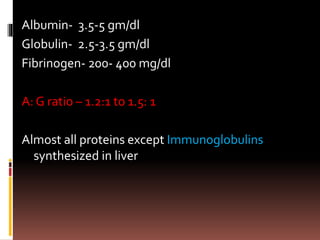
Albumin- 3.5-5 gm/dl
Globulin- 2.5-3.5 gm/dl
Fibrinogen- 200- 400 mg/dl
A: G ratio – 1.2:1 to 1.5: 1
Almost all proteins except Immunoglobulins
synthesized in liver
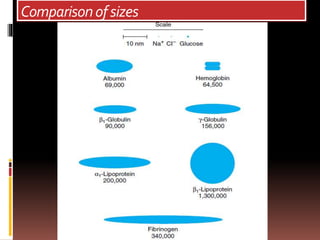
Comparisonofsizes
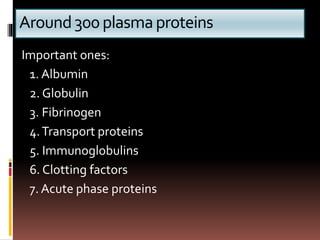
Around300plasmaproteins
Important ones:
1. Albumin
2. Globulin
3. Fibrinogen
4.Transport proteins
5. Immunoglobulins
6. Clotting factors
7. Acute phase proteins
Most abundant in plasma
Found in extra-vascular fluids
One polypeptide chain
585 AA; 17 disulfide bonds
Synthesized by hepatocytes
12g/day produced
T1/2 is 15-19 days
Over 80 allelic forms available
Functionsofalbumin
Exerts osmotic pressure- effective osmotic pressure
(25mm Hg)
80% exerted by albumin
Transport- Bilirubin
NEFA
Drugs
Steroid hormones
Calcium
Copper
Heavy metals
Buffering action- 16 His residues
Nutritional function-contributes to essential AA
pool
Clinicalsignificance
HYPERALBUMINEMIA: Rare and insignificant;
Dehydration
HYPOALBUMINEMIA:
Cirrhosis of liver
Malnutrition
Acute inflammation
Burns
Nephrotic syndrome
Albuminuria
Protein losing enteropathy
ANALBUMINEMIA: rare genetic defect; albumin<
0.5g/dl; mild edema
Pre-albumin
 Minor band running ahead of Albumin
 TBPA (Thyroxin binding prealbumin)
 RBPA(Retinol binding prealbumin)
 Low levels: Hepatitis
Early cirrhosis
Thyrotoxicosis
Deficiency of Zn
Globulins
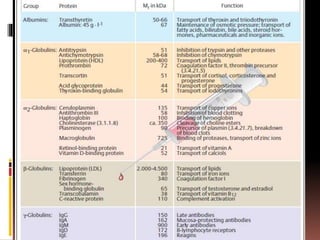
Alpha 1 Proteins
 Alpha-1-Lipoprotein-HDL
 Alpha-1-Antitrypsin
-- Protease inhibitor(Particularly Elastase) that
binds to and inactivates trypsin
– Deficiency leads to destruction of the alveolar
walls and is associated with pulmonary
deficiency- Emphysema
– Deficiency also seen in cirrhosis
– Alpha-1-antitrypsin is an acute phase protein and
is increased in acute episodes of tissue damage
 α1-Acid glycoprotein (orosomucoid) -
 45% carbohydrate
 Synthesized by hepatocytes
 Binds and inactivates lipophilic and basic
hormones e.g. Progesterone
 Acute phase protein
 ↑ levels- pregnancy, ulcerative colitis
• α1-Fetoprotein (AFP)
 Principal foetal protein, used to screen for foetal
abnormalities (neural tube defects)
 Tumor marker for hepatocellular and germ cell
carcinomas
 ↓levels- fetal trisomy 18 or 21
α2 Globulins
 Ceruloplasmin
 Cu containing
 6-8 Cu per molecule
 Regulation of oxidation-reductions, transport
and utilization of iron
 ↓level- Wilson’s hepatolenticular degeneration
 Transcortin/ Corticosteroid binding
globulin- Binds cortisol
↑ synthesis by estrogen
 Haptoglobin- Conservation of iron
 Thyroxin binding globulin- TransportsT3
&T4
 α2 Macroglobulin- natural inhibitor of
endopeptidase such as trypsin, chymotrypsin,
plasmin, thrombin- in vivo anticoagulant
- ↑level- Nephrotic syndrome, cirrhosis, collagen
disorder
- ↓ level- Myeloma, peptic ulcer
β-Globulin
 Haemopexin- Binds to free heme and
conserves
 Transferrin-Transports iron
↑ level- Fe deficiency anemia, Pregnancy
↓ level- Chr. Infections, malnutrition
 β2- Microglobulin- part of HLA
↑level- malignant lymphoid or myeloid
proliferation , Renal failure
 C-reactive protein (CRP)- reacts with c-
polysaccharide of cell wall of pneumococci
- ↑level- bacterial infections
-hs-CRP- predicts the risk of coronary disease
γ-Globulins
 Immunoglobulins - 5 major classes
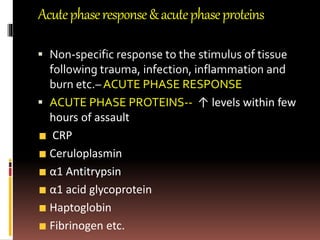
Acutephaseresponse&acutephaseproteins
 Non-specific response to the stimulus of tissue
following trauma, infection, inflammation and
burn etc.– ACUTE PHASE RESPONSE
 ACUTE PHASE PROTEINS-- ↑ levels within few
hours of assault
CRP
Ceruloplasmin
α1 Antitrypsin
α1 acid glycoprotein
Haptoglobin
Fibrinogen etc.
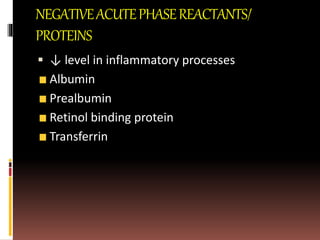
NEGATIVEACUTEPHASEREACTANTS/
PROTEINS
 ↓ level in inflammatory processes
Albumin
Prealbumin
Retinol binding protein
Transferrin
After silence, that which comes nearest to expressing the inexpressible is music.
Aldous Huxley
Plasma proteins

Plasma proteins

  • 1.
    PLASMA PROTEINS-II Prof. Dr.Viyatprajna Acharya
  • 2.
  • 3.
    Total blood volume:4.5-5 lit Whole blood left to clot centrifuged Supernatant is ‘SERUM’ Blood+ Anticoagulant centrifuged Supernatant is ‘PLASMA’ 55-60% of BLOOD- PLASMA Defibrinated plasma = Serum
  • 4.
     Total plasmaprotein content- 6-8 gm/dl  Hundreds of different proteins in plasma  Important ones: Albumin Globulin Fibrinogen Clotting factors Transferrin Ceruloplasmin; etc
  • 5.
    Albumin- 3.5-5 gm/dl Globulin-2.5-3.5 gm/dl Fibrinogen- 200- 400 mg/dl A: G ratio – 1.2:1 to 1.5: 1 Almost all proteins except Immunoglobulins synthesized in liver
  • 6.
  • 7.
    Around300plasmaproteins Important ones: 1. Albumin 2.Globulin 3. Fibrinogen 4.Transport proteins 5. Immunoglobulins 6. Clotting factors 7. Acute phase proteins
  • 10.
    Most abundant inplasma Found in extra-vascular fluids One polypeptide chain 585 AA; 17 disulfide bonds Synthesized by hepatocytes 12g/day produced T1/2 is 15-19 days Over 80 allelic forms available
  • 11.
    Functionsofalbumin Exerts osmotic pressure-effective osmotic pressure (25mm Hg) 80% exerted by albumin Transport- Bilirubin NEFA Drugs Steroid hormones Calcium Copper Heavy metals
  • 12.
    Buffering action- 16His residues Nutritional function-contributes to essential AA pool
  • 13.
    Clinicalsignificance HYPERALBUMINEMIA: Rare andinsignificant; Dehydration HYPOALBUMINEMIA: Cirrhosis of liver Malnutrition Acute inflammation Burns Nephrotic syndrome Albuminuria Protein losing enteropathy ANALBUMINEMIA: rare genetic defect; albumin< 0.5g/dl; mild edema
  • 14.
    Pre-albumin  Minor bandrunning ahead of Albumin  TBPA (Thyroxin binding prealbumin)  RBPA(Retinol binding prealbumin)  Low levels: Hepatitis Early cirrhosis Thyrotoxicosis Deficiency of Zn
  • 15.
  • 16.
    Alpha 1 Proteins Alpha-1-Lipoprotein-HDL  Alpha-1-Antitrypsin -- Protease inhibitor(Particularly Elastase) that binds to and inactivates trypsin – Deficiency leads to destruction of the alveolar walls and is associated with pulmonary deficiency- Emphysema – Deficiency also seen in cirrhosis – Alpha-1-antitrypsin is an acute phase protein and is increased in acute episodes of tissue damage
  • 17.
     α1-Acid glycoprotein(orosomucoid) -  45% carbohydrate  Synthesized by hepatocytes  Binds and inactivates lipophilic and basic hormones e.g. Progesterone  Acute phase protein  ↑ levels- pregnancy, ulcerative colitis • α1-Fetoprotein (AFP)  Principal foetal protein, used to screen for foetal abnormalities (neural tube defects)  Tumor marker for hepatocellular and germ cell carcinomas  ↓levels- fetal trisomy 18 or 21
  • 18.
    α2 Globulins  Ceruloplasmin Cu containing  6-8 Cu per molecule  Regulation of oxidation-reductions, transport and utilization of iron  ↓level- Wilson’s hepatolenticular degeneration
  • 19.
     Transcortin/ Corticosteroidbinding globulin- Binds cortisol ↑ synthesis by estrogen  Haptoglobin- Conservation of iron  Thyroxin binding globulin- TransportsT3 &T4  α2 Macroglobulin- natural inhibitor of endopeptidase such as trypsin, chymotrypsin, plasmin, thrombin- in vivo anticoagulant - ↑level- Nephrotic syndrome, cirrhosis, collagen disorder - ↓ level- Myeloma, peptic ulcer
  • 20.
    β-Globulin  Haemopexin- Bindsto free heme and conserves  Transferrin-Transports iron ↑ level- Fe deficiency anemia, Pregnancy ↓ level- Chr. Infections, malnutrition  β2- Microglobulin- part of HLA ↑level- malignant lymphoid or myeloid proliferation , Renal failure
  • 21.
     C-reactive protein(CRP)- reacts with c- polysaccharide of cell wall of pneumococci - ↑level- bacterial infections -hs-CRP- predicts the risk of coronary disease
  • 22.
  • 23.
    Acutephaseresponse&acutephaseproteins  Non-specific responseto the stimulus of tissue following trauma, infection, inflammation and burn etc.– ACUTE PHASE RESPONSE  ACUTE PHASE PROTEINS-- ↑ levels within few hours of assault CRP Ceruloplasmin α1 Antitrypsin α1 acid glycoprotein Haptoglobin Fibrinogen etc.
  • 24.
    NEGATIVEACUTEPHASEREACTANTS/ PROTEINS  ↓ levelin inflammatory processes Albumin Prealbumin Retinol binding protein Transferrin
  • 25.
    After silence, thatwhich comes nearest to expressing the inexpressible is music. Aldous Huxley