PLANTS
Name all the plants you can think of…
What do these all have in common?

Chapter 9
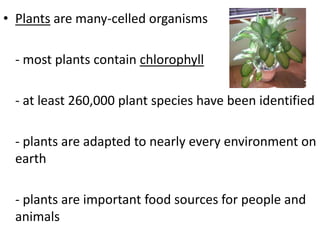
• Plants are many-celled organisms
- most plants contain chlorophyll
- at least 260,000 plant species have been identified

- plants are adapted to nearly every environment on
earth
- plants are important food sources for people and
animals
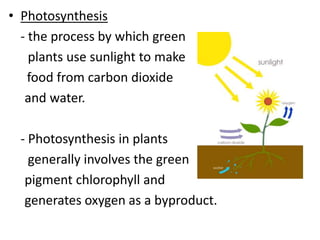
• Photosynthesis
- the process by which green
plants use sunlight to make
food from carbon dioxide
and water.

- Photosynthesis in plants
generally involves the green
pigment chlorophyll and
generates oxygen as a byproduct.
PLANT CELLS:
• Plant cells have:
- a cell membrane
- a nucleus and other organelles
- a cell wall
- chlorophyll – the green pigment used in
photosynthesis
- a central vacuole which
regulates the water
content of the cell
• Some plants also contain carotenoids
- Carotenoids are red, yellow or orange pigments
that are also used in photosynthesis
• PARTS:
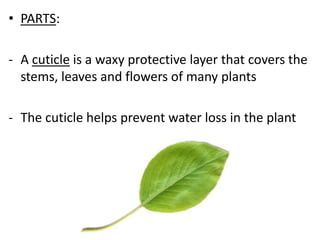
- A cuticle is a waxy protective layer that covers the
stems, leaves and flowers of many plants
- The cuticle helps prevent water loss in the plant
• Cellulose is a chemical compound made out of
sugar
- cellulose forms tangled fibers in cell walls and
provides structure and support
• Plants can be categorized as vascular or
nonvascular

• Vascular plants have tubelike
structures that carry water and
nutrients throughout the plant
• Nonvascular plants do not have the tubelike
structures
• Nonvascular plants use other ways to move
water and nutrients
• Nonvascular plants have rhizoids instead of roots.
• Rhizoids are structures that anchor the plants
where they grow
• Most nonvascular plants are classified as mosses
• Botany is the science of studying plants.

• In the late 1700s, Swedish
botanist Carolus Linnaeus
developed a system of
classifying living things,
using many different
characteristics
PARTS OF A PLANT
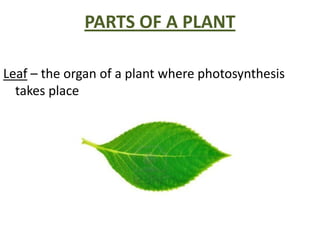
Leaf – the organ of a plant where photosynthesis
takes place
• Stem – support the branches, leaves, and
reproductive structures
Roots – act as anchors for a growing plant, holding
it in place.
- Water and substances enter a plant through
its roots.
Flower – the part of certain plants that develop
into fruit
- Flowering plants are called agiosperms
• Gymnosperms are vascular plants that produce
seeds that are NOT protected by fruit.
• Gymnosperms have no flowers
• These plants include
conifers, such as pine trees,
fir trees, and spruce –
all are common
evergreen trees
• In a seed plant, there are three tissues which
make up the vascular system:
- xylem - conducts water and dissolved nutrients
upward from the root and also helps to form
the stem
- phloem - conducts sugars and other metabolic
products downward from the leaves.
- cambium - a thin layer between the xylem and
phloem of most vascular plants that gives rise
to new cells and is responsible for secondary
growth.
• In a seed plant, some spores develop into pollen
• A pollen grain is a small structure produced by
the male seed plant
• The transfer of pollen grains to reproduce is
called pollination
• Pollen can be transferred by gravity, wind, water,
animals or insects
*FLOWERS*
- Flowers have four main parts: petals, sepals,
stamen and pistils
• Petals are the colorful parts
• Sepals are the leaflike parts outside the petals.
They form the outside of the flower bud
• Stamen is the male reproductive part; pollen is
produced in the stamen
• Pistil is the female reproductive organ; the ovary
is the base of the pistil where ovules are found
– ovules produce eggs, or reproductive cells
Plants power point

Plants power point

  • 1.
    PLANTS Name all theplants you can think of… What do these all have in common? Chapter 9
  • 2.
    • Plants aremany-celled organisms - most plants contain chlorophyll - at least 260,000 plant species have been identified - plants are adapted to nearly every environment on earth - plants are important food sources for people and animals
  • 3.
    • Photosynthesis - theprocess by which green plants use sunlight to make food from carbon dioxide and water. - Photosynthesis in plants generally involves the green pigment chlorophyll and generates oxygen as a byproduct.
  • 4.
  • 5.
    • Plant cellshave: - a cell membrane - a nucleus and other organelles - a cell wall - chlorophyll – the green pigment used in photosynthesis - a central vacuole which regulates the water content of the cell
  • 6.
    • Some plantsalso contain carotenoids - Carotenoids are red, yellow or orange pigments that are also used in photosynthesis
  • 7.
    • PARTS: - Acuticle is a waxy protective layer that covers the stems, leaves and flowers of many plants - The cuticle helps prevent water loss in the plant
  • 8.
    • Cellulose isa chemical compound made out of sugar - cellulose forms tangled fibers in cell walls and provides structure and support
  • 9.
    • Plants canbe categorized as vascular or nonvascular • Vascular plants have tubelike structures that carry water and nutrients throughout the plant
  • 10.
    • Nonvascular plantsdo not have the tubelike structures • Nonvascular plants use other ways to move water and nutrients
  • 11.
    • Nonvascular plantshave rhizoids instead of roots. • Rhizoids are structures that anchor the plants where they grow • Most nonvascular plants are classified as mosses
  • 12.
    • Botany isthe science of studying plants. • In the late 1700s, Swedish botanist Carolus Linnaeus developed a system of classifying living things, using many different characteristics
  • 14.
    PARTS OF APLANT Leaf – the organ of a plant where photosynthesis takes place
  • 15.
    • Stem –support the branches, leaves, and reproductive structures
  • 16.
    Roots – actas anchors for a growing plant, holding it in place. - Water and substances enter a plant through its roots.
  • 17.
    Flower – thepart of certain plants that develop into fruit - Flowering plants are called agiosperms
  • 18.
    • Gymnosperms arevascular plants that produce seeds that are NOT protected by fruit. • Gymnosperms have no flowers • These plants include conifers, such as pine trees, fir trees, and spruce – all are common evergreen trees
  • 19.
    • In aseed plant, there are three tissues which make up the vascular system: - xylem - conducts water and dissolved nutrients upward from the root and also helps to form the stem - phloem - conducts sugars and other metabolic products downward from the leaves. - cambium - a thin layer between the xylem and phloem of most vascular plants that gives rise to new cells and is responsible for secondary growth.
  • 22.
    • In aseed plant, some spores develop into pollen • A pollen grain is a small structure produced by the male seed plant • The transfer of pollen grains to reproduce is called pollination • Pollen can be transferred by gravity, wind, water, animals or insects
  • 24.
    *FLOWERS* - Flowers havefour main parts: petals, sepals, stamen and pistils
  • 25.
    • Petals arethe colorful parts • Sepals are the leaflike parts outside the petals. They form the outside of the flower bud • Stamen is the male reproductive part; pollen is produced in the stamen • Pistil is the female reproductive organ; the ovary is the base of the pistil where ovules are found – ovules produce eggs, or reproductive cells