Welcome
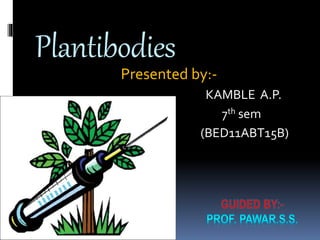
Plantibodies 
Presented by:- 
KAMBLE A.P. 
7th sem 
(BED11ABT15B)
What are plantibodies ?? 
 A plantibody is a Antibody 
produce by genetically modified 
plant. 
 Antibody are part of Animal 
immune system, and produce in 
plant by transforming them with 
Antibody genes from Animals.
Cont…. 
 This was first done in 1989, 
with a mouse antibody made 
by Tobacco plant. 
 Although plant do not 
naturally make antibody, 
Plantibody have been shown 
to function in the same way 
as normal antibodies.
Antibody factories 
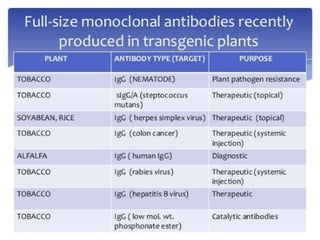
 Plant are being used as antibody factories, 
using their endomembrane and secretory 
system to produce large amount of clinically 
visible proteins. 
 Antibodies can be expressed in plant as either 
full –length molecules or as smaller fragment.
Methods for plantibody production 
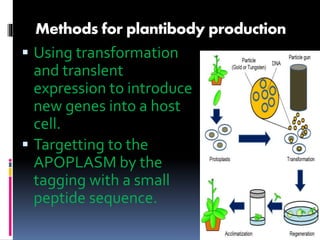
 Using transformation 
and translent 
expression to introduce 
new genes into a host 
cell. 
 Targetting to the 
APOPLASM by the 
tagging with a small 
peptide sequence.
Cont…. 
 Single molecule added to target the 
protein to Endoplasmic Reticulum 
(E.R); to ensure correct folding of the 
protein. 
 Higher protein level obtained in the 
E.R and the apoplasm as compared to 
the crystol.
Purification of plantibodies 
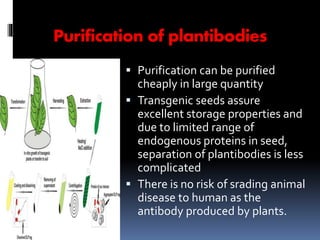
 Purification can be purified 
cheaply in large quantity 
 Transgenic seeds assure 
excellent storage properties and 
due to limited range of 
endogenous proteins in seed, 
separation of plantibodies is less 
complicated 
 There is no risk of srading animal 
disease to human as the 
antibody produced by plants.
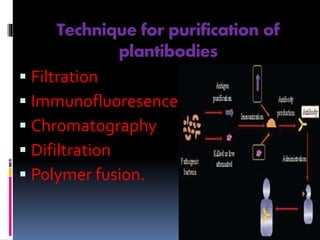
Technique for purification of 
plantibodies 
 Filtration 
 Immunofluoresence 
 Chromatography 
 Difiltration 
 Polymer fusion.
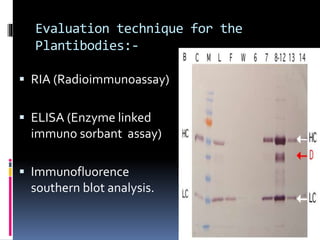
Evaluation technique for the 
Plantibodies:- 
 RIA (Radioimmunoassay) 
 ELISA (Enzyme linked 
immuno sorbant assay) 
 Immunofluorence 
southern blot analysis.
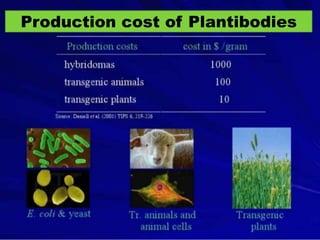
Production cost of Plantibodies
Advantage:- 
 Large-scale production of plantibodies for 
immunotherapy 
 Benificial to human, plants as well as 
economy. 
 No risk of transmitting diseases to human 
 Eliminate the toxic compound;
Application:- 
 Antibodies generated by plant are 
cheaper, easier to manage, and safer 
to use than those obtained from 
animals. 
 Treatment of illness such as immune 
disorder, cancer and inflammatory 
disease. 
 Plantibodies are close to passing 
clinical trail.
Tobacco-derived ‘’PLANTIBODIES’’ enter the fight 
against Ebola.
Plantibodies.

Plantibodies.

  • 1.
  • 2.
    Plantibodies Presented by:- KAMBLE A.P. 7th sem (BED11ABT15B)
  • 3.
    What are plantibodies??  A plantibody is a Antibody produce by genetically modified plant.  Antibody are part of Animal immune system, and produce in plant by transforming them with Antibody genes from Animals.
  • 4.
    Cont….  Thiswas first done in 1989, with a mouse antibody made by Tobacco plant.  Although plant do not naturally make antibody, Plantibody have been shown to function in the same way as normal antibodies.
  • 5.
    Antibody factories Plant are being used as antibody factories, using their endomembrane and secretory system to produce large amount of clinically visible proteins.  Antibodies can be expressed in plant as either full –length molecules or as smaller fragment.
  • 7.
    Methods for plantibodyproduction  Using transformation and translent expression to introduce new genes into a host cell.  Targetting to the APOPLASM by the tagging with a small peptide sequence.
  • 8.
    Cont….  Singlemolecule added to target the protein to Endoplasmic Reticulum (E.R); to ensure correct folding of the protein.  Higher protein level obtained in the E.R and the apoplasm as compared to the crystol.
  • 9.
    Purification of plantibodies  Purification can be purified cheaply in large quantity  Transgenic seeds assure excellent storage properties and due to limited range of endogenous proteins in seed, separation of plantibodies is less complicated  There is no risk of srading animal disease to human as the antibody produced by plants.
  • 10.
    Technique for purificationof plantibodies  Filtration  Immunofluoresence  Chromatography  Difiltration  Polymer fusion.
  • 11.
    Evaluation technique forthe Plantibodies:-  RIA (Radioimmunoassay)  ELISA (Enzyme linked immuno sorbant assay)  Immunofluorence southern blot analysis.
  • 12.
    Production cost ofPlantibodies
  • 13.
    Advantage:-  Large-scaleproduction of plantibodies for immunotherapy  Benificial to human, plants as well as economy.  No risk of transmitting diseases to human  Eliminate the toxic compound;
  • 14.
    Application:-  Antibodiesgenerated by plant are cheaper, easier to manage, and safer to use than those obtained from animals.  Treatment of illness such as immune disorder, cancer and inflammatory disease.  Plantibodies are close to passing clinical trail.
  • 15.