MOLECULAR FARMING
SUNIL KUMAR M
DEFINITION
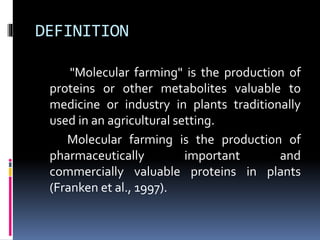
"Molecular farming" is the production of
proteins or other metabolites valuable to
medicine or industry in plants traditionally
used in an agricultural setting.
Molecular farming is the production of
pharmaceutically important and
commercially valuable proteins in plants
(Franken et al., 1997).
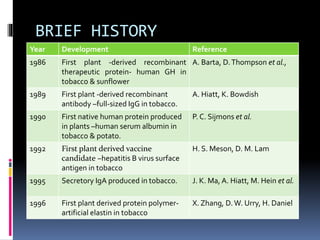
BRIEF HISTORY
Year Development Reference
1986 First plant -derived recombinant
therapeutic protein- human GH in
tobacco & sunflower
A. Barta, D.Thompson et al.,
1989 First plant -derived recombinant
antibody –full-sized IgG in tobacco.
A. Hiatt, K. Bowdish
1990 First native human protein produced
in plants –human serum albumin in
tobacco & potato.
P. C. Sijmons et al.
1992 First plant derived vaccine
candidate –hepatitis B virus surface
antigen in tobacco
H. S. Meson, D. M. Lam
1995 Secretory IgA produced in tobacco. J. K. Ma, A. Hiatt, M. Hein et al.
1996 First plant derived protein polymer-
artificial elastin in tobacco
X. Zhang, D.W. Urry, H. Daniel
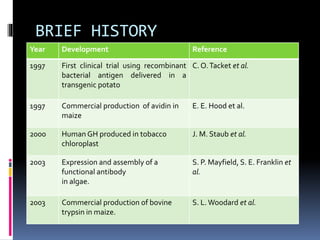
BRIEF HISTORY
Year Development Reference
1997 First clinical trial using recombinant
bacterial antigen delivered in a
transgenic potato
C. O.Tacket et al.
1997 Commercial production of avidin in
maize
E. E. Hood et al.
2000 Human GH produced in tobacco
chloroplast
J. M. Staub et al.
2003 Expression and assembly of a
functional antibody
in algae.
S. P. Mayfield, S. E. Franklin et
al.
2003 Commercial production of bovine
trypsin in maize.
S. L.Woodard et al.
WHY PLANTS
According to Horn et al., 2004
 Significantly lower production costs than with
transgenic animals, fermentation or bioreactors;
 Infrastructure and expertise already exists for the
planting, harvesting and processing of plant
material;
 Plants do not contain known human pathogens
(such as virions, etc.)That could contaminate the
final product;
 Plant cells can direct proteins to environments
that reduce degradation and therefore increase
stability.
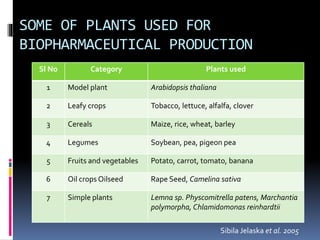
SOME OF PLANTS USED FOR
BIOPHARMACEUTICAL PRODUCTION
Sl No Category Plants used
1 Model plant Arabidopsis thaliana
2 Leafy crops Tobacco, lettuce, alfalfa, clover
3 Cereals Maize, rice, wheat, barley
4 Legumes Soybean, pea, pigeon pea
5 Fruits and vegetables Potato, carrot, tomato, banana
6 Oil crops Oilseed Rape Seed, Camelina sativa
7 Simple plants Lemna sp. Physcomitrella patens, Marchantia
polymorpha, Chlamidomonas reinhardtii
Sibila Jelaska et al. 2005
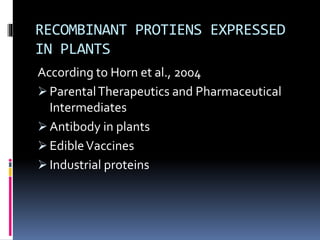
RECOMBINANT PROTIENS EXPRESSED
IN PLANTS
According to Horn et al., 2004
 ParentalTherapeutics and Pharmaceutical
Intermediates
 Antibody in plants
 EdibleVaccines
 Industrial proteins
EDIBLE VACCINES
 Concept of edible vaccine got impetus after
expression of hepatitis B surface antigen in
tobacco plants (Mason et al., 1992)
 The first reported edible vaccine was a
surface protein from streptococcus expressed
in tobacco leaves. (Mason and Arntzen, 1995)
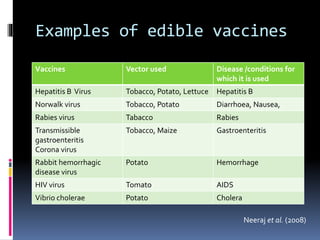
Examples of edible vaccines
Vaccines Vector used Disease /conditions for
which it is used
Hepatitis B Virus Tobacco, Potato, Lettuce Hepatitis B
Norwalk virus Tobacco, Potato Diarrhoea, Nausea,
Rabies virus Tabacco Rabies
Transmissible
gastroenteritis
Corona virus
Tobacco, Maize Gastroenteritis
Rabbit hemorrhagic
disease virus
Potato Hemorrhage
HIV virus Tomato AIDS
Vibrio cholerae Potato Cholera
Neeraj et al. (2008)
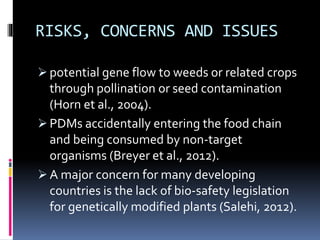
RISKS, CONCERNS AND ISSUES
 potential gene flow to weeds or related crops
through pollination or seed contamination
(Horn et al., 2004).
 PDMs accidentally entering the food chain
and being consumed by non-target
organisms (Breyer et al., 2012).
 A major concern for many developing
countries is the lack of bio-safety legislation
for genetically modified plants (Salehi, 2012).
Conclusion
References
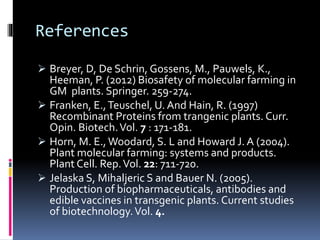
 Breyer, D, De Schrin, Gossens, M., Pauwels, K.,
Heeman, P. (2012) Biosafety of molecular farming in
GM plants. Springer. 259-274.
 Franken, E.,Teuschel, U. And Hain, R. (1997)
Recombinant Proteins from trangenic plants. Curr.
Opin. Biotech.Vol. 7 : 171-181.
 Horn, M. E.,Woodard, S. L and Howard J. A (2004).
Plant molecular farming: systems and products.
Plant Cell. Rep.Vol. 22: 711-720.
 Jelaska S, Mihaljeric S and Bauer N. (2005).
Production of biopharmaceuticals, antibodies and
edible vaccines in transgenic plants. Current studies
of biotechnology.Vol. 4.
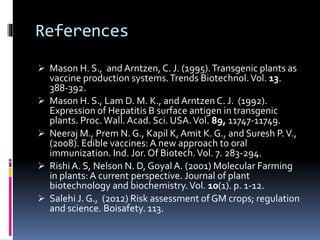
References
 Mason H. S., and Arntzen, C. J. (1995).Transgenic plants as
vaccine production systems.Trends Biotechnol.Vol. 13.
388-392.
 Mason H. S., Lam D. M. K., and Arntzen C. J. (1992).
Expression of Hepatitis B surface antigen in transgenic
plants. Proc. Wall. Acad. Sci. USA.Vol. 89, 11747-11749.
 Neeraj M., Prem N. G., Kapil K, Amit K. G., and Suresh P.V.,
(2008). Edible vaccines: A new approach to oral
immunization. Ind. Jor. Of Biotech.Vol. 7. 283-294.
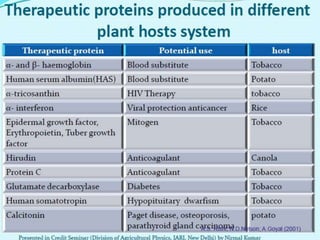
 Rishi A. S, Nelson N. D, Goyal A. (2001) Molecular Farming
in plants: A current perspective. Journal of plant
biotechnology and biochemistry.Vol. 10(1). p. 1-12.
 Salehi J. G., (2012) Risk assessment of GM crops; regulation
and science. Boisafety. 113.

Molecular farming

  • 1.
  • 2.
    DEFINITION "Molecular farming" isthe production of proteins or other metabolites valuable to medicine or industry in plants traditionally used in an agricultural setting. Molecular farming is the production of pharmaceutically important and commercially valuable proteins in plants (Franken et al., 1997).
  • 3.
    BRIEF HISTORY Year DevelopmentReference 1986 First plant -derived recombinant therapeutic protein- human GH in tobacco & sunflower A. Barta, D.Thompson et al., 1989 First plant -derived recombinant antibody –full-sized IgG in tobacco. A. Hiatt, K. Bowdish 1990 First native human protein produced in plants –human serum albumin in tobacco & potato. P. C. Sijmons et al. 1992 First plant derived vaccine candidate –hepatitis B virus surface antigen in tobacco H. S. Meson, D. M. Lam 1995 Secretory IgA produced in tobacco. J. K. Ma, A. Hiatt, M. Hein et al. 1996 First plant derived protein polymer- artificial elastin in tobacco X. Zhang, D.W. Urry, H. Daniel
  • 4.
    BRIEF HISTORY Year DevelopmentReference 1997 First clinical trial using recombinant bacterial antigen delivered in a transgenic potato C. O.Tacket et al. 1997 Commercial production of avidin in maize E. E. Hood et al. 2000 Human GH produced in tobacco chloroplast J. M. Staub et al. 2003 Expression and assembly of a functional antibody in algae. S. P. Mayfield, S. E. Franklin et al. 2003 Commercial production of bovine trypsin in maize. S. L.Woodard et al.
  • 5.
    WHY PLANTS According toHorn et al., 2004  Significantly lower production costs than with transgenic animals, fermentation or bioreactors;  Infrastructure and expertise already exists for the planting, harvesting and processing of plant material;  Plants do not contain known human pathogens (such as virions, etc.)That could contaminate the final product;  Plant cells can direct proteins to environments that reduce degradation and therefore increase stability.
  • 6.
    SOME OF PLANTSUSED FOR BIOPHARMACEUTICAL PRODUCTION Sl No Category Plants used 1 Model plant Arabidopsis thaliana 2 Leafy crops Tobacco, lettuce, alfalfa, clover 3 Cereals Maize, rice, wheat, barley 4 Legumes Soybean, pea, pigeon pea 5 Fruits and vegetables Potato, carrot, tomato, banana 6 Oil crops Oilseed Rape Seed, Camelina sativa 7 Simple plants Lemna sp. Physcomitrella patens, Marchantia polymorpha, Chlamidomonas reinhardtii Sibila Jelaska et al. 2005
  • 9.
    RECOMBINANT PROTIENS EXPRESSED INPLANTS According to Horn et al., 2004  ParentalTherapeutics and Pharmaceutical Intermediates  Antibody in plants  EdibleVaccines  Industrial proteins
  • 13.
    EDIBLE VACCINES  Conceptof edible vaccine got impetus after expression of hepatitis B surface antigen in tobacco plants (Mason et al., 1992)  The first reported edible vaccine was a surface protein from streptococcus expressed in tobacco leaves. (Mason and Arntzen, 1995)
  • 14.
    Examples of ediblevaccines Vaccines Vector used Disease /conditions for which it is used Hepatitis B Virus Tobacco, Potato, Lettuce Hepatitis B Norwalk virus Tobacco, Potato Diarrhoea, Nausea, Rabies virus Tabacco Rabies Transmissible gastroenteritis Corona virus Tobacco, Maize Gastroenteritis Rabbit hemorrhagic disease virus Potato Hemorrhage HIV virus Tomato AIDS Vibrio cholerae Potato Cholera Neeraj et al. (2008)
  • 15.
    RISKS, CONCERNS ANDISSUES  potential gene flow to weeds or related crops through pollination or seed contamination (Horn et al., 2004).  PDMs accidentally entering the food chain and being consumed by non-target organisms (Breyer et al., 2012).  A major concern for many developing countries is the lack of bio-safety legislation for genetically modified plants (Salehi, 2012).
  • 16.
  • 17.
    References  Breyer, D,De Schrin, Gossens, M., Pauwels, K., Heeman, P. (2012) Biosafety of molecular farming in GM plants. Springer. 259-274.  Franken, E.,Teuschel, U. And Hain, R. (1997) Recombinant Proteins from trangenic plants. Curr. Opin. Biotech.Vol. 7 : 171-181.  Horn, M. E.,Woodard, S. L and Howard J. A (2004). Plant molecular farming: systems and products. Plant Cell. Rep.Vol. 22: 711-720.  Jelaska S, Mihaljeric S and Bauer N. (2005). Production of biopharmaceuticals, antibodies and edible vaccines in transgenic plants. Current studies of biotechnology.Vol. 4.
  • 18.
    References  Mason H.S., and Arntzen, C. J. (1995).Transgenic plants as vaccine production systems.Trends Biotechnol.Vol. 13. 388-392.  Mason H. S., Lam D. M. K., and Arntzen C. J. (1992). Expression of Hepatitis B surface antigen in transgenic plants. Proc. Wall. Acad. Sci. USA.Vol. 89, 11747-11749.  Neeraj M., Prem N. G., Kapil K, Amit K. G., and Suresh P.V., (2008). Edible vaccines: A new approach to oral immunization. Ind. Jor. Of Biotech.Vol. 7. 283-294.  Rishi A. S, Nelson N. D, Goyal A. (2001) Molecular Farming in plants: A current perspective. Journal of plant biotechnology and biochemistry.Vol. 10(1). p. 1-12.  Salehi J. G., (2012) Risk assessment of GM crops; regulation and science. Boisafety. 113.