Molecular Farming
WHY
HO
W
WHAT
Learning Triangle
MOLECULAR FARMING is a
biotechnological program that includes
the Genetic modification of organisms
to produce Renewable raw materials,
Proteins and Metabolites for
commercial (industrial) and
pharmaceutical purposes.
Molecular farming is defined as the production of proteins or other metabolites valuable
to medicine or industry in plants traditionally used in an agricultural setting. (Abhishek Singh et al. 2021)
Molecular farming refers to the production, in transformed cells or transgenic organisms,
of recombinant proteins with potential therapeutic or commercial value. (Twyman et al. 2003)
Molecular farming involves the manipulation of the cell factory to produce a valuable
protein, often with therapeutic potential in humans. (Twyman et al. 2003)
 Molecular Pharming
 BioPharming
 Pharming
 Host as a Bioreactor
 Plant
 Animal
 Bacteria
 Fungi
 Algae
Timeline Overview
1986
Plant derived
recombinant
therapeutic
protein rhGH in
Tobacco &
Sunflower
(Barta et al.)
1990
Native human
protein produced
in plants (Human
serum albumin in
Tobacco & Potato)
(Sijmons et al.)
1995
Oral vaccine in
Potato
1989
Plant made
antibody IgG1 in
Tobacco
(Hiatt & Brwdish)
1992
Surface HBsAg in
Tobacco
(Meson & Lam)
1996
Plant derived
polymer – artificial
elastin in Tobacco
(Zhang et al.)
Fischer et al. (2013)
Timeline Overview
1998
Clinical trail of
plant derived
pharmaceutical
protein
2003
Commercial
production of
Bovine trypsin in
maize
(Woodard et al.)
2009
Glucocerebrosidas
e carrot
suspension cells
2000
HGH produced in
tobacco
chloroplast
(Staub et al.)
2006
Commercialized
plant based
antibody
Plant based
vaccine approved
by USDA
2012
Plant based
vaccine for human
trail
Fischer et al. (2013)
Timeline Overview
2015
Ebola RIC based
vaccine in Tobacco
plants
2017
Anthrax Decoy
Fusion protein in N.
banthamiana
Fischer et al. (2013)
STRATEGY
Clone a gene of
interest
Grow the host
species, recover
biomass
Deliver product
of interest
Transform the host
platform species
Purify product of
interest
Isolate the gene
Clinical trail &
Licensing
Molecular
Farming
HOSTS
BACTERIA UNICELLULAR ALGAE
YEASTS
CELL CULTURES WHOLE ANIMALS
WHOLE PLANTS
Contaminating endotoxin difficult to remove
Recombinant proteins with inclusion bodies
Labour and cost intensive refolding in vitro
necessary
Lower scalability
Do not produce glycosylated full – sized
antibodies
Preferred to the production of small, a
glycosylated proteins like Insulin, Interferon-β
BACTERIA
Fischer et al. 2000
Delicate nature of mammalian cells
Human pathogens and oncogenes
Require expensive equipment and media
Limited by legal and ethical restriction
Scaling up problems
ANIMAL BASED SYSTEM
Fischer et al. 2000
transgenic animals and bioreactors.
Infrastructure & expertise already exists for the
planting, harvesting and processing of plant
material.
Plant contain no known human pathogens.
Higher plants generally synthesize proteins from
eukaryotes with correct folding, glycosylation
activity.
Plant cells can direct proteins to environments
that reduce degradation and therefore increase
stability.
Low ethical concerns.
Easier purification (e.g. antibodies, serum
proteins)
Versatile (Production of broad diversity of
proteins)
Take more time to develop a transgene
PLANT BASED SYSTEM
Khan et al. 2020
Expression Systems for PMF
Transgenic plants
Plant – Cell Suspension culture
Transient expression system
Transplastomic plants
Hydroponic culture
Transgenic plants
40%
30%
20%
10%
 Foreign DNA incorporated into the nuclear genome using
 Agrobacterium tumefaciens
 Particle bombardment
 Most common
 Long term non-refrigerated storage
 Scalability
× More ‘gene to protein’ time
× Biosafety concerns
Plant – Cell Suspension culture
40%
30%
10%
 Culture derived from: a) Transgenic explants b)
Transformation after desegregation.
 Recombinant protein localization depends on a) Presence
of targeting/ leader peptides in the recombinant protein
b)Permeability of plant cell wall for macromolecules.
× Containment & production under GMP procedure.
× Low scale up capacity
Transplastomic plants
40%
30%
20%
10%
 DNA introduced into chloroplast genome
 High transgene copy number
 No gene silencing
 Recombinant protein accumulate in chloroplast
 Natural transgene containment
× Long term storage not possible
× Long development time
× Limited use for production of therapeutic glycoproteins
Hydroponic culture
40%
10%
 A signal peptide is attached to the recombinant protein
directing it to the secretory pathway
 Protein can be recovered from the root exudates
(Rhizosecretion) or leaf guttation fluid (Phylosecretion)
 Technology being developed by the US biotechnology
company Phytomedics Inc.
 Purification is easier
 Reduced fear of unintentional environmental release
× Expensive to operate hydroponic facilities
COMPARISON
System
Product
Quality
Production
cost
Scale up
capacity
Time Glycosylation Storage
Contamination
Risk
Ethical issue
Transgenic
Plants
High Low Very High High
Minor
Differences
Easy / RT Low Existing
Plant cell
cultures
High Medium Medium Medium
Minor
Differences
Medium / -
20°C
Low Low
Mammalian
cell cultures
Very High High Very Low High Correct Difficult / N2
Viruses,
Oncogenes
Existing
Transgenic
animals
Very High High Low High Correct Difficult
Viruses,
Oncogenes High
Yeast Medium Medium High Medium Incorrect
Medium / -
20°C Low Low
Bacteria Low Low High Low None
Medium / -
20°C Endotoxins Low
01
02
BIOPOLYMERS
03
04
05
APPLICAT
IONS
Monoclonal Antibody
= Antibody that is produced by genetically engineered Plant
i.e. insertion of antibodies into a transgenic plant,
referred to as Plantibody
= Biolex (North Carolina) is the trademark for Monoclonal
antibody
= No risk of spreading diseases to humans
= Hiatt et. al. (1989): First time demonstrate the production
of antibodies in tobacco as therapeutic protein and plant
protection against diseases
= Daniel (2002) was reported that due to the lack of
glycosylation, chloroplast transformation is ideal for
single-chain fragment (scFv)
= All current therapeutic antibodies are of the IgG class
Edible Vaccine
= A vaccine developed by engineering a gene for an
antigenic protein into a plant.
= The concept of edible vaccine got incentive after
Arntzen et al. (1992) expressed hepatitis B antigen
in tobacco.
= Expressed in the edible portion in tubers, fruits
etc.
= Due to ingestion, it releases the protein and get
recognized by the immune system.
= Stimulate both humoral and mucosal immunity.
= It is feasible to administer unlike injection.
= Heat stable no need of refrigeration.
Tobacco, Potato, Banana, Tomato, Rice, Soybean, Carrot, Wheat, Corn, Alfalfa
THERAPEUTIC
PRODUCTS
= Insulin
= Interferon
= Lactoferrin
= Recombinant somatotrophin
= Recombinant Gonadotrophins
NUTRACEUTICALS
= Dr. Stephan coined term Nutraceuticals in 1890
= Food with extra nutritional value
= Example: Golden rice , Omega rich fats. Polyphenols
rich Fruits
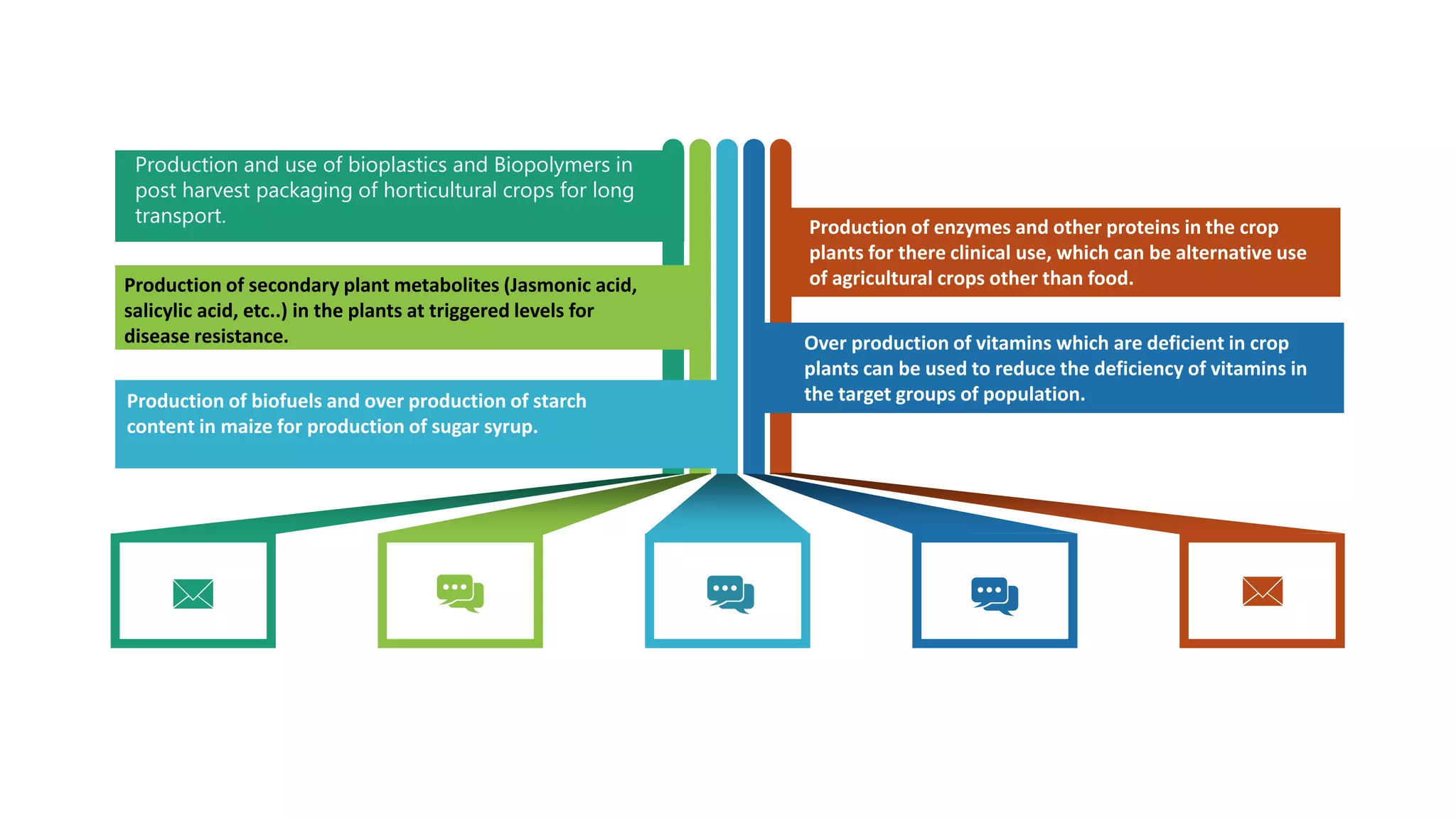
Production of enzymes and other proteins in the crop
plants for there clinical use, which can be alternative use
of agricultural crops other than food.
Over production of vitamins which are deficient in crop
plants can be used to reduce the deficiency of vitamins in
the target groups of population.
Production and use of bioplastics and Biopolymers in
post harvest packaging of horticultural crops for long
transport.
Production of secondary plant metabolites (Jasmonic acid,
salicylic acid, etc..) in the plants at triggered levels for
disease resistance.
Production of biofuels and over production of starch
content in maize for production of sugar syrup.
MF Products
In the USA, the DARPA initiative challenged plant biotechnology companies to develop strategies for
the large-scale manufacture of influenza vaccines, resulting in a successful Phase I clinical trial
In Europe the Pharma-Planta academic consortium gained regulatory approval for a plant-derived
monoclonal antibody and completed a first-in-human phase I clinical trial
Dutch pharmaceutical company Synthon acquired the assets of Biolex Therapeutics, an established
Molecular Pharming company with several clinical candidates produced in their proprietary LEX
system based on aquatic plants.
The Israeli biotechnology company Protalix Biotherapeutics won FDA approval for the commercial
release of a recombinant form of the enzyme glucocerebrosidase produced in carrot cells, the first
plant biotechnology-derived biopharmaceutical in the world approved for the market
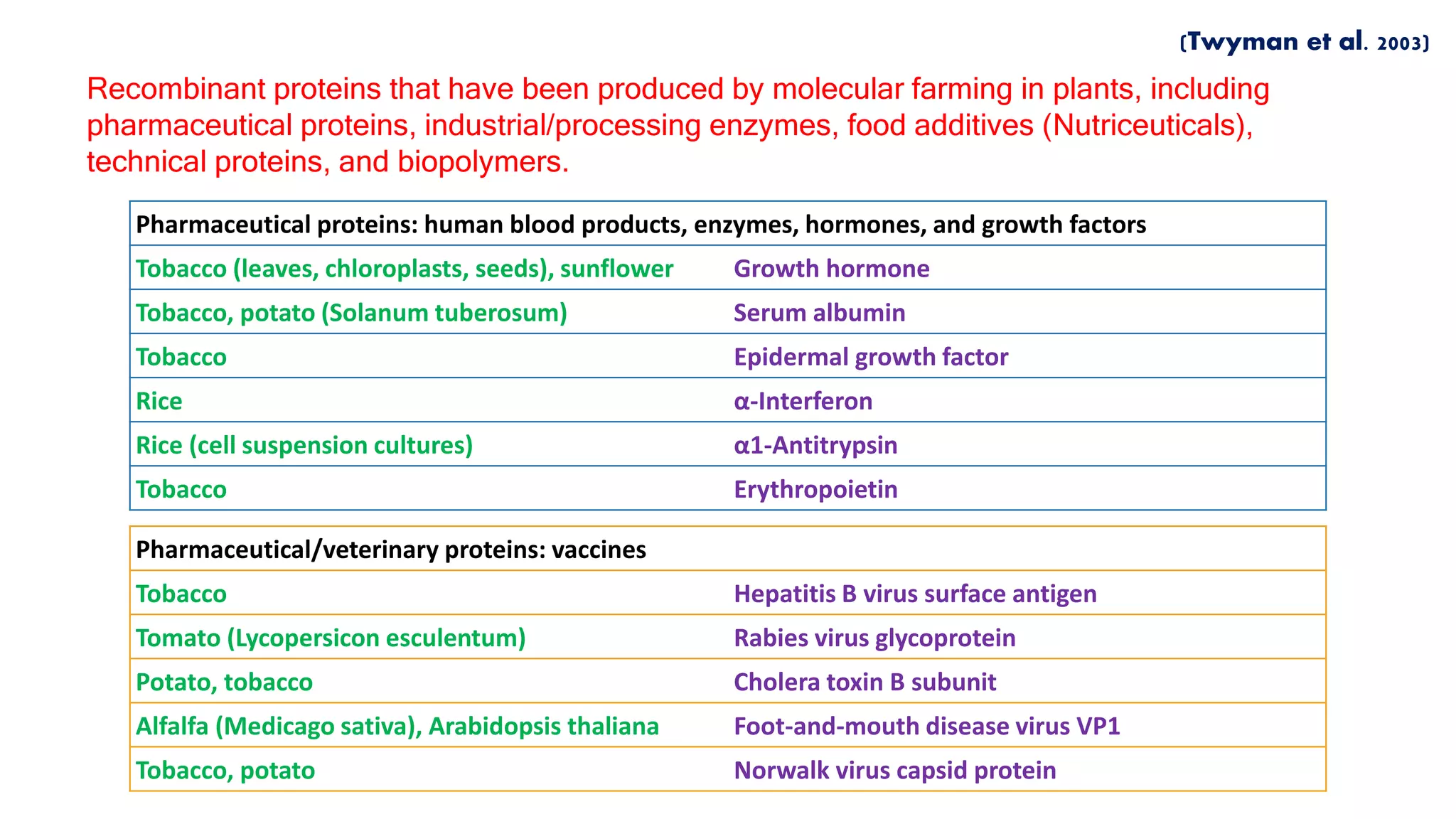
Pharmaceutical proteins: human blood products, enzymes, hormones, and growth factors
Tobacco (leaves, chloroplasts, seeds), sunflower Growth hormone
Tobacco, potato (Solanum tuberosum) Serum albumin
Tobacco Epidermal growth factor
Rice α-Interferon
Rice (cell suspension cultures) α1-Antitrypsin
Tobacco Erythropoietin
Recombinant proteins that have been produced by molecular farming in plants, including
pharmaceutical proteins, industrial/processing enzymes, food additives (Nutriceuticals),
technical proteins, and biopolymers.
Pharmaceutical/veterinary proteins: vaccines
Tobacco Hepatitis B virus surface antigen
Tomato (Lycopersicon esculentum) Rabies virus glycoprotein
Potato, tobacco Cholera toxin B subunit
Alfalfa (Medicago sativa), Arabidopsis thaliana Foot-and-mouth disease virus VP1
Tobacco, potato Norwalk virus capsid protein
(Twyman et al. 2003)
Pharmaceutical proteins: recombinant antibodies
Tobacco VH domain, substance P
Tobacco IgG, scFv, human creatine kinase
Tobacco (cell suspension culture) ScFv-immunotoxin, CD-40
Soybean (Glycine max) Humanized IgG, herpes simplex virus
Tobacco, rice, wheat (Triticum aestivum), pea
(Pisum sativum) (whole plants and culture
systems)
ScFv, carcinoembryonic antigen
Tobacco IgG, IgA, Streptococcus mutans adhesin
Tobacco (virus-infected plants) ScFv, 38C13 murine B-cell lymphoma
(Twyman et al. 2003)
Industrial/processing enzymes
Alfalfa, barley (Hordeum vulgare), potato, tobacco 1,4-β-d-endoglucanase
Barley, canola (Brassica napus), tobacco Xylanase
Canola, rice, tobacco, wheat Phytase
Tobacco, bean (Phaseolus vulgaris), pea α-Amylase
Food additives (nutriceuticals)
Potato β-Casein
Potato Lactoferrin
Technical proteins
Maize (zea mays) Avidin
Maize Aprotinin
Maize β-Glucuronidase
Biopolymers
Tobacco Synthetic elastin
Tobacco Human collagen
Tobacco, potato Synthetic spider silk
(Twyman et al. 2003)
B I O S A F E T Y
I S S U E S
CHALLENGES
Applied to all transgenic plants
Gene and Protein Pollution Product safety
Applied to all pharmaceutical products
Vertical gene Transfer Horizontal gene transfer
VGT is the movement of DNA between plants that are at
least partially sexually compatible
Most prevalent form of transgene pollution
Occurs predominantly via dispersal of transgenic pollen
Also by seed dispersal
Herbicide resistance gene have introgressed form
transgenic oil seed rape to its weedy cousin Brassica
campestris by hybridization (Mikkelsen et al., 1996)
HGT is the movement of genes between species that are not
sexually compatible and may belong to very different
taxonomic groups
The process is common in bacteria, resulting in transfer of
plasmid-borne antibiotic resistance traits
A. tumefacience and related species represent a special case
Antibiotic resistance marker and transgenes encoding
pharmaceutical proteins could be acquired by human
pathogens
Transgene pollution is the spread of
transgenes beyond the intended
genetically modified species by
natural gene flow mechanisms
Possible Solutions to Transgene pollution
 Minimum required genetic modification
 Elimination of non essential genetic information
 Containment of essential transgenes
 Alternative production system
• Transient expression
• Plant suspension culture in sealed, sterile reactor (Dora, 2000)
CONTAINMENTS
Biological
Physical or Artificial
 Maintained in green house
 Concealing flowers/ fruits in
plastic bags in field
 Isolation
 Barrier crops
o Use of self pollinating crops, exploitation of
cleistogamy
o Asynchronous flowering times, a typical
growing seasons
o Use of crops lacking wild relatives that are
compatible for hybridization
o Strengthening of hybridization barriers
between compatible species
o Apomixis
o Interference with flower development
o Male sterility
o Seed sterility
o Maternal inheritance
o Transgene integration in incompatible
genomes
o Transgenic mitigation
o Conditional transgene excision
Possible Solutions to Protein pollution
 To a certain extend by physical containment
 Controlling gene expression
o Restricting expression of particular tissue
o To bring the transgene under inducible control as has been shown for recombinant
‘glucocerebrosidase’ (Cramer et al., 1999)
 Controlling protein accumulation and activity
o Protein can also be targeted to a specific intracellular compartment
o Recombinant proteins can also be produced as inactive precursors that have to be
processed by proteolytic cleavage before they attain full biological activity
o Use for the expression of hirudin -
Protein Pollution
Product
Safety
The purified protein may be
contaminated with toxic substances
from the plant or applied to the
plant, e.g. plant derived metabolites,
allergens, field chemicals (e.g.
herbicides, pesticides, fungicides),
fertilizers, dung and manure.
The product itself, due to
intrinsic properties, may be
harmful.
Molecular farming
provides an
opportunity for the
economical and
large-scale
production of
pharmaceuticals,
industrial enzymes
and
technical proteins
that are currently
produced at great
expense and in
small quantities.
Use of virus infected
plants is best
approach for
molecular farming
We must ensure that
these benefits are
not outweighed by
risks to
human health and
the environment
CONCLUTION

Molecular Forming - an Overviwe

  • 1.
  • 2.
  • 3.
    MOLECULAR FARMING isa biotechnological program that includes the Genetic modification of organisms to produce Renewable raw materials, Proteins and Metabolites for commercial (industrial) and pharmaceutical purposes.
  • 4.
    Molecular farming isdefined as the production of proteins or other metabolites valuable to medicine or industry in plants traditionally used in an agricultural setting. (Abhishek Singh et al. 2021) Molecular farming refers to the production, in transformed cells or transgenic organisms, of recombinant proteins with potential therapeutic or commercial value. (Twyman et al. 2003) Molecular farming involves the manipulation of the cell factory to produce a valuable protein, often with therapeutic potential in humans. (Twyman et al. 2003)  Molecular Pharming  BioPharming  Pharming  Host as a Bioreactor  Plant  Animal  Bacteria  Fungi  Algae
  • 5.
    Timeline Overview 1986 Plant derived recombinant therapeutic proteinrhGH in Tobacco & Sunflower (Barta et al.) 1990 Native human protein produced in plants (Human serum albumin in Tobacco & Potato) (Sijmons et al.) 1995 Oral vaccine in Potato 1989 Plant made antibody IgG1 in Tobacco (Hiatt & Brwdish) 1992 Surface HBsAg in Tobacco (Meson & Lam) 1996 Plant derived polymer – artificial elastin in Tobacco (Zhang et al.) Fischer et al. (2013)
  • 6.
    Timeline Overview 1998 Clinical trailof plant derived pharmaceutical protein 2003 Commercial production of Bovine trypsin in maize (Woodard et al.) 2009 Glucocerebrosidas e carrot suspension cells 2000 HGH produced in tobacco chloroplast (Staub et al.) 2006 Commercialized plant based antibody Plant based vaccine approved by USDA 2012 Plant based vaccine for human trail Fischer et al. (2013)
  • 7.
    Timeline Overview 2015 Ebola RICbased vaccine in Tobacco plants 2017 Anthrax Decoy Fusion protein in N. banthamiana Fischer et al. (2013)
  • 8.
    STRATEGY Clone a geneof interest Grow the host species, recover biomass Deliver product of interest Transform the host platform species Purify product of interest Isolate the gene Clinical trail & Licensing
  • 10.
  • 11.
    Contaminating endotoxin difficultto remove Recombinant proteins with inclusion bodies Labour and cost intensive refolding in vitro necessary Lower scalability Do not produce glycosylated full – sized antibodies Preferred to the production of small, a glycosylated proteins like Insulin, Interferon-β BACTERIA Fischer et al. 2000
  • 12.
    Delicate nature ofmammalian cells Human pathogens and oncogenes Require expensive equipment and media Limited by legal and ethical restriction Scaling up problems ANIMAL BASED SYSTEM Fischer et al. 2000
  • 13.
    transgenic animals andbioreactors. Infrastructure & expertise already exists for the planting, harvesting and processing of plant material. Plant contain no known human pathogens. Higher plants generally synthesize proteins from eukaryotes with correct folding, glycosylation activity. Plant cells can direct proteins to environments that reduce degradation and therefore increase stability. Low ethical concerns. Easier purification (e.g. antibodies, serum proteins) Versatile (Production of broad diversity of proteins) Take more time to develop a transgene PLANT BASED SYSTEM Khan et al. 2020
  • 14.
    Expression Systems forPMF Transgenic plants Plant – Cell Suspension culture Transient expression system Transplastomic plants Hydroponic culture
  • 15.
    Transgenic plants 40% 30% 20% 10%  ForeignDNA incorporated into the nuclear genome using  Agrobacterium tumefaciens  Particle bombardment  Most common  Long term non-refrigerated storage  Scalability × More ‘gene to protein’ time × Biosafety concerns
  • 16.
    Plant – CellSuspension culture 40% 30% 10%  Culture derived from: a) Transgenic explants b) Transformation after desegregation.  Recombinant protein localization depends on a) Presence of targeting/ leader peptides in the recombinant protein b)Permeability of plant cell wall for macromolecules. × Containment & production under GMP procedure. × Low scale up capacity
  • 17.
    Transplastomic plants 40% 30% 20% 10%  DNAintroduced into chloroplast genome  High transgene copy number  No gene silencing  Recombinant protein accumulate in chloroplast  Natural transgene containment × Long term storage not possible × Long development time × Limited use for production of therapeutic glycoproteins
  • 18.
    Hydroponic culture 40% 10%  Asignal peptide is attached to the recombinant protein directing it to the secretory pathway  Protein can be recovered from the root exudates (Rhizosecretion) or leaf guttation fluid (Phylosecretion)  Technology being developed by the US biotechnology company Phytomedics Inc.  Purification is easier  Reduced fear of unintentional environmental release × Expensive to operate hydroponic facilities
  • 19.
    COMPARISON System Product Quality Production cost Scale up capacity Time GlycosylationStorage Contamination Risk Ethical issue Transgenic Plants High Low Very High High Minor Differences Easy / RT Low Existing Plant cell cultures High Medium Medium Medium Minor Differences Medium / - 20°C Low Low Mammalian cell cultures Very High High Very Low High Correct Difficult / N2 Viruses, Oncogenes Existing Transgenic animals Very High High Low High Correct Difficult Viruses, Oncogenes High Yeast Medium Medium High Medium Incorrect Medium / - 20°C Low Low Bacteria Low Low High Low None Medium / - 20°C Endotoxins Low
  • 20.
  • 21.
    Monoclonal Antibody = Antibodythat is produced by genetically engineered Plant i.e. insertion of antibodies into a transgenic plant, referred to as Plantibody = Biolex (North Carolina) is the trademark for Monoclonal antibody = No risk of spreading diseases to humans = Hiatt et. al. (1989): First time demonstrate the production of antibodies in tobacco as therapeutic protein and plant protection against diseases = Daniel (2002) was reported that due to the lack of glycosylation, chloroplast transformation is ideal for single-chain fragment (scFv) = All current therapeutic antibodies are of the IgG class
  • 22.
    Edible Vaccine = Avaccine developed by engineering a gene for an antigenic protein into a plant. = The concept of edible vaccine got incentive after Arntzen et al. (1992) expressed hepatitis B antigen in tobacco. = Expressed in the edible portion in tubers, fruits etc. = Due to ingestion, it releases the protein and get recognized by the immune system. = Stimulate both humoral and mucosal immunity. = It is feasible to administer unlike injection. = Heat stable no need of refrigeration. Tobacco, Potato, Banana, Tomato, Rice, Soybean, Carrot, Wheat, Corn, Alfalfa
  • 23.
    THERAPEUTIC PRODUCTS = Insulin = Interferon =Lactoferrin = Recombinant somatotrophin = Recombinant Gonadotrophins NUTRACEUTICALS = Dr. Stephan coined term Nutraceuticals in 1890 = Food with extra nutritional value = Example: Golden rice , Omega rich fats. Polyphenols rich Fruits
  • 24.
    Production of enzymesand other proteins in the crop plants for there clinical use, which can be alternative use of agricultural crops other than food. Over production of vitamins which are deficient in crop plants can be used to reduce the deficiency of vitamins in the target groups of population. Production and use of bioplastics and Biopolymers in post harvest packaging of horticultural crops for long transport. Production of secondary plant metabolites (Jasmonic acid, salicylic acid, etc..) in the plants at triggered levels for disease resistance. Production of biofuels and over production of starch content in maize for production of sugar syrup.
  • 26.
    MF Products In theUSA, the DARPA initiative challenged plant biotechnology companies to develop strategies for the large-scale manufacture of influenza vaccines, resulting in a successful Phase I clinical trial In Europe the Pharma-Planta academic consortium gained regulatory approval for a plant-derived monoclonal antibody and completed a first-in-human phase I clinical trial Dutch pharmaceutical company Synthon acquired the assets of Biolex Therapeutics, an established Molecular Pharming company with several clinical candidates produced in their proprietary LEX system based on aquatic plants. The Israeli biotechnology company Protalix Biotherapeutics won FDA approval for the commercial release of a recombinant form of the enzyme glucocerebrosidase produced in carrot cells, the first plant biotechnology-derived biopharmaceutical in the world approved for the market
  • 27.
    Pharmaceutical proteins: humanblood products, enzymes, hormones, and growth factors Tobacco (leaves, chloroplasts, seeds), sunflower Growth hormone Tobacco, potato (Solanum tuberosum) Serum albumin Tobacco Epidermal growth factor Rice α-Interferon Rice (cell suspension cultures) α1-Antitrypsin Tobacco Erythropoietin Recombinant proteins that have been produced by molecular farming in plants, including pharmaceutical proteins, industrial/processing enzymes, food additives (Nutriceuticals), technical proteins, and biopolymers. Pharmaceutical/veterinary proteins: vaccines Tobacco Hepatitis B virus surface antigen Tomato (Lycopersicon esculentum) Rabies virus glycoprotein Potato, tobacco Cholera toxin B subunit Alfalfa (Medicago sativa), Arabidopsis thaliana Foot-and-mouth disease virus VP1 Tobacco, potato Norwalk virus capsid protein (Twyman et al. 2003)
  • 28.
    Pharmaceutical proteins: recombinantantibodies Tobacco VH domain, substance P Tobacco IgG, scFv, human creatine kinase Tobacco (cell suspension culture) ScFv-immunotoxin, CD-40 Soybean (Glycine max) Humanized IgG, herpes simplex virus Tobacco, rice, wheat (Triticum aestivum), pea (Pisum sativum) (whole plants and culture systems) ScFv, carcinoembryonic antigen Tobacco IgG, IgA, Streptococcus mutans adhesin Tobacco (virus-infected plants) ScFv, 38C13 murine B-cell lymphoma (Twyman et al. 2003)
  • 29.
    Industrial/processing enzymes Alfalfa, barley(Hordeum vulgare), potato, tobacco 1,4-β-d-endoglucanase Barley, canola (Brassica napus), tobacco Xylanase Canola, rice, tobacco, wheat Phytase Tobacco, bean (Phaseolus vulgaris), pea α-Amylase Food additives (nutriceuticals) Potato β-Casein Potato Lactoferrin Technical proteins Maize (zea mays) Avidin Maize Aprotinin Maize β-Glucuronidase Biopolymers Tobacco Synthetic elastin Tobacco Human collagen Tobacco, potato Synthetic spider silk (Twyman et al. 2003)
  • 30.
    B I OS A F E T Y I S S U E S
  • 31.
    CHALLENGES Applied to alltransgenic plants Gene and Protein Pollution Product safety Applied to all pharmaceutical products
  • 32.
    Vertical gene TransferHorizontal gene transfer VGT is the movement of DNA between plants that are at least partially sexually compatible Most prevalent form of transgene pollution Occurs predominantly via dispersal of transgenic pollen Also by seed dispersal Herbicide resistance gene have introgressed form transgenic oil seed rape to its weedy cousin Brassica campestris by hybridization (Mikkelsen et al., 1996) HGT is the movement of genes between species that are not sexually compatible and may belong to very different taxonomic groups The process is common in bacteria, resulting in transfer of plasmid-borne antibiotic resistance traits A. tumefacience and related species represent a special case Antibiotic resistance marker and transgenes encoding pharmaceutical proteins could be acquired by human pathogens Transgene pollution is the spread of transgenes beyond the intended genetically modified species by natural gene flow mechanisms
  • 33.
    Possible Solutions toTransgene pollution  Minimum required genetic modification  Elimination of non essential genetic information  Containment of essential transgenes  Alternative production system • Transient expression • Plant suspension culture in sealed, sterile reactor (Dora, 2000) CONTAINMENTS Biological Physical or Artificial  Maintained in green house  Concealing flowers/ fruits in plastic bags in field  Isolation  Barrier crops o Use of self pollinating crops, exploitation of cleistogamy o Asynchronous flowering times, a typical growing seasons o Use of crops lacking wild relatives that are compatible for hybridization o Strengthening of hybridization barriers between compatible species o Apomixis o Interference with flower development o Male sterility o Seed sterility o Maternal inheritance o Transgene integration in incompatible genomes o Transgenic mitigation o Conditional transgene excision
  • 34.
    Possible Solutions toProtein pollution  To a certain extend by physical containment  Controlling gene expression o Restricting expression of particular tissue o To bring the transgene under inducible control as has been shown for recombinant ‘glucocerebrosidase’ (Cramer et al., 1999)  Controlling protein accumulation and activity o Protein can also be targeted to a specific intracellular compartment o Recombinant proteins can also be produced as inactive precursors that have to be processed by proteolytic cleavage before they attain full biological activity o Use for the expression of hirudin - Protein Pollution
  • 35.
    Product Safety The purified proteinmay be contaminated with toxic substances from the plant or applied to the plant, e.g. plant derived metabolites, allergens, field chemicals (e.g. herbicides, pesticides, fungicides), fertilizers, dung and manure. The product itself, due to intrinsic properties, may be harmful.
  • 36.
    Molecular farming provides an opportunityfor the economical and large-scale production of pharmaceuticals, industrial enzymes and technical proteins that are currently produced at great expense and in small quantities. Use of virus infected plants is best approach for molecular farming We must ensure that these benefits are not outweighed by risks to human health and the environment CONCLUTION