PLANT KINGDOM by Adithi Pai Century Public School Tirupur, India CLASSIFICATION by ROBERT WHITTAKER IN 1969
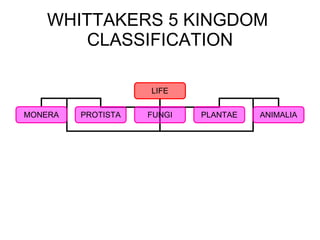
WHITTAKERS 5 KINGDOM  CLASSIFICATION LIFE MONERA PROTISTA FUNGI PLANTAE ANIMALIA
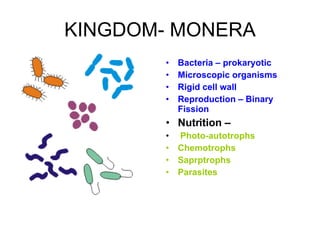
KINGDOM- MONERA Bacteria – prokaryotic Microscopic organisms Rigid cell wall Reproduction – Binary Fission Nutrition – Photo-autotrophs Chemotrophs Saprptrophs Parasites
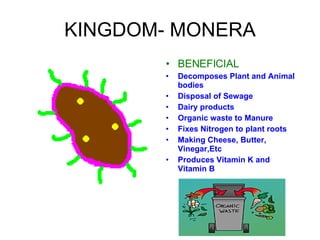
KINGDOM- MONERA BENEFICIAL Decomposes Plant and Animal bodies Disposal of Sewage Dairy products Organic waste to Manure Fixes Nitrogen to plant roots Making Cheese, Butter, Vinegar,Etc Produces Vitamin K and Vitamin   B
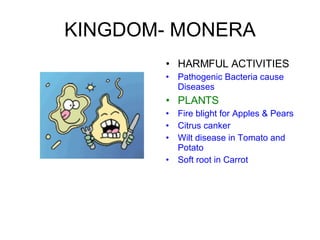
KINGDOM- MONERA HARMFUL ACTIVITIES Pathogenic Bacteria cause Diseases PLANTS Fire blight for Apples & Pears Citrus canker Wilt disease in Tomato and Potato Soft root in Carrot
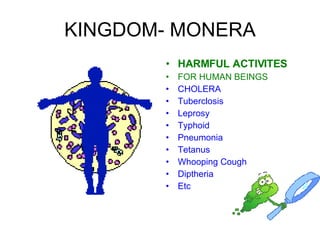
KINGDOM- MONERA HARMFUL ACTIVITES FOR HUMAN BEINGS CHOLERA Tuberclosis Leprosy Typhoid Pneumonia Tetanus Whooping Cough Diptheria Etc
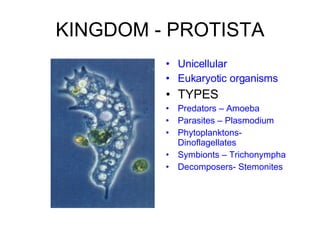
KINGDOM - PROTISTA Unicellular Eukaryotic organisms TYPES Predators – Amoeba Parasites – Plasmodium Phytoplanktons- Dinoflagellates Symbionts – Trichonympha Decomposers- Stemonites
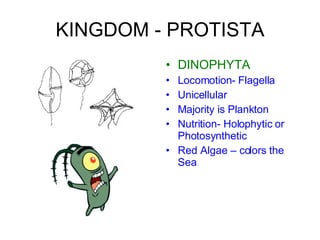
KINGDOM - PROTISTA DINOPHYTA Locomotion- Flagella Unicellular Majority is Plankton Nutrition- Holophytic or Photosynthetic Red Algae – colors the Sea
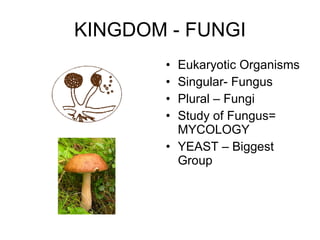
KINGDOM - FUNGI Eukaryotic Organisms Singular- Fungus Plural – Fungi Study of Fungus= MYCOLOGY YEAST – Biggest Group
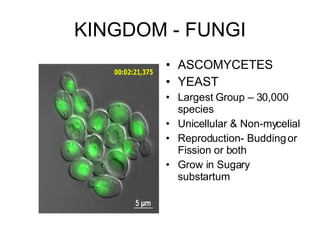
KINGDOM - FUNGI ASCOMYCETES YEAST Largest Group – 30,000 species Unicellular & Non-mycelial Reproduction- Budding or Fission or both Grow in Sugary substartum
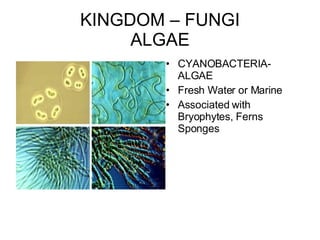
KINGDOM – FUNGI ALGAE CYANOBACTERIA- ALGAE Fresh Water or Marine Associated with Bryophytes, Ferns Sponges
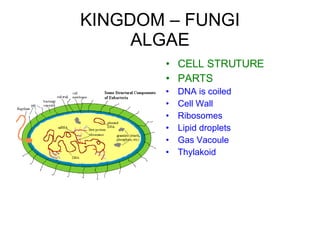
KINGDOM – FUNGI ALGAE CELL STRUTURE PARTS DNA is coiled Cell Wall Ribosomes Lipid droplets Gas Vacoule Thylakoid
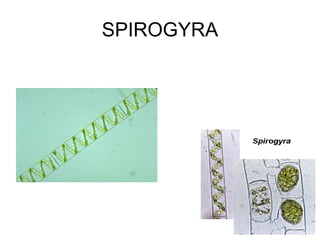
SPIROGYRA
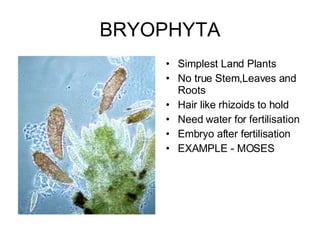
BRYOPHYTA Simplest Land Plants No true Stem,Leaves and Roots Hair like rhizoids to hold Need water for fertilisation Embryo after fertilisation EXAMPLE - MOSES
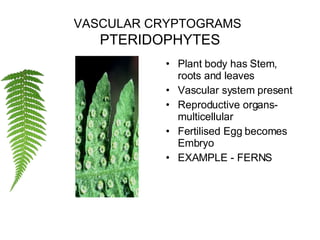
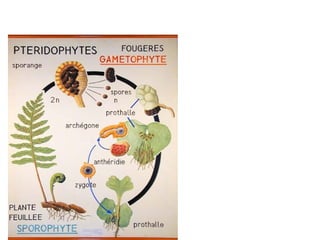
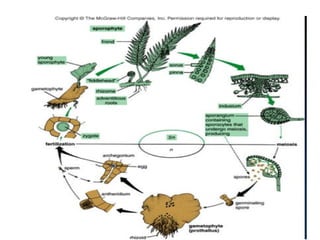
VASCULAR CRYPTOGRAMS   PTERIDOPHYTES Plant body has Stem, roots and leaves Vascular system present Reproductive organs- multicellular Fertilised Egg becomes Embryo EXAMPLE - FERNS
 
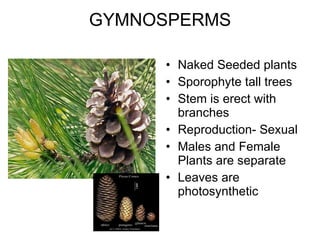
GYMNOSPERMS Naked Seeded plants Sporophyte tall trees Stem is erect with branches Reproduction- Sexual Males and Female Plants are separate Leaves are photosynthetic
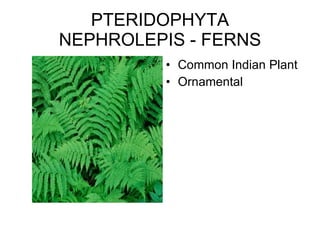
PTERIDOPHYTA NEPHROLEPIS - FERNS Common Indian Plant Ornamental
 
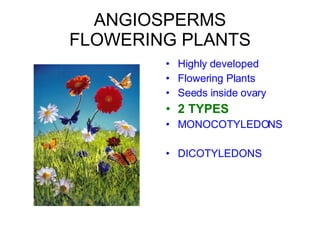
ANGIOSPERMS FLOWERING PLANTS Highly developed Flowering Plants Seeds inside ovary 2 TYPES MONOCOTYLEDONS DICOTYLEDONS
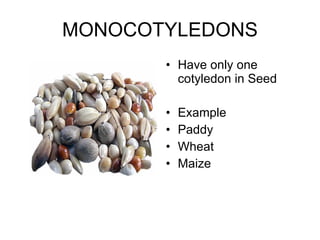
MONOCOTYLEDONS Have only one cotyledon in Seed Example  Paddy  Wheat Maize
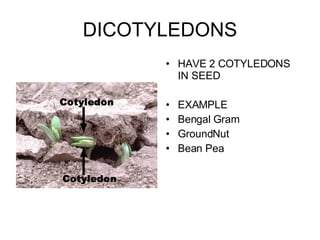
DICOTYLEDONS HAVE 2 COTYLEDONS IN SEED EXAMPLE Bengal Gram GroundNut Bean Pea

Plant Kingdom classification

  • 1.
    PLANT KINGDOM byAdithi Pai Century Public School Tirupur, India CLASSIFICATION by ROBERT WHITTAKER IN 1969
  • 2.
    WHITTAKERS 5 KINGDOM CLASSIFICATION LIFE MONERA PROTISTA FUNGI PLANTAE ANIMALIA
  • 3.
    KINGDOM- MONERA Bacteria– prokaryotic Microscopic organisms Rigid cell wall Reproduction – Binary Fission Nutrition – Photo-autotrophs Chemotrophs Saprptrophs Parasites
  • 4.
    KINGDOM- MONERA BENEFICIALDecomposes Plant and Animal bodies Disposal of Sewage Dairy products Organic waste to Manure Fixes Nitrogen to plant roots Making Cheese, Butter, Vinegar,Etc Produces Vitamin K and Vitamin B
  • 5.
    KINGDOM- MONERA HARMFULACTIVITIES Pathogenic Bacteria cause Diseases PLANTS Fire blight for Apples & Pears Citrus canker Wilt disease in Tomato and Potato Soft root in Carrot
  • 6.
    KINGDOM- MONERA HARMFULACTIVITES FOR HUMAN BEINGS CHOLERA Tuberclosis Leprosy Typhoid Pneumonia Tetanus Whooping Cough Diptheria Etc
  • 7.
    KINGDOM - PROTISTAUnicellular Eukaryotic organisms TYPES Predators – Amoeba Parasites – Plasmodium Phytoplanktons- Dinoflagellates Symbionts – Trichonympha Decomposers- Stemonites
  • 8.
    KINGDOM - PROTISTADINOPHYTA Locomotion- Flagella Unicellular Majority is Plankton Nutrition- Holophytic or Photosynthetic Red Algae – colors the Sea
  • 9.
    KINGDOM - FUNGIEukaryotic Organisms Singular- Fungus Plural – Fungi Study of Fungus= MYCOLOGY YEAST – Biggest Group
  • 10.
    KINGDOM - FUNGIASCOMYCETES YEAST Largest Group – 30,000 species Unicellular & Non-mycelial Reproduction- Budding or Fission or both Grow in Sugary substartum
  • 11.
    KINGDOM – FUNGIALGAE CYANOBACTERIA- ALGAE Fresh Water or Marine Associated with Bryophytes, Ferns Sponges
  • 12.
    KINGDOM – FUNGIALGAE CELL STRUTURE PARTS DNA is coiled Cell Wall Ribosomes Lipid droplets Gas Vacoule Thylakoid
  • 13.
  • 14.
    BRYOPHYTA Simplest LandPlants No true Stem,Leaves and Roots Hair like rhizoids to hold Need water for fertilisation Embryo after fertilisation EXAMPLE - MOSES
  • 15.
    VASCULAR CRYPTOGRAMS PTERIDOPHYTES Plant body has Stem, roots and leaves Vascular system present Reproductive organs- multicellular Fertilised Egg becomes Embryo EXAMPLE - FERNS
  • 16.
  • 17.
    GYMNOSPERMS Naked Seededplants Sporophyte tall trees Stem is erect with branches Reproduction- Sexual Males and Female Plants are separate Leaves are photosynthetic
  • 18.
    PTERIDOPHYTA NEPHROLEPIS -FERNS Common Indian Plant Ornamental
  • 19.
  • 20.
    ANGIOSPERMS FLOWERING PLANTSHighly developed Flowering Plants Seeds inside ovary 2 TYPES MONOCOTYLEDONS DICOTYLEDONS
  • 21.
    MONOCOTYLEDONS Have onlyone cotyledon in Seed Example Paddy Wheat Maize
  • 22.
    DICOTYLEDONS HAVE 2COTYLEDONS IN SEED EXAMPLE Bengal Gram GroundNut Bean Pea