Seed structure & Seed
Dispersal
How do seeds “get around”?
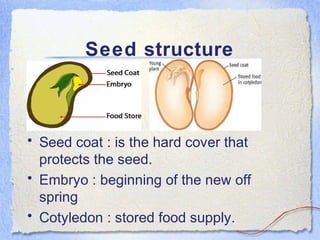
Seed structure
• Seed coat : is the hard cover that
protects the seed.
• Embryo : beginning of the new off
spring
• Cotyledon : stored food supply.
How is it helpful for seeds to be
carried to a new place?
(Think of as many reasons as you
can.)
There are several ways that seeds
can “travel” to a new spot.
• Wind
• Water
• Explosively( drop)
• Animal help
–Eaten.
–Carried.
Number 1-15 on a piece of
paper. For each of the following
pictures of seeds/fruits, describe
how the seed is most likely
dispersed
(wind, water, gravity,
explosively, or animal - eaten or
hitchhiking).
For some, you might put two or
more possibilities.
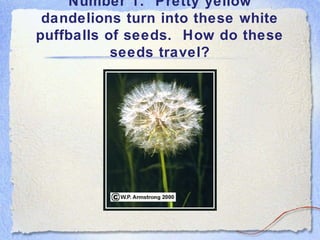
Number 1. Pretty yellow
dandelions turn into these white
puffballs of seeds. How do these
seeds travel?
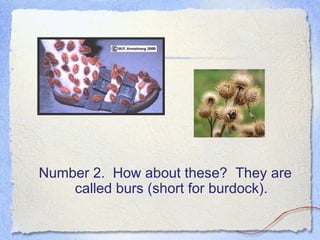
Number 2. How about these? They are
called burs (short for burdock).
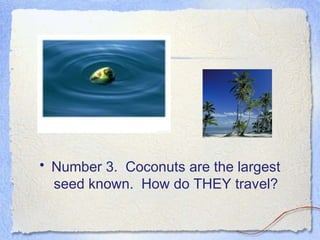
• Number 3. Coconuts are the largest
seed known. How do THEY travel?
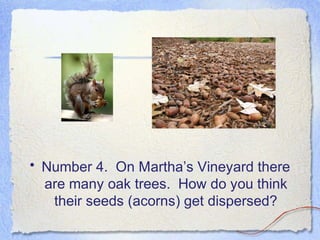
• Number 4. On Martha’s Vineyard there
are many oak trees. How do you think
their seeds (acorns) get dispersed?
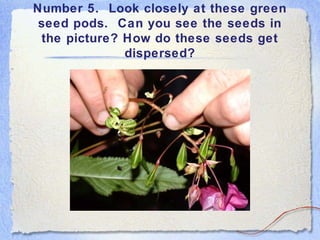
Number 5. Look closely at these green
seed pods. Can you see the seeds in
the picture? How do these seeds get
dispersed?
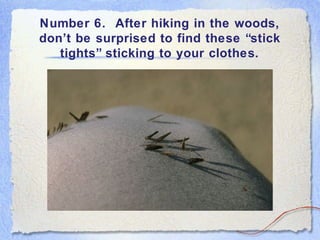
Number 6. After hiking in the woods,
don’t be surprised to find these “stick
tights” sticking to your clothes.
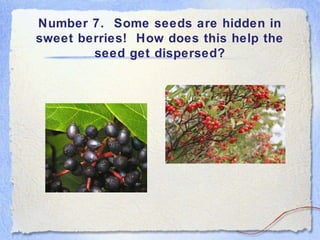
Number 7. Some seeds are hidden in
sweet berries! How does this help the
seed get dispersed?
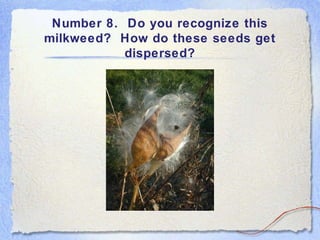
Number 8. Do you recognize this
milkweed? How do these seeds get
dispersed?
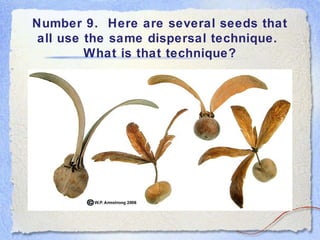
Number 9. Here are several seeds that
all use the same dispersal technique.
What is that technique?
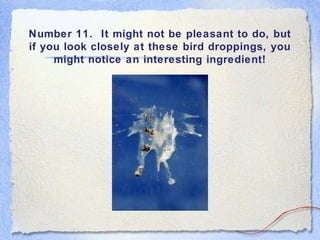
Number 11. It might not be pleasant to do, but
if you look closely at these bird droppings, you
might notice an interesting ingredient!
Number 14. All of these seeds have one
thing in common - how they are
dispersed!
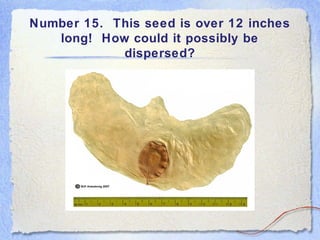
Number 15. This seed is over 12 inches
long! How could it possibly be
dispersed?

Seed dispersal

  • 1.
    Seed structure &Seed Dispersal How do seeds “get around”?
  • 2.
    Seed structure • Seedcoat : is the hard cover that protects the seed. • Embryo : beginning of the new off spring • Cotyledon : stored food supply.
  • 3.
    How is ithelpful for seeds to be carried to a new place? (Think of as many reasons as you can.)
  • 4.
    There are severalways that seeds can “travel” to a new spot. • Wind • Water • Explosively( drop) • Animal help –Eaten. –Carried.
  • 5.
    Number 1-15 ona piece of paper. For each of the following pictures of seeds/fruits, describe how the seed is most likely dispersed (wind, water, gravity, explosively, or animal - eaten or hitchhiking). For some, you might put two or more possibilities.
  • 6.
    Number 1. Prettyyellow dandelions turn into these white puffballs of seeds. How do these seeds travel?
  • 7.
    Number 2. Howabout these? They are called burs (short for burdock).
  • 8.
    • Number 3.Coconuts are the largest seed known. How do THEY travel?
  • 9.
    • Number 4.On Martha’s Vineyard there are many oak trees. How do you think their seeds (acorns) get dispersed?
  • 10.
    Number 5. Lookclosely at these green seed pods. Can you see the seeds in the picture? How do these seeds get dispersed?
  • 11.
    Number 6. Afterhiking in the woods, don’t be surprised to find these “stick tights” sticking to your clothes.
  • 12.
    Number 7. Someseeds are hidden in sweet berries! How does this help the seed get dispersed?
  • 13.
    Number 8. Doyou recognize this milkweed? How do these seeds get dispersed?
  • 14.
    Number 9. Hereare several seeds that all use the same dispersal technique. What is that technique?
  • 15.
    Number 11. Itmight not be pleasant to do, but if you look closely at these bird droppings, you might notice an interesting ingredient!
  • 16.
    Number 14. Allof these seeds have one thing in common - how they are dispersed!
  • 17.
    Number 15. Thisseed is over 12 inches long! How could it possibly be dispersed?