 Introduction 
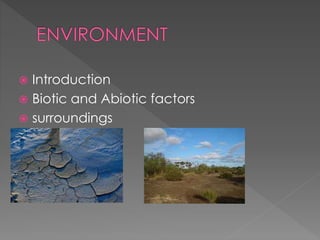
 Biotic and Abiotic factors 
 surroundings
 Introduction 
 Environmental pollution is the contamination of physical and 
biological components of the earth/atmosphere to such an extent 
that normal environmental process are adversely affected
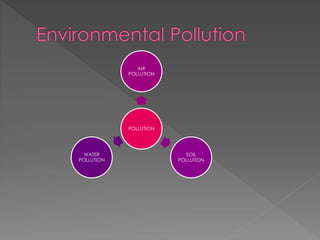
AIR 
POLLUTION 
POLLUTION 
SOIL 
POLLUTION 
WATER 
POLLUTION
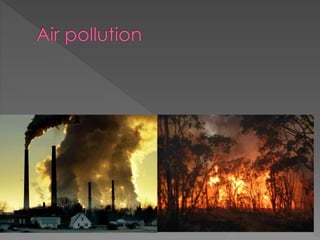
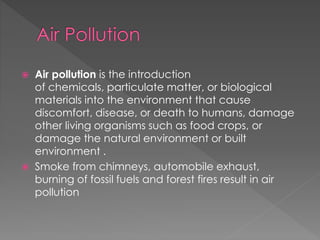
 Air pollution is the introduction 
of chemicals, particulate matter, or biological 
materials into the environment that cause 
discomfort, disease, or death to humans, damage 
other living organisms such as food crops, or 
damage the natural environment or built 
environment . 
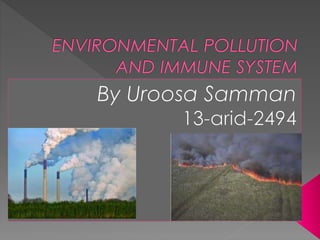
 Smoke from chimneys, automobile exhaust, 
burning of fossil fuels and forest fires result in air 
pollution
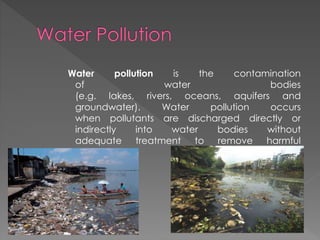
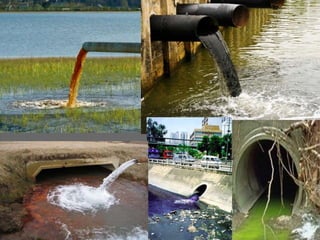
Water pollution is the contamination 
of water bodies 
(e.g. lakes, rivers, oceans, aquifers and 
groundwater). Water pollution occurs 
when pollutants are discharged directly or 
indirectly into water bodies without 
adequate treatment to remove harmful 
compounds
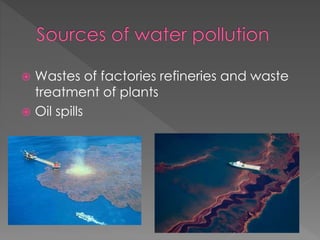
 Wastes of factories refineries and waste 
treatment of plants 
 Oil spills
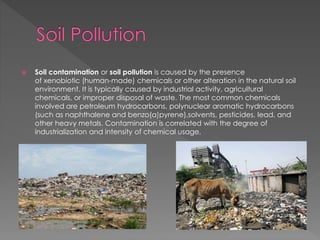
 Soil contamination or soil pollution is caused by the presence 
of xenobiotic (human-made) chemicals or other alteration in the natural soil 
environment. It is typically caused by industrial activity, agricultural 
chemicals, or improper disposal of waste. The most common chemicals 
involved are petroleum hydrocarbons, polynuclear aromatic hydrocarbons 
(such as naphthalene and benzo(a)pyrene),solvents, pesticides, lead, and 
other heavy metals. Contamination is correlated with the degree of 
industrialization and intensity of chemical usage.
 the bodily system that protects the body from foreign 
substances, cells, and tissues by producing the immune 
response and that includes especially the thymus, spleen, 
lymph nodes, special deposits of lymphoid tissue (as in the 
gastrointestinal tract and bone marrow), macrophages, 
lymphocytes including the B cells and T cells, and antibodies
 Diseases 
 A deleterious change in the body’s 
condition in response to environmental 
factors 
 Diseases like 
 Skin allergies 
 Respiratory infections 
 Asthma 
 Lung cancer
 Inhalation of polluted air can cause cardio respiratory diseases 
 Breathing polluted air can also cause widespread inflammation 
by triggering the release of white blood cells from bone marrow 
into the blood stream. The influx of white blood cells can alter 
the integrity of the blood vessels. The white blood cells are then 
absorbed into fat tissues where chemicals are released that 
cause inflammation. 
 These particulate matter stimulates inflammation in the lung, and 
products of that inflammation spill over into the body's circulation, 
traveling to fat tissue to promote inflammation and causing vascular 
dysfunction,
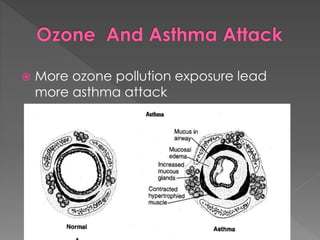
 More ozone pollution exposure lead 
more asthma attack
 Ozone reduces lungs function 
 Ozone : other symptoms 
 Allergy symptoms 
 Respiratory infections 
 Ear infections 
 Emphysema attack 
 Overall death rate
 Penetrate deeply into the lungs to alveoli 
 irritate lung linings- more asthma 
 stimulate immune system inflammatory 
proteins
 Drinking polluted water weaken immune 
system 
 A weakened immune system can be a 
result of having an organ transplant, 
having HIV or AIDS or from undergoing 
chemotherapy. 
 A weaker immune system means a 
higher likelihood of contracting disease 
from waterborne contaminants
 Diarrhea 
 Typhoid 
 Cholera 
 Dysentry 
 Measles
Environmental pollution and immune system

Environmental pollution and immune system

  • 2.
     Introduction Biotic and Abiotic factors  surroundings
  • 3.
     Introduction Environmental pollution is the contamination of physical and biological components of the earth/atmosphere to such an extent that normal environmental process are adversely affected
  • 4.
    AIR POLLUTION POLLUTION SOIL POLLUTION WATER POLLUTION
  • 6.
     Air pollutionis the introduction of chemicals, particulate matter, or biological materials into the environment that cause discomfort, disease, or death to humans, damage other living organisms such as food crops, or damage the natural environment or built environment .  Smoke from chimneys, automobile exhaust, burning of fossil fuels and forest fires result in air pollution
  • 7.
    Water pollution isthe contamination of water bodies (e.g. lakes, rivers, oceans, aquifers and groundwater). Water pollution occurs when pollutants are discharged directly or indirectly into water bodies without adequate treatment to remove harmful compounds
  • 8.
     Wastes offactories refineries and waste treatment of plants  Oil spills
  • 10.
     Soil contaminationor soil pollution is caused by the presence of xenobiotic (human-made) chemicals or other alteration in the natural soil environment. It is typically caused by industrial activity, agricultural chemicals, or improper disposal of waste. The most common chemicals involved are petroleum hydrocarbons, polynuclear aromatic hydrocarbons (such as naphthalene and benzo(a)pyrene),solvents, pesticides, lead, and other heavy metals. Contamination is correlated with the degree of industrialization and intensity of chemical usage.
  • 11.
     the bodilysystem that protects the body from foreign substances, cells, and tissues by producing the immune response and that includes especially the thymus, spleen, lymph nodes, special deposits of lymphoid tissue (as in the gastrointestinal tract and bone marrow), macrophages, lymphocytes including the B cells and T cells, and antibodies
  • 12.
     Diseases A deleterious change in the body’s condition in response to environmental factors  Diseases like  Skin allergies  Respiratory infections  Asthma  Lung cancer
  • 13.
     Inhalation ofpolluted air can cause cardio respiratory diseases  Breathing polluted air can also cause widespread inflammation by triggering the release of white blood cells from bone marrow into the blood stream. The influx of white blood cells can alter the integrity of the blood vessels. The white blood cells are then absorbed into fat tissues where chemicals are released that cause inflammation.  These particulate matter stimulates inflammation in the lung, and products of that inflammation spill over into the body's circulation, traveling to fat tissue to promote inflammation and causing vascular dysfunction,
  • 14.
     More ozonepollution exposure lead more asthma attack
  • 15.
     Ozone reduceslungs function  Ozone : other symptoms  Allergy symptoms  Respiratory infections  Ear infections  Emphysema attack  Overall death rate
  • 16.
     Penetrate deeplyinto the lungs to alveoli  irritate lung linings- more asthma  stimulate immune system inflammatory proteins
  • 17.
     Drinking pollutedwater weaken immune system  A weakened immune system can be a result of having an organ transplant, having HIV or AIDS or from undergoing chemotherapy.  A weaker immune system means a higher likelihood of contracting disease from waterborne contaminants
  • 18.
     Diarrhea Typhoid  Cholera  Dysentry  Measles