TYPIFICATION AND
DIFFERENT ZOOLOGICAL
TYPES
ANAND S
GIRI
M Sc Zoology
TYPE AND TYPIFICATION
An object that serves as the basis for the name of a taxon
is known as type .
Type is a specimen (or a group of specimens) which
serves to illustrate the defining characters of a species or
genus.
The type forms the basis for taxonomic description and
the taxonomic description contains mainly the features of
the type.
Type of the family is the genus and that of genus is
species
 The methodology used for fixing a type is known as
‘TYPIFICATION’ or The designation of a nomenclatural
type is called TYPIFICATION.
The type may or may not be the most typical member of
the taxon.
The type only fixes the name of particular taxon and the
two are permenently and intimately associated
Type forms the basis for taxonomic description and the
taxonomic description contains mainly the features of the
type
 The type belongs to the science once it is published and
won’t remain the sole property of the author .Any
bonafied taxonomist is entitled to examine the type when
required.
 The type specimen is specifically chosen by the original
author or the later taxonomist.
 Types are international standards for scientific names.
 Type specimens are catalogued and usually kept in a
museum or other collection where scientists can access it.
DIFFERENT ZOOLOGICAL TYPES
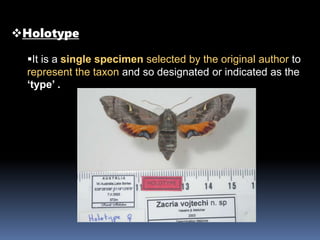
Holotype
It is a single specimen selected by the original author to
represent the taxon and so designated or indicated as the
‘type’ .
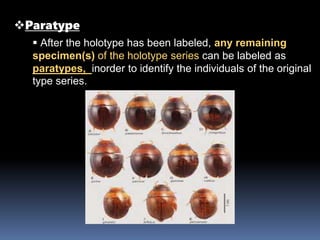
Paratype
 After the holotype has been labeled, any remaining
specimen(s) of the holotype series can be labeled as
paratypes, inorder to identify the individuals of the original
type series.
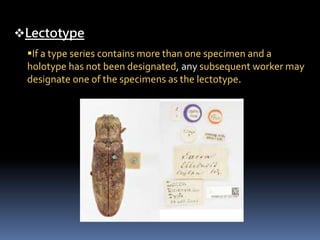
Lectotype
If a type series contains more than one specimen and a
holotype has not been designated, any subsequent worker may
designate one of the specimens as the lectotype.
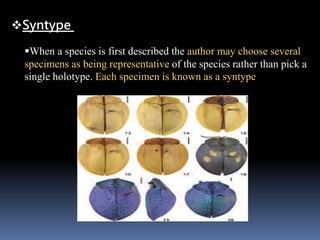
Syntype
When a species is first described the author may choose several
specimens as being representative of the species rather than pick a
single holotype. Each specimen is known as a syntype
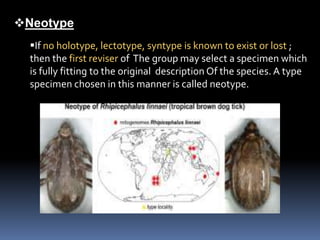
Neotype
If no holotype, lectotype, syntype is known to exist or lost ;
then the first reviser of The group may select a specimen which
is fully fitting to the original description Of the species. A type
specimen chosen in this manner is called neotype.
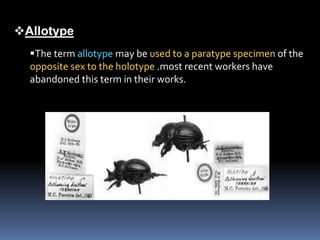
Allotype
The term allotype may be used to a paratype specimen of the
opposite sex to the holotype .most recent workers have
abandoned this term in their works.
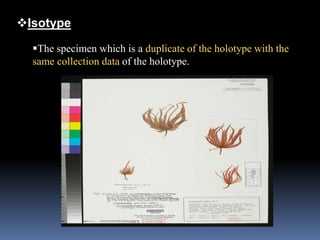
Isotype
The specimen which is a duplicate of the holotype with the
same collection data of the holotype.
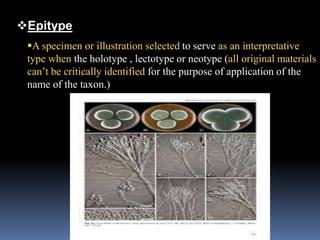
Epitype
A specimen or illustration selected to serve as an interpretative
type when the holotype , lectotype or neotype (all original materials
can’t be critically identified for the purpose of application of the
name of the taxon.)
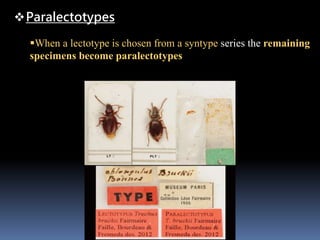
Paralectotypes
When a lectotype is chosen from a syntype series the remaining
specimens become paralectotypes
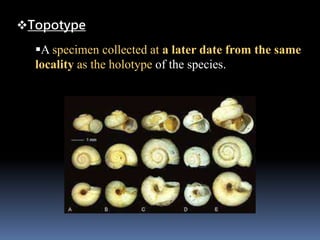
Topotype
A specimen collected at a later date from the same
locality as the holotype of the species.
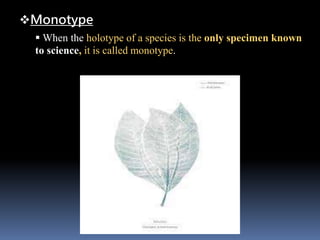
Monotype
 When the holotype of a species is the only specimen known
to science, it is called monotype.
SIGNIFICANCE
 Provide an objective reference which can be used by later
scholars to verify the identity of the species being described.
 Important to physically examine previously described species
to definitively conclude that a specimen we have on hand is in
fact new to science.
The type specimen of the earliest described species can
be re-examined as soon as the minute differences of the
species of the sibling complex are understood.
 In order to be valid as a type, a specimen must meet certain
guidelines set forth in the International Code For Zoological
Nomenclature.
REFERENCE
Narendran T.C, An introduction to Taxonomy, 2006(Published by the
Director, Zoo. Surv. India, Kolkata).
Theory of Practice of Animal Taxonomy, V.C. Kapoor, Sixth Edition,
Oxford & IBH Publishing Co. Pvt. Ltd. New Delhi,2008
 https://www.studyandscore.com
www.slideshare.net
https://www.plantscience4u.com/2021/04/type-method-or-
typification;.
https://www.google.com/url?sa=i&url=https%3A%2F%2Fcolorama
zonia.com.
THANK YOU
typification and type.pptx

typification and type.pptx

  • 1.
  • 2.
    TYPE AND TYPIFICATION Anobject that serves as the basis for the name of a taxon is known as type . Type is a specimen (or a group of specimens) which serves to illustrate the defining characters of a species or genus. The type forms the basis for taxonomic description and the taxonomic description contains mainly the features of the type. Type of the family is the genus and that of genus is species
  • 3.
     The methodologyused for fixing a type is known as ‘TYPIFICATION’ or The designation of a nomenclatural type is called TYPIFICATION. The type may or may not be the most typical member of the taxon. The type only fixes the name of particular taxon and the two are permenently and intimately associated Type forms the basis for taxonomic description and the taxonomic description contains mainly the features of the type
  • 4.
     The typebelongs to the science once it is published and won’t remain the sole property of the author .Any bonafied taxonomist is entitled to examine the type when required.  The type specimen is specifically chosen by the original author or the later taxonomist.  Types are international standards for scientific names.  Type specimens are catalogued and usually kept in a museum or other collection where scientists can access it.
  • 5.
  • 6.
    Holotype It is asingle specimen selected by the original author to represent the taxon and so designated or indicated as the ‘type’ .
  • 7.
    Paratype  After theholotype has been labeled, any remaining specimen(s) of the holotype series can be labeled as paratypes, inorder to identify the individuals of the original type series.
  • 8.
    Lectotype If a typeseries contains more than one specimen and a holotype has not been designated, any subsequent worker may designate one of the specimens as the lectotype.
  • 9.
    Syntype When a speciesis first described the author may choose several specimens as being representative of the species rather than pick a single holotype. Each specimen is known as a syntype
  • 10.
    Neotype If no holotype,lectotype, syntype is known to exist or lost ; then the first reviser of The group may select a specimen which is fully fitting to the original description Of the species. A type specimen chosen in this manner is called neotype.
  • 11.
    Allotype The term allotypemay be used to a paratype specimen of the opposite sex to the holotype .most recent workers have abandoned this term in their works.
  • 12.
    Isotype The specimen whichis a duplicate of the holotype with the same collection data of the holotype.
  • 13.
    Epitype A specimen orillustration selected to serve as an interpretative type when the holotype , lectotype or neotype (all original materials can’t be critically identified for the purpose of application of the name of the taxon.)
  • 14.
    Paralectotypes When a lectotypeis chosen from a syntype series the remaining specimens become paralectotypes
  • 15.
    Topotype A specimen collectedat a later date from the same locality as the holotype of the species.
  • 16.
    Monotype  When theholotype of a species is the only specimen known to science, it is called monotype.
  • 17.
    SIGNIFICANCE  Provide anobjective reference which can be used by later scholars to verify the identity of the species being described.  Important to physically examine previously described species to definitively conclude that a specimen we have on hand is in fact new to science. The type specimen of the earliest described species can be re-examined as soon as the minute differences of the species of the sibling complex are understood.  In order to be valid as a type, a specimen must meet certain guidelines set forth in the International Code For Zoological Nomenclature.
  • 18.
    REFERENCE Narendran T.C, Anintroduction to Taxonomy, 2006(Published by the Director, Zoo. Surv. India, Kolkata). Theory of Practice of Animal Taxonomy, V.C. Kapoor, Sixth Edition, Oxford & IBH Publishing Co. Pvt. Ltd. New Delhi,2008  https://www.studyandscore.com www.slideshare.net https://www.plantscience4u.com/2021/04/type-method-or- typification;. https://www.google.com/url?sa=i&url=https%3A%2F%2Fcolorama zonia.com.
  • 19.