Blogging for Educators   (as part of the Electronic Village online workshops) 2008 http://creativecommons.org/licenses/by-nc/2.0/uk/
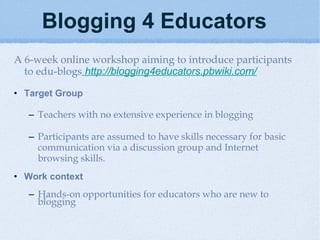
Blogging 4 Educators A 6-week online workshop aiming to introduce participants to edu-blogs   http://blogging4educators.pbwiki.com/   Target Group Teachers with no extensive experience in blogging Participants are assumed to have skills necessary for basic communication via a discussion group and Internet browsing skills.  Work context Hands-on opportunities for educators who are new to blogging
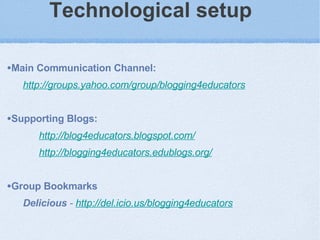
Technological setup   Main Communication Channel: http://groups.yahoo.com/group/blogging4educators   Supporting Blogs: http://blog4educators.blogspot.com/      http://blogging4educators.edublogs.org/   Group Bookmarks   Delicious  -  http://del.icio.us/blogging4educators
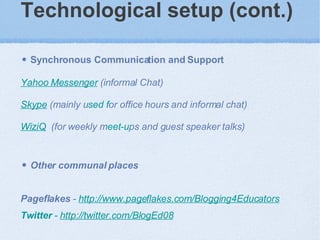
Technological setup (cont.)   Synchronous Communication and Support   Yahoo Messenger  (informal Chat) Skype  (mainly u sed f or office hours and informal chat) WiziQ   (for weekly m eet-u ps and guest speaker talks) Other communal places Pageflakes  -  http://www.pageflakes.com /Blogging4Educators   Twitter  -  http://twitte r.com/BlogEd08
Task / Purpose Provide free teacher training opportunities for educators through an online hands-on workshop (learning by doing– practical knowledge as a result of active engagement) . Introduce educators to edu-blogging in a meaningful way
How we engaged We provided mentorship :  24/7 Moderation  Personalized “Welcome” messages  Strong support thru different communication Channels
How we led other to engage   We engaged participants  ( in a progressive way through weekly activities):  Exploration of the possibilities provided by different blog services, aiming at th e :  Creation and posting on both individual and collective blogs; Comment management / comment writing; Template personalization; Tagging and,  RSS.  We connected participants to experts  (interaction with guest speakers) External Validation Different perspectives  Real time interactions
Results Almost immediate application of what participants learned to their own practice / reality Development of a kind of a Community feeling – which has evolved into a parallel new space: NING  http://blogging4educators.ning.com/  (where the conversation continues ) Closer bonds (and friendship) among some participants, and definitely among moderators
Lessons learnt Moderating online requires a lot of background work and preparation -  team spirit  is CRUCIAL (the sense of community/ feeling of belonging/ cohesion starts within the moderators team)   Supporting and nurturing  participants’ learning process are VITAL to a positive learning/moderation experience Flexibility ,  understanding  and  tolerance  when dealing with participants’ needs and requests are VERY IMPORTANT Showing one  cares  and keeping the  communication channels open  welcomes people to progressively interact in a more spontaneous way
Reflection Although this workshop worked for many of members, we weren’t able to reach to all the participants who joined the workshop in the same way.   This might have been due to:  The amount of emails exchanged daily Different learning styles  Lack of time

planetcasestudy

  • 1.
    Blogging for Educators (as part of the Electronic Village online workshops) 2008 http://creativecommons.org/licenses/by-nc/2.0/uk/
  • 2.
    Blogging 4 EducatorsA 6-week online workshop aiming to introduce participants to edu-blogs http://blogging4educators.pbwiki.com/ Target Group Teachers with no extensive experience in blogging Participants are assumed to have skills necessary for basic communication via a discussion group and Internet browsing skills. Work context Hands-on opportunities for educators who are new to blogging
  • 3.
    Technological setup Main Communication Channel: http://groups.yahoo.com/group/blogging4educators Supporting Blogs: http://blog4educators.blogspot.com/     http://blogging4educators.edublogs.org/ Group Bookmarks Delicious - http://del.icio.us/blogging4educators
  • 4.
    Technological setup (cont.) Synchronous Communication and Support Yahoo Messenger (informal Chat) Skype (mainly u sed f or office hours and informal chat) WiziQ   (for weekly m eet-u ps and guest speaker talks) Other communal places Pageflakes - http://www.pageflakes.com /Blogging4Educators Twitter - http://twitte r.com/BlogEd08
  • 5.
    Task / PurposeProvide free teacher training opportunities for educators through an online hands-on workshop (learning by doing– practical knowledge as a result of active engagement) . Introduce educators to edu-blogging in a meaningful way
  • 6.
    How we engagedWe provided mentorship : 24/7 Moderation Personalized “Welcome” messages Strong support thru different communication Channels
  • 7.
    How we ledother to engage We engaged participants ( in a progressive way through weekly activities): Exploration of the possibilities provided by different blog services, aiming at th e : Creation and posting on both individual and collective blogs; Comment management / comment writing; Template personalization; Tagging and, RSS. We connected participants to experts (interaction with guest speakers) External Validation Different perspectives Real time interactions
  • 8.
    Results Almost immediateapplication of what participants learned to their own practice / reality Development of a kind of a Community feeling – which has evolved into a parallel new space: NING http://blogging4educators.ning.com/ (where the conversation continues ) Closer bonds (and friendship) among some participants, and definitely among moderators
  • 9.
    Lessons learnt Moderatingonline requires a lot of background work and preparation - team spirit is CRUCIAL (the sense of community/ feeling of belonging/ cohesion starts within the moderators team) Supporting and nurturing participants’ learning process are VITAL to a positive learning/moderation experience Flexibility , understanding and tolerance when dealing with participants’ needs and requests are VERY IMPORTANT Showing one cares and keeping the communication channels open welcomes people to progressively interact in a more spontaneous way
  • 10.
    Reflection Although thisworkshop worked for many of members, we weren’t able to reach to all the participants who joined the workshop in the same way. This might have been due to: The amount of emails exchanged daily Different learning styles Lack of time