ABNORMALITIES
OF THE
PUERPERIUM
A rise of temperature reaching 1000F (380 C)
or more (measured orally) on 2 separate occasions
at 24 hrs apart (excluding first 24 hours) within first
10 days following delivery is called Puerperal
pyrexia.
DEFINITION
PUERPERAL SEPSIS
URINARY TRACT INFECTION
MASTITIS
CAUSES…
INFECTION OF CAESAREAN SECTION
WOUND
PULMONARY INFECTION
A RECRUDESCENCE OF MALARIA /
PULMONARY TUBERCULOSIS
PUERPERAL
SEPSIS
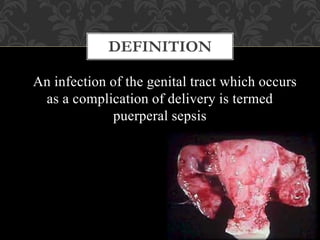
An infection of the genital tract which occurs
as a complication of delivery is termed
puerperal sepsis
DEFINITION
 Marked decline in cases:
 Improved obstetric care
 Availability of wider range of antibiotics
INCIDENCE
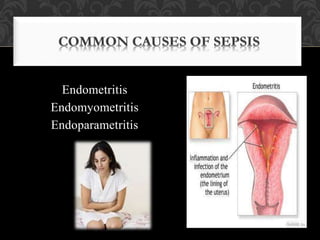
Endometritis
Endomyometritis
Endoparametritis
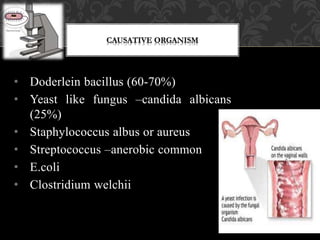
• Doderlein bacillus (60-70%)
• Yeast like fungus –candida albicans
(25%)
• Staphylococcus albus or aureus
• Streptococcus –anerobic common
• E.coli
• Clostridium welchii
PATHOGENIC FACTOR
FOR VAGINAL FLORA
The cervicovaginal mucous membrane is damaged even in
normal delivery and the uterine surface too, specially at the
placental site
is converted into open wound by the seperation of the placenta
which takes place during third stage of labor
the blood clots present at the placental site are excellent media
for the growth of the bacteria.
• Malnutrition and anemia
• Preterm labor
• Premature rupture of
membrane
• Chronic debilitating
illness (HIV)
• Prolonged rupture of
membrane >18hrs
• Diabetes
• Repeated vaginal examination
• Traumatic operative delivery
• Retained bits of placental tissue or membrane.
• Prolonged labour
• Hemorrhage
• Caesarean delivery
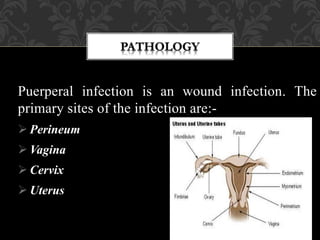
Puerperal infection is an wound infection. The
primary sites of the infection are:-
 Perineum
 Vagina
 Cervix
 Uterus
PERINEUM
Laceration of the perineum are likely to be
infected.
The wound edges become red and swollen.
There may be collection of purulent discharge
resulting in complete disruption of the wound.
VAGINA
Vaginal laceration are infected directly or by
extension from the perineal infection.
The mucosa is swollen and hyperaemic,
resulting in necrosis and sloughing
Cervix:-
The cervical laceration becomes the site of infection
Uterus :-
The uterus is most common site of infection
Decidua (placental site) is common site and infected
first
The infection usually manifests between 3rd and 6th
day of delivery
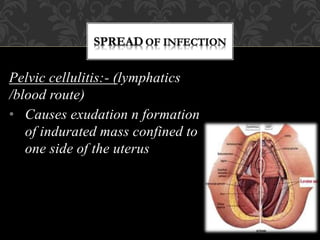
Pelvic cellulitis:- (lymphatics
/blood route)
• Causes exudation n formation
of indurated mass confined to
one side of the uterus
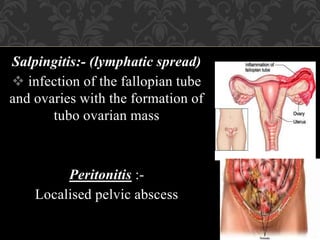
Salpingitis:- (lymphatic spread)
 infection of the fallopian tube
and ovaries with the formation of
tubo ovarian mass
Peritonitis :-
Localised pelvic abscess
Thrombophelebitis :-
Ovarian vein of one side is usually involved
Uterine vein may also involved
Suppuration n embolism to other organs
Septicemia and pyemia:-
These may lead to endocarditis, pericarditis,
Renal abscess, lung abscess, meningitis or artheritis.
“These are rare these days with advent of potent
antibiotic”
Local infection-
Slight rise in temperature, generalised
malaise and headache.
Redness and the swelling of the local wound
Pus formation and disruption of wound
Uterine infection-
 Mild:
Pyrexia of variable degree and tachycardia.
Red, copius and offensive lochia.
Subinvoluted, tender and soft uterus.
Sever infection-
Fever with chills and rigor
Rapid pulse
Scanty, odorless lochia
Subinvoluted uterus
Parametritis-
Sustained rise in temperature (7th to 10th day)
Constant pelvic pain
Tenderness on either side of the hypogastrium
Unilateral, tender mass felt on vaginal examination
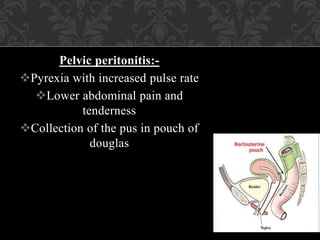
Pelvic peritonitis:-
Pyrexia with increased pulse rate
Lower abdominal pain and
tenderness
Collection of the pus in pouch of
douglas
Generalised peritonitis:-
High fever with rapid pulse
Vomiting
Abdominal pain
Tender and distended abdomen
Thrombophelebitis –
swinging fever with chills and rigor
Features of pyemia
Septicemia-
High temperature with rigor
Rapid pulse
Headache, insomnia or mental confusion
Positive blood culture
Sign/symptoms of infection in the lungs,
meninges or joint
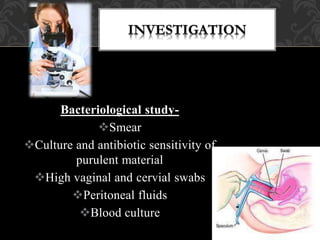
Bacteriological study-
Smear
Culture and antibiotic sensitivity of
purulent material
High vaginal and cervial swabs
Peritoneal fluids
Blood culture
Urine :-
Routine and microscopic
examination
Culture if infection is suspected
Complete blood count-
Ultrasonography-
For diagnosis of pelvic masses
Pelvic abscess
Pelvic peritonitis
Retained bits of placenta and/ or membrane
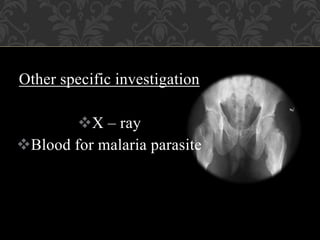
Other specific investigation
X – ray
Blood for malaria parasite
SUBINVOLUTION
When the involution is impaired or retarded
it is called subinvolution.
DEFINITION
 Grand multiparity,
 twins and hydramnios,
 Maternal ill health,
 Cesarean section,
 Prolapse of the uterus,
 Uterine fibroid.
CAUSES:
• The condition may be asymptomatic.
(1)Abnormal lochial discharge either excessive
or prolonged,
(2)Irregular or at times excessive uterine
bleeding,
(3) Irregular cramp like pain in cases of
retained products or rise of temperature in
sepsis
SYMPTOMS:
(1) The uterine height is greater than the normal for
the particular day of puerperium. It feels boggy and
softer.
(2) Presence of features responsible for subinvolution
may be evident.
SIGNS:
Appropriate therapy is to be instituted only when
subinvolution is found to be a mere sign of some local
pathology:
(1)Antibiotics in endometritis,
(2)Exploration of the uterus in retained products,
(3) Pessary in prolapse or retroversion.
MANAGEMENT
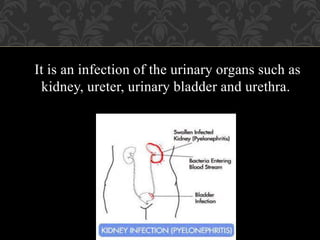
It is an infection of the urinary organs such as
kidney, ureter, urinary bladder and urethra.
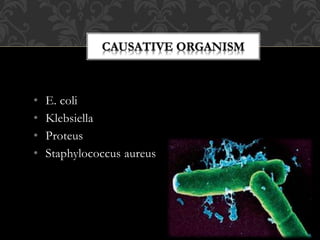
• E. coli
• Klebsiella
• Proteus
• Staphylococcus aureus
OTHER CAUSES ARE:-
 Recurrence of previous cystitis and pyelitis
 Infection contracted for the first time during
pregnancy is due to
Effect of frequent catheterization either during
labor or in early puerperium to relative retention
of urine.
Stasis of urine during early puerperium due to
lack of bladder tone and less desire to pass urine.
It is one of the common cause of
puerperal pyrexia, the incidence
being 1- 5 % of all deliveries.
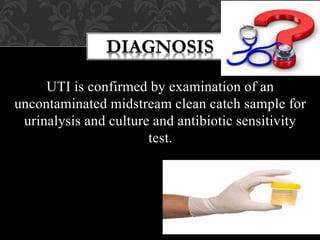
UTI is confirmed by examination of an
uncontaminated midstream clean catch sample for
urinalysis and culture and antibiotic sensitivity
test.
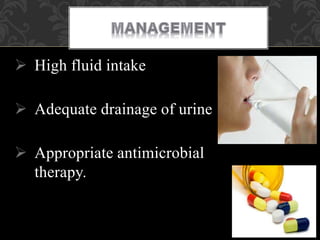
 High fluid intake
 Adequate drainage of urine
 Appropriate antimicrobial
therapy.
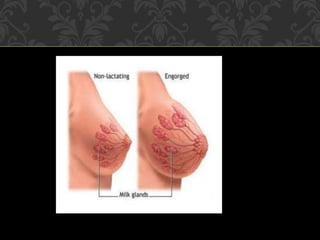
BREAST
ENGORGEMENT
CAUSES
Due to exaggerated normal
venous and lymphatic
engorgement.
Prevent the escape of milk from
lacteal system.
INCIDENCE
In primiparous
ONSET
Third and forth day
postpartum
SYMPTOMS
Pain
Heaviness in both breast
Malaise
Rise of temperature
Painful breast feeding
PREVENTION
Avoid prelacteal feeding
Initiate breast feeding early
and unrestricted
Exclusive breast feeding on
demand
Feeding in correct position
TREATMENT
Breast supports
Manual expression of
remaining milk after each feed
In severe condition use breast
pump
CRACKED AND
RETRACTED
NIPPLES
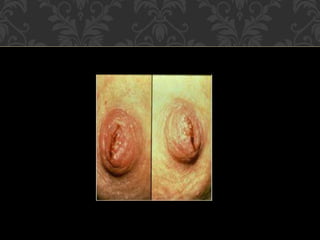
IT OCCURS DUE TO LOSS
OF SURFACE EPITHELIUM
OR DUE TO A FISSURE
SITUATED AT THE TIP OR
BASE OF THE NIPPLE
CAUSE
Crust formation over nipple due
to unhygiene
Retracted nipple
Trauma from baby's mouth
SYMPTOMS
Asymptomatic condition
pain while feeding
PROPHYLAXIS
Local cleanliness during pregnancy
and in puerperium before and after
each feeding
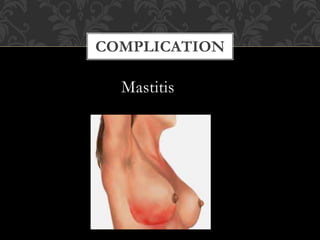
COMPLICATION
Mastitis
TREATMENT
 Correct attachment will provide
immediate relief from healing and
pain
 Fresh human milk and saliva have
got an healing property
 breast pumps in severe cases

Abnormal puerperium

  • 1.
  • 3.
    A rise oftemperature reaching 1000F (380 C) or more (measured orally) on 2 separate occasions at 24 hrs apart (excluding first 24 hours) within first 10 days following delivery is called Puerperal pyrexia. DEFINITION
  • 4.
    PUERPERAL SEPSIS URINARY TRACTINFECTION MASTITIS CAUSES…
  • 5.
    INFECTION OF CAESAREANSECTION WOUND PULMONARY INFECTION A RECRUDESCENCE OF MALARIA / PULMONARY TUBERCULOSIS
  • 6.
  • 7.
    An infection ofthe genital tract which occurs as a complication of delivery is termed puerperal sepsis DEFINITION
  • 8.
     Marked declinein cases:  Improved obstetric care  Availability of wider range of antibiotics INCIDENCE
  • 9.
  • 10.
    • Doderlein bacillus(60-70%) • Yeast like fungus –candida albicans (25%) • Staphylococcus albus or aureus • Streptococcus –anerobic common • E.coli • Clostridium welchii
  • 12.
    PATHOGENIC FACTOR FOR VAGINALFLORA The cervicovaginal mucous membrane is damaged even in normal delivery and the uterine surface too, specially at the placental site is converted into open wound by the seperation of the placenta which takes place during third stage of labor the blood clots present at the placental site are excellent media for the growth of the bacteria.
  • 13.
    • Malnutrition andanemia • Preterm labor • Premature rupture of membrane • Chronic debilitating illness (HIV) • Prolonged rupture of membrane >18hrs • Diabetes
  • 14.
    • Repeated vaginalexamination • Traumatic operative delivery • Retained bits of placental tissue or membrane. • Prolonged labour • Hemorrhage • Caesarean delivery
  • 15.
    Puerperal infection isan wound infection. The primary sites of the infection are:-  Perineum  Vagina  Cervix  Uterus
  • 16.
    PERINEUM Laceration of theperineum are likely to be infected. The wound edges become red and swollen. There may be collection of purulent discharge resulting in complete disruption of the wound.
  • 17.
    VAGINA Vaginal laceration areinfected directly or by extension from the perineal infection. The mucosa is swollen and hyperaemic, resulting in necrosis and sloughing
  • 18.
    Cervix:- The cervical lacerationbecomes the site of infection Uterus :- The uterus is most common site of infection Decidua (placental site) is common site and infected first The infection usually manifests between 3rd and 6th day of delivery
  • 19.
    Pelvic cellulitis:- (lymphatics /bloodroute) • Causes exudation n formation of indurated mass confined to one side of the uterus
  • 20.
    Salpingitis:- (lymphatic spread) infection of the fallopian tube and ovaries with the formation of tubo ovarian mass Peritonitis :- Localised pelvic abscess
  • 21.
    Thrombophelebitis :- Ovarian veinof one side is usually involved Uterine vein may also involved Suppuration n embolism to other organs Septicemia and pyemia:- These may lead to endocarditis, pericarditis, Renal abscess, lung abscess, meningitis or artheritis. “These are rare these days with advent of potent antibiotic”
  • 22.
    Local infection- Slight risein temperature, generalised malaise and headache. Redness and the swelling of the local wound Pus formation and disruption of wound Uterine infection-  Mild: Pyrexia of variable degree and tachycardia. Red, copius and offensive lochia. Subinvoluted, tender and soft uterus.
  • 23.
    Sever infection- Fever withchills and rigor Rapid pulse Scanty, odorless lochia Subinvoluted uterus Parametritis- Sustained rise in temperature (7th to 10th day) Constant pelvic pain Tenderness on either side of the hypogastrium Unilateral, tender mass felt on vaginal examination
  • 24.
    Pelvic peritonitis:- Pyrexia withincreased pulse rate Lower abdominal pain and tenderness Collection of the pus in pouch of douglas
  • 25.
    Generalised peritonitis:- High feverwith rapid pulse Vomiting Abdominal pain Tender and distended abdomen Thrombophelebitis – swinging fever with chills and rigor Features of pyemia
  • 26.
    Septicemia- High temperature withrigor Rapid pulse Headache, insomnia or mental confusion Positive blood culture Sign/symptoms of infection in the lungs, meninges or joint
  • 27.
    Bacteriological study- Smear Culture andantibiotic sensitivity of purulent material High vaginal and cervial swabs Peritoneal fluids Blood culture
  • 28.
    Urine :- Routine andmicroscopic examination Culture if infection is suspected Complete blood count-
  • 29.
    Ultrasonography- For diagnosis ofpelvic masses Pelvic abscess Pelvic peritonitis Retained bits of placenta and/ or membrane
  • 30.
    Other specific investigation X– ray Blood for malaria parasite
  • 31.
  • 32.
    When the involutionis impaired or retarded it is called subinvolution. DEFINITION
  • 33.
     Grand multiparity, twins and hydramnios,  Maternal ill health,  Cesarean section,  Prolapse of the uterus,  Uterine fibroid. CAUSES:
  • 34.
    • The conditionmay be asymptomatic. (1)Abnormal lochial discharge either excessive or prolonged, (2)Irregular or at times excessive uterine bleeding, (3) Irregular cramp like pain in cases of retained products or rise of temperature in sepsis SYMPTOMS:
  • 35.
    (1) The uterineheight is greater than the normal for the particular day of puerperium. It feels boggy and softer. (2) Presence of features responsible for subinvolution may be evident. SIGNS:
  • 36.
    Appropriate therapy isto be instituted only when subinvolution is found to be a mere sign of some local pathology: (1)Antibiotics in endometritis, (2)Exploration of the uterus in retained products, (3) Pessary in prolapse or retroversion. MANAGEMENT
  • 38.
    It is aninfection of the urinary organs such as kidney, ureter, urinary bladder and urethra.
  • 39.
    • E. coli •Klebsiella • Proteus • Staphylococcus aureus
  • 40.
    OTHER CAUSES ARE:- Recurrence of previous cystitis and pyelitis  Infection contracted for the first time during pregnancy is due to Effect of frequent catheterization either during labor or in early puerperium to relative retention of urine. Stasis of urine during early puerperium due to lack of bladder tone and less desire to pass urine.
  • 41.
    It is oneof the common cause of puerperal pyrexia, the incidence being 1- 5 % of all deliveries.
  • 42.
    UTI is confirmedby examination of an uncontaminated midstream clean catch sample for urinalysis and culture and antibiotic sensitivity test.
  • 43.
     High fluidintake  Adequate drainage of urine  Appropriate antimicrobial therapy.
  • 44.
  • 45.
    CAUSES Due to exaggeratednormal venous and lymphatic engorgement. Prevent the escape of milk from lacteal system.
  • 46.
  • 47.
    ONSET Third and forthday postpartum
  • 48.
    SYMPTOMS Pain Heaviness in bothbreast Malaise Rise of temperature Painful breast feeding
  • 50.
    PREVENTION Avoid prelacteal feeding Initiatebreast feeding early and unrestricted Exclusive breast feeding on demand Feeding in correct position
  • 51.
    TREATMENT Breast supports Manual expressionof remaining milk after each feed In severe condition use breast pump
  • 52.
  • 53.
    IT OCCURS DUETO LOSS OF SURFACE EPITHELIUM OR DUE TO A FISSURE SITUATED AT THE TIP OR BASE OF THE NIPPLE
  • 55.
    CAUSE Crust formation overnipple due to unhygiene Retracted nipple Trauma from baby's mouth
  • 56.
  • 57.
    PROPHYLAXIS Local cleanliness duringpregnancy and in puerperium before and after each feeding
  • 58.
  • 59.
    TREATMENT  Correct attachmentwill provide immediate relief from healing and pain  Fresh human milk and saliva have got an healing property  breast pumps in severe cases