DR. NABEEL S. BONDAGJI, MD, FRCSC
Department of Obstetrics and Gynecology
Feto-Maternal Unit
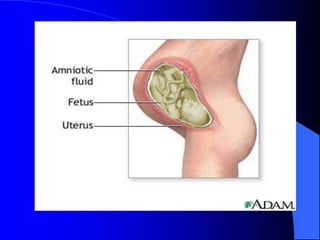
PHYSIOLOGY OF AMNIOTIC FLUID
 Early pregnancy: composition of AF
similar to ECF. Transfer of water across
amnion and through fetal skin.
 By second trimester: fetus begins to
urinate swallow, and inspire AF  During
last 2/3 of pregnancy, AF is principally
comprised of fetal urine.
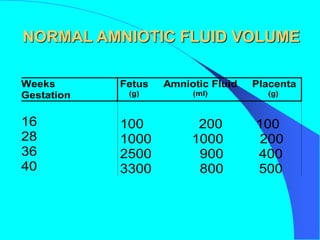
NORMAL AMNIOTIC FLUID VOLUME
Weeks
Gestation
Fetus Amniotic Fluid Placenta
(g) (ml) (g)
16
28
36
40
100 200 100
1000 1000 200
2500 900 400
3300 800 500
DEFINITIONS:
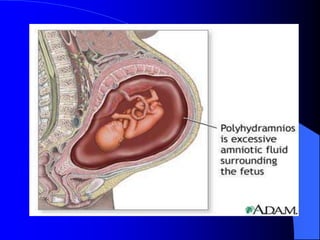
 Polyhydramnios: 2000 cc amniotic fluid
 Amniotic Fluid Index = largest vertical
pocket in 4 quadrants
polyhydramnios 24 cm.
ETIOLOGY OF POLYHYDRAMNIOS
 Idiopathic
 Fetal Anomalies
 Diabetes
 Multifetal gestation
 Immune/Non-immune hydrops
 Fetal infection
 Placental haemangiomas
Etiology of Polyhydramnios:
Fetal Anomalies
 Problems with swallowing and GI
absorption
 Increased transudation of fluid:
anencephaly, spina bifida
 Increased urination: anencephaly (lack of
ADH, stimulation of urination centers)
 Decreased inspiration
SYMPTOMS
 Dyspnea
 Abdominal pain
 Venous stasis
 Contractions  preterm labor
 Decreased Perception of Fetal
Movements
DIAGNOSIS
 Fundal height > gestational age
 Difficulty palpating fetal parts/hearing
heart tones
 Tense uterine wall
 ***Sonography
(fetus)?
 Fetal prognosis worsens with more severe
hydramnios and congenital anomalies
 15-20% fetal malformations
 Preterm delivery
 Suspect diabetes
 Prolapse of cord
 Abruption
(Mother)?
 Dyspnea
 Venous Stasis
 Placental abruption
 Uterine dysfunction
 Post-partum hemorrhage
 Abnormal presentation -- C/S
TREATMENT
 Mild to Moderate hydramnios: rarely
requires treatment
 Hospitalization, bed rest
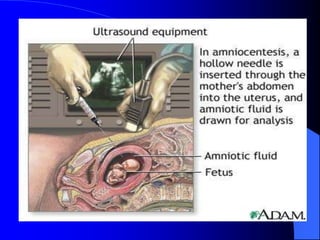
 Amniocentesis
 Non-steroidal anti-inflammatory analgesia
 Blood sugar control
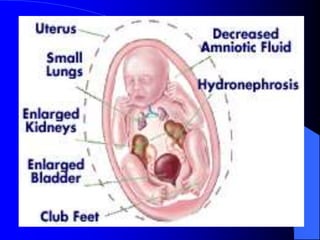
OLIGOHYDRAMNIOS
DEFINITION
 AFI 5
ETIOLOGY
 Postdate
 Fetal Anomalies: obstruction of fetal
urinary tract/renal agenesis
 IUGR
 ROM
 Twin/Twin transfusion
 Exposure to ACE inhibitors, and
 Non-steroidal anti-inflammatory
SIGNS/SYMPTOMS
 Fundal height < gestational age
 Decreased fetal movement
 Fetal Heart Rate tracing abnormality
 Diagnosis: Ultrasound
 Extremely poor fetal prognosis, especially
in early pregnancy
 Adhesions between amnion and fetal parts -
--malformations and amputations
 Musculoskeletal deformities
 Pulmonary hypoplasia
 Cord Compression -- >fetal hypoxia
 Passage of meconium into low AF volume:
thick particulate suspension -->respiratory
compromise
TREATMENT
 Delivery
 Amnioinfusion
POLYHYDRAMNIOS AND OLIGOHYDRAMNIOS.ppt

POLYHYDRAMNIOS AND OLIGOHYDRAMNIOS.ppt

  • 1.
    DR. NABEEL S.BONDAGJI, MD, FRCSC Department of Obstetrics and Gynecology Feto-Maternal Unit
  • 2.
    PHYSIOLOGY OF AMNIOTICFLUID  Early pregnancy: composition of AF similar to ECF. Transfer of water across amnion and through fetal skin.  By second trimester: fetus begins to urinate swallow, and inspire AF  During last 2/3 of pregnancy, AF is principally comprised of fetal urine.
  • 3.
    NORMAL AMNIOTIC FLUIDVOLUME Weeks Gestation Fetus Amniotic Fluid Placenta (g) (ml) (g) 16 28 36 40 100 200 100 1000 1000 200 2500 900 400 3300 800 500
  • 5.
    DEFINITIONS:  Polyhydramnios: 2000cc amniotic fluid  Amniotic Fluid Index = largest vertical pocket in 4 quadrants polyhydramnios 24 cm.
  • 7.
    ETIOLOGY OF POLYHYDRAMNIOS Idiopathic  Fetal Anomalies  Diabetes  Multifetal gestation  Immune/Non-immune hydrops  Fetal infection  Placental haemangiomas
  • 8.
    Etiology of Polyhydramnios: FetalAnomalies  Problems with swallowing and GI absorption  Increased transudation of fluid: anencephaly, spina bifida  Increased urination: anencephaly (lack of ADH, stimulation of urination centers)  Decreased inspiration
  • 9.
    SYMPTOMS  Dyspnea  Abdominalpain  Venous stasis  Contractions  preterm labor  Decreased Perception of Fetal Movements
  • 10.
    DIAGNOSIS  Fundal height> gestational age  Difficulty palpating fetal parts/hearing heart tones  Tense uterine wall  ***Sonography
  • 11.
    (fetus)?  Fetal prognosisworsens with more severe hydramnios and congenital anomalies  15-20% fetal malformations  Preterm delivery  Suspect diabetes  Prolapse of cord  Abruption
  • 12.
    (Mother)?  Dyspnea  VenousStasis  Placental abruption  Uterine dysfunction  Post-partum hemorrhage  Abnormal presentation -- C/S
  • 13.
    TREATMENT  Mild toModerate hydramnios: rarely requires treatment  Hospitalization, bed rest  Amniocentesis  Non-steroidal anti-inflammatory analgesia  Blood sugar control
  • 14.
  • 15.
  • 17.
    ETIOLOGY  Postdate  FetalAnomalies: obstruction of fetal urinary tract/renal agenesis  IUGR  ROM  Twin/Twin transfusion  Exposure to ACE inhibitors, and  Non-steroidal anti-inflammatory
  • 18.
    SIGNS/SYMPTOMS  Fundal height< gestational age  Decreased fetal movement  Fetal Heart Rate tracing abnormality  Diagnosis: Ultrasound
  • 20.
     Extremely poorfetal prognosis, especially in early pregnancy  Adhesions between amnion and fetal parts - --malformations and amputations  Musculoskeletal deformities  Pulmonary hypoplasia
  • 21.
     Cord Compression-- >fetal hypoxia  Passage of meconium into low AF volume: thick particulate suspension -->respiratory compromise
  • 22.