FST 611-Nutraceuticals and Functional
Foods
A. Poshadri
Reg.No: 2020T01P
Course In-charge
Dr. K.S.Gadhe
Associate Professor & Head
Introduction
• The concept of functional foods originated in Japan in the late 1970s
• The term Nutraceutical is a hybrid or contraction of Nutrition and
pharmaceutical - coined in 1989 by DeFelice
• The first Food for Specified Health Use (FOSHU) food (a hypoallergenic)
was approved in 1993, and by 2001 the market had grown surprisingly
with 192 products gaining approval
• IFIC: defines functional foods are “foods or dietary components that
may provide a health benefit beyond basic nutrition
Health Canada defines functional foods as “similar in appearance to a
conventional food, consumed as part of the usual diet, with demonstrated
physiological benefits, and/or to reduce the risk of chronic disease beyond
basic nutritional functions
Nutraceutical foods were defined by De Felice (2002) as “a food (or part of) that
provides medical or health benefits, including the prevention and/or treatment
of diseases,”
 Global market size: USD 162 billion in 2018 and was projected to reach USD
280 billion by 2025 (annual growth rate of around 8%)
 The nutraceutical market in India- CAGR of 17.1% and is nearly worth a
whopping Rs 22000 Cr ($3.0 billion).
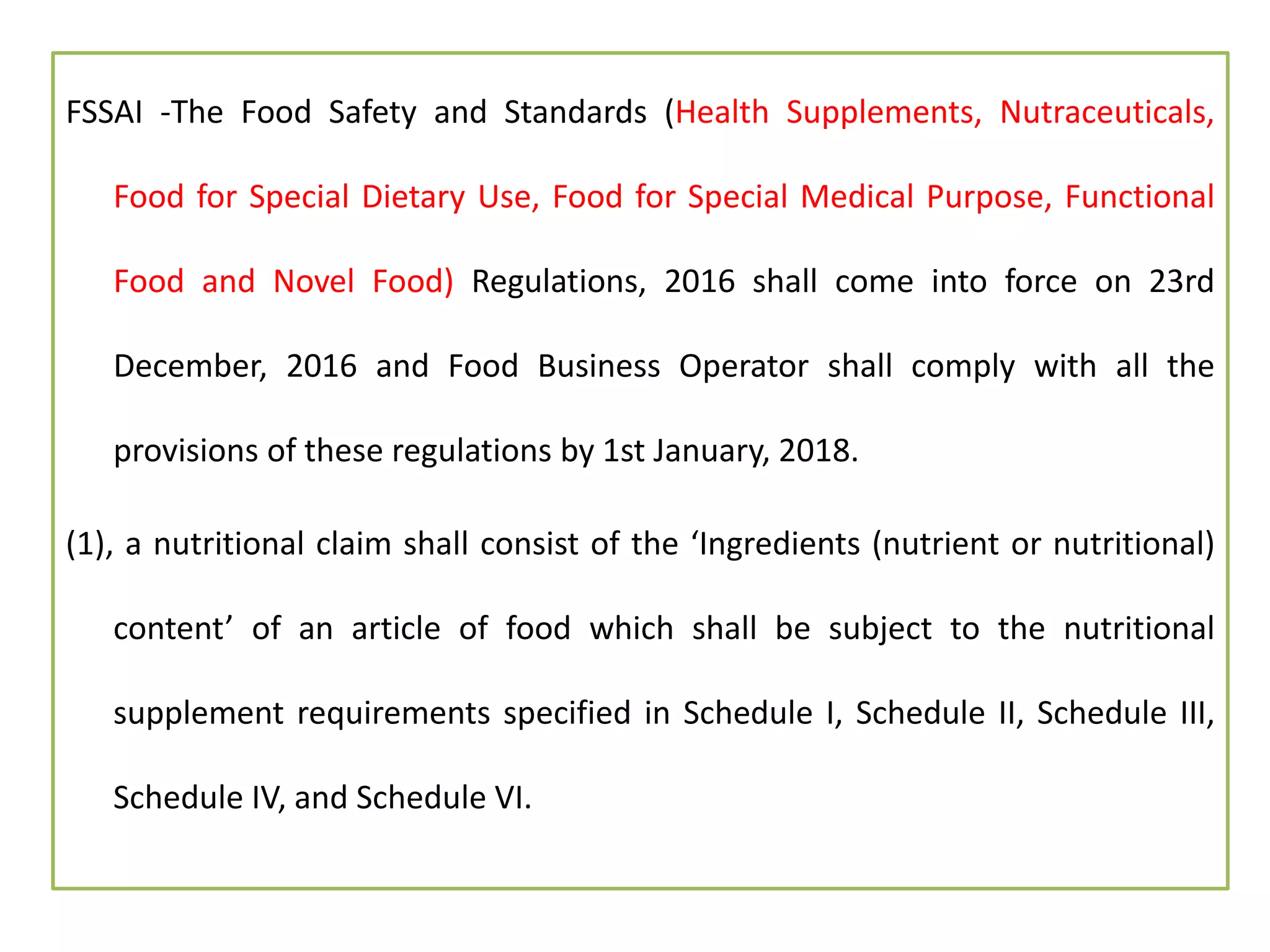
FSSAI -The Food Safety and Standards (Health Supplements, Nutraceuticals,
Food for Special Dietary Use, Food for Special Medical Purpose, Functional
Food and Novel Food) Regulations, 2016 shall come into force on 23rd
December, 2016 and Food Business Operator shall comply with all the
provisions of these regulations by 1st January, 2018.
(1), a nutritional claim shall consist of the ‘Ingredients (nutrient or nutritional)
content’ of an article of food which shall be subject to the nutritional
supplement requirements specified in Schedule I, Schedule II, Schedule III,
Schedule IV, and Schedule VI.
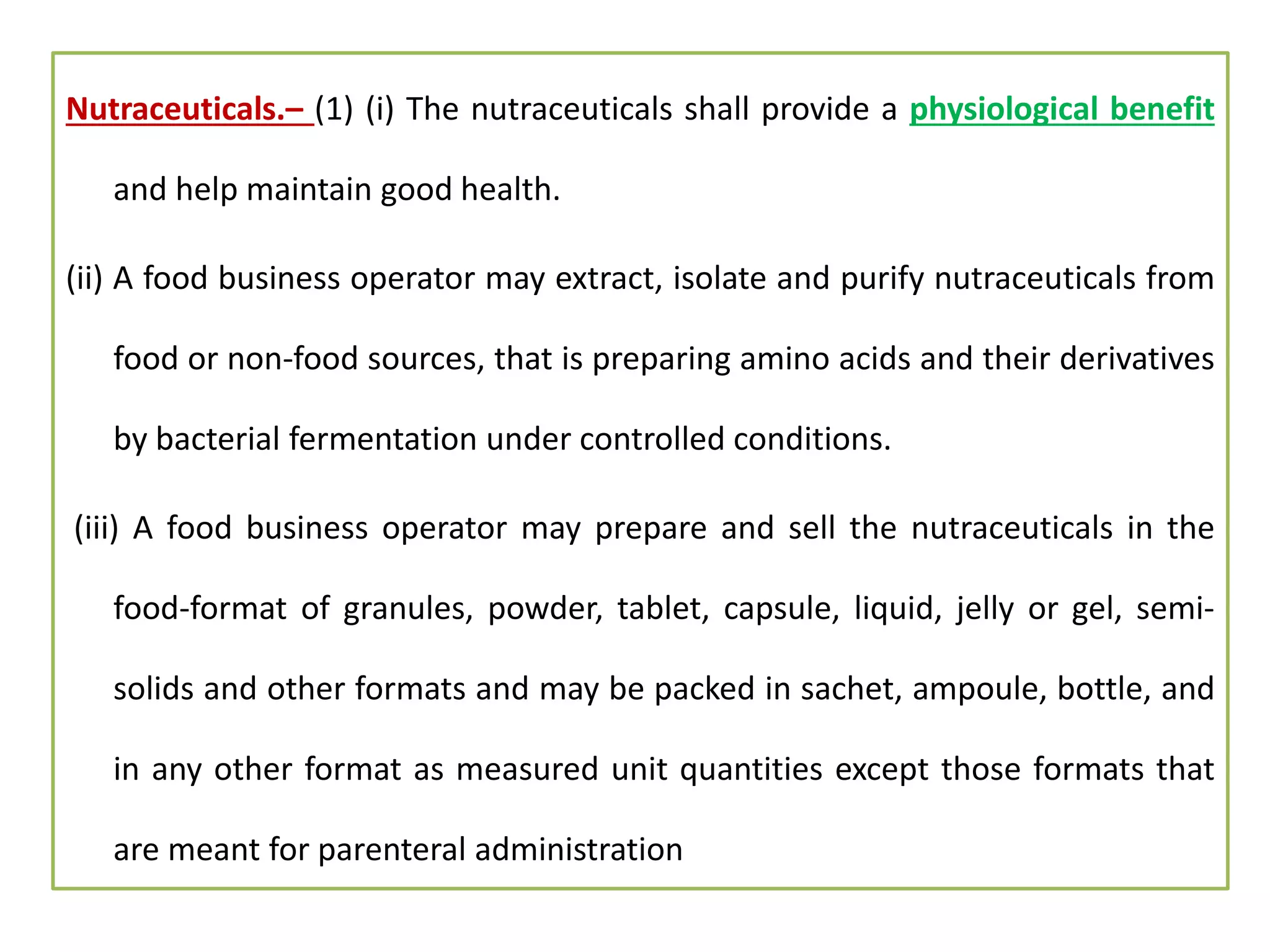
Nutraceuticals.– (1) (i) The nutraceuticals shall provide a physiological benefit
and help maintain good health.
(ii) A food business operator may extract, isolate and purify nutraceuticals from
food or non-food sources, that is preparing amino acids and their derivatives
by bacterial fermentation under controlled conditions.
(iii) A food business operator may prepare and sell the nutraceuticals in the
food-format of granules, powder, tablet, capsule, liquid, jelly or gel, semi-
solids and other formats and may be packed in sachet, ampoule, bottle, and
in any other format as measured unit quantities except those formats that
are meant for parenteral administration
Benefits of Nutraceuticals
a) May increase the health value of our diet.
b) May help us live longer.
c) May help us to avoid particular medical conditions.
d) May have a psychological benefit from doing something for one self.
e) May be perceived to be more “natural” than traditional medicine and
less likely to produce unpleasant side effects.
f) May present food for populations with special needs (e.g. nutrient-
dense foods for the elderly).
g) May easily be available and economically affordable
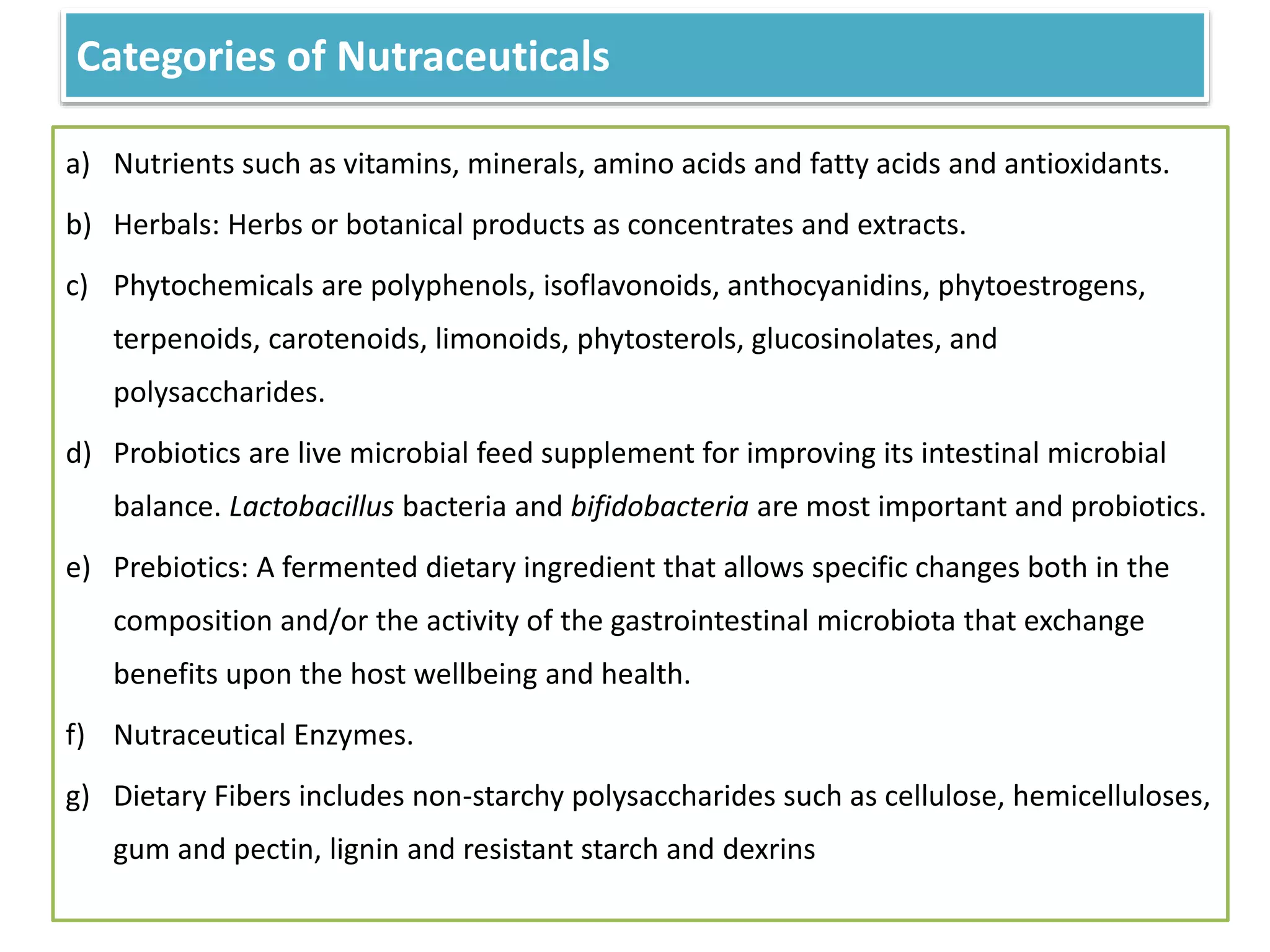
Categories of Nutraceuticals
a) Nutrients such as vitamins, minerals, amino acids and fatty acids and antioxidants.
b) Herbals: Herbs or botanical products as concentrates and extracts.
c) Phytochemicals are polyphenols, isoflavonoids, anthocyanidins, phytoestrogens,
terpenoids, carotenoids, limonoids, phytosterols, glucosinolates, and
polysaccharides.
d) Probiotics are live microbial feed supplement for improving its intestinal microbial
balance. Lactobacillus bacteria and bifidobacteria are most important and probiotics.
e) Prebiotics: A fermented dietary ingredient that allows specific changes both in the
composition and/or the activity of the gastrointestinal microbiota that exchange
benefits upon the host wellbeing and health.
f) Nutraceutical Enzymes.
g) Dietary Fibers includes non-starchy polysaccharides such as cellulose, hemicelluloses,
gum and pectin, lignin and resistant starch and dexrins
1. Bioactive compounds: Naturally occurring chemical compounds
contained in, or derived from, a plant, animal or marine source, that
exert the desired health/wellness benefit
2. Functional ingredients: Standardized and characterized preparations,
fractions or extracts containing bioactive compounds of varying
purity, that are used as ingredients, by manufacturers in the food
(human and pet) and fractions or extracts containing bioactive
compounds of varying purity, which are used as ingredients by
manufacturers in the cosmetics and pharmaceutical sectors.
Prominent types of functional foods
Type of functional food Definition Example
Fortified product A food fortified with additional
nutrients
Fruit juices fortified with
vitamin C
Enriched products A food with added new nutrients
or components not normally
found in a particular food
Margarine with plant sterol
ester, probiotics, prebiotics
Altered products A food from which a deleterious
component has been removed,
reduced or replaced with another
substance with beneficial effects
Fibers as fat releasers in meat
or ice cream products
Enhanced commodities A food in which one of the
components has been
naturally enhanced through
special growing
conditions, new feed
composition, genetic
manipulation, or otherwise
Eggs with increased omega-3
content achieved by
altered chicken feed
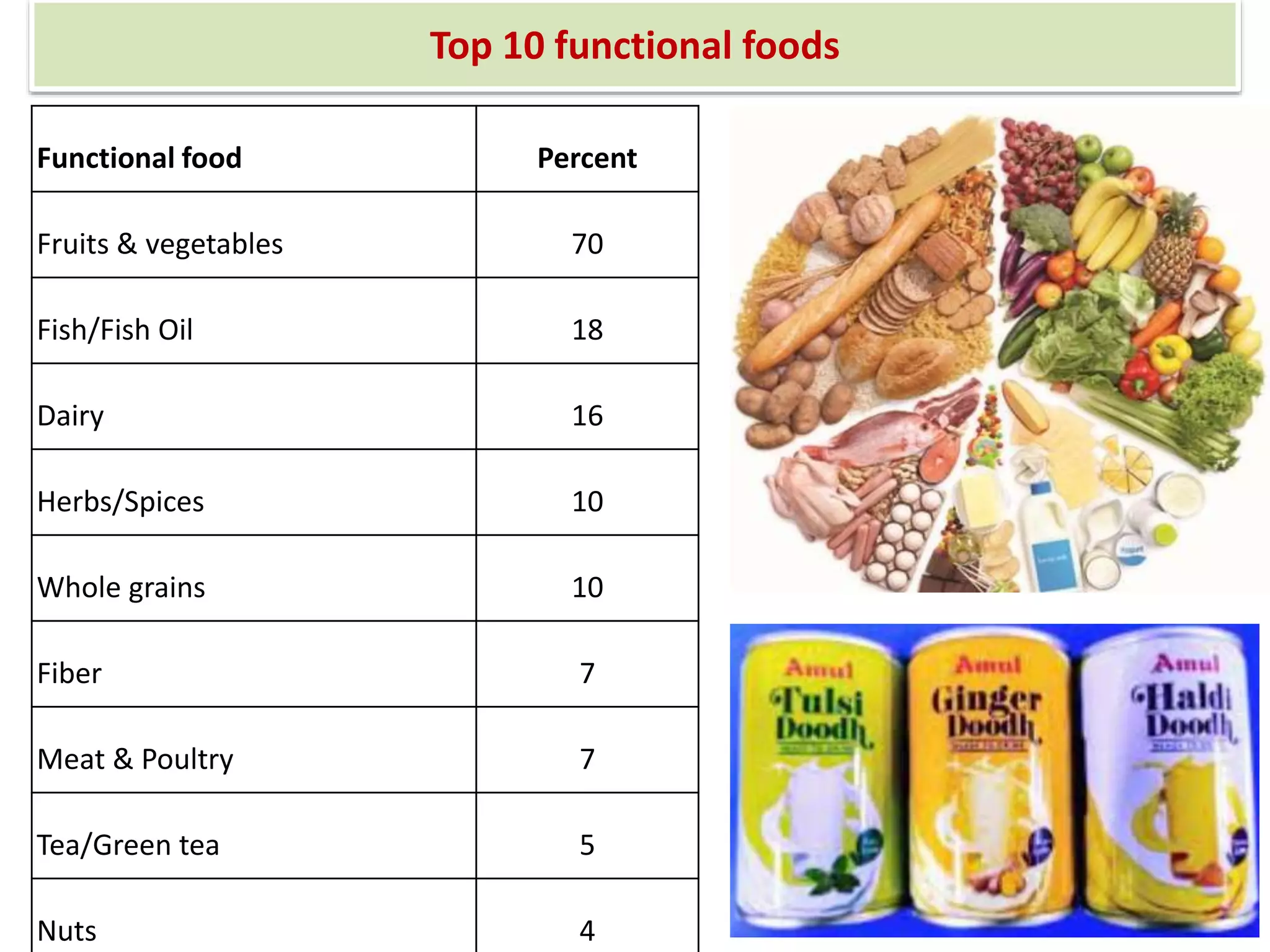
Top 10 functional foods
Functional food Percent
Fruits & vegetables 70
Fish/Fish Oil 18
Dairy 16
Herbs/Spices 10
Whole grains 10
Fiber 7
Meat & Poultry 7
Tea/Green tea 5
Nuts 4
Example of functional components with their potential benefits
Chemical groups Plant sources Medicinal property
Alkaloids
Quinine Cinchona Anti-malarial
Tropane alkaloids Solanaceous members :
Deadly night shade, Datura
In treatment of heart
ailments
Morphine Opium poppy Antidepressant, pain killer
Ergot alkaloids Fungus: Claviceps purpurea Abortifacients
Vincristine Periwinkle Antineoplastic
Vinblastine Periwinkle Antineoplastic
Coumarin, Fenugreek Hypoglycemic
Scopoletin Fenugreek Hypoglycemic
Fenugreekine Fenugreek Hypoglycemic
Trigonelliine Fenugreek Hypoglycemic
Carotenoid terpenoids/ Isoprenoids
α-carotene Carrots Antioxidants, anti
carcinogenic
β-carotene Fruits & vegetables Antioxidants
γ-cryptoxanthin Oranges & tangerines Antioxidants, anticancer
Lutein Vegetables (kale, spinach,
watercress, parsley)
Reduce risk of macular
degeneration,
protect against colon cancer
Zeaxanthin Corn, avocado Protects eye from macular
degeneration and cataracts
Lycopene Tomatoes, pink grapefruit,
watermelon, guava, papaya
Reduces risk of prostrate
cancer in males
Non-carotenoid terpenoids
Perillyl alcohol Cherries & mints Anticancer
Saponins Legumes (Chicks, peas,
fenugreek, all pulse crops)
Reduces cholesterol levels
in blood
Terpenol Carrots Anticancer
Terpene limonoids Peels and membranes of citrus
fruits
Anticarcinogenic
Flavonoid polyphenolics
Anthocyanins Stawberries, raspberries,
cherries,
cranberries,pomegranate,
apples, red grapes
Antioxidants
Betacyanins Beet root Antioxidants
Catechins Tea Antioxidants
Flavonones Citrus fruits Antioxidants
Flavones Fruits & vegetables Anticancer
Isoflavones Soybean Anticancer
Hesperetin Citrus fruits Antioxidants
Naringin Grapefruit Reduces cholesterol
Rutin Asparagus, buckwheat & citrus
fruits
Protects against cardio
vascular ailments
Quercitin Red onions, buckwheat, red
grapes, green tea, apple skins
Anti-sitaminic, antioxidant
Silymarin Artichoke & milk thistle Anti-atherosclerotic
Tangeretin tangerines Anticancer
Tannins Cranberries, pomegranate,
cocoa & tea
Reduces blood cholesterol
Phenolic acids
Ellagic acids Strawberries & raspberries Prevents colon cancer
Chlorogenic acids Blueberries, tomatoes, grapes &
bell peppers
Antioxidant
p-coumaric acids Red and green ball peppers,
legumes
Antioxidant, anticancer
Phytic acids Legumes and whole seed grains Lowers blood glucose
Ferulic acids Seeds of brown rice, whole
wheat and oats,apple,
artichoke, orange, peanut &
pine apple
Antioxidant, anticancer
Vanillin Vanilla bean Antioxidant, anticancer
Cinnamic acid Cinnamon, balsam tree resins Antibacterial, antifungal
Hydroxycinnamic acid Grapes, blueberries &
blackberries
Antioxidant, anticancer
Non-flavonoid polyphenolics
Curcumin Curcuma Anti-microbial, anticancer,
antioxidant
Resveratrol Grapes Anti-inflammatory,
anticancer
Lignans Plant cell walls Reduces skin cancer
Glucosinolates
Isothiocyanates Horseradish, radish & mustard Anticancer
Phenethyl isothiocyanate Watercress Anticancer
Sulforaphene Broccoli Anticancer
Indoles Broccoli Anticancer
Thiosulfonates Garlic & onions Anticancer, antimicrobial,
reduces blood
pressure and blood
cholesterol
Phytosterols (plant
sterols)
Peanuts, cashews, almonds,
peas, kidney beans & avocados
Anticancer, blocks
cholesterol absorption
Anthraquinones
Senna Legumes and pulses Purgative
Barbaloin Aloe Laxative, anti-helminthic
Hypericin St. John’s wort Analgesic
Capsaicin Capsicum (hot peppers) Anticancer, anti
inflammatory, anti-apoptotic
Piperine Black peppers, jalapeno
peppers
Helps in digestion
Terpenes
Menthol (Monoterpene) Plants of mint family Topical pain reliever & anti-
pyretic
Borneol (Monoterpene) Pine oil Disinfectant
Santonin
(Sesquiterpene)
Wormwood Photosensitizer
Gossypol
(Sesquiterpene)
Cotton Contraceptive
Adopted from Saikat K Basu,James E Thomas and Surya N Acharya (2007).Prospects for
Growth in Global Nutraceutical and Functional Food Markets: A Canadian
PerspectiveA. Australian Journal of Basic and Applied Sciences, 1(4): 637-649.
Challenges in Nutraceuticals production/claims
 Regulatory credibility and uncertain claims in labelling.
 The lack of quality control is an area of concern for nutraceuticals.
 Absence of quality control will increase the risk to the consumer and also
results in a total lack of driving force to conduct an adequate research that
shows the potential benefits of nutraceuticals or ensures their safety.
 The safety of nutraceuticals must be assured, and all the claims must be
substantiated, truthful and non-misleading.
 Clinical research on specific nutraceutical products would help substantiate
the potential medical or health values of these products.

Nutraceuticals and functional foods

  • 1.
    FST 611-Nutraceuticals andFunctional Foods A. Poshadri Reg.No: 2020T01P Course In-charge Dr. K.S.Gadhe Associate Professor & Head
  • 2.
    Introduction • The conceptof functional foods originated in Japan in the late 1970s • The term Nutraceutical is a hybrid or contraction of Nutrition and pharmaceutical - coined in 1989 by DeFelice • The first Food for Specified Health Use (FOSHU) food (a hypoallergenic) was approved in 1993, and by 2001 the market had grown surprisingly with 192 products gaining approval • IFIC: defines functional foods are “foods or dietary components that may provide a health benefit beyond basic nutrition
  • 3.
    Health Canada definesfunctional foods as “similar in appearance to a conventional food, consumed as part of the usual diet, with demonstrated physiological benefits, and/or to reduce the risk of chronic disease beyond basic nutritional functions Nutraceutical foods were defined by De Felice (2002) as “a food (or part of) that provides medical or health benefits, including the prevention and/or treatment of diseases,”  Global market size: USD 162 billion in 2018 and was projected to reach USD 280 billion by 2025 (annual growth rate of around 8%)  The nutraceutical market in India- CAGR of 17.1% and is nearly worth a whopping Rs 22000 Cr ($3.0 billion).
  • 4.
    FSSAI -The FoodSafety and Standards (Health Supplements, Nutraceuticals, Food for Special Dietary Use, Food for Special Medical Purpose, Functional Food and Novel Food) Regulations, 2016 shall come into force on 23rd December, 2016 and Food Business Operator shall comply with all the provisions of these regulations by 1st January, 2018. (1), a nutritional claim shall consist of the ‘Ingredients (nutrient or nutritional) content’ of an article of food which shall be subject to the nutritional supplement requirements specified in Schedule I, Schedule II, Schedule III, Schedule IV, and Schedule VI.
  • 5.
    Nutraceuticals.– (1) (i)The nutraceuticals shall provide a physiological benefit and help maintain good health. (ii) A food business operator may extract, isolate and purify nutraceuticals from food or non-food sources, that is preparing amino acids and their derivatives by bacterial fermentation under controlled conditions. (iii) A food business operator may prepare and sell the nutraceuticals in the food-format of granules, powder, tablet, capsule, liquid, jelly or gel, semi- solids and other formats and may be packed in sachet, ampoule, bottle, and in any other format as measured unit quantities except those formats that are meant for parenteral administration
  • 6.
    Benefits of Nutraceuticals a)May increase the health value of our diet. b) May help us live longer. c) May help us to avoid particular medical conditions. d) May have a psychological benefit from doing something for one self. e) May be perceived to be more “natural” than traditional medicine and less likely to produce unpleasant side effects. f) May present food for populations with special needs (e.g. nutrient- dense foods for the elderly). g) May easily be available and economically affordable
  • 7.
    Categories of Nutraceuticals a)Nutrients such as vitamins, minerals, amino acids and fatty acids and antioxidants. b) Herbals: Herbs or botanical products as concentrates and extracts. c) Phytochemicals are polyphenols, isoflavonoids, anthocyanidins, phytoestrogens, terpenoids, carotenoids, limonoids, phytosterols, glucosinolates, and polysaccharides. d) Probiotics are live microbial feed supplement for improving its intestinal microbial balance. Lactobacillus bacteria and bifidobacteria are most important and probiotics. e) Prebiotics: A fermented dietary ingredient that allows specific changes both in the composition and/or the activity of the gastrointestinal microbiota that exchange benefits upon the host wellbeing and health. f) Nutraceutical Enzymes. g) Dietary Fibers includes non-starchy polysaccharides such as cellulose, hemicelluloses, gum and pectin, lignin and resistant starch and dexrins
  • 9.
    1. Bioactive compounds:Naturally occurring chemical compounds contained in, or derived from, a plant, animal or marine source, that exert the desired health/wellness benefit 2. Functional ingredients: Standardized and characterized preparations, fractions or extracts containing bioactive compounds of varying purity, that are used as ingredients, by manufacturers in the food (human and pet) and fractions or extracts containing bioactive compounds of varying purity, which are used as ingredients by manufacturers in the cosmetics and pharmaceutical sectors.
  • 10.
    Prominent types offunctional foods Type of functional food Definition Example Fortified product A food fortified with additional nutrients Fruit juices fortified with vitamin C Enriched products A food with added new nutrients or components not normally found in a particular food Margarine with plant sterol ester, probiotics, prebiotics Altered products A food from which a deleterious component has been removed, reduced or replaced with another substance with beneficial effects Fibers as fat releasers in meat or ice cream products Enhanced commodities A food in which one of the components has been naturally enhanced through special growing conditions, new feed composition, genetic manipulation, or otherwise Eggs with increased omega-3 content achieved by altered chicken feed
  • 11.
    Top 10 functionalfoods Functional food Percent Fruits & vegetables 70 Fish/Fish Oil 18 Dairy 16 Herbs/Spices 10 Whole grains 10 Fiber 7 Meat & Poultry 7 Tea/Green tea 5 Nuts 4
  • 12.
    Example of functionalcomponents with their potential benefits Chemical groups Plant sources Medicinal property Alkaloids Quinine Cinchona Anti-malarial Tropane alkaloids Solanaceous members : Deadly night shade, Datura In treatment of heart ailments Morphine Opium poppy Antidepressant, pain killer Ergot alkaloids Fungus: Claviceps purpurea Abortifacients Vincristine Periwinkle Antineoplastic Vinblastine Periwinkle Antineoplastic Coumarin, Fenugreek Hypoglycemic Scopoletin Fenugreek Hypoglycemic Fenugreekine Fenugreek Hypoglycemic Trigonelliine Fenugreek Hypoglycemic
  • 13.
    Carotenoid terpenoids/ Isoprenoids α-caroteneCarrots Antioxidants, anti carcinogenic β-carotene Fruits & vegetables Antioxidants γ-cryptoxanthin Oranges & tangerines Antioxidants, anticancer Lutein Vegetables (kale, spinach, watercress, parsley) Reduce risk of macular degeneration, protect against colon cancer Zeaxanthin Corn, avocado Protects eye from macular degeneration and cataracts Lycopene Tomatoes, pink grapefruit, watermelon, guava, papaya Reduces risk of prostrate cancer in males Non-carotenoid terpenoids Perillyl alcohol Cherries & mints Anticancer Saponins Legumes (Chicks, peas, fenugreek, all pulse crops) Reduces cholesterol levels in blood Terpenol Carrots Anticancer Terpene limonoids Peels and membranes of citrus fruits Anticarcinogenic
  • 14.
    Flavonoid polyphenolics Anthocyanins Stawberries,raspberries, cherries, cranberries,pomegranate, apples, red grapes Antioxidants Betacyanins Beet root Antioxidants Catechins Tea Antioxidants Flavonones Citrus fruits Antioxidants Flavones Fruits & vegetables Anticancer Isoflavones Soybean Anticancer Hesperetin Citrus fruits Antioxidants Naringin Grapefruit Reduces cholesterol Rutin Asparagus, buckwheat & citrus fruits Protects against cardio vascular ailments Quercitin Red onions, buckwheat, red grapes, green tea, apple skins Anti-sitaminic, antioxidant Silymarin Artichoke & milk thistle Anti-atherosclerotic Tangeretin tangerines Anticancer Tannins Cranberries, pomegranate, cocoa & tea Reduces blood cholesterol
  • 15.
    Phenolic acids Ellagic acidsStrawberries & raspberries Prevents colon cancer Chlorogenic acids Blueberries, tomatoes, grapes & bell peppers Antioxidant p-coumaric acids Red and green ball peppers, legumes Antioxidant, anticancer Phytic acids Legumes and whole seed grains Lowers blood glucose Ferulic acids Seeds of brown rice, whole wheat and oats,apple, artichoke, orange, peanut & pine apple Antioxidant, anticancer Vanillin Vanilla bean Antioxidant, anticancer Cinnamic acid Cinnamon, balsam tree resins Antibacterial, antifungal Hydroxycinnamic acid Grapes, blueberries & blackberries Antioxidant, anticancer Non-flavonoid polyphenolics Curcumin Curcuma Anti-microbial, anticancer, antioxidant Resveratrol Grapes Anti-inflammatory, anticancer Lignans Plant cell walls Reduces skin cancer
  • 16.
    Glucosinolates Isothiocyanates Horseradish, radish& mustard Anticancer Phenethyl isothiocyanate Watercress Anticancer Sulforaphene Broccoli Anticancer Indoles Broccoli Anticancer Thiosulfonates Garlic & onions Anticancer, antimicrobial, reduces blood pressure and blood cholesterol Phytosterols (plant sterols) Peanuts, cashews, almonds, peas, kidney beans & avocados Anticancer, blocks cholesterol absorption Anthraquinones Senna Legumes and pulses Purgative Barbaloin Aloe Laxative, anti-helminthic Hypericin St. John’s wort Analgesic Capsaicin Capsicum (hot peppers) Anticancer, anti inflammatory, anti-apoptotic Piperine Black peppers, jalapeno peppers Helps in digestion
  • 17.
    Terpenes Menthol (Monoterpene) Plantsof mint family Topical pain reliever & anti- pyretic Borneol (Monoterpene) Pine oil Disinfectant Santonin (Sesquiterpene) Wormwood Photosensitizer Gossypol (Sesquiterpene) Cotton Contraceptive Adopted from Saikat K Basu,James E Thomas and Surya N Acharya (2007).Prospects for Growth in Global Nutraceutical and Functional Food Markets: A Canadian PerspectiveA. Australian Journal of Basic and Applied Sciences, 1(4): 637-649.
  • 18.
    Challenges in Nutraceuticalsproduction/claims  Regulatory credibility and uncertain claims in labelling.  The lack of quality control is an area of concern for nutraceuticals.  Absence of quality control will increase the risk to the consumer and also results in a total lack of driving force to conduct an adequate research that shows the potential benefits of nutraceuticals or ensures their safety.  The safety of nutraceuticals must be assured, and all the claims must be substantiated, truthful and non-misleading.  Clinical research on specific nutraceutical products would help substantiate the potential medical or health values of these products.