FATHIMA MAHMOOD
WHATARE
THEY?
Antinutrients are natural or synthetic compounds that
block the absorption of nutrients and/or act as
toxins, exerting a negative effect on our body.
They are found at some level in almost all foods. Many
ANs are in contained in grains, legumes, beans , nuts
etc.
SIMPLE
PURPOSE
Antinutrients are produced by plants as a
part of their defense mechanism.
Plants needed to protect their seeds from
consumption and destruction by other organisms. So
the ANs evolved as poisons making the ingestor sick,
or block the digestion of the seeds so they are
excreted undamaged, in which case the animal has
helped spread the seeds!
SHOULDYOU BE WORRIED
ABOUT ANTINUTRIENTS
INYOUR FOOD?
PHYTATES: has a strong binding affinity to minerals such
ascalcium,magnesium,iron,copper,andzinc.This results inprecipitation,
making the minerals unavailable for absorption inthe intestines. Phytic acids
arecommon in the nuts,seeds and grains.
OXALATES present in many plants,particularlyinmembers of
the spinach familyandsoybeans.Oxalates bind tocalcium and preventits
absorption in thehuman body.Cancausekidneystones.
PROTEASE INHIBITORS:are substances that inhibit the actions
of trypsin, pepsinandother proteases in the gut, preventing the digestion and
subsequent absorptionof protein. Forexample,Bowman-Birk trypsin inhibitor is
foundinsoybeans.
LIPASE INHIBITORS, AMYLASEINHIBITORS(foundinmany types of beans)
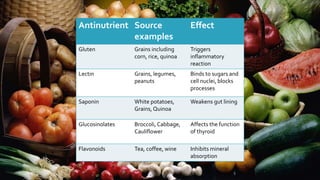
Antinutrient Source
examples
Effect
Gluten Grains including
corn, rice, quinoa
Triggers
inflammatory
reaction
Lectin Grains, legumes,
peanuts
Binds to sugars and
cell nuclei, blocks
processes
Saponin White potatoes,
Grains, Quinoa
Weakens gut lining
Glucosinolates Broccoli, Cabbage,
Cauliflower
Affects the function
of thyroid
Flavonoids Tea, coffee, wine Inhibits mineral
absorption
ANTINUTIRENTS CAN
BE INACTIVATED
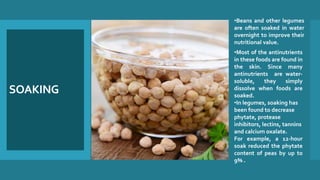
SOAKING
•Beans and other legumes
are often soaked in water
overnight to improve their
nutritional value.
•Most of the antinutrients
in these foods are found in
the skin. Since many
antinutrients are water-
soluble, they simply
dissolve when foods are
soaked.
•In legumes, soaking has
been found to decrease
phytate, protease
inhibitors, lectins, tannins
and calcium oxalate.
For example, a 12-hour
soak reduced the phytate
content of peas by up to
9% .
SPROUTING
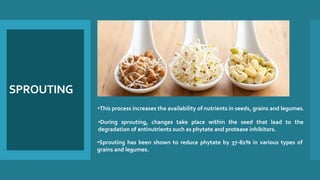
•This process increases the availability of nutrients in seeds, grains and legumes.
•During sprouting, changes take place within the seed that lead to the
degradation of antinutrients such as phytate and protease inhibitors.
•Sprouting has been shown to reduce phytate by 37-81% in various types of
grains and legumes.
HEAT
High heat, especially when boiling, can degrade antinutrients like lectins,
tannins and protease inhibitors
calcium oxalate is reduced by 19-87% in boiled green leafy vegetables. Steaming
and baking are not as effective.
In contrast, phytate is heat-resistant and not as easily degraded with boiling.
The cooking time required depends on the type of antinutrient, food plant and
the cooking method.
COMBINATION
OF METHODS
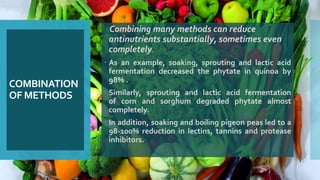
Combining many methods can reduce
antinutrients substantially, sometimes even
completely.
 As an example, soaking, sprouting and lactic acid
fermentation decreased the phytate in quinoa by
98% .
 Similarly, sprouting and lactic acid fermentation
of corn and sorghum degraded phytate almost
completely.
 In addition, soaking and boiling pigeon peas led to a
98-100% reduction in lectins, tannins and protease
inhibitors.
We need to be more intuitive
about our eating patterns
In a book, ‘Diet for the Atomic Age’, Sara
Shannon, lists 11 nutrients in particular that protect
against heavy metal toxicity and radiation
damage. Phytates bind with radioactive and toxic
substances and carry them out of the body. Aware of
phytic acid’s mineral binding properties, Shannon
states that an adequate diet will more than
compensate.
Solanine and Chaconine are also ANs which are
beneficial in less amounts but at higher levels can be
toxic to the body.
PHYTATE
CONTROVERSY.
EATING
APPROPRIATE
DOSES
Counteracting the effects with other
foods.
Eating foods rich in vitamin C, like leafy green
vegetables or citrus fruits, can counteract phytate and
increase iron absorption. And foods rich in vitamin
A like sweet potatoes or berries can also help improve
iron absorption.
EVALUATION
AND
PROTECTION
Individual ability to tolerate and digest
these ANs is based on a host of factors
including genetics, dose, other toxins,
age, digestion and other factors.
Intolerance to certain foods can be obvious or
completely obscure. Use of probiotics , enzymes,
acid, and other gut-healing compounds, and specific
preparation methods can eventually enable the re-
addition of previously toxic foods on a rotational
basis. The avoidance of certain foods for periods of
time may be necessary to enable healing.
THANKYOU

Antinutrients

  • 1.
  • 2.
    WHATARE THEY? Antinutrients are naturalor synthetic compounds that block the absorption of nutrients and/or act as toxins, exerting a negative effect on our body. They are found at some level in almost all foods. Many ANs are in contained in grains, legumes, beans , nuts etc.
  • 3.
    SIMPLE PURPOSE Antinutrients are producedby plants as a part of their defense mechanism. Plants needed to protect their seeds from consumption and destruction by other organisms. So the ANs evolved as poisons making the ingestor sick, or block the digestion of the seeds so they are excreted undamaged, in which case the animal has helped spread the seeds!
  • 4.
    SHOULDYOU BE WORRIED ABOUTANTINUTRIENTS INYOUR FOOD?
  • 5.
    PHYTATES: has astrong binding affinity to minerals such ascalcium,magnesium,iron,copper,andzinc.This results inprecipitation, making the minerals unavailable for absorption inthe intestines. Phytic acids arecommon in the nuts,seeds and grains. OXALATES present in many plants,particularlyinmembers of the spinach familyandsoybeans.Oxalates bind tocalcium and preventits absorption in thehuman body.Cancausekidneystones. PROTEASE INHIBITORS:are substances that inhibit the actions of trypsin, pepsinandother proteases in the gut, preventing the digestion and subsequent absorptionof protein. Forexample,Bowman-Birk trypsin inhibitor is foundinsoybeans. LIPASE INHIBITORS, AMYLASEINHIBITORS(foundinmany types of beans)
  • 6.
    Antinutrient Source examples Effect Gluten Grainsincluding corn, rice, quinoa Triggers inflammatory reaction Lectin Grains, legumes, peanuts Binds to sugars and cell nuclei, blocks processes Saponin White potatoes, Grains, Quinoa Weakens gut lining Glucosinolates Broccoli, Cabbage, Cauliflower Affects the function of thyroid Flavonoids Tea, coffee, wine Inhibits mineral absorption
  • 7.
  • 8.
    SOAKING •Beans and otherlegumes are often soaked in water overnight to improve their nutritional value. •Most of the antinutrients in these foods are found in the skin. Since many antinutrients are water- soluble, they simply dissolve when foods are soaked. •In legumes, soaking has been found to decrease phytate, protease inhibitors, lectins, tannins and calcium oxalate. For example, a 12-hour soak reduced the phytate content of peas by up to 9% .
  • 9.
    SPROUTING •This process increasesthe availability of nutrients in seeds, grains and legumes. •During sprouting, changes take place within the seed that lead to the degradation of antinutrients such as phytate and protease inhibitors. •Sprouting has been shown to reduce phytate by 37-81% in various types of grains and legumes.
  • 10.
    HEAT High heat, especiallywhen boiling, can degrade antinutrients like lectins, tannins and protease inhibitors calcium oxalate is reduced by 19-87% in boiled green leafy vegetables. Steaming and baking are not as effective. In contrast, phytate is heat-resistant and not as easily degraded with boiling. The cooking time required depends on the type of antinutrient, food plant and the cooking method.
  • 11.
    COMBINATION OF METHODS Combining manymethods can reduce antinutrients substantially, sometimes even completely.  As an example, soaking, sprouting and lactic acid fermentation decreased the phytate in quinoa by 98% .  Similarly, sprouting and lactic acid fermentation of corn and sorghum degraded phytate almost completely.  In addition, soaking and boiling pigeon peas led to a 98-100% reduction in lectins, tannins and protease inhibitors.
  • 12.
    We need tobe more intuitive about our eating patterns
  • 13.
    In a book,‘Diet for the Atomic Age’, Sara Shannon, lists 11 nutrients in particular that protect against heavy metal toxicity and radiation damage. Phytates bind with radioactive and toxic substances and carry them out of the body. Aware of phytic acid’s mineral binding properties, Shannon states that an adequate diet will more than compensate. Solanine and Chaconine are also ANs which are beneficial in less amounts but at higher levels can be toxic to the body. PHYTATE CONTROVERSY.
  • 14.
    EATING APPROPRIATE DOSES Counteracting the effectswith other foods. Eating foods rich in vitamin C, like leafy green vegetables or citrus fruits, can counteract phytate and increase iron absorption. And foods rich in vitamin A like sweet potatoes or berries can also help improve iron absorption.
  • 15.
    EVALUATION AND PROTECTION Individual ability totolerate and digest these ANs is based on a host of factors including genetics, dose, other toxins, age, digestion and other factors. Intolerance to certain foods can be obvious or completely obscure. Use of probiotics , enzymes, acid, and other gut-healing compounds, and specific preparation methods can eventually enable the re- addition of previously toxic foods on a rotational basis. The avoidance of certain foods for periods of time may be necessary to enable healing.
  • 16.