MEDIAL SURGICAL NURSING
GROUP TWO
PHARYNGITIS
INTRODUCTION
• DEFINITION: Pharyngitis is an inflammation of
the back of the throat or wall of the throat. It
causes pain, irritation, difficulty in swallowing
and scratchiness of the throat.
SIGNS AND SYMPTOMS
• Pharyngitis main causes are throat pain and
difficulty in swallowing. Other causes may
include:
Redness or inflammation of the throat
Neck tenderness and swelling
Pus or white patches on tonsils
Laryngitis(hoarseness) / pain with talking
CAUSES
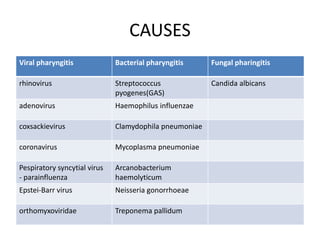
Viral pharyngitis Bacterial pharyngitis Fungal pharingitis
rhinovirus Streptococcus
pyogenes(GAS)
Candida albicans
adenovirus Haemophilus influenzae
coxsackievirus Clamydophila pneumoniae
coronavirus Mycoplasma pneumoniae
Pespiratory syncytial virus
- parainfluenza
Arcanobacterium
haemolyticum
Epstei-Barr virus Neisseria gonorrhoeae
orthomyxoviridae Treponema pallidum
TRANSISSION.
• Group A strep pharyngitis commonly spread
through direct person to person transmission.
• Typically occur through respiratory droplets
but also through contact with secretion, such
as saliva, wound discharge or nasal secretions.
• Symptomatic patients are likely to transmit
the bacteria or viral to other than
asymptomatic pharyngeal carriers.
Cont….
• Crowed conditions such as those in schools, daycare
centers, or military training facilities facilitate
transmission.
• Also can be rarely transmitted through food. Food
borne outbreak of pharyngitis have to occur due to
improper food handling.
• Evidence from outbreak investigation indicate that
environmental transmission of group A strep may be
possible, although it is likely a less common route of
transmission.
• Incubation period of group A step pharyngitis is
approximately 2 to 5 days
Cont..
• Other causes apart from common viral
illnesses and bacteria infections include:
 Allergies especially post natal drip
 Dryness such as when nasal congestion is
present and breathing through the mouth
occurs
 Irritants such as chemicals and smoke
 Gastro esophageal reflux syndrome(GERD)
PREVENTION
• Avoiding germs and practicing good hand
hygiene is the best way to prevent infection.
Tips of avoiding infection incude:
 avoid contact with people who are sick
Wash your hands thoroughly and frequently
with soap and water
Avoiding sharing foods and drinking after
others
Cont…
Use alcohol based hand sanitizer when hand
washing is unavailable
Regularly clean frequently touched surfacers
with sanitizing cleaner.
DIAGNOSIS
• Diagnosis of pharyngitis include;
 assessment of presenting signs and symptoms
 laboratory investigations involving rapid strep
testing and throat culture: throat culture remains
the criterion standard for bacterial pharyngitis
diagnosis.
Rapid antigen detection testing(RADT): This test
detect viral and bacterial antigen from throat
swab taken from tonsillar exudates or posterior
oropharyngeal using dipstick.
TREATMENT
• Viral infection usually resolve on their own within
5-7days and only require symptom management.
Example :
 fever can be managed by administering
ibuprofen and acetaminophen
Lozenges and sprays help to reduce pain.
• bacterial pharyngitis such as strep pharyngitis
treated by antibiotics after culture and sensitivity
Cont….
• Pharyngitis can also be relieved locally by
using warm salty water gargles( 1teaspoon to
1 cup of water)
NURSING MANAGEMENT
• NURSING ASSESSMENT:
History of exposure.
• history of exposure to known carries , fever,
headache, abdominal pain in conjunction with a
sore throat suggest group A beta hemolytic strep
pharyngitis
• history of intake: because supportive care is a
primary goal in all cases, historical information
regarding oral intake and hydration status is also
important.
• Assessment of signs and symptoms :
Involve all signs and symptoms shown by patient
with pharyngitis which include;
Redness or inflammation of the throat
Neck tenderness and swelling
Pus or white patches on tonsils
Laryngitis(hoarseness) / pain with talking
• Nursing diagnosis
based on assessment data, the majornursing
diagnosis are;
 ineffective breathing pattern related to
inflammatory process in the respiratory tract.
Ineffective airway clearance related to
mechanical obstruction of the airway as
evidenced by increased secretions
Anxiety related to disease experience
Nursing intervention
• Positioning, place the patient in semi fowlers
position in order to facilitate lung expansion
• Increase fluid intake, encourage fluid intake to
decrease viscosity of secretions.
• Increase room humidity using cool moist
vaporizer to relieve stiffness of the nose
• Administer medication, administer antibiotics
as prescribed after positive culture results
Nursing evaluation
goals are met as evidenced by;
 The patient reported increased energy
 The patient is afebrile
 The patient experience no further signs and
symptoms of infection
 The patient was able to expectorate sputum
efficiently
 The patient expressed feelings of comfort in
maintaining air exchange
PARTICIPANTS
• Godlisen shirima
• Salma mponda
• Ashura shaban
• Arafa ally mkoma
• Abdulkarim shomvi
• Jamila mansour

med surg 2..........................pptx

  • 1.
  • 2.
    INTRODUCTION • DEFINITION: Pharyngitisis an inflammation of the back of the throat or wall of the throat. It causes pain, irritation, difficulty in swallowing and scratchiness of the throat.
  • 3.
    SIGNS AND SYMPTOMS •Pharyngitis main causes are throat pain and difficulty in swallowing. Other causes may include: Redness or inflammation of the throat Neck tenderness and swelling Pus or white patches on tonsils Laryngitis(hoarseness) / pain with talking
  • 4.
    CAUSES Viral pharyngitis Bacterialpharyngitis Fungal pharingitis rhinovirus Streptococcus pyogenes(GAS) Candida albicans adenovirus Haemophilus influenzae coxsackievirus Clamydophila pneumoniae coronavirus Mycoplasma pneumoniae Pespiratory syncytial virus - parainfluenza Arcanobacterium haemolyticum Epstei-Barr virus Neisseria gonorrhoeae orthomyxoviridae Treponema pallidum
  • 5.
    TRANSISSION. • Group Astrep pharyngitis commonly spread through direct person to person transmission. • Typically occur through respiratory droplets but also through contact with secretion, such as saliva, wound discharge or nasal secretions. • Symptomatic patients are likely to transmit the bacteria or viral to other than asymptomatic pharyngeal carriers.
  • 6.
    Cont…. • Crowed conditionssuch as those in schools, daycare centers, or military training facilities facilitate transmission. • Also can be rarely transmitted through food. Food borne outbreak of pharyngitis have to occur due to improper food handling. • Evidence from outbreak investigation indicate that environmental transmission of group A strep may be possible, although it is likely a less common route of transmission. • Incubation period of group A step pharyngitis is approximately 2 to 5 days
  • 7.
    Cont.. • Other causesapart from common viral illnesses and bacteria infections include:  Allergies especially post natal drip  Dryness such as when nasal congestion is present and breathing through the mouth occurs  Irritants such as chemicals and smoke  Gastro esophageal reflux syndrome(GERD)
  • 8.
    PREVENTION • Avoiding germsand practicing good hand hygiene is the best way to prevent infection. Tips of avoiding infection incude:  avoid contact with people who are sick Wash your hands thoroughly and frequently with soap and water Avoiding sharing foods and drinking after others
  • 9.
    Cont… Use alcohol basedhand sanitizer when hand washing is unavailable Regularly clean frequently touched surfacers with sanitizing cleaner.
  • 10.
    DIAGNOSIS • Diagnosis ofpharyngitis include;  assessment of presenting signs and symptoms  laboratory investigations involving rapid strep testing and throat culture: throat culture remains the criterion standard for bacterial pharyngitis diagnosis. Rapid antigen detection testing(RADT): This test detect viral and bacterial antigen from throat swab taken from tonsillar exudates or posterior oropharyngeal using dipstick.
  • 11.
    TREATMENT • Viral infectionusually resolve on their own within 5-7days and only require symptom management. Example :  fever can be managed by administering ibuprofen and acetaminophen Lozenges and sprays help to reduce pain. • bacterial pharyngitis such as strep pharyngitis treated by antibiotics after culture and sensitivity
  • 12.
    Cont…. • Pharyngitis canalso be relieved locally by using warm salty water gargles( 1teaspoon to 1 cup of water)
  • 13.
    NURSING MANAGEMENT • NURSINGASSESSMENT: History of exposure. • history of exposure to known carries , fever, headache, abdominal pain in conjunction with a sore throat suggest group A beta hemolytic strep pharyngitis • history of intake: because supportive care is a primary goal in all cases, historical information regarding oral intake and hydration status is also important.
  • 14.
    • Assessment ofsigns and symptoms : Involve all signs and symptoms shown by patient with pharyngitis which include; Redness or inflammation of the throat Neck tenderness and swelling Pus or white patches on tonsils Laryngitis(hoarseness) / pain with talking
  • 15.
    • Nursing diagnosis basedon assessment data, the majornursing diagnosis are;  ineffective breathing pattern related to inflammatory process in the respiratory tract. Ineffective airway clearance related to mechanical obstruction of the airway as evidenced by increased secretions Anxiety related to disease experience
  • 16.
    Nursing intervention • Positioning,place the patient in semi fowlers position in order to facilitate lung expansion • Increase fluid intake, encourage fluid intake to decrease viscosity of secretions. • Increase room humidity using cool moist vaporizer to relieve stiffness of the nose • Administer medication, administer antibiotics as prescribed after positive culture results
  • 17.
    Nursing evaluation goals aremet as evidenced by;  The patient reported increased energy  The patient is afebrile  The patient experience no further signs and symptoms of infection  The patient was able to expectorate sputum efficiently  The patient expressed feelings of comfort in maintaining air exchange
  • 18.
    PARTICIPANTS • Godlisen shirima •Salma mponda • Ashura shaban • Arafa ally mkoma • Abdulkarim shomvi • Jamila mansour