Pharmaceuticals:
Bioequivalence
&
Clinical trials

an INTER-COMPARISON
methodology
for
BIOAVAILABILTY/BIOEQUIVALENCY
purposes

karafede@hotmail.com
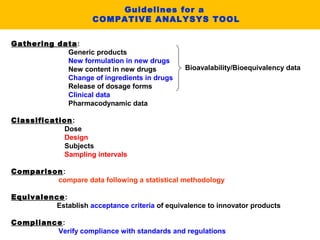
Guidelines for a
COMPATIVE ANALYSYS TOOL
Gathering data:
Generic products
New formulation in new drugs
New content in new drugs
Change of ingredients in drugs
Release of dosage forms
Clinical data
Pharmacodynamic data

Bioavalability/Bioequivalency data

Classification:
Dose
Design
Subjects
Sampling intervals
Comparison:
compare data following a statistical methodology
Equivalence:
Establish acceptance criteria of equivalence to innovator products
Compliance:
Verify compliance with standards and regulations
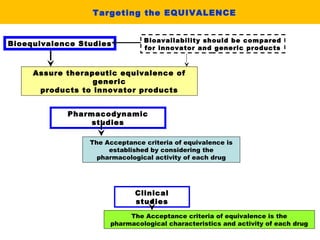
Targeting the EQUIVALENCE

Bioequivalence Studies

Bioavailability should be compared
for innovator and generic products

Assure therapeutic equivalence of
generic
products to innovator products
Pharmacodynamic
studies
The Acceptance criteria of equivalence is
established by considering the
pharmacological activity of each drug

Clinical
studies
The Acceptance criteria of equivalence is the
pharmacological characteristics and activity of each drug
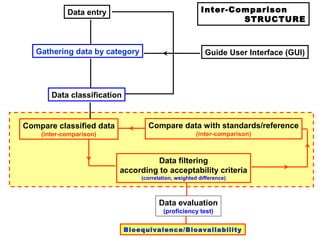
Data entry

Inter-Comparison
STRUCTURE

Gathering data by category

Guide User Interface (GUI)

Data classification

Compare classified data

Compare data with standards/reference

(inter-comparison)

(inter-comparison)

Data filtering
according to acceptability criteria
(correlation, weighted difference)

Data evaluation
(proficiency test)
Bioequivalence/Bioavailability
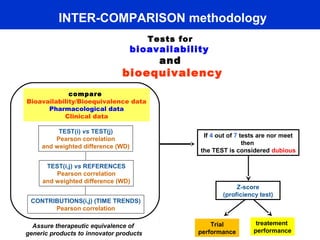
INTER-COMPARISON methodology
Tests for

bioavailability

and

bioequivalency
compare
Bioavailability/Bioequivalence data
Pharmacological data
Clinical data
TEST(i) vs TEST(j)
Pearson correlation
and weighted difference (WD)
TEST(i,j) vs REFERENCES
Pearson correlation
and weighted difference (WD)
CONTRIBUTIONS(i,j) (TIME TRENDS)
Pearson correlation
Assure therapeutic equivalence of
generic products to innovator products

If 4 out of 7 tests are nor meet
then
the TEST is considered dubious

Z-score
(proficiency test)

Trial
performance

treatement
performance
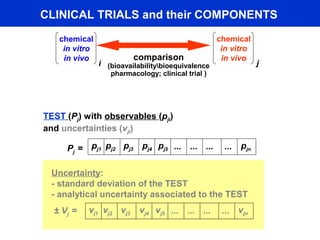
CLINICAL TRIALS and their COMPONENTS
chemical
in vitro
in vivo

comparison

i (bioavailabilitybioequivalence

chemical
in vitro
in vivo

pharmacology; clinical trial )

TEST (Pj) with observables (pji)
and uncertainties (vji)
Pj =

pj1 pj2 pj3

pj4 pj5 ... ... ...

...

pjn

Uncertainty:
- standard deviation of the TEST
- analytical uncertainty associated to the TEST
± Vj =

vj1 vj2 vj3

vj4 vj5 ... ... ...

...

vjn

j
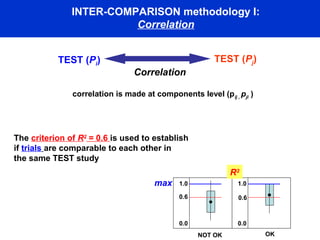
INTER-COMPARISON methodology I:
Correlation
TEST (Pi)

TEST (Pj)
Correlation

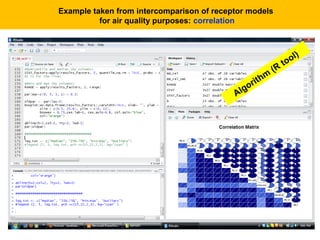
correlation is made at components level (pij , pji )

The criterion of R2 = 0.6 is used to establish
if trials are comparable to each other in
the same TEST study

R2
max

1.0

1.0

0.6

0.6

0.0

0.0
NOT OK

OK
Example taken from intercomparison of receptor models
for air quality purposes: correlation

g
Al

m
th
i
or

(R

t

ol)
o
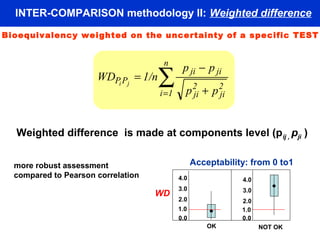
INTER-COMPARISON methodology II: Weighted difference
Bioequivalency weighted on the uncertainty of a specific TEST

n

WDPi Pj = 1/n

∑
i =1

p ji − p ji
p2 + p2
ji
ji

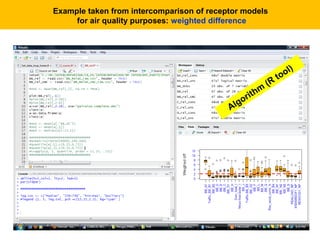
Weighted difference is made at components level (p ij , pji )
Acceptability: from 0 to1

more robust assessment
compared to Pearson correlation

4.0

WD

4.0

3.0

3.0

2.0

2.0
1.0
0.0

1.0
0.0
OK

NOT OK
Example taken from intercomparison of receptor models
for air quality purposes: weighted difference

g
Al

m
th
i
or

(R

t

ol)
o
INTER-COMPARISON methodology III:
proficiency test for bioavailabilty/bioequivalency, clinical studies
Defining the standard deviation for proficiency assessment ( σ p)
as criterion to evaluate new treatment performance (ISO 13528)
Assigned value
(σ p = 50%,25%...)
Pj − X j
z=
z-score
σp
 the TEST is considered coherent and satisfactory if:

z ≤2

“OK”

 the TEST is considered questionable if:

2≤ z ≤3

“Warning”

 the TEST is unsatisfactory if:

z >3

“Action”
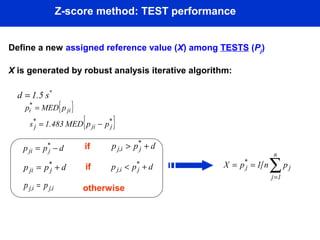
Z-score method: TEST performance
Define a new assigned reference value (X) among TESTS (Pj)
X is generated by robust analysis iterative algorithm:

d = 1.5 s*

{ }

p* = MED p ji
i

{

}

p ji = p* − d
j

if

p j,i > p* + d
j

p ji = p* + d
j

if

p j,i < p* + d
j

p j,i = p j,i

otherwise

s*j = 1.483 MED p ji − p*
j

X = p* = 1 n
j

n

∑p
j =1

j
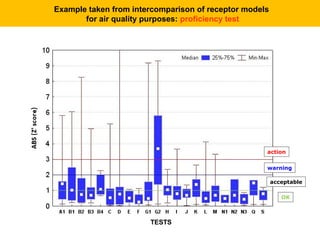
Example taken from intercomparison of receptor models
for air quality purposes: proficiency test

action
warning
acceptable
OK

TESTS
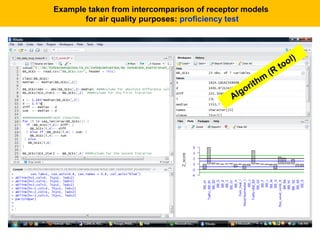
Example taken from intercomparison of receptor models
for air quality purposes: proficiency test

g
Al

m
th
i
or

(R

t

ol)
o

Pharmaceuticals: Bioequivalence & Clinical trials

  • 1.
  • 2.
    Guidelines for a COMPATIVEANALYSYS TOOL Gathering data: Generic products New formulation in new drugs New content in new drugs Change of ingredients in drugs Release of dosage forms Clinical data Pharmacodynamic data Bioavalability/Bioequivalency data Classification: Dose Design Subjects Sampling intervals Comparison: compare data following a statistical methodology Equivalence: Establish acceptance criteria of equivalence to innovator products Compliance: Verify compliance with standards and regulations
  • 3.
    Targeting the EQUIVALENCE BioequivalenceStudies Bioavailability should be compared for innovator and generic products Assure therapeutic equivalence of generic products to innovator products Pharmacodynamic studies The Acceptance criteria of equivalence is established by considering the pharmacological activity of each drug Clinical studies The Acceptance criteria of equivalence is the pharmacological characteristics and activity of each drug
  • 4.
    Data entry Inter-Comparison STRUCTURE Gathering databy category Guide User Interface (GUI) Data classification Compare classified data Compare data with standards/reference (inter-comparison) (inter-comparison) Data filtering according to acceptability criteria (correlation, weighted difference) Data evaluation (proficiency test) Bioequivalence/Bioavailability
  • 5.
    INTER-COMPARISON methodology Tests for bioavailability and bioequivalency compare Bioavailability/Bioequivalencedata Pharmacological data Clinical data TEST(i) vs TEST(j) Pearson correlation and weighted difference (WD) TEST(i,j) vs REFERENCES Pearson correlation and weighted difference (WD) CONTRIBUTIONS(i,j) (TIME TRENDS) Pearson correlation Assure therapeutic equivalence of generic products to innovator products If 4 out of 7 tests are nor meet then the TEST is considered dubious Z-score (proficiency test) Trial performance treatement performance
  • 6.
    CLINICAL TRIALS andtheir COMPONENTS chemical in vitro in vivo comparison i (bioavailabilitybioequivalence chemical in vitro in vivo pharmacology; clinical trial ) TEST (Pj) with observables (pji) and uncertainties (vji) Pj = pj1 pj2 pj3 pj4 pj5 ... ... ... ... pjn Uncertainty: - standard deviation of the TEST - analytical uncertainty associated to the TEST ± Vj = vj1 vj2 vj3 vj4 vj5 ... ... ... ... vjn j
  • 7.
    INTER-COMPARISON methodology I: Correlation TEST(Pi) TEST (Pj) Correlation correlation is made at components level (pij , pji ) The criterion of R2 = 0.6 is used to establish if trials are comparable to each other in the same TEST study R2 max 1.0 1.0 0.6 0.6 0.0 0.0 NOT OK OK
  • 8.
    Example taken fromintercomparison of receptor models for air quality purposes: correlation g Al m th i or (R t ol) o
  • 9.
    INTER-COMPARISON methodology II:Weighted difference Bioequivalency weighted on the uncertainty of a specific TEST n WDPi Pj = 1/n ∑ i =1 p ji − p ji p2 + p2 ji ji Weighted difference is made at components level (p ij , pji ) Acceptability: from 0 to1 more robust assessment compared to Pearson correlation 4.0 WD 4.0 3.0 3.0 2.0 2.0 1.0 0.0 1.0 0.0 OK NOT OK
  • 10.
    Example taken fromintercomparison of receptor models for air quality purposes: weighted difference g Al m th i or (R t ol) o
  • 11.
    INTER-COMPARISON methodology III: proficiencytest for bioavailabilty/bioequivalency, clinical studies Defining the standard deviation for proficiency assessment ( σ p) as criterion to evaluate new treatment performance (ISO 13528) Assigned value (σ p = 50%,25%...) Pj − X j z= z-score σp  the TEST is considered coherent and satisfactory if: z ≤2 “OK”  the TEST is considered questionable if: 2≤ z ≤3 “Warning”  the TEST is unsatisfactory if: z >3 “Action”
  • 12.
    Z-score method: TESTperformance Define a new assigned reference value (X) among TESTS (Pj) X is generated by robust analysis iterative algorithm: d = 1.5 s* { } p* = MED p ji i { } p ji = p* − d j if p j,i > p* + d j p ji = p* + d j if p j,i < p* + d j p j,i = p j,i otherwise s*j = 1.483 MED p ji − p* j X = p* = 1 n j n ∑p j =1 j
  • 13.
    Example taken fromintercomparison of receptor models for air quality purposes: proficiency test action warning acceptable OK TESTS
  • 14.
    Example taken fromintercomparison of receptor models for air quality purposes: proficiency test g Al m th i or (R t ol) o