JRC-ISPRA 28 April 2011

1

F. KARAGULIAN1, L. Clarisse2,
F. Lagler1, M. Barbiere1, R. Connolly1 and, C. A. Belis1

PM formation during a photochemical
episode in the Po Valley: measurements,
mechanisms and source apportionment

European Commission - JRC Institute for Environment and Sustainability, Ispra, Italy
2
Université Libre de Bruxelles, Brussels, Belgium
1
JRC-ISPRA 28 April 2011

Is there any influence of photochemistry
on PM2.5 concentration in the Po valley?

2
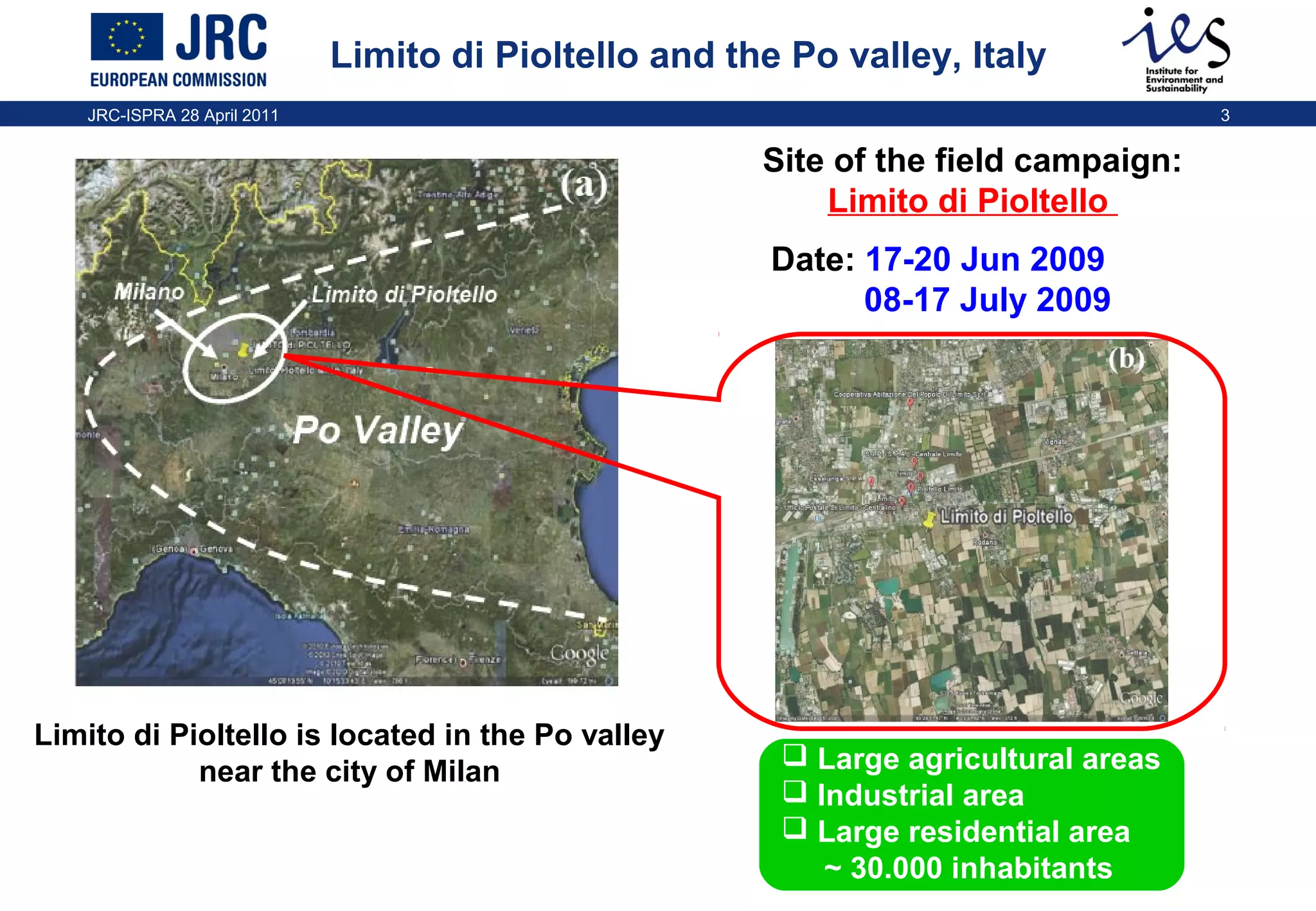
Limito di Pioltello and the Po valley, Italy
JRC-ISPRA 28 April 2011

3

Site of the field campaign:
Limito di Pioltello
Milano

Limito di Pioltello

Date: 17-20 Jun 2009
08-17 July 2009

Po Valley

Limito di Pioltello is located in the Po valley
near the city of Milan

 Large agricultural areas
 Industrial area
 Large residential area
~ 30.000 inhabitants
4-hour experimental time resolution
JRC-ISPRA 28 April 2011

4

 Sequential samplers (FAI Instruments and Leckel SEQ47/50) for gravimetric
measurements of PM1 (24h) PM2.5 (4h, 24h) and PM10 (24h), respectively
 Sampling: quartz filter for ion chromatography and offline carbon analysis,
Teflon® filter, (PTFE) for gravimetric and elemental analysis,
on-line semi-continuous OC/EC analyzer Sunset (on hourly basis)
 VOCs sampled on air for 24 hours with CARBOPACK tubes made of activated
charcoal cartridges and analyzed with GC-MS
 Carbonyls groups sampled with 2,4-Dinitrophenylhydrazine-coated (DNPH)
cartridges and analyzed with HPLC
 Size distribution of particles were also collected with an optical particle
counter (OPC, Grimm)
JRC-ISPRA 28 April 2011

5

Results
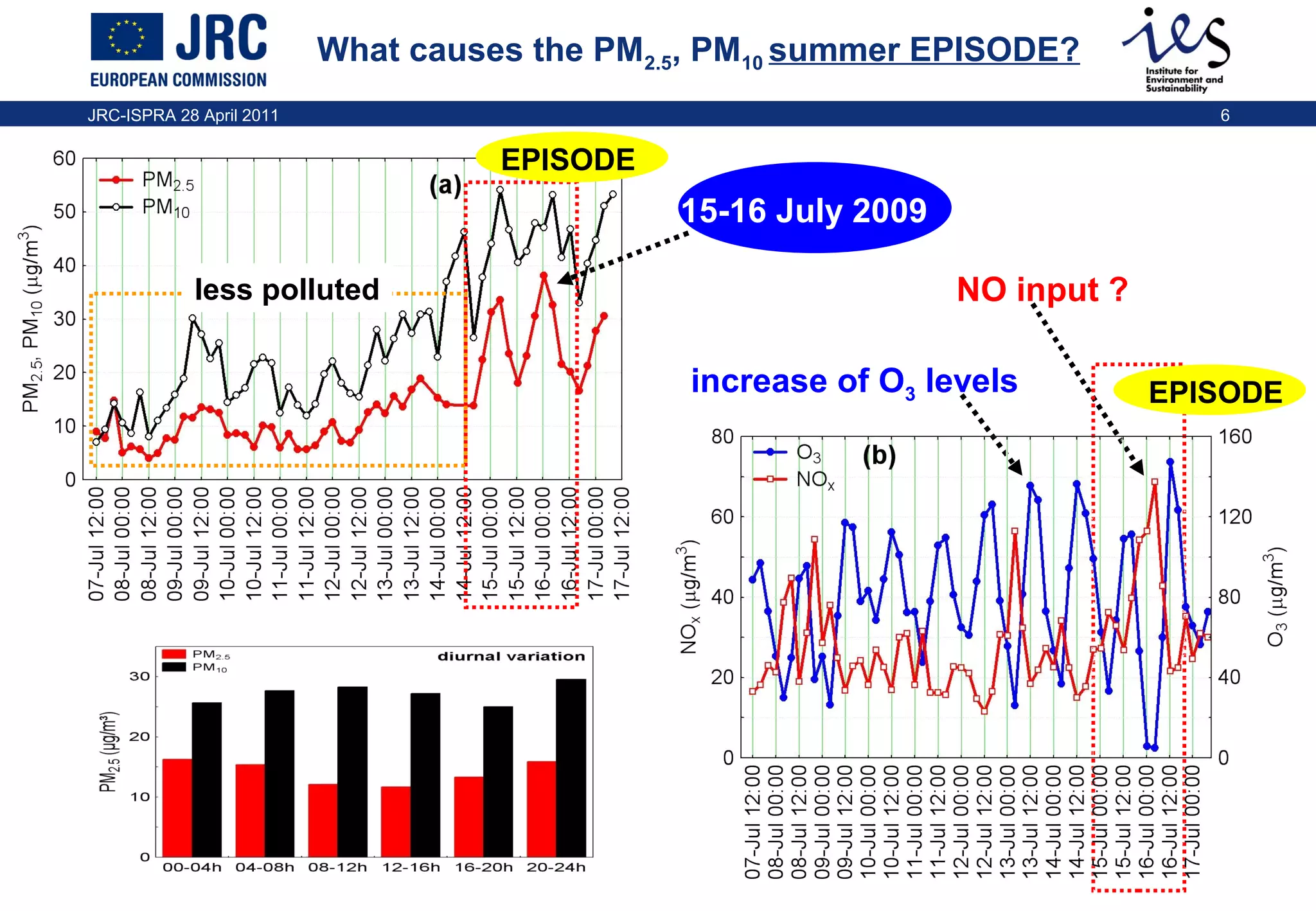
What causes the PM2.5, PM10 summer EPISODE?
JRC-ISPRA 28 April 2011

6

EPISODE

15-16 July 2009
less polluted

NO input ?
increase of O3 levels

EPISODE
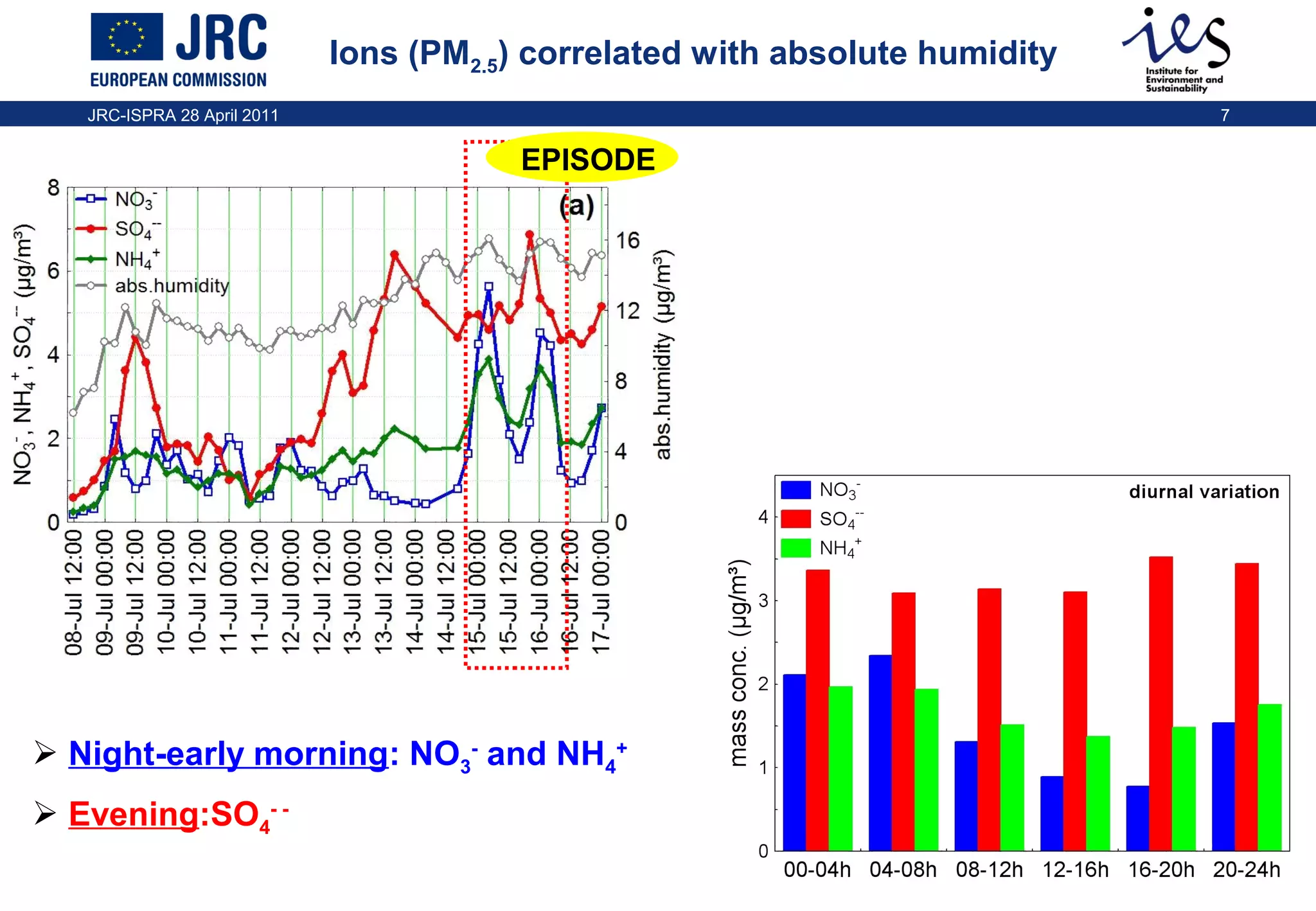
Ions (PM2.5) correlated with absolute humidity
JRC-ISPRA 28 April 2011

7

EPISODE

 Night-early morning: NO3- and NH4+
 Evening:SO4- -
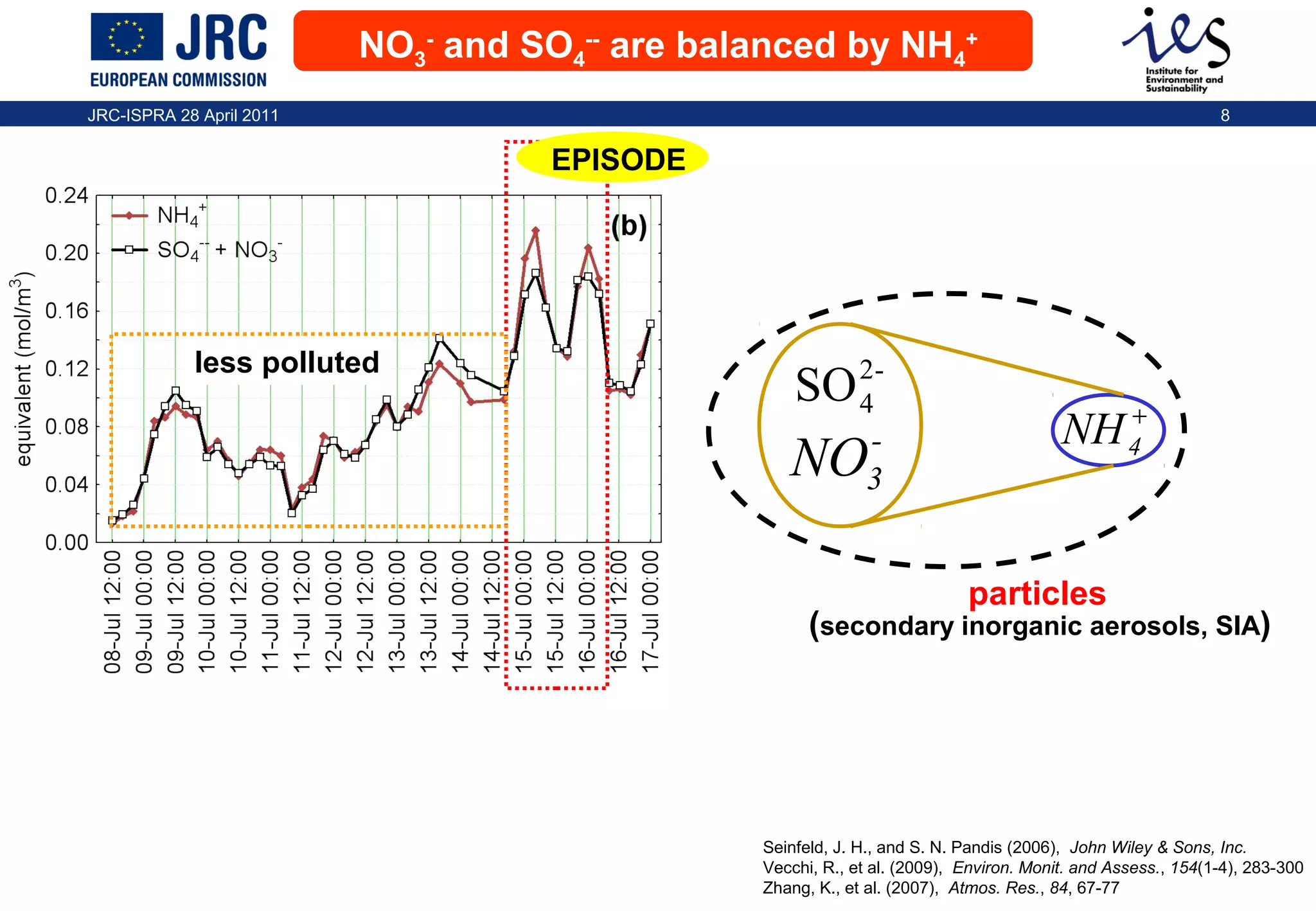
NO3- and SO4-- are balanced by NH4+
JRC-ISPRA 28 April 2011

8

EPISODE

less polluted

SO 24
3

NO

NH 4+

particles

(secondary inorganic aerosols, SIA)

Seinfeld, J. H., and S. N. Pandis (2006), John Wiley & Sons, Inc.
Vecchi, R., et al. (2009), Environ. Monit. and Assess., 154(1-4), 283-300
Zhang, K., et al. (2007), Atmos. Res., 84, 67-77
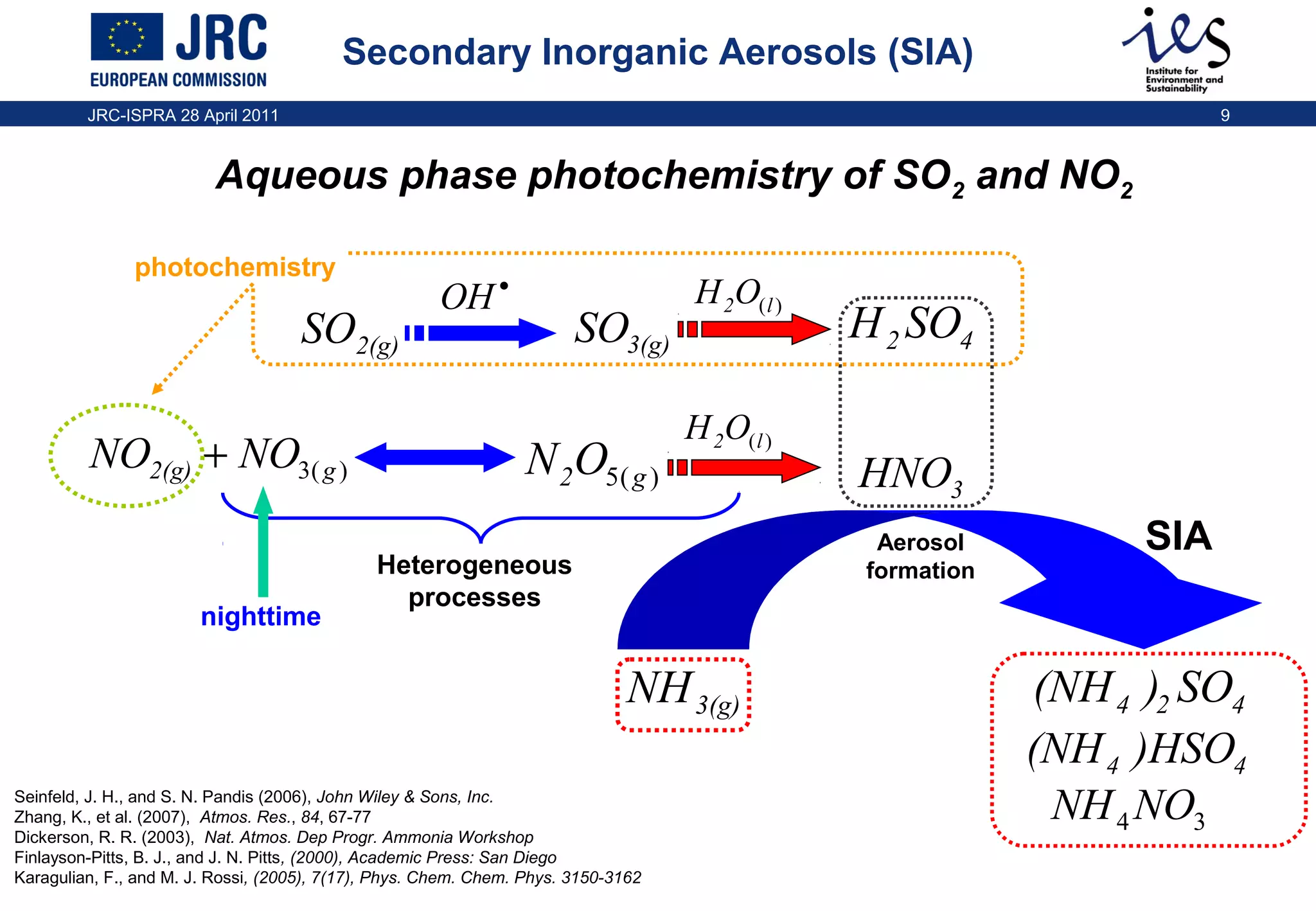
Secondary Inorganic Aerosols (SIA)
JRC-ISPRA 28 April 2011

9

Aqueous phase photochemistry of SO2 and NO2
photochemistry

SO2(g)
NO2(g) + NO3( g )

nighttime

OH •

SO3(g)

N 2O5( g )

H 2O(l )

H 2O(l )

H 2 SO4
HNO3
Aerosol
formation

Heterogeneous
processes

NH 3(g)
Seinfeld, J. H., and S. N. Pandis (2006), John Wiley & Sons, Inc.
Zhang, K., et al. (2007), Atmos. Res., 84, 67-77
Dickerson, R. R. (2003), Nat. Atmos. Dep Progr. Ammonia Workshop
Finlayson-Pitts, B. J., and J. N. Pitts, (2000), Academic Press: San Diego
Karagulian, F., and M. J. Rossi, (2005), 7(17), Phys. Chem. Chem. Phys. 3150-3162

SIA

(NH 4 )2 SO4
(NH 4 )HSO4
NH 4 NO3
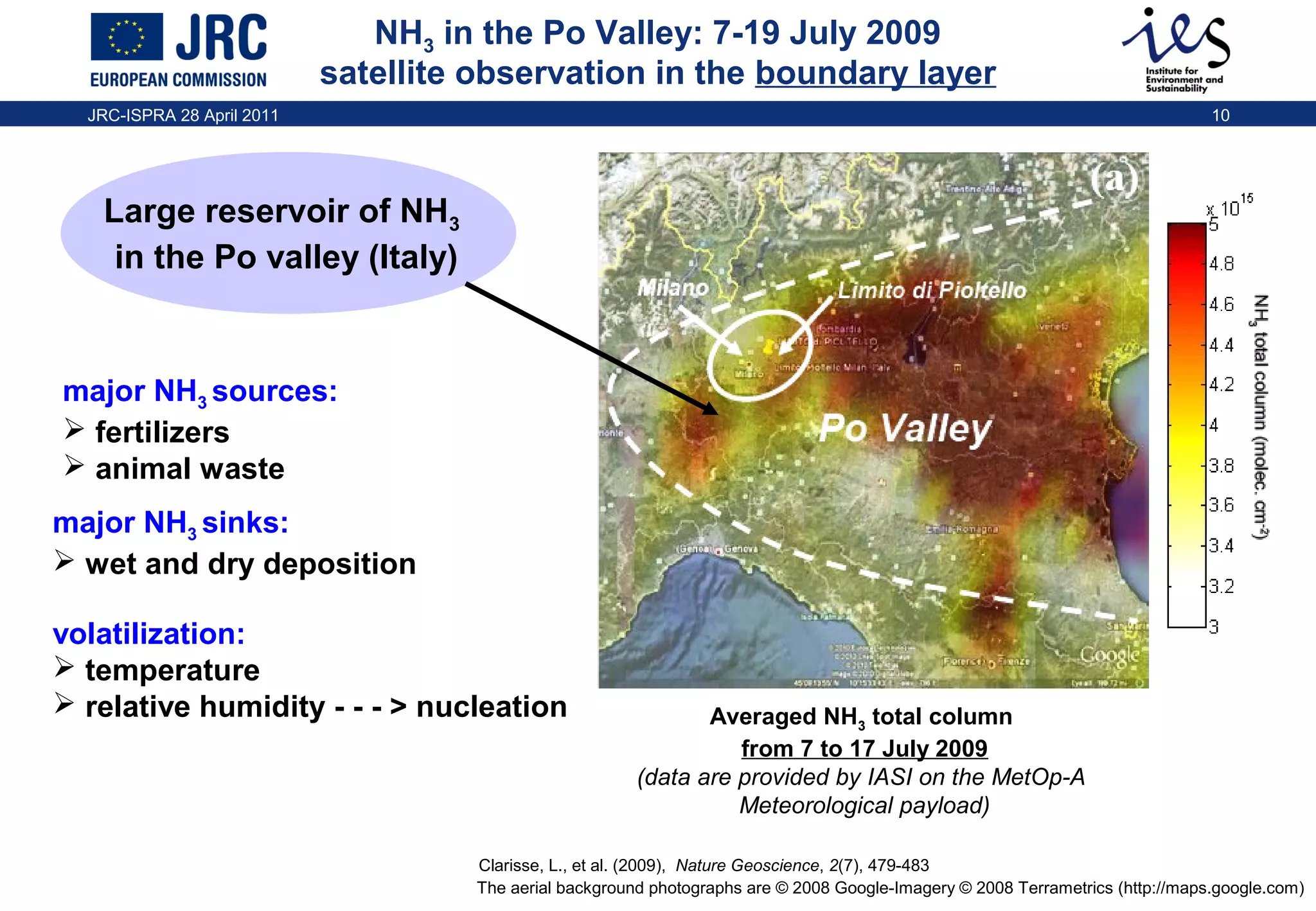
NH3 in the Po Valley: 7-19 July 2009
satellite observation in the boundary layer
JRC-ISPRA 28 April 2011

10

Large reservoir of NH3
in the Po valley (Italy)
Milano

major NH3 sources:
 fertilizers
 animal waste

Limito di Pioltello

Po Valley

major NH3 sinks:
 wet and dry deposition
volatilization:
 temperature
 relative humidity - - - > nucleation

Averaged NH3 total column
from 7 to 17 July 2009
(data are provided by IASI on the MetOp-A
Meteorological payload)

Clarisse, L., et al. (2009), Nature Geoscience, 2(7), 479-483
The aerial background photographs are © 2008 Google-Imagery © 2008 Terrametrics (http://maps.google.com)
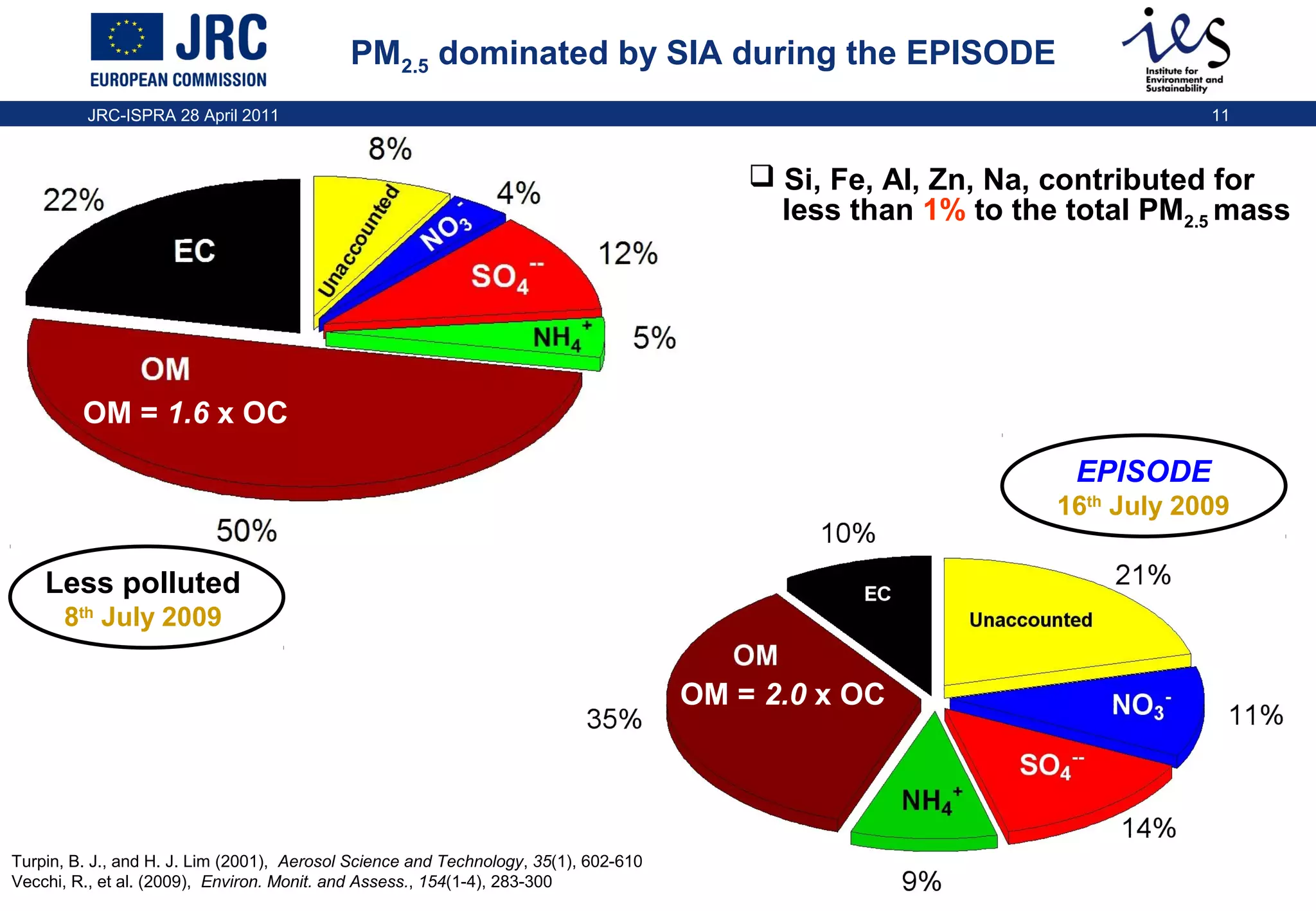
PM2.5 dominated by SIA during the EPISODE
JRC-ISPRA 28 April 2011

11

 Si, Fe, Al, Zn, Na, contributed for
less than 1% to the total PM2.5 mass

OM = 1.6 x OC
EPISODE
16th July 2009

Less OM = 1.4 x OC
polluted
8th July 2009

OM = 2.0 x OC

Turpin, B. J., and H. J. Lim (2001), Aerosol Science and Technology, 35(1), 602-610
Vecchi, R., et al. (2009), Environ. Monit. and Assess., 154(1-4), 283-300
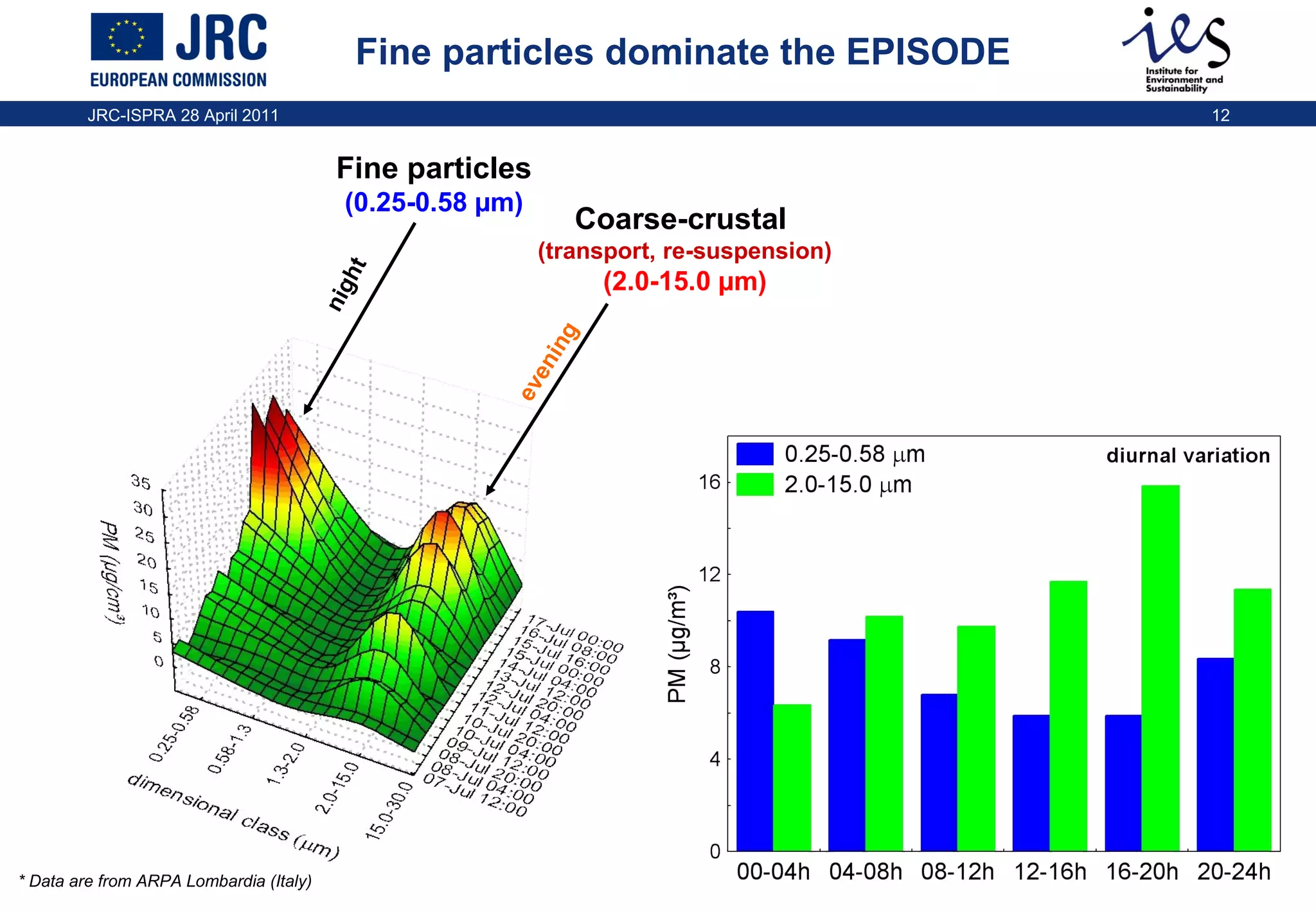
Fine particles dominate the EPISODE
JRC-ISPRA 28 April 2011

12

Fine particles
Coarse-crustal
(transport, re-suspension)

(2.0-15.0 µm)
ev
en
ing

n ig

ht

(0.25-0.58 µm)

* Data are from ARPA Lombardia (Italy)
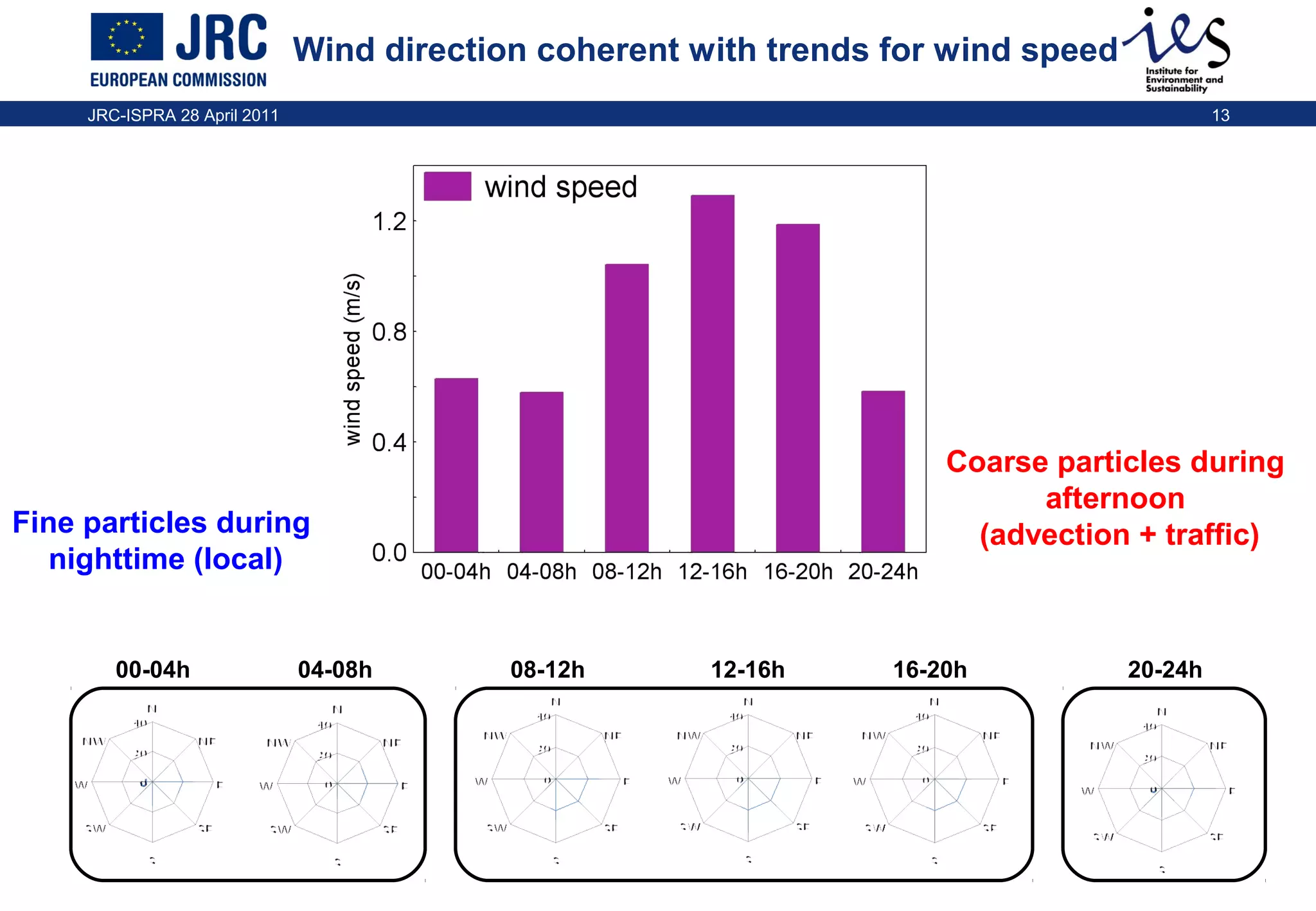
Wind direction coherent with trends for wind speed
JRC-ISPRA 28 April 2011

13

Coarse particles during
afternoon
(advection + traffic)

Fine particles during
nighttime (local)

00-04h

04-08h

08-12h

12-16h

16-20h

20-24h
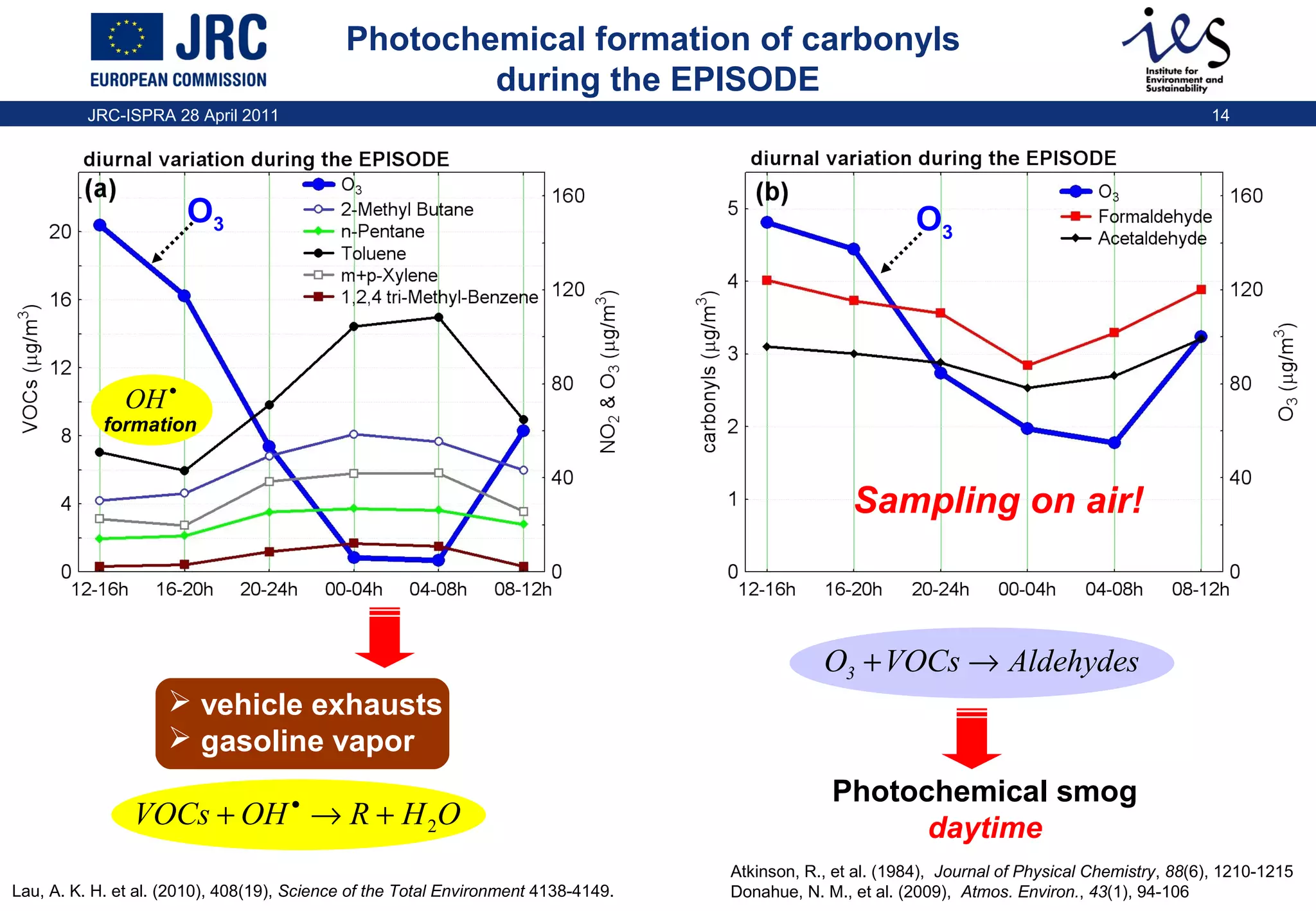
Photochemical formation of carbonyls
during the EPISODE
JRC-ISPRA 28 April 2011

14

O3

O3

OH •

formation

Sampling on air!

O3 + VOCs → Aldehydes
 vehicle exhausts
 gasoline vapor
•

VOCs + OH → R + H 2O
Lau, A. K. H. et al. (2010), 408(19), Science of the Total Environment 4138-4149.

Photochemical smog
daytime
Atkinson, R., et al. (1984), Journal of Physical Chemistry, 88(6), 1210-1215
Donahue, N. M., et al. (2009), Atmos. Environ., 43(1), 94-106
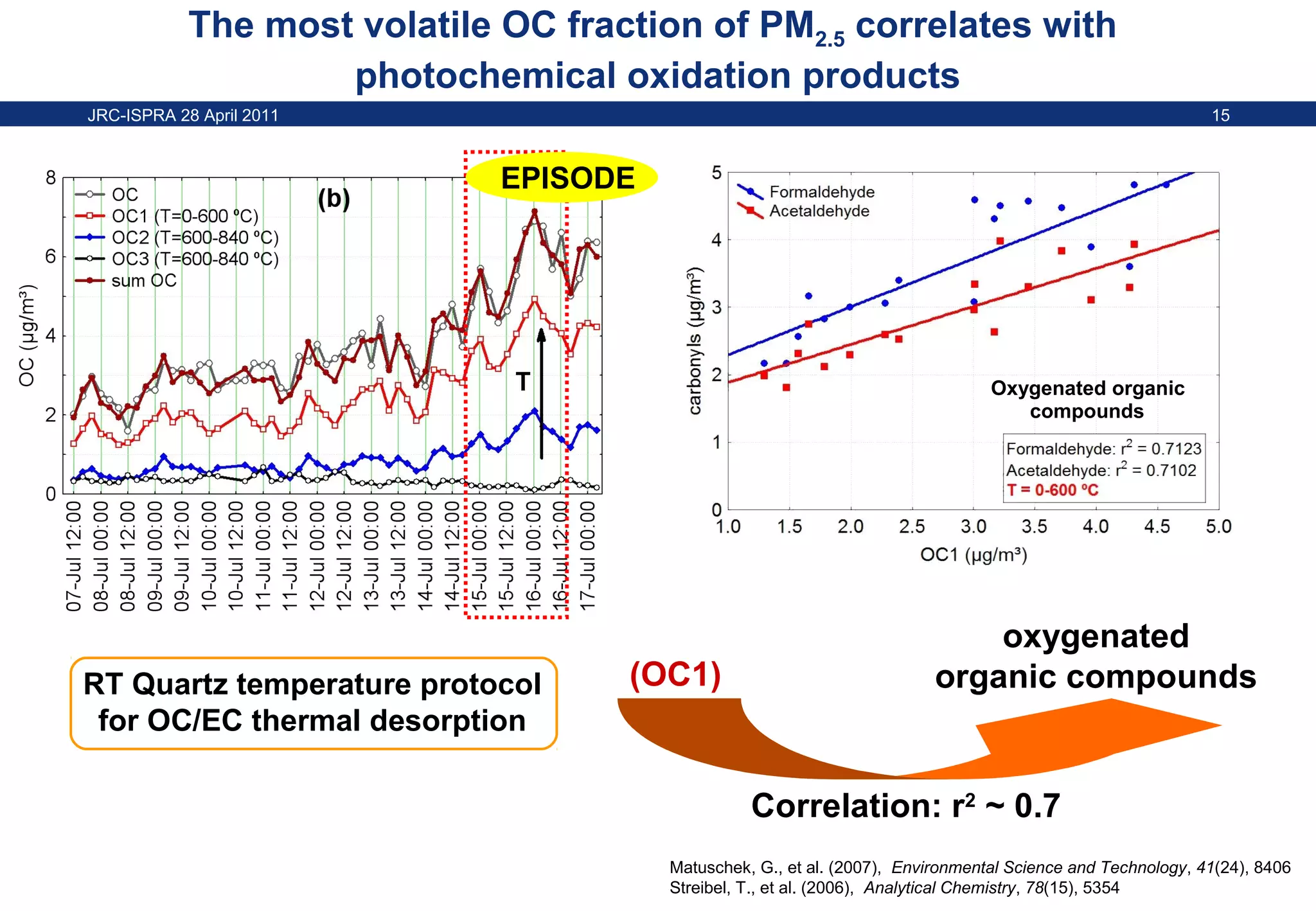
The most volatile OC fraction of PM2.5 correlates with
photochemical oxidation products
JRC-ISPRA 28 April 2011

15

EPISODE

Oxygenated organic
compounds

RT Quartz temperature protocol
for OC/EC thermal desorption

(OC1)

oxygenated
organic compounds

Correlation: r2 ~ 0.7
Matuschek, G., et al. (2007), Environmental Science and Technology, 41(24), 8406
Streibel, T., et al. (2006), Analytical Chemistry, 78(15), 5354
JRC-ISPRA 28 April 2011

Comparison between EPA PMF 3.0 and
Multilinear Engine (ME-2)

16
Source apportionment and receptor models
JRC-ISPRA 28 April 2011

17

Contribution of the kth source
in the jth sample

Mass conservation principle….

p

xij =

∑g

ik f kj

two way model

k =1

Concentration of the jth specie
in the ith sample
i = 1,2,….m (samples)

Concentration of the ith specie
in the kth source

j = 1,2,….n (species) uij is the measured uncertainty

When both gik and fkj are unknown, the Positive matrix Factorization (PMF) model is used (EPA PMF 3.0)

Q

main

=

n

∑∑
i =1

object function

p


 xij −
g ik f kj 
m


k =1


u ij
j =1 






∑

2

min Q main (x, f)
f

best fit
Multilinear Engine ME-2
JRC-ISPRA 28 April 2011

18

We can also use a PMF which includes constraints
and pulling equations

 Introducing the Multilinear Engine ME-2
Q = Q main + Q aux
Q

aux

V

=

∑
v =l

aux
Qv

V

=

∑

2
(av − f pj )2 /sv

v =l

softness of the pulling
pulling value
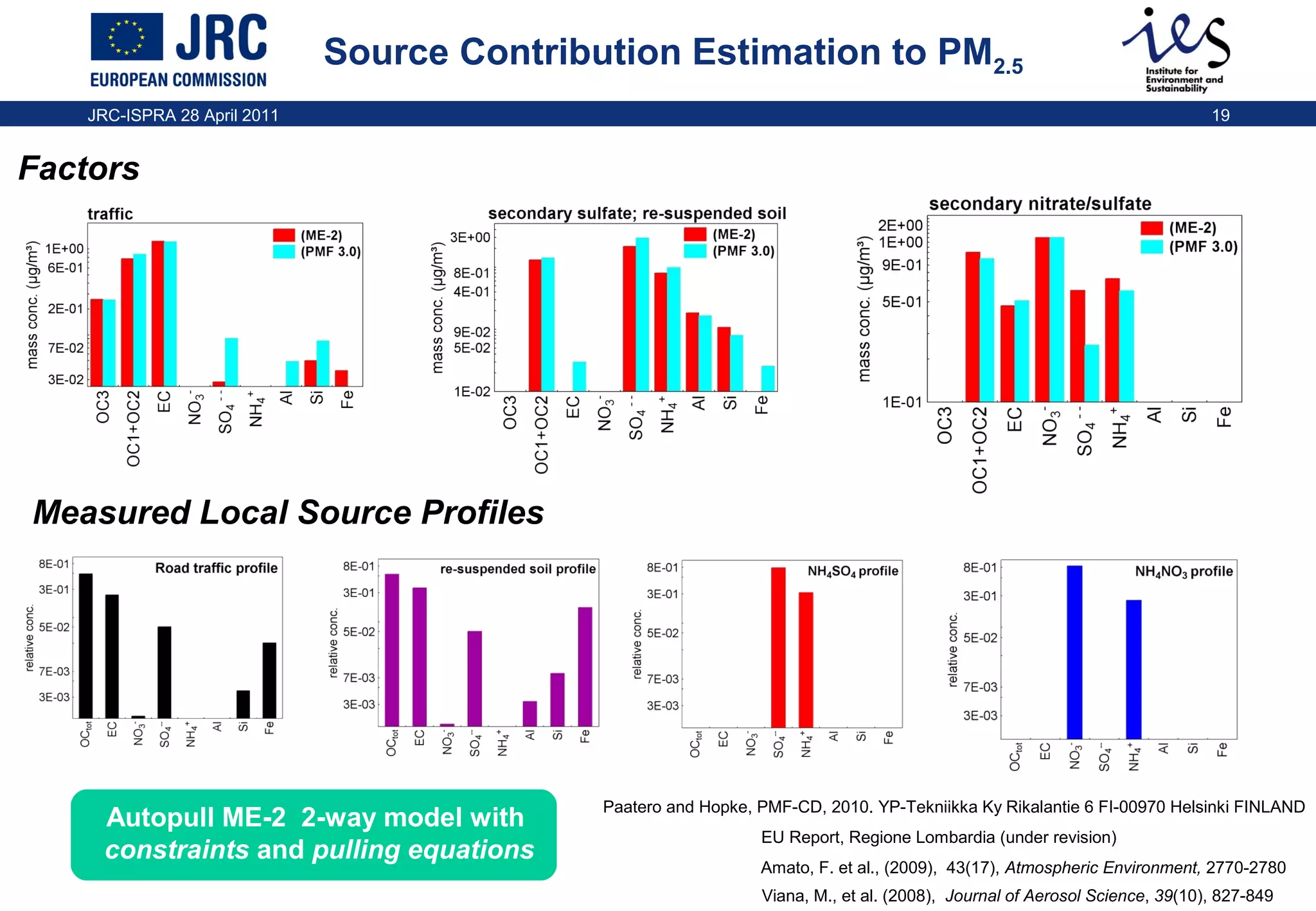
Source Contribution Estimation to PM2.5
JRC-ISPRA 28 April 2011

19

Factors

Measured Local Source Profiles

Autopull ME-2 2-way model with
constraints and pulling equations

Paatero and Hopke, PMF-CD, 2010. YP-Tekniikka Ky Rikalantie 6 FI-00970 Helsinki FINLAND
EU Report, Regione Lombardia (under revision)
Amato, F. et al., (2009), 43(17), Atmospheric Environment, 2770-2780
Viana, M., et al. (2008), Journal of Aerosol Science, 39(10), 827-849
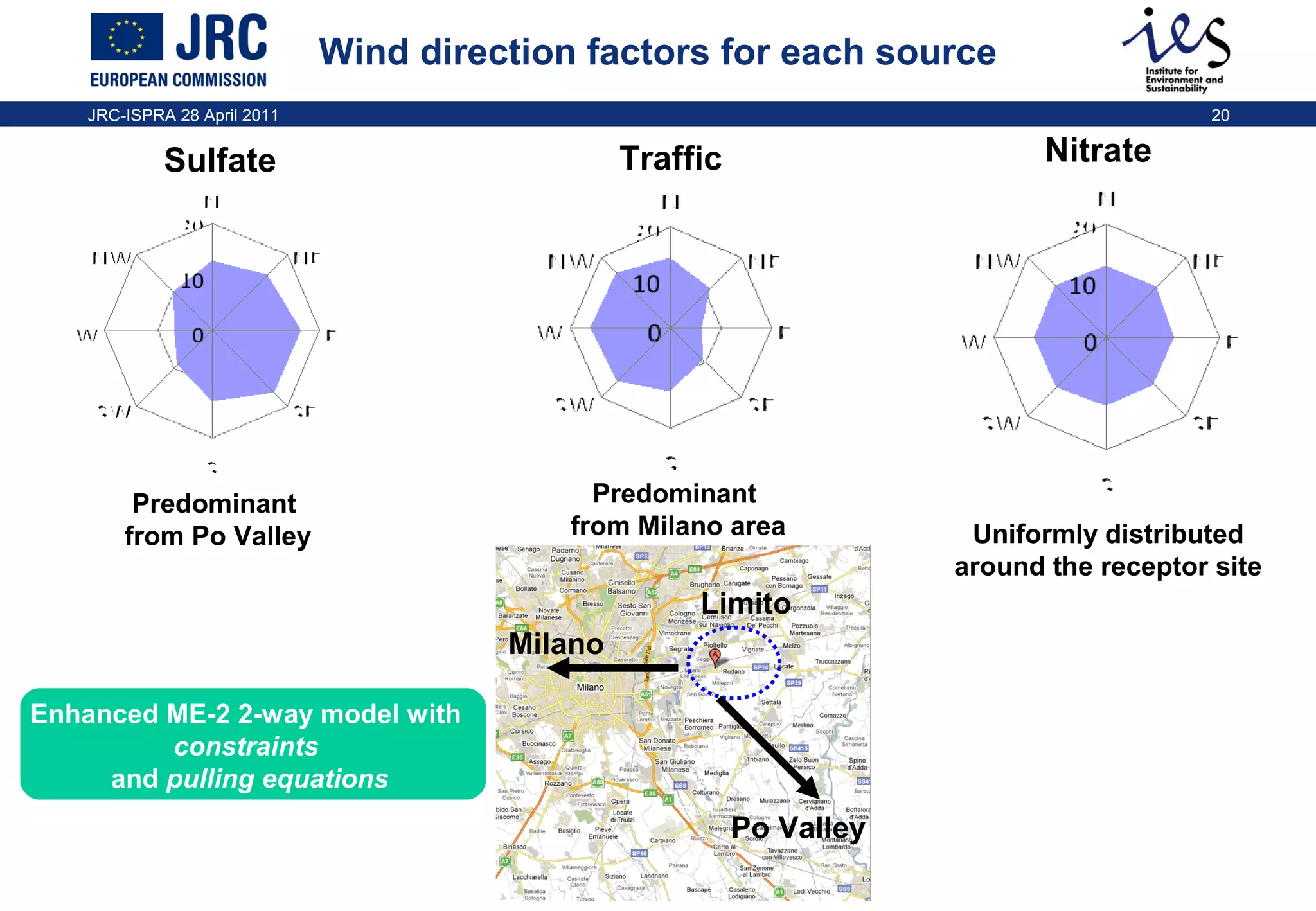
Wind direction factors for each source
JRC-ISPRA 28 April 2011

20

Nitrate

Sulfate

Traffic

Predominant
from Po Valley

Predominant
from Milano area

Limito
Milano
Enhanced ME-2 2-way model with
constraints
and pulling equations

Po Valley

Uniformly distributed
around the receptor site
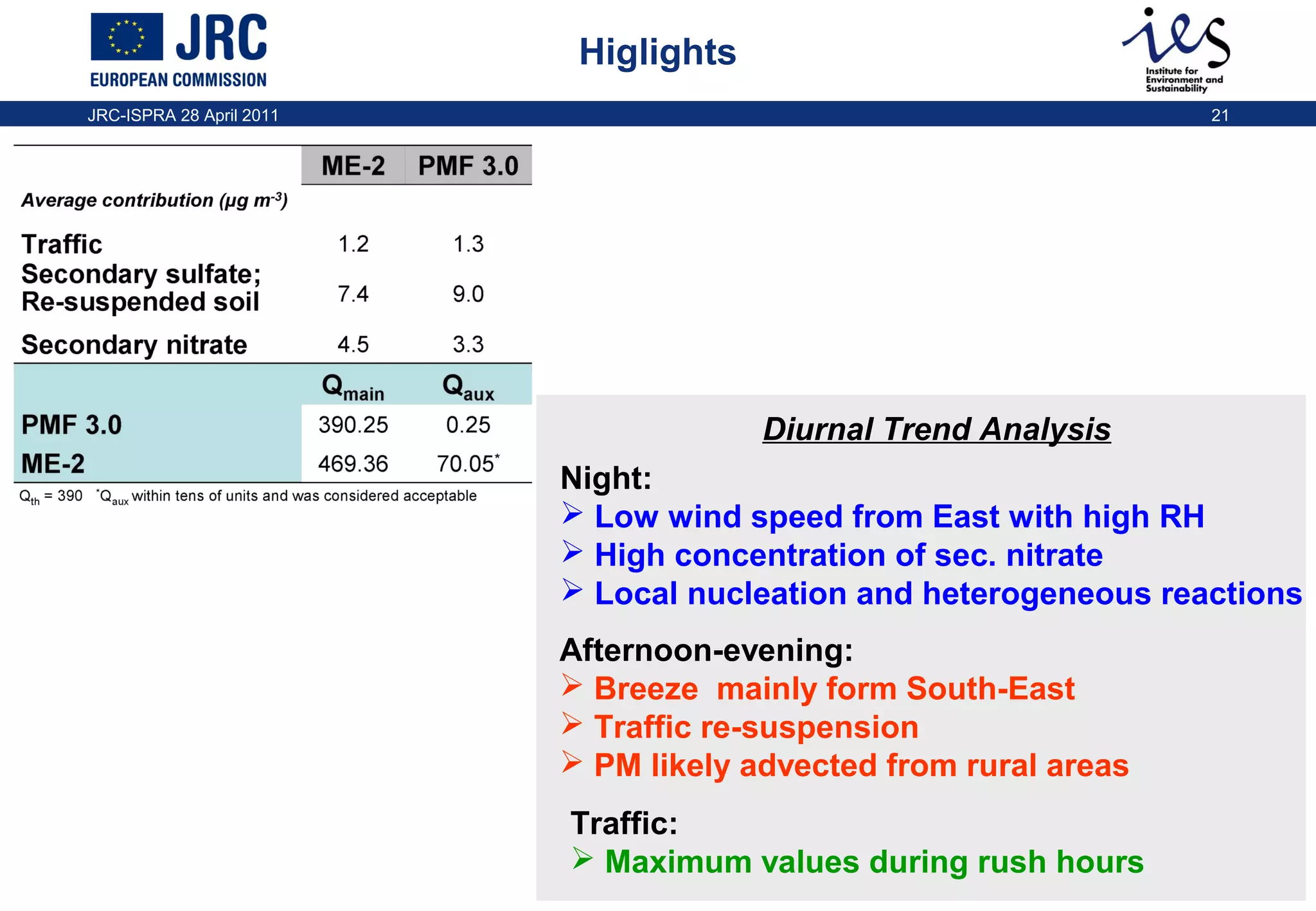
Higlights
JRC-ISPRA 28 April 2011

21

Diurnal Trend Analysis
Night:
 Low wind speed from East with high RH
 High concentration of sec. nitrate
 Local nucleation and heterogeneous reactions
Afternoon-evening:
 Breeze mainly form South-East
 Traffic re-suspension
 PM likely advected from rural areas
Traffic:
 Maximum values during rush hours
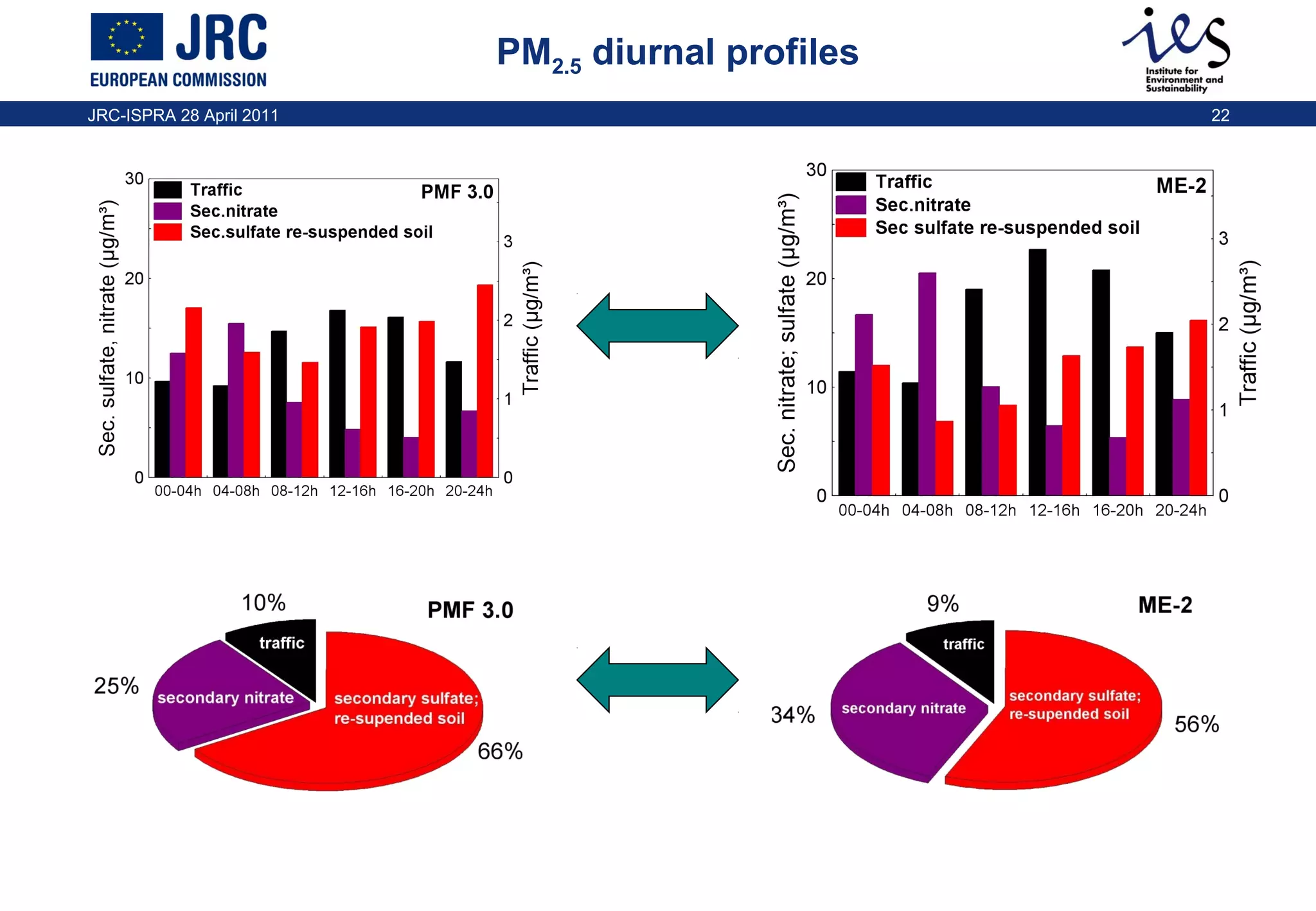
PM2.5 diurnal profiles
JRC-ISPRA 28 April 2011

22
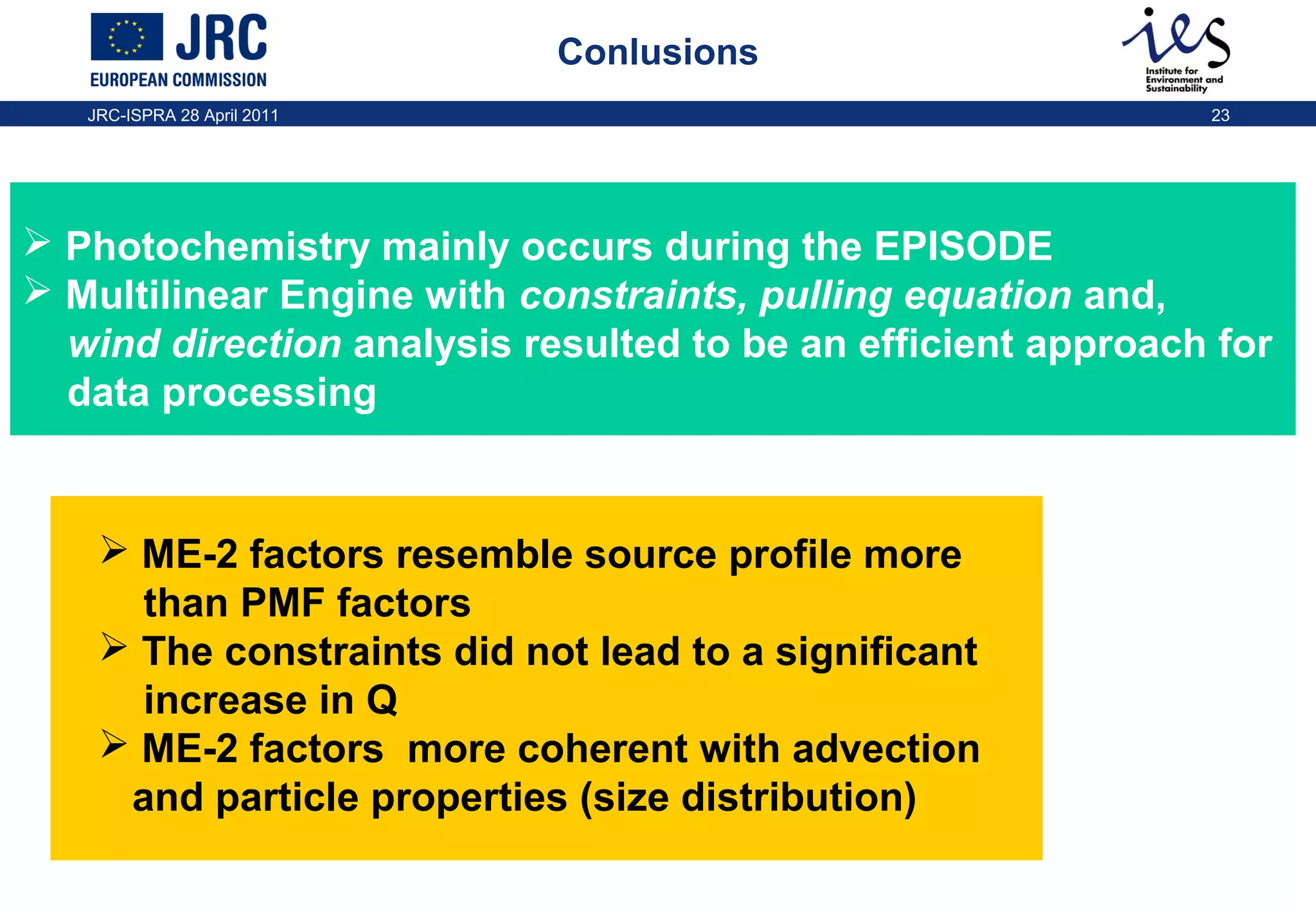
Conlusions
JRC-ISPRA 28 April 2011

23

 Photochemistry mainly occurs during the EPISODE
 Multilinear Engine with constraints, pulling equation and,
wind direction analysis resulted to be an efficient approach for
data processing

 ME-2 factors resemble source profile more
than PMF factors
 The constraints did not lead to a significant
increase in Q
 ME-2 factors more coherent with advection
and particle properties (size distribution)
JRC-ISPRA 28 April 2011

Thanks for your attention
Acknowledgment
Data: Michel Gerboles, Sinan Yatkin, Bo Larsen
Programming: Luca Spano’
General Support: all my friends

24

Particle Matter in Po Valley (Source Apportionment)

  • 1.
    JRC-ISPRA 28 April2011 1 F. KARAGULIAN1, L. Clarisse2, F. Lagler1, M. Barbiere1, R. Connolly1 and, C. A. Belis1 PM formation during a photochemical episode in the Po Valley: measurements, mechanisms and source apportionment European Commission - JRC Institute for Environment and Sustainability, Ispra, Italy 2 Université Libre de Bruxelles, Brussels, Belgium 1
  • 2.
    JRC-ISPRA 28 April2011 Is there any influence of photochemistry on PM2.5 concentration in the Po valley? 2
  • 3.
    Limito di Pioltelloand the Po valley, Italy JRC-ISPRA 28 April 2011 3 Site of the field campaign: Limito di Pioltello Milano Limito di Pioltello Date: 17-20 Jun 2009 08-17 July 2009 Po Valley Limito di Pioltello is located in the Po valley near the city of Milan  Large agricultural areas  Industrial area  Large residential area ~ 30.000 inhabitants
  • 4.
    4-hour experimental timeresolution JRC-ISPRA 28 April 2011 4  Sequential samplers (FAI Instruments and Leckel SEQ47/50) for gravimetric measurements of PM1 (24h) PM2.5 (4h, 24h) and PM10 (24h), respectively  Sampling: quartz filter for ion chromatography and offline carbon analysis, Teflon® filter, (PTFE) for gravimetric and elemental analysis, on-line semi-continuous OC/EC analyzer Sunset (on hourly basis)  VOCs sampled on air for 24 hours with CARBOPACK tubes made of activated charcoal cartridges and analyzed with GC-MS  Carbonyls groups sampled with 2,4-Dinitrophenylhydrazine-coated (DNPH) cartridges and analyzed with HPLC  Size distribution of particles were also collected with an optical particle counter (OPC, Grimm)
  • 5.
    JRC-ISPRA 28 April2011 5 Results
  • 6.
    What causes thePM2.5, PM10 summer EPISODE? JRC-ISPRA 28 April 2011 6 EPISODE 15-16 July 2009 less polluted NO input ? increase of O3 levels EPISODE
  • 7.
    Ions (PM2.5) correlatedwith absolute humidity JRC-ISPRA 28 April 2011 7 EPISODE  Night-early morning: NO3- and NH4+  Evening:SO4- -
  • 8.
    NO3- and SO4--are balanced by NH4+ JRC-ISPRA 28 April 2011 8 EPISODE less polluted SO 24 3 NO NH 4+ particles (secondary inorganic aerosols, SIA) Seinfeld, J. H., and S. N. Pandis (2006), John Wiley & Sons, Inc. Vecchi, R., et al. (2009), Environ. Monit. and Assess., 154(1-4), 283-300 Zhang, K., et al. (2007), Atmos. Res., 84, 67-77
  • 9.
    Secondary Inorganic Aerosols(SIA) JRC-ISPRA 28 April 2011 9 Aqueous phase photochemistry of SO2 and NO2 photochemistry SO2(g) NO2(g) + NO3( g ) nighttime OH • SO3(g) N 2O5( g ) H 2O(l ) H 2O(l ) H 2 SO4 HNO3 Aerosol formation Heterogeneous processes NH 3(g) Seinfeld, J. H., and S. N. Pandis (2006), John Wiley & Sons, Inc. Zhang, K., et al. (2007), Atmos. Res., 84, 67-77 Dickerson, R. R. (2003), Nat. Atmos. Dep Progr. Ammonia Workshop Finlayson-Pitts, B. J., and J. N. Pitts, (2000), Academic Press: San Diego Karagulian, F., and M. J. Rossi, (2005), 7(17), Phys. Chem. Chem. Phys. 3150-3162 SIA (NH 4 )2 SO4 (NH 4 )HSO4 NH 4 NO3
  • 10.
    NH3 in thePo Valley: 7-19 July 2009 satellite observation in the boundary layer JRC-ISPRA 28 April 2011 10 Large reservoir of NH3 in the Po valley (Italy) Milano major NH3 sources:  fertilizers  animal waste Limito di Pioltello Po Valley major NH3 sinks:  wet and dry deposition volatilization:  temperature  relative humidity - - - > nucleation Averaged NH3 total column from 7 to 17 July 2009 (data are provided by IASI on the MetOp-A Meteorological payload) Clarisse, L., et al. (2009), Nature Geoscience, 2(7), 479-483 The aerial background photographs are © 2008 Google-Imagery © 2008 Terrametrics (http://maps.google.com)
  • 11.
    PM2.5 dominated bySIA during the EPISODE JRC-ISPRA 28 April 2011 11  Si, Fe, Al, Zn, Na, contributed for less than 1% to the total PM2.5 mass OM = 1.6 x OC EPISODE 16th July 2009 Less OM = 1.4 x OC polluted 8th July 2009 OM = 2.0 x OC Turpin, B. J., and H. J. Lim (2001), Aerosol Science and Technology, 35(1), 602-610 Vecchi, R., et al. (2009), Environ. Monit. and Assess., 154(1-4), 283-300
  • 12.
    Fine particles dominatethe EPISODE JRC-ISPRA 28 April 2011 12 Fine particles Coarse-crustal (transport, re-suspension) (2.0-15.0 µm) ev en ing n ig ht (0.25-0.58 µm) * Data are from ARPA Lombardia (Italy)
  • 13.
    Wind direction coherentwith trends for wind speed JRC-ISPRA 28 April 2011 13 Coarse particles during afternoon (advection + traffic) Fine particles during nighttime (local) 00-04h 04-08h 08-12h 12-16h 16-20h 20-24h
  • 14.
    Photochemical formation ofcarbonyls during the EPISODE JRC-ISPRA 28 April 2011 14 O3 O3 OH • formation Sampling on air! O3 + VOCs → Aldehydes  vehicle exhausts  gasoline vapor • VOCs + OH → R + H 2O Lau, A. K. H. et al. (2010), 408(19), Science of the Total Environment 4138-4149. Photochemical smog daytime Atkinson, R., et al. (1984), Journal of Physical Chemistry, 88(6), 1210-1215 Donahue, N. M., et al. (2009), Atmos. Environ., 43(1), 94-106
  • 15.
    The most volatileOC fraction of PM2.5 correlates with photochemical oxidation products JRC-ISPRA 28 April 2011 15 EPISODE Oxygenated organic compounds RT Quartz temperature protocol for OC/EC thermal desorption (OC1) oxygenated organic compounds Correlation: r2 ~ 0.7 Matuschek, G., et al. (2007), Environmental Science and Technology, 41(24), 8406 Streibel, T., et al. (2006), Analytical Chemistry, 78(15), 5354
  • 16.
    JRC-ISPRA 28 April2011 Comparison between EPA PMF 3.0 and Multilinear Engine (ME-2) 16
  • 17.
    Source apportionment andreceptor models JRC-ISPRA 28 April 2011 17 Contribution of the kth source in the jth sample Mass conservation principle…. p xij = ∑g ik f kj two way model k =1 Concentration of the jth specie in the ith sample i = 1,2,….m (samples) Concentration of the ith specie in the kth source j = 1,2,….n (species) uij is the measured uncertainty When both gik and fkj are unknown, the Positive matrix Factorization (PMF) model is used (EPA PMF 3.0) Q main = n ∑∑ i =1 object function p    xij − g ik f kj  m   k =1   u ij j =1       ∑ 2 min Q main (x, f) f best fit
  • 18.
    Multilinear Engine ME-2 JRC-ISPRA28 April 2011 18 We can also use a PMF which includes constraints and pulling equations  Introducing the Multilinear Engine ME-2 Q = Q main + Q aux Q aux V = ∑ v =l aux Qv V = ∑ 2 (av − f pj )2 /sv v =l softness of the pulling pulling value
  • 19.
    Source Contribution Estimationto PM2.5 JRC-ISPRA 28 April 2011 19 Factors Measured Local Source Profiles Autopull ME-2 2-way model with constraints and pulling equations Paatero and Hopke, PMF-CD, 2010. YP-Tekniikka Ky Rikalantie 6 FI-00970 Helsinki FINLAND EU Report, Regione Lombardia (under revision) Amato, F. et al., (2009), 43(17), Atmospheric Environment, 2770-2780 Viana, M., et al. (2008), Journal of Aerosol Science, 39(10), 827-849
  • 20.
    Wind direction factorsfor each source JRC-ISPRA 28 April 2011 20 Nitrate Sulfate Traffic Predominant from Po Valley Predominant from Milano area Limito Milano Enhanced ME-2 2-way model with constraints and pulling equations Po Valley Uniformly distributed around the receptor site
  • 21.
    Higlights JRC-ISPRA 28 April2011 21 Diurnal Trend Analysis Night:  Low wind speed from East with high RH  High concentration of sec. nitrate  Local nucleation and heterogeneous reactions Afternoon-evening:  Breeze mainly form South-East  Traffic re-suspension  PM likely advected from rural areas Traffic:  Maximum values during rush hours
  • 22.
  • 23.
    Conlusions JRC-ISPRA 28 April2011 23  Photochemistry mainly occurs during the EPISODE  Multilinear Engine with constraints, pulling equation and, wind direction analysis resulted to be an efficient approach for data processing  ME-2 factors resemble source profile more than PMF factors  The constraints did not lead to a significant increase in Q  ME-2 factors more coherent with advection and particle properties (size distribution)
  • 24.
    JRC-ISPRA 28 April2011 Thanks for your attention Acknowledgment Data: Michel Gerboles, Sinan Yatkin, Bo Larsen Programming: Luca Spano’ General Support: all my friends 24