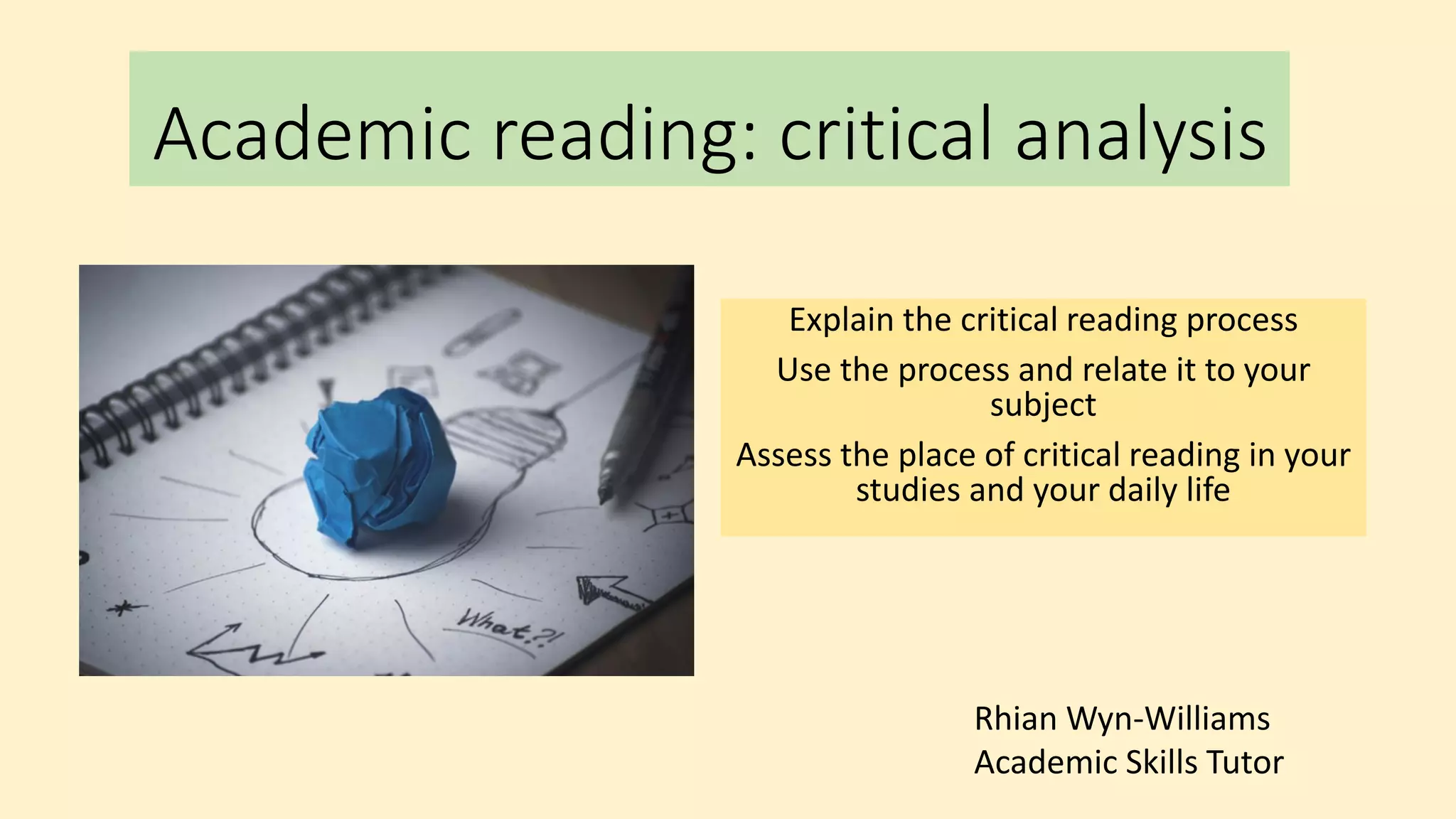
Academic reading: critical analysis
Explain the critical reading process
Use the process and relate it to your
subject
Assess the place of critical reading in your
studies and your daily life
Rhian Wyn-Williams
Academic Skills Tutor
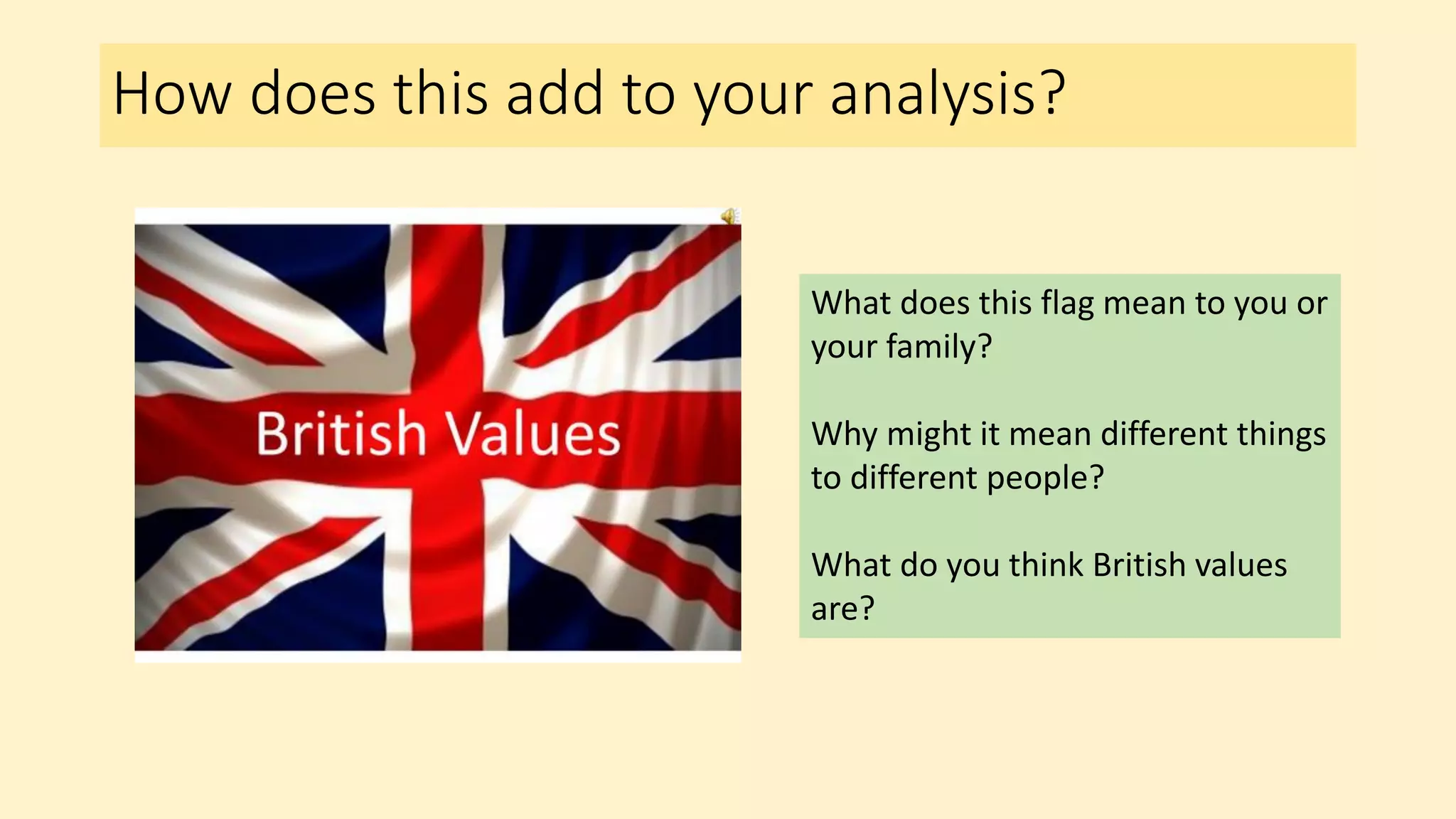
In pairs, take three minutes to discuss what you
see in this image.
How does this add to your analysis?
What does this flag mean to you or
your family?
Why might it mean different things
to different people?
What do you think British values
are?
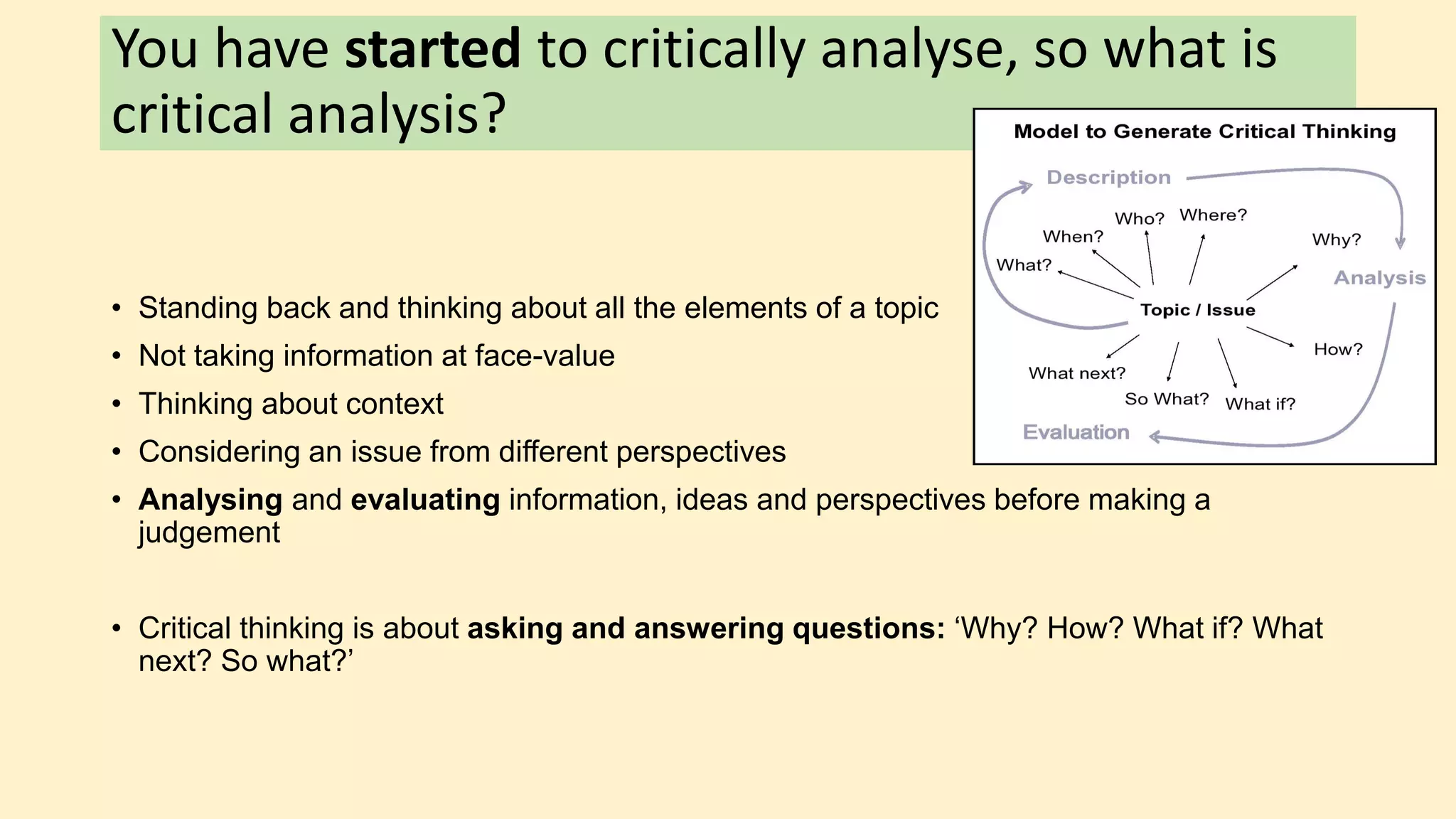
You have started to critically analyse, so what is
critical analysis?
• Standing back and thinking about all the elements of a topic
• Not taking information at face-value
• Thinking about context
• Considering an issue from different perspectives
• Analysing and evaluating information, ideas and perspectives before making a
judgement
• Critical thinking is about asking and answering questions: ‘Why? How? What if? What
next? So what?’
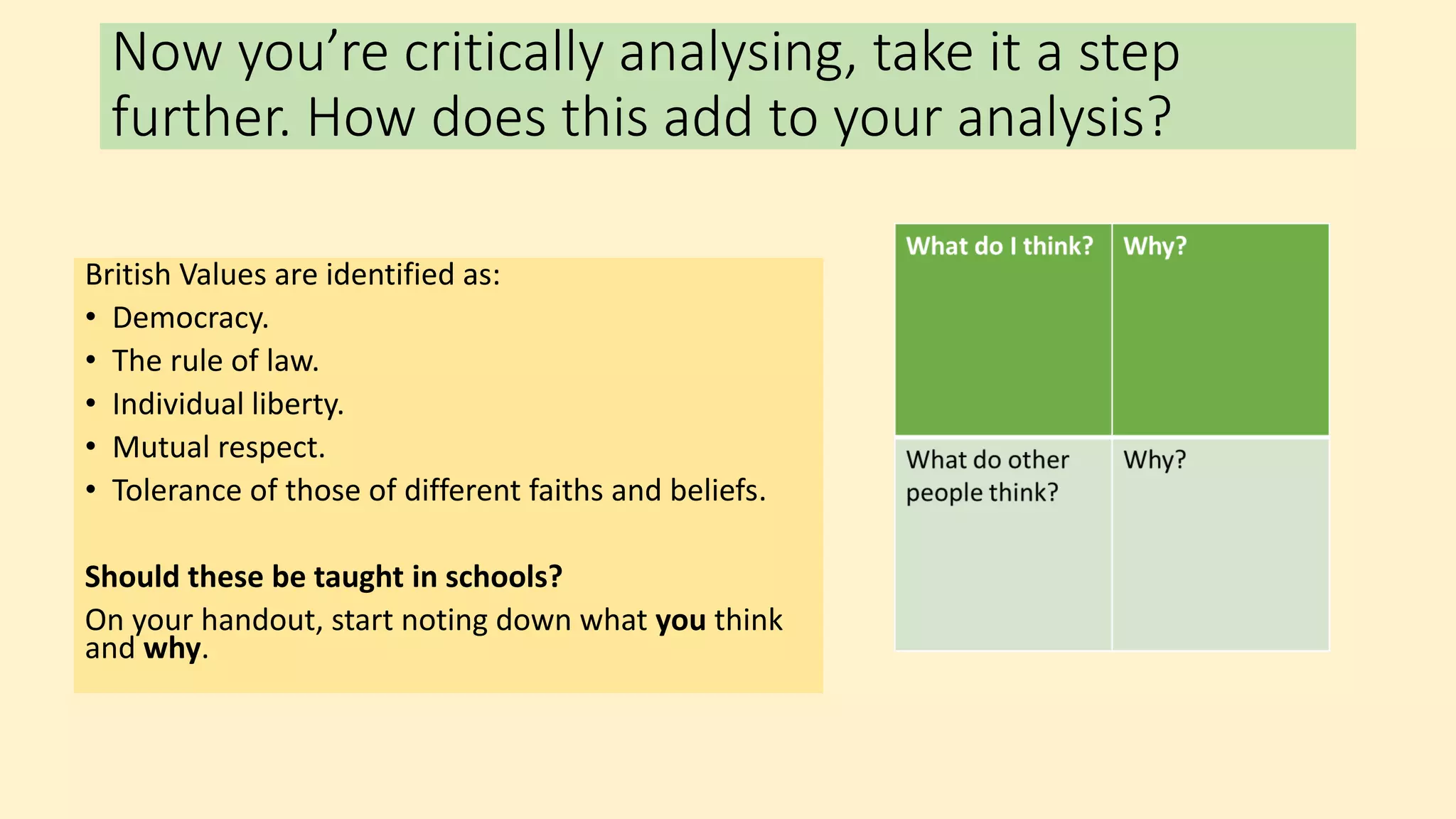
Now you’re critically analysing, take it a step
further. How does this add to your analysis?
British Values are identified as:
• Democracy.
• The rule of law.
• Individual liberty.
• Mutual respect.
• Tolerance of those of different faiths and beliefs.
Should these be taught in schools?
On your handout, start noting down what you think
and why.
But is there more for you to consider?
You each have one of two articles about the promoting of
British Values in schools.
Read the article and add some more detail to your grid: is
this another point of view or does it give you some more
reasons to explain your own view?
Share the information and ideas from your article with the
rest of your group. Use that discussion to add even more
comments to your grid.
Finally, we’ll watch this video.
What do you think now?
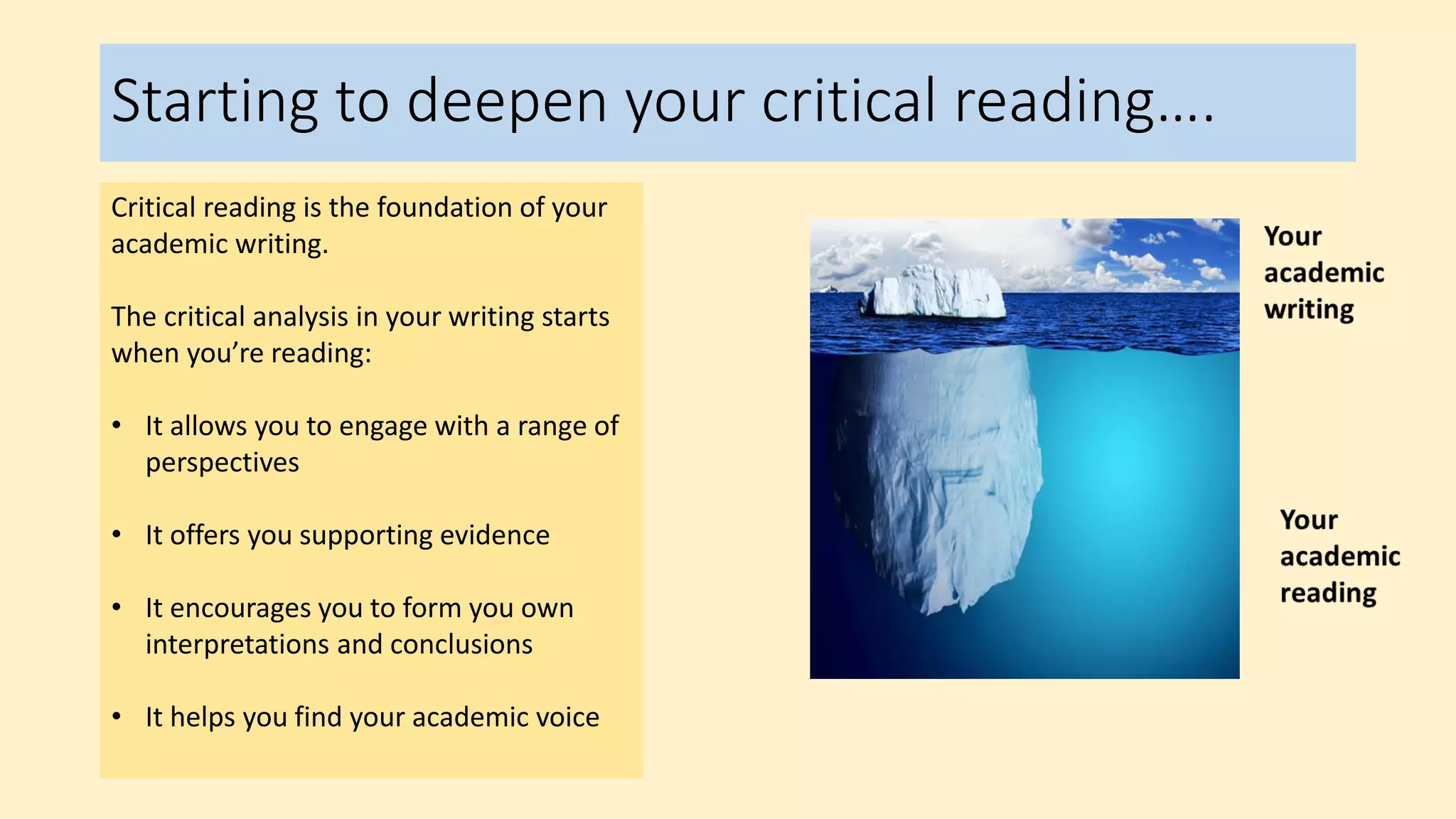
Starting to deepen your critical reading….
Critical reading is the foundation of your
academic writing.
The critical analysis in your writing starts
when you’re reading:
• It allows you to engage with a range of
perspectives
• It offers you supporting evidence
• It encourages you to form you own
interpretations and conclusions
• It helps you find your academic voice
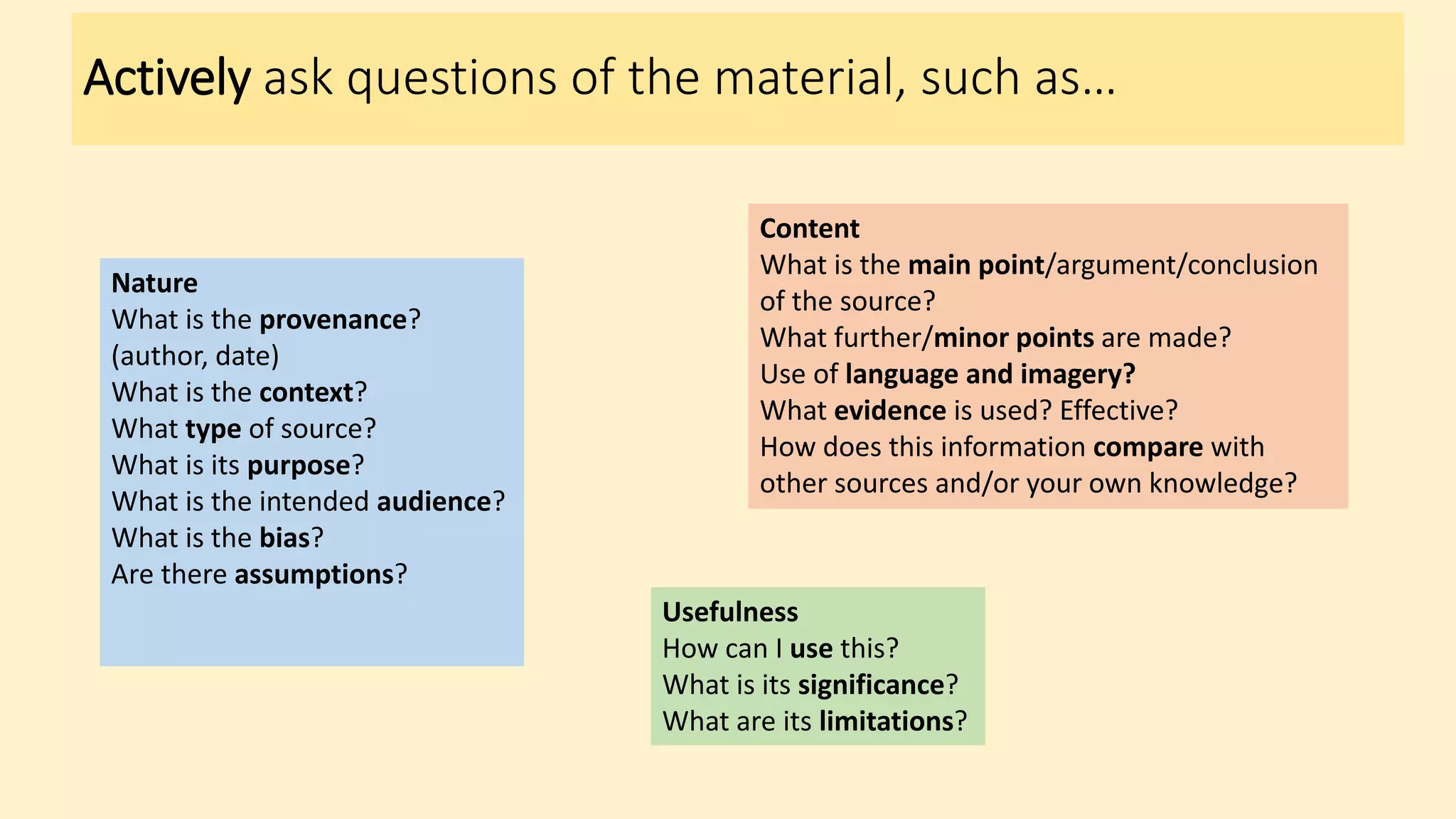
Actively ask questions of the material, such as…
Nature
What is the provenance?
(author, date)
What is the context?
What type of source?
What is its purpose?
What is the intended audience?
What is the bias?
Are there assumptions?
Content
What is the main point/argument/conclusion
of the source?
What further/minor points are made?
Use of language and imagery?
What evidence is used? Effective?
How does this information compare with
other sources and/or your own knowledge?
Usefulness
How can I use this?
What is its significance?
What are its limitations?
• Choose either of the two articles
on British Values in Education on
your handout.
• Using the critical reading
questions, as far as is possible,
critically discuss them.
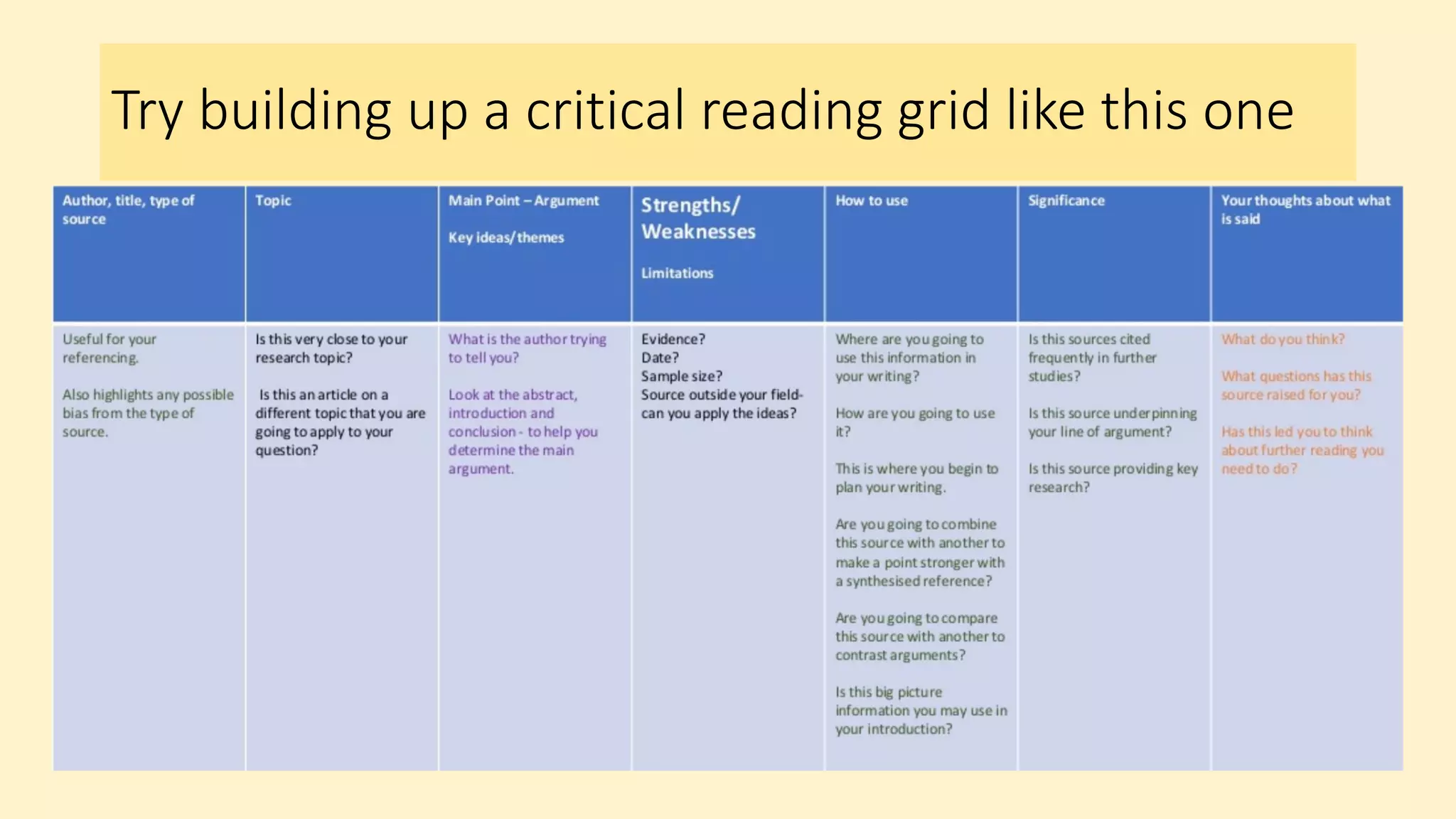
Try building up a critical reading grid like this one
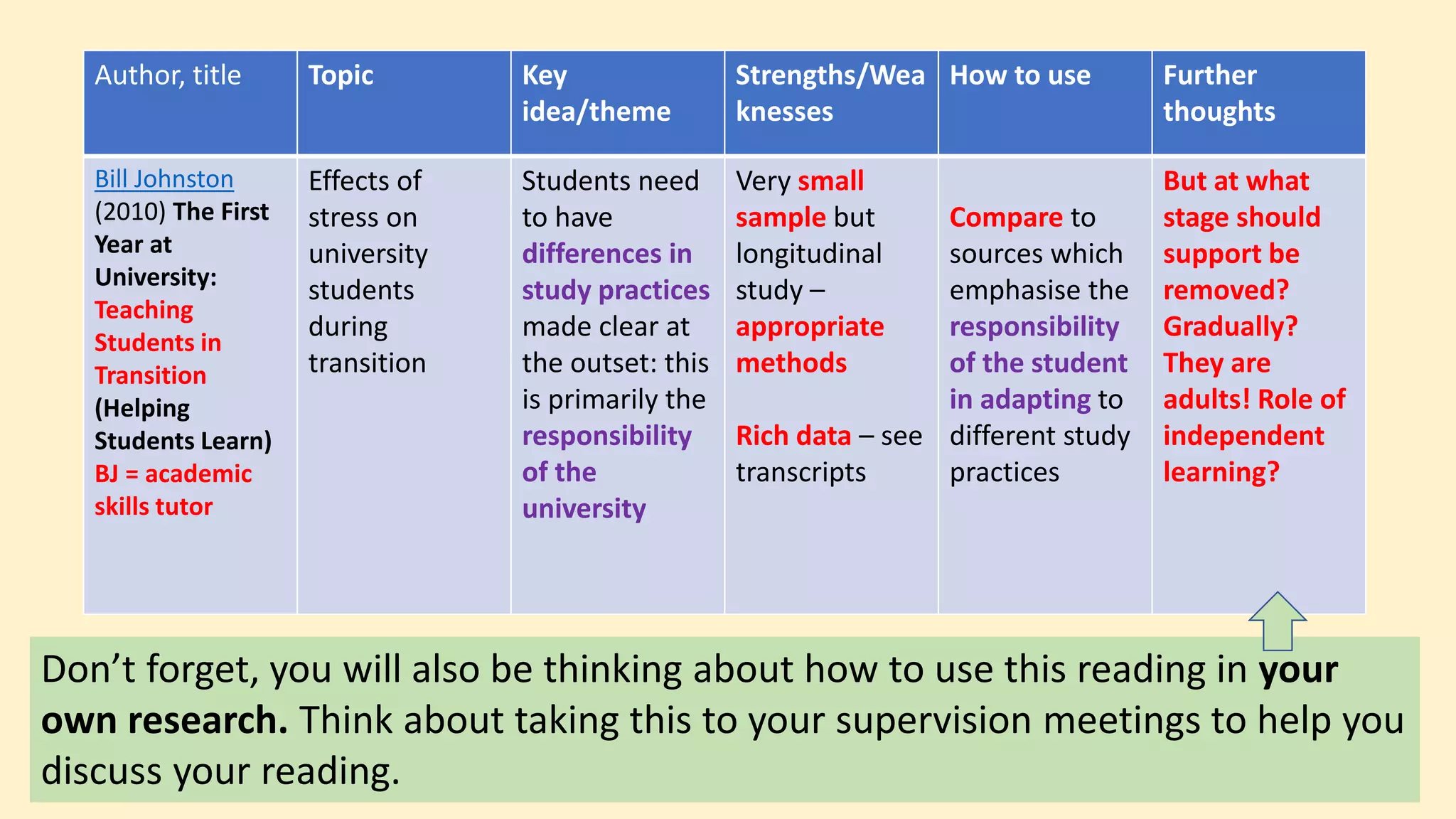
Author, title Topic Key
idea/theme
Strengths/Wea
knesses
How to use Further
thoughts
Bill Johnston
(2010) The First
Year at
University:
Teaching
Students in
Transition
(Helping
Students Learn)
BJ = academic
skills tutor
Effects of
stress on
university
students
during
transition
Students need
to have
differences in
study practices
made clear at
the outset: this
is primarily the
responsibility
of the
university
Very small
sample but
longitudinal
study –
appropriate
methods
Rich data – see
transcripts
Compare to
sources which
emphasise the
responsibility
of the student
in adapting to
different study
practices
But at what
stage should
support be
removed?
Gradually?
They are
adults! Role of
independent
learning?
Don’t forget, you will also be thinking about how to use this reading in your
own research. Think about taking this to your supervision meetings to help you
discuss your reading.
Try it out…
• In pairs, choose any two of the sources
we have used today, and have a go
at filling in the blank version of the grid
on your worksheet.
• What points of analysis did you
note down? Why?
• Now you have critically engaged with a
range of source material, what do you think?
Should British values be promoted in schools?
Reflection…..
If you had to give another student a piece of advice
about how to develop their critical reading, what
would it be?

Pg academic reading critical analysis

  • 1.
    Academic reading: criticalanalysis Explain the critical reading process Use the process and relate it to your subject Assess the place of critical reading in your studies and your daily life Rhian Wyn-Williams Academic Skills Tutor
  • 2.
    In pairs, takethree minutes to discuss what you see in this image.
  • 3.
    How does thisadd to your analysis? What does this flag mean to you or your family? Why might it mean different things to different people? What do you think British values are?
  • 4.
    You have startedto critically analyse, so what is critical analysis? • Standing back and thinking about all the elements of a topic • Not taking information at face-value • Thinking about context • Considering an issue from different perspectives • Analysing and evaluating information, ideas and perspectives before making a judgement • Critical thinking is about asking and answering questions: ‘Why? How? What if? What next? So what?’
  • 5.
    Now you’re criticallyanalysing, take it a step further. How does this add to your analysis? British Values are identified as: • Democracy. • The rule of law. • Individual liberty. • Mutual respect. • Tolerance of those of different faiths and beliefs. Should these be taught in schools? On your handout, start noting down what you think and why.
  • 6.
    But is theremore for you to consider? You each have one of two articles about the promoting of British Values in schools. Read the article and add some more detail to your grid: is this another point of view or does it give you some more reasons to explain your own view? Share the information and ideas from your article with the rest of your group. Use that discussion to add even more comments to your grid. Finally, we’ll watch this video. What do you think now?
  • 7.
    Starting to deepenyour critical reading…. Critical reading is the foundation of your academic writing. The critical analysis in your writing starts when you’re reading: • It allows you to engage with a range of perspectives • It offers you supporting evidence • It encourages you to form you own interpretations and conclusions • It helps you find your academic voice
  • 8.
    Actively ask questionsof the material, such as… Nature What is the provenance? (author, date) What is the context? What type of source? What is its purpose? What is the intended audience? What is the bias? Are there assumptions? Content What is the main point/argument/conclusion of the source? What further/minor points are made? Use of language and imagery? What evidence is used? Effective? How does this information compare with other sources and/or your own knowledge? Usefulness How can I use this? What is its significance? What are its limitations?
  • 9.
    • Choose eitherof the two articles on British Values in Education on your handout. • Using the critical reading questions, as far as is possible, critically discuss them.
  • 10.
    Try building upa critical reading grid like this one
  • 11.
    Author, title TopicKey idea/theme Strengths/Wea knesses How to use Further thoughts Bill Johnston (2010) The First Year at University: Teaching Students in Transition (Helping Students Learn) BJ = academic skills tutor Effects of stress on university students during transition Students need to have differences in study practices made clear at the outset: this is primarily the responsibility of the university Very small sample but longitudinal study – appropriate methods Rich data – see transcripts Compare to sources which emphasise the responsibility of the student in adapting to different study practices But at what stage should support be removed? Gradually? They are adults! Role of independent learning? Don’t forget, you will also be thinking about how to use this reading in your own research. Think about taking this to your supervision meetings to help you discuss your reading.
  • 12.
    Try it out… •In pairs, choose any two of the sources we have used today, and have a go at filling in the blank version of the grid on your worksheet. • What points of analysis did you note down? Why? • Now you have critically engaged with a range of source material, what do you think? Should British values be promoted in schools?
  • 13.
    Reflection….. If you hadto give another student a piece of advice about how to develop their critical reading, what would it be?