SUBJECT MATTER OF THE INQUIRY OR
RESEARCH
You begin your research work with a problem;
that is, having a problem or topic to work on.
Guidelines In Choosing a Research Topic
1. Interest in the Subject Matter
2. Availability of Information
3. Timeliness and relevance of the topic
4. Limitations on the Subject
5. Personal Resources
Research Topics to be Avoided
1. Controversial Topics
2. Highly Technical subjects
3. Hard to Investigate subjects
4. Too Broad subjects
5. Too Narrow subjects
6. Vague subjects
Sources of Research Topics
1. Mass media communication
2. Books, Internet, peer-reviewed journals,
government publications
3. Professional periodicals
4. General periodicals
5. Previous reading assignments
6. Work experience
CHAPTER 1: The Problem and
its Background
CHAPTER 1
ENTRIES:
 Background of the Study
 Statements of the Problem
 Objectives of the Study
 Significance of the Study
 Scope and Delimitation of the Study
 Conceptual Framework
 Definition of Terms
Background of the Study
This is a brief statement of the origin of the problem.
It is an account describing the circumstances which
suggested the research and the justification for the
selection of the study.
The problem is presented starting from a global
perspective, then finally converging to the specific
problem at hand.
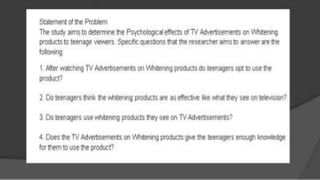
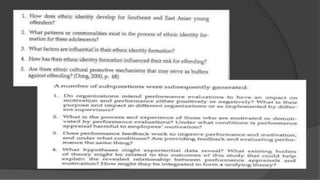
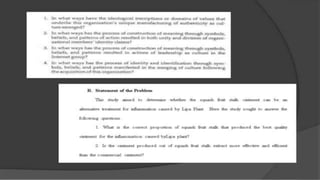
Statements of the Problem
 The problem must be shown as one that arose from a situation or
need.
 The problem should be stated precisely, accurately, and clearly.
 The general problem can be stated in declarative form while the
specific problems are stated in the interrogative form.
 The general problem covers the broad problem area while the
specific problems are interrelated parts of the general problem that
allows the researcher to confront the general problem into smaller
sub-parts.
Significance of the Study
 This is the justification of the research.
 This section explains why the problem being investigated is
important and why the results are significant.
 It should include its relevance to felt needs, the potential
contribution to new knowledge, policy implications, and other
possible uses for the results.
 It identifies the specific people or agency that would benefit from the
findings of the study and how they will be benefited.
 The presentation should be in paragraph form and not an
enumerated list only.
Significance of the Study (Example)
Data produced from this study will provide insights to the issue of the increasing unemployment in
our society. The researchers believed the importance of the chosen aspect. And this might be the best
way to comprehend the issues regarding the unemployment.
To the students. This study will be also helpful to the students and that they will be able to have
interest in studying economics and other relevant issues that are covered by this study. Through this
study, they will be knowledgeable to the certain issues that our country is facing right now.
To the futures researchers. This proposed study will help and benefit the future researchers as their
guide to their research. And they will be able to know why this issue is still existing and relevant in our
society.
The researchers expect the government and the residents their assistance to this problem so that
this issue will be reduced and minimized in our community.
And by completing this research, the researchers hope to explore the many causes of
unemployment, a realization of the seriousness of this problem in our society and suggestions to what
can be done to ease the problem of unemployment.
Scope and Delimitation of the Study
 The scope presents the content and coverage and what variables are included in the
study. It also includes explanation as to why some areas are not taken into
consideration or not included as variables.
 The scope is expected to indicate a reasonable area of study which is large enough to
be significant but narrow enough to permit careful treatment.
 The scope of the problem should be stated specifically. It defines when and where the
study is conducted and who the subjects are.
 On the other hand, the limitation of the study sets the precise boundaries of the
problem area, variables and the samples; what are included and excluded.
 It also defines procedural limits in terms of tools used to gather data, the geographical
setting and period covered.
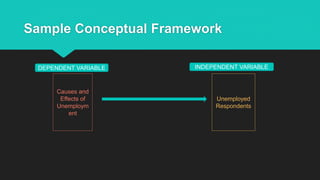
Conceptual Framework
 Conceptual framework is textual but it contains a graphical or pictorial presentation, the paradigm,
of the underlying theories as bases for the study.
 A tentative explanation or theoretical explanation of the phenomenon or problem.
Sample Conceptual Framework
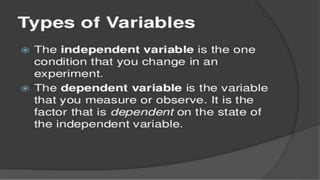
DEPENDENT VARIABLE INDEPENDENT VARIABLE
Causes and
Effects of
Unemploym
ent
Unemployed
Respondents
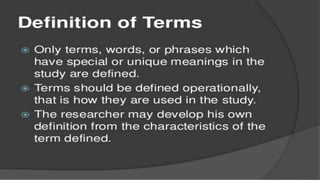
Definition of Terms
Chapter 1 presentation

Chapter 1 presentation

  • 1.
    SUBJECT MATTER OFTHE INQUIRY OR RESEARCH You begin your research work with a problem; that is, having a problem or topic to work on.
  • 2.
    Guidelines In Choosinga Research Topic 1. Interest in the Subject Matter 2. Availability of Information 3. Timeliness and relevance of the topic 4. Limitations on the Subject 5. Personal Resources
  • 3.
    Research Topics tobe Avoided 1. Controversial Topics 2. Highly Technical subjects 3. Hard to Investigate subjects 4. Too Broad subjects 5. Too Narrow subjects 6. Vague subjects
  • 4.
    Sources of ResearchTopics 1. Mass media communication 2. Books, Internet, peer-reviewed journals, government publications 3. Professional periodicals 4. General periodicals 5. Previous reading assignments 6. Work experience
  • 5.
    CHAPTER 1: TheProblem and its Background
  • 6.
    CHAPTER 1 ENTRIES:  Backgroundof the Study  Statements of the Problem  Objectives of the Study  Significance of the Study  Scope and Delimitation of the Study  Conceptual Framework  Definition of Terms
  • 7.
    Background of theStudy This is a brief statement of the origin of the problem. It is an account describing the circumstances which suggested the research and the justification for the selection of the study. The problem is presented starting from a global perspective, then finally converging to the specific problem at hand.
  • 9.
    Statements of theProblem  The problem must be shown as one that arose from a situation or need.  The problem should be stated precisely, accurately, and clearly.  The general problem can be stated in declarative form while the specific problems are stated in the interrogative form.  The general problem covers the broad problem area while the specific problems are interrelated parts of the general problem that allows the researcher to confront the general problem into smaller sub-parts.
  • 13.
    Significance of theStudy  This is the justification of the research.  This section explains why the problem being investigated is important and why the results are significant.  It should include its relevance to felt needs, the potential contribution to new knowledge, policy implications, and other possible uses for the results.  It identifies the specific people or agency that would benefit from the findings of the study and how they will be benefited.  The presentation should be in paragraph form and not an enumerated list only.
  • 15.
    Significance of theStudy (Example) Data produced from this study will provide insights to the issue of the increasing unemployment in our society. The researchers believed the importance of the chosen aspect. And this might be the best way to comprehend the issues regarding the unemployment. To the students. This study will be also helpful to the students and that they will be able to have interest in studying economics and other relevant issues that are covered by this study. Through this study, they will be knowledgeable to the certain issues that our country is facing right now. To the futures researchers. This proposed study will help and benefit the future researchers as their guide to their research. And they will be able to know why this issue is still existing and relevant in our society. The researchers expect the government and the residents their assistance to this problem so that this issue will be reduced and minimized in our community. And by completing this research, the researchers hope to explore the many causes of unemployment, a realization of the seriousness of this problem in our society and suggestions to what can be done to ease the problem of unemployment.
  • 16.
    Scope and Delimitationof the Study  The scope presents the content and coverage and what variables are included in the study. It also includes explanation as to why some areas are not taken into consideration or not included as variables.  The scope is expected to indicate a reasonable area of study which is large enough to be significant but narrow enough to permit careful treatment.  The scope of the problem should be stated specifically. It defines when and where the study is conducted and who the subjects are.  On the other hand, the limitation of the study sets the precise boundaries of the problem area, variables and the samples; what are included and excluded.  It also defines procedural limits in terms of tools used to gather data, the geographical setting and period covered.
  • 19.
    Conceptual Framework  Conceptualframework is textual but it contains a graphical or pictorial presentation, the paradigm, of the underlying theories as bases for the study.  A tentative explanation or theoretical explanation of the phenomenon or problem.
  • 22.
    Sample Conceptual Framework DEPENDENTVARIABLE INDEPENDENT VARIABLE Causes and Effects of Unemploym ent Unemployed Respondents
  • 23.