Lunch-andLearn

Personal Branding
Becky Livingston
President & CEO
Penheel Marketing
October 2013

© 2013 Penheel Marketing™
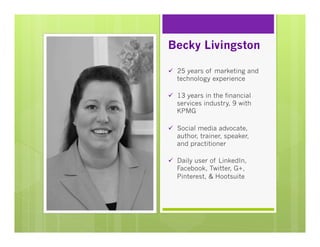
Becky Livingston
ü  25 years of marketing and
technology experience
ü  13 years in the financial
services industry, 9 with
KPMG
ü  Social media advocate,
author, trainer, speaker,
and practitioner
ü  Daily user of LinkedIn,
Facebook, Twitter, G+,
Pinterest, & Hootsuite
Agenda
§ 

Personal Branding
§ 
§ 
§ 
§ 

§ 

What is it?
Why it’s important.
How do you use it?
Examples

Bringing It All Together
What is personal branding?
§ 
§ 
§ 
§ 

Powerful, clear, positive idea that comes to mind when
people think of you.
It’s what you stand for – values, abilities, and actions.
A broadcast message about your character and
performance.
Tells your audience 3 things:
§ 
§ 
§ 

Who you are.
What you do.
What makes you different; or how you create value for
others.
Why it’s important.
More of the right kind of
clients.
ü  Increased earning
potential.
ü  Consistent flow of
business.
ü  Draws beneficial people.
ü  “Top-of-Mind” status
ü 

Increased credibility
ü  Leadership role
ü  Enhanced prestige
ü  Added perceived value
ü  Greater recognition
ü  Association with a trend
ü 

Professionals need to develop a position, or personal brand statement, that
they can clearly articulate across a series of [social] platforms.
How do you use it?
§ 
§ 
§ 
§ 
§ 

To introduce yourself verbally, visually, and in
writing.
To create an aura about what you do and how
you do it.
To demonstrate to others about your beliefs,
values, and abilities.
To change/clarify/create perceptions.
To influence.

3-30-3-30
Personal Brand Equity (PBE)
1. 

2. 
3. 

Intangible value individuals bring to the
firm in terms of their ability to influence
others by leveraging their experience,
expertise and reputation
Relationships they have built and
maintained
Tangible value they bring in terms of
their contribution to firm revenues and
growth.
Personal Brand Statement
1. 
2. 

3. 
4. 

Identifying a target market by niche or by job
title
Choosing personal attributes and
characteristics that define how the individual
wants to be perceived
Defining and selecting the technical skills
they wish to highlight
Conveying what makes them different.
Examples
“I am a manager who uses the audit process as a
steppingstone to understand and help my tax-exempt
clients solve their business issues. My clients think of
me as a team player and a ‘go-to’ resource who can
find ways to solve their problems.”
“I am a dedicated professional who helps owners of
small manufacturing businesses develop and execute
succession plans that guarantee firm continuity. No
other CPA in the market can combine innovative
thinking with resources, contacts and experience like
I do.”
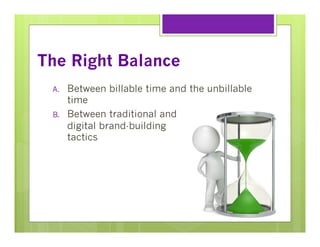
The Right Balance
A. 
B. 

Between billable time and the unbillable
time
Between traditional and
digital brand-building
tactics
Succession Planning
›  Develop

written, individualized, and customized
personal branding plans
›  Defined

goals, tactical elements, incorporate
marketing resources, ROI

›  Commit,

measure, adjust
›  Transfer of goodwill

Tool
www.ReachPersonalBranding.com/
Using Social Media - LinkedIn
§ 
§ 
§ 
§ 
§ 
§ 

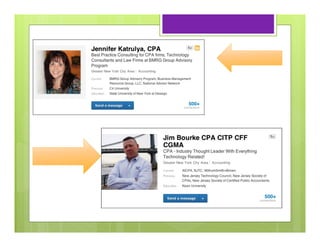
Photo
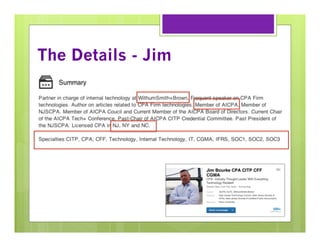
Post the branding statement front and center in
the summary.
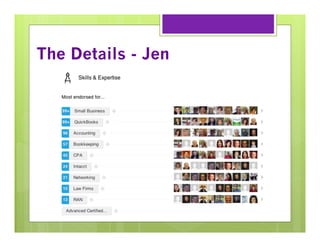
Add skills and move that section to the top of
the page
Join groups and post in them.
Respond to comments and like content.
Post updates to your status bar several times a
week.
The Details - Jen
The Details - Jim
Parting Words
Branding is about you.
A strong personal brand is not about how long
you’ve been building it, but how well you’ve been
doing it.
Like a great pair of shoes, it must:
ü  Make you feel powerful and happy
ü  Fit
ü  Feel good
ü  Tell a story
Connect with Penheel Marketing
@Penheel
Questions …

Personal branding for CPAs

  • 1.
    Lunch-andLearn Personal Branding Becky Livingston President& CEO Penheel Marketing October 2013 © 2013 Penheel Marketing™
  • 2.
    Becky Livingston ü  25years of marketing and technology experience ü  13 years in the financial services industry, 9 with KPMG ü  Social media advocate, author, trainer, speaker, and practitioner ü  Daily user of LinkedIn, Facebook, Twitter, G+, Pinterest, & Hootsuite
  • 3.
    Agenda §  Personal Branding §  §  §  §  §  What isit? Why it’s important. How do you use it? Examples Bringing It All Together
  • 4.
    What is personalbranding? §  §  §  §  Powerful, clear, positive idea that comes to mind when people think of you. It’s what you stand for – values, abilities, and actions. A broadcast message about your character and performance. Tells your audience 3 things: §  §  §  Who you are. What you do. What makes you different; or how you create value for others.
  • 5.
    Why it’s important. Moreof the right kind of clients. ü  Increased earning potential. ü  Consistent flow of business. ü  Draws beneficial people. ü  “Top-of-Mind” status ü  Increased credibility ü  Leadership role ü  Enhanced prestige ü  Added perceived value ü  Greater recognition ü  Association with a trend ü  Professionals need to develop a position, or personal brand statement, that they can clearly articulate across a series of [social] platforms.
  • 6.
    How do youuse it? §  §  §  §  §  To introduce yourself verbally, visually, and in writing. To create an aura about what you do and how you do it. To demonstrate to others about your beliefs, values, and abilities. To change/clarify/create perceptions. To influence. 3-30-3-30
  • 7.
    Personal Brand Equity(PBE) 1.  2.  3.  Intangible value individuals bring to the firm in terms of their ability to influence others by leveraging their experience, expertise and reputation Relationships they have built and maintained Tangible value they bring in terms of their contribution to firm revenues and growth.
  • 8.
    Personal Brand Statement 1.  2.  3.  4.  Identifyinga target market by niche or by job title Choosing personal attributes and characteristics that define how the individual wants to be perceived Defining and selecting the technical skills they wish to highlight Conveying what makes them different.
  • 9.
    Examples “I am amanager who uses the audit process as a steppingstone to understand and help my tax-exempt clients solve their business issues. My clients think of me as a team player and a ‘go-to’ resource who can find ways to solve their problems.” “I am a dedicated professional who helps owners of small manufacturing businesses develop and execute succession plans that guarantee firm continuity. No other CPA in the market can combine innovative thinking with resources, contacts and experience like I do.”
  • 10.
    The Right Balance A.  B.  Betweenbillable time and the unbillable time Between traditional and digital brand-building tactics
  • 11.
    Succession Planning ›  Develop written,individualized, and customized personal branding plans ›  Defined goals, tactical elements, incorporate marketing resources, ROI ›  Commit, measure, adjust ›  Transfer of goodwill Tool www.ReachPersonalBranding.com/
  • 12.
    Using Social Media- LinkedIn §  §  §  §  §  §  Photo Post the branding statement front and center in the summary. Add skills and move that section to the top of the page Join groups and post in them. Respond to comments and like content. Post updates to your status bar several times a week.
  • 14.
  • 15.
  • 16.
    Parting Words Branding isabout you. A strong personal brand is not about how long you’ve been building it, but how well you’ve been doing it. Like a great pair of shoes, it must: ü  Make you feel powerful and happy ü  Fit ü  Feel good ü  Tell a story
  • 17.
    Connect with PenheelMarketing @Penheel
  • 18.