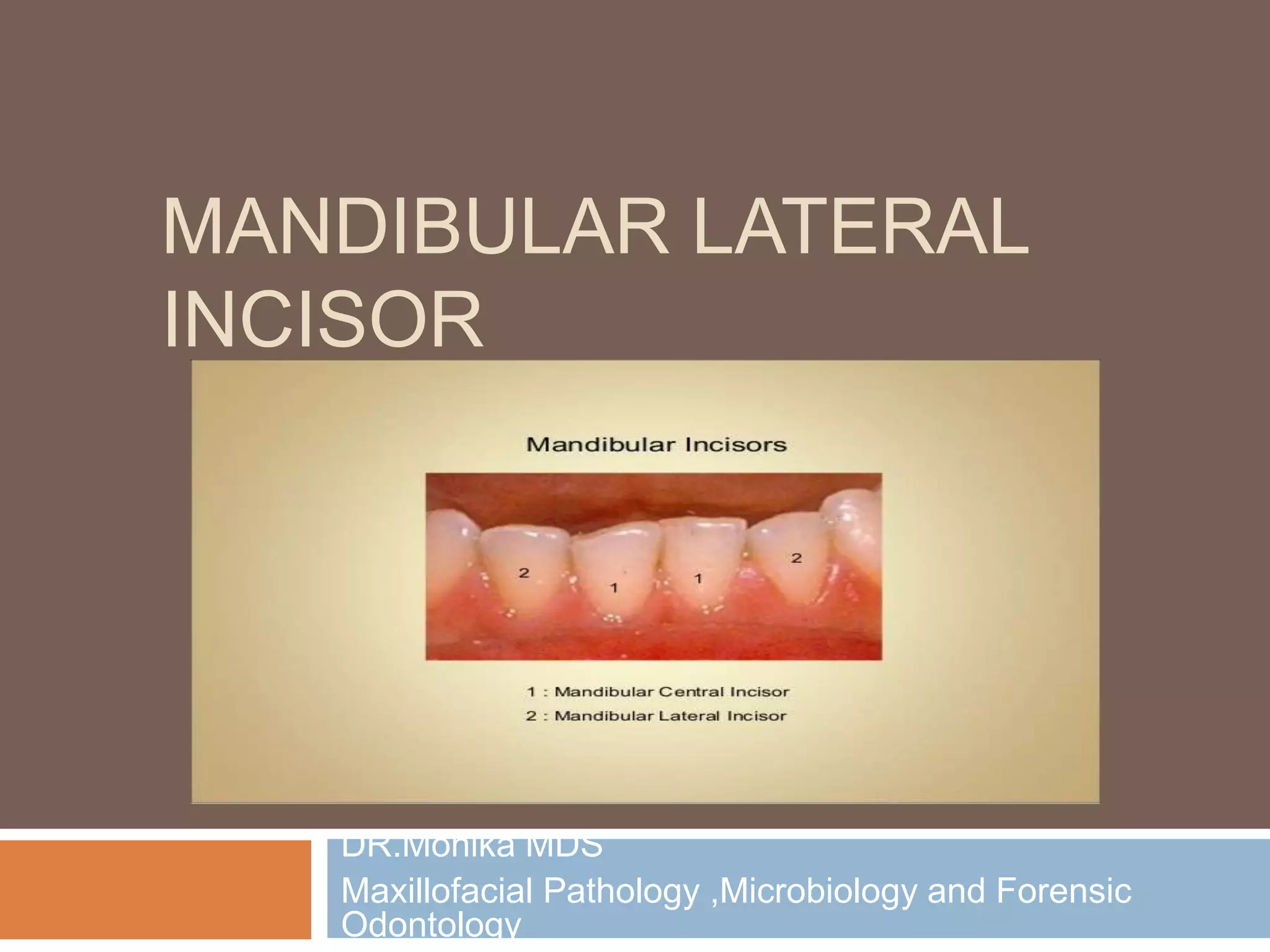
MANDIBULAR LATERAL
INCISOR
DR.Monika MDS
Maxillofacial Pathology ,Microbiology and Forensic
Odontology
Introduction
 Second tooth from the midline in each lower
quadrant
 Shares a mesial contact area with the
central incisor.
 Mandibular lateral incisor is slightly wider
mesiodistally
 slightly larger in all respects than the
mandibular central incisor
 complements the central in function.
 The distal contact is with the deciduous
mandibular canine until that tooth's exfoliation
and then contact is shared with the permanent
canine.
TOOTH NUMBERING
SYSTEM
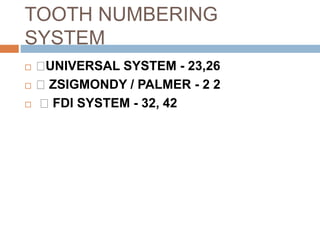
 UNIVERSAL SYSTEM - 23,26
 ZSIGMONDY / PALMER - 2 2
 FDI SYSTEM - 32, 42
CHRONOLOGY
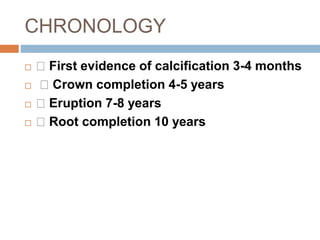
 First evidence of calcification 3-4 months
 Crown completion 4-5 years
 Eruption 7-8 years
 Root completion 10 years
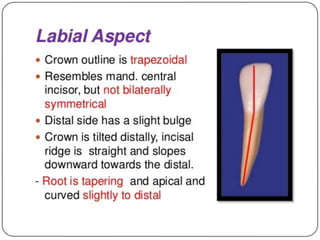
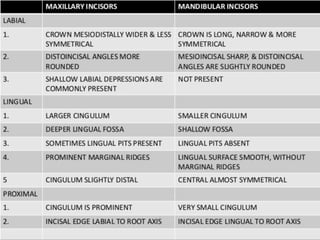
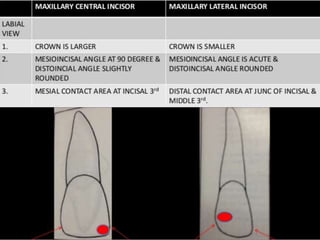
Labial Aspect
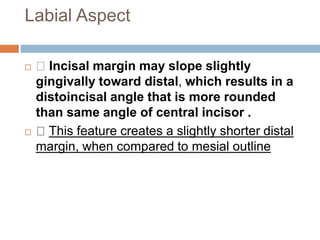
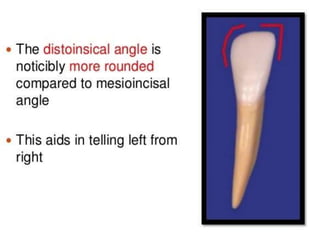
 Incisal margin may slope slightly
gingivally toward distal, which results in a
distoincisal angle that is more rounded
than same angle of central incisor .
 This feature creates a slightly shorter distal
margin, when compared to mesial outline
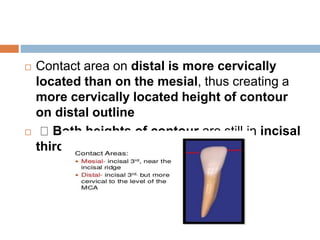
 Contact area on distal is more cervically
located than on the mesial, thus creating a
more cervically located height of contour
on distal outline
 Both heights of contour are still in incisal
third
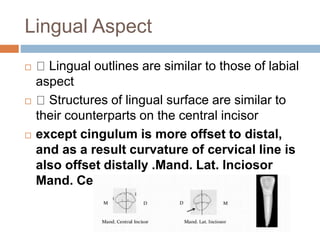
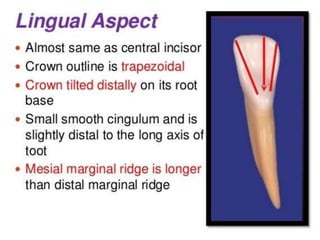
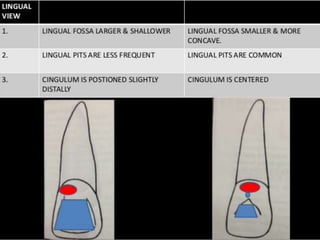
Lingual Aspect
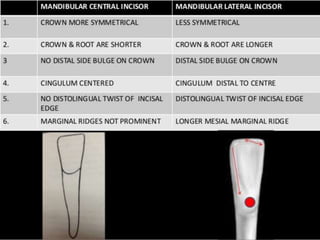
 Lingual outlines are similar to those of labial
aspect
 Structures of lingual surface are similar to
their counterparts on the central incisor
 except cingulum is more offset to distal,
and as a result curvature of cervical line is
also offset distally .Mand. Lat. Inciosor
Mand. Central Incisor M D D M
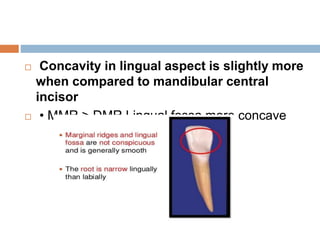
 Concavity in lingual aspect is slightly more
when compared to mandibular central
incisor
 • MMR > DMR Lingual fossa more concave
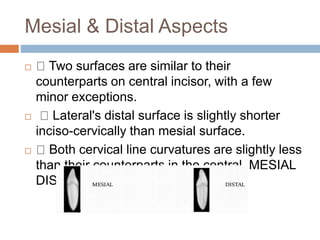
Mesial & Distal Aspects
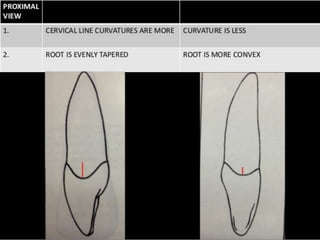
 Two surfaces are similar to their
counterparts on central incisor, with a few
minor exceptions.
 Lateral's distal surface is slightly shorter
inciso-cervically than mesial surface.
 Both cervical line curvatures are slightly less
than their counterparts in the central. MESIAL
DISTAL
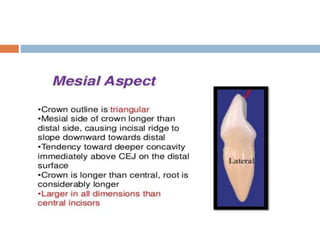
 Mesial cervical line shows greater incisal
curvature than does the distal
 At distal contact area, height of contour is
more cervically located than on mesial
 In incisal third, distal contact area is very
near to junction of incisal & middle thirds & is
most cervically located of any mandibular
incisor contact
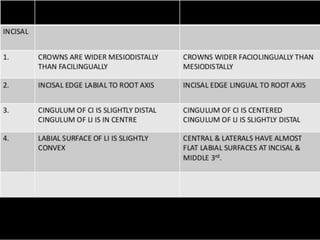
Incisal Aspect
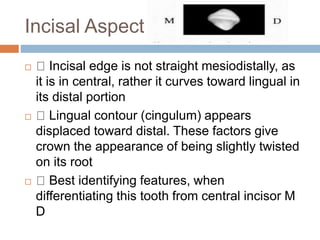
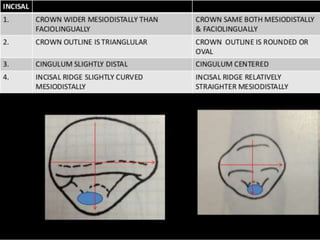
 Incisal edge is not straight mesiodistally, as
it is in central, rather it curves toward lingual in
its distal portion
 Lingual contour (cingulum) appears
displaced toward distal. These factors give
crown the appearance of being slightly twisted
on its root
 Best identifying features, when
differentiating this tooth from central incisor M
D
Root
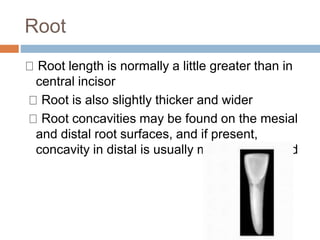
Root length is normally a little greater than in
central incisor
Root is also slightly thicker and wider
Root concavities may be found on the mesial
and distal root surfaces, and if present,
concavity in distal is usually more pronounced
 Variations and Anomalies:
 Anomalies are rare, but occasionally a
bifurcated root is found
References
 CONCISE DENTAL ANATOMY &
MORPHOLOGY : JAMES L FULLER
 DENTAL ANATOMY, PHYSIOLOGY &
OCCLUSION: WHEELER’S
 TEXTBOOK OF DENTAL ANATOMY,
PHYSIOLOGY & OCCLUSION: RASHMI GS
(PHULARI) INTERNET
Permanent Mandibular Lateral Incisor

Permanent Mandibular Lateral Incisor

  • 1.
    MANDIBULAR LATERAL INCISOR DR.Monika MDS MaxillofacialPathology ,Microbiology and Forensic Odontology
  • 2.
    Introduction  Second toothfrom the midline in each lower quadrant  Shares a mesial contact area with the central incisor.  Mandibular lateral incisor is slightly wider mesiodistally
  • 3.
     slightly largerin all respects than the mandibular central incisor  complements the central in function.  The distal contact is with the deciduous mandibular canine until that tooth's exfoliation and then contact is shared with the permanent canine.
  • 4.
    TOOTH NUMBERING SYSTEM  UNIVERSALSYSTEM - 23,26  ZSIGMONDY / PALMER - 2 2  FDI SYSTEM - 32, 42
  • 5.
    CHRONOLOGY  First evidenceof calcification 3-4 months  Crown completion 4-5 years  Eruption 7-8 years  Root completion 10 years
  • 7.
    Labial Aspect  Incisalmargin may slope slightly gingivally toward distal, which results in a distoincisal angle that is more rounded than same angle of central incisor .  This feature creates a slightly shorter distal margin, when compared to mesial outline
  • 9.
     Contact areaon distal is more cervically located than on the mesial, thus creating a more cervically located height of contour on distal outline  Both heights of contour are still in incisal third
  • 11.
    Lingual Aspect  Lingualoutlines are similar to those of labial aspect  Structures of lingual surface are similar to their counterparts on the central incisor  except cingulum is more offset to distal, and as a result curvature of cervical line is also offset distally .Mand. Lat. Inciosor Mand. Central Incisor M D D M
  • 13.
     Concavity inlingual aspect is slightly more when compared to mandibular central incisor  • MMR > DMR Lingual fossa more concave
  • 14.
    Mesial & DistalAspects  Two surfaces are similar to their counterparts on central incisor, with a few minor exceptions.  Lateral's distal surface is slightly shorter inciso-cervically than mesial surface.  Both cervical line curvatures are slightly less than their counterparts in the central. MESIAL DISTAL
  • 16.
     Mesial cervicalline shows greater incisal curvature than does the distal  At distal contact area, height of contour is more cervically located than on mesial  In incisal third, distal contact area is very near to junction of incisal & middle thirds & is most cervically located of any mandibular incisor contact
  • 17.
    Incisal Aspect  Incisaledge is not straight mesiodistally, as it is in central, rather it curves toward lingual in its distal portion  Lingual contour (cingulum) appears displaced toward distal. These factors give crown the appearance of being slightly twisted on its root  Best identifying features, when differentiating this tooth from central incisor M D
  • 18.
    Root Root length isnormally a little greater than in central incisor Root is also slightly thicker and wider Root concavities may be found on the mesial and distal root surfaces, and if present, concavity in distal is usually more pronounced
  • 19.
     Variations andAnomalies:  Anomalies are rare, but occasionally a bifurcated root is found
  • 27.
    References  CONCISE DENTALANATOMY & MORPHOLOGY : JAMES L FULLER  DENTAL ANATOMY, PHYSIOLOGY & OCCLUSION: WHEELER’S  TEXTBOOK OF DENTAL ANATOMY, PHYSIOLOGY & OCCLUSION: RASHMI GS (PHULARI) INTERNET