MORPHOLOGY
OF
PARMANENT
CANINE
Maxillary Canine
Labial aspect
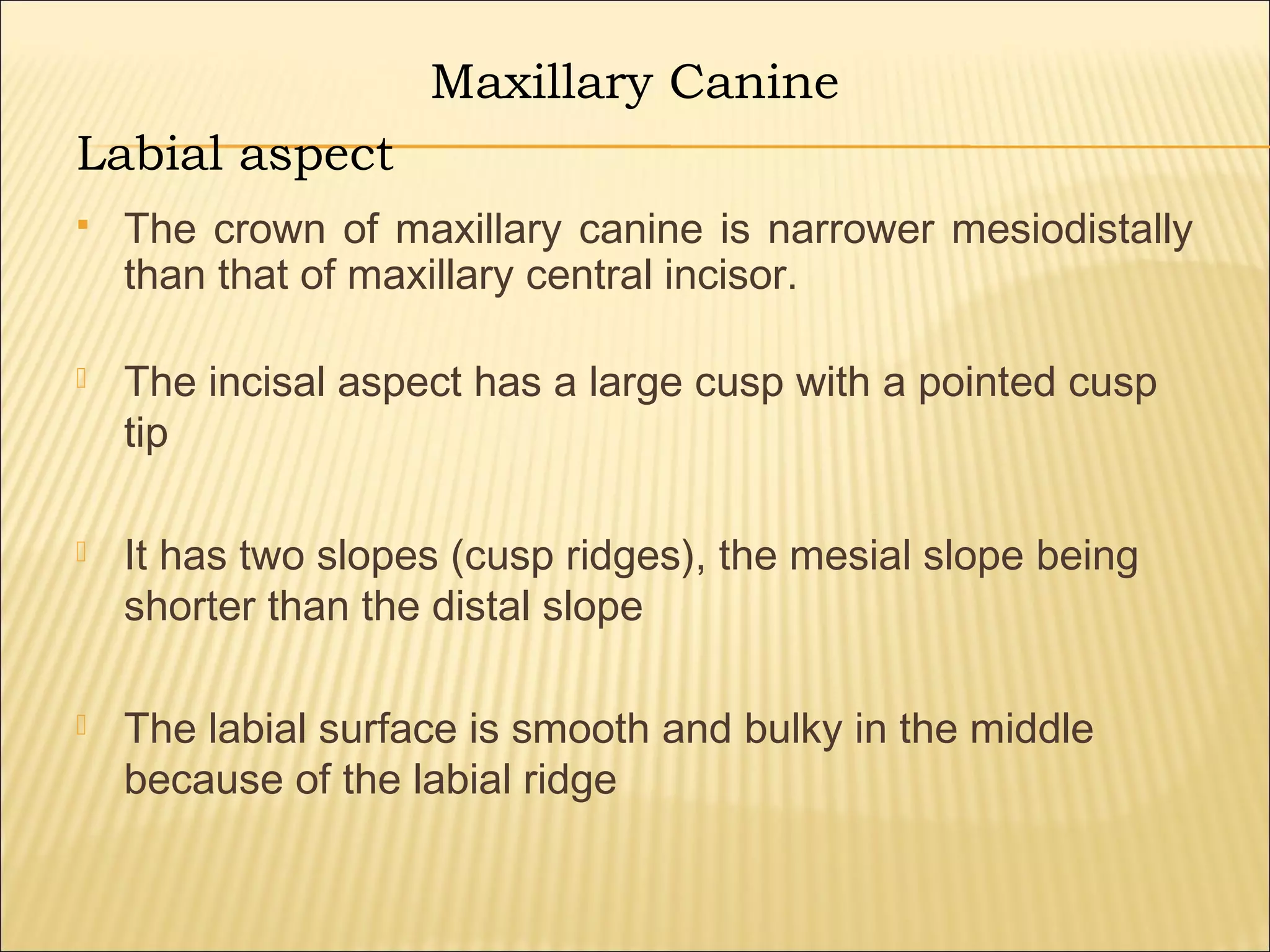
 The crown of maxillary canine is narrower mesiodistally
than that of maxillary central incisor.
 The incisal aspect has a large cusp with a pointed cusp
tip
 It has two slopes (cusp ridges), the mesial slope being
shorter than the distal slope
 The labial surface is smooth and bulky in the middle
because of the labial ridge
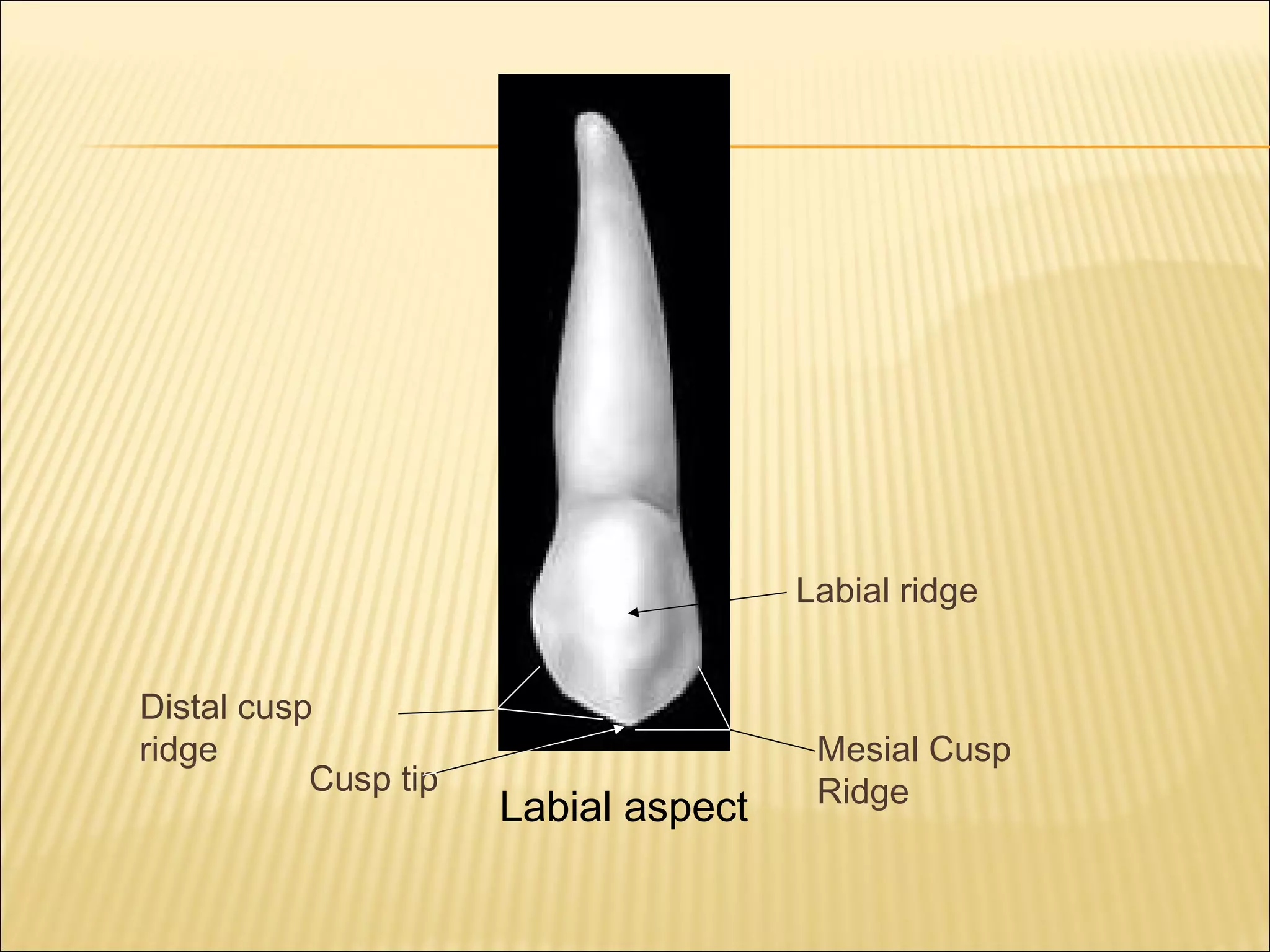
Labial aspect
Labial ridge
Cusp tip
Distal cusp
ridge Mesial Cusp
Ridge
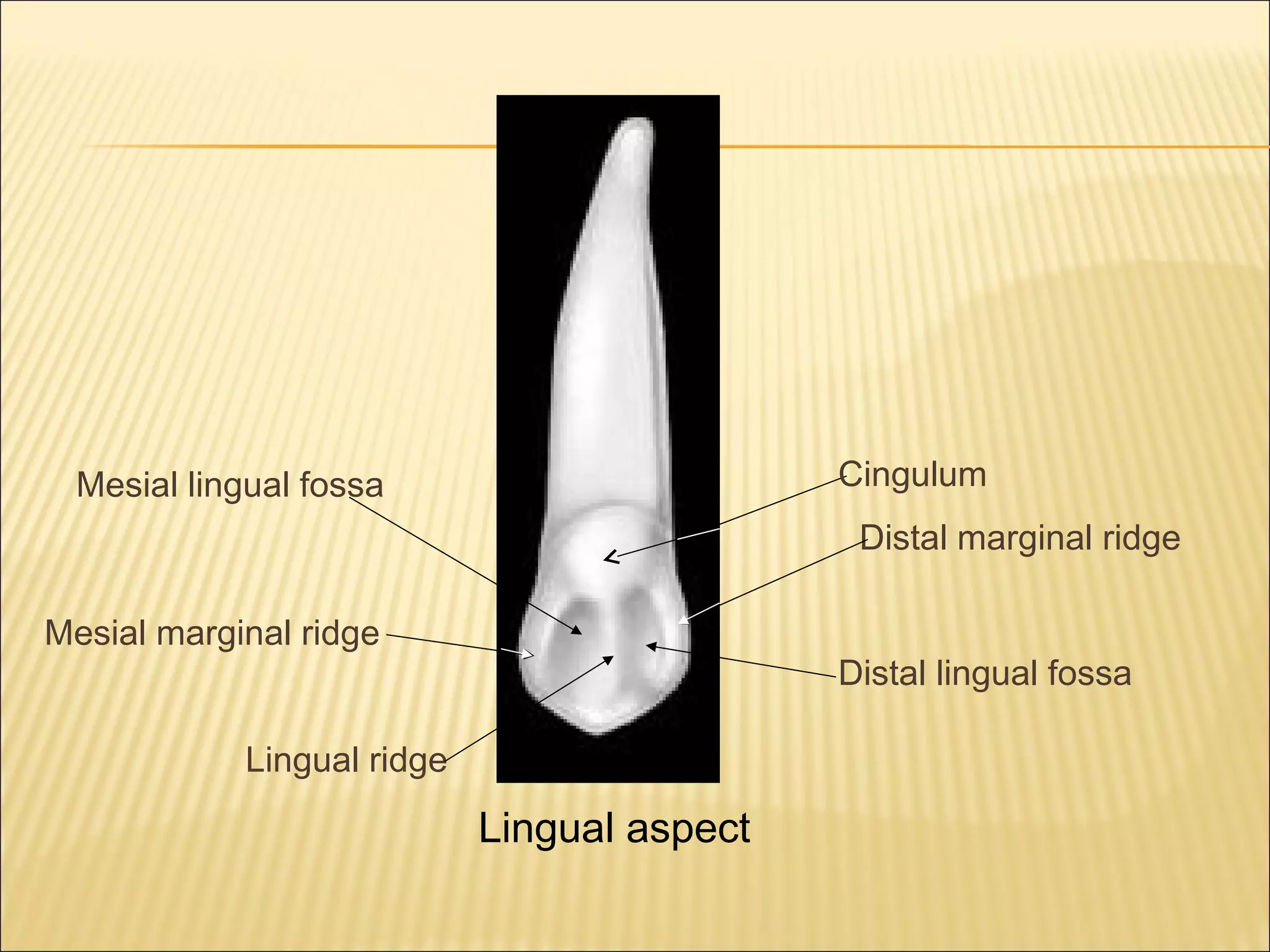
Lingual aspect
 The crown and root are narrower lingually
 The cingulum is well developed, large and sometimes
pointed like a cusp
 Occasionally a well developed lingual ridge is seen that
divides the lingual fossa into mesial and distal lingual
fossae
 Heavy marginal ridges are associated with well formed
cingulum and fossae
Lingual aspect
Cingulum
Distal marginal ridge
Distal lingual fossa
Lingual ridge
Mesial marginal ridge
Mesial lingual fossa
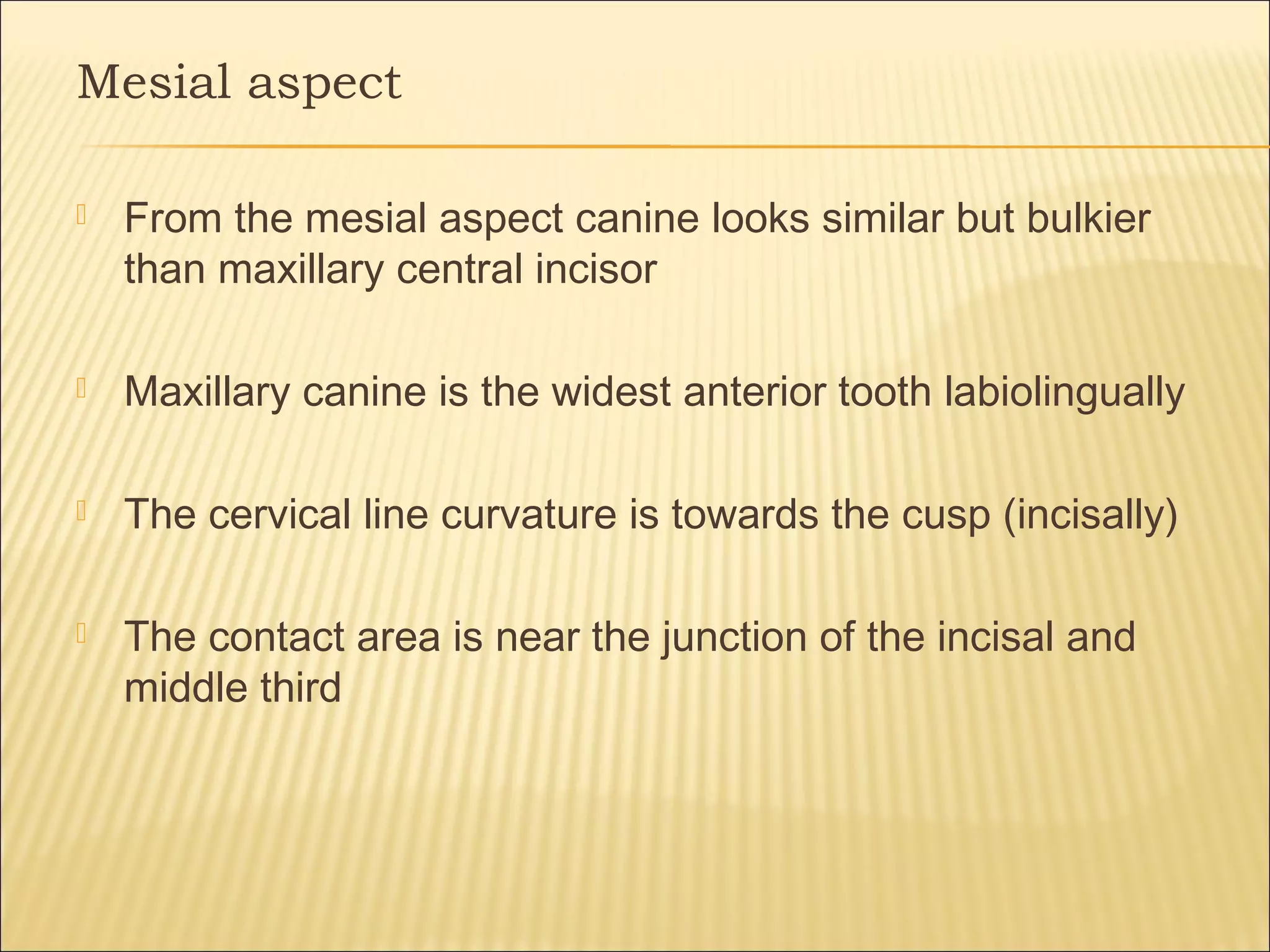
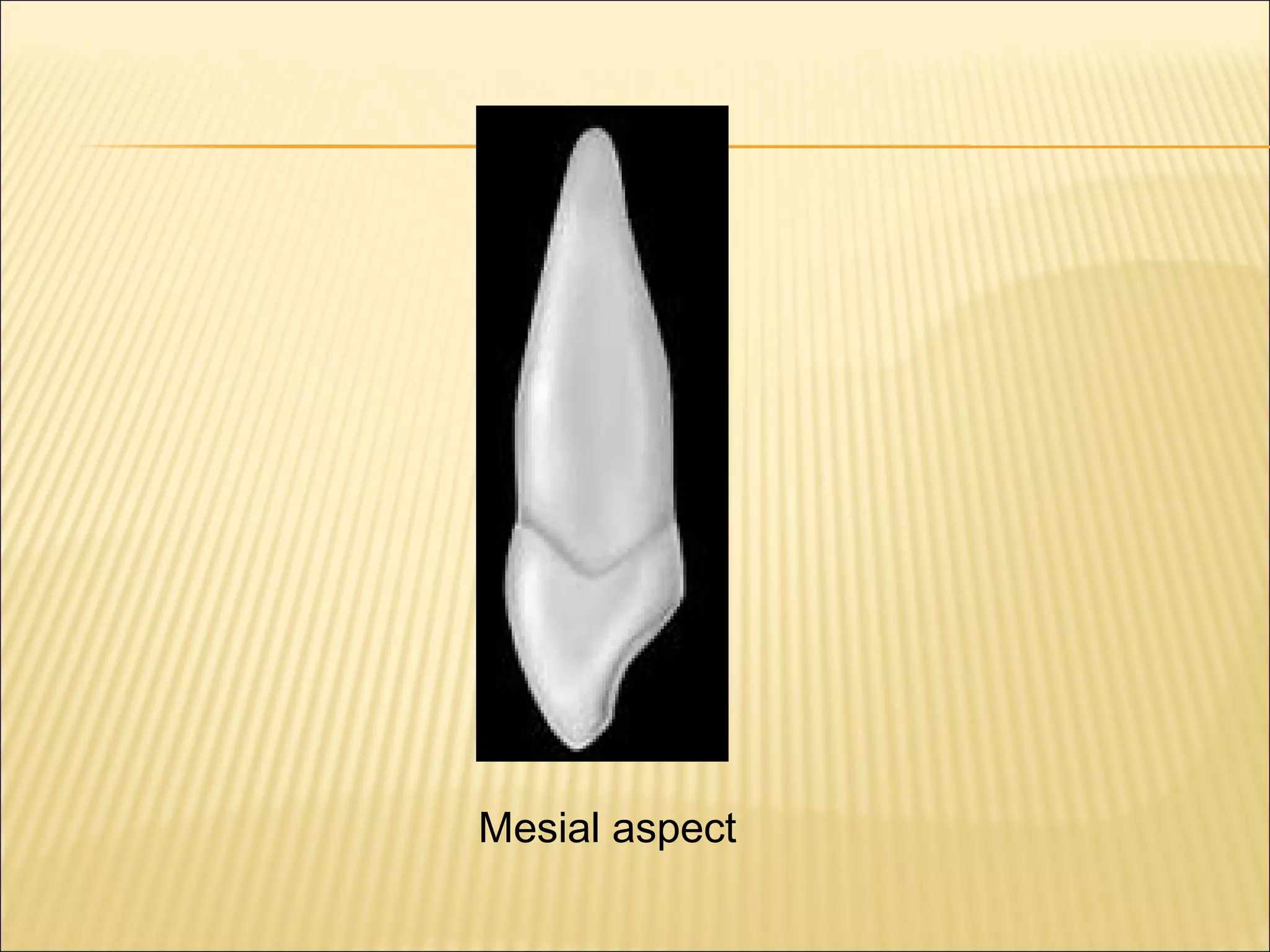
Mesial aspect
 From the mesial aspect canine looks similar but bulkier
than maxillary central incisor
 Maxillary canine is the widest anterior tooth labiolingually
 The cervical line curvature is towards the cusp (incisally)
 The contact area is near the junction of the incisal and
middle third
Mesial aspect
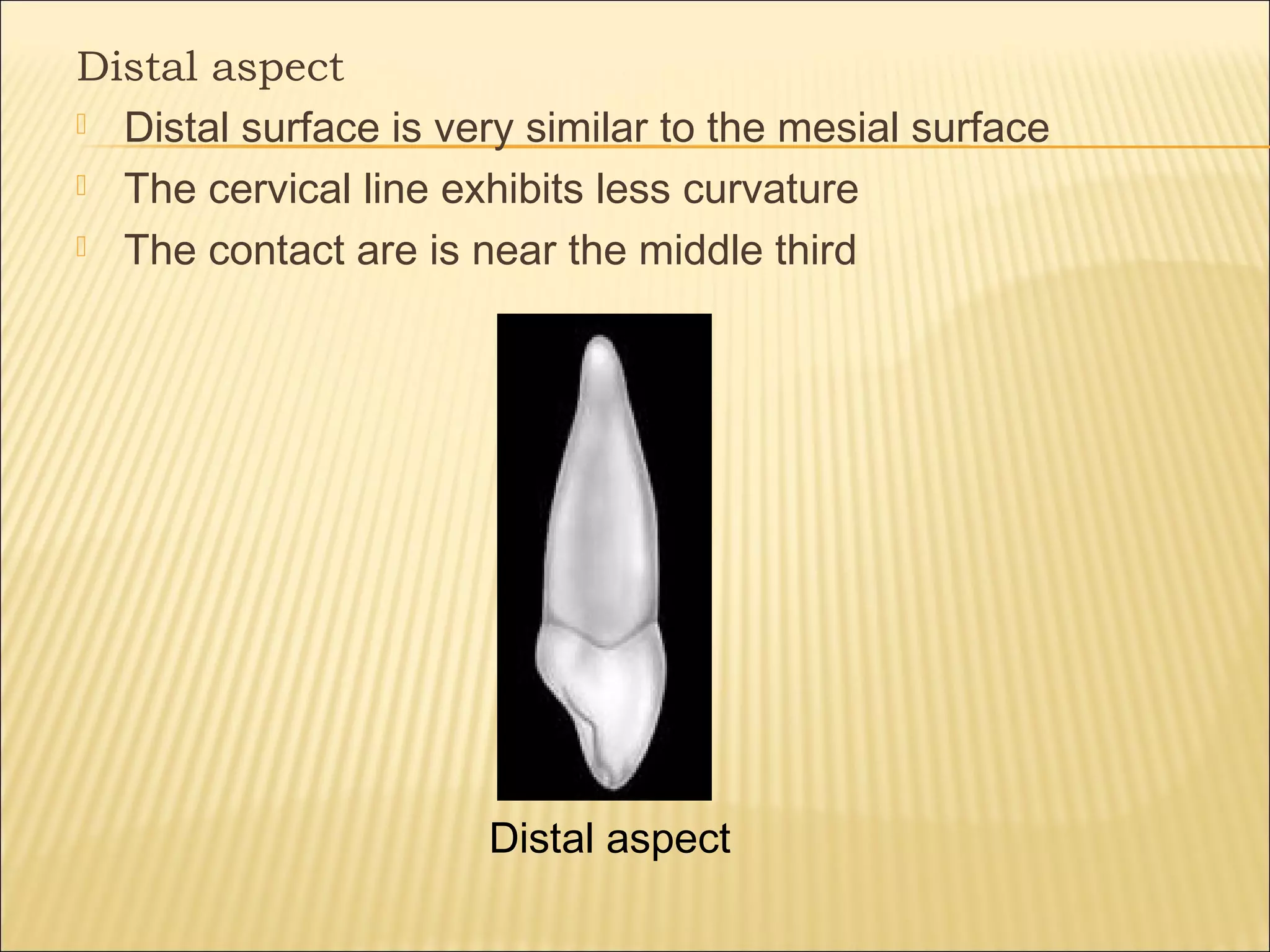
Distal aspect
 Distal surface is very similar to the mesial surface
 The cervical line exhibits less curvature
 The contact are is near the middle third
Distal aspect
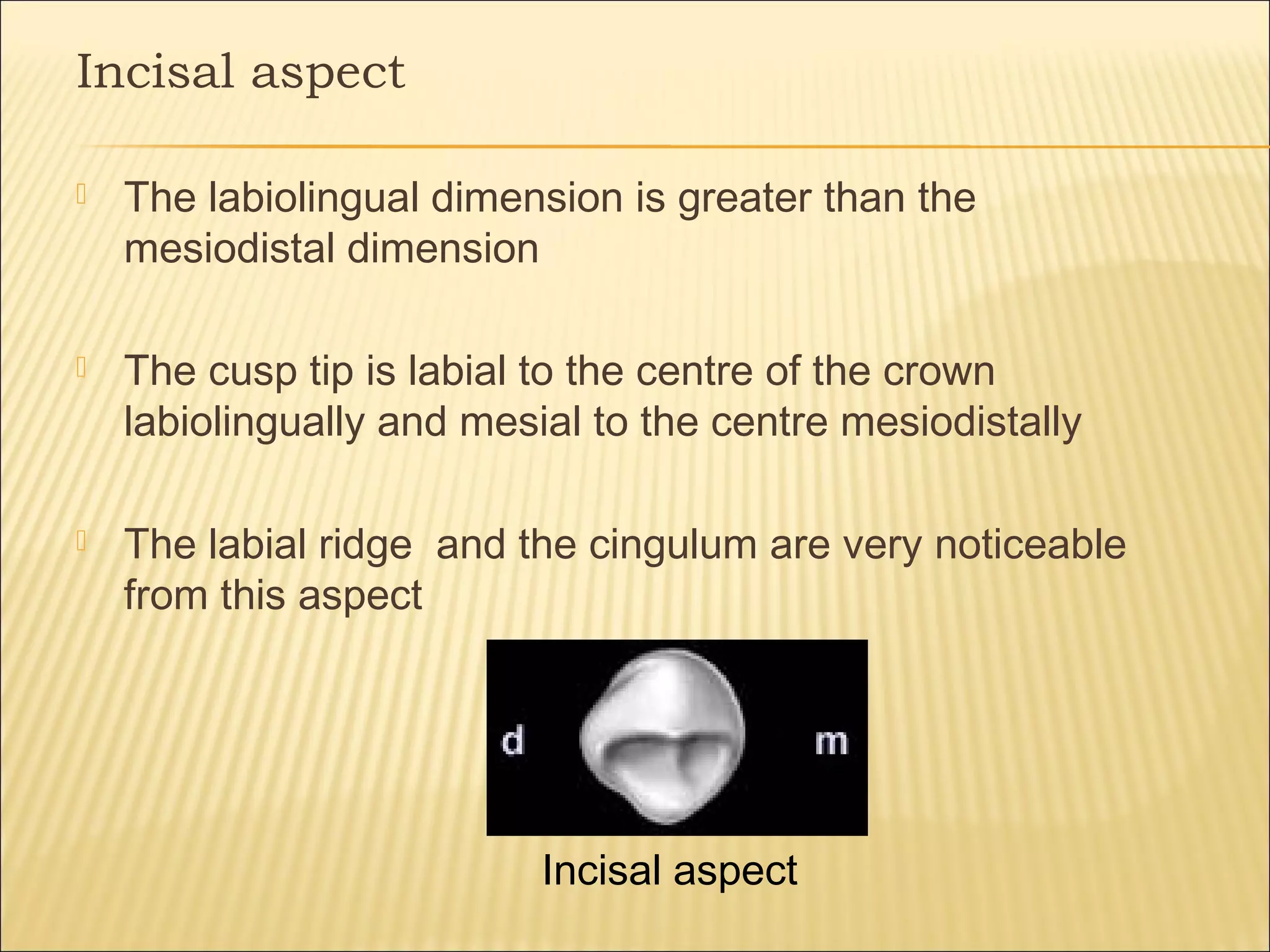
Incisal aspect
 The labiolingual dimension is greater than the
mesiodistal dimension
 The cusp tip is labial to the centre of the crown
labiolingually and mesial to the centre mesiodistally
 The labial ridge and the cingulum are very noticeable
from this aspect
Incisal aspect
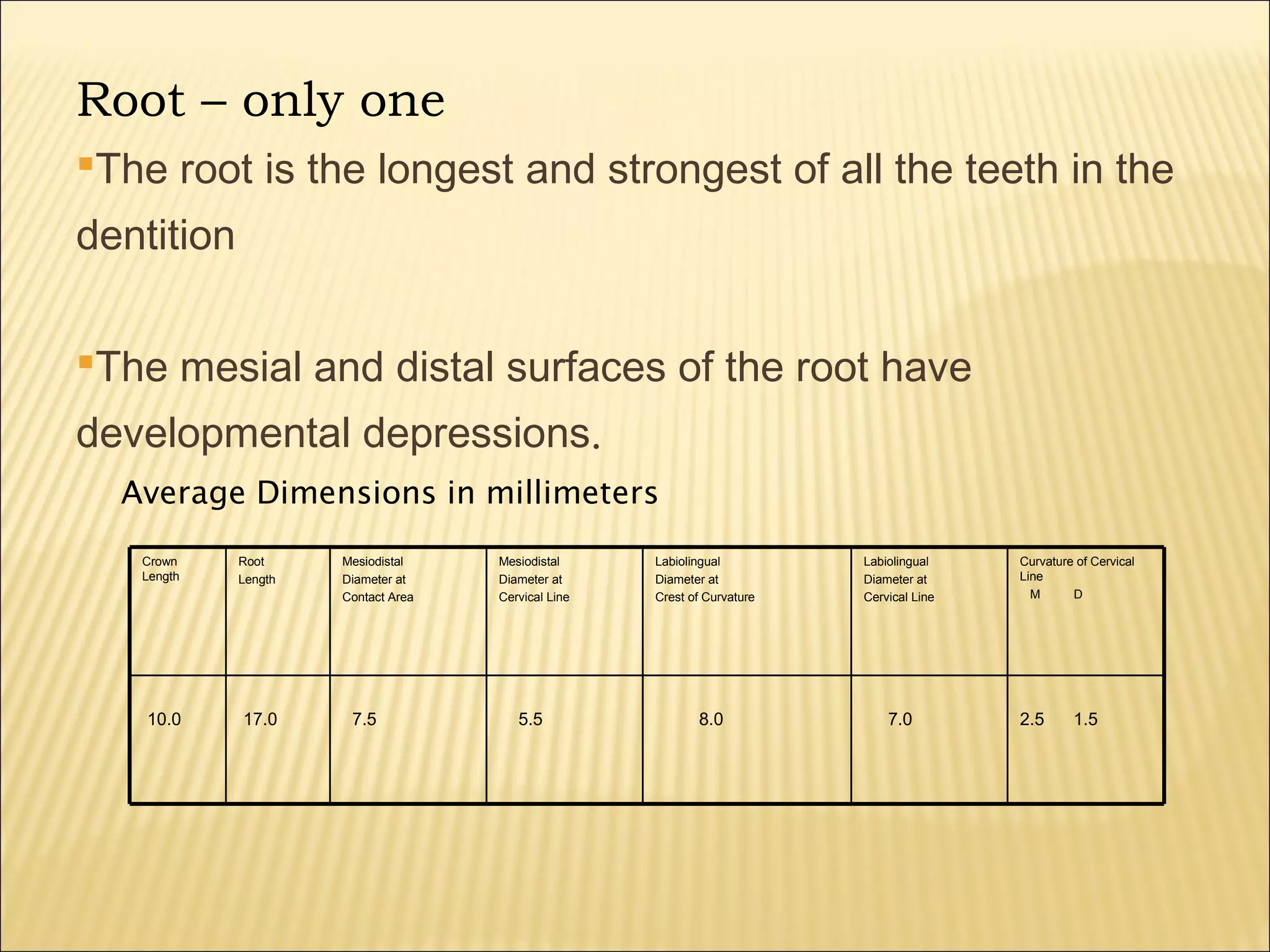
Root – only one
The root is the longest and strongest of all the teeth in the
dentition
The mesial and distal surfaces of the root have
developmental depressions.
2.5 1.57.08.05.57.517.010.0
Curvature of Cervical
Line
M D
Labiolingual
Diameter at
Cervical Line
Labiolingual
Diameter at
Crest of Curvature
Mesiodistal
Diameter at
Cervical Line
Mesiodistal
Diameter at
Contact Area
Root
Length
Crown
Length
Average Dimensions in millimeters
Mandibular Canine
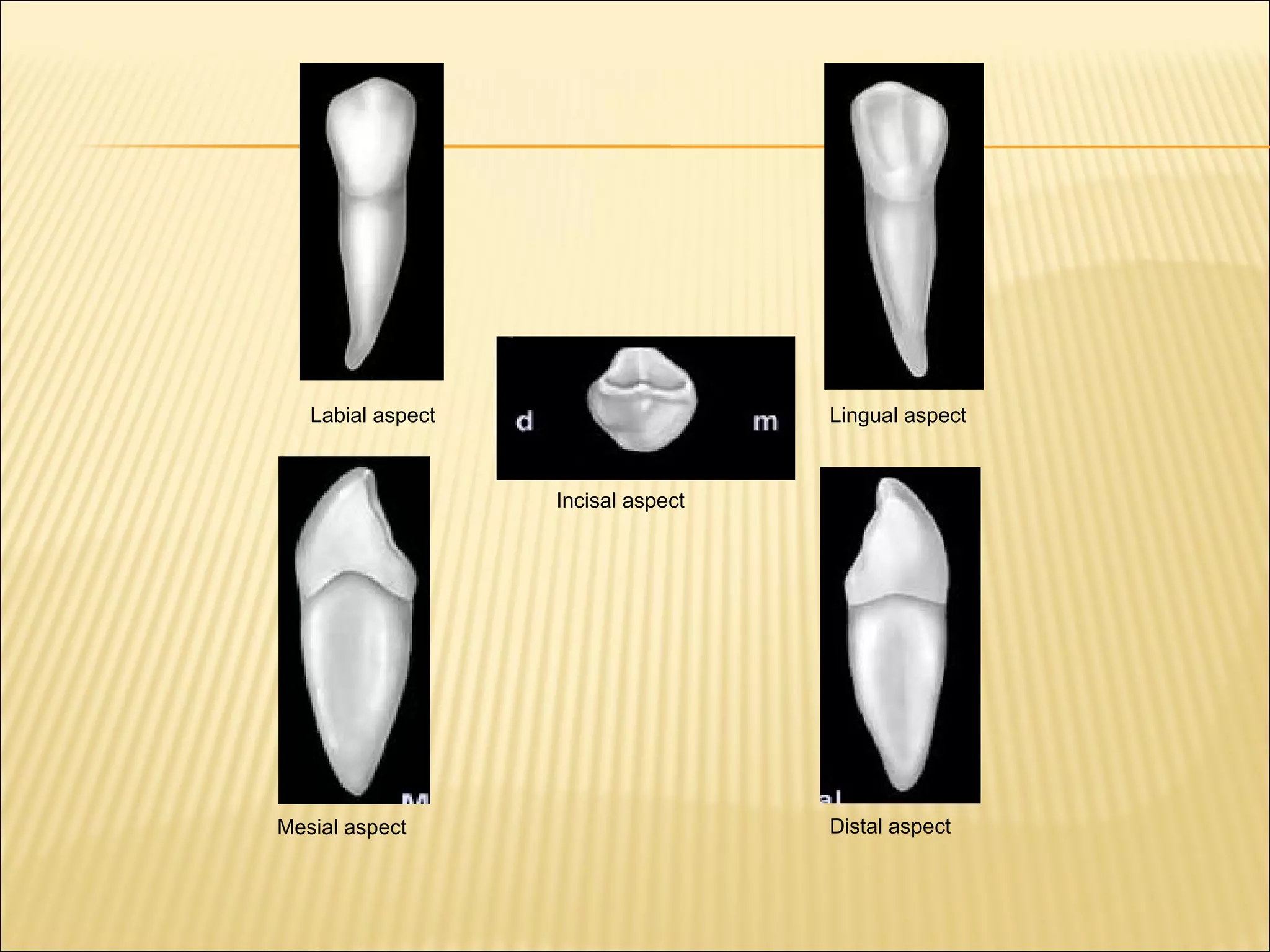
Labial aspect
 Mandibular canines are similar to maxillary canines
except that they are slightly narrower mesiodistally
 Mesial outline of the crown is straight and inline with the
mesial outline of the root
 The mesial cusp ridge is smaller than the distal cusp
ridge
Lingual aspect
 The lingual surface of the crown is smooth and flat
simulating the surface of mandibular lateral incisor
 Cingulum is less prominent and marginal ridges are less
distinct
Mesial and Distal aspects
 These aspects are very similar and the cervical line
curves more on the mesial aspect
 The contact area on mesial aspect is in the incisal third
and a little higher on the distal third
Incisal aspect
 Like maxillary canine the labiolingual dimension is more
than the mesiodistal dimension
 The cusp tip appears inclined in a lingual direction
Root
 The root is shorter by 1 or 2 mm
 The developmental depression is more pronounced on
the lower canine
Labial aspect Lingual aspect
Mesial aspect Distal aspect
Incisal aspect

morphology of maxillary & mandibular canine teeth

  • 1.
  • 3.
    Maxillary Canine Labial aspect The crown of maxillary canine is narrower mesiodistally than that of maxillary central incisor.  The incisal aspect has a large cusp with a pointed cusp tip  It has two slopes (cusp ridges), the mesial slope being shorter than the distal slope  The labial surface is smooth and bulky in the middle because of the labial ridge
  • 4.
    Labial aspect Labial ridge Cusptip Distal cusp ridge Mesial Cusp Ridge
  • 5.
    Lingual aspect  Thecrown and root are narrower lingually  The cingulum is well developed, large and sometimes pointed like a cusp  Occasionally a well developed lingual ridge is seen that divides the lingual fossa into mesial and distal lingual fossae  Heavy marginal ridges are associated with well formed cingulum and fossae
  • 6.
    Lingual aspect Cingulum Distal marginalridge Distal lingual fossa Lingual ridge Mesial marginal ridge Mesial lingual fossa
  • 7.
    Mesial aspect  Fromthe mesial aspect canine looks similar but bulkier than maxillary central incisor  Maxillary canine is the widest anterior tooth labiolingually  The cervical line curvature is towards the cusp (incisally)  The contact area is near the junction of the incisal and middle third
  • 8.
  • 9.
    Distal aspect  Distalsurface is very similar to the mesial surface  The cervical line exhibits less curvature  The contact are is near the middle third Distal aspect
  • 10.
    Incisal aspect  Thelabiolingual dimension is greater than the mesiodistal dimension  The cusp tip is labial to the centre of the crown labiolingually and mesial to the centre mesiodistally  The labial ridge and the cingulum are very noticeable from this aspect Incisal aspect
  • 11.
    Root – onlyone The root is the longest and strongest of all the teeth in the dentition The mesial and distal surfaces of the root have developmental depressions. 2.5 1.57.08.05.57.517.010.0 Curvature of Cervical Line M D Labiolingual Diameter at Cervical Line Labiolingual Diameter at Crest of Curvature Mesiodistal Diameter at Cervical Line Mesiodistal Diameter at Contact Area Root Length Crown Length Average Dimensions in millimeters
  • 12.
    Mandibular Canine Labial aspect Mandibular canines are similar to maxillary canines except that they are slightly narrower mesiodistally  Mesial outline of the crown is straight and inline with the mesial outline of the root  The mesial cusp ridge is smaller than the distal cusp ridge
  • 13.
    Lingual aspect  Thelingual surface of the crown is smooth and flat simulating the surface of mandibular lateral incisor  Cingulum is less prominent and marginal ridges are less distinct Mesial and Distal aspects  These aspects are very similar and the cervical line curves more on the mesial aspect  The contact area on mesial aspect is in the incisal third and a little higher on the distal third
  • 14.
    Incisal aspect  Likemaxillary canine the labiolingual dimension is more than the mesiodistal dimension  The cusp tip appears inclined in a lingual direction Root  The root is shorter by 1 or 2 mm  The developmental depression is more pronounced on the lower canine
  • 15.
    Labial aspect Lingualaspect Mesial aspect Distal aspect Incisal aspect