
MAXILLARY CENTRAL
INCISOR
Dr. Ram Simsuangco
Maxillary Central Incisor
- develops from 4 primary centers of formation (lobes); 3 labial lobe and 1
lingual lobe
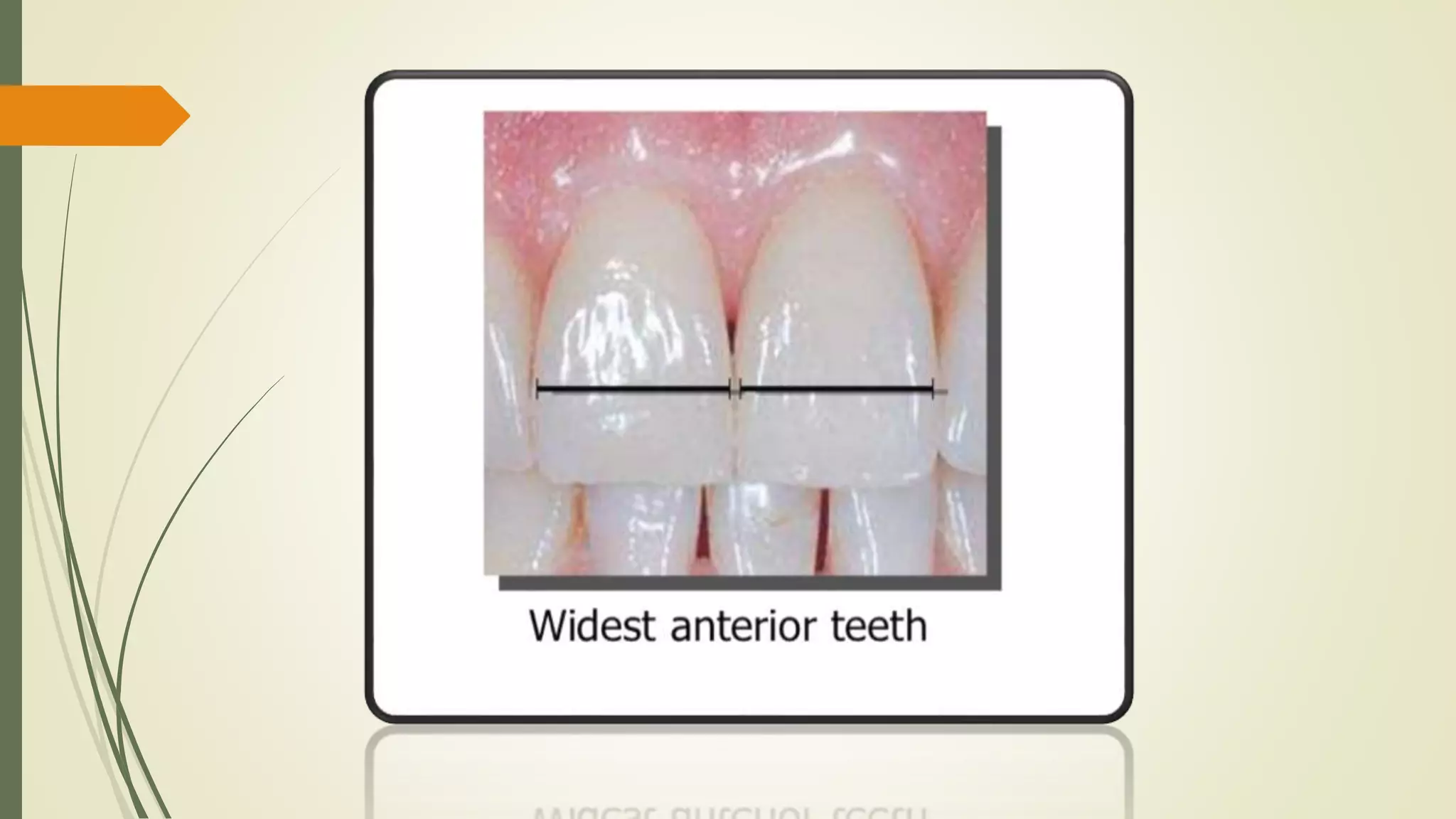
- Widest mesiodistal dimension; generally smooth
MORPHOLOGY OF NEWLY ERUPTED CENTRAL INCISOR
 presence of mamelons
 Two shallow developmental depressions labially
 Perikymata – fine horizontal lines on the crown surface
2 basic forms: wide cervix and narrow cervix
Variations: short root, unusually long crown, shovel-shaped incisors
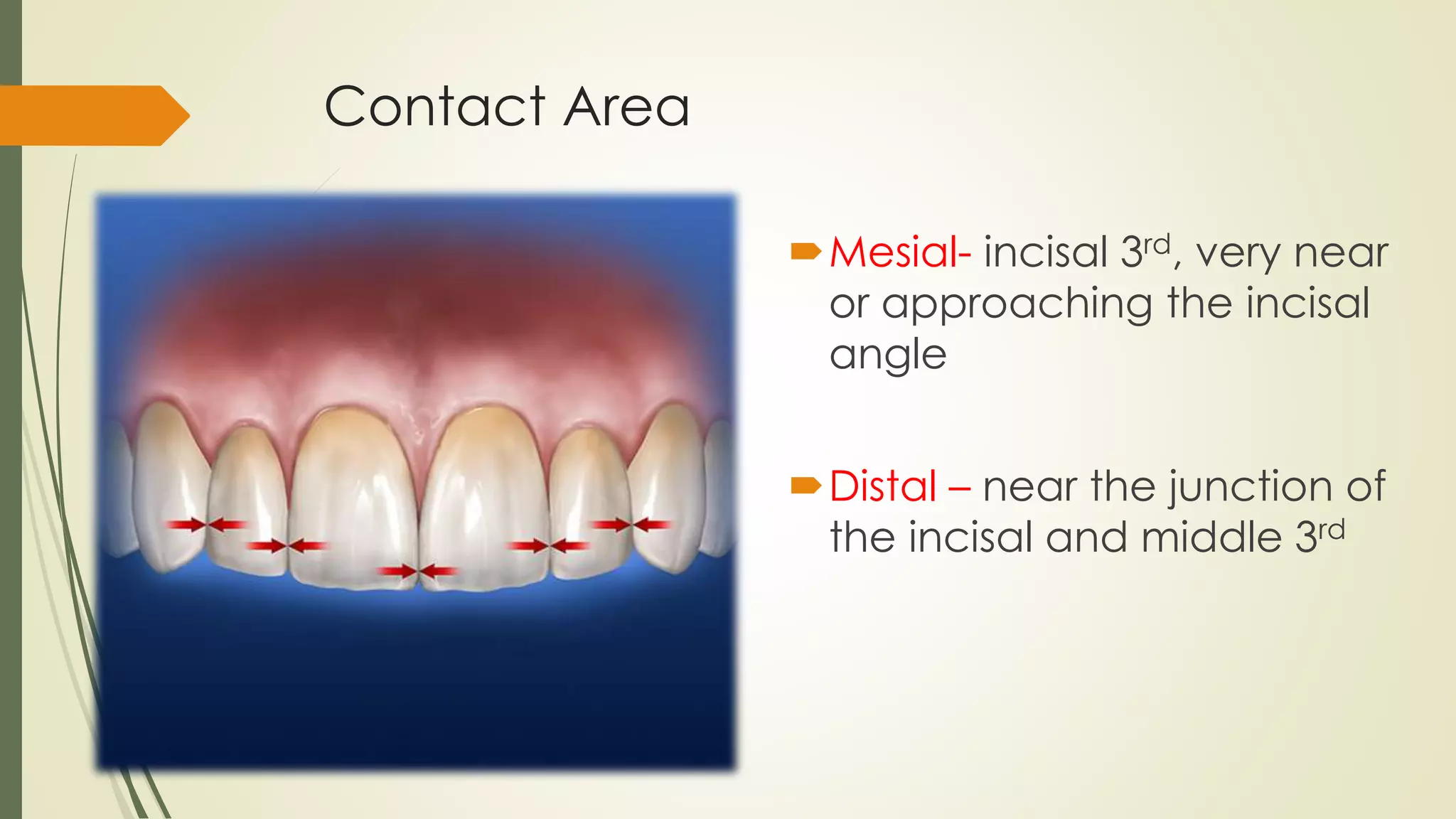
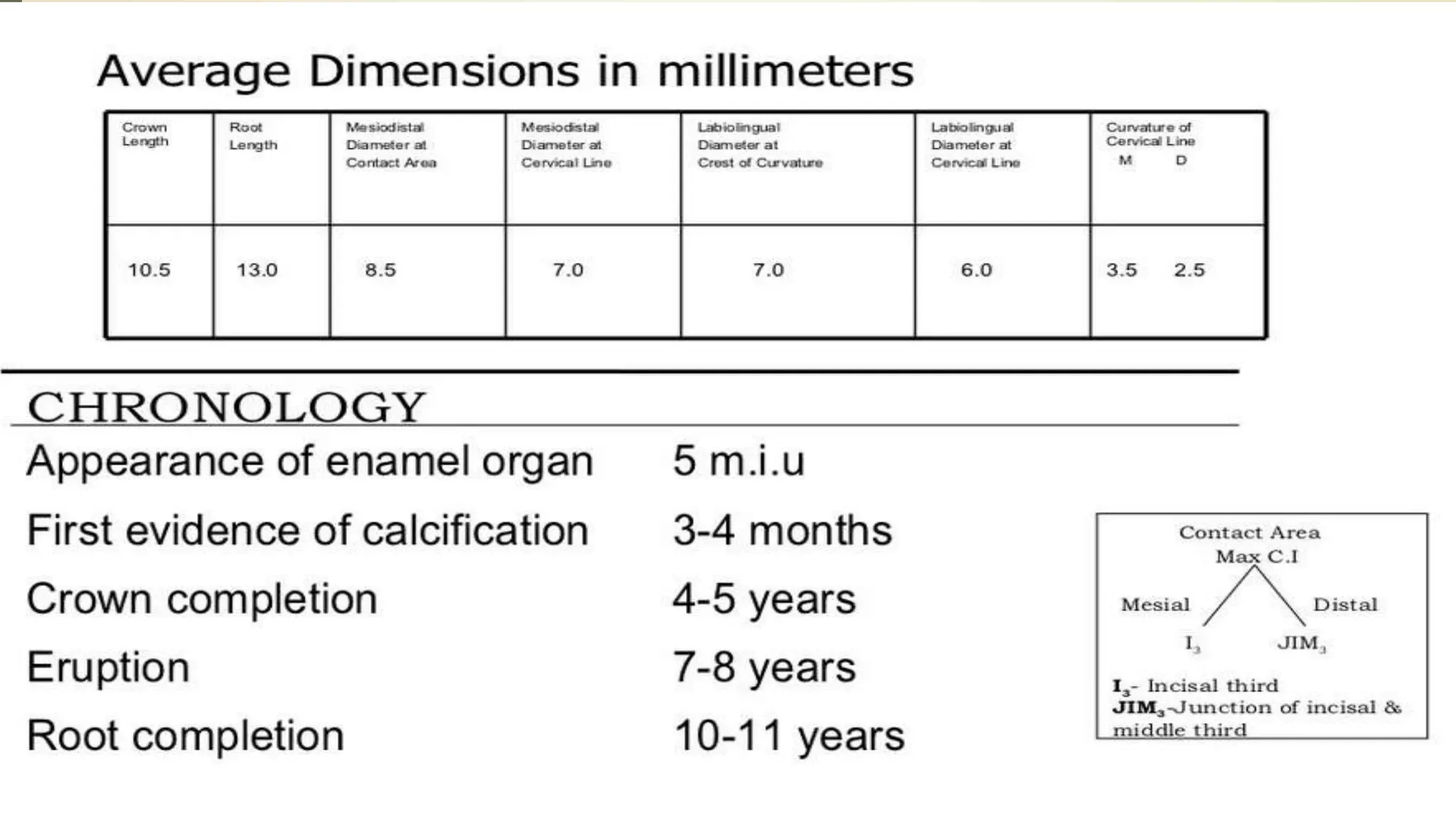
Contact Area
Mesial- incisal 3rd, very near
or approaching the incisal
angle
Distal – near the junction of
the incisal and middle 3rd
Labial aspect
 Crown outline is trapezoidal
 Length of crown usually greater than MD width
 Outline of crown:
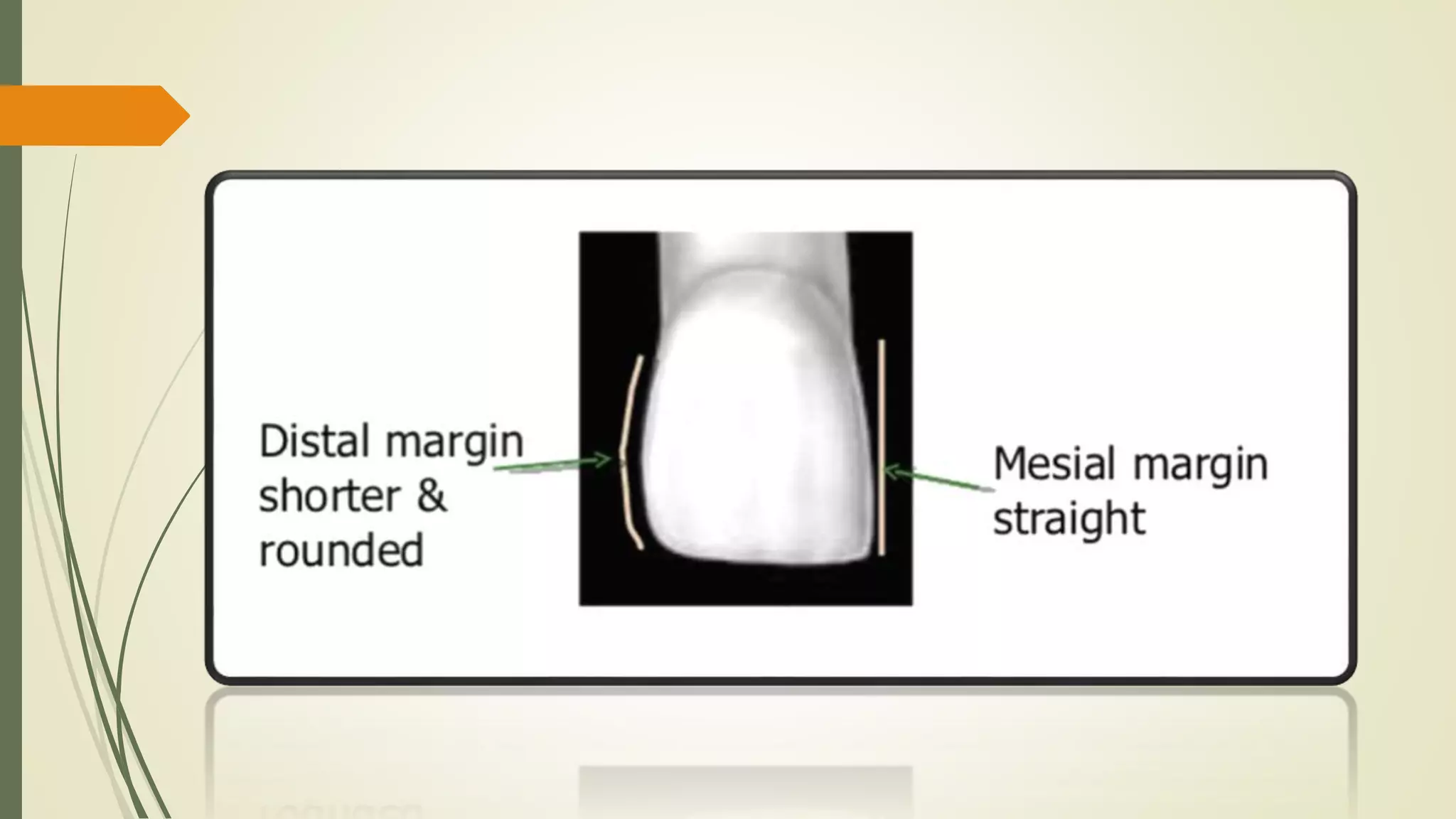
 Mesial slightly convex
 Distal outline more convex
 Mesioincisal angle = sharp ; Distoincisal angle = more convex
 Incisal outline regular and straight in MD direction
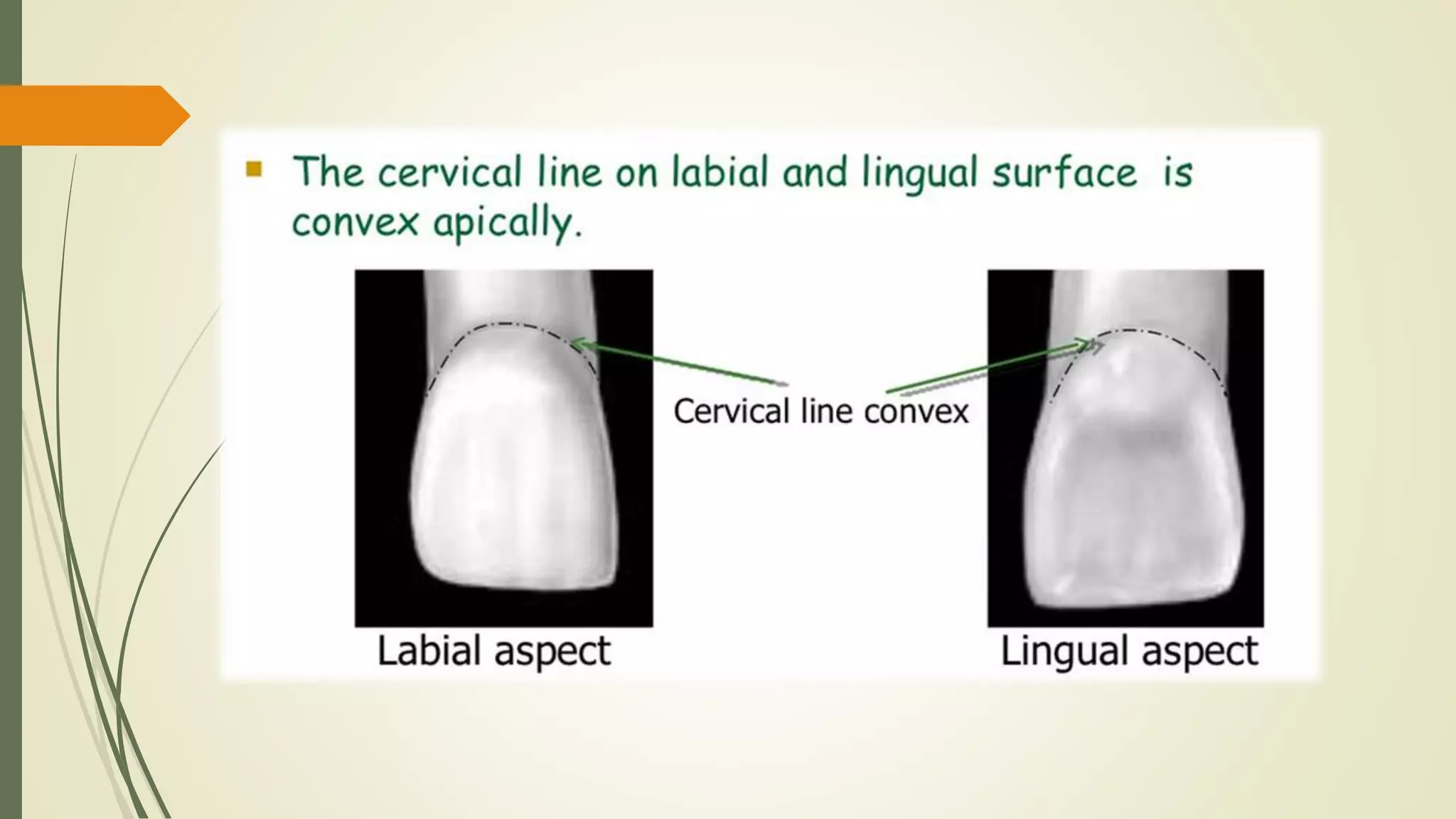
 Cervical outline: semi-circular with curvature rootwise
 Root is cone-shaped, with a regularly blunt apex; root is 2 or 3 mm more longer than crown
 Root axis line of crown and root labially tends to parallel the mesial outline of the crown and
root
Lingual Aspect
 Crown outline is trapezoidal
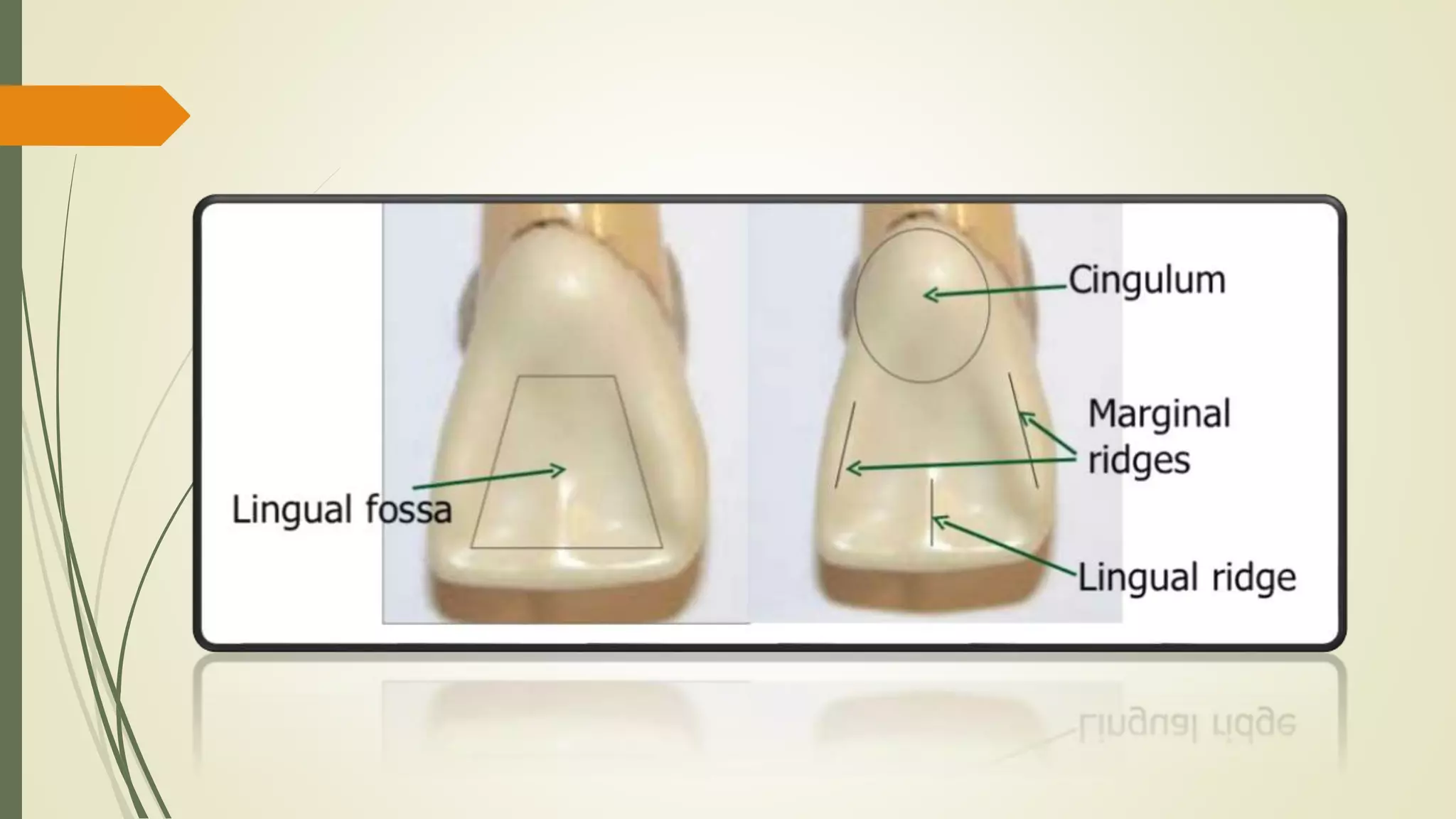
 Smooth convexity at the cervical 3rd, cingulum is located off centered
towards distal
 Bet. Mesial and distal marginal ridges is a shallow concavity, the lingual
fossa
 Shovel-shaped incisors – incisors with deep lingual dossa and prominent
marginal ridges
 Linguoincisal edge is raised, in level with MRs
 There are developmental grooves extending from the cingulum to the
lingual fossa
 Crown and root taper lingually
 Root surface on lingual is narrower than labially
Mesial Aspect
 Crown is triangular or wedge-shaped
 Root axis line bisect incisal ridge and root apex, Incisal ridge is in line
with center of the root
 Crest of curvature at the cervical 3rd – greatest labiolingual
measurement
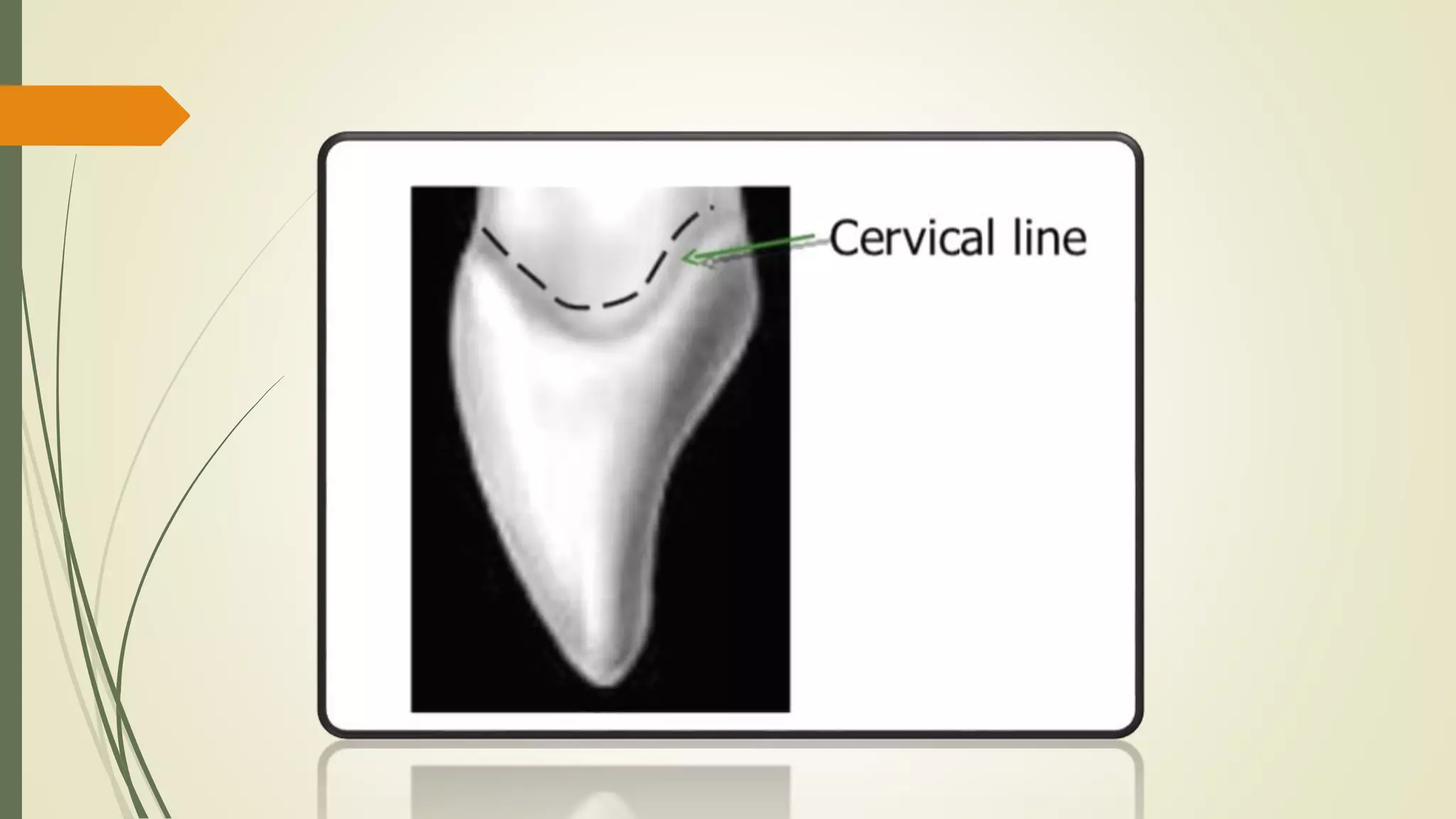
 CEJ curves incisally to a noticeable degree than any of the tooth in
the mouth
 Root is cone-shaped, apex is usually bluntly rounded
Distal Aspect
 Similar to mesial; except crown is thicker toward incisal
3rd
 Less curvature of CEJ
 Most teeth turned a little on their root bases, in order to
adapt to the curvature of the dental arch, creating an
illusion of greater thickness on the distal
Incisal Aspect
 Labial surface is relatively broad and flat especially towards
the incisal 3rd
 Cervical portion of crown is convex, arc is described as
broad
 Incisal ridge slope toward the lingual
 Lingual outline – tapers towards the cingulum
 Cingulum off centered to the distal
 Prominent mesiolabial and distolabial line angles
 Labiolingual calibration of the crown is more than two 3rds
as great as the MD calibration
Maxillary central incisor (ORAL ANATOMY)

Maxillary central incisor (ORAL ANATOMY)

  • 1.
  • 2.
    Maxillary Central Incisor -develops from 4 primary centers of formation (lobes); 3 labial lobe and 1 lingual lobe - Widest mesiodistal dimension; generally smooth MORPHOLOGY OF NEWLY ERUPTED CENTRAL INCISOR  presence of mamelons  Two shallow developmental depressions labially  Perikymata – fine horizontal lines on the crown surface 2 basic forms: wide cervix and narrow cervix Variations: short root, unusually long crown, shovel-shaped incisors
  • 3.
    Contact Area Mesial- incisal3rd, very near or approaching the incisal angle Distal – near the junction of the incisal and middle 3rd
  • 4.
    Labial aspect  Crownoutline is trapezoidal  Length of crown usually greater than MD width  Outline of crown:  Mesial slightly convex  Distal outline more convex  Mesioincisal angle = sharp ; Distoincisal angle = more convex  Incisal outline regular and straight in MD direction  Cervical outline: semi-circular with curvature rootwise  Root is cone-shaped, with a regularly blunt apex; root is 2 or 3 mm more longer than crown  Root axis line of crown and root labially tends to parallel the mesial outline of the crown and root
  • 9.
    Lingual Aspect  Crownoutline is trapezoidal  Smooth convexity at the cervical 3rd, cingulum is located off centered towards distal  Bet. Mesial and distal marginal ridges is a shallow concavity, the lingual fossa  Shovel-shaped incisors – incisors with deep lingual dossa and prominent marginal ridges  Linguoincisal edge is raised, in level with MRs  There are developmental grooves extending from the cingulum to the lingual fossa  Crown and root taper lingually  Root surface on lingual is narrower than labially
  • 12.
    Mesial Aspect  Crownis triangular or wedge-shaped  Root axis line bisect incisal ridge and root apex, Incisal ridge is in line with center of the root  Crest of curvature at the cervical 3rd – greatest labiolingual measurement  CEJ curves incisally to a noticeable degree than any of the tooth in the mouth  Root is cone-shaped, apex is usually bluntly rounded
  • 15.
    Distal Aspect  Similarto mesial; except crown is thicker toward incisal 3rd  Less curvature of CEJ  Most teeth turned a little on their root bases, in order to adapt to the curvature of the dental arch, creating an illusion of greater thickness on the distal
  • 16.
    Incisal Aspect  Labialsurface is relatively broad and flat especially towards the incisal 3rd  Cervical portion of crown is convex, arc is described as broad  Incisal ridge slope toward the lingual  Lingual outline – tapers towards the cingulum  Cingulum off centered to the distal  Prominent mesiolabial and distolabial line angles  Labiolingual calibration of the crown is more than two 3rds as great as the MD calibration