Pericardial Diseases Piti Niyomsirivanich, MD. Reference :  Libby: Braunwald's Heart Disease: A Textbook of Cardiovascular Medicine, 8th ed.
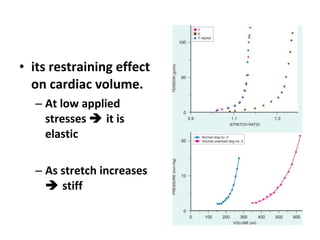
ANATOMY AND PHYSIOLOGY OF THE PERICARDIUM The pericardium is composed of two layers the  visceral  pericardium single layer of mesothelial cells adherent to the epicardial surface of the heart the fibrous  parietal  layer about 2 mm thick in normal humans and surrounds most of the heart. acellular and contains both collagen and elastin fibers. Collagen  low levels of stretch
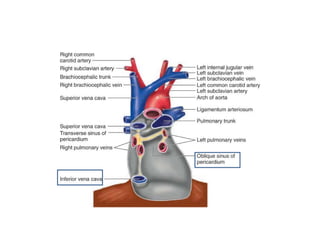
The pericardial space or sac is contained within these two layers and normally  contains up to 50 ml of serous fluid . The parietal pericardium has  ligamentous attachments to the diaphragm, sternum , and other structures in the anterior mediastinum. The  only noncardiovascular macrostructures  associated with the pericardium are the  phrenic nerves , which are enveloped by the parietal pericardium.
 
the normal pericardium does have functions it maintains the position  of the heart relatively constant. function as a barrier  to infection and provides lubrication between visceral and parietal layers. The pericardium is well innervated with mechanoreceptors and chemoreceptors and phrenic afferents. reflexes  arising from the pericardium and/or epicardium (e.g., the Bezold-Jarisch reflex), as well as  transmission of pericardial pain .
its restraining effect on cardiac volume. At low applied stresses    it is elastic As stretch increases    stiff
The contact pressure is proportionally  more important for the right heart , whose filling pressures are normally lower than the left heart.
THE PASSIVE ROLE OF THE NORMAL PERICARDIUM IN HEART DISEASE When the cardiac chambers dilate rapidly, the restraining effect can become markedly augmented resulting in a hemodynamic picture  resembling both cardiac tamponade and constrictive pericarditis The most common example is acute RV myocardial infarction (MI), the right heart dilates markedly and rapidly  total heart volume >  pericardial reserve volume. increased pericardial constraint paradoxical pulse ,Kussmaul sign
Chronic  cardiac dilation (e.g., caused by dilated cardiomyopathy or regurgitant valvular disease) the  pericardium undergoes chronic adaptation  to accommodate marked increases in cardiac volume.
ACUTE PERICARDITIS
defined as symptoms and/or signs resulting from  pericardial inflammation of no more than 1 to 2 weeks' duration . can occur in a wide variety of these diseases (denoted by asterisks), but the  majority of cases are idiopathic .
Categories of Pericardial Disease and Selected Specific Etiologies Idiopathic     Infectious      Viral   (echovirus, coxsackievirus, adenovirus, cytomegalovirus, hepatitis B, infectious mononucleosis, HIV/AIDs)     Bacterial   ( Pneumococcus, Staphylococcus, Streptococcus,  mycoplasma, Lyme disease,  Haemophilus influenzae, Neisseria meningitidis,  and others)     Mycobacteria   (Mycobacterium tuberculosis, Mycobacterium avium-intracellulare)     Fungal  (histoplasmosis, coccidiomycosis)    Protozoal     Immune-inflammatory      Connective tissue disease [*]  (systemic lupus erythematosus, rheumatoid arthritis, scleroderma, mixed)    Arteritis (polyarteritis nodosa, temporal arteritis)    Inflammatory bowel disease    Early post–myocardial infarction    Late post–myocardial infarction (Dressler syndrome), [*]  late postcardiotomy/thoracotomy, [*]  late  posttrauma [*] Drug induced [*]  (e.g., procainamide, hydralazine, isoniazid, cyclosporine)     Neoplastic disease     Primary: mesothelioma, fibrosarcoma, lipoma, and so on    Secondary [*] : breast and lung carcinoma, lymphomas, Kaposi sarcoma
Categories of Pericardial Disease and Selected Specific Etiologies Radiation induced [*]  Early postcardiac surgery    Hemopericardium    Trauma    Post–myocardial infarction free wall rupture    Device and procedure related: percutaneous coronary procedures, implantable defibrillators, pacemakers, post–arrhythmia ablation, post–atrial septal defect closure, post–valve repair/replacement    Dissecting aortic aneurysm     Trauma     Blunt and penetrating, [*]  post–cardiopulmonary resuscitation [*]     Congenital     Cysts, congenital absence     Miscellaneous      Cholesterol (“gold paint” pericarditis)    Chronic renal failure, dialysis related    Chylopericardium    Hypothyroidism and hyperthyroidism    Amyloidosis    Aortic dissection
The incidence is  difficult to quantify   > there are undoubtedly  many undiagnosed cases . At  autopsy, the frequency is approximately 1 percent . Pericarditis is relatively common in patients presenting to the ER > 5 % of nonischemic chest pain  1% of cases with ST elevation.
History and Differential Diagnosis almost always presents with chest pain . A few cases are diagnosed during  evaluation of associated symptoms  such as dyspnea or fever  incidentally in noncardiac manifestations  of systemic diseases  such as rheumatoid arthritis or systemic lupus erythematosus (SLE).
The pain of pericarditis can be severe. It is variable in quality but often  sharp and almost always pleuritic . Pericardial pain typically has a relatively rapid onset and sometimes begins remarkably abruptly.  It is most commonly substernal, but can also be centered in the left anterior chest or epigastrium. Left arm radiation is not unusual.
radiation to trapezius ridge, which is highly specific for pericarditis . Pericardial pain is almost always  relieved by sitting forward  and worsened by lying down. Associated symptoms  dyspnea, cough, and occasionally hiccoughs. A history of cancer or an autoimmune disorder, high fevers with shaking chills, skin rash, or weight loss should alert the physician to specific diseases that can cause pericarditis.
Diagnoses most easily confused with pericarditis include  pneumonia or pneumonitis with pleurisy (which may coexist with pericarditis), pulmonary embolus/infarction, costochondritis, and gastroesophageal reflux disease. Acute pericarditis is usually relatively  easily distinguished from myocardial ischemia/infarction  on clinical and other grounds, but coronary angiography is occasionally required to resolve this issue.  Other considerations include  aortic dissection, intraabdominal processes, pneumothorax, and herpes zoster pain (before skin lesions appear.)  Finally, acute pericarditis is occasionally the presenting manifestation of a preceding, clinically silent MI.
Physical Examination Patients with  uncomplicated  acute pericarditis often appear uncomfortable and anxious and may have  low-grade fever  and s inus tachycardia . Otherwise, the only abnormal physical finding is the  friction rub  caused by contact between visceral and parietal pericardium. The classic  rub is pathognomonic  of pericarditis. It consists of three components corresponding  to ventricular systole, early diastolic filling, and atrial contraction  and is similar to the sound made when walking on crunchy snow.
The rub is usually  loudest at the lower left sternal border , often  extends to the cardiac apex , and is best heard with the patient  leaning forward . It is often  dynamic , disappearing and returning over short periods of time.  Sometimes what is considered a pericardial rub has only two or even one component.
Laboratory Testing Electrocardiogram The electrocardiogram (ECG) is the most important laboratory test for diagnosing acute pericarditis. The ST segment vector typically  points leftward ,  anterior and inferior , with  ST segment elevation in all leads except AVR and often V1. Thus the term “diffuse” is a slight misnomer. Usually, the  ST segment is coved upward  and resembles the current of injury of acute, transmural ischemia.
In other cases the ST segment more closely resembles early repolarization. PR segment depression  is also common  PR depression can occur in the absence of ST elevation  and be the initial ECG manifestation of acute pericarditis
ECG abnormalities other than ST elevation and PR depression are unusual in patients presenting soon after the onset of symptoms of acute pericarditis. Subsequent ECG changes are quite variable.
In others, the elevated ST segment passes through the isoelectric point  and progresses to ST segment depression and T wave inversions in leads with upright QRS complexes. The latter changes can persist for weeks and months. these ECG changes can be difficult to distinguish from myocardial ischemia.
ECG abnormalities  other than the above should be considered carefully As examples, AV block   Lyme disease,  pathological Q    silent MI with pericardial pain as its first manifestation,  low voltage or electrical alternans point toward significant effusion.
Modest elevations of the white blood cell count , typically 11,000 to 13,000 ml with a  mild lymphocytos is, are common in acute idiopathic pericarditis.  Higher counts are an alert for the presence of other etiologies.  The erythrocyte sedimentation rate  (ESR) should be no more than modestly elevated  in acute idiopathic pericarditis.  Unusually high values may be a clue to etiologies such as autoimmune diseases or tuberculosis.
Cardiac Enzymes and Troponin Measurements Surprisingly large numbers of patients with a diagnosis of  acute pericarditis without other evidence of myocarditis or MI have  elevated creatine kinase MB fraction and/or troponin I  values Pericarditis patients with elevated biomarkers of myocardial injury almost always have ST segment elevation.  elevations of troponin I without creatine kinase    adjacent epicardial inflammation  rather than a true myocarditis
Chest Radiograph  CXR is usually normal  in uncomplicated acute idiopathic pericarditis. Occasionally, small pulmonary infiltrates or pleural effusions are present,  bacterial pericarditis often occurs in conjunction with severe pneumonia . Mass lesions and  enlarged lymph nodes suggestive of neoplastic disease  also have great significance.
Tuberculous pericarditis can occur with or without associated pulmonary infiltrates. Pulmonary vascular congestion may signal coexistent, severe myocarditis.
Echocardiography The  echocardiogram is normal  in most patients with acute idiopathic pericarditis. The main reason for its performance is to  exclude an otherwise silent effusion .  Moderate or larger effusions are unusual
Natural History and Management keep in mind that  controlled data are limited . Initial management  should be focused on screening for specific etiologies  In young women    test for SLE.
Acute idiopathic pericarditis is a self-limited disease  without significant complications or recurrence In 70 to 90 percent of patients. If laboratory data support the clinical diagnosis,  symptomatic treatment with nonsteroidal antiinflammatory drugs (NSAIDs)  should be initiated Because of its excellent safety profile, we prefer  ibuprofen (600 to 800 mg po three times daily)  with discontinuation if pain is no longer present  after 2 weeks .
Many patients have gratifying  responses to the first dose or two of an NSAID , and most respond fully and need no additional treatment. Reliable patients with no more than small effusions  who respond well to NSAIDs need not be admitted to a hospital .
Patients who  do not respond well initially , have larger effusions, or suspicion of an etiology other than idiopathic pericarditis  should be hospitalized  for additional observation, diagnostic testing, and treatment as needed.
Patients who  respond slowly or inadequately  to NSAIDs may require supplementary narcotic analgesics to allow time for a full response and/or a brief course of  colchicine or prednisone . Colchicine  is administered as a  2 to 3 mg oral loading  dose followed by  1 mg daily for 10 to 14 days . Prednisone 60 mg  by mouth is administered daily for 2 days  with tapering to zero over a week .
Perhaps  15 to 30 percent  of patients with acute, apparently idiopathic pericarditis who respond satisfactorily to treatment as outlined earlier suffer a  relapse  after completion of initial therapy A pericardial biopsy  to look for a specific etiology in patients  with recurrent pain  without effusion  is rarely indicated
Treatment of recurrent pain is empirical. For an initial relapse, a second 2-week course of a  NSAID  is often effective. we favor  colchicine prophylaxis . Substantial experience has accumulated using chronic colchicine as prophylaxis for recurrent pericardial pain including that caused by idiopathic pericarditis and other etiologies (postthoracotomy, SLE). As earlier, the usual dose is a 2- to 3-mg oral load followed by 1 mg by mouth daily. Nonsteroidal immunosuppressive therapy with drugs such as  azathioprine and cyclophosphamide … experience is extremely limited
PERICARDIAL EFFUSION AND TAMPONADE
Etiology Idiopathic pericarditis and any infection, neoplasm, autoimmune, or inflammatory process (including postradiation and drug induced) that can cause pericarditis can cause an effusion high incidence  of progression to tamponade are  bacterial  (including mycobacteria),  fungal , and  human immunodeficiency virus  (HIV)-associated infections and  neoplastic  involvement.
Pathophysiology and Hemodynamics Formation of an  effusion is a component of the response to inflammation  when there is an inflammatory and/or infectious process affecting the pericardium. pericardial tumor implants Lymphomas   by obstructing pericardial lymph drainage. effusions in situations with no obvious inflammation (e.g., uremia) is poorly understood.
Cardiac tamponade is characterized by a  continuum from an effusion  causing minimally detectable effects to full-blown circulatory collapse. Determinants of the hemodynamic consequences of pericardial effusion are the  level of pressure in the pericardial sac  and the  ability of the heart to compensate  for elevated pressure.
Large,  slowly accumulating effusions are often well tolerated , presumably because of chronic changes in the pericardial pressure-volume relation. The  compensatory response  to a significant pericardial effusion includes  increased adrenergic stimulation and parasympathetic withdrawal , which cause tachycardia and increased contractility. those receiving beta-adrenergic blocking drugs are more susceptible to the effects of a pericardial effusion.
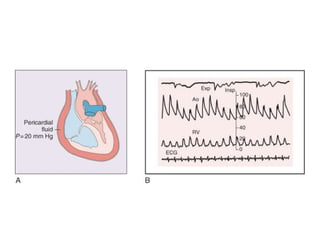
As  fluid accumulates  in the pericardial sac,  Lt-Rt A and V diastolic pressures rise  severe tamponade pressure in the pericardial sac, typically  15 to 20 mm Hg cardiac volumes progressively decline.  The  decreased preload  mainly accounts for the small stroke volume.
two other hemodynamic abnormalities are characteristic of tamponade.  One is  loss of the y descent  of the right atrial or systemic venous pressure The second characteristic hemodynamic finding is the  paradoxical pulse large decline in systemic arterial pressure during inspiration (usually defined as a >10 mm Hg drop in systolic pressure) Also seen in constrictive pericarditis, pulmonary embolus, and pulmonary disease with large variation in intrathoracic pressure.
 
Low Pressure Temponade Low pressure tamponade occurs when there is a  decrease in blood volume   in the setting of a preexisting effusion  that would not otherwise be significant. diuretics  are administered to patients with effusions Low pressure tamponade is observed during  hemodialysis
Regional tamponade sometimes encountered after cardiac surgery should be suspected whenever hemodynamic abnormalities exist in a setting in which a  regional or loculated effusion  is present. Large pleural effusions  can also compress the heart
Clinical Presentation Asymptomatic unless tamponade  is present. Patients with tamponade  may complain of  true dyspnea , the mechanism of which is uncertain because  no pulmonary congestion  occurs.
In pericardial effusion without tamponade the cardiovascular examination is  normal except that if the effusion is large , the cardiac impulse may be difficult or impossible to palpate and the  heart sounds muffled . Tubular breath sounds  may be heard in the  left axilla  or left base because of bronchial compression. Beck's triad  of hypotension, muffled heart sounds, and elevated jugular venous pressure  remains a useful clue to the presence of severe tamponade
Patients with tamponade are almost always uncomfortable, with signs reflecting varying degrees of reduced cardiac output and shock including tachypnea; diaphoresis; cool extremities; peripheral cyanosis; depressed sensorium; and, rarely, yawning. hypotension is usually present , although in early stages compensatory mechanisms maintain the blood pressure.
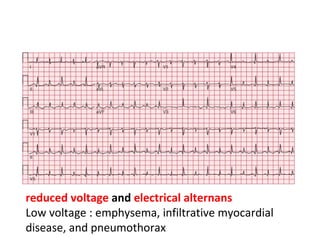
reduced voltage  and  electrical alternans Low voltage : emphysema, infiltrative myocardial disease, and pneumothorax
Chest Radiograph The cardiac silhouette remains  normal  until pericardial effusions are at least moderate in size. With  moderate and larger effusions , the anteroposterior cardiac silhouette assumes a rounded,  flasklike appearance . Lateral views  may reveal the  pericardial fat pad sign , a linear lucency between the chest wall and the anterior surface of the heart representing separation of parietal pericardial fat from epicardium.
Echocardiography A pericardial effusion appears as a  lucent separation  between parietal and visceral pericardium. With a true effusion, separation is present for the  entire cardiac cycle . Small effusions are  first  evident over the  posterobasal  left ventricle.
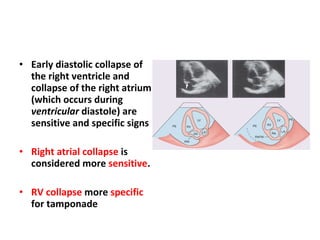
Early diastolic collapse of the right ventricle and collapse of the right atrium (which occurs during  ventricular  diastole) are sensitive and specific signs Right atrial collapse  is considered more  sensitive . RV collapse  more  specific  for tamponade
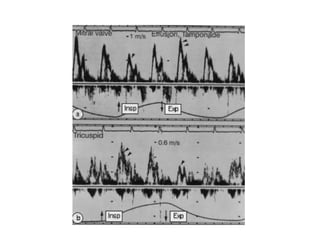
Distention of the caval vessels  that does not diminish with inspiration is also a useful sign Doppler velocity  recordings demonstrate exaggerated  respiratory variation  in right- and left-sided venous and valvular flow,
 
Other Imaging Modalities Computed tomography (CT) and magnetic resonance imaging (MRI) are useful adjuncts to echocardiography in the characterization of effusion and tamponade Neither is ordinarily required  and/or advisable in sick patients  Attenuation similar to water suggests transudative, greater than water malignant, bloody or purulent, and less than water chylous effusion.
Management of Pericardial Effusion and Tamponade suspected bacterial or tuberculous pericarditis, bleeding into the pericardial space
Effusions Without Actual or Threatened Tamponade In many cases of effusion when tamponade is neither present nor threatened,  a cause will be evident or suggested on the basis of the history  (e.g., known neoplastic or autoimmune disease, radiation therapy) and/or previously obtained diagnostic tests.  When a  diagnosis is not clear , an assessment of specific  etiologies  of pericardial disease should be undertaken. TB ,autoimmune diseases and infections (e.g., Lyme disease) and hypothyroidism should be considered Serial  titers of antibodies to viruses  are usually  not helpful
In obvious cases In occasional situations  where pericardiocentesis is necessary  for diagnostic purposes, consideration should be given to  open drainage with biopsy . Occasional patients with  large, asymptomatic effusions  and no evidence of tamponade. The effusions are  by definition chronic . They are in general stable, and  specific etiologies usually do not emerge over time . there is a  rationale for closed pericardiocentesis  following routine evaluation for specific etiologies Before undertaking pericardiocentesis , a course of a  NSAID  or  colchicine  should be considered .
Effusions with Actual or Threatened Tamponade These patients should be considered as having a  true or potential medical emergency. Most patients require  pericardiocentesis  to treat or prevent tamponade. idiopathic pericarditis  , mild tamponade can be treated with a course of a NSAID and/or colchicine  and monitored in the hope that their effusions will shrink rapidly. Patients with  autoimmune diseases  can be treated in the same way and/or with a course of corticosteroids
in whom a decision is made to  defer pericardiocentesis Hemodynamic monitoring with a  pulmonary artery balloon catheter  is often useful Once actual or threatened tamponade is diagnosed,  intravenous hydration  should be instituted intravenous positive  inotropes  (dobutamine, dopamine) can be employed but are of  limited efficacy Hydration and positive inotropes are temporizing measures and should not be allowed to substitute for or delay pericardiocentesis
closed pericardiocentesis is the initial treatment of choice
subxiphoid needle  insertion performed  under echocardiographic  guidance  Once the needle has entered  the pericardial space, a modest  amount of fluid should be removed  (perhaps 50 to 150 ml) in an effort to produce some degree of hemodynamic improvement. Then a  guidewire  should be inserted the needle replaced with a  pigtail catheter .  The catheter can be manipulated with continuing echocardiographic guidance to maximize the amount of fluid removed If echocardiographic guidance is unavailable, the needle should be directed toward the right shoulder and then replaced with a catheter for subsequent fluid removal
If a pulmonary artery catheter has been inserted into the right heart, pulmonary capillary wedge and  systemic arterial pressures and cardiac output should be monitored  before, during, and after the procedure. Following pericardiocentesis, repeat echocardiography  and in many cases continued hemodynamic monitoring are useful to assess fluid  reaccumulation .
Analysis of Pericardial Fluid The fluid has the features of a plasma ultrafiltrate. analysis of  pericardial fluid does not usually have a high yield  in identifying the etiology routine pericardial fluid measurements should include  specific gravity, white blood cell count and differential, hematocrit, and protein  content Blood in pericardial fluid is nonspecific Chylous effusions can occur after traumatic or surgical injury to the thoracic duct or obstruction by a neoplastic process. Cholesterol rich (“ gold paint ”) effusions occur in severe  hypothyroidism .
Pericardial fluid should be routinely  stained and cultured  for detection of bacteria, including tuberculosis, and fungi. As much fluid as possible  should be submitted for  detection of malignant cells adenosine deaminase (ADA), interferon-gamma, and polymerase chain reaction (PCR we believe that a  relatively rapid test  for tuberculosis (ADA, PCR)  should be routine  because of the general  difficulty of diagnosing tuberculous pericarditis
Pericardioscopy and Percutaneous Biopsy Some experts advocate the  routine use of pericardioscopic-guided biopsy  in patients with pericardial effusion who do not have an etiologic diagnosis. fluoroscopy-guided parietal pericardial biopsy  extended sampling (18 to 20 samples).
CONSTRICTIVE PERICARDITIS
Etiology The pathophysiological consequence of  pericardial scarring  is markedly  restricted filling of the heart results in  elevation and equilibration of filling pressures in all chambers  and the systemic and pulmonary veins. almost all ventricular filling occurs early in diastole Systemic venous congestion results in  hepatic congestion, peripheral edema, ascites, and sometimes anasarca and cardiac cirrhosis.
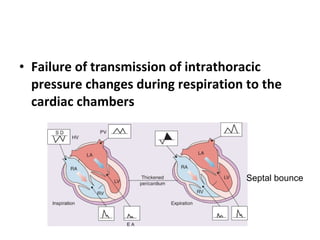
Failure of transmission of intrathoracic pressure changes during respiration to the cardiac chambers  Septal bounce
Clinical Presentation usual presentation consists of  signs and symptoms of predominantly right heart failure . include lower extremity edema, vague abdominal complaints, and some degree of passive hepatic congestion As the disease becomes more severe, hepatic congestion worsens and can progress to ascites and/or anasarca, as well as jaundice caused by cardiac cirrhosis.
Physical Examination markedly elevated jugular venous pressure with a prominent,  rapidly collapsing  y  descent  combined with a normally  prominent  x  descent W , M AF the  x  descent is lost, prominent  y  descent The latter is difficult to distinguish from tricuspid regurgitation Kussmaul sign,  an inspiratory increase in systemic venous pressure, is usually present
A paradoxical pulse occurs in perhaps one third  of patients with constrictive pericarditis  pericardial knock, an early diastolic sound best heard at the left sternal border and/or the cardiac apex. corresponds to the early, abrupt cessation of ventricular filling Widening of second heart  sound splitting may also be present Other signs of chronic hepatic congestion include jaundice, spider angiomata, and palmar erythema. Lower extremity edema is usually present, and anasarca
Electrocardiogram Nonspecific T wave abnormalities  are often observed, as well as  reduced voltage . Left atrial abnormality may also be present.
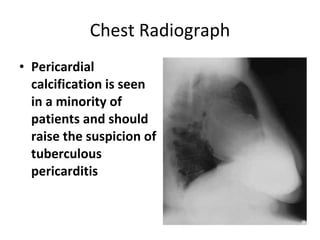
Chest Radiograph Pericardial calcification is seen in a minority of patients and should raise the suspicion of tuberculous pericarditis
Echocardiogram pericardial thickening , abrupt displacement of the interventricular septum during early diastole signs of systemic venous congestion  Doppler flow velocity measurements reveal exaggerated  respiratory variation   help distinguish restrictive cardiomyopathy from constrictive pericarditis
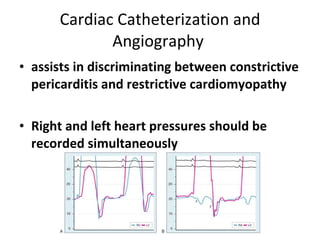
Cardiac Catheterization and Angiography  assists in discriminating between constrictive pericarditis and restrictive cardiomyopathy Right and left heart pressures should be recorded simultaneously
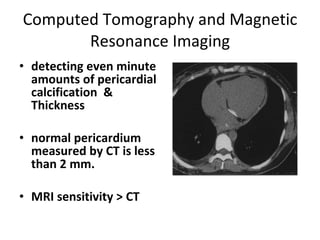
Computed Tomography and Magnetic Resonance Imaging detecting even minute amounts of pericardial calcification  & Thickness normal pericardium measured by CT is less than 2 mm. MRI sensitivity > CT
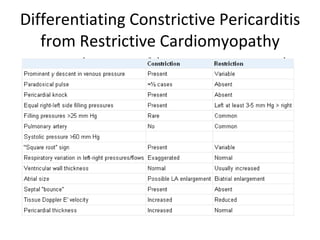
Differentiating Constrictive Pericarditis from Restrictive Cardiomyopathy
Management Constrictive pericarditis is a progressive disease. surgical pericardiectomy is the only definitive treatment  & should not be delayed once the diagnosis is made. may respond to a course of  corticosteroids diuretics and salt restriction  beta-adrenergic blockers and calcium antagonists that  slow the heart rate should be avoided sinus tachycardia is a compensatory mechanism,
Pericardiectomy performed through either a median sternotomy or a left fifth interspace thoracotomy radical excision of as much of the parietal pericardium as possible The visceral pericardium is then inspect Resection should be considered if it is involved in the disease process. Pericardiectomy has a 5 to 15 percent perioperative mortality in patients with constrictive pericarditis
Prognosis From 70 to 80 percent of patients remain free from adverse cardiovascular outcomes at 5 years,  and 40 to 50 percent at 10 years after pericardiectomy . Long-term results are worst in patients with  radiation-induced disease, impaired renal function, relatively high pulmonary artery systolic pressure, reduced LV ejection fraction, low serum sodium, and advanced age
SPECIFIC CAUSES OF PERICARDIAL DISEASE
Viral Pericarditis Etiology and Pathophysiology most common form of pericardial infection caused by either direct damage resulting from  viral replication  or  immune responses . Echo and Coxsackie  viruses are the most common Cytomegalovirus  has a predilection for  immunocompromised  patients most definitive way to diagnose viral pericarditis is detection of  DNA by PCR or in situ hybridization  in pericardial fluid
Viral Pericarditis Clinical Features and Management In patients with chronic, confirmed viral pericarditis, several immune-mediated  treatments are under investigation   none have been shown to be effective to date .
Bacterial Pericarditis Etiology and Pathophysiology characterized by a  purulent effusion Direct extension  from pneumonia or empyema most common agents are  staphylococci , pneumococci, and  streptococci .  Hematogenous spread  during bacteremia and contiguous spread after thoracic surgery
Bacterial Pericarditis Etiology and Pathophysiology Anaerobic organisms can also result from  rupture of perivalvular abscesses  into the pericardial space  Rarely , pericardial invasion spreads along facial planes from the  oral cavity Neisseria can evoke a sterile effusion  accompanied by systemic reactions such as arthritis, pleuritis, and ophthalmitis. This does not require antibiotic therapy and responds to antiinflammatory drugs.
Clinical Features usually  high-grade fever with shaking chills  and  tachycardia A  pericardial friction rub  is present in the majority. can take a fulminant course with  rapid development of tamponade  Laboratory findings include leukocytosis  with marked left shift.  Pericardial fluid shows polymorphonuclear leukocytosis, low glucose, high protein, and elevated lactate dehydrogenase levels .
chest radiograph shows  widening of the cardiac silhouette  if the effusion is large With gas-producing organisms a lucent air fluid interface may be observed. The ECG shows  typical ST segment and T wave changes of acute pericarditis , ,  along with low voltage   Echocardiography almost always demonstrates a significant  pericardial effusion  with or without adhesions Cardiac tamponade is common and can be confused with septic shock.
Management proven bacterial pericarditis should be considered a medical emergency prompt  closed pericardiocentesis or surgical drainage  performed. Gram stained and cultured  for aerobic and anaerobic bacteria  Fungal and tuberculosis  staining and cultures should also be performed.
Purulent pericardial effusions are likely to recur. Thus  surgical drainage with construction of a window is often necessary Intrapericardial streptokinase  has been administered to selected patients with purulent and/or loculated effusions and may obviate the need for a window The prognosis of bacterial pericarditis is generally poor , with survival in the range of 30 percent  even in modern series.
Pericardial Disease and Human Immunodeficiency Virus  Pericardial disease is the most common cardiac manifestation of HIV the most common abnormality is an  effusion Most are  small; asymptomatic related to enhanced  cytokine Congestive heart failure, Kaposi sarcoma, tuberculosis, and other pulmonary infections are independently associated with moderate to large effusions,
In some cases the  HIV virus itself  appears to be the etiology.  Tuberculosis is the most common  etiology of pericardial effusion  in African HIV patients . Constrictive pericarditis is rare . When present it is usually secondary to  Mycobacterium tuberculosis
Clinical Features Symptomatic patients with pericardial disease usually present with  dyspnea or chest pain   The  most common infectious agents identified in symptomatic effusions  are  M. tuberculosis  and  Mycobacterium avium-intracellulare .   Cryptococcus neoformans,  cytomegalovirus, and  Mycobacterium kansasii Lymphomas and Kaposi sarcoma are the most common neoplasms associated with effusion
Management Asymptomatic patients  with small to moderate pericardial effusions  do not require treatment . Most are idiopathic  and usually remain asymptomatic or  resolve spontaneously . Symptomatic, large effusions should be drained
Tuberculous Pericarditis Etiology and Pathophysiology patients with pulmonary tuberculosis,  1 to 8 percent develop pericardial involvement. 7 percent of patients who developed cardiac tamponade .
Clinical Features subacute to chronic, with fever, malaise, and dyspnea  in association with a pericardial effusion Cough, night sweats, orthopnea, weight loss, and ankle edema are also common The most frequent findings are  radiographic cardiomegaly, pericardial rub, fever, and tachycardia Findings related to large effusions,  paradoxical pulse , hepatomegaly,  increased venous pressure , pleural effusion, and  distant heart sounds  are common
A  definitive diagnosis is made by isolating the organism  from pericardial fluid or biopsy. the  yield for isolation  from pericardial fluid  is low . probability of making a diagnosis is increased if both  pericardial fluid and biopsy specimens  are examined  a definite role for pericardial biopsy . Pericardial tissue reveals either  granulomas or organisms  in 80 to 90 percent of cases
Granulomas can be found in rheumatoid and sarcoid  pericardial disease. Measurement of adenosine deaminase  (ADA)  was the first modern test to markedly  improve the accuracy and speed of diagnosis  of tuberculous pericarditis ADA greater than 40 units/liter  in pericardial fluid has a sensitivity and specificity greater than 90 percent.  Increased interferon-gamma in pericardial fluid is an additional marker
Management The  goals of therapy are to treat symptoms , as well as tamponade  Multidrug antimycobacterial treatment  is mandatory  Corticosteroids did not influence the risk of death  or progression to constriction  but did speed the resolution of symptoms and decrease reaccumulation of fluid. The outcomes suggested that patients who undergo  open drainage are less likely to require repeat pericardiocentesis , and there was a trend in the open drainage group toward reduced development of constriction.
If corticosteroids are administered, high doses (1 to 2 mg/kg/day with tapering over 6 to 8 weeks)
Uremic Pericarditis and Dialysis-Associated Pericardial Disease  Etiology and Pathophysiology Its  pathophysiology has never been fully elucidated , but it is  correlated with blood levels of blood urea nitrogen   (BUN) and creatinine. The acute or subacute phase is characterized by shaggy, hemorrhagic, fibrinous exudates on both parietal and visceral surfaces with minimal inflammatory cellular reaction. Dialysis-associated pericardial disease  is now much more common than classic uremic pericarditis. It is characterized by  de novo appearance of pericardial disease in patients undergoing chronic dialysis ,
Clinical Features acute pericarditis with  chest pain, fever, leukocytosis, and pericardial friction rub .  Small,  asymptomatic effusions are common Alternatively, patients can present with a pericardial effusion causing hypotension during or after ultrafiltration ( low-pressure tamponade ).
Management intensive hemodialysis  and drainage in patients with effusions . Pericardial effusions without hemodynamic compromise  usually resolve after several weeks of intensive hemodialysis . Treatment of pericardial disease appearing  de novo in patients on chronic dialysis is empirical Use of  NSAIDs for pericardial pain is reasonable , but  corticosteroids are probably ineffective . A pericardial window may be required  and is usually the most effective approach in patients  with recurring effusions .
Early Post–Myocardial Infarction Pericarditis and Dressler Syndrome  Etiology and Pathophysiology occurs during the  first 1 to 3 days caused by  transmural necrosis  with inflammation 40 percent of patients with large, Q-wave MIs have pericardial inflammation Thrombolysis and mechanical revascularization appear to have reduced the incidence of this form of pericarditis by at least 50 percent. Late pericarditis described by  Dressler  and had an estimated incidence of  3 to 4 percent of MI patients Dressler syndrome is believed to have an  autoimmune etiology  caused by sensitization to myocardial cells
Clinical Features early post-MI pericarditis is  asymptomatic  and identified by  auscultation of a rub usually within 1 to 3 days after presentation. Many are monophasic (usually systolic) and  can be confused with murmurs of mitral regurgitation  or  ventricular septal defect . Acute post-MI pericarditis virtually  never causes tamponade  (except LV free wall rupture) An atypical T-wave evolution consisting of  persistent upright T waves  or  early normalization of inverted T waves  has also been described and appears to be  highly sensitive for early post-MI pericarditis .
Dressler syndrome occurs as early as  1 week to a few months after acute MI .  Symptoms include  fever and pleuritic chest pain . The physical examination may reveal pleural and/or pericardial friction rubs. The chest radiograph may show a  pleural effusion and/or enlargement of the cardiac silhouette , and the  ECG often demonstrates  ST elevation and T wave changes typical of acute pericarditis .
Management Treatment is entirely symptomatic.  Augmentation of the usual low-dose  aspirin administered to MI patients ( 650 mg three to four times per day for 2 to 5 days ) Corticosteroids and perhaps some non-aspirin NSAIDs interfere with conversion of an MI into a scar Dressler syndrome is a self-limited disorder , admission to hospital for observation and monitoring should be considered if there is a substantial pericardial effusion Aspirin or other NSAIDs  are effective for symptomatic relief. Colchicine  is also likely effective. A short course of  prednisone , 40 to 60 mg per day with a 7- to 10-day taper, can be used in patients

Pericardial Disease

  • 1.
    Pericardial Diseases PitiNiyomsirivanich, MD. Reference : Libby: Braunwald's Heart Disease: A Textbook of Cardiovascular Medicine, 8th ed.
  • 2.
    ANATOMY AND PHYSIOLOGYOF THE PERICARDIUM The pericardium is composed of two layers the visceral pericardium single layer of mesothelial cells adherent to the epicardial surface of the heart the fibrous parietal layer about 2 mm thick in normal humans and surrounds most of the heart. acellular and contains both collagen and elastin fibers. Collagen  low levels of stretch
  • 3.
    The pericardial spaceor sac is contained within these two layers and normally contains up to 50 ml of serous fluid . The parietal pericardium has ligamentous attachments to the diaphragm, sternum , and other structures in the anterior mediastinum. The only noncardiovascular macrostructures associated with the pericardium are the phrenic nerves , which are enveloped by the parietal pericardium.
  • 4.
  • 5.
    the normal pericardiumdoes have functions it maintains the position of the heart relatively constant. function as a barrier to infection and provides lubrication between visceral and parietal layers. The pericardium is well innervated with mechanoreceptors and chemoreceptors and phrenic afferents. reflexes arising from the pericardium and/or epicardium (e.g., the Bezold-Jarisch reflex), as well as transmission of pericardial pain .
  • 6.
    its restraining effecton cardiac volume. At low applied stresses  it is elastic As stretch increases  stiff
  • 7.
    The contact pressureis proportionally more important for the right heart , whose filling pressures are normally lower than the left heart.
  • 8.
    THE PASSIVE ROLEOF THE NORMAL PERICARDIUM IN HEART DISEASE When the cardiac chambers dilate rapidly, the restraining effect can become markedly augmented resulting in a hemodynamic picture resembling both cardiac tamponade and constrictive pericarditis The most common example is acute RV myocardial infarction (MI), the right heart dilates markedly and rapidly total heart volume > pericardial reserve volume. increased pericardial constraint paradoxical pulse ,Kussmaul sign
  • 9.
    Chronic cardiacdilation (e.g., caused by dilated cardiomyopathy or regurgitant valvular disease) the pericardium undergoes chronic adaptation to accommodate marked increases in cardiac volume.
  • 10.
  • 11.
    defined as symptomsand/or signs resulting from pericardial inflammation of no more than 1 to 2 weeks' duration . can occur in a wide variety of these diseases (denoted by asterisks), but the majority of cases are idiopathic .
  • 12.
    Categories of PericardialDisease and Selected Specific Etiologies Idiopathic    Infectious    Viral (echovirus, coxsackievirus, adenovirus, cytomegalovirus, hepatitis B, infectious mononucleosis, HIV/AIDs)    Bacterial ( Pneumococcus, Staphylococcus, Streptococcus, mycoplasma, Lyme disease, Haemophilus influenzae, Neisseria meningitidis, and others)    Mycobacteria (Mycobacterium tuberculosis, Mycobacterium avium-intracellulare)    Fungal (histoplasmosis, coccidiomycosis)    Protozoal    Immune-inflammatory    Connective tissue disease [*] (systemic lupus erythematosus, rheumatoid arthritis, scleroderma, mixed)    Arteritis (polyarteritis nodosa, temporal arteritis)    Inflammatory bowel disease    Early post–myocardial infarction    Late post–myocardial infarction (Dressler syndrome), [*] late postcardiotomy/thoracotomy, [*] late posttrauma [*] Drug induced [*] (e.g., procainamide, hydralazine, isoniazid, cyclosporine)    Neoplastic disease    Primary: mesothelioma, fibrosarcoma, lipoma, and so on    Secondary [*] : breast and lung carcinoma, lymphomas, Kaposi sarcoma
  • 13.
    Categories of PericardialDisease and Selected Specific Etiologies Radiation induced [*] Early postcardiac surgery    Hemopericardium    Trauma    Post–myocardial infarction free wall rupture    Device and procedure related: percutaneous coronary procedures, implantable defibrillators, pacemakers, post–arrhythmia ablation, post–atrial septal defect closure, post–valve repair/replacement    Dissecting aortic aneurysm    Trauma    Blunt and penetrating, [*] post–cardiopulmonary resuscitation [*]    Congenital    Cysts, congenital absence    Miscellaneous    Cholesterol (“gold paint” pericarditis)    Chronic renal failure, dialysis related    Chylopericardium    Hypothyroidism and hyperthyroidism    Amyloidosis    Aortic dissection
  • 14.
    The incidence is difficult to quantify > there are undoubtedly many undiagnosed cases . At autopsy, the frequency is approximately 1 percent . Pericarditis is relatively common in patients presenting to the ER > 5 % of nonischemic chest pain 1% of cases with ST elevation.
  • 15.
    History and DifferentialDiagnosis almost always presents with chest pain . A few cases are diagnosed during evaluation of associated symptoms such as dyspnea or fever incidentally in noncardiac manifestations of systemic diseases such as rheumatoid arthritis or systemic lupus erythematosus (SLE).
  • 16.
    The pain ofpericarditis can be severe. It is variable in quality but often sharp and almost always pleuritic . Pericardial pain typically has a relatively rapid onset and sometimes begins remarkably abruptly. It is most commonly substernal, but can also be centered in the left anterior chest or epigastrium. Left arm radiation is not unusual.
  • 17.
    radiation to trapeziusridge, which is highly specific for pericarditis . Pericardial pain is almost always relieved by sitting forward and worsened by lying down. Associated symptoms dyspnea, cough, and occasionally hiccoughs. A history of cancer or an autoimmune disorder, high fevers with shaking chills, skin rash, or weight loss should alert the physician to specific diseases that can cause pericarditis.
  • 18.
    Diagnoses most easilyconfused with pericarditis include pneumonia or pneumonitis with pleurisy (which may coexist with pericarditis), pulmonary embolus/infarction, costochondritis, and gastroesophageal reflux disease. Acute pericarditis is usually relatively easily distinguished from myocardial ischemia/infarction on clinical and other grounds, but coronary angiography is occasionally required to resolve this issue. Other considerations include aortic dissection, intraabdominal processes, pneumothorax, and herpes zoster pain (before skin lesions appear.) Finally, acute pericarditis is occasionally the presenting manifestation of a preceding, clinically silent MI.
  • 19.
    Physical Examination Patientswith uncomplicated acute pericarditis often appear uncomfortable and anxious and may have low-grade fever and s inus tachycardia . Otherwise, the only abnormal physical finding is the friction rub caused by contact between visceral and parietal pericardium. The classic rub is pathognomonic of pericarditis. It consists of three components corresponding to ventricular systole, early diastolic filling, and atrial contraction and is similar to the sound made when walking on crunchy snow.
  • 20.
    The rub isusually loudest at the lower left sternal border , often extends to the cardiac apex , and is best heard with the patient leaning forward . It is often dynamic , disappearing and returning over short periods of time. Sometimes what is considered a pericardial rub has only two or even one component.
  • 21.
    Laboratory Testing ElectrocardiogramThe electrocardiogram (ECG) is the most important laboratory test for diagnosing acute pericarditis. The ST segment vector typically points leftward , anterior and inferior , with ST segment elevation in all leads except AVR and often V1. Thus the term “diffuse” is a slight misnomer. Usually, the ST segment is coved upward and resembles the current of injury of acute, transmural ischemia.
  • 22.
    In other casesthe ST segment more closely resembles early repolarization. PR segment depression is also common PR depression can occur in the absence of ST elevation and be the initial ECG manifestation of acute pericarditis
  • 23.
    ECG abnormalities otherthan ST elevation and PR depression are unusual in patients presenting soon after the onset of symptoms of acute pericarditis. Subsequent ECG changes are quite variable.
  • 24.
    In others, theelevated ST segment passes through the isoelectric point and progresses to ST segment depression and T wave inversions in leads with upright QRS complexes. The latter changes can persist for weeks and months. these ECG changes can be difficult to distinguish from myocardial ischemia.
  • 25.
    ECG abnormalities other than the above should be considered carefully As examples, AV block  Lyme disease, pathological Q  silent MI with pericardial pain as its first manifestation, low voltage or electrical alternans point toward significant effusion.
  • 26.
    Modest elevations ofthe white blood cell count , typically 11,000 to 13,000 ml with a mild lymphocytos is, are common in acute idiopathic pericarditis. Higher counts are an alert for the presence of other etiologies. The erythrocyte sedimentation rate (ESR) should be no more than modestly elevated in acute idiopathic pericarditis. Unusually high values may be a clue to etiologies such as autoimmune diseases or tuberculosis.
  • 27.
    Cardiac Enzymes andTroponin Measurements Surprisingly large numbers of patients with a diagnosis of acute pericarditis without other evidence of myocarditis or MI have elevated creatine kinase MB fraction and/or troponin I values Pericarditis patients with elevated biomarkers of myocardial injury almost always have ST segment elevation. elevations of troponin I without creatine kinase  adjacent epicardial inflammation rather than a true myocarditis
  • 28.
    Chest Radiograph CXR is usually normal in uncomplicated acute idiopathic pericarditis. Occasionally, small pulmonary infiltrates or pleural effusions are present, bacterial pericarditis often occurs in conjunction with severe pneumonia . Mass lesions and enlarged lymph nodes suggestive of neoplastic disease also have great significance.
  • 29.
    Tuberculous pericarditis canoccur with or without associated pulmonary infiltrates. Pulmonary vascular congestion may signal coexistent, severe myocarditis.
  • 30.
    Echocardiography The echocardiogram is normal in most patients with acute idiopathic pericarditis. The main reason for its performance is to exclude an otherwise silent effusion . Moderate or larger effusions are unusual
  • 31.
    Natural History andManagement keep in mind that controlled data are limited . Initial management should be focused on screening for specific etiologies In young women  test for SLE.
  • 32.
    Acute idiopathic pericarditisis a self-limited disease without significant complications or recurrence In 70 to 90 percent of patients. If laboratory data support the clinical diagnosis, symptomatic treatment with nonsteroidal antiinflammatory drugs (NSAIDs) should be initiated Because of its excellent safety profile, we prefer ibuprofen (600 to 800 mg po three times daily) with discontinuation if pain is no longer present after 2 weeks .
  • 33.
    Many patients havegratifying responses to the first dose or two of an NSAID , and most respond fully and need no additional treatment. Reliable patients with no more than small effusions who respond well to NSAIDs need not be admitted to a hospital .
  • 34.
    Patients who do not respond well initially , have larger effusions, or suspicion of an etiology other than idiopathic pericarditis should be hospitalized for additional observation, diagnostic testing, and treatment as needed.
  • 35.
    Patients who respond slowly or inadequately to NSAIDs may require supplementary narcotic analgesics to allow time for a full response and/or a brief course of colchicine or prednisone . Colchicine is administered as a 2 to 3 mg oral loading dose followed by 1 mg daily for 10 to 14 days . Prednisone 60 mg by mouth is administered daily for 2 days with tapering to zero over a week .
  • 36.
    Perhaps 15to 30 percent of patients with acute, apparently idiopathic pericarditis who respond satisfactorily to treatment as outlined earlier suffer a relapse after completion of initial therapy A pericardial biopsy to look for a specific etiology in patients with recurrent pain without effusion is rarely indicated
  • 37.
    Treatment of recurrentpain is empirical. For an initial relapse, a second 2-week course of a NSAID is often effective. we favor colchicine prophylaxis . Substantial experience has accumulated using chronic colchicine as prophylaxis for recurrent pericardial pain including that caused by idiopathic pericarditis and other etiologies (postthoracotomy, SLE). As earlier, the usual dose is a 2- to 3-mg oral load followed by 1 mg by mouth daily. Nonsteroidal immunosuppressive therapy with drugs such as azathioprine and cyclophosphamide … experience is extremely limited
  • 38.
  • 39.
    Etiology Idiopathic pericarditisand any infection, neoplasm, autoimmune, or inflammatory process (including postradiation and drug induced) that can cause pericarditis can cause an effusion high incidence of progression to tamponade are bacterial (including mycobacteria), fungal , and human immunodeficiency virus (HIV)-associated infections and neoplastic involvement.
  • 40.
    Pathophysiology and HemodynamicsFormation of an effusion is a component of the response to inflammation when there is an inflammatory and/or infectious process affecting the pericardium. pericardial tumor implants Lymphomas  by obstructing pericardial lymph drainage. effusions in situations with no obvious inflammation (e.g., uremia) is poorly understood.
  • 41.
    Cardiac tamponade ischaracterized by a continuum from an effusion causing minimally detectable effects to full-blown circulatory collapse. Determinants of the hemodynamic consequences of pericardial effusion are the level of pressure in the pericardial sac and the ability of the heart to compensate for elevated pressure.
  • 42.
    Large, slowlyaccumulating effusions are often well tolerated , presumably because of chronic changes in the pericardial pressure-volume relation. The compensatory response to a significant pericardial effusion includes increased adrenergic stimulation and parasympathetic withdrawal , which cause tachycardia and increased contractility. those receiving beta-adrenergic blocking drugs are more susceptible to the effects of a pericardial effusion.
  • 43.
    As fluidaccumulates in the pericardial sac, Lt-Rt A and V diastolic pressures rise severe tamponade pressure in the pericardial sac, typically 15 to 20 mm Hg cardiac volumes progressively decline. The decreased preload mainly accounts for the small stroke volume.
  • 44.
    two other hemodynamicabnormalities are characteristic of tamponade. One is loss of the y descent of the right atrial or systemic venous pressure The second characteristic hemodynamic finding is the paradoxical pulse large decline in systemic arterial pressure during inspiration (usually defined as a >10 mm Hg drop in systolic pressure) Also seen in constrictive pericarditis, pulmonary embolus, and pulmonary disease with large variation in intrathoracic pressure.
  • 45.
  • 46.
    Low Pressure TemponadeLow pressure tamponade occurs when there is a decrease in blood volume in the setting of a preexisting effusion that would not otherwise be significant. diuretics are administered to patients with effusions Low pressure tamponade is observed during hemodialysis
  • 47.
    Regional tamponade sometimesencountered after cardiac surgery should be suspected whenever hemodynamic abnormalities exist in a setting in which a regional or loculated effusion is present. Large pleural effusions can also compress the heart
  • 48.
    Clinical Presentation Asymptomaticunless tamponade is present. Patients with tamponade may complain of true dyspnea , the mechanism of which is uncertain because no pulmonary congestion occurs.
  • 49.
    In pericardial effusionwithout tamponade the cardiovascular examination is normal except that if the effusion is large , the cardiac impulse may be difficult or impossible to palpate and the heart sounds muffled . Tubular breath sounds may be heard in the left axilla or left base because of bronchial compression. Beck's triad of hypotension, muffled heart sounds, and elevated jugular venous pressure remains a useful clue to the presence of severe tamponade
  • 50.
    Patients with tamponadeare almost always uncomfortable, with signs reflecting varying degrees of reduced cardiac output and shock including tachypnea; diaphoresis; cool extremities; peripheral cyanosis; depressed sensorium; and, rarely, yawning. hypotension is usually present , although in early stages compensatory mechanisms maintain the blood pressure.
  • 51.
    reduced voltage and electrical alternans Low voltage : emphysema, infiltrative myocardial disease, and pneumothorax
  • 52.
    Chest Radiograph Thecardiac silhouette remains normal until pericardial effusions are at least moderate in size. With moderate and larger effusions , the anteroposterior cardiac silhouette assumes a rounded, flasklike appearance . Lateral views may reveal the pericardial fat pad sign , a linear lucency between the chest wall and the anterior surface of the heart representing separation of parietal pericardial fat from epicardium.
  • 53.
    Echocardiography A pericardialeffusion appears as a lucent separation between parietal and visceral pericardium. With a true effusion, separation is present for the entire cardiac cycle . Small effusions are first evident over the posterobasal left ventricle.
  • 54.
    Early diastolic collapseof the right ventricle and collapse of the right atrium (which occurs during ventricular diastole) are sensitive and specific signs Right atrial collapse is considered more sensitive . RV collapse more specific for tamponade
  • 55.
    Distention of thecaval vessels that does not diminish with inspiration is also a useful sign Doppler velocity recordings demonstrate exaggerated respiratory variation in right- and left-sided venous and valvular flow,
  • 56.
  • 57.
    Other Imaging ModalitiesComputed tomography (CT) and magnetic resonance imaging (MRI) are useful adjuncts to echocardiography in the characterization of effusion and tamponade Neither is ordinarily required and/or advisable in sick patients Attenuation similar to water suggests transudative, greater than water malignant, bloody or purulent, and less than water chylous effusion.
  • 58.
    Management of PericardialEffusion and Tamponade suspected bacterial or tuberculous pericarditis, bleeding into the pericardial space
  • 59.
    Effusions Without Actualor Threatened Tamponade In many cases of effusion when tamponade is neither present nor threatened, a cause will be evident or suggested on the basis of the history (e.g., known neoplastic or autoimmune disease, radiation therapy) and/or previously obtained diagnostic tests. When a diagnosis is not clear , an assessment of specific etiologies of pericardial disease should be undertaken. TB ,autoimmune diseases and infections (e.g., Lyme disease) and hypothyroidism should be considered Serial titers of antibodies to viruses are usually not helpful
  • 60.
    In obvious casesIn occasional situations where pericardiocentesis is necessary for diagnostic purposes, consideration should be given to open drainage with biopsy . Occasional patients with large, asymptomatic effusions and no evidence of tamponade. The effusions are by definition chronic . They are in general stable, and specific etiologies usually do not emerge over time . there is a rationale for closed pericardiocentesis following routine evaluation for specific etiologies Before undertaking pericardiocentesis , a course of a NSAID or colchicine should be considered .
  • 61.
    Effusions with Actualor Threatened Tamponade These patients should be considered as having a true or potential medical emergency. Most patients require pericardiocentesis to treat or prevent tamponade. idiopathic pericarditis , mild tamponade can be treated with a course of a NSAID and/or colchicine and monitored in the hope that their effusions will shrink rapidly. Patients with autoimmune diseases can be treated in the same way and/or with a course of corticosteroids
  • 62.
    in whom adecision is made to defer pericardiocentesis Hemodynamic monitoring with a pulmonary artery balloon catheter is often useful Once actual or threatened tamponade is diagnosed, intravenous hydration should be instituted intravenous positive inotropes (dobutamine, dopamine) can be employed but are of limited efficacy Hydration and positive inotropes are temporizing measures and should not be allowed to substitute for or delay pericardiocentesis
  • 63.
    closed pericardiocentesis isthe initial treatment of choice
  • 64.
    subxiphoid needle insertion performed under echocardiographic guidance Once the needle has entered the pericardial space, a modest amount of fluid should be removed (perhaps 50 to 150 ml) in an effort to produce some degree of hemodynamic improvement. Then a guidewire should be inserted the needle replaced with a pigtail catheter . The catheter can be manipulated with continuing echocardiographic guidance to maximize the amount of fluid removed If echocardiographic guidance is unavailable, the needle should be directed toward the right shoulder and then replaced with a catheter for subsequent fluid removal
  • 65.
    If a pulmonaryartery catheter has been inserted into the right heart, pulmonary capillary wedge and systemic arterial pressures and cardiac output should be monitored before, during, and after the procedure. Following pericardiocentesis, repeat echocardiography and in many cases continued hemodynamic monitoring are useful to assess fluid reaccumulation .
  • 66.
    Analysis of PericardialFluid The fluid has the features of a plasma ultrafiltrate. analysis of pericardial fluid does not usually have a high yield in identifying the etiology routine pericardial fluid measurements should include specific gravity, white blood cell count and differential, hematocrit, and protein content Blood in pericardial fluid is nonspecific Chylous effusions can occur after traumatic or surgical injury to the thoracic duct or obstruction by a neoplastic process. Cholesterol rich (“ gold paint ”) effusions occur in severe hypothyroidism .
  • 67.
    Pericardial fluid shouldbe routinely stained and cultured for detection of bacteria, including tuberculosis, and fungi. As much fluid as possible should be submitted for detection of malignant cells adenosine deaminase (ADA), interferon-gamma, and polymerase chain reaction (PCR we believe that a relatively rapid test for tuberculosis (ADA, PCR) should be routine because of the general difficulty of diagnosing tuberculous pericarditis
  • 68.
    Pericardioscopy and PercutaneousBiopsy Some experts advocate the routine use of pericardioscopic-guided biopsy in patients with pericardial effusion who do not have an etiologic diagnosis. fluoroscopy-guided parietal pericardial biopsy extended sampling (18 to 20 samples).
  • 69.
  • 70.
    Etiology The pathophysiologicalconsequence of pericardial scarring is markedly restricted filling of the heart results in elevation and equilibration of filling pressures in all chambers and the systemic and pulmonary veins. almost all ventricular filling occurs early in diastole Systemic venous congestion results in hepatic congestion, peripheral edema, ascites, and sometimes anasarca and cardiac cirrhosis.
  • 71.
    Failure of transmissionof intrathoracic pressure changes during respiration to the cardiac chambers Septal bounce
  • 72.
    Clinical Presentation usualpresentation consists of signs and symptoms of predominantly right heart failure . include lower extremity edema, vague abdominal complaints, and some degree of passive hepatic congestion As the disease becomes more severe, hepatic congestion worsens and can progress to ascites and/or anasarca, as well as jaundice caused by cardiac cirrhosis.
  • 73.
    Physical Examination markedlyelevated jugular venous pressure with a prominent, rapidly collapsing y descent combined with a normally prominent x descent W , M AF the x descent is lost, prominent y descent The latter is difficult to distinguish from tricuspid regurgitation Kussmaul sign, an inspiratory increase in systemic venous pressure, is usually present
  • 74.
    A paradoxical pulseoccurs in perhaps one third of patients with constrictive pericarditis pericardial knock, an early diastolic sound best heard at the left sternal border and/or the cardiac apex. corresponds to the early, abrupt cessation of ventricular filling Widening of second heart sound splitting may also be present Other signs of chronic hepatic congestion include jaundice, spider angiomata, and palmar erythema. Lower extremity edema is usually present, and anasarca
  • 75.
    Electrocardiogram Nonspecific Twave abnormalities are often observed, as well as reduced voltage . Left atrial abnormality may also be present.
  • 76.
    Chest Radiograph Pericardialcalcification is seen in a minority of patients and should raise the suspicion of tuberculous pericarditis
  • 77.
    Echocardiogram pericardial thickening, abrupt displacement of the interventricular septum during early diastole signs of systemic venous congestion Doppler flow velocity measurements reveal exaggerated respiratory variation help distinguish restrictive cardiomyopathy from constrictive pericarditis
  • 78.
    Cardiac Catheterization andAngiography assists in discriminating between constrictive pericarditis and restrictive cardiomyopathy Right and left heart pressures should be recorded simultaneously
  • 79.
    Computed Tomography andMagnetic Resonance Imaging detecting even minute amounts of pericardial calcification & Thickness normal pericardium measured by CT is less than 2 mm. MRI sensitivity > CT
  • 80.
    Differentiating Constrictive Pericarditisfrom Restrictive Cardiomyopathy
  • 81.
    Management Constrictive pericarditisis a progressive disease. surgical pericardiectomy is the only definitive treatment & should not be delayed once the diagnosis is made. may respond to a course of corticosteroids diuretics and salt restriction beta-adrenergic blockers and calcium antagonists that slow the heart rate should be avoided sinus tachycardia is a compensatory mechanism,
  • 82.
    Pericardiectomy performed througheither a median sternotomy or a left fifth interspace thoracotomy radical excision of as much of the parietal pericardium as possible The visceral pericardium is then inspect Resection should be considered if it is involved in the disease process. Pericardiectomy has a 5 to 15 percent perioperative mortality in patients with constrictive pericarditis
  • 83.
    Prognosis From 70to 80 percent of patients remain free from adverse cardiovascular outcomes at 5 years, and 40 to 50 percent at 10 years after pericardiectomy . Long-term results are worst in patients with radiation-induced disease, impaired renal function, relatively high pulmonary artery systolic pressure, reduced LV ejection fraction, low serum sodium, and advanced age
  • 84.
    SPECIFIC CAUSES OFPERICARDIAL DISEASE
  • 85.
    Viral Pericarditis Etiologyand Pathophysiology most common form of pericardial infection caused by either direct damage resulting from viral replication or immune responses . Echo and Coxsackie viruses are the most common Cytomegalovirus has a predilection for immunocompromised patients most definitive way to diagnose viral pericarditis is detection of DNA by PCR or in situ hybridization in pericardial fluid
  • 86.
    Viral Pericarditis ClinicalFeatures and Management In patients with chronic, confirmed viral pericarditis, several immune-mediated treatments are under investigation none have been shown to be effective to date .
  • 87.
    Bacterial Pericarditis Etiologyand Pathophysiology characterized by a purulent effusion Direct extension from pneumonia or empyema most common agents are staphylococci , pneumococci, and streptococci . Hematogenous spread during bacteremia and contiguous spread after thoracic surgery
  • 88.
    Bacterial Pericarditis Etiologyand Pathophysiology Anaerobic organisms can also result from rupture of perivalvular abscesses into the pericardial space Rarely , pericardial invasion spreads along facial planes from the oral cavity Neisseria can evoke a sterile effusion accompanied by systemic reactions such as arthritis, pleuritis, and ophthalmitis. This does not require antibiotic therapy and responds to antiinflammatory drugs.
  • 89.
    Clinical Features usually high-grade fever with shaking chills and tachycardia A pericardial friction rub is present in the majority. can take a fulminant course with rapid development of tamponade Laboratory findings include leukocytosis with marked left shift. Pericardial fluid shows polymorphonuclear leukocytosis, low glucose, high protein, and elevated lactate dehydrogenase levels .
  • 90.
    chest radiograph shows widening of the cardiac silhouette if the effusion is large With gas-producing organisms a lucent air fluid interface may be observed. The ECG shows typical ST segment and T wave changes of acute pericarditis , , along with low voltage Echocardiography almost always demonstrates a significant pericardial effusion with or without adhesions Cardiac tamponade is common and can be confused with septic shock.
  • 91.
    Management proven bacterialpericarditis should be considered a medical emergency prompt closed pericardiocentesis or surgical drainage performed. Gram stained and cultured for aerobic and anaerobic bacteria Fungal and tuberculosis staining and cultures should also be performed.
  • 92.
    Purulent pericardial effusionsare likely to recur. Thus surgical drainage with construction of a window is often necessary Intrapericardial streptokinase has been administered to selected patients with purulent and/or loculated effusions and may obviate the need for a window The prognosis of bacterial pericarditis is generally poor , with survival in the range of 30 percent even in modern series.
  • 93.
    Pericardial Disease andHuman Immunodeficiency Virus Pericardial disease is the most common cardiac manifestation of HIV the most common abnormality is an effusion Most are small; asymptomatic related to enhanced cytokine Congestive heart failure, Kaposi sarcoma, tuberculosis, and other pulmonary infections are independently associated with moderate to large effusions,
  • 94.
    In some casesthe HIV virus itself appears to be the etiology. Tuberculosis is the most common etiology of pericardial effusion in African HIV patients . Constrictive pericarditis is rare . When present it is usually secondary to Mycobacterium tuberculosis
  • 95.
    Clinical Features Symptomaticpatients with pericardial disease usually present with dyspnea or chest pain The most common infectious agents identified in symptomatic effusions are M. tuberculosis and Mycobacterium avium-intracellulare . Cryptococcus neoformans, cytomegalovirus, and Mycobacterium kansasii Lymphomas and Kaposi sarcoma are the most common neoplasms associated with effusion
  • 96.
    Management Asymptomatic patients with small to moderate pericardial effusions do not require treatment . Most are idiopathic and usually remain asymptomatic or resolve spontaneously . Symptomatic, large effusions should be drained
  • 97.
    Tuberculous Pericarditis Etiologyand Pathophysiology patients with pulmonary tuberculosis, 1 to 8 percent develop pericardial involvement. 7 percent of patients who developed cardiac tamponade .
  • 98.
    Clinical Features subacuteto chronic, with fever, malaise, and dyspnea in association with a pericardial effusion Cough, night sweats, orthopnea, weight loss, and ankle edema are also common The most frequent findings are radiographic cardiomegaly, pericardial rub, fever, and tachycardia Findings related to large effusions, paradoxical pulse , hepatomegaly, increased venous pressure , pleural effusion, and distant heart sounds are common
  • 99.
    A definitivediagnosis is made by isolating the organism from pericardial fluid or biopsy. the yield for isolation from pericardial fluid is low . probability of making a diagnosis is increased if both pericardial fluid and biopsy specimens are examined a definite role for pericardial biopsy . Pericardial tissue reveals either granulomas or organisms in 80 to 90 percent of cases
  • 100.
    Granulomas can befound in rheumatoid and sarcoid pericardial disease. Measurement of adenosine deaminase (ADA) was the first modern test to markedly improve the accuracy and speed of diagnosis of tuberculous pericarditis ADA greater than 40 units/liter in pericardial fluid has a sensitivity and specificity greater than 90 percent. Increased interferon-gamma in pericardial fluid is an additional marker
  • 101.
    Management The goals of therapy are to treat symptoms , as well as tamponade Multidrug antimycobacterial treatment is mandatory Corticosteroids did not influence the risk of death or progression to constriction but did speed the resolution of symptoms and decrease reaccumulation of fluid. The outcomes suggested that patients who undergo open drainage are less likely to require repeat pericardiocentesis , and there was a trend in the open drainage group toward reduced development of constriction.
  • 102.
    If corticosteroids areadministered, high doses (1 to 2 mg/kg/day with tapering over 6 to 8 weeks)
  • 103.
    Uremic Pericarditis andDialysis-Associated Pericardial Disease Etiology and Pathophysiology Its pathophysiology has never been fully elucidated , but it is correlated with blood levels of blood urea nitrogen (BUN) and creatinine. The acute or subacute phase is characterized by shaggy, hemorrhagic, fibrinous exudates on both parietal and visceral surfaces with minimal inflammatory cellular reaction. Dialysis-associated pericardial disease is now much more common than classic uremic pericarditis. It is characterized by de novo appearance of pericardial disease in patients undergoing chronic dialysis ,
  • 104.
    Clinical Features acutepericarditis with chest pain, fever, leukocytosis, and pericardial friction rub . Small, asymptomatic effusions are common Alternatively, patients can present with a pericardial effusion causing hypotension during or after ultrafiltration ( low-pressure tamponade ).
  • 105.
    Management intensive hemodialysis and drainage in patients with effusions . Pericardial effusions without hemodynamic compromise usually resolve after several weeks of intensive hemodialysis . Treatment of pericardial disease appearing de novo in patients on chronic dialysis is empirical Use of NSAIDs for pericardial pain is reasonable , but corticosteroids are probably ineffective . A pericardial window may be required and is usually the most effective approach in patients with recurring effusions .
  • 106.
    Early Post–Myocardial InfarctionPericarditis and Dressler Syndrome Etiology and Pathophysiology occurs during the first 1 to 3 days caused by transmural necrosis with inflammation 40 percent of patients with large, Q-wave MIs have pericardial inflammation Thrombolysis and mechanical revascularization appear to have reduced the incidence of this form of pericarditis by at least 50 percent. Late pericarditis described by Dressler and had an estimated incidence of 3 to 4 percent of MI patients Dressler syndrome is believed to have an autoimmune etiology caused by sensitization to myocardial cells
  • 107.
    Clinical Features earlypost-MI pericarditis is asymptomatic and identified by auscultation of a rub usually within 1 to 3 days after presentation. Many are monophasic (usually systolic) and can be confused with murmurs of mitral regurgitation or ventricular septal defect . Acute post-MI pericarditis virtually never causes tamponade (except LV free wall rupture) An atypical T-wave evolution consisting of persistent upright T waves or early normalization of inverted T waves has also been described and appears to be highly sensitive for early post-MI pericarditis .
  • 108.
    Dressler syndrome occursas early as 1 week to a few months after acute MI . Symptoms include fever and pleuritic chest pain . The physical examination may reveal pleural and/or pericardial friction rubs. The chest radiograph may show a pleural effusion and/or enlargement of the cardiac silhouette , and the ECG often demonstrates ST elevation and T wave changes typical of acute pericarditis .
  • 109.
    Management Treatment isentirely symptomatic. Augmentation of the usual low-dose aspirin administered to MI patients ( 650 mg three to four times per day for 2 to 5 days ) Corticosteroids and perhaps some non-aspirin NSAIDs interfere with conversion of an MI into a scar Dressler syndrome is a self-limited disorder , admission to hospital for observation and monitoring should be considered if there is a substantial pericardial effusion Aspirin or other NSAIDs are effective for symptomatic relief. Colchicine is also likely effective. A short course of prednisone , 40 to 60 mg per day with a 7- to 10-day taper, can be used in patients