PERCEPTION AND
INDIVIDUAL DECISION
MAKING
What is perception and why is it important?
• Perception : A process by which an individuals organize and interpret their
sensory impressions in order to give meaning to their environment
• People’s behavior is based on their perception of what reality is, not reality
itself.
• The world as it is perceived is the world that is behaviorally important.
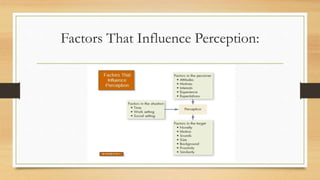
Factors That Influence Perception:
Person Perception : Making Judgements About
Others
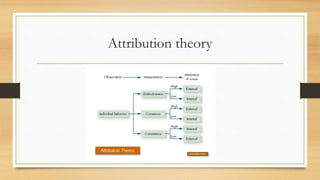
• Attribution theory : When people observe behavior , they attempt to
determine if it is internally or externally caused.
• This determination is based on the following factors:
1.Distinctiveness :Showing different behavior in different situations
2.Consensus :Responds in the same way as others to the same situation
3.Consistency : Responds in the same way over time
Attribution theory
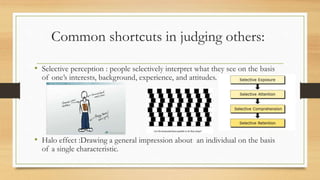
Common shortcuts in judging others:
• Selective perception : people selectively interpret what they see on the basis
of one’s interests, background, experience, and attitudes.
• Halo effect :Drawing a general impression about an individual on the basis
of a single characteristic.
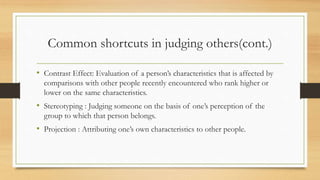
Common shortcuts in judging others(cont.)
• Contrast Effect: Evaluation of a person’s characteristics that is affected by
comparisons with other people recently encountered who rank higher or
lower on the same characteristics.
• Stereotyping : Judging someone on the basis of one’s perception of the
group to which that person belongs.
• Projection : Attributing one’s own characteristics to other people.
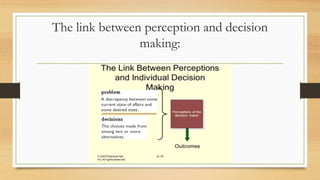
The link between perception and decision
making:
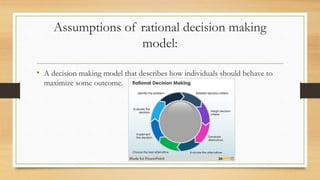
Assumptions of rational decision making
model:
• A decision making model that describes how individuals should behave to
maximize some outcome.
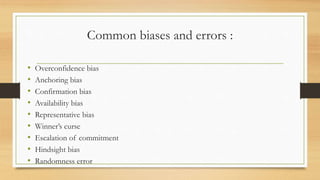
Common biases and errors :
• Overconfidence bias
• Anchoring bias
• Confirmation bias
• Availability bias
• Representative bias
• Winner’s curse
• Escalation of commitment
• Hindsight bias
• Randomness error
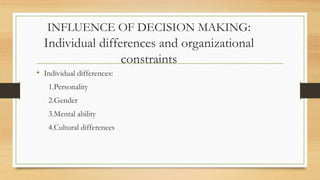
INFLUENCE OF DECISION MAKING:
Individual differences and organizational
constraints
• Individual differences:
1.Personality
2.Gender
3.Mental ability
4.Cultural differences
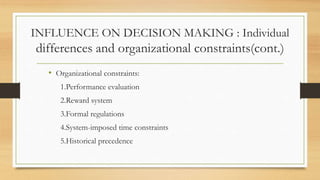
INFLUENCE ON DECISION MAKING : Individual
differences and organizational constraints(cont.)
• Organizational constraints:
1.Performance evaluation
2.Reward system
3.Formal regulations
4.System-imposed time constraints
5.Historical precedence
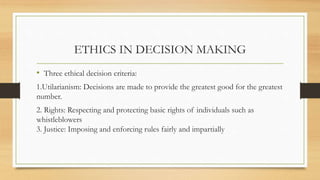
ETHICS IN DECISION MAKING
• Three ethical decision criteria:
1.Utilarianism: Decisions are made to provide the greatest good for the greatest
number.
2. Rights: Respecting and protecting basic rights of individuals such as
whistleblowers
3. Justice: Imposing and enforcing rules fairly and impartially
Ways to improve decision:
• Analyze the situation and adjust your decision making style to fit the situation.
• Be aware of biases and try to limit their impact.
• Combine rational analysis with intuition to increase decision-making
effectiveness
• Don’t assume that your specific decision style is appropriate to every situation
• Enhance personal creativity by looking for novel problems.

Perception and individual decision making

  • 1.
  • 2.
    What is perceptionand why is it important? • Perception : A process by which an individuals organize and interpret their sensory impressions in order to give meaning to their environment • People’s behavior is based on their perception of what reality is, not reality itself. • The world as it is perceived is the world that is behaviorally important.
  • 3.
  • 4.
    Person Perception :Making Judgements About Others • Attribution theory : When people observe behavior , they attempt to determine if it is internally or externally caused. • This determination is based on the following factors: 1.Distinctiveness :Showing different behavior in different situations 2.Consensus :Responds in the same way as others to the same situation 3.Consistency : Responds in the same way over time
  • 5.
  • 6.
    Common shortcuts injudging others: • Selective perception : people selectively interpret what they see on the basis of one’s interests, background, experience, and attitudes. • Halo effect :Drawing a general impression about an individual on the basis of a single characteristic.
  • 7.
    Common shortcuts injudging others(cont.) • Contrast Effect: Evaluation of a person’s characteristics that is affected by comparisons with other people recently encountered who rank higher or lower on the same characteristics. • Stereotyping : Judging someone on the basis of one’s perception of the group to which that person belongs. • Projection : Attributing one’s own characteristics to other people.
  • 8.
    The link betweenperception and decision making:
  • 9.
    Assumptions of rationaldecision making model: • A decision making model that describes how individuals should behave to maximize some outcome.
  • 10.
    Common biases anderrors : • Overconfidence bias • Anchoring bias • Confirmation bias • Availability bias • Representative bias • Winner’s curse • Escalation of commitment • Hindsight bias • Randomness error
  • 11.
    INFLUENCE OF DECISIONMAKING: Individual differences and organizational constraints • Individual differences: 1.Personality 2.Gender 3.Mental ability 4.Cultural differences
  • 12.
    INFLUENCE ON DECISIONMAKING : Individual differences and organizational constraints(cont.) • Organizational constraints: 1.Performance evaluation 2.Reward system 3.Formal regulations 4.System-imposed time constraints 5.Historical precedence
  • 13.
    ETHICS IN DECISIONMAKING • Three ethical decision criteria: 1.Utilarianism: Decisions are made to provide the greatest good for the greatest number. 2. Rights: Respecting and protecting basic rights of individuals such as whistleblowers 3. Justice: Imposing and enforcing rules fairly and impartially
  • 14.
    Ways to improvedecision: • Analyze the situation and adjust your decision making style to fit the situation. • Be aware of biases and try to limit their impact. • Combine rational analysis with intuition to increase decision-making effectiveness • Don’t assume that your specific decision style is appropriate to every situation • Enhance personal creativity by looking for novel problems.