Chapter 7
Motivation Concepts
Luke: “I don’t believe it.”
Yoda: “That is why you fail.”
The Empire Strikes Back
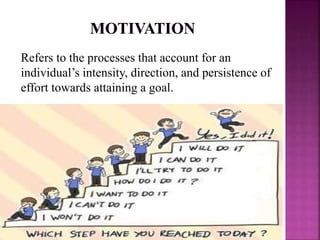
Refers to the processes that account for an
individual’s intensity, direction, and persistence of
effort towards attaining a goal.
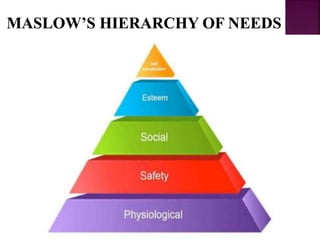
 Maslow’s Hierarchy of Needs
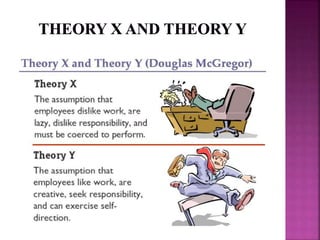
 Theory X and Theory Y
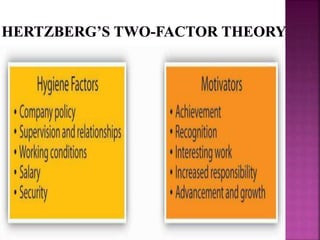
 Two-Factor Theory
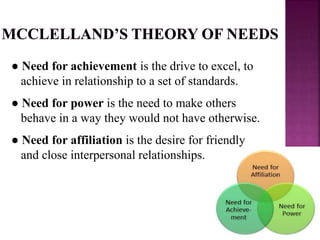
 McClelland’s Theory of Needs
● Need for achievement is the drive to excel, to
achieve in relationship to a set of standards.
● Need for power is the need to make others
behave in a way they would not have otherwise.
● Need for affiliation is the desire for friendly
and close interpersonal relationships.
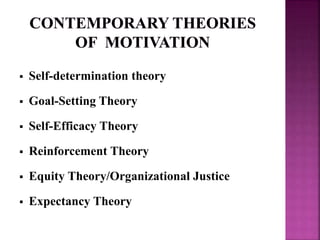
 Self-determination theory
 Goal-Setting Theory
 Self-Efficacy Theory
 Reinforcement Theory
 Equity Theory/Organizational Justice
 Expectancy Theory
 A theory of motivation that is concerned with the
beneficial effects of intrinsic motivation and the
harmful effects of extrinsic motivation.
 People prefer to feel they have control over their
actions, so anything that makes a previously
enjoyed task feel more like an obligation than a
freely chosen activity will undermine motivation.
A theory that says that specific and difficult goals,
with feedback, lead to higher performance.
 MBO: A more systematic way to utilize goal-
setting is with management by objectives (MBO),
which emphasizes participatively set goals that are
tangible, verifiable, and measurable.
An individual’s belief that he or she is capable of performing
a task.
Four ways through which self-efficacy can be increased.
 Enactive mastery
 Gaining relevant experience with the task or job.
 Vicarious modeling
 Becoming more confident because you see someone else
doing the task.
 Verbal persuasion
 Becoming more confident because someone convinces
you.
 Arousal
 Energized state.
A theory which says that behavior is a function of its
consequences.
 Positive Reinforcement
 Offering attractive consequences for desirable performance.
 Negative Reinforcement
 The employee displays desirable behavior in order to avoid the
negative consequence.
 Extinction
 Reducing undesirable behavior by withholding reinforcement
when the behavior occurs.
 Punishment
 An undesirable consequence for undesirable behavior.
A theory that says that individuals compare their job
inputs and outcomes with those of others and then
respond to eliminate any inequities.
 Inputs include, effort, experience, education, competence.
 Outcomes include, salary levels, raises, recognition.
Employees compare their outcome–input ratio with that
of relevant others.
 Equity
 Underrewarded
 Overrewarded
An overall perception of what is fair in the workplace,
composed of distributive, procedural, and interactional
justice.
 Distributive justice: Perceived fairness of the amount
and allocation of rewards among individuals.
 Procedural justice: Perceived fairness of the process
used to determine the distribution of rewards.
 Interactional justice: Perceived degree to which an
individual is treated with dignity, concern, and respect.
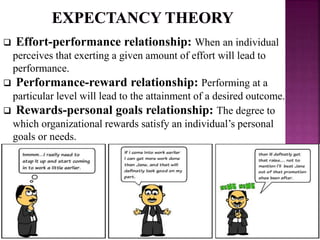
 Effort-performance relationship: When an individual
perceives that exerting a given amount of effort will lead to
performance.
 Performance-reward relationship: Performing at a
particular level will lead to the attainment of a desired outcome.
 Rewards-personal goals relationship: The degree to
which organizational rewards satisfy an individual’s personal
goals or needs.
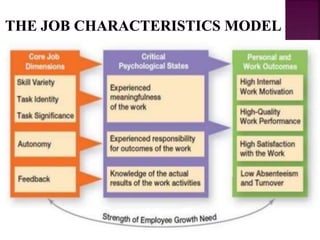
 Skill variety is the degree to which a job requires a
variety of different activities so the worker can use a
number of different skills and talent.
 Task identity is the degree to which a job requires
completion of a whole and identifiable piece of work.
 Task significance is the degree to which a job affects
the lives or work of other people.
 Autonomy is the degree to which a job provides the
worker freedom, independence, and discretion in
scheduling work.
 Feedback is the degree to which carrying out work
activities generates direct and clear information about
your own performance.
 Flextime
 Flexible work hours.
 Job Sharing
 An arrangement that allows two or more individuals
to split a traditional 40-hour-a-week job.
 Telecommuting
 Working from home at least two days a week on a
computer that is linked to the employer’s office.
 Virtual Office
Different types of variable-pay programs can
increase employee motivation.
 What to pay employees.
 How to pay individual employees.
 What benefits and choices to offer.
 How to construct employee recognition programs.
The process of initially setting pay levels entails
balancing internal equity and external equity.
 Internal Equity
 Job evaluation
 External Equity
 Pay surveys
 Piece-rate pay plan: Fixed payment per unit production.
 Merit-based pay plan: Payment based on performance
appraisal ratings.
 Bonus: A pay plan that rewards employees for recent
performance rather than historical performance.
Skill-based pay: Paying on the basis of how many skills
employees have or how many jobs they can do.
Profit-sharing plan: Distributing compensation based on
some established formula designed around company’s
profitability.
 Gainsharing: A formula-based group incentive plan
giving rewards on the basis of the group’s productivity..
 Employee stock ownership plan: A company-established
benefits plan in which employees acquire stock as part of
their benefits.
Flexible benefits: A benefits plan that allows
each employee to put together a benefits package
individually tailored to his or her own needs and
situation.
 Employee recognition programs range from a
spontaneous and private thank-you to widely
publicized formal programs.
 Financial incentives may be more motivating in
the short term, but in the long run it’s nonfinancial
incentives.

OB Chapter 7 Motivation Concepts.pptx

  • 1.
  • 2.
    Luke: “I don’tbelieve it.” Yoda: “That is why you fail.” The Empire Strikes Back
  • 3.
    Refers to theprocesses that account for an individual’s intensity, direction, and persistence of effort towards attaining a goal.
  • 4.
     Maslow’s Hierarchyof Needs  Theory X and Theory Y  Two-Factor Theory  McClelland’s Theory of Needs
  • 8.
    ● Need forachievement is the drive to excel, to achieve in relationship to a set of standards. ● Need for power is the need to make others behave in a way they would not have otherwise. ● Need for affiliation is the desire for friendly and close interpersonal relationships.
  • 9.
     Self-determination theory Goal-Setting Theory  Self-Efficacy Theory  Reinforcement Theory  Equity Theory/Organizational Justice  Expectancy Theory
  • 10.
     A theoryof motivation that is concerned with the beneficial effects of intrinsic motivation and the harmful effects of extrinsic motivation.  People prefer to feel they have control over their actions, so anything that makes a previously enjoyed task feel more like an obligation than a freely chosen activity will undermine motivation.
  • 11.
    A theory thatsays that specific and difficult goals, with feedback, lead to higher performance.  MBO: A more systematic way to utilize goal- setting is with management by objectives (MBO), which emphasizes participatively set goals that are tangible, verifiable, and measurable.
  • 12.
    An individual’s beliefthat he or she is capable of performing a task. Four ways through which self-efficacy can be increased.  Enactive mastery  Gaining relevant experience with the task or job.  Vicarious modeling  Becoming more confident because you see someone else doing the task.  Verbal persuasion  Becoming more confident because someone convinces you.  Arousal  Energized state.
  • 13.
    A theory whichsays that behavior is a function of its consequences.  Positive Reinforcement  Offering attractive consequences for desirable performance.  Negative Reinforcement  The employee displays desirable behavior in order to avoid the negative consequence.  Extinction  Reducing undesirable behavior by withholding reinforcement when the behavior occurs.  Punishment  An undesirable consequence for undesirable behavior.
  • 14.
    A theory thatsays that individuals compare their job inputs and outcomes with those of others and then respond to eliminate any inequities.  Inputs include, effort, experience, education, competence.  Outcomes include, salary levels, raises, recognition. Employees compare their outcome–input ratio with that of relevant others.  Equity  Underrewarded  Overrewarded
  • 15.
    An overall perceptionof what is fair in the workplace, composed of distributive, procedural, and interactional justice.  Distributive justice: Perceived fairness of the amount and allocation of rewards among individuals.  Procedural justice: Perceived fairness of the process used to determine the distribution of rewards.  Interactional justice: Perceived degree to which an individual is treated with dignity, concern, and respect.
  • 16.
     Effort-performance relationship:When an individual perceives that exerting a given amount of effort will lead to performance.  Performance-reward relationship: Performing at a particular level will lead to the attainment of a desired outcome.  Rewards-personal goals relationship: The degree to which organizational rewards satisfy an individual’s personal goals or needs.
  • 18.
     Skill varietyis the degree to which a job requires a variety of different activities so the worker can use a number of different skills and talent.  Task identity is the degree to which a job requires completion of a whole and identifiable piece of work.  Task significance is the degree to which a job affects the lives or work of other people.  Autonomy is the degree to which a job provides the worker freedom, independence, and discretion in scheduling work.  Feedback is the degree to which carrying out work activities generates direct and clear information about your own performance.
  • 19.
     Flextime  Flexiblework hours.  Job Sharing  An arrangement that allows two or more individuals to split a traditional 40-hour-a-week job.  Telecommuting  Working from home at least two days a week on a computer that is linked to the employer’s office.  Virtual Office
  • 20.
    Different types ofvariable-pay programs can increase employee motivation.  What to pay employees.  How to pay individual employees.  What benefits and choices to offer.  How to construct employee recognition programs.
  • 21.
    The process ofinitially setting pay levels entails balancing internal equity and external equity.  Internal Equity  Job evaluation  External Equity  Pay surveys
  • 22.
     Piece-rate payplan: Fixed payment per unit production.  Merit-based pay plan: Payment based on performance appraisal ratings.  Bonus: A pay plan that rewards employees for recent performance rather than historical performance. Skill-based pay: Paying on the basis of how many skills employees have or how many jobs they can do. Profit-sharing plan: Distributing compensation based on some established formula designed around company’s profitability.  Gainsharing: A formula-based group incentive plan giving rewards on the basis of the group’s productivity..  Employee stock ownership plan: A company-established benefits plan in which employees acquire stock as part of their benefits.
  • 23.
    Flexible benefits: Abenefits plan that allows each employee to put together a benefits package individually tailored to his or her own needs and situation.
  • 24.
     Employee recognitionprograms range from a spontaneous and private thank-you to widely publicized formal programs.  Financial incentives may be more motivating in the short term, but in the long run it’s nonfinancial incentives.

Editor's Notes

  • #6 Abraham Maslow
  • #13 Albert Bandura High self-efficacy Low self-efficacy