PSYCOLOGY FOR MANAGERS
Chapter-2
Diversity in Organization
Dr.Amrinder Singh
Assistant Professor
Govt. College of Commerce & Business Administration,
Sector-50,Chandigarh
In this chapter, we look at how organizations should work to
maximize the potential contributions of a diverse workforce. Because
each of us is different from others in myriad ways, we consider
diversity in many different forms. We also show how individual
differences in abilities affect employee behavior and effectiveness in
organizations.
Diversity in Organization
21-3
We are, each of us, unique. This is obvious enough, but managers
sometimes forget they need to recognize and capitalize on individual
differences to get the most from their employees. In this chapter,
we’ll learn how individual characteristics like age, gender, race,
ethnicity, and abilities can influence employee performance. We’ll
also see how managers can develop awareness about these
characteristics and manage a diverse workforce effectively. But first,
let’s take an overview perspective of the changing workforce.
Diversity
21-4
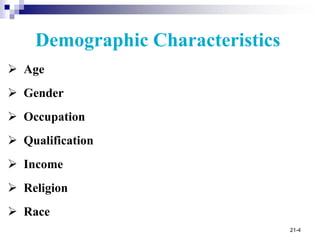
Demographic Characteristics
 Age
 Gender
 Occupation
 Qualification
 Income
 Religion
 Race
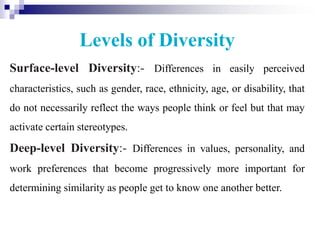
Levels of Diversity
Surface-level Diversity:- Differences in easily perceived
characteristics, such as gender, race, ethnicity, age, or disability, that
do not necessarily reflect the ways people think or feel but that may
activate certain stereotypes.
Deep-level Diversity:- Differences in values, personality, and
work preferences that become progressively more important for
determining similarity as people get to know one another better.
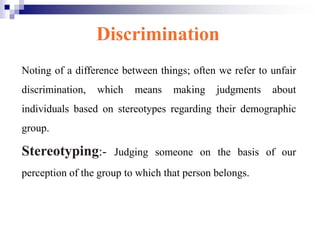
Discrimination
Noting of a difference between things; often we refer to unfair
discrimination, which means making judgments about
individuals based on stereotypes regarding their demographic
group.
Stereotyping:- Judging someone on the basis of our
perception of the group to which that person belongs.
an EthicalChoice
21-7
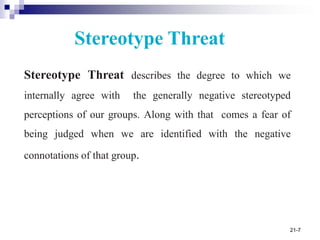
Stereotype Threat describes the degree to which we
internally agree with the generally negative stereotyped
perceptions of our groups. Along with that comes a fear of
being judged when we are identified with the negative
connotations of that group.
Stereotype Threat
P I A
To review, rather than looking at individual characteristics, unfair
discrimination assumes everyone in a group is the same. This
discrimination is often very harmful for employees, as we’ve just
discussed, and for organizations.
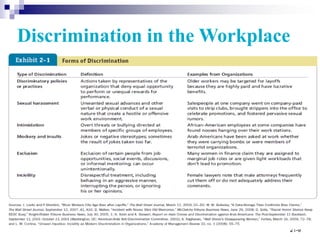
Exhibit 2-1
Discrimination in the Workplace
21-9
Discrimination in the Workplace
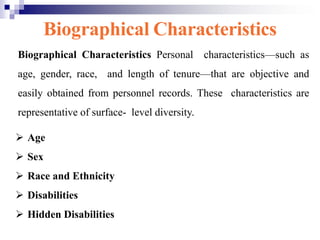
Biographical Characteristics
 Age
 Sex
 Race and Ethnicity
 Disabilities
 Hidden Disabilities
Biographical Characteristics Personal characteristics—such as
age, gender, race, and length of tenure—that are objective and
easily obtained from personnel records. These characteristics are
representative of surface- level diversity.
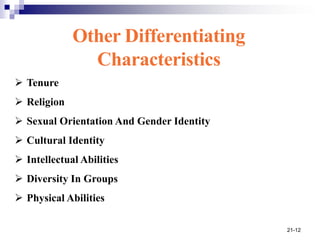
Other Differentiating
Characteristics
The last set of characteristics we’ll look at includes tenure,
religion, sexual orientation and gender identity, and cultural
identity. These characteristics illustrate deep-level differences
that provide opportunities for workplace diversity, as long as
discrimination can be overcome.
21-12
 Tenure
 Religion
 Sexual Orientation And Gender Identity
 Cultural Identity
 Intellectual Abilities
 Diversity In Groups
 Physical Abilities
Other Differentiating
Characteristics
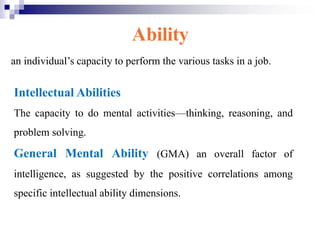
Ability
an individual’s capacity to perform the various tasks in a job.
Intellectual Abilities
The capacity to do mental activities—thinking, reasoning, and
problem solving.
General Mental Ability (GMA) an overall factor of
intelligence, as suggested by the positive correlations among
specific intellectual ability dimensions.
21-14
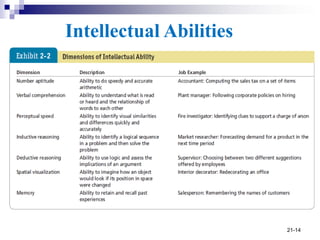
Intellectual Abilities
21-15
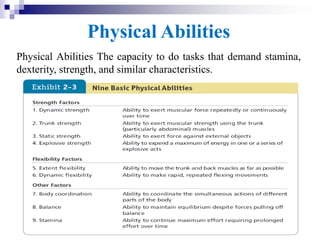
Physical Abilities
Physical Abilities The capacity to do tasks that demand stamina,
dexterity, strength, and similar characteristics.
Implementing Diversity
Management Strategies
Having discussed a variety of ways in which people differ, we now
look at how a manager can and should manage these differences.
Diversity management makes everyone more aware of and
sensitive to the needs and differences of others. This definition
highlights the fact that diversity programs include and are meant for
everyone. Diversity is much more likely to be successful when we
see it as everyone’s business than when we believe it helps only
certain groups of employees.
21-17
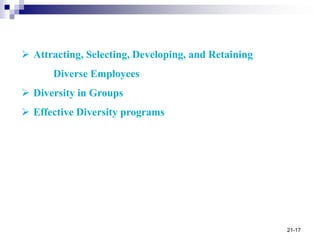
 Attracting, Selecting, Developing, and Retaining
Diverse Employees
 Diversity in Groups
 Effective Diversity programs

Diversity In Organizations, Chapter-2, Organizational Behavior

  • 1.
    PSYCOLOGY FOR MANAGERS Chapter-2 Diversityin Organization Dr.Amrinder Singh Assistant Professor Govt. College of Commerce & Business Administration, Sector-50,Chandigarh
  • 2.
    In this chapter,we look at how organizations should work to maximize the potential contributions of a diverse workforce. Because each of us is different from others in myriad ways, we consider diversity in many different forms. We also show how individual differences in abilities affect employee behavior and effectiveness in organizations. Diversity in Organization
  • 3.
    21-3 We are, eachof us, unique. This is obvious enough, but managers sometimes forget they need to recognize and capitalize on individual differences to get the most from their employees. In this chapter, we’ll learn how individual characteristics like age, gender, race, ethnicity, and abilities can influence employee performance. We’ll also see how managers can develop awareness about these characteristics and manage a diverse workforce effectively. But first, let’s take an overview perspective of the changing workforce. Diversity
  • 4.
    21-4 Demographic Characteristics  Age Gender  Occupation  Qualification  Income  Religion  Race
  • 5.
    Levels of Diversity Surface-levelDiversity:- Differences in easily perceived characteristics, such as gender, race, ethnicity, age, or disability, that do not necessarily reflect the ways people think or feel but that may activate certain stereotypes. Deep-level Diversity:- Differences in values, personality, and work preferences that become progressively more important for determining similarity as people get to know one another better.
  • 6.
    Discrimination Noting of adifference between things; often we refer to unfair discrimination, which means making judgments about individuals based on stereotypes regarding their demographic group. Stereotyping:- Judging someone on the basis of our perception of the group to which that person belongs. an EthicalChoice
  • 7.
    21-7 Stereotype Threat describesthe degree to which we internally agree with the generally negative stereotyped perceptions of our groups. Along with that comes a fear of being judged when we are identified with the negative connotations of that group. Stereotype Threat
  • 8.
    P I A Toreview, rather than looking at individual characteristics, unfair discrimination assumes everyone in a group is the same. This discrimination is often very harmful for employees, as we’ve just discussed, and for organizations. Exhibit 2-1 Discrimination in the Workplace
  • 9.
  • 10.
    Biographical Characteristics  Age Sex  Race and Ethnicity  Disabilities  Hidden Disabilities Biographical Characteristics Personal characteristics—such as age, gender, race, and length of tenure—that are objective and easily obtained from personnel records. These characteristics are representative of surface- level diversity.
  • 11.
    Other Differentiating Characteristics The lastset of characteristics we’ll look at includes tenure, religion, sexual orientation and gender identity, and cultural identity. These characteristics illustrate deep-level differences that provide opportunities for workplace diversity, as long as discrimination can be overcome.
  • 12.
    21-12  Tenure  Religion Sexual Orientation And Gender Identity  Cultural Identity  Intellectual Abilities  Diversity In Groups  Physical Abilities Other Differentiating Characteristics
  • 13.
    Ability an individual’s capacityto perform the various tasks in a job. Intellectual Abilities The capacity to do mental activities—thinking, reasoning, and problem solving. General Mental Ability (GMA) an overall factor of intelligence, as suggested by the positive correlations among specific intellectual ability dimensions.
  • 14.
  • 15.
    21-15 Physical Abilities Physical AbilitiesThe capacity to do tasks that demand stamina, dexterity, strength, and similar characteristics.
  • 16.
    Implementing Diversity Management Strategies Havingdiscussed a variety of ways in which people differ, we now look at how a manager can and should manage these differences. Diversity management makes everyone more aware of and sensitive to the needs and differences of others. This definition highlights the fact that diversity programs include and are meant for everyone. Diversity is much more likely to be successful when we see it as everyone’s business than when we believe it helps only certain groups of employees.
  • 17.
    21-17  Attracting, Selecting,Developing, and Retaining Diverse Employees  Diversity in Groups  Effective Diversity programs