HEXOSE MONOPHOSPHATE SHUNT
HMP Shunt is an alternative pathway to glycolysis and TCA cycle for the oxidation of
glucose. Hexose monophosphate pathway or HMP shunt is also called pentose
phosphate pathway or phosphogluconate pathway. HMP shunt is more anabolic in
nature, since it is concerned with the biosynthesis of NADPH and pentose.
The enzymes of HMP shunt are located in the cytosol, Tissues such as liver, adipose
tissue, adrenal gland, erythrocytes, testes and lactating mammary gland, are highly active
in HMP shunt.
As Most of these tissues are involved in the biosynthesis of fatty acids and steroids
which are dependent on the supply of NADPH.
REACTIONS OF THE PATHWAY
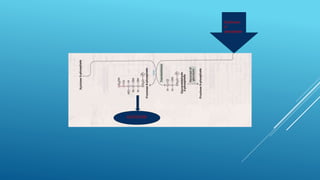
The sequence of reactions of HMP shunt is divided into two phases-oxidative and non-oxidative.
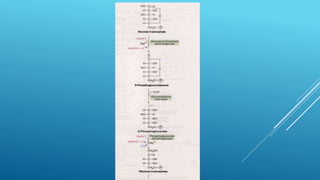
A. Oxidative phase: Glucose 6-phosphate dehydrogenase (G6PD) is an NADP-dependent enzyme that
converts glucose 6-phosphate to 6-phosphogluconolactone. The 6-phosphogluconolactone is then
hydrolysed by the gluconolactone hydrolase to 6-phosphogluconate.
The next reaction involving the synthesis of NADPH is catalysed by 6-phosphogluconate
dehydrogenase to produce 3 keto 6-phosphogluconate which then undergoes decarboxylation to give
ribulose 5-phosphate.
B. Non-oxidative phase:
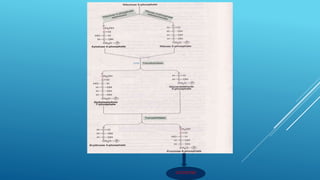
1. Ribulose 5-phosphate is acted upon by an epimerase to produce xylulose 5-phosphate while ribose 5-
phosphate ketoisomerase converts ribulose 5-phosphate to ribose 5-phosphate
GLYCOLYSIS
Erythrose-
4-
phosphate
GLYCOLYSIS
2.The enzyme transketolase catalyses the transfer of two carbon moiety from xylulose 5-
phosphate to ribose 5-phosphate to give a 3-carbon glyceraldehyde 3-phosphate and a 7-
carbon sedoheptulose 7-phosphate (TPP-Coenzyme).
3.Transaldolase brings about the transfer of a 3-carbon fragment (active dihydroxyacetone)
from sedoheptulose 7-phosphate to glyceraldehyde 3-phosphate to give fructose 6-
phosphate and four carbon erythrose 4-phosphate.
4.Transketolase acts on xylulose 5-phosphate and transfers a 2-carbon fragment
(glyceraldehyde) from it to erythrose 4-phosphate to generate fructose 6-phosphate and
glyceraldehyde 3-phosphate.
The overall reaction may be represented as
6 Glucose 6-phosphate + 12 NADP+ + 6H2O ----->6CO2 + 12 NADPH + 12H+ + 5
Glucose 6-phosphate
Note 1.
For the complete oxidation of glucose 6-phosphate to 6CO2, we have to start with 6 molecules of
glucose 6-phosphate. Of these 6 molecules of glucose 6-phosphate, 5 molecules of glucose 6-
phosphate are regenerated with the production of l2 NADPH.
Note 2.
Fructose 6-phosphate and glyceraldehyde 3-phosphate can be further catabolized through glycolysis and
citric acid cycle.

Hmp shunt

  • 1.
    HEXOSE MONOPHOSPHATE SHUNT HMPShunt is an alternative pathway to glycolysis and TCA cycle for the oxidation of glucose. Hexose monophosphate pathway or HMP shunt is also called pentose phosphate pathway or phosphogluconate pathway. HMP shunt is more anabolic in nature, since it is concerned with the biosynthesis of NADPH and pentose. The enzymes of HMP shunt are located in the cytosol, Tissues such as liver, adipose tissue, adrenal gland, erythrocytes, testes and lactating mammary gland, are highly active in HMP shunt. As Most of these tissues are involved in the biosynthesis of fatty acids and steroids which are dependent on the supply of NADPH.
  • 2.
    REACTIONS OF THEPATHWAY The sequence of reactions of HMP shunt is divided into two phases-oxidative and non-oxidative. A. Oxidative phase: Glucose 6-phosphate dehydrogenase (G6PD) is an NADP-dependent enzyme that converts glucose 6-phosphate to 6-phosphogluconolactone. The 6-phosphogluconolactone is then hydrolysed by the gluconolactone hydrolase to 6-phosphogluconate. The next reaction involving the synthesis of NADPH is catalysed by 6-phosphogluconate dehydrogenase to produce 3 keto 6-phosphogluconate which then undergoes decarboxylation to give ribulose 5-phosphate. B. Non-oxidative phase: 1. Ribulose 5-phosphate is acted upon by an epimerase to produce xylulose 5-phosphate while ribose 5- phosphate ketoisomerase converts ribulose 5-phosphate to ribose 5-phosphate
  • 4.
  • 5.
  • 6.
    2.The enzyme transketolasecatalyses the transfer of two carbon moiety from xylulose 5- phosphate to ribose 5-phosphate to give a 3-carbon glyceraldehyde 3-phosphate and a 7- carbon sedoheptulose 7-phosphate (TPP-Coenzyme). 3.Transaldolase brings about the transfer of a 3-carbon fragment (active dihydroxyacetone) from sedoheptulose 7-phosphate to glyceraldehyde 3-phosphate to give fructose 6- phosphate and four carbon erythrose 4-phosphate. 4.Transketolase acts on xylulose 5-phosphate and transfers a 2-carbon fragment (glyceraldehyde) from it to erythrose 4-phosphate to generate fructose 6-phosphate and glyceraldehyde 3-phosphate.
  • 7.
    The overall reactionmay be represented as 6 Glucose 6-phosphate + 12 NADP+ + 6H2O ----->6CO2 + 12 NADPH + 12H+ + 5 Glucose 6-phosphate Note 1. For the complete oxidation of glucose 6-phosphate to 6CO2, we have to start with 6 molecules of glucose 6-phosphate. Of these 6 molecules of glucose 6-phosphate, 5 molecules of glucose 6- phosphate are regenerated with the production of l2 NADPH.
  • 8.
    Note 2. Fructose 6-phosphateand glyceraldehyde 3-phosphate can be further catabolized through glycolysis and citric acid cycle.