Presented By
Sijo A
Ph.D. Research Scholar (Microbiology)
School of Biosciences, MACFAST College
Tiruvalla, Kerala, India
Nanomaterials for Green Systems
• Green materials refer to substances that are environmentally friendly, sustainable, and
biodegradable.
• These materials are designed to minimize the environmental footprint by reducing resource
consumption and pollution.
Biopolymers
• Biopolymers are polymers derived from renewable biological sources such as plants, algae, or
microorganisms. Examples include:
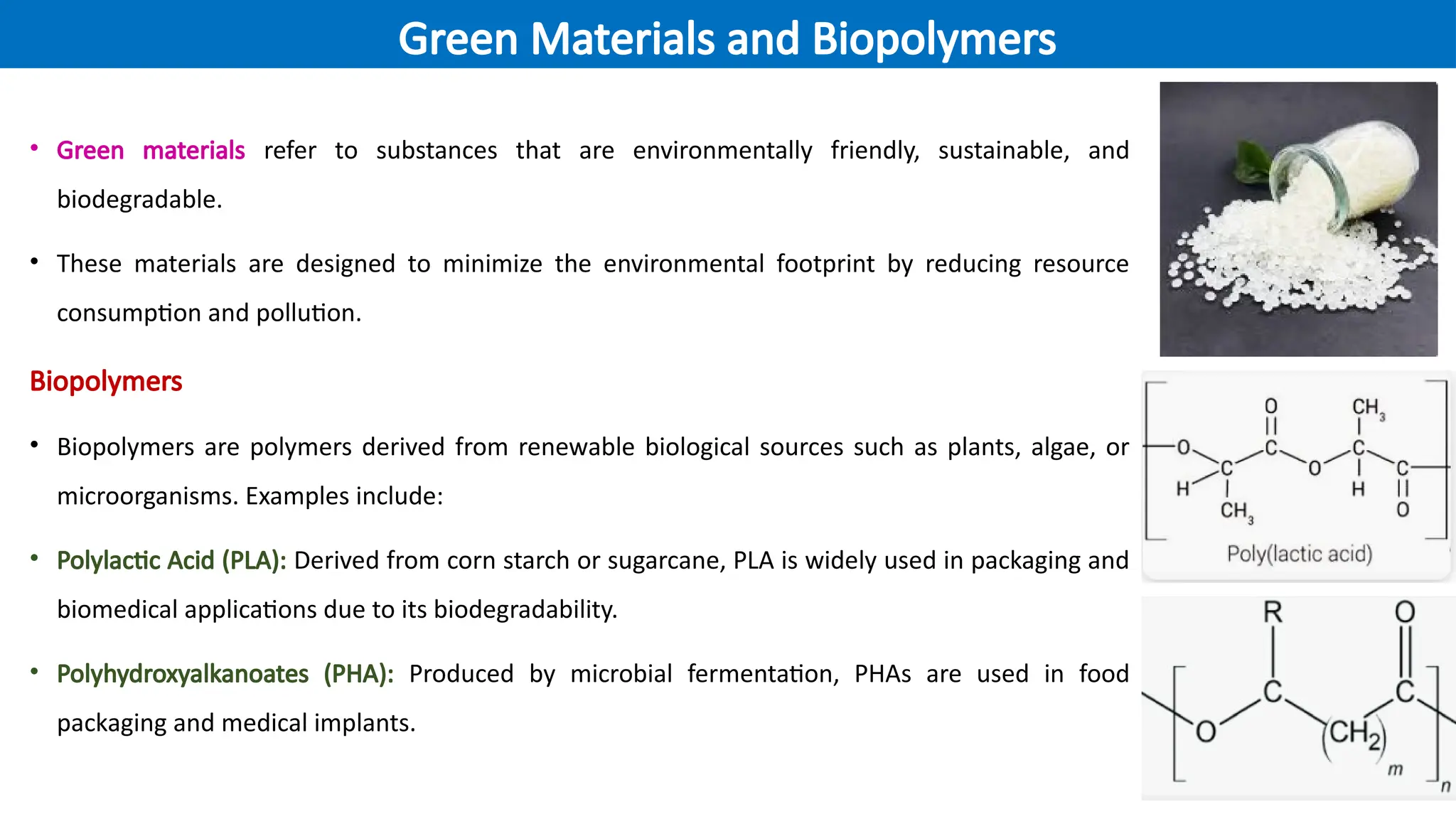
• Polylactic Acid (PLA): Derived from corn starch or sugarcane, PLA is widely used in packaging and
biomedical applications due to its biodegradability.
• Polyhydroxyalkanoates (PHA): Produced by microbial fermentation, PHAs are used in food
packaging and medical implants.
Green Materials and Biopolymers
• Bioplastics, a subset of biopolymers, are developed as alternatives to petroleum-based
plastics.
• They decompose naturally, reducing plastic pollution. Examples include:
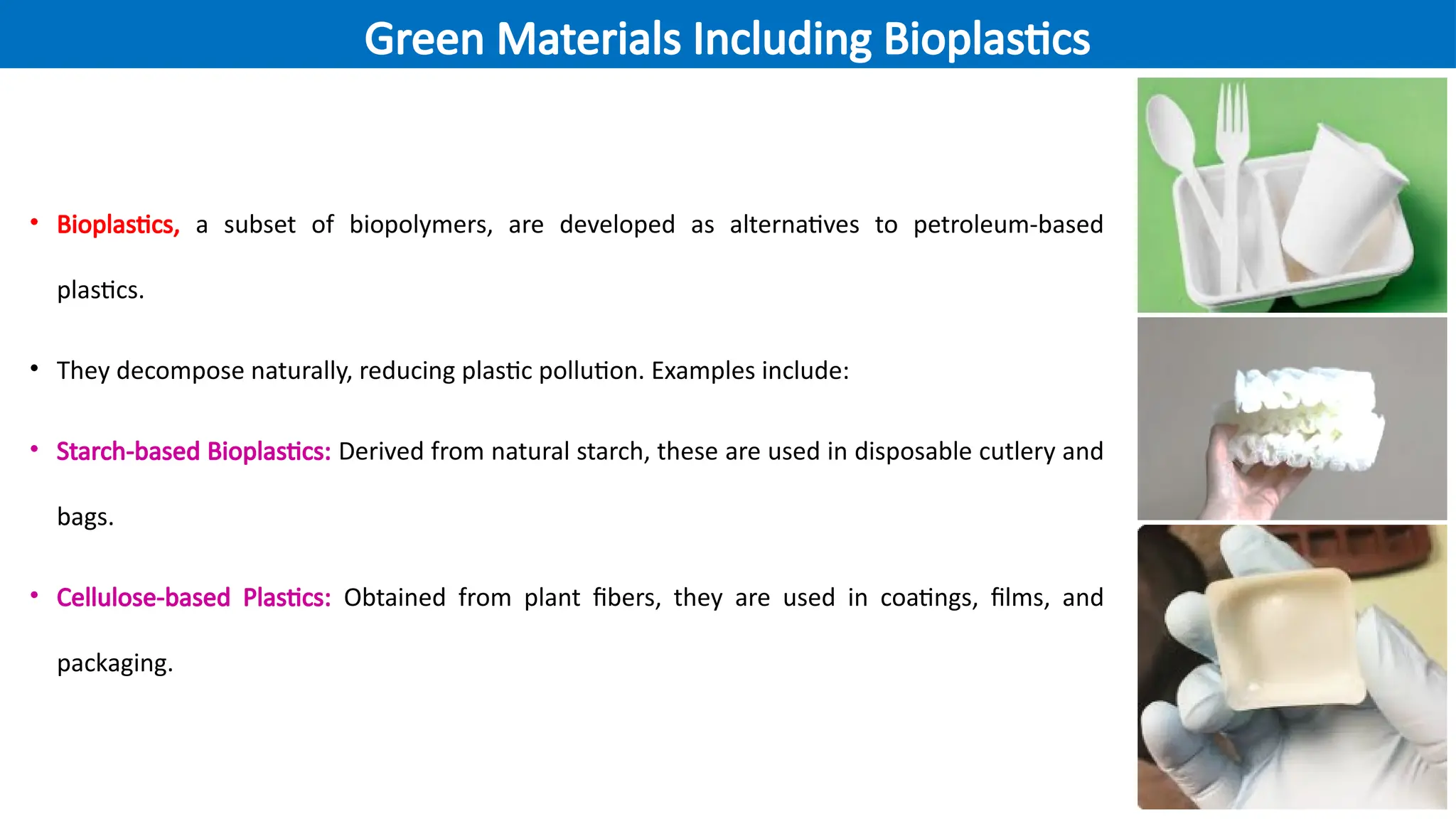
• Starch-based Bioplastics: Derived from natural starch, these are used in disposable cutlery and
bags.
• Cellulose-based Plastics: Obtained from plant fibers, they are used in coatings, films, and
packaging.
Green Materials Including Bioplastics
• Nanocomposites incorporate nanoparticles into polymer matrices, enhancing the material's
mechanical, thermal, and barrier properties.
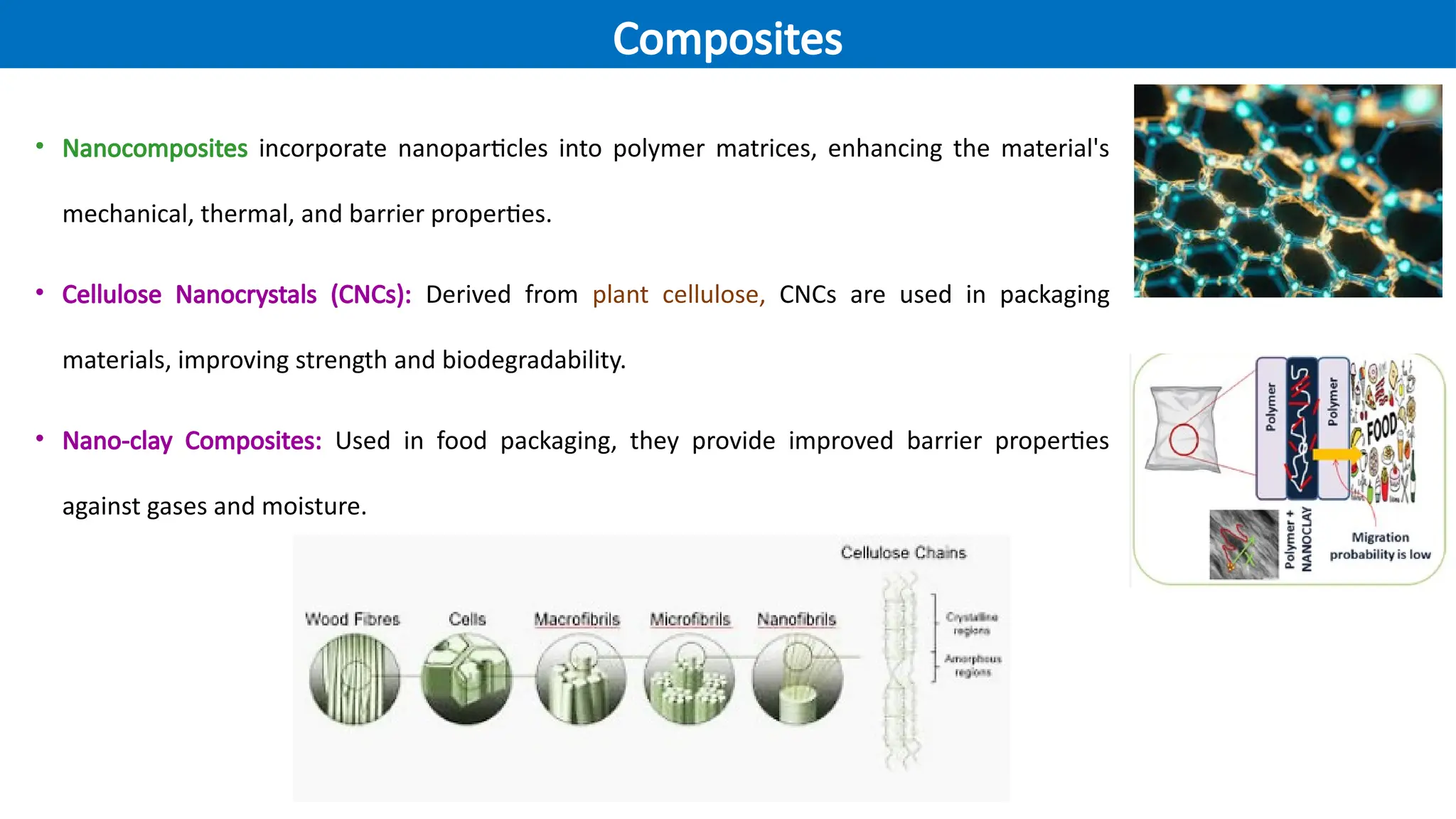
• Cellulose Nanocrystals (CNCs): Derived from plant cellulose, CNCs are used in packaging
materials, improving strength and biodegradability.
• Nano-clay Composites: Used in food packaging, they provide improved barrier properties
against gases and moisture.
Composites
• The construction industry has seen a paradigm shift with the integration of nanotechnology to
enhance energy efficiency, durability, and environmental sustainability.
Windows, Skylights, and Lighting
• Nanotechnology enables the development of advanced materials for energy-efficient lighting
and building systems:
• Smart Glass: Incorporating thermochromic or electrochromic nanoparticles, smart glass
adjusts its transparency based on temperature or electrical signals, reducing the need for
artificial cooling or heating.
• Photovoltaic Glass: Embedded with quantum dots or nanoscale silicon, photovoltaic glass
generates electricity from sunlight while functioning as windows or skylights.
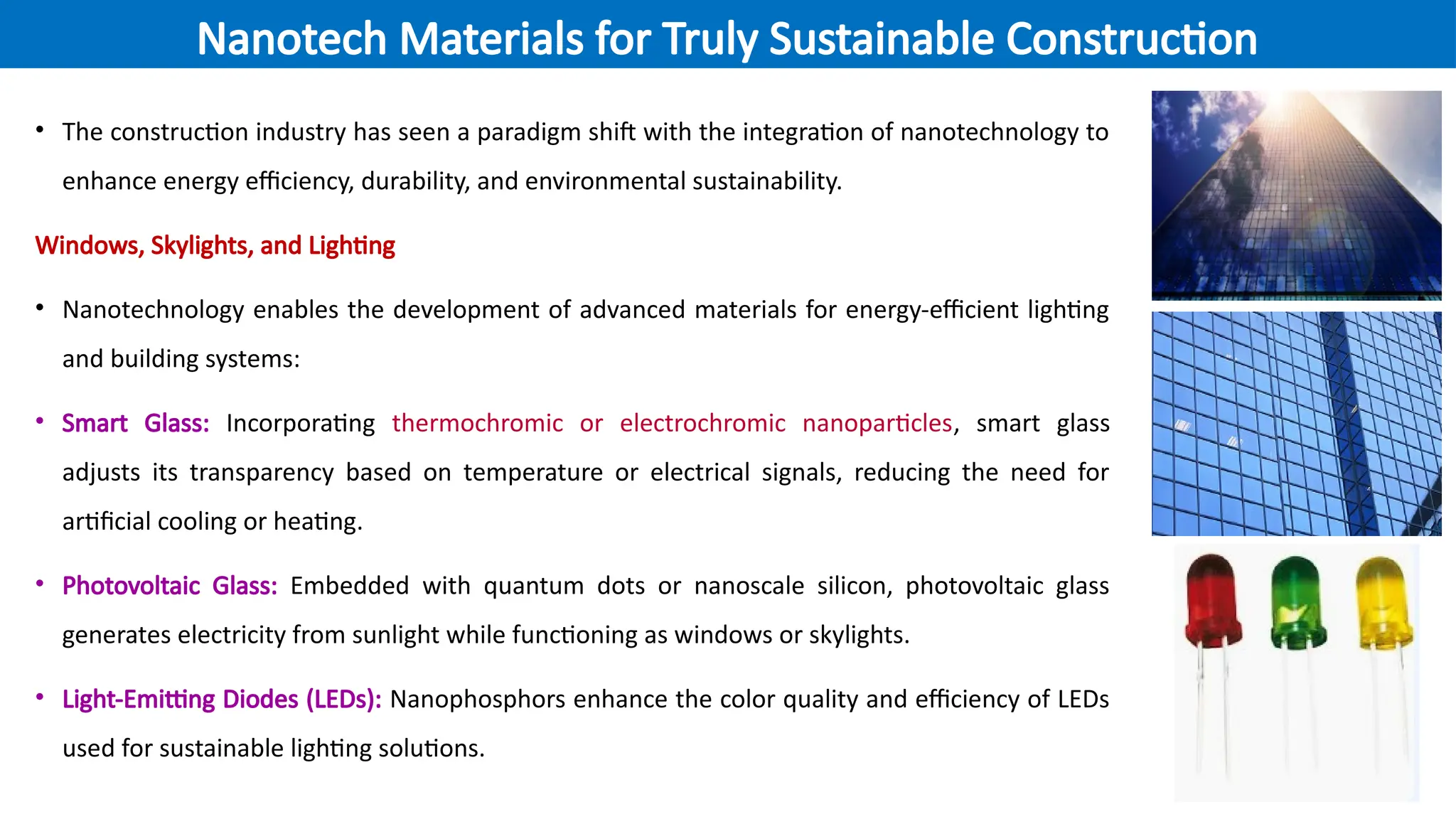
• Light-Emitting Diodes (LEDs): Nanophosphors enhance the color quality and efficiency of LEDs
used for sustainable lighting solutions.
Nanotech Materials for Truly Sustainable Construction
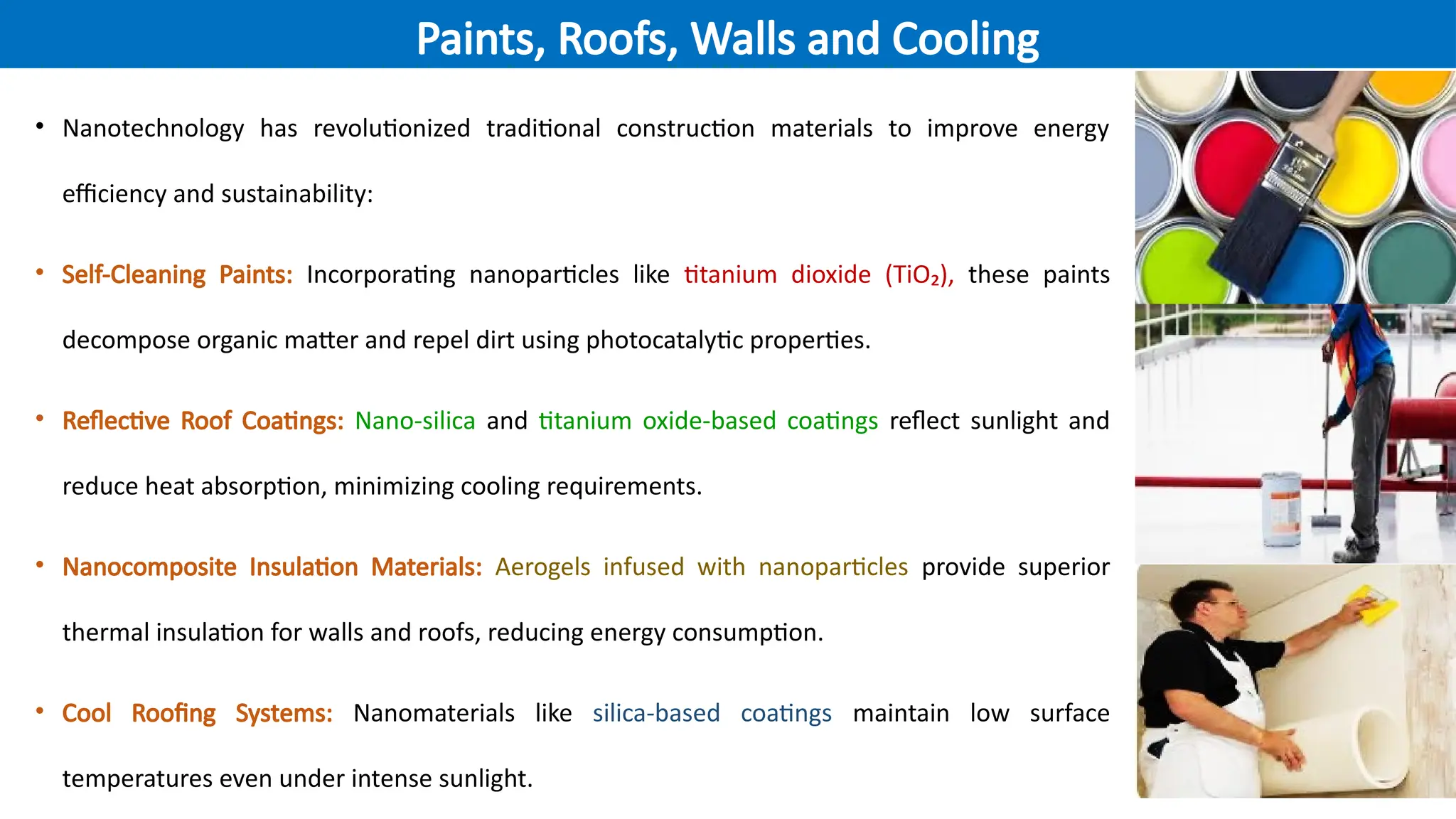
• Nanotechnology has revolutionized traditional construction materials to improve energy
efficiency and sustainability:
• Self-Cleaning Paints: Incorporating nanoparticles like titanium dioxide (TiO₂), these paints
decompose organic matter and repel dirt using photocatalytic properties.
• Reflective Roof Coatings: Nano-silica and titanium oxide-based coatings reflect sunlight and
reduce heat absorption, minimizing cooling requirements.
• Nanocomposite Insulation Materials: Aerogels infused with nanoparticles provide superior
thermal insulation for walls and roofs, reducing energy consumption.
• Cool Roofing Systems: Nanomaterials like silica-based coatings maintain low surface
temperatures even under intense sunlight.
Paints, Roofs, Walls and Cooling
• Nanotechnology-based sensors are critical in monitoring environmental conditions and
detecting pollutants.
Gas Sensors
• Multifunctional gas sensors made from nanomaterials are compact, highly sensitive, and
capable of detecting trace amounts of harmful gases.
• Graphene-Based Gas Sensors: Graphene and its derivatives can detect gases like ammonia,
carbon monoxide, and methane with high precision.
• Metal Oxide Nanoparticles: Zinc oxide (ZnO) and tin oxide (SnO₂) are widely used in gas
sensors for air quality monitoring and industrial applications.
Multifunctional Sensors
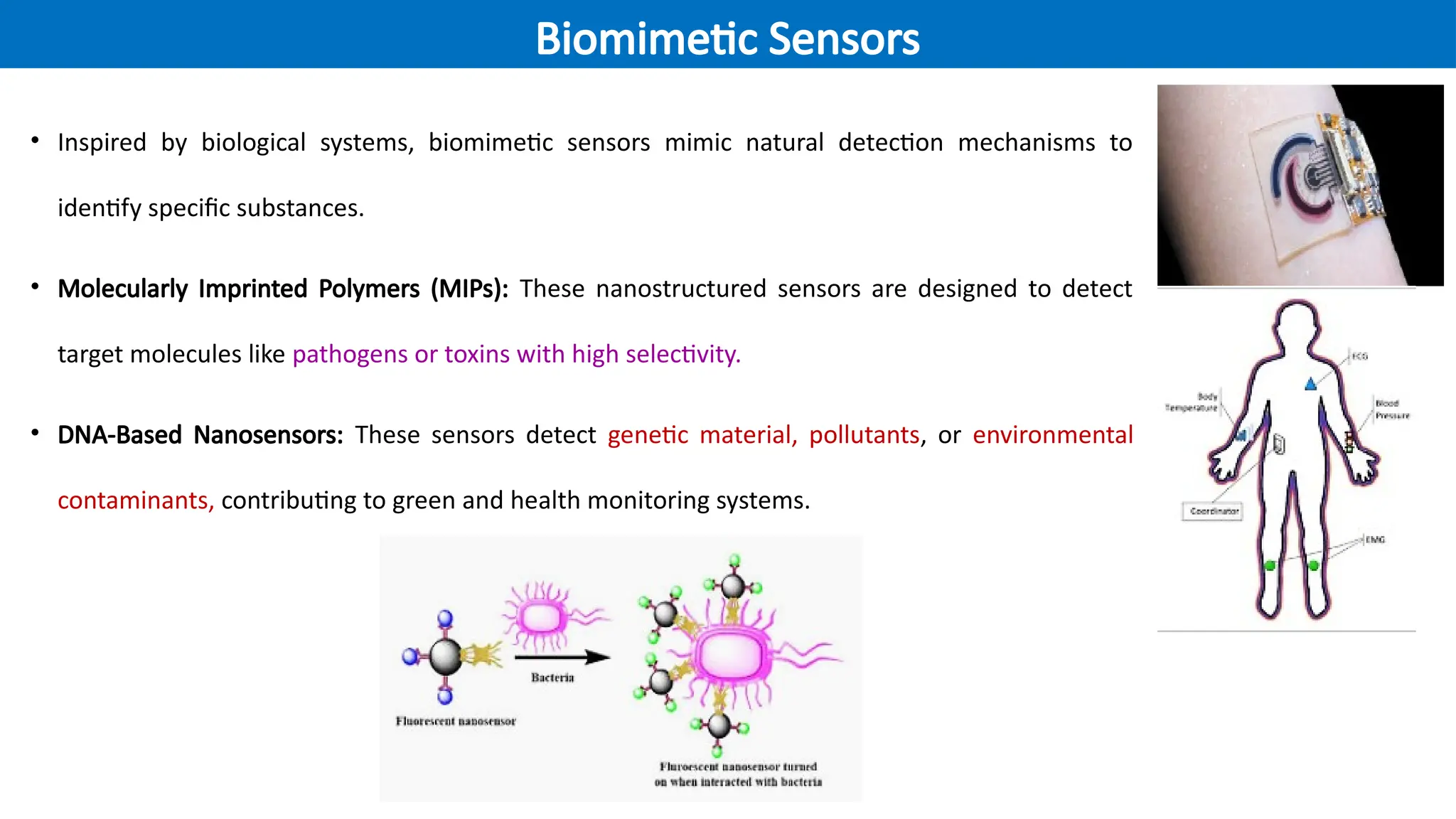
• Inspired by biological systems, biomimetic sensors mimic natural detection mechanisms to
identify specific substances.
• Molecularly Imprinted Polymers (MIPs): These nanostructured sensors are designed to detect
target molecules like pathogens or toxins with high selectivity.
• DNA-Based Nanosensors: These sensors detect genetic material, pollutants, or environmental
contaminants, contributing to green and health monitoring systems.
Biomimetic Sensors
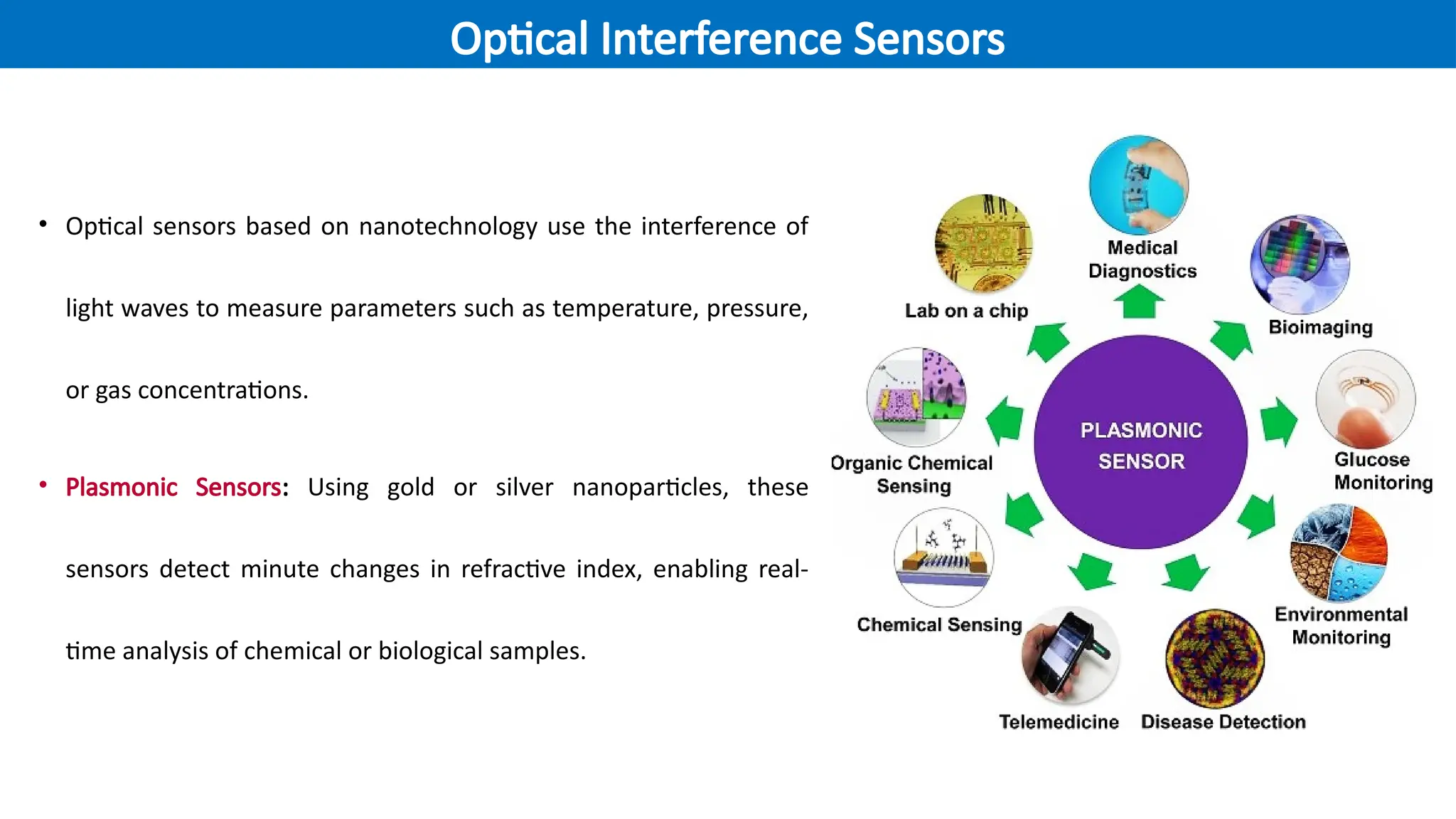
• Optical sensors based on nanotechnology use the interference of
light waves to measure parameters such as temperature, pressure,
or gas concentrations.
• Plasmonic Sensors: Using gold or silver nanoparticles, these
sensors detect minute changes in refractive index, enabling real-
time analysis of chemical or biological samples.
Optical Interference Sensors
Thermo-Light Responsive Nanomaterials
• These materials change their properties in response to temperature or light, making them ideal for energy-efficient
applications:
• Phase-Change Materials (PCMs): Used in energy storage systems, PCMs store and release heat as they transition
between solid and liquid states.
• Photonic Crystals: These nanostructures manipulate light to regulate heat and energy flow in buildings or wearable
devices.
Thermo-Light and Stimulus-Responsive Nanomaterials
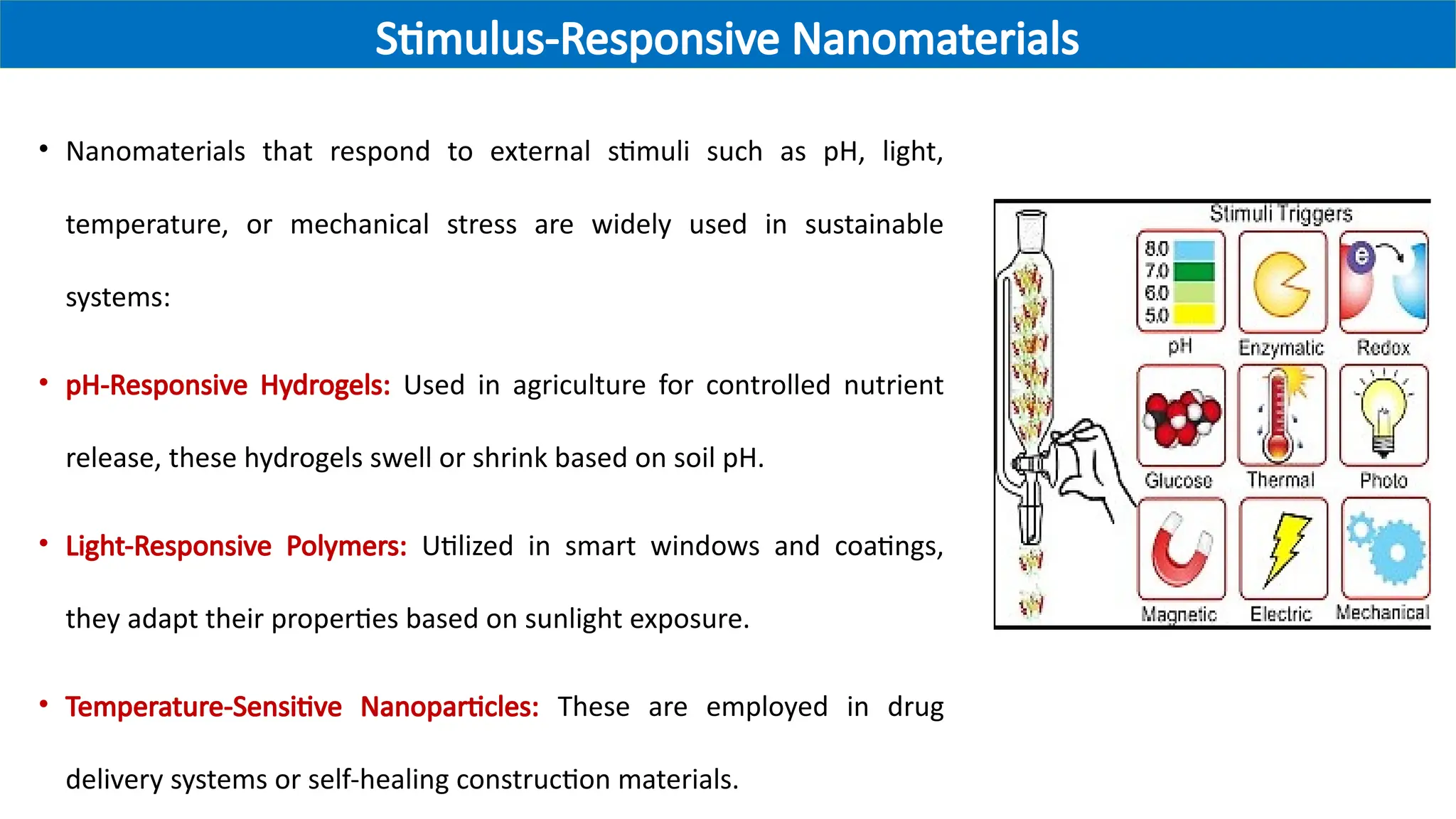
• Nanomaterials that respond to external stimuli such as pH, light,
temperature, or mechanical stress are widely used in sustainable
systems:
• pH-Responsive Hydrogels: Used in agriculture for controlled nutrient
release, these hydrogels swell or shrink based on soil pH.
• Light-Responsive Polymers: Utilized in smart windows and coatings,
they adapt their properties based on sunlight exposure.
• Temperature-Sensitive Nanoparticles: These are employed in drug
delivery systems or self-healing construction materials.
Stimulus-Responsive Nanomaterials
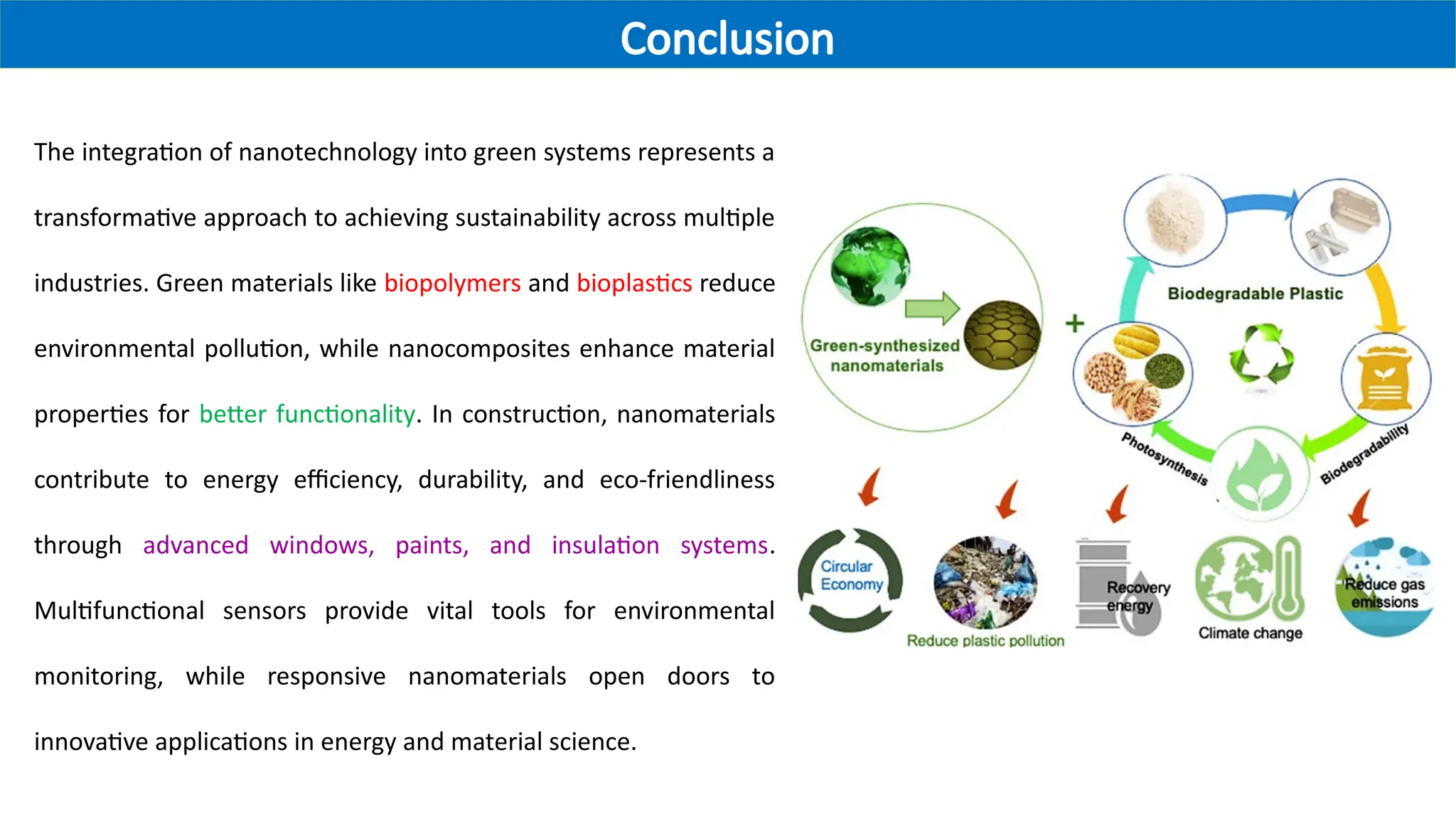
The integration of nanotechnology into green systems represents a
transformative approach to achieving sustainability across multiple
industries. Green materials like biopolymers and bioplastics reduce
environmental pollution, while nanocomposites enhance material
properties for better functionality. In construction, nanomaterials
contribute to energy efficiency, durability, and eco-friendliness
through advanced windows, paints, and insulation systems.
Multifunctional sensors provide vital tools for environmental
monitoring, while responsive nanomaterials open doors to
innovative applications in energy and material science.
Conclusion

Nanomaterials for Green System - Biotechnology

  • 1.
    Presented By Sijo A Ph.D.Research Scholar (Microbiology) School of Biosciences, MACFAST College Tiruvalla, Kerala, India Nanomaterials for Green Systems
  • 2.
    • Green materialsrefer to substances that are environmentally friendly, sustainable, and biodegradable. • These materials are designed to minimize the environmental footprint by reducing resource consumption and pollution. Biopolymers • Biopolymers are polymers derived from renewable biological sources such as plants, algae, or microorganisms. Examples include: • Polylactic Acid (PLA): Derived from corn starch or sugarcane, PLA is widely used in packaging and biomedical applications due to its biodegradability. • Polyhydroxyalkanoates (PHA): Produced by microbial fermentation, PHAs are used in food packaging and medical implants. Green Materials and Biopolymers
  • 3.
    • Bioplastics, asubset of biopolymers, are developed as alternatives to petroleum-based plastics. • They decompose naturally, reducing plastic pollution. Examples include: • Starch-based Bioplastics: Derived from natural starch, these are used in disposable cutlery and bags. • Cellulose-based Plastics: Obtained from plant fibers, they are used in coatings, films, and packaging. Green Materials Including Bioplastics
  • 4.
    • Nanocomposites incorporatenanoparticles into polymer matrices, enhancing the material's mechanical, thermal, and barrier properties. • Cellulose Nanocrystals (CNCs): Derived from plant cellulose, CNCs are used in packaging materials, improving strength and biodegradability. • Nano-clay Composites: Used in food packaging, they provide improved barrier properties against gases and moisture. Composites
  • 5.
    • The constructionindustry has seen a paradigm shift with the integration of nanotechnology to enhance energy efficiency, durability, and environmental sustainability. Windows, Skylights, and Lighting • Nanotechnology enables the development of advanced materials for energy-efficient lighting and building systems: • Smart Glass: Incorporating thermochromic or electrochromic nanoparticles, smart glass adjusts its transparency based on temperature or electrical signals, reducing the need for artificial cooling or heating. • Photovoltaic Glass: Embedded with quantum dots or nanoscale silicon, photovoltaic glass generates electricity from sunlight while functioning as windows or skylights. • Light-Emitting Diodes (LEDs): Nanophosphors enhance the color quality and efficiency of LEDs used for sustainable lighting solutions. Nanotech Materials for Truly Sustainable Construction
  • 6.
    • Nanotechnology hasrevolutionized traditional construction materials to improve energy efficiency and sustainability: • Self-Cleaning Paints: Incorporating nanoparticles like titanium dioxide (TiO₂), these paints decompose organic matter and repel dirt using photocatalytic properties. • Reflective Roof Coatings: Nano-silica and titanium oxide-based coatings reflect sunlight and reduce heat absorption, minimizing cooling requirements. • Nanocomposite Insulation Materials: Aerogels infused with nanoparticles provide superior thermal insulation for walls and roofs, reducing energy consumption. • Cool Roofing Systems: Nanomaterials like silica-based coatings maintain low surface temperatures even under intense sunlight. Paints, Roofs, Walls and Cooling
  • 7.
    • Nanotechnology-based sensorsare critical in monitoring environmental conditions and detecting pollutants. Gas Sensors • Multifunctional gas sensors made from nanomaterials are compact, highly sensitive, and capable of detecting trace amounts of harmful gases. • Graphene-Based Gas Sensors: Graphene and its derivatives can detect gases like ammonia, carbon monoxide, and methane with high precision. • Metal Oxide Nanoparticles: Zinc oxide (ZnO) and tin oxide (SnO₂) are widely used in gas sensors for air quality monitoring and industrial applications. Multifunctional Sensors
  • 8.
    • Inspired bybiological systems, biomimetic sensors mimic natural detection mechanisms to identify specific substances. • Molecularly Imprinted Polymers (MIPs): These nanostructured sensors are designed to detect target molecules like pathogens or toxins with high selectivity. • DNA-Based Nanosensors: These sensors detect genetic material, pollutants, or environmental contaminants, contributing to green and health monitoring systems. Biomimetic Sensors
  • 9.
    • Optical sensorsbased on nanotechnology use the interference of light waves to measure parameters such as temperature, pressure, or gas concentrations. • Plasmonic Sensors: Using gold or silver nanoparticles, these sensors detect minute changes in refractive index, enabling real- time analysis of chemical or biological samples. Optical Interference Sensors
  • 10.
    Thermo-Light Responsive Nanomaterials •These materials change their properties in response to temperature or light, making them ideal for energy-efficient applications: • Phase-Change Materials (PCMs): Used in energy storage systems, PCMs store and release heat as they transition between solid and liquid states. • Photonic Crystals: These nanostructures manipulate light to regulate heat and energy flow in buildings or wearable devices. Thermo-Light and Stimulus-Responsive Nanomaterials
  • 11.
    • Nanomaterials thatrespond to external stimuli such as pH, light, temperature, or mechanical stress are widely used in sustainable systems: • pH-Responsive Hydrogels: Used in agriculture for controlled nutrient release, these hydrogels swell or shrink based on soil pH. • Light-Responsive Polymers: Utilized in smart windows and coatings, they adapt their properties based on sunlight exposure. • Temperature-Sensitive Nanoparticles: These are employed in drug delivery systems or self-healing construction materials. Stimulus-Responsive Nanomaterials
  • 12.
    The integration ofnanotechnology into green systems represents a transformative approach to achieving sustainability across multiple industries. Green materials like biopolymers and bioplastics reduce environmental pollution, while nanocomposites enhance material properties for better functionality. In construction, nanomaterials contribute to energy efficiency, durability, and eco-friendliness through advanced windows, paints, and insulation systems. Multifunctional sensors provide vital tools for environmental monitoring, while responsive nanomaterials open doors to innovative applications in energy and material science. Conclusion