Presented By
Sijo A
Ph.D. Research Scholar (Microbiology)
School of Biosciences, MACFAST College
Tiruvalla, Kerala
GENETICALLY MODIFIED ORGANISMS
Genetically Modified Organisms
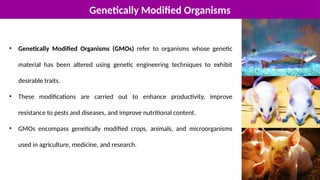
• Genetically Modified Organisms (GMOs) refer to organisms whose genetic
material has been altered using genetic engineering techniques to exhibit
desirable traits.
• These modifications are carried out to enhance productivity, improve
resistance to pests and diseases, and improve nutritional content.
• GMOs encompass genetically modified crops, animals, and microorganisms
used in agriculture, medicine, and research.
Methodology of Genetic Modification
The creation of GMOs involves several sophisticated techniques, including:
1. Identification of Desired Gene – The process begins with identifying the gene responsible for
the desired trait, such as pest resistance or enhanced nutrition.
2. Gene Isolation – The identified gene is isolated from the donor organism using restriction
enzymes.
3. Gene Insertion – The isolated gene is inserted into the target organism’s genome using
various techniques:
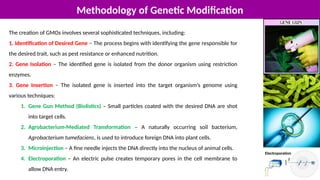
1. Gene Gun Method (Biolistics) – Small particles coated with the desired DNA are shot
into target cells.
2. Agrobacterium-Mediated Transformation – A naturally occurring soil bacterium,
Agrobacterium tumefaciens, is used to introduce foreign DNA into plant cells.
3. Microinjection – A fine needle injects the DNA directly into the nucleus of animal cells.
4. Electroporation – An electric pulse creates temporary pores in the cell membrane to
allow DNA entry.
Methodology of Genetic Modification
4. Selection and Screening – Successfully modified cells are selected using antibiotic resistance markers or
reporter genes.
5. Regeneration and Growth – Modified cells are cultured to develop into mature organisms exhibiting the
introduced trait.
6. Field Trials and Regulatory Approval – GMOs undergo rigorous testing for safety, efficacy, and
environmental impact before commercialization.
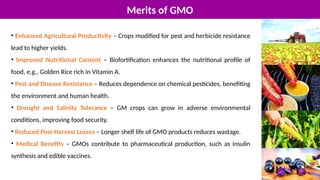
Merits of GMO
• Enhanced Agricultural Productivity – Crops modified for pest and herbicide resistance
lead to higher yields.
• Improved Nutritional Content – Biofortification enhances the nutritional profile of
food, e.g., Golden Rice rich in Vitamin A.
• Pest and Disease Resistance – Reduces dependence on chemical pesticides, benefiting
the environment and human health.
• Drought and Salinity Tolerance – GM crops can grow in adverse environmental
conditions, improving food security.
• Reduced Post-Harvest Losses – Longer shelf life of GMO products reduces wastage.
• Medical Benefits – GMOs contribute to pharmaceutical production, such as insulin
synthesis and edible vaccines.
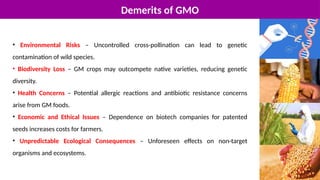
Demerits of GMO
• Environmental Risks – Uncontrolled cross-pollination can lead to genetic
contamination of wild species.
• Biodiversity Loss – GM crops may outcompete native varieties, reducing genetic
diversity.
• Health Concerns – Potential allergic reactions and antibiotic resistance concerns
arise from GM foods.
• Economic and Ethical Issues – Dependence on biotech companies for patented
seeds increases costs for farmers.
• Unpredictable Ecological Consequences – Unforeseen effects on non-target
organisms and ecosystems.
Transgenic Animals
• Transgenic animals are genetically engineered to express foreign genes for
research, agriculture, or medical applications.
Features, Merits, and Demerits of Specific Transgenic Animals
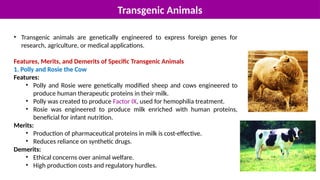
1. Polly and Rosie the Cow
Features:
• Polly and Rosie were genetically modified sheep and cows engineered to
produce human therapeutic proteins in their milk.
• Polly was created to produce Factor IX, used for hemophilia treatment.
• Rosie was engineered to produce milk enriched with human proteins,
beneficial for infant nutrition.
Merits:
• Production of pharmaceutical proteins in milk is cost-effective.
• Reduces reliance on synthetic drugs.
Demerits:
• Ethical concerns over animal welfare.
• High production costs and regulatory hurdles.
Transgenic Animals
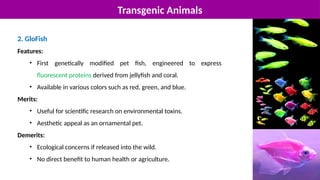
2. GloFish
Features:
• First genetically modified pet fish, engineered to express
fluorescent proteins derived from jellyfish and coral.
• Available in various colors such as red, green, and blue.
Merits:
• Useful for scientific research on environmental toxins.
• Aesthetic appeal as an ornamental pet.
Demerits:
• Ecological concerns if released into the wild.
• No direct benefit to human health or agriculture.
Transgenic Animals
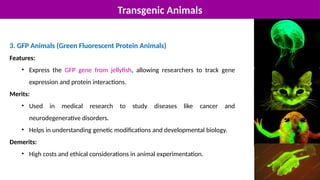
3. GFP Animals (Green Fluorescent Protein Animals)
Features:
• Express the GFP gene from jellyfish, allowing researchers to track gene
expression and protein interactions.
Merits:
• Used in medical research to study diseases like cancer and
neurodegenerative disorders.
• Helps in understanding genetic modifications and developmental biology.
Demerits:
• High costs and ethical considerations in animal experimentation.
Genetically Modified Crops
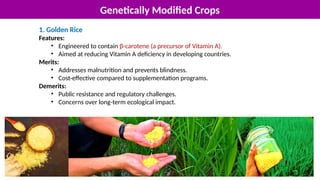
1. Golden Rice
Features:
• Engineered to contain β-carotene (a precursor of Vitamin A).
• Aimed at reducing Vitamin A deficiency in developing countries.
Merits:
• Addresses malnutrition and prevents blindness.
• Cost-effective compared to supplementation programs.
Demerits:
• Public resistance and regulatory challenges.
• Concerns over long-term ecological impact.
Genetically Modified Crops
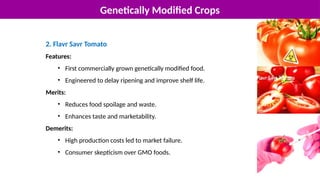
2. Flavr Savr Tomato
Features:
• First commercially grown genetically modified food.
• Engineered to delay ripening and improve shelf life.
Merits:
• Reduces food spoilage and waste.
• Enhances taste and marketability.
Demerits:
• High production costs led to market failure.
• Consumer skepticism over GMO foods.

Genetically modified organisms in Biotechnology

  • 1.
    Presented By Sijo A Ph.D.Research Scholar (Microbiology) School of Biosciences, MACFAST College Tiruvalla, Kerala GENETICALLY MODIFIED ORGANISMS
  • 2.
    Genetically Modified Organisms •Genetically Modified Organisms (GMOs) refer to organisms whose genetic material has been altered using genetic engineering techniques to exhibit desirable traits. • These modifications are carried out to enhance productivity, improve resistance to pests and diseases, and improve nutritional content. • GMOs encompass genetically modified crops, animals, and microorganisms used in agriculture, medicine, and research.
  • 3.
    Methodology of GeneticModification The creation of GMOs involves several sophisticated techniques, including: 1. Identification of Desired Gene – The process begins with identifying the gene responsible for the desired trait, such as pest resistance or enhanced nutrition. 2. Gene Isolation – The identified gene is isolated from the donor organism using restriction enzymes. 3. Gene Insertion – The isolated gene is inserted into the target organism’s genome using various techniques: 1. Gene Gun Method (Biolistics) – Small particles coated with the desired DNA are shot into target cells. 2. Agrobacterium-Mediated Transformation – A naturally occurring soil bacterium, Agrobacterium tumefaciens, is used to introduce foreign DNA into plant cells. 3. Microinjection – A fine needle injects the DNA directly into the nucleus of animal cells. 4. Electroporation – An electric pulse creates temporary pores in the cell membrane to allow DNA entry.
  • 4.
    Methodology of GeneticModification 4. Selection and Screening – Successfully modified cells are selected using antibiotic resistance markers or reporter genes. 5. Regeneration and Growth – Modified cells are cultured to develop into mature organisms exhibiting the introduced trait. 6. Field Trials and Regulatory Approval – GMOs undergo rigorous testing for safety, efficacy, and environmental impact before commercialization.
  • 5.
    Merits of GMO •Enhanced Agricultural Productivity – Crops modified for pest and herbicide resistance lead to higher yields. • Improved Nutritional Content – Biofortification enhances the nutritional profile of food, e.g., Golden Rice rich in Vitamin A. • Pest and Disease Resistance – Reduces dependence on chemical pesticides, benefiting the environment and human health. • Drought and Salinity Tolerance – GM crops can grow in adverse environmental conditions, improving food security. • Reduced Post-Harvest Losses – Longer shelf life of GMO products reduces wastage. • Medical Benefits – GMOs contribute to pharmaceutical production, such as insulin synthesis and edible vaccines.
  • 6.
    Demerits of GMO •Environmental Risks – Uncontrolled cross-pollination can lead to genetic contamination of wild species. • Biodiversity Loss – GM crops may outcompete native varieties, reducing genetic diversity. • Health Concerns – Potential allergic reactions and antibiotic resistance concerns arise from GM foods. • Economic and Ethical Issues – Dependence on biotech companies for patented seeds increases costs for farmers. • Unpredictable Ecological Consequences – Unforeseen effects on non-target organisms and ecosystems.
  • 7.
    Transgenic Animals • Transgenicanimals are genetically engineered to express foreign genes for research, agriculture, or medical applications. Features, Merits, and Demerits of Specific Transgenic Animals 1. Polly and Rosie the Cow Features: • Polly and Rosie were genetically modified sheep and cows engineered to produce human therapeutic proteins in their milk. • Polly was created to produce Factor IX, used for hemophilia treatment. • Rosie was engineered to produce milk enriched with human proteins, beneficial for infant nutrition. Merits: • Production of pharmaceutical proteins in milk is cost-effective. • Reduces reliance on synthetic drugs. Demerits: • Ethical concerns over animal welfare. • High production costs and regulatory hurdles.
  • 8.
    Transgenic Animals 2. GloFish Features: •First genetically modified pet fish, engineered to express fluorescent proteins derived from jellyfish and coral. • Available in various colors such as red, green, and blue. Merits: • Useful for scientific research on environmental toxins. • Aesthetic appeal as an ornamental pet. Demerits: • Ecological concerns if released into the wild. • No direct benefit to human health or agriculture.
  • 9.
    Transgenic Animals 3. GFPAnimals (Green Fluorescent Protein Animals) Features: • Express the GFP gene from jellyfish, allowing researchers to track gene expression and protein interactions. Merits: • Used in medical research to study diseases like cancer and neurodegenerative disorders. • Helps in understanding genetic modifications and developmental biology. Demerits: • High costs and ethical considerations in animal experimentation.
  • 10.
    Genetically Modified Crops 1.Golden Rice Features: • Engineered to contain β-carotene (a precursor of Vitamin A). • Aimed at reducing Vitamin A deficiency in developing countries. Merits: • Addresses malnutrition and prevents blindness. • Cost-effective compared to supplementation programs. Demerits: • Public resistance and regulatory challenges. • Concerns over long-term ecological impact.
  • 11.
    Genetically Modified Crops 2.Flavr Savr Tomato Features: • First commercially grown genetically modified food. • Engineered to delay ripening and improve shelf life. Merits: • Reduces food spoilage and waste. • Enhances taste and marketability. Demerits: • High production costs led to market failure. • Consumer skepticism over GMO foods.