CARBOHYDRATES
ANABOLISM
Hexose monophosphate
shunt
Introduction
 Hexose monophosphate pathway or HMP
shunt is also called pentose phosphate
pathway or phosphogluconate pathway.
 This is an alternative pathway to glycolysis
 However, HMP shunt is more anabolic in
nature, since it is concerned with the
biosynthesis of NADPH and pentoses
 lt is a unique multifunctional pathway, since
there are several interconvertible substances
produced
lmportance of pentoses
 In the HMP shunt, hexoses are converted into
pentoses,
 The most important being ribose 5-
phosphate.
 This pentose or its derivatives are useful for
the synflresis of nucleic acids (RNA and
DNA) and many nucleotides such as ATP,
NAD+, FAD and CoA.
Importance of NADPH
 NADPH is required for the reductive
biosynthesis of fatty acids and steroids
 NADPH is used in the synthesis of certain
amino acids involving the enzyme glutamate
dehydrogenase.
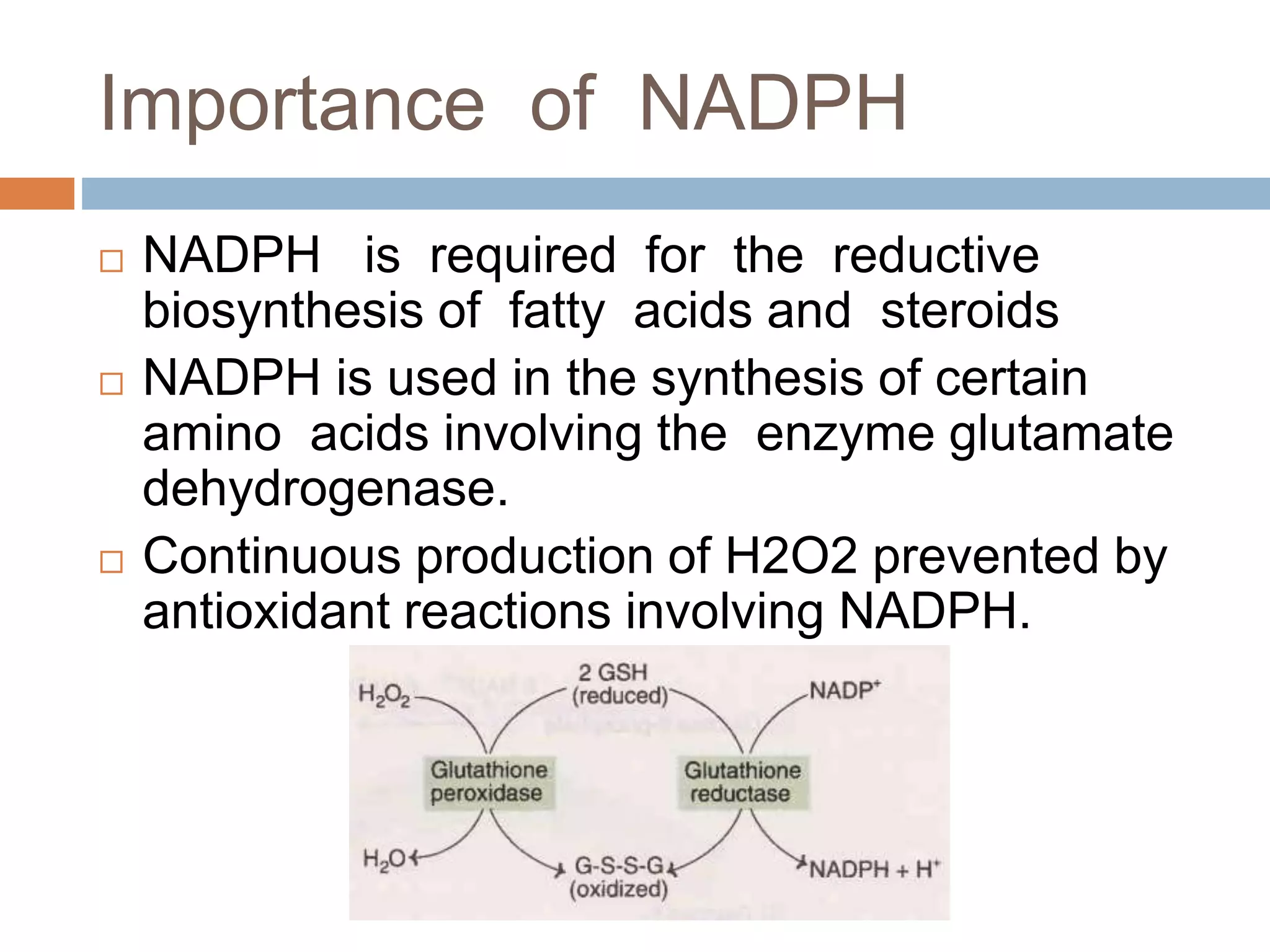
 Continuous production of H2O2 prevented by
antioxidant reactions involving NADPH.
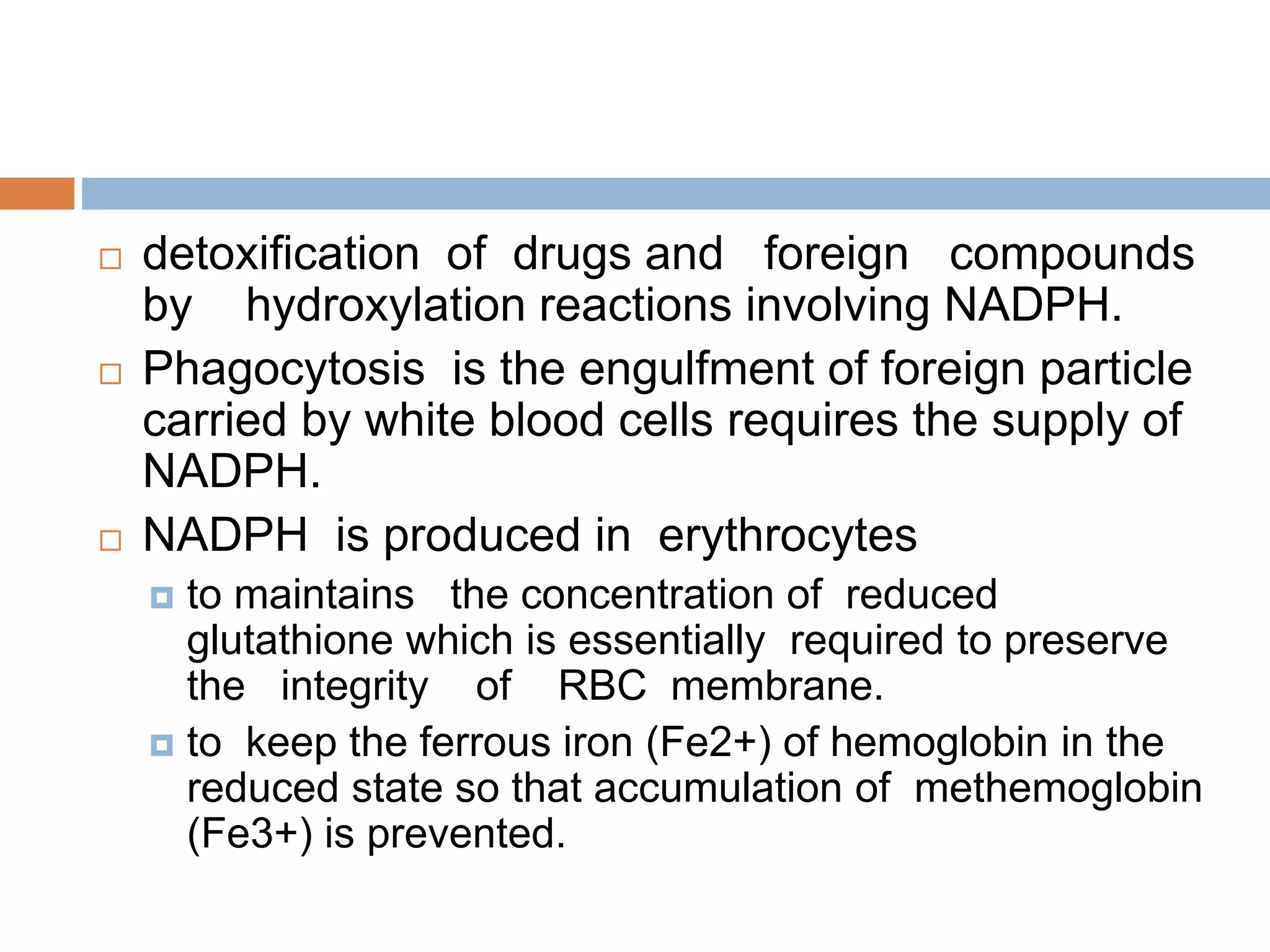
 detoxification of drugs and foreign compounds
by hydroxylation reactions involving NADPH.
 Phagocytosis is the engulfment of foreign particle
carried by white blood cells requires the supply of
NADPH.
 NADPH is produced in erythrocytes
 to maintains the concentration of reduced
glutathione which is essentially required to preserve
the integrity of RBC membrane.
 to keep the ferrous iron (Fe2+) of hemoglobin in the
reduced state so that accumulation of methemoglobin
(Fe3+) is prevented.
Location of the pathway
 The enzymes of HMP shunt are located in the
cytosol.
 The tissues such as liver, adipose tissue,
adrenal gland, erythrocytes, testes and
lactating mammary gland, are highly active in
HMP shunt.
HMP.pptx

HMP.pptx

  • 1.
  • 2.
    Introduction  Hexose monophosphatepathway or HMP shunt is also called pentose phosphate pathway or phosphogluconate pathway.  This is an alternative pathway to glycolysis  However, HMP shunt is more anabolic in nature, since it is concerned with the biosynthesis of NADPH and pentoses  lt is a unique multifunctional pathway, since there are several interconvertible substances produced
  • 3.
    lmportance of pentoses In the HMP shunt, hexoses are converted into pentoses,  The most important being ribose 5- phosphate.  This pentose or its derivatives are useful for the synflresis of nucleic acids (RNA and DNA) and many nucleotides such as ATP, NAD+, FAD and CoA.
  • 4.
    Importance of NADPH NADPH is required for the reductive biosynthesis of fatty acids and steroids  NADPH is used in the synthesis of certain amino acids involving the enzyme glutamate dehydrogenase.  Continuous production of H2O2 prevented by antioxidant reactions involving NADPH.
  • 5.
     detoxification ofdrugs and foreign compounds by hydroxylation reactions involving NADPH.  Phagocytosis is the engulfment of foreign particle carried by white blood cells requires the supply of NADPH.  NADPH is produced in erythrocytes  to maintains the concentration of reduced glutathione which is essentially required to preserve the integrity of RBC membrane.  to keep the ferrous iron (Fe2+) of hemoglobin in the reduced state so that accumulation of methemoglobin (Fe3+) is prevented.
  • 6.
    Location of thepathway  The enzymes of HMP shunt are located in the cytosol.  The tissues such as liver, adipose tissue, adrenal gland, erythrocytes, testes and lactating mammary gland, are highly active in HMP shunt.