Pediatric Neurologic DisordersMa. Tosca Cybil A. Torres, RN, MAN
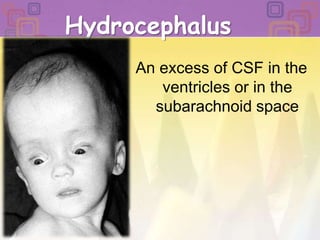
Hydrocephalus An excess of CSF in the ventricles or in the subarachnoid space
ClassificationObstructive/ intraventricularcaused by a block in the passage of fluid. Communicating/ extraventricularfluid passes between the ventricles and spinal cord
AssessmentWidened fontanellesSeparates suture lines in the skullEnlarged head diameterShiny scalpProminent scalp veins “Bossing” of foreheadShrill cry  Sunset eyess/sx of increased ICPHyperactive reflexesStrabismus Optic atrophy IrritableLethargic Failure to thrive
Diagnostics Sonogram CT scan MRI Skull X-rayTransillumination
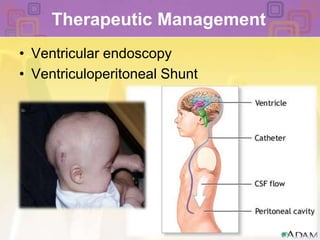
Therapeutic Management Ventricular endoscopyVentriculoperitoneal Shunt
Nursing Diagnoses Risk for injury Risk of infection Risk for ineffective cerebral tissue perfusionRisk for impaired skin integrity Risk for imbalanced nutrition: less than body requirements Impaired family processes
Nursing interventions Assess infant’s neurologic status closely. Watch for increasing irritability or lethargy. Measure and record head circumference every 4H. Assess anterior fontanelle for tenseness and bulging. Position infant with the head if the bed elevated 15º to 30° and maintain in neutral position. Monitor V/S q2HAdminister O2 as ordered.Monitor I and O. Administer diuretics as ordered. Encourage mother to breast-feed.  Position properly with head supported. Avoid flexion or hyperextension. If vomiting occurs, encourage mother to attempt to refeed the infant.  If vomiting persists, anticipate the need for enteral or parenteral nutrition.
Nursing interventions Wash head daily with repositioning q 2HEncourage parents to verbalize feelings. Teach parents signs and symptoms of increasing ICP.
Post operative nursing careElevate head of bed to 30°Infants are not turned to lie on the side of the shuntAssess for signs of increasing ICP Assess for signs of infection Keep NGT in place. Introduce fluids gradually after NGT is removed. Observe for constipation
Neural Tube Defects
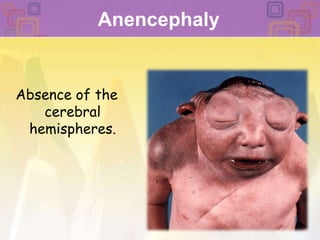
Anencephaly Absence of the cerebral hemispheres.
Anencephaly Occurs when the upper end of the neural tube fails to close in early uterine lifeDiagnosed by elevated AFP in maternal serum or on amniocentesis Confirmed by sonogram.
Anencephaly 100% mortality rate.
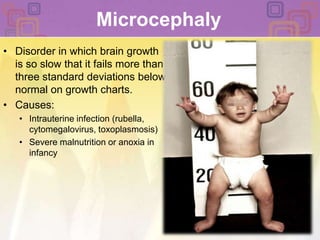
MicrocephalyDisorder in which brain growth is so slow that it fails more than three standard deviations below normal on growth charts. Causes: Intrauterine infection (rubella, cytomegalovirus, toxoplasmosis) Severe malnutrition or anoxia in infancy
Spina bifida ("split spine") a developmental birth defect involving the neural tube: incomplete closure of the embryonic neural tube results in an incompletely formed spinal cord. the vertebrae overlying the open portion of the spinal cord do not fully form and remain unfused and open
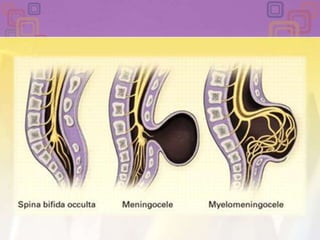
Spina bifidaCategories: spina bifida occultaspina bifida cystica (myelomeningocele)meningoceleThe most common location of the malformations is the lumbar and sacral areas of the spinal cord
Assessment:varying degrees of paralysis absence of skin sensationpoor or absent bowel and/or bladder controlcurvature of the spine (scoliosis) most cases there are cognitive problems hydrocephalus
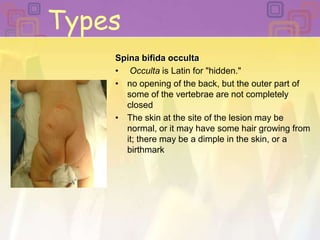
TypesSpina bifida occultaOcculta is Latin for "hidden." no opening of the back, but the outer part of some of the vertebrae are not completely closed The skin at the site of the lesion may be normal, or it may have some hair growing from it; there may be a dimple in the skin, or a birthmark
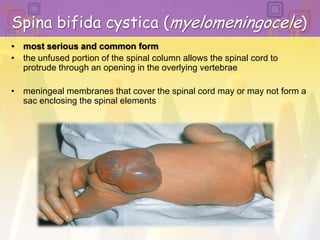
Spina bifida cystica (myelomeningocele)most serious and common form the unfused portion of the spinal column allows the spinal cord to protrude through an opening in the overlying vertebrae meningeal membranes that cover the spinal cord may or may not form a sac enclosing the spinal elements
Meningoceleleast common formMeninges covering the spinal cord herniate through the unformed vertebraeProtrusion may be covered with a layer or skin just the clear dura
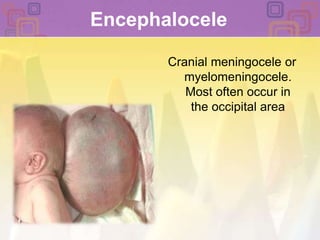
EncephaloceleCranial meningocele or myelomeningocele. Most often occur in the occipital area
Medical-Surgical Treatment no cure for nerve damageClosure of  the opening on the back if spina bifida is detected during pregnancy, then open fetal surgerycan be performed
Nursing diagnoses Risk for infection Risk for impaired cerebral tissue perfusion Risk for impaired skin integrity Impaired physical mobility
Pre-operative carePlace infant in supine If in side lying, place a towel or pillow in between the infant’s legsPlace a piece of plastic below the meningocele on the child’s back like an apron and secure it with a tapeApply a sterile wet compress of saline, antiseptic, or antibiotic gauze over the lesion Keep infant warm assess for seepage of any clear liquid
Post operative care Place infant in supine until the skin incision is healed Same careful precautions are observed. Assess for signs of increased ICP
Cerebral Palsy
Cerebral Palsy A group of nonprogressive disorders of upper motor neuron impairment that result in motor dysfunction.
Cerebral Palsy Cause is UNKNOWN.Associated with low birth weight, prebirth, or birth injury Intrauterine anoxia and direct birth injury may contribute to the development of CPOccurs in 2:1000 births
Types of Cerebral Palsy Spastic S/Sx:Hypertonic musclesAbnormal clonusExaggerated DTRsAbnormal reflexes (eg. Babinski)When held in ventral position, arching of back and abnormal extension of arms and legs are observedFailure to demonstrate parachute reflex when lowered suddenly Scissor’s gait  Hemiplegia, tetraplegia or paraplegia astereognosis
Types of Cerebral Palsy Dyskinetic or AthetoidS/Sx: Abnormal involuntary movement Athetoid means “wormlike” Early in life, child is limp and flaccid. Later, in place of voluntary movements, the child makes slow, writhing motions. DroolingSpeech impairment Choreoid movements Disordered muscle tone (dyskinetic)
Types of Cerebral Palsy AtaxicS/Sx: Awkward, wide based gaitUnable to perform finger-to-nose exam or perform rapid, repetitive movements or fine coordinated motions. Mixed
Assessment HistoryPE-all forms of CP may have sensory alterationsStrabismusvisual perception problemsVisual field defectsSpeech problems deafness
25% to 75% of children with CP are cognitively challenged. 50% have recurrent seizures.
Physical findings that suggest CPDelayed motor development Abnormal head circumference Abnormal postures Abnormal reflexesAbnormal muscle performance or tone
Nursing Diagnoses Deficient Knowledge Risk for disuse syndromeRisk for delayed growth and development Risk for imbalanced nutrition: less than body requirementsRisk for self-care deficit Impaired verbal communication
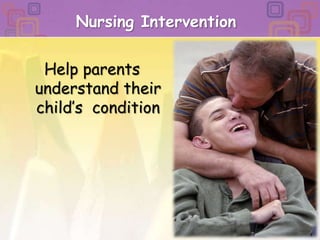
Nursing InterventionHelp parents understand their child’s  condition
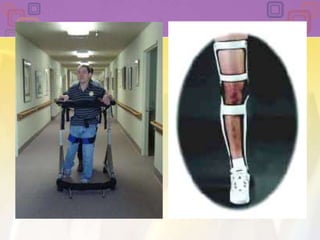
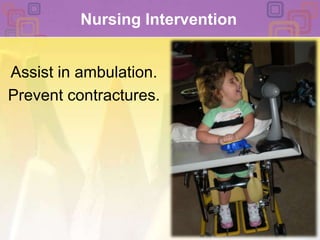
Nursing InterventionAssist in ambulation. Prevent contractures.
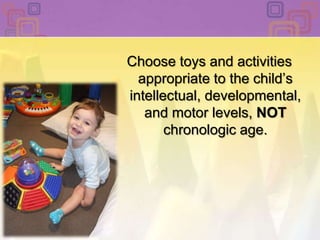
Choose toys and activities appropriate to the child’s intellectual, developmental, and motor levels, NOT chronologic age.
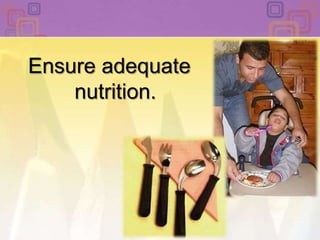
Ensure adequate nutrition.
Provide alternative form of communication
SPINAL CORD INJURY
Causes:TraumaTumorIschemiaDevelopmental disordersNeurodegenerative diseasesTransverse myelitisVascular malformations
SPINAL CORD INJURY Effects are less severe the lower the injury.
Manifestations C-1 to C-3: Tetraplegia with total loss of muscular/respiratory function.C-4 to C-5: Tetraplegia with impairment, poor pulmonary capacity, complete dependency for ADLs.C-6 to C-7: Tetraplegia with some arm/hand movement allowing some independence in ADLs.C-7 to T-1: Tetraplegia with limited use of thumb/fingers, increasing independence.T-2 to L-1: Paraplegia with intact arm function and varying function of intercostal and abdominal muscles.L-1 to L-2 or below: Mixed motor-sensory loss; bowel and bladder dysfunction.
Diagnostic:Clinical evaluation: absence of reflexes, flaccidity, loss of sensation below injury levelSpinal x-ray: vertebral fractures, bony overgrowth CT scans/MRI: evidence of cord compression and edema or tumor formation
SPINAL CORD SYNDROME
Central Cord SyndromeCentral cord syndrome is a form of incomplete spinal cord injury characterized by impairment in the arms and hands and, to a lesser extent, in the legs. This is also referred to as inverse paraplegia, because the hands and arms are paralyzed while the legs and lower extremities work correctly.This condition is associated with ischemia, hemorrhage, or necrosis involving the central portions of the spinal cord
Anterior cord syndromean incomplete spinal cord injury. Below the injury, motor function, pain sensation, and temperature sensation is lost; touch, proprioceptionand vibration sense remain intact..
Brown-Séquard Syndromeusually occurs when the spinal cord is hemisectioned or injured on the lateral side. On the ipsilateral side of the injur, there is a loss of motor function, vibration, and light touch. Contralaterally, there is a loss of pain, temperature, and deep touch sensations.
Assessment ACTIVITY/RESTMay exhibit: Paralysis of muscles (flaccid during spinal shock) at/below level of lesionMuscle/generalized weakness (cord contusion and compression)
Assessment CIRCULATIONMay report: PalpitationsDizziness with position changesMay exhibit: Low BP, postural BP changes, bradycardiaCool, pale extremitiesAbsence of perspiration in affected area
Assessment ELIMINATIONMay exhibit: Incontinence of bladder and bowelUrinary retentionAbdominal distension; loss of bowel soundsMelena, coffee-ground emesis/hematemesis
Assessment EGO INTEGRITYMay report: Denial, disbelief, sadness, angerMay exhibit: Fear, anxiety, irritability, withdrawal
Assessment FOOD/FLUIDMay exhibit: Abdominal distension; loss of bowel sounds (paralytic ileus)
Assessment HYGIENEMay exhibit: Variable level of dependence in ADLs
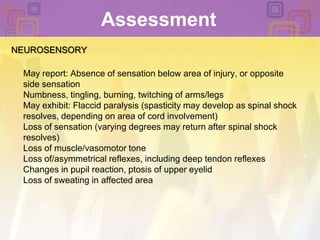
Assessment NEUROSENSORYMay report: Absence of sensation below area of injury, or opposite side sensationNumbness, tingling, burning, twitching of arms/legsMay exhibit: Flaccid paralysis (spasticity may develop as spinal shock resolves, depending on area of cord involvement)Loss of sensation (varying degrees may return after spinal shock resolves)Loss of muscle/vasomotor toneLoss of/asymmetrical reflexes, including deep tendon reflexesChanges in pupil reaction, ptosis of upper eyelidLoss of sweating in affected area
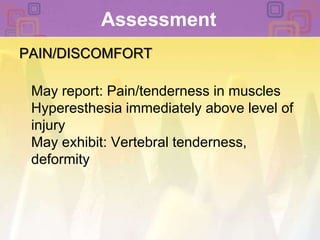
Assessment PAIN/DISCOMFORTMay report: Pain/tenderness in musclesHyperesthesia immediately above level of injuryMay exhibit: Vertebral tenderness, deformity
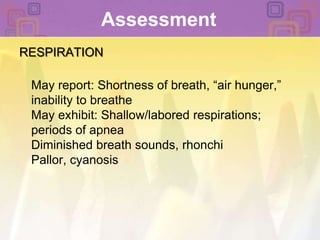
Assessment RESPIRATIONMay report: Shortness of breath, “air hunger,” inability to breatheMay exhibit: Shallow/labored respirations; periods of apneaDiminished breath sounds, rhonchiPallor, cyanosis
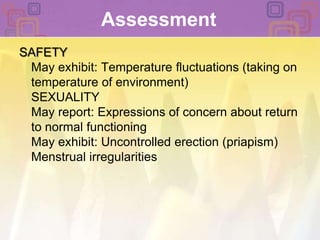
Assessment SAFETYMay exhibit: Temperature fluctuations (taking on temperature of environment)SEXUALITYMay report: Expressions of concern about return to normal functioningMay exhibit: Uncontrolled erection (priapism)Menstrual irregularities
Nursing DiagnosesIneffective breathing pattern High risk for disuse syndromeImpaired physical mobility Altered sensory perceptionRisk for infection Altered eliminationRisk for impaired skin integrity Ineffective individual copingPowerlessness
NURSING PRIORITIES	1. Maximize respiratory function.2. Prevent further injury to spinal cord.3. Promote mobility/independence.4. Prevent or minimize complications.5. Support psychological adjustment of patient/SO.6. Provide information about injury, prognosis and expectations, treatment needs, possible and preventable complications.
Therapeutic management:Surgery- laminectomy or fusion for decompression and stabilization, wound debridement, placement of cervical tongs or halo traction for stabilization, tracheotomy for mechanical ventilation as needed medications: massive corticosteroid therapy to improve outcome, vasopressors for shock, prophylactic antibiotics for open wounds, analgesics for pain, anticoagulants to prevent emboli and thrombus formation, anti anxiety to reduce emotional stress.
Therapeutic managementc. General:	a. initial: 		1. spinal stabilization with backboard or cervical collar on initial transport 		2. MV if necessary 		3. monitor cardiac status, blood gases, neuro V/S, I&O, V/S		4. maintain skeletal traction and body alignment 		5. reposition and turn every 2hrs		6. passive ROM		7. monitor bowel and bladder function, skin integrity and avoid extreme temperatures
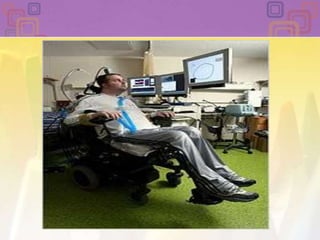
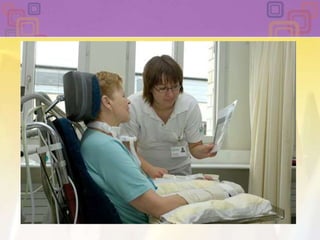
Therapeutic managementb. Long term 	1. bowel training	2. bladder training 	3. PT to diminish orthostatic hypotension, increase strength and endurance, decrease muscle spasticity, prevent contractures	4. OT to aid adaptation of ADLs	5. respiratory therapy	6. recreational therapy	7. speech therapy	8. case mgt for needed resources	9. long term medical ff up 	10. counseling of individual and family support adaptation
Prevention and promotion:Daily skin inspectionsDiligent use of bowel and bladder programs to prevent bowel obstruction and UTIInfluenza and pneumonia vaccines to prevent respiratory complications Early recognition and treatment of urinary tract and respiratory problems
DISCHARGE GOALS	1. Ventilatory effort adequate for individual needs.2. Spinal injury stabilized.3. Complications prevented/controlled.4. Self-care needs met by self/with assistance, depending on specific situation.5. Beginning to cope with current situation and planning for future.6. Condition/prognosis, therapeutic regimen, and possible complications understood.7. Plan in place to meet needs after discharge.
Infection of the CNS
Bacterial MeningitisInfection of the cerebral meninges
Causes: RTILumbar punctureSkull fracture MeningoceleMyelomeningocele
Assessment History S/Sx: Irritable HeadacheSeizure/shockBrudzinski’s sign Kernig’s signOpisthotonosCranial nerve paralysis (III & VI)Papilledema
NeonateBulging and tense fontanellesPoor sucking Weak cry Lethargy ApneaSeizures
Diagnostics Lumbar tap with CSF analysisBlood culture Ct scan MRI Ultrasound
Therapeutic managementAntibiotic therapy (IV/intrathecal) Corticosteroid Osmotic diuretic
Nursing diagnosesPain Risk for ineffective cerebral tissue perfusionAltered sensory perception
Nursing interventions Position in supine without pillowsPlace in isolation  Ensure strict medication complianceObserve for signs and symptoms of increasing ICP Monitor I and O with specific gravity of urine Assess senses
Encephalitis Inflammation of the brain tissue and possibly the meninges as well
Assessment S/SxSymptoms begin gradually or suddenly Headache Fever Nuchal rigidity((+) brudzinski’s and Kernig’s sign) Ataxia Muscle weakness or paralysis DiplopiaConfusion Irritability
Therapeuic Management Treatment is primarily supportiveAntipyretic Antibiotic therapyCorticosteroid Osmotic diuretic
Reye’s SyndromeAcute encephalitis with accompanying fatty infiltration of the liver, heart, lungs, pancreas, and skeletal muscle. Occurs in children 1-18 years of age Both sex are equally susceptible Cause Unknown but generally occurs after a viral infection such as varicella and influenzaIf child was treated with salicylate such as acetylsalicylic acid (aspirin) during the viral infection
Neurologic Diseases that result from viral infections or neurotoxins
Postpoliomyelitis SyndromeComplication of previous poliomyelitis virus (epidemic occurred in USA during 1940’s and 1950’s); persons who recovered are re-experiencing manifestation of acute illness in their advanced agePathophysiology: Process is unknownManifestations: Fatigue, muscle and joint weakness, loss of muscle mass, respiratory difficulties, and painDiagnosis: By history and physical examinationTreatment: Involves physical therapy and pulmonary rehabilitationNursing Care: Involves emotional support and interventions to deal with dysfunction; ADL, safety are including in interventions
RabiesRhabovirus infection of CNS transmitted by infected saliva that enters the body through bite or open woundCritical illness almost always fatalSource often is bite of infected domestic or wild animalIncubation is 10 days to years
RabiesManifestations occur in stagesProdromal: wound is painful, various paresthesias, general signs of infection; increased sensitivity to light, sound, and skin temperature changesExcitement stage: periods of excitement and quiet; develops laryngospasm and is afraid to drink (hydrophobia), convulsions, muscle spasms and death usually due to respiratory failure
RabiesCollaborative CareAnimal that bit person is held under observation for 7 – 10 days to detect rabiesSick animal are killed and their brains are tests for presence of rabies virusBlood of client may be tested for rabies antibodies
RabiesPost-exposure treatmentRabies immune globulin (RIG) is administered for passive immunizationClient often has local and mild systemic reaction; treatment is over 30 daysTreatment of client with rabies: involves intensive care treatmentHealth PromotionVaccination of petsAvoid wild animals, especially those appearing illFollow up care for any bites
Tetanus (lockjaw) Disorder of nervous system caused by neurotoxin from Clostridium tetani, anaerobic bacillus present in the soilContract disease from open wound contaminated with dirt, debrisHas high mortality rateIncubation is usually 8 – 12 daysManifestations Stiffness of jaw and neck and dysphagiaSpasms of jaw and facial musclesDevelops generalized seizures and painful body muscle spasmsDeath occurs from respiratory and cardiac complications
Tetanus (lockjaw)Diagnosis is made on clinical manifestationsClients with disease are treated in intensive care with antibiotics, chlorpromazine (Thorazine) and diazepam (Valium ) for muscles spasmsHealth PromotionActive immunization with boosters given at time of exposurePassive immunization is given to persons who are not adequately immunized
BotulismFood poisoning caused by ingestion of food contaminated with toxin from Clostridium botulinum, anaerobic bacteria found in soilContracted by eating contaminated foods usually improperly canned or cookedUntreated death rate is highPathophysiology: Bacteria produce a toxin, which blocks release of acetylcholine from nerve endings causing respiratory failure by paralysis of muscles
BotulismManifestationsVisual disturbancesGastrointestinal symptomsParalysis of all muscle groupsEffecting respirationDiagnosis Based on clinical pictureVerified by laboratory analysis of client’s serum and stoolTesting the suspected food
BotulismTreatmentAdministration of antitoxinSupportive treatment including mechanical ventilation and systemic support in intensive care unitHealth PromotionTeaching clients to process foods properly when home canningBoiling foods for 10 minutes which destroys the toxinNot eating spoiled foods
End of Concept

Pediatric Neurologic Disorders

  • 1.
    Pediatric Neurologic DisordersMa.Tosca Cybil A. Torres, RN, MAN
  • 2.
    Hydrocephalus An excessof CSF in the ventricles or in the subarachnoid space
  • 3.
    ClassificationObstructive/ intraventricularcaused bya block in the passage of fluid. Communicating/ extraventricularfluid passes between the ventricles and spinal cord
  • 4.
    AssessmentWidened fontanellesSeparates suturelines in the skullEnlarged head diameterShiny scalpProminent scalp veins “Bossing” of foreheadShrill cry Sunset eyess/sx of increased ICPHyperactive reflexesStrabismus Optic atrophy IrritableLethargic Failure to thrive
  • 5.
    Diagnostics Sonogram CTscan MRI Skull X-rayTransillumination
  • 6.
    Therapeutic Management VentricularendoscopyVentriculoperitoneal Shunt
  • 7.
    Nursing Diagnoses Riskfor injury Risk of infection Risk for ineffective cerebral tissue perfusionRisk for impaired skin integrity Risk for imbalanced nutrition: less than body requirements Impaired family processes
  • 8.
    Nursing interventions Assessinfant’s neurologic status closely. Watch for increasing irritability or lethargy. Measure and record head circumference every 4H. Assess anterior fontanelle for tenseness and bulging. Position infant with the head if the bed elevated 15º to 30° and maintain in neutral position. Monitor V/S q2HAdminister O2 as ordered.Monitor I and O. Administer diuretics as ordered. Encourage mother to breast-feed. Position properly with head supported. Avoid flexion or hyperextension. If vomiting occurs, encourage mother to attempt to refeed the infant. If vomiting persists, anticipate the need for enteral or parenteral nutrition.
  • 9.
    Nursing interventions Washhead daily with repositioning q 2HEncourage parents to verbalize feelings. Teach parents signs and symptoms of increasing ICP.
  • 10.
    Post operative nursingcareElevate head of bed to 30°Infants are not turned to lie on the side of the shuntAssess for signs of increasing ICP Assess for signs of infection Keep NGT in place. Introduce fluids gradually after NGT is removed. Observe for constipation
  • 11.
  • 12.
    Anencephaly Absence ofthe cerebral hemispheres.
  • 13.
    Anencephaly Occurs whenthe upper end of the neural tube fails to close in early uterine lifeDiagnosed by elevated AFP in maternal serum or on amniocentesis Confirmed by sonogram.
  • 14.
  • 15.
    MicrocephalyDisorder in whichbrain growth is so slow that it fails more than three standard deviations below normal on growth charts. Causes: Intrauterine infection (rubella, cytomegalovirus, toxoplasmosis) Severe malnutrition or anoxia in infancy
  • 16.
    Spina bifida ("splitspine") a developmental birth defect involving the neural tube: incomplete closure of the embryonic neural tube results in an incompletely formed spinal cord. the vertebrae overlying the open portion of the spinal cord do not fully form and remain unfused and open
  • 17.
    Spina bifidaCategories: spinabifida occultaspina bifida cystica (myelomeningocele)meningoceleThe most common location of the malformations is the lumbar and sacral areas of the spinal cord
  • 18.
    Assessment:varying degrees ofparalysis absence of skin sensationpoor or absent bowel and/or bladder controlcurvature of the spine (scoliosis) most cases there are cognitive problems hydrocephalus
  • 19.
    TypesSpina bifida occultaOccultais Latin for "hidden." no opening of the back, but the outer part of some of the vertebrae are not completely closed The skin at the site of the lesion may be normal, or it may have some hair growing from it; there may be a dimple in the skin, or a birthmark
  • 20.
    Spina bifida cystica(myelomeningocele)most serious and common form the unfused portion of the spinal column allows the spinal cord to protrude through an opening in the overlying vertebrae meningeal membranes that cover the spinal cord may or may not form a sac enclosing the spinal elements
  • 21.
    Meningoceleleast common formMeningescovering the spinal cord herniate through the unformed vertebraeProtrusion may be covered with a layer or skin just the clear dura
  • 22.
    EncephaloceleCranial meningocele ormyelomeningocele. Most often occur in the occipital area
  • 24.
    Medical-Surgical Treatment nocure for nerve damageClosure of the opening on the back if spina bifida is detected during pregnancy, then open fetal surgerycan be performed
  • 25.
    Nursing diagnoses Riskfor infection Risk for impaired cerebral tissue perfusion Risk for impaired skin integrity Impaired physical mobility
  • 26.
    Pre-operative carePlace infantin supine If in side lying, place a towel or pillow in between the infant’s legsPlace a piece of plastic below the meningocele on the child’s back like an apron and secure it with a tapeApply a sterile wet compress of saline, antiseptic, or antibiotic gauze over the lesion Keep infant warm assess for seepage of any clear liquid
  • 27.
    Post operative carePlace infant in supine until the skin incision is healed Same careful precautions are observed. Assess for signs of increased ICP
  • 28.
  • 29.
    Cerebral Palsy Agroup of nonprogressive disorders of upper motor neuron impairment that result in motor dysfunction.
  • 30.
    Cerebral Palsy Causeis UNKNOWN.Associated with low birth weight, prebirth, or birth injury Intrauterine anoxia and direct birth injury may contribute to the development of CPOccurs in 2:1000 births
  • 31.
    Types of CerebralPalsy Spastic S/Sx:Hypertonic musclesAbnormal clonusExaggerated DTRsAbnormal reflexes (eg. Babinski)When held in ventral position, arching of back and abnormal extension of arms and legs are observedFailure to demonstrate parachute reflex when lowered suddenly Scissor’s gait Hemiplegia, tetraplegia or paraplegia astereognosis
  • 32.
    Types of CerebralPalsy Dyskinetic or AthetoidS/Sx: Abnormal involuntary movement Athetoid means “wormlike” Early in life, child is limp and flaccid. Later, in place of voluntary movements, the child makes slow, writhing motions. DroolingSpeech impairment Choreoid movements Disordered muscle tone (dyskinetic)
  • 33.
    Types of CerebralPalsy AtaxicS/Sx: Awkward, wide based gaitUnable to perform finger-to-nose exam or perform rapid, repetitive movements or fine coordinated motions. Mixed
  • 34.
    Assessment HistoryPE-all formsof CP may have sensory alterationsStrabismusvisual perception problemsVisual field defectsSpeech problems deafness
  • 35.
    25% to 75%of children with CP are cognitively challenged. 50% have recurrent seizures.
  • 36.
    Physical findings thatsuggest CPDelayed motor development Abnormal head circumference Abnormal postures Abnormal reflexesAbnormal muscle performance or tone
  • 37.
    Nursing Diagnoses DeficientKnowledge Risk for disuse syndromeRisk for delayed growth and development Risk for imbalanced nutrition: less than body requirementsRisk for self-care deficit Impaired verbal communication
  • 38.
    Nursing InterventionHelp parentsunderstand their child’s condition
  • 39.
    Nursing InterventionAssist inambulation. Prevent contractures.
  • 41.
    Choose toys andactivities appropriate to the child’s intellectual, developmental, and motor levels, NOT chronologic age.
  • 42.
  • 43.
    Provide alternative formof communication
  • 44.
  • 46.
  • 47.
    SPINAL CORD INJURYEffects are less severe the lower the injury.
  • 48.
    Manifestations C-1 toC-3: Tetraplegia with total loss of muscular/respiratory function.C-4 to C-5: Tetraplegia with impairment, poor pulmonary capacity, complete dependency for ADLs.C-6 to C-7: Tetraplegia with some arm/hand movement allowing some independence in ADLs.C-7 to T-1: Tetraplegia with limited use of thumb/fingers, increasing independence.T-2 to L-1: Paraplegia with intact arm function and varying function of intercostal and abdominal muscles.L-1 to L-2 or below: Mixed motor-sensory loss; bowel and bladder dysfunction.
  • 49.
    Diagnostic:Clinical evaluation: absenceof reflexes, flaccidity, loss of sensation below injury levelSpinal x-ray: vertebral fractures, bony overgrowth CT scans/MRI: evidence of cord compression and edema or tumor formation
  • 50.
  • 51.
    Central Cord SyndromeCentralcord syndrome is a form of incomplete spinal cord injury characterized by impairment in the arms and hands and, to a lesser extent, in the legs. This is also referred to as inverse paraplegia, because the hands and arms are paralyzed while the legs and lower extremities work correctly.This condition is associated with ischemia, hemorrhage, or necrosis involving the central portions of the spinal cord
  • 52.
    Anterior cord syndromeanincomplete spinal cord injury. Below the injury, motor function, pain sensation, and temperature sensation is lost; touch, proprioceptionand vibration sense remain intact..
  • 53.
    Brown-Séquard Syndromeusually occurswhen the spinal cord is hemisectioned or injured on the lateral side. On the ipsilateral side of the injur, there is a loss of motor function, vibration, and light touch. Contralaterally, there is a loss of pain, temperature, and deep touch sensations.
  • 54.
    Assessment ACTIVITY/RESTMay exhibit:Paralysis of muscles (flaccid during spinal shock) at/below level of lesionMuscle/generalized weakness (cord contusion and compression)
  • 55.
    Assessment CIRCULATIONMay report:PalpitationsDizziness with position changesMay exhibit: Low BP, postural BP changes, bradycardiaCool, pale extremitiesAbsence of perspiration in affected area
  • 56.
    Assessment ELIMINATIONMay exhibit:Incontinence of bladder and bowelUrinary retentionAbdominal distension; loss of bowel soundsMelena, coffee-ground emesis/hematemesis
  • 57.
    Assessment EGO INTEGRITYMayreport: Denial, disbelief, sadness, angerMay exhibit: Fear, anxiety, irritability, withdrawal
  • 58.
    Assessment FOOD/FLUIDMay exhibit:Abdominal distension; loss of bowel sounds (paralytic ileus)
  • 59.
    Assessment HYGIENEMay exhibit:Variable level of dependence in ADLs
  • 60.
    Assessment NEUROSENSORYMay report:Absence of sensation below area of injury, or opposite side sensationNumbness, tingling, burning, twitching of arms/legsMay exhibit: Flaccid paralysis (spasticity may develop as spinal shock resolves, depending on area of cord involvement)Loss of sensation (varying degrees may return after spinal shock resolves)Loss of muscle/vasomotor toneLoss of/asymmetrical reflexes, including deep tendon reflexesChanges in pupil reaction, ptosis of upper eyelidLoss of sweating in affected area
  • 61.
    Assessment PAIN/DISCOMFORTMay report:Pain/tenderness in musclesHyperesthesia immediately above level of injuryMay exhibit: Vertebral tenderness, deformity
  • 62.
    Assessment RESPIRATIONMay report:Shortness of breath, “air hunger,” inability to breatheMay exhibit: Shallow/labored respirations; periods of apneaDiminished breath sounds, rhonchiPallor, cyanosis
  • 63.
    Assessment SAFETYMay exhibit:Temperature fluctuations (taking on temperature of environment)SEXUALITYMay report: Expressions of concern about return to normal functioningMay exhibit: Uncontrolled erection (priapism)Menstrual irregularities
  • 64.
    Nursing DiagnosesIneffective breathingpattern High risk for disuse syndromeImpaired physical mobility Altered sensory perceptionRisk for infection Altered eliminationRisk for impaired skin integrity Ineffective individual copingPowerlessness
  • 65.
    NURSING PRIORITIES 1. Maximizerespiratory function.2. Prevent further injury to spinal cord.3. Promote mobility/independence.4. Prevent or minimize complications.5. Support psychological adjustment of patient/SO.6. Provide information about injury, prognosis and expectations, treatment needs, possible and preventable complications.
  • 66.
    Therapeutic management:Surgery- laminectomyor fusion for decompression and stabilization, wound debridement, placement of cervical tongs or halo traction for stabilization, tracheotomy for mechanical ventilation as needed medications: massive corticosteroid therapy to improve outcome, vasopressors for shock, prophylactic antibiotics for open wounds, analgesics for pain, anticoagulants to prevent emboli and thrombus formation, anti anxiety to reduce emotional stress.
  • 67.
    Therapeutic managementc. General: a.initial: 1. spinal stabilization with backboard or cervical collar on initial transport 2. MV if necessary 3. monitor cardiac status, blood gases, neuro V/S, I&O, V/S 4. maintain skeletal traction and body alignment 5. reposition and turn every 2hrs 6. passive ROM 7. monitor bowel and bladder function, skin integrity and avoid extreme temperatures
  • 68.
    Therapeutic managementb. Longterm 1. bowel training 2. bladder training 3. PT to diminish orthostatic hypotension, increase strength and endurance, decrease muscle spasticity, prevent contractures 4. OT to aid adaptation of ADLs 5. respiratory therapy 6. recreational therapy 7. speech therapy 8. case mgt for needed resources 9. long term medical ff up 10. counseling of individual and family support adaptation
  • 71.
    Prevention and promotion:Dailyskin inspectionsDiligent use of bowel and bladder programs to prevent bowel obstruction and UTIInfluenza and pneumonia vaccines to prevent respiratory complications Early recognition and treatment of urinary tract and respiratory problems
  • 72.
    DISCHARGE GOALS 1. Ventilatoryeffort adequate for individual needs.2. Spinal injury stabilized.3. Complications prevented/controlled.4. Self-care needs met by self/with assistance, depending on specific situation.5. Beginning to cope with current situation and planning for future.6. Condition/prognosis, therapeutic regimen, and possible complications understood.7. Plan in place to meet needs after discharge.
  • 73.
  • 74.
  • 75.
    Causes: RTILumbar punctureSkullfracture MeningoceleMyelomeningocele
  • 76.
    Assessment History S/Sx:Irritable HeadacheSeizure/shockBrudzinski’s sign Kernig’s signOpisthotonosCranial nerve paralysis (III & VI)Papilledema
  • 77.
    NeonateBulging and tensefontanellesPoor sucking Weak cry Lethargy ApneaSeizures
  • 78.
    Diagnostics Lumbar tapwith CSF analysisBlood culture Ct scan MRI Ultrasound
  • 79.
    Therapeutic managementAntibiotic therapy(IV/intrathecal) Corticosteroid Osmotic diuretic
  • 80.
    Nursing diagnosesPain Riskfor ineffective cerebral tissue perfusionAltered sensory perception
  • 81.
    Nursing interventions Positionin supine without pillowsPlace in isolation Ensure strict medication complianceObserve for signs and symptoms of increasing ICP Monitor I and O with specific gravity of urine Assess senses
  • 82.
    Encephalitis Inflammation ofthe brain tissue and possibly the meninges as well
  • 83.
    Assessment S/SxSymptoms begingradually or suddenly Headache Fever Nuchal rigidity((+) brudzinski’s and Kernig’s sign) Ataxia Muscle weakness or paralysis DiplopiaConfusion Irritability
  • 84.
    Therapeuic Management Treatmentis primarily supportiveAntipyretic Antibiotic therapyCorticosteroid Osmotic diuretic
  • 85.
    Reye’s SyndromeAcute encephalitiswith accompanying fatty infiltration of the liver, heart, lungs, pancreas, and skeletal muscle. Occurs in children 1-18 years of age Both sex are equally susceptible Cause Unknown but generally occurs after a viral infection such as varicella and influenzaIf child was treated with salicylate such as acetylsalicylic acid (aspirin) during the viral infection
  • 86.
    Neurologic Diseases thatresult from viral infections or neurotoxins
  • 87.
    Postpoliomyelitis SyndromeComplication ofprevious poliomyelitis virus (epidemic occurred in USA during 1940’s and 1950’s); persons who recovered are re-experiencing manifestation of acute illness in their advanced agePathophysiology: Process is unknownManifestations: Fatigue, muscle and joint weakness, loss of muscle mass, respiratory difficulties, and painDiagnosis: By history and physical examinationTreatment: Involves physical therapy and pulmonary rehabilitationNursing Care: Involves emotional support and interventions to deal with dysfunction; ADL, safety are including in interventions
  • 88.
    RabiesRhabovirus infection ofCNS transmitted by infected saliva that enters the body through bite or open woundCritical illness almost always fatalSource often is bite of infected domestic or wild animalIncubation is 10 days to years
  • 89.
    RabiesManifestations occur instagesProdromal: wound is painful, various paresthesias, general signs of infection; increased sensitivity to light, sound, and skin temperature changesExcitement stage: periods of excitement and quiet; develops laryngospasm and is afraid to drink (hydrophobia), convulsions, muscle spasms and death usually due to respiratory failure
  • 90.
    RabiesCollaborative CareAnimal thatbit person is held under observation for 7 – 10 days to detect rabiesSick animal are killed and their brains are tests for presence of rabies virusBlood of client may be tested for rabies antibodies
  • 91.
    RabiesPost-exposure treatmentRabies immuneglobulin (RIG) is administered for passive immunizationClient often has local and mild systemic reaction; treatment is over 30 daysTreatment of client with rabies: involves intensive care treatmentHealth PromotionVaccination of petsAvoid wild animals, especially those appearing illFollow up care for any bites
  • 92.
    Tetanus (lockjaw) Disorderof nervous system caused by neurotoxin from Clostridium tetani, anaerobic bacillus present in the soilContract disease from open wound contaminated with dirt, debrisHas high mortality rateIncubation is usually 8 – 12 daysManifestations Stiffness of jaw and neck and dysphagiaSpasms of jaw and facial musclesDevelops generalized seizures and painful body muscle spasmsDeath occurs from respiratory and cardiac complications
  • 93.
    Tetanus (lockjaw)Diagnosis ismade on clinical manifestationsClients with disease are treated in intensive care with antibiotics, chlorpromazine (Thorazine) and diazepam (Valium ) for muscles spasmsHealth PromotionActive immunization with boosters given at time of exposurePassive immunization is given to persons who are not adequately immunized
  • 94.
    BotulismFood poisoning causedby ingestion of food contaminated with toxin from Clostridium botulinum, anaerobic bacteria found in soilContracted by eating contaminated foods usually improperly canned or cookedUntreated death rate is highPathophysiology: Bacteria produce a toxin, which blocks release of acetylcholine from nerve endings causing respiratory failure by paralysis of muscles
  • 95.
    BotulismManifestationsVisual disturbancesGastrointestinal symptomsParalysisof all muscle groupsEffecting respirationDiagnosis Based on clinical pictureVerified by laboratory analysis of client’s serum and stoolTesting the suspected food
  • 96.
    BotulismTreatmentAdministration of antitoxinSupportivetreatment including mechanical ventilation and systemic support in intensive care unitHealth PromotionTeaching clients to process foods properly when home canningBoiling foods for 10 minutes which destroys the toxinNot eating spoiled foods
  • 97.