Patterns of Reproduction in Plants
Purely Organic In The News
Alternate Generations of Plants Plant life cycle Two multicellular generations that alternate One phase includes sexual reproduction
Plant Life Cycles Diploid Usual complement of chromosome pairs Includes zygote & sporophyte Haploid One set of chromosomes only Includes spores, gametophyte, egg, & sperm
Gametophytes Haploid Haploid spores form gametophyte Form gametes by mitosis
Gamete Formation Eggs formed in archegonia Sperm produced in antheridium Fuse to form zygote
Sporophyte Zygote undergoes mitosis Multicellular sporophyte undergoes meiosis Spores often in cases called sporangia
One Generation Dominates Gametophyte in nonvascular plants Mosses Liverworts & hornwort Sporophyte in vascular plants Ferns Conifers Flowering plants
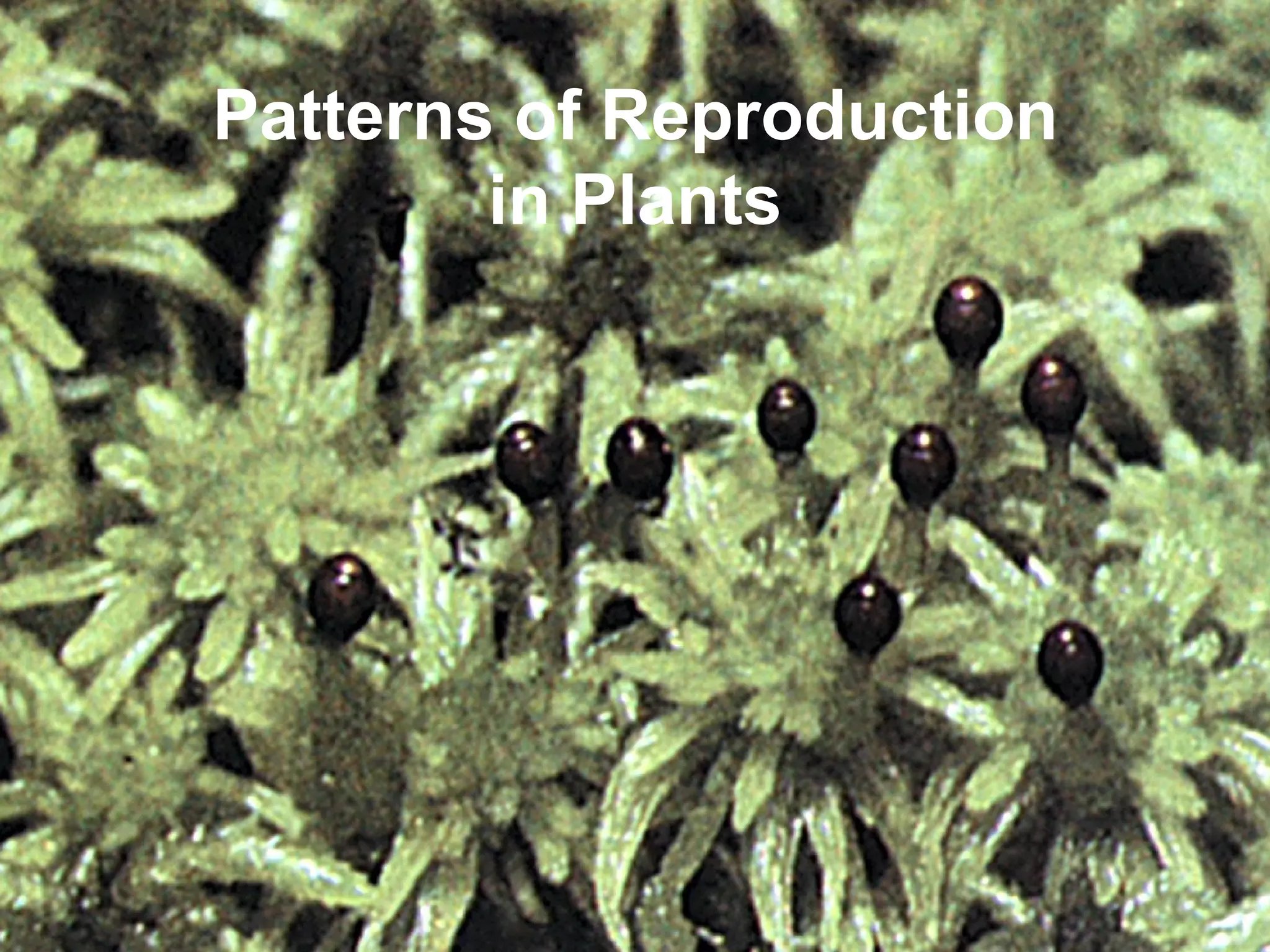
Nonvascular Plants Three phyla Bryophyta – mosses Hepatophyta – liverworts Anthocerophyta – hornwort Gametophyte nutritionally independent Sporophyte grows out of gametophyte
Vascular Plants Seedless vascular plants Whisk ferns Club mosses Horsetails Ferns  Plants with naked seeds Conifers Cycads Ginkos  Protected seeds Angiosperms
Seedless Vascular Plants Seeds contain sporophyte embryos & food Seedless plants compensate for no seed by being tied to favorable habitat Sporophyte is dominant stage
Moss Life cycle
Gymnosperms Exposed (naked) seeds Sporophyte generation dominates Includes conifers, cycads & ginkos
Pine Life Cycle
Angiosperms Protected seeds Flowering plants Largest number of plants
 
Flowers Organ for sexual reproduction Sepals = outer modified leaves Petals attract pollinators Male stamen Female pistil
Angiosperm Life Cycle
Pollination Method to combine egg & sperm Wind pollination Gymnosperms  Some angiosperms like grasses
Pollination Insect & animal pollination Pollen carried from one flower to another Common in many angiosperms Some are self pollinated
Seed Development Zygote is plant embryo Endosperm  From other sperm nuclei Feeds embryo Embryo develops cotyledons (seed leaves) Monocot = single cotyledon Dicot = double cotyledon
Fruit Mature ovary Seeds, tissues, and coverings Fruits may allow for animal dispersal
Seed Dispersal Methods  Animals, wind, & water
Germination Begins when seed takes up water Initially uses stored food of seed Begins to sprout
Monocots Vs. Dicots Differ in recognizable features  Dicots – food stored in cotyledons Monocots – food stored in endosperm
Seedling Development Radicle First portion to emerge Anchors seedling Epicotyl Portion of shoot above cotyledon
Seedling Development Coleoptile Sheath protecting new leaves Hypocotyl Shoot below cotyledens
Vegetative Propogation Asexual reproduction New plant develops from portion of parent Rhizomes = underground stems Stolons = above ground stems
Vegetative Propogation Leaves can produce new plants
Cell Culture of Plants Plant production from a single cell Produces genetic clones
 

Pattern of reproduction in plant