Never offer the devil (desire) a ride,
He always want to be in the driving seat…!
-- BK
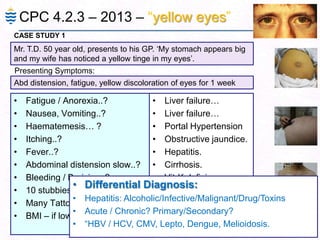
CPC 4.2.3 – 2013 – ―yellow eyes‖
• Fatigue / Anorexia..?
• Nausea, Vomiting..?
• Haematemesis… ?
• Itching..?
• Fever..?
• Abdominal distension slow..?
• Bleeding / Bruising..?
• 10 stubbies/day /more..?
• Many Tattoos..?
• BMI – if low / High..?
2
Mr. T.D. 50 year old, presents to his GP. ‗My stomach appears big
and my wife has noticed a yellow tinge in my eyes‘.
CASE STUDY 1
Abd distension, fatigue, yellow discoloration of eyes for 1 week
Presenting Symptoms:
• Liver failure…
• Liver failure…
• Portal Hypertension
• Obstructive jaundice.
• Hepatitis.
• Cirrhosis.
• Vit-K deficiency.
• Alcoholic hepatitis.
• Viral Hepatitis (B/C)
• Anorexia / Obesity –
steatosis.
• Differential Diagnosis:
• Hepatitis: Alcoholic/Infective/Malignant/Drug/Toxins
• Acute / Chronic? Primary/Secondary?
• ―HBV / HCV, CMV, Lepto, Dengue, Melioidosis.
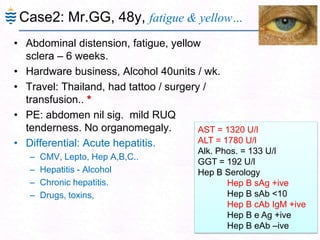
Case2: Mr.GG, 48y, fatigue & yellow…
• Abdominal distension, fatigue, yellow
sclera – 6 weeks.
• Hardware business, Alcohol 40units / wk.
• Travel: Thailand, had tattoo / surgery /
transfusion.. *
• PE: abdomen nil sig. mild RUQ
tenderness. No organomegaly.
• Differential: Acute hepatitis.
– CMV, Lepto, Hep A,B,C..
– Hepatitis - Alcohol
– Chronic hepatitis.
– Drugs, toxins,
3
AST = 1320 U/l
ALT = 1780 U/l
Alk. Phos. = 133 U/l
GGT = 192 U/l
Hep B Serology
Hep B sAg +ive
Hep B sAb <10
Hep B cAb IgM +ive
Hep B e Ag +ive
Hep B eAb –ive
4
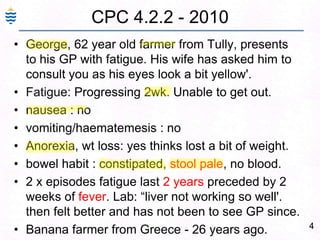
CPC 4.2.2 - 2010
• George, 62 year old farmer from Tully, presents
to his GP with fatigue. His wife has asked him to
consult you as his eyes look a bit yellow'.
• Fatigue: Progressing 2wk. Unable to get out.
• nausea : no
• vomiting/haematemesis : no
• Anorexia, wt loss: yes thinks lost a bit of weight.
• bowel habit : constipated, stool pale, no blood.
• 2 x episodes fatigue last 2 years preceded by 2
weeks of fever. Lab: ―liver not working so well'.
then felt better and has not been to see GP since.
• Banana farmer from Greece - 26 years ago.
5
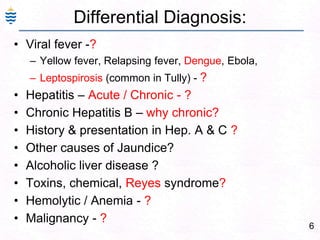
Laboratory Investigations:
• FBC: Hb 13.8 g/dl, PCV 45%; WBC 7000/mm3, 70%
N, 25% L; Platelets 200,000/mm3
• Blood film: Normocytic, normochromic cells
• Bilirubin: Total serum Bilirubin = 98 μmol/l, (Direct 67)
• Liver enzymes:
• Aspartate amino transferase (AST) = 182 U/l
• Alanine amino transferase (ALT) = 55 U/l
• Alkaline Phosphatase = 190 U/I
• Serum Protein: Total protein = 59 g/l, Albumin = 20 g/l,
• Hepatitis B Surface Antigen (HbsAg): Positive
Hep B sAg +ive
Hep B sAb <10
Hep B cAb IgM +ive
Hep B e Ag +ive
Hep B eAb –ive
6
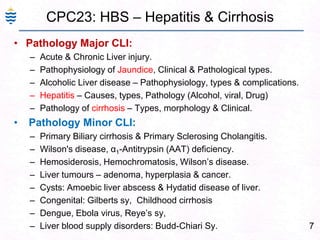
Differential Diagnosis:
• Viral fever -?
– Yellow fever, Relapsing fever, Dengue, Ebola,
– Leptospirosis (common in Tully) - ?
• Hepatitis – Acute / Chronic - ?
• Chronic Hepatitis B – why chronic?
• History & presentation in Hep. A & C ?
• Other causes of Jaundice?
• Alcoholic liver disease ?
• Toxins, chemical, Reyes syndrome?
• Hemolytic / Anemia - ?
• Malignancy - ?
7
CPC23: HBS – Hepatitis & Cirrhosis
• Pathology Major CLI:
– Acute & Chronic Liver injury.
– Pathophysiology of Jaundice, Clinical & Pathological types.
– Alcoholic Liver disease – Pathophysiology, types & complications.
– Hepatitis – Causes, types, Pathology (Alcohol, viral, Drug)
– Pathology of cirrhosis – Types, morphology & Clinical.
• Pathology Minor CLI:
– Primary Biliary cirrhosis & Primary Sclerosing Cholangitis.
– Wilson's disease, α1-Antitrypsin (AAT) deficiency.
– Hemosiderosis, Hemochromatosis, Wilson‘s disease.
– Liver tumours – adenoma, hyperplasia & cancer.
– Cysts: Amoebic liver abscess & Hydatid disease of liver.
– Congenital: Gilberts sy, Childhood cirrhosis
– Dengue, Ebola virus, Reye‘s sy,
– Liver blood supply disorders: Budd-Chiari Sy.
"When you speak, speak the truth;
perform when you promise;
discharge your trust... Withhold your
hands from striking, and from taking
that which is unlawful and bad..."
-- From Wings of Fire, book by Dr. APJ Abdul Kalam, Foremer President of India.
9
Pathology of
Common Liver Disorders
Dr. Venkatesh M. Shashidhar.
Assoc.Prof & Head of Pathology
10
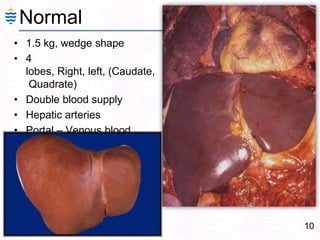
• 1.5 kg, wedge shape
• 4
lobes, Right, left, (Caudate,
Quadrate)
• Double blood supply
• Hepatic arteries
• Portal – Venous blood
Normal
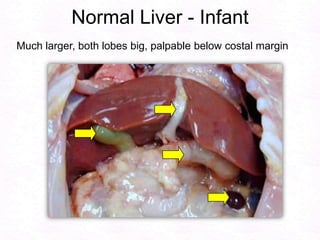
Normal Liver - Infant
Much larger, both lobes big, palpable below costal margin
12
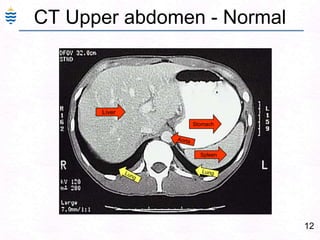
CT Upper abdomen - Normal
Liver
Stomach
Spleen
13
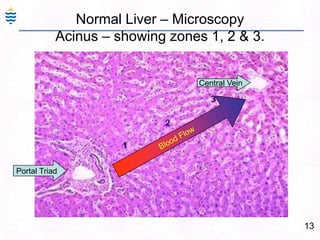
Normal Liver – Microscopy
Acinus – showing zones 1, 2 & 3.
Portal Triad
Central Vein
14
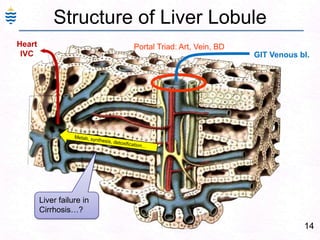
Structure of Liver Lobule
Portal Triad: Art, Vein, BD
GIT Venous bl.
Heart
IVC
Liver failure in
Cirrhosis…?
15
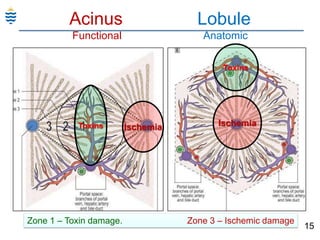
Acinus Lobule
Functional Anatomic
Zone 1 – Toxin damage. Zone 3 – Ischemic damage
Toxins Ischemia
Toxins
Ischemia
16
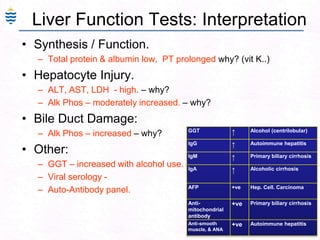
Liver Function Tests: Interpretation
• Synthesis / Function.
– Total protein & albumin low, PT prolonged why? (vit K..)
• Hepatocyte Injury.
– ALT, AST, LDH - high. – why?
– Alk Phos – moderately increased. – why?
• Bile Duct Damage:
– Alk Phos – increased – why?
• Other:
– GGT – increased with alcohol use. – why?
– Viral serology -
– Auto-Antibody panel.
GGT ↑ Alcohol (centrilobular)
IgG ↑ Autoimmune hepatitis
IgM ↑ Primary biliary cirrhosis
IgA ↑ Alcoholic cirrhosis
AFP +ve Hep. Cell. Carcinoma
Anti-
mitochondrial
antibody
+ve Primary biliary cirrhosis
Anti-smooth
muscle, & ANA
+ve Autoimmune hepatitis
17
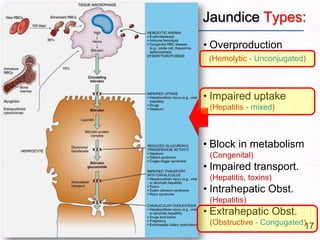
• Overproduction
(Hemolytic - Unconjugated)
• Impaired uptake
(Hepatitis - mixed)
• Block in metabolism
(Congenital)
• Impaired transport.
(Hepatitis, toxins)
• Intrahepatic Obst.
(Hepatitis)
• Extrahepatic Obst.
(Obstructive - Congugated)
Jaundice Types:
18
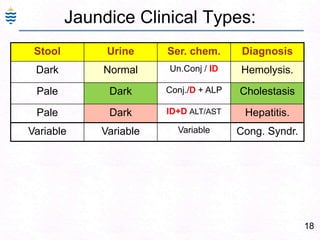
Jaundice Clinical Types:
Stool Urine Ser. chem. Diagnosis
Dark Normal Un.Conj / ID Hemolysis.
Pale Dark Conj./D + ALP Cholestasis
Pale Dark ID+D ALT/AST Hepatitis.
Variable Variable Variable Cong. Syndr.
A wise man watches his faults more
closely than his virtues; others
reverse the order.
--Napoleon Hill
20
Pathology of Viral Hepatitis
Dr. Venkatesh M. Shashidhar.
Assoc.Prof & Head of Pathology
21
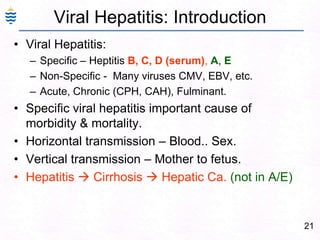
Viral Hepatitis: Introduction
• Viral Hepatitis:
– Specific – Heptitis B, C, D (serum), A, E
– Non-Specific - Many viruses CMV, EBV, etc.
– Acute, Chronic (CPH, CAH), Fulminant.
• Specific viral hepatitis important cause of
morbidity & mortality.
• Horizontal transmission – Blood.. Sex.
• Vertical transmission – Mother to fetus.
• Hepatitis  Cirrhosis  Hepatic Ca. (not in A/E)
22
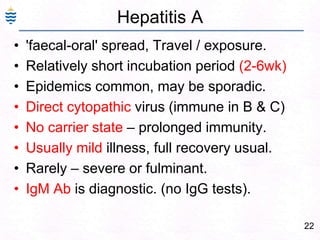
Hepatitis A
• 'faecal-oral' spread, Travel / exposure.
• Relatively short incubation period (2-6wk)
• Epidemics common, may be sporadic.
• Direct cytopathic virus (immune in B & C)
• No carrier state – prolonged immunity.
• Usually mild illness, full recovery usual.
• Rarely – severe or fulminant.
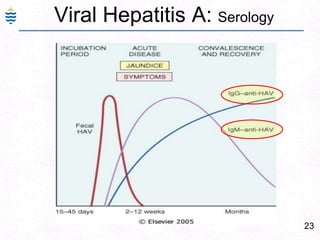
• IgM Ab is diagnostic. (no IgG tests).
23
Viral Hepatitis A: Serology
24
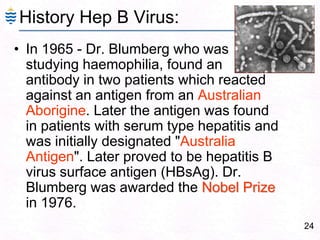
History Hep B Virus:
• In 1965 - Dr. Blumberg who was
studying haemophilia, found an
antibody in two patients which reacted
against an antigen from an Australian
Aborigine. Later the antigen was found
in patients with serum type hepatitis and
was initially designated "Australia
Antigen". Later proved to be hepatitis B
virus surface antigen (HBsAg). Dr.
Blumberg was awarded the Nobel Prize
in 1976.
25
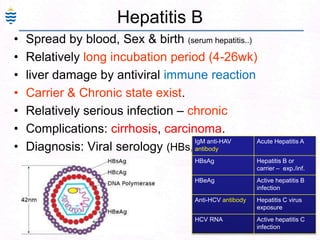
Hepatitis B
• Spread by blood, Sex & birth (serum hepatitis..)
• Relatively long incubation period (4-26wk)
• liver damage by antiviral immune reaction
• Carrier & Chronic state exist.
• Relatively serious infection – chronic
• Complications: cirrhosis, carcinoma.
• Diagnosis: Viral serology (HBs, HBc & HBe)
IgM anti-HAV
antibody
Acute Hepatitis A
HBsAg Hepatitis B or
carrier – exp./inf.
HBeAg Active hepatitis B
infection
Anti-HCV antibody Hepatitis C virus
exposure
HCV RNA Active hepatitis C
infection
26
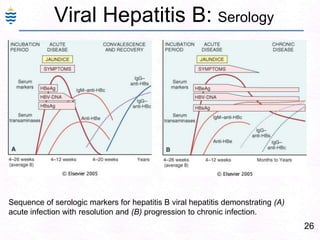
Viral Hepatitis B: Serology
Sequence of serologic markers for hepatitis B viral hepatitis demonstrating (A)
acute infection with resolution and (B) progression to chronic infection.
27
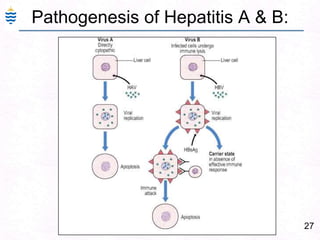
Pathogenesis of Hepatitis A & B:
28
Pathogenesis:
• Ingestion / inoculation
• Replication - Viremia
• Liver – major site replication.
• Cellular immune response.
• Apoptosis, necrosis of hepatocytes.
• Inflammation - Hepatitis
• Bridging Hepatocyte necrosis (Central vein,
portal triad)
• Fibrosis – patchy/bridging
• Cirrhosis – extensive fibrosis with loss of
archetecture & regenerating nodules.
• Liver Failure, Coma, Carcinoma..
29
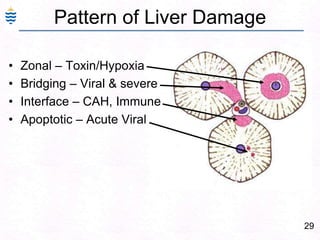
Pattern of Liver Damage
• Zonal – Toxin/Hypoxia
• Bridging – Viral & severe
• Interface – CAH, Immune
• Apoptotic – Acute Viral
30
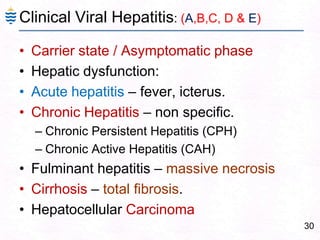
Clinical Viral Hepatitis: (A,B,C, D & E)
• Carrier state / Asymptomatic phase
• Hepatic dysfunction:
• Acute hepatitis – fever, icterus.
• Chronic Hepatitis – non specific.
– Chronic Persistent Hepatitis (CPH)
– Chronic Active Hepatitis (CAH)
• Fulminant hepatitis – massive necrosis
• Cirrhosis – total fibrosis.
• Hepatocellular Carcinoma
31
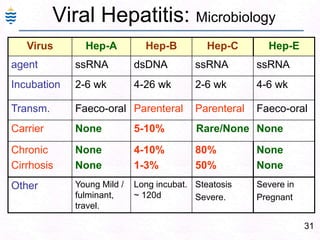
Viral Hepatitis: Microbiology
Virus Hep-A Hep-B Hep-C Hep-E
agent ssRNA dsDNA ssRNA ssRNA
Incubation 2-6 wk 4-26 wk 2-6 wk 4-6 wk
Transm. Faeco-oral Parenteral Parenteral Faeco-oral
Carrier None 5-10% Rare/None None
Chronic
Cirrhosis
None
None
4-10%
1-3%
80%
50%
None
None
Other Young Mild /
fulminant,
travel.
Long incubat.
~ 120d
Steatosis
Severe.
Severe in
Pregnant
32
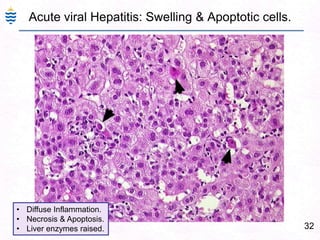
Acute viral Hepatitis: Swelling & Apoptotic cells.
• Diffuse Inflammation.
• Necrosis & Apoptosis.
• Liver enzymes raised.
33
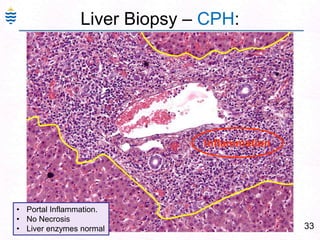
Liver Biopsy – CPH:
Inflammation
• Portal Inflammation.
• No Necrosis
• Liver enzymes normal
34
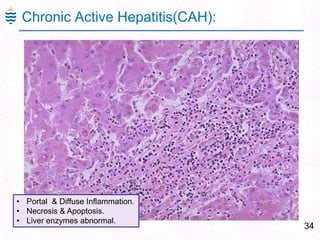
Chronic Active Hepatitis(CAH):
• Portal & Diffuse Inflammation.
• Necrosis & Apoptosis.
• Liver enzymes abnormal.
35
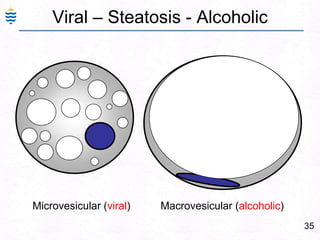
Viral – Steatosis - Alcoholic
Microvesicular (viral) Macrovesicular (alcoholic)
36
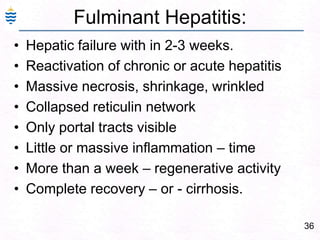
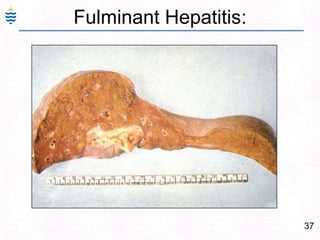
Fulminant Hepatitis:
• Hepatic failure with in 2-3 weeks.
• Reactivation of chronic or acute hepatitis
• Massive necrosis, shrinkage, wrinkled
• Collapsed reticulin network
• Only portal tracts visible
• Little or massive inflammation – time
• More than a week – regenerative activity
• Complete recovery – or - cirrhosis.
37
Fulminant Hepatitis:
38
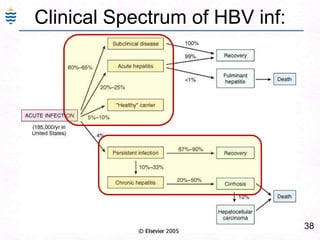
Clinical Spectrum of HBV inf:
Failure is a blessing when it pushes
one out of a cushioned seat of self-
satisfaction and forces him to do
something useful.
--Napoleon Hill
Laboratory Diagnosis
Viral Hepatitis
41
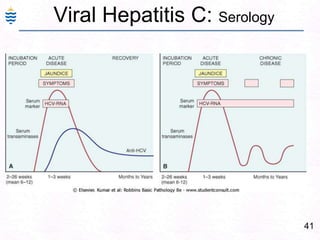
Viral Hepatitis C: Serology
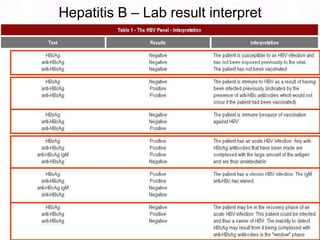
Hepatitis B – Lab result interpret
43
Learn from the mistakes
of others. You can't live
long enough to make
them all yourself…!
61% of 5th year students exceeded ‘sensible’ limits
Drugs and alcohol were taken mainly for pleasure and were
perceived as a normal part of life for many students…
Capability of advising patients…?
http://www.lycaeum.org/research/researchpdfs/1996_webb_1.pdf
"The past, the present and the
future are really one: they are
today!"
-Harriet Beecher Stowe
The past has gone and future you cannot see. The present, when you can do something, that is the Gift
(Present) with which you can make your future & past memorable.
- Sai Baba
45
Other Hepatitis
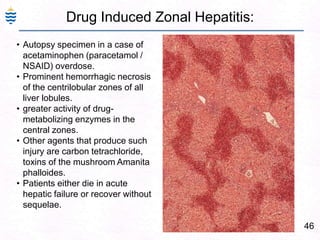
Drug Induced Zonal Hepatitis:
46
• Autopsy specimen in a case of
acetaminophen (paracetamol /
NSAID) overdose.
• Prominent hemorrhagic necrosis
of the centrilobular zones of all
liver lobules.
• greater activity of drug-
metabolizing enzymes in the
central zones.
• Other agents that produce such
injury are carbon tetrachloride,
toxins of the mushroom Amanita
phalloides.
• Patients either die in acute
hepatic failure or recover without
sequelae.
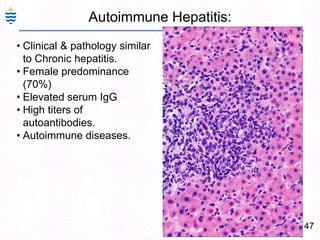
Autoimmune Hepatitis:
47
• Clinical & pathology similar
to Chronic hepatitis.
• Female predominance
(70%)
• Elevated serum IgG
• High titers of
autoantibodies.
• Autoimmune diseases.
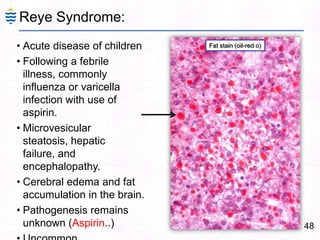
Reye Syndrome:
48
• Acute disease of children
• Following a febrile
illness, commonly
influenza or varicella
infection with use of
aspirin.
• Microvesicular
steatosis, hepatic
failure, and
encephalopathy.
• Cerebral edema and fat
accumulation in the brain.
• Pathogenesis remains
unknown (Aspirin..)
Fat stain (oil-red o)
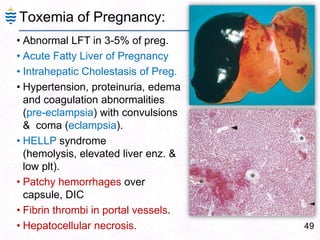
Toxemia of Pregnancy:
49
• Abnormal LFT in 3-5% of preg.
• Acute Fatty Liver of Pregnancy
• Intrahepatic Cholestasis of Preg.
• Hypertension, proteinuria, edema
and coagulation abnormalities
(pre-eclampsia) with convulsions
& coma (eclampsia).
• HELLP syndrome
(hemolysis, elevated liver enz. &
low plt).
• Patchy hemorrhages over
capsule, DIC
• Fibrin thrombi in portal vessels.
• Hepatocellular necrosis.
Self Study: brief
• Primary Biliary cirrhosis & Primary Sclerosing Cholangitis
(differences, Male, female, associated conditions etc).
• Wilson's disease & α1-Antitrypsin (AAT) deficiency.
• Hemosiderosis, Hemochromatosis – differences.
• Liver tumours – adenoma, hyperplasia & cancer.
• Cysts: Congenital, Amoebic & Hydatid.
• Congenital: Gilberts sy, Childhood cirrhosis
• Hepatitis in Dengue & Leptospirosis
• Reye‘s syndrome.
• Budd-Chiari Syndrome.
50
51
Pathology of Cirrhosis
52
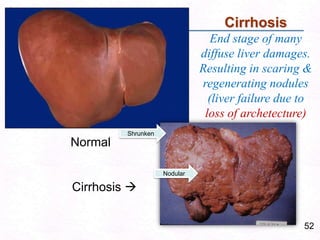
Normal
Cirrhosis 
Cirrhosis
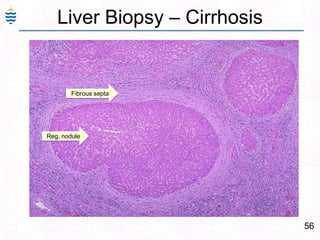
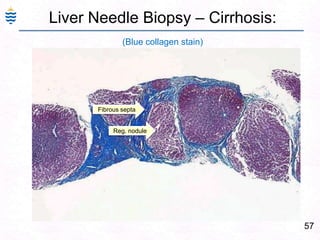
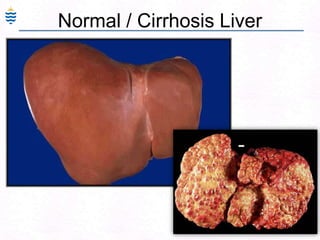
End stage of many
diffuse liver damages.
Resulting in scaring &
regenerating nodules
(liver failure due to
loss of archetecture)
Nodular
Shrunken
53
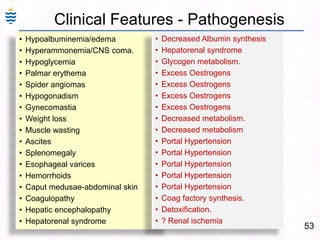
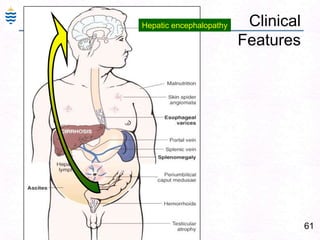
Clinical Features - Pathogenesis
• Hypoalbuminemia/edema
• Hyperammonemia/CNS coma.
• Hypoglycemia
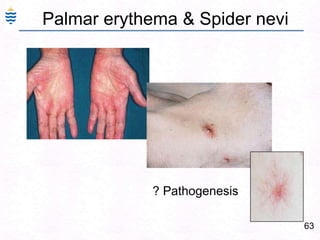
• Palmar erythema
• Spider angiomas
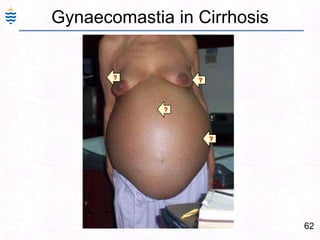
• Hypogonadism
• Gynecomastia
• Weight loss
• Muscle wasting
• Ascites
• Splenomegaly
• Esophageal varices
• Hemorrhoids
• Caput medusae-abdominal skin
• Coagulopathy
• Hepatic encephalopathy
• Hepatorenal syndrome
• Decreased Albumin synthesis
• Hepatorenal syndrome
• Glycogen metabolism.
• Excess Oestrogens
• Excess Oestrogens
• Excess Oestrogens
• Excess Oestrogens
• Decreased metabolism.
• Decreased metabolism
• Portal Hypertension
• Coag factory synthesis.
• Detoxification.
• ? Renal ischemia
54
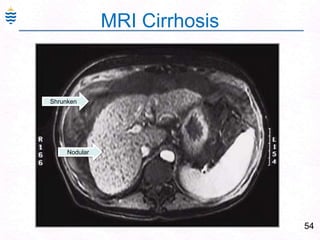
MRI Cirrhosis
Nodular
Shrunken
55
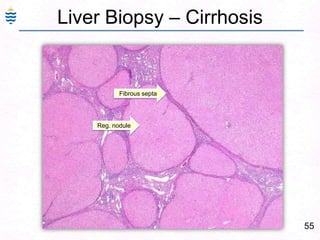
Liver Biopsy – Cirrhosis
Reg. nodule
Fibrous septa
56
Liver Biopsy – Cirrhosis
Reg. nodule
Fibrous septa
57
Liver Needle Biopsy – Cirrhosis:
(Blue collagen stain)
Reg. nodule
Fibrous septa
58
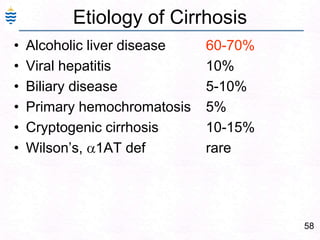
Etiology of Cirrhosis
• Alcoholic liver disease 60-70%
• Viral hepatitis 10%
• Biliary disease 5-10%
• Primary hemochromatosis 5%
• Cryptogenic cirrhosis 10-15%
• Wilson‘s, 1AT def rare
59
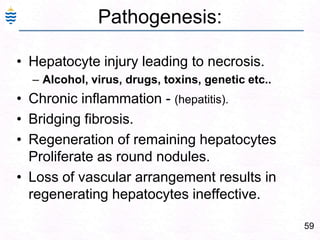
Pathogenesis:
• Hepatocyte injury leading to necrosis.
– Alcohol, virus, drugs, toxins, genetic etc..
• Chronic inflammation - (hepatitis).
• Bridging fibrosis.
• Regeneration of remaining hepatocytes
Proliferate as round nodules.
• Loss of vascular arrangement results in
regenerating hepatocytes ineffective.
60
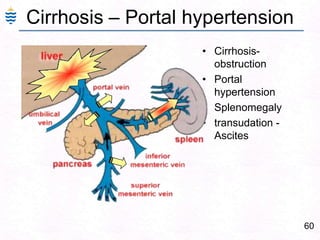
Cirrhosis – Portal hypertension
• Cirrhosis-
obstruction
• Portal
hypertension
• Splenomegaly
• transudation -
Ascites
61
Clinical
Features
Hepatic encephalopathy
62
Gynaecomastia in Cirrhosis
??
?
?
63
Palmar erythema & Spider nevi
? Pathogenesis
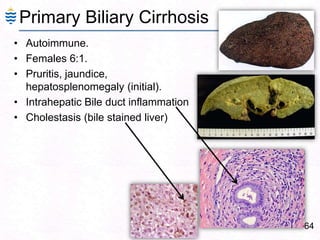
Primary Biliary Cirrhosis
• Autoimmune.
• Females 6:1.
• Pruritis, jaundice,
hepatosplenomegaly (initial).
• Intrahepatic Bile duct inflammation
• Cholestasis (bile stained liver)
64
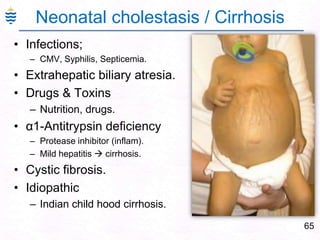
Neonatal cholestasis / Cirrhosis
• Infections;
– CMV, Syphilis, Septicemia.
• Extrahepatic biliary atresia.
• Drugs & Toxins
– Nutrition, drugs.
• α1-Antitrypsin deficiency
– Protease inhibitor (inflam).
– Mild hepatitis  cirrhosis.
• Cystic fibrosis.
• Idiopathic
– Indian child hood cirrhosis.
65
66
Normal / Cirrhosis Liver
67
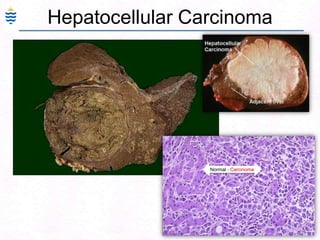
Hepatocellular Carcinoma
Normal - Carcinoma
68
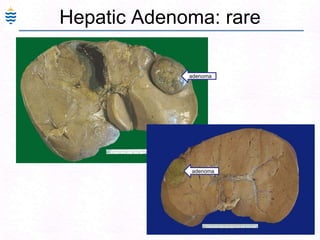
Hepatic Adenoma: rare
adenoma
adenoma
69
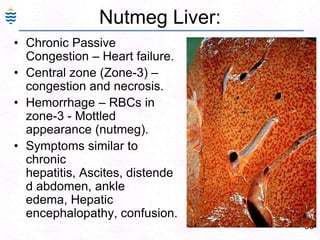
Nutmeg Liver:
• Chronic Passive
Congestion – Heart failure.
• Central zone (Zone-3) –
congestion and necrosis.
• Hemorrhage – RBCs in
zone-3 - Mottled
appearance (nutmeg).
• Symptoms similar to
chronic
hepatitis, Ascites, distende
d abdomen, ankle
edema, Hepatic
encephalopathy, confusion.
70
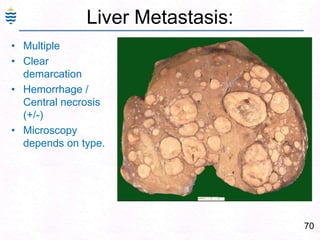
Liver Metastasis:
• Multiple
• Clear
demarcation
• Hemorrhage /
Central necrosis
(+/-)
• Microscopy
depends on type.
71
Learn from the mistakes
of others. You can't live
long enough to make
them all yourself…!
61% of 5th year students exceeded ‘sensible’ limits
Drugs and alcohol were taken mainly for pleasure and were
perceived as a normal part of life for many students…
Capability of advising patients…?
http://www.lycaeum.org/research/researchpdfs/1996_webb_1.pdf
Alcoholic
Liver Disease
73
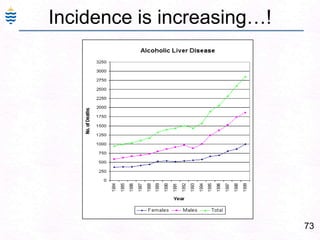
Incidence is increasing…!
74
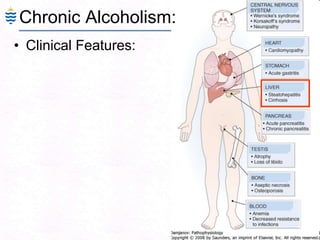
Chronic Alcoholism:
• Clinical Features:
75
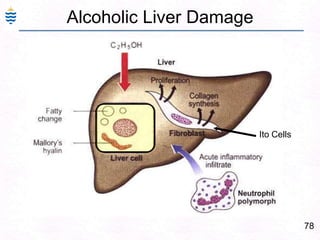
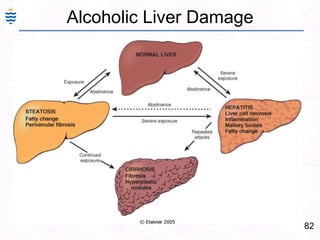
Alcoholic Liver Injury:
• Ethyl alcohol : Common cause of
acute/Chronic liver disease
• Alcoholic Liver disease - Patterns
– Fatty change,
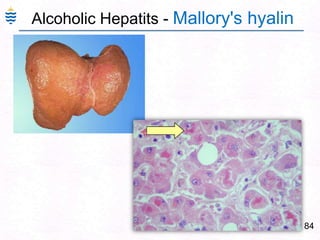
– Acute hepatitis (Mallory Hyalin)
– Chronic hepatitis with Portal fibrosis
– Chronic Liver failure
– Cirrhosis
• All reversible except cirrhosis stage.
76
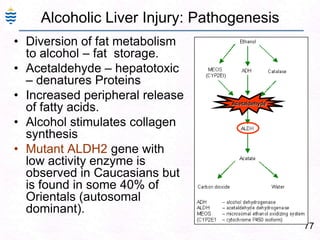
Alcoholic Liver Injury: Pathogenesis
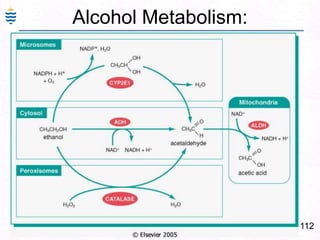
• Acetaldehyde – metabolite – hepatotoxic
• Diversion of metabolism to alcohol
• Fat storage – fatty change. Cell swelling..
• Rupture Fat necrosis  severe
inflammation  fibrosis.
• Alcohol stimulates collagen synthesis
• Inflammation, Portal bridging fibrosis
• Micronodular cirrhosis.
77
Alcoholic Liver Injury: Pathogenesis
• Diversion of fat metabolism
to alcohol – fat storage.
• Acetaldehyde – hepatotoxic
– denatures Proteins
• Increased peripheral release
of fatty acids.
• Alcohol stimulates collagen
synthesis
• Mutant ALDH2 gene with
low activity enzyme is
observed in Caucasians but
is found in some 40% of
Orientals (autosomal
dominant).
Acetaldehyde
78
Alcoholic Liver Damage
Ito Cells
79
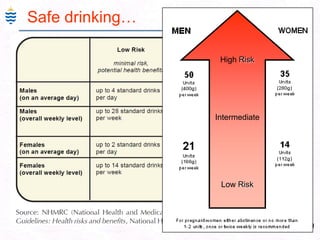
High Risk
Intermediate
Low Risk
Safe drinking…
80
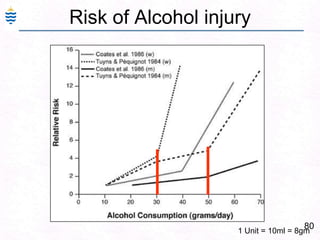
Risk of Alcohol injury
1 Unit = 10ml = 8gm
81
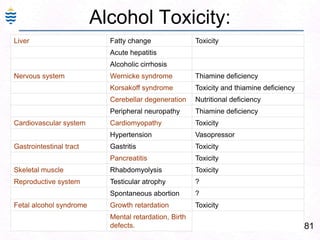
Alcohol Toxicity:
Liver Fatty change Toxicity
Acute hepatitis
Alcoholic cirrhosis
Nervous system Wernicke syndrome Thiamine deficiency
Korsakoff syndrome Toxicity and thiamine deficiency
Cerebellar degeneration Nutritional deficiency
Peripheral neuropathy Thiamine deficiency
Cardiovascular system Cardiomyopathy Toxicity
Hypertension Vasopressor
Gastrointestinal tract Gastritis Toxicity
Pancreatitis Toxicity
Skeletal muscle Rhabdomyolysis Toxicity
Reproductive system Testicular atrophy ?
Spontaneous abortion ?
Fetal alcohol syndrome Growth retardation Toxicity
Mental retardation, Birth
defects.
82
Alcoholic Liver Damage
Alcoholic Hepatitis:
83
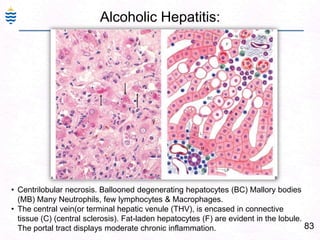
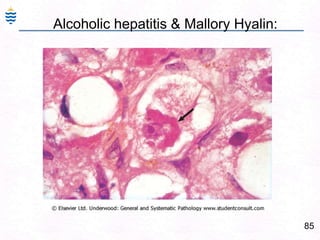
• Centrilobular necrosis. Ballooned degenerating hepatocytes (BC) Mallory bodies
(MB) Many Neutrophils, few lymphocytes & Macrophages.
• The central vein(or terminal hepatic venule (THV), is encased in connective
tissue (C) (central sclerosis). Fat-laden hepatocytes (F) are evident in the lobule.
The portal tract displays moderate chronic inflammation.
84
Alcoholic Hepatits - Mallory's hyalin
85
Alcoholic hepatitis & Mallory Hyalin:
86
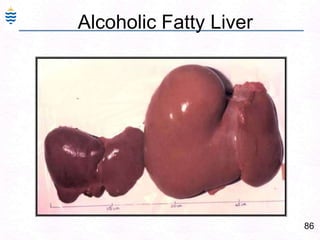
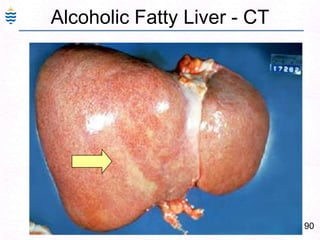
Alcoholic Fatty Liver
87
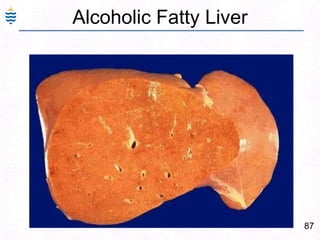
Alcoholic Fatty Liver
88
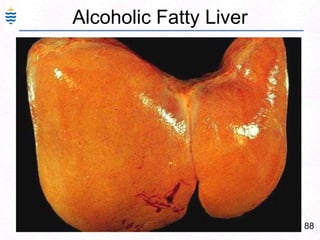
Alcoholic Fatty Liver
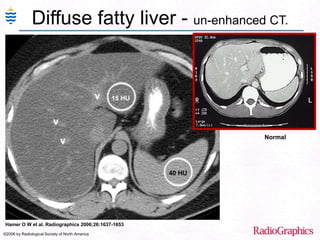
Diffuse fatty liver - un-enhanced CT.
Hamer O W et al. Radiographics 2006;26:1637-1653
©2006 by Radiological Society of North America
Normal
90
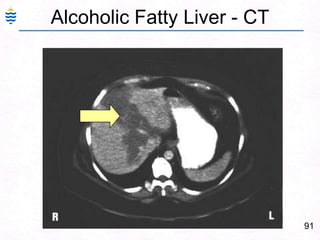
Alcoholic Fatty Liver - CT
91
Alcoholic Fatty Liver - CT
92
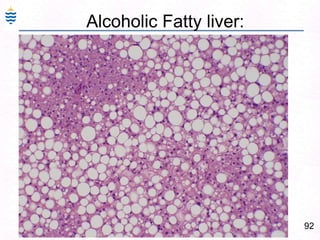
Alcoholic Fatty liver:
93
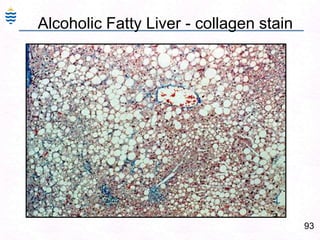
Alcoholic Fatty Liver - collagen stain
94
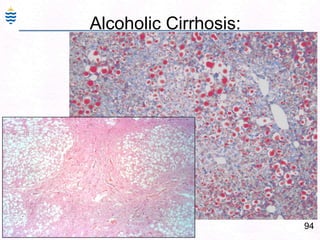
Alcoholic Cirrhosis:
95
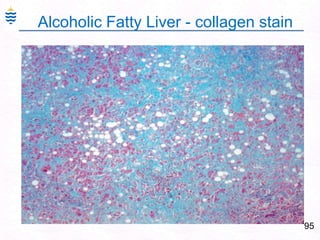
Alcoholic Fatty Liver - collagen stain
96
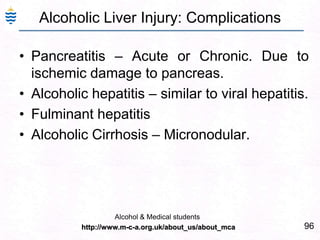
Alcoholic Liver Injury: Complications
• Pancreatitis – Acute or Chronic. Due to
ischemic damage to pancreas.
• Alcoholic hepatitis – similar to viral hepatitis.
• Fulminant hepatitis
• Alcoholic Cirrhosis – Micronodular.
Alcohol & Medical students
http://www.m-c-a.org.uk/about_us/about_mca
Miscellaneous Conditions
97
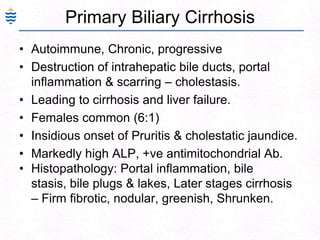
Primary Biliary Cirrhosis
• Autoimmune, Chronic, progressive
• Destruction of intrahepatic bile ducts, portal
inflammation & scarring – cholestasis.
• Leading to cirrhosis and liver failure.
• Females common (6:1)
• Insidious onset of Pruritis & cholestatic jaundice.
• Markedly high ALP, +ve antimitochondrial Ab.
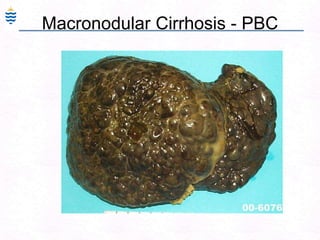
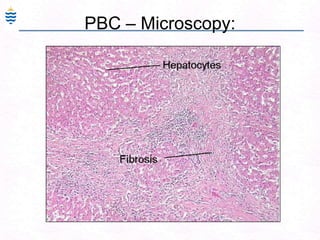
• Histopathology: Portal inflammation, bile
stasis, bile plugs & lakes, Later stages cirrhosis
– Firm fibrotic, nodular, greenish, Shrunken.
Macronodular Cirrhosis - PBC
PBC – Microscopy:
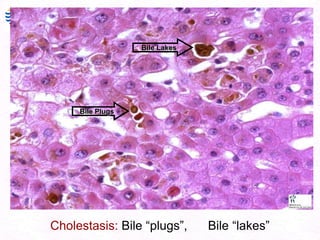
Cholestasis: Bile ―plugs‖, Bile ―lakes‖
Bile Plugs
Bile Lakes
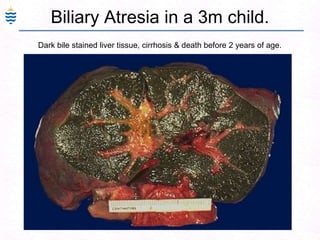
Biliary Atresia in a 3m child.
Dark bile stained liver tissue, cirrhosis & death before 2 years of age.
103
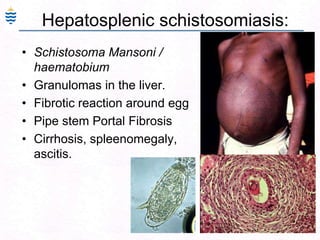
Hepatosplenic schistosomiasis:
• Schistosoma Mansoni /
haematobium
• Granulomas in the liver.
• Fibrotic reaction around egg
• Pipe stem Portal Fibrosis
• Cirrhosis, spleenomegaly,
ascitis.
104
Hepatosplenic schistosomiasis:
• Schistosoma Mansoni /
haematobium
• Granulomas in the liver.
• Fibrotic reaction around egg
• Pipe stem Portal Fibrosis
• Cirrhosis, spleenomegaly,
ascitis.
"It's not the will to win, but the will
to prepare to win that makes the
difference."
- - Bear Bryant 1913-1983, Football Coach
106
CPC-2.2– Major Pathology CLI:
• Pathology of Acute & Chronic Liver injury.
• Hepatitis – Causes, Types, Pathophysiology, Gross &
Microscopic Pathology. Complications.
• Common types: Viral (Specific & Non specific), Alcoholic
& Drug induced.
• Pathophysiology of Jaundice, Clinical & Pathological
types.
• Pathology of cirrhosis – Classification, morphology &
Complications.
• Pathology of Alcoholic Liver disease – Pathophysiology,
types & complications.
107
CPC-2.2– Minor Pathology CLI:
• Hemosiderosis & Hemochromatosis.
• Pathogenesis of Hepatic coma, Liver failure.
• Primary Biliary cirrhosis.
• Hepatocellular carcinoma.
• Liver cysts & tumours – adenoma, hyperplasia & cancer.
• Amoebic liver abscess & Hydatid disease of liver.
• Congenital liver disorders – enzyme disorders.
108
Clinical Case Study
109
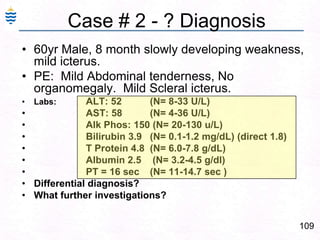
Case # 2 - ? Diagnosis
• 60yr Male, 8 month slowly developing weakness,
mild icterus.
• PE: Mild Abdominal tenderness, No
organomegaly. Mild Scleral icterus.
• Labs: ALT: 52 (N= 8-33 U/L)
• AST: 58 (N= 4-36 U/L)
• Alk Phos: 150 (N= 20-130 u/L)
• Bilirubin 3.9 (N= 0.1-1.2 mg/dL) (direct 1.8)
• T Protein 4.8 (N= 6.0-7.8 g/dL)
• Albumin 2.5 (N= 3.2-4.5 g/dl)
• PT = 16 sec (N= 11-14.7 sec )
• Differential diagnosis?
• What further investigations?
110
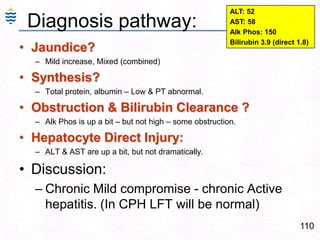
Diagnosis pathway:
• Jaundice?
– Mild increase, Mixed (combined)
• Synthesis?
– Total protein, albumin – Low & PT abnormal.
• Obstruction & Bilirubin Clearance ?
– Alk Phos is up a bit – but not high – some obstruction.
• Hepatocyte Direct Injury:
– ALT & AST are up a bit, but not dramatically.
• Discussion:
– Chronic Mild compromise - chronic Active
hepatitis. (In CPH LFT will be normal)
ALT: 52
AST: 58
Alk Phos: 150
Bilirubin 3.9 (direct 1.8)
111
• 28y Male, 3 weeks after visiting east
Timor, presents with malaise, fatigue, loss
of appetite. Mild icterus. AST & ALT mild
elevation. Total bil 3.9mg/dl (Direct 2.8).
Which of the following would be positive?
112
Alcohol Metabolism:
113
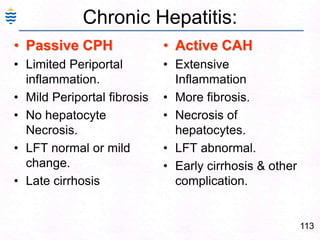
Chronic Hepatitis:
• Passive CPH
• Limited Periportal
inflammation.
• Mild Periportal fibrosis
• No hepatocyte
Necrosis.
• LFT normal or mild
change.
• Late cirrhosis
• Active CAH
• Extensive
Inflammation
• More fibrosis.
• Necrosis of
hepatocytes.
• LFT abnormal.
• Early cirrhosis & other
complication.
“Nearly all men can stand adversity,
but if you want to test a man's
character, give him power!”
— Abraham Lincoln

Pathology of Hepatitis - Lecture

  • 1.
    Never offer thedevil (desire) a ride, He always want to be in the driving seat…! -- BK
  • 2.
    CPC 4.2.3 –2013 – ―yellow eyes‖ • Fatigue / Anorexia..? • Nausea, Vomiting..? • Haematemesis… ? • Itching..? • Fever..? • Abdominal distension slow..? • Bleeding / Bruising..? • 10 stubbies/day /more..? • Many Tattoos..? • BMI – if low / High..? 2 Mr. T.D. 50 year old, presents to his GP. ‗My stomach appears big and my wife has noticed a yellow tinge in my eyes‘. CASE STUDY 1 Abd distension, fatigue, yellow discoloration of eyes for 1 week Presenting Symptoms: • Liver failure… • Liver failure… • Portal Hypertension • Obstructive jaundice. • Hepatitis. • Cirrhosis. • Vit-K deficiency. • Alcoholic hepatitis. • Viral Hepatitis (B/C) • Anorexia / Obesity – steatosis. • Differential Diagnosis: • Hepatitis: Alcoholic/Infective/Malignant/Drug/Toxins • Acute / Chronic? Primary/Secondary? • ―HBV / HCV, CMV, Lepto, Dengue, Melioidosis.
  • 3.
    Case2: Mr.GG, 48y,fatigue & yellow… • Abdominal distension, fatigue, yellow sclera – 6 weeks. • Hardware business, Alcohol 40units / wk. • Travel: Thailand, had tattoo / surgery / transfusion.. * • PE: abdomen nil sig. mild RUQ tenderness. No organomegaly. • Differential: Acute hepatitis. – CMV, Lepto, Hep A,B,C.. – Hepatitis - Alcohol – Chronic hepatitis. – Drugs, toxins, 3 AST = 1320 U/l ALT = 1780 U/l Alk. Phos. = 133 U/l GGT = 192 U/l Hep B Serology Hep B sAg +ive Hep B sAb <10 Hep B cAb IgM +ive Hep B e Ag +ive Hep B eAb –ive
  • 4.
    4 CPC 4.2.2 -2010 • George, 62 year old farmer from Tully, presents to his GP with fatigue. His wife has asked him to consult you as his eyes look a bit yellow'. • Fatigue: Progressing 2wk. Unable to get out. • nausea : no • vomiting/haematemesis : no • Anorexia, wt loss: yes thinks lost a bit of weight. • bowel habit : constipated, stool pale, no blood. • 2 x episodes fatigue last 2 years preceded by 2 weeks of fever. Lab: ―liver not working so well'. then felt better and has not been to see GP since. • Banana farmer from Greece - 26 years ago.
  • 5.
    5 Laboratory Investigations: • FBC:Hb 13.8 g/dl, PCV 45%; WBC 7000/mm3, 70% N, 25% L; Platelets 200,000/mm3 • Blood film: Normocytic, normochromic cells • Bilirubin: Total serum Bilirubin = 98 μmol/l, (Direct 67) • Liver enzymes: • Aspartate amino transferase (AST) = 182 U/l • Alanine amino transferase (ALT) = 55 U/l • Alkaline Phosphatase = 190 U/I • Serum Protein: Total protein = 59 g/l, Albumin = 20 g/l, • Hepatitis B Surface Antigen (HbsAg): Positive Hep B sAg +ive Hep B sAb <10 Hep B cAb IgM +ive Hep B e Ag +ive Hep B eAb –ive
  • 6.
    6 Differential Diagnosis: • Viralfever -? – Yellow fever, Relapsing fever, Dengue, Ebola, – Leptospirosis (common in Tully) - ? • Hepatitis – Acute / Chronic - ? • Chronic Hepatitis B – why chronic? • History & presentation in Hep. A & C ? • Other causes of Jaundice? • Alcoholic liver disease ? • Toxins, chemical, Reyes syndrome? • Hemolytic / Anemia - ? • Malignancy - ?
  • 7.
    7 CPC23: HBS –Hepatitis & Cirrhosis • Pathology Major CLI: – Acute & Chronic Liver injury. – Pathophysiology of Jaundice, Clinical & Pathological types. – Alcoholic Liver disease – Pathophysiology, types & complications. – Hepatitis – Causes, types, Pathology (Alcohol, viral, Drug) – Pathology of cirrhosis – Types, morphology & Clinical. • Pathology Minor CLI: – Primary Biliary cirrhosis & Primary Sclerosing Cholangitis. – Wilson's disease, α1-Antitrypsin (AAT) deficiency. – Hemosiderosis, Hemochromatosis, Wilson‘s disease. – Liver tumours – adenoma, hyperplasia & cancer. – Cysts: Amoebic liver abscess & Hydatid disease of liver. – Congenital: Gilberts sy, Childhood cirrhosis – Dengue, Ebola virus, Reye‘s sy, – Liver blood supply disorders: Budd-Chiari Sy.
  • 8.
    "When you speak,speak the truth; perform when you promise; discharge your trust... Withhold your hands from striking, and from taking that which is unlawful and bad..." -- From Wings of Fire, book by Dr. APJ Abdul Kalam, Foremer President of India.
  • 9.
    9 Pathology of Common LiverDisorders Dr. Venkatesh M. Shashidhar. Assoc.Prof & Head of Pathology
  • 10.
    10 • 1.5 kg,wedge shape • 4 lobes, Right, left, (Caudate, Quadrate) • Double blood supply • Hepatic arteries • Portal – Venous blood Normal
  • 11.
    Normal Liver -Infant Much larger, both lobes big, palpable below costal margin
  • 12.
    12 CT Upper abdomen- Normal Liver Stomach Spleen
  • 13.
    13 Normal Liver –Microscopy Acinus – showing zones 1, 2 & 3. Portal Triad Central Vein
  • 14.
    14 Structure of LiverLobule Portal Triad: Art, Vein, BD GIT Venous bl. Heart IVC Liver failure in Cirrhosis…?
  • 15.
    15 Acinus Lobule Functional Anatomic Zone1 – Toxin damage. Zone 3 – Ischemic damage Toxins Ischemia Toxins Ischemia
  • 16.
    16 Liver Function Tests:Interpretation • Synthesis / Function. – Total protein & albumin low, PT prolonged why? (vit K..) • Hepatocyte Injury. – ALT, AST, LDH - high. – why? – Alk Phos – moderately increased. – why? • Bile Duct Damage: – Alk Phos – increased – why? • Other: – GGT – increased with alcohol use. – why? – Viral serology - – Auto-Antibody panel. GGT ↑ Alcohol (centrilobular) IgG ↑ Autoimmune hepatitis IgM ↑ Primary biliary cirrhosis IgA ↑ Alcoholic cirrhosis AFP +ve Hep. Cell. Carcinoma Anti- mitochondrial antibody +ve Primary biliary cirrhosis Anti-smooth muscle, & ANA +ve Autoimmune hepatitis
  • 17.
    17 • Overproduction (Hemolytic -Unconjugated) • Impaired uptake (Hepatitis - mixed) • Block in metabolism (Congenital) • Impaired transport. (Hepatitis, toxins) • Intrahepatic Obst. (Hepatitis) • Extrahepatic Obst. (Obstructive - Congugated) Jaundice Types:
  • 18.
    18 Jaundice Clinical Types: StoolUrine Ser. chem. Diagnosis Dark Normal Un.Conj / ID Hemolysis. Pale Dark Conj./D + ALP Cholestasis Pale Dark ID+D ALT/AST Hepatitis. Variable Variable Variable Cong. Syndr.
  • 19.
    A wise manwatches his faults more closely than his virtues; others reverse the order. --Napoleon Hill
  • 20.
    20 Pathology of ViralHepatitis Dr. Venkatesh M. Shashidhar. Assoc.Prof & Head of Pathology
  • 21.
    21 Viral Hepatitis: Introduction •Viral Hepatitis: – Specific – Heptitis B, C, D (serum), A, E – Non-Specific - Many viruses CMV, EBV, etc. – Acute, Chronic (CPH, CAH), Fulminant. • Specific viral hepatitis important cause of morbidity & mortality. • Horizontal transmission – Blood.. Sex. • Vertical transmission – Mother to fetus. • Hepatitis  Cirrhosis  Hepatic Ca. (not in A/E)
  • 22.
    22 Hepatitis A • 'faecal-oral'spread, Travel / exposure. • Relatively short incubation period (2-6wk) • Epidemics common, may be sporadic. • Direct cytopathic virus (immune in B & C) • No carrier state – prolonged immunity. • Usually mild illness, full recovery usual. • Rarely – severe or fulminant. • IgM Ab is diagnostic. (no IgG tests).
  • 23.
  • 24.
    24 History Hep BVirus: • In 1965 - Dr. Blumberg who was studying haemophilia, found an antibody in two patients which reacted against an antigen from an Australian Aborigine. Later the antigen was found in patients with serum type hepatitis and was initially designated "Australia Antigen". Later proved to be hepatitis B virus surface antigen (HBsAg). Dr. Blumberg was awarded the Nobel Prize in 1976.
  • 25.
    25 Hepatitis B • Spreadby blood, Sex & birth (serum hepatitis..) • Relatively long incubation period (4-26wk) • liver damage by antiviral immune reaction • Carrier & Chronic state exist. • Relatively serious infection – chronic • Complications: cirrhosis, carcinoma. • Diagnosis: Viral serology (HBs, HBc & HBe) IgM anti-HAV antibody Acute Hepatitis A HBsAg Hepatitis B or carrier – exp./inf. HBeAg Active hepatitis B infection Anti-HCV antibody Hepatitis C virus exposure HCV RNA Active hepatitis C infection
  • 26.
    26 Viral Hepatitis B:Serology Sequence of serologic markers for hepatitis B viral hepatitis demonstrating (A) acute infection with resolution and (B) progression to chronic infection.
  • 27.
  • 28.
    28 Pathogenesis: • Ingestion /inoculation • Replication - Viremia • Liver – major site replication. • Cellular immune response. • Apoptosis, necrosis of hepatocytes. • Inflammation - Hepatitis • Bridging Hepatocyte necrosis (Central vein, portal triad) • Fibrosis – patchy/bridging • Cirrhosis – extensive fibrosis with loss of archetecture & regenerating nodules. • Liver Failure, Coma, Carcinoma..
  • 29.
    29 Pattern of LiverDamage • Zonal – Toxin/Hypoxia • Bridging – Viral & severe • Interface – CAH, Immune • Apoptotic – Acute Viral
  • 30.
    30 Clinical Viral Hepatitis:(A,B,C, D & E) • Carrier state / Asymptomatic phase • Hepatic dysfunction: • Acute hepatitis – fever, icterus. • Chronic Hepatitis – non specific. – Chronic Persistent Hepatitis (CPH) – Chronic Active Hepatitis (CAH) • Fulminant hepatitis – massive necrosis • Cirrhosis – total fibrosis. • Hepatocellular Carcinoma
  • 31.
    31 Viral Hepatitis: Microbiology VirusHep-A Hep-B Hep-C Hep-E agent ssRNA dsDNA ssRNA ssRNA Incubation 2-6 wk 4-26 wk 2-6 wk 4-6 wk Transm. Faeco-oral Parenteral Parenteral Faeco-oral Carrier None 5-10% Rare/None None Chronic Cirrhosis None None 4-10% 1-3% 80% 50% None None Other Young Mild / fulminant, travel. Long incubat. ~ 120d Steatosis Severe. Severe in Pregnant
  • 32.
    32 Acute viral Hepatitis:Swelling & Apoptotic cells. • Diffuse Inflammation. • Necrosis & Apoptosis. • Liver enzymes raised.
  • 33.
    33 Liver Biopsy –CPH: Inflammation • Portal Inflammation. • No Necrosis • Liver enzymes normal
  • 34.
    34 Chronic Active Hepatitis(CAH): •Portal & Diffuse Inflammation. • Necrosis & Apoptosis. • Liver enzymes abnormal.
  • 35.
    35 Viral – Steatosis- Alcoholic Microvesicular (viral) Macrovesicular (alcoholic)
  • 36.
    36 Fulminant Hepatitis: • Hepaticfailure with in 2-3 weeks. • Reactivation of chronic or acute hepatitis • Massive necrosis, shrinkage, wrinkled • Collapsed reticulin network • Only portal tracts visible • Little or massive inflammation – time • More than a week – regenerative activity • Complete recovery – or - cirrhosis.
  • 37.
  • 38.
  • 39.
    Failure is ablessing when it pushes one out of a cushioned seat of self- satisfaction and forces him to do something useful. --Napoleon Hill
  • 40.
  • 41.
  • 42.
    Hepatitis B –Lab result interpret
  • 43.
    43 Learn from themistakes of others. You can't live long enough to make them all yourself…! 61% of 5th year students exceeded ‘sensible’ limits Drugs and alcohol were taken mainly for pleasure and were perceived as a normal part of life for many students… Capability of advising patients…? http://www.lycaeum.org/research/researchpdfs/1996_webb_1.pdf
  • 44.
    "The past, thepresent and the future are really one: they are today!" -Harriet Beecher Stowe The past has gone and future you cannot see. The present, when you can do something, that is the Gift (Present) with which you can make your future & past memorable. - Sai Baba
  • 45.
  • 46.
    Drug Induced ZonalHepatitis: 46 • Autopsy specimen in a case of acetaminophen (paracetamol / NSAID) overdose. • Prominent hemorrhagic necrosis of the centrilobular zones of all liver lobules. • greater activity of drug- metabolizing enzymes in the central zones. • Other agents that produce such injury are carbon tetrachloride, toxins of the mushroom Amanita phalloides. • Patients either die in acute hepatic failure or recover without sequelae.
  • 47.
    Autoimmune Hepatitis: 47 • Clinical& pathology similar to Chronic hepatitis. • Female predominance (70%) • Elevated serum IgG • High titers of autoantibodies. • Autoimmune diseases.
  • 48.
    Reye Syndrome: 48 • Acutedisease of children • Following a febrile illness, commonly influenza or varicella infection with use of aspirin. • Microvesicular steatosis, hepatic failure, and encephalopathy. • Cerebral edema and fat accumulation in the brain. • Pathogenesis remains unknown (Aspirin..) Fat stain (oil-red o)
  • 49.
    Toxemia of Pregnancy: 49 •Abnormal LFT in 3-5% of preg. • Acute Fatty Liver of Pregnancy • Intrahepatic Cholestasis of Preg. • Hypertension, proteinuria, edema and coagulation abnormalities (pre-eclampsia) with convulsions & coma (eclampsia). • HELLP syndrome (hemolysis, elevated liver enz. & low plt). • Patchy hemorrhages over capsule, DIC • Fibrin thrombi in portal vessels. • Hepatocellular necrosis.
  • 50.
    Self Study: brief •Primary Biliary cirrhosis & Primary Sclerosing Cholangitis (differences, Male, female, associated conditions etc). • Wilson's disease & α1-Antitrypsin (AAT) deficiency. • Hemosiderosis, Hemochromatosis – differences. • Liver tumours – adenoma, hyperplasia & cancer. • Cysts: Congenital, Amoebic & Hydatid. • Congenital: Gilberts sy, Childhood cirrhosis • Hepatitis in Dengue & Leptospirosis • Reye‘s syndrome. • Budd-Chiari Syndrome. 50
  • 51.
  • 52.
    52 Normal Cirrhosis  Cirrhosis End stageof many diffuse liver damages. Resulting in scaring & regenerating nodules (liver failure due to loss of archetecture) Nodular Shrunken
  • 53.
    53 Clinical Features -Pathogenesis • Hypoalbuminemia/edema • Hyperammonemia/CNS coma. • Hypoglycemia • Palmar erythema • Spider angiomas • Hypogonadism • Gynecomastia • Weight loss • Muscle wasting • Ascites • Splenomegaly • Esophageal varices • Hemorrhoids • Caput medusae-abdominal skin • Coagulopathy • Hepatic encephalopathy • Hepatorenal syndrome • Decreased Albumin synthesis • Hepatorenal syndrome • Glycogen metabolism. • Excess Oestrogens • Excess Oestrogens • Excess Oestrogens • Excess Oestrogens • Decreased metabolism. • Decreased metabolism • Portal Hypertension • Portal Hypertension • Portal Hypertension • Portal Hypertension • Portal Hypertension • Coag factory synthesis. • Detoxification. • ? Renal ischemia
  • 54.
  • 55.
    55 Liver Biopsy –Cirrhosis Reg. nodule Fibrous septa
  • 56.
    56 Liver Biopsy –Cirrhosis Reg. nodule Fibrous septa
  • 57.
    57 Liver Needle Biopsy– Cirrhosis: (Blue collagen stain) Reg. nodule Fibrous septa
  • 58.
    58 Etiology of Cirrhosis •Alcoholic liver disease 60-70% • Viral hepatitis 10% • Biliary disease 5-10% • Primary hemochromatosis 5% • Cryptogenic cirrhosis 10-15% • Wilson‘s, 1AT def rare
  • 59.
    59 Pathogenesis: • Hepatocyte injuryleading to necrosis. – Alcohol, virus, drugs, toxins, genetic etc.. • Chronic inflammation - (hepatitis). • Bridging fibrosis. • Regeneration of remaining hepatocytes Proliferate as round nodules. • Loss of vascular arrangement results in regenerating hepatocytes ineffective.
  • 60.
    60 Cirrhosis – Portalhypertension • Cirrhosis- obstruction • Portal hypertension • Splenomegaly • transudation - Ascites
  • 61.
  • 62.
  • 63.
    63 Palmar erythema &Spider nevi ? Pathogenesis
  • 64.
    Primary Biliary Cirrhosis •Autoimmune. • Females 6:1. • Pruritis, jaundice, hepatosplenomegaly (initial). • Intrahepatic Bile duct inflammation • Cholestasis (bile stained liver) 64
  • 65.
    Neonatal cholestasis /Cirrhosis • Infections; – CMV, Syphilis, Septicemia. • Extrahepatic biliary atresia. • Drugs & Toxins – Nutrition, drugs. • α1-Antitrypsin deficiency – Protease inhibitor (inflam). – Mild hepatitis  cirrhosis. • Cystic fibrosis. • Idiopathic – Indian child hood cirrhosis. 65
  • 66.
  • 67.
  • 68.
  • 69.
    69 Nutmeg Liver: • ChronicPassive Congestion – Heart failure. • Central zone (Zone-3) – congestion and necrosis. • Hemorrhage – RBCs in zone-3 - Mottled appearance (nutmeg). • Symptoms similar to chronic hepatitis, Ascites, distende d abdomen, ankle edema, Hepatic encephalopathy, confusion.
  • 70.
    70 Liver Metastasis: • Multiple •Clear demarcation • Hemorrhage / Central necrosis (+/-) • Microscopy depends on type.
  • 71.
    71 Learn from themistakes of others. You can't live long enough to make them all yourself…! 61% of 5th year students exceeded ‘sensible’ limits Drugs and alcohol were taken mainly for pleasure and were perceived as a normal part of life for many students… Capability of advising patients…? http://www.lycaeum.org/research/researchpdfs/1996_webb_1.pdf
  • 72.
  • 73.
  • 74.
  • 75.
    75 Alcoholic Liver Injury: •Ethyl alcohol : Common cause of acute/Chronic liver disease • Alcoholic Liver disease - Patterns – Fatty change, – Acute hepatitis (Mallory Hyalin) – Chronic hepatitis with Portal fibrosis – Chronic Liver failure – Cirrhosis • All reversible except cirrhosis stage.
  • 76.
    76 Alcoholic Liver Injury:Pathogenesis • Acetaldehyde – metabolite – hepatotoxic • Diversion of metabolism to alcohol • Fat storage – fatty change. Cell swelling.. • Rupture Fat necrosis  severe inflammation  fibrosis. • Alcohol stimulates collagen synthesis • Inflammation, Portal bridging fibrosis • Micronodular cirrhosis.
  • 77.
    77 Alcoholic Liver Injury:Pathogenesis • Diversion of fat metabolism to alcohol – fat storage. • Acetaldehyde – hepatotoxic – denatures Proteins • Increased peripheral release of fatty acids. • Alcohol stimulates collagen synthesis • Mutant ALDH2 gene with low activity enzyme is observed in Caucasians but is found in some 40% of Orientals (autosomal dominant). Acetaldehyde
  • 78.
  • 79.
  • 80.
    80 Risk of Alcoholinjury 1 Unit = 10ml = 8gm
  • 81.
    81 Alcohol Toxicity: Liver Fattychange Toxicity Acute hepatitis Alcoholic cirrhosis Nervous system Wernicke syndrome Thiamine deficiency Korsakoff syndrome Toxicity and thiamine deficiency Cerebellar degeneration Nutritional deficiency Peripheral neuropathy Thiamine deficiency Cardiovascular system Cardiomyopathy Toxicity Hypertension Vasopressor Gastrointestinal tract Gastritis Toxicity Pancreatitis Toxicity Skeletal muscle Rhabdomyolysis Toxicity Reproductive system Testicular atrophy ? Spontaneous abortion ? Fetal alcohol syndrome Growth retardation Toxicity Mental retardation, Birth defects.
  • 82.
  • 83.
    Alcoholic Hepatitis: 83 • Centrilobularnecrosis. Ballooned degenerating hepatocytes (BC) Mallory bodies (MB) Many Neutrophils, few lymphocytes & Macrophages. • The central vein(or terminal hepatic venule (THV), is encased in connective tissue (C) (central sclerosis). Fat-laden hepatocytes (F) are evident in the lobule. The portal tract displays moderate chronic inflammation.
  • 84.
    84 Alcoholic Hepatits -Mallory's hyalin
  • 85.
    85 Alcoholic hepatitis &Mallory Hyalin:
  • 86.
  • 87.
  • 88.
  • 89.
    Diffuse fatty liver- un-enhanced CT. Hamer O W et al. Radiographics 2006;26:1637-1653 ©2006 by Radiological Society of North America Normal
  • 90.
  • 91.
  • 92.
  • 93.
    93 Alcoholic Fatty Liver- collagen stain
  • 94.
  • 95.
    95 Alcoholic Fatty Liver- collagen stain
  • 96.
    96 Alcoholic Liver Injury:Complications • Pancreatitis – Acute or Chronic. Due to ischemic damage to pancreas. • Alcoholic hepatitis – similar to viral hepatitis. • Fulminant hepatitis • Alcoholic Cirrhosis – Micronodular. Alcohol & Medical students http://www.m-c-a.org.uk/about_us/about_mca
  • 97.
  • 98.
    Primary Biliary Cirrhosis •Autoimmune, Chronic, progressive • Destruction of intrahepatic bile ducts, portal inflammation & scarring – cholestasis. • Leading to cirrhosis and liver failure. • Females common (6:1) • Insidious onset of Pruritis & cholestatic jaundice. • Markedly high ALP, +ve antimitochondrial Ab. • Histopathology: Portal inflammation, bile stasis, bile plugs & lakes, Later stages cirrhosis – Firm fibrotic, nodular, greenish, Shrunken.
  • 99.
  • 100.
  • 101.
    Cholestasis: Bile ―plugs‖,Bile ―lakes‖ Bile Plugs Bile Lakes
  • 102.
    Biliary Atresia ina 3m child. Dark bile stained liver tissue, cirrhosis & death before 2 years of age.
  • 103.
    103 Hepatosplenic schistosomiasis: • SchistosomaMansoni / haematobium • Granulomas in the liver. • Fibrotic reaction around egg • Pipe stem Portal Fibrosis • Cirrhosis, spleenomegaly, ascitis.
  • 104.
    104 Hepatosplenic schistosomiasis: • SchistosomaMansoni / haematobium • Granulomas in the liver. • Fibrotic reaction around egg • Pipe stem Portal Fibrosis • Cirrhosis, spleenomegaly, ascitis.
  • 105.
    "It's not thewill to win, but the will to prepare to win that makes the difference." - - Bear Bryant 1913-1983, Football Coach
  • 106.
    106 CPC-2.2– Major PathologyCLI: • Pathology of Acute & Chronic Liver injury. • Hepatitis – Causes, Types, Pathophysiology, Gross & Microscopic Pathology. Complications. • Common types: Viral (Specific & Non specific), Alcoholic & Drug induced. • Pathophysiology of Jaundice, Clinical & Pathological types. • Pathology of cirrhosis – Classification, morphology & Complications. • Pathology of Alcoholic Liver disease – Pathophysiology, types & complications.
  • 107.
    107 CPC-2.2– Minor PathologyCLI: • Hemosiderosis & Hemochromatosis. • Pathogenesis of Hepatic coma, Liver failure. • Primary Biliary cirrhosis. • Hepatocellular carcinoma. • Liver cysts & tumours – adenoma, hyperplasia & cancer. • Amoebic liver abscess & Hydatid disease of liver. • Congenital liver disorders – enzyme disorders.
  • 108.
  • 109.
    109 Case # 2- ? Diagnosis • 60yr Male, 8 month slowly developing weakness, mild icterus. • PE: Mild Abdominal tenderness, No organomegaly. Mild Scleral icterus. • Labs: ALT: 52 (N= 8-33 U/L) • AST: 58 (N= 4-36 U/L) • Alk Phos: 150 (N= 20-130 u/L) • Bilirubin 3.9 (N= 0.1-1.2 mg/dL) (direct 1.8) • T Protein 4.8 (N= 6.0-7.8 g/dL) • Albumin 2.5 (N= 3.2-4.5 g/dl) • PT = 16 sec (N= 11-14.7 sec ) • Differential diagnosis? • What further investigations?
  • 110.
    110 Diagnosis pathway: • Jaundice? –Mild increase, Mixed (combined) • Synthesis? – Total protein, albumin – Low & PT abnormal. • Obstruction & Bilirubin Clearance ? – Alk Phos is up a bit – but not high – some obstruction. • Hepatocyte Direct Injury: – ALT & AST are up a bit, but not dramatically. • Discussion: – Chronic Mild compromise - chronic Active hepatitis. (In CPH LFT will be normal) ALT: 52 AST: 58 Alk Phos: 150 Bilirubin 3.9 (direct 1.8)
  • 111.
    111 • 28y Male,3 weeks after visiting east Timor, presents with malaise, fatigue, loss of appetite. Mild icterus. AST & ALT mild elevation. Total bil 3.9mg/dl (Direct 2.8). Which of the following would be positive?
  • 112.
  • 113.
    113 Chronic Hepatitis: • PassiveCPH • Limited Periportal inflammation. • Mild Periportal fibrosis • No hepatocyte Necrosis. • LFT normal or mild change. • Late cirrhosis • Active CAH • Extensive Inflammation • More fibrosis. • Necrosis of hepatocytes. • LFT abnormal. • Early cirrhosis & other complication.
  • 114.
    “Nearly all mencan stand adversity, but if you want to test a man's character, give him power!” — Abraham Lincoln