VIRAL HEPATITIS
CONTENTS
 Definition and Classification
 Physiology
 Pathogenesis
 Complications
 Individual Viruses
 Dental Considerations
 References
HISTORY
 Its an ancient disease first described in 5th century BC
 Earliest recognized blood-borne outbreak of hepatitis was
in Germany in 1883 after receiving small pox vaccine
 In 1947, McCalum and Bauer introduced the term hepatitis
A for infectious and Hepatitis B for serum hepatitis.
 This terminology was adopted by WHO in 1973
HEPATITIS
 DEFINITION: Hepatitis is inflammation of the liver that
may result from infectious or other causes.
 Examples of hepatitis with infectious causes are viral
hepatitis, infectious mononucleosis, secondary syphilis, and
tuberculosis,etc
 Noninfectious hepatitis can result from excessive or
prolonged use of toxic substances (e.g., drugs
[acetaminophen, alcohol, halothane, ketoconazole,
methyldopa, methotrexate]; more commonly,
alcohol),auto-immune
 Acute Hepatitis- is a self limited liver injury of less than 6
months.
 Chronic Hepatitis is defined as symptomatic, biochemical
or serologic evidence of continuing or relapsing hepatic
disease for more than 6 months with histologically
documented inflammation and necrosis.
 Fulminant hepatitis- when hepatic insufficiency progresses
from onset of symptoms to hepatic encephalopathy within
2-3 weeks
Diagnosis
 Liver function tests (AST and ALT elevated out of
proportion to alkaline phosphatase, usually with
hyperbilirubinemia)
 Viral serologic testing
 PT/INR measurement
Pathogenesis
PATHOPHYSIOLOGY AND COMPLICATIONS
 Hepatitis viruses replicate in hepatocytes and ultimately
damage the host cell.
 HBV infection produces high serum titers that may reach 10 8
to 10 11 virions/mL.
 In contrast, HAV produces a viremia that may reach 10 5
virions/mL in blood but 10 6 to 10 10 genomes/g in stool.
 No single histopathologic lesion is characteristic of viral
hepatitis, but the appearances of types A, B, C, D, and E
hepatitides are similar and are described together.
 Commonly, acute viral hepatitis is characterized by ballooning
degeneration and necrosis of liver cells (hepatocytes). The
entire liver lobule becomes inflamed and consists of
lymphocytes and mononuclear phagocytes.
 Icterus (jaundice) is associated with hepatitis in
 approximately 70% of cases of HAV,
 approximately 30% of cases of HBV infection, and
 approximately 25% of cases of HCV and HEV.
 This is caused by an accumulation of bilirubin in the
plasma, epithelium, and urine.
 Jaundice usually becomes clinically apparent when the plasma level of
bilirubin approaches 2.5 mg/100 mL (normal is less than 1 mg/100
mL).
 If plasma bilirubin does not reach this level, the patient is
anicteric(without jaundice), thus explaining nonicteric hepatitis.
 Most cases of viral hepatitis, especially types A and E, resolve with no
complications.
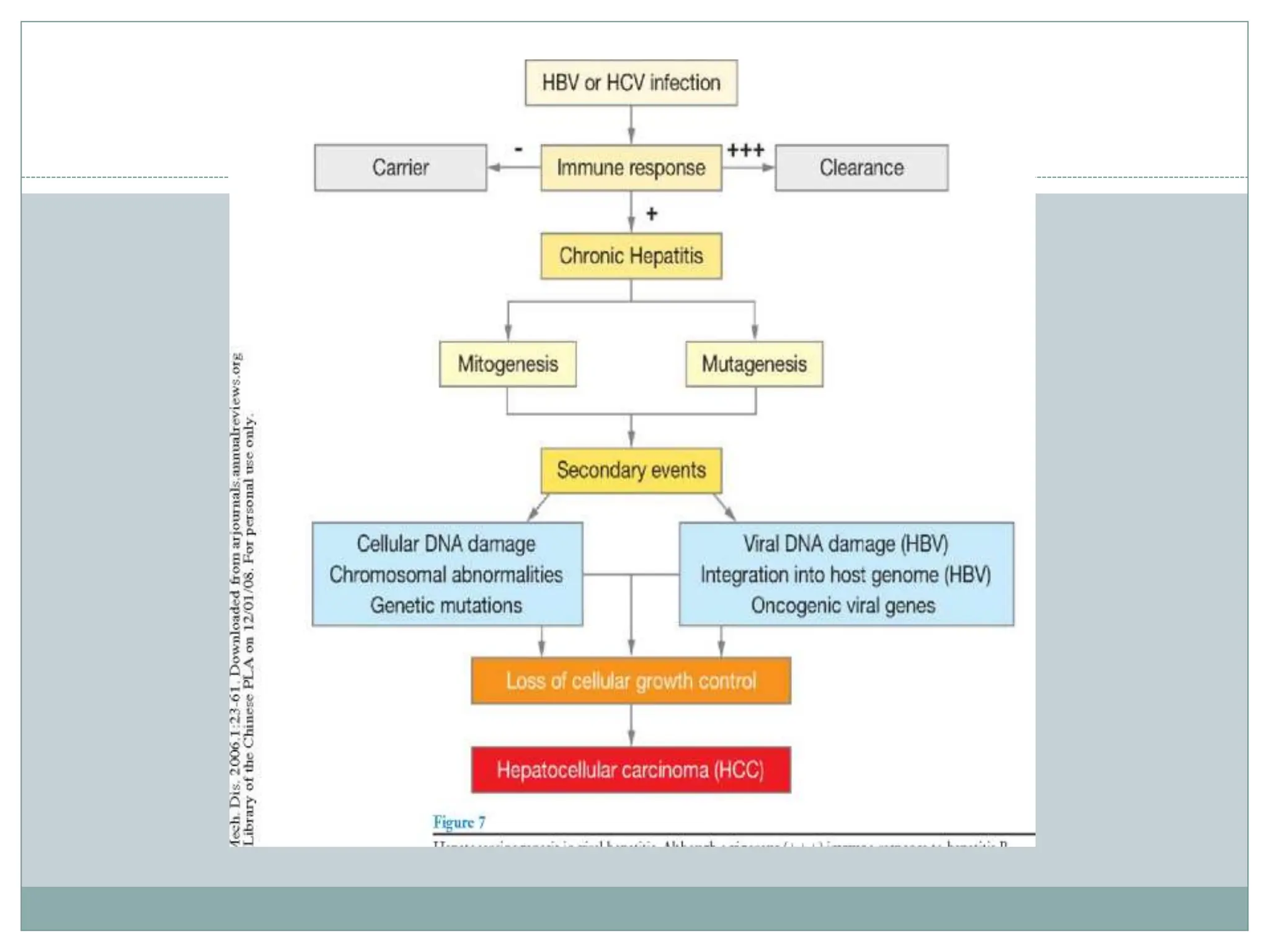
 HBV, HCV, and HDV may persist and can replicate in the liver when
the virus is not completely cleared from the organ.
 The consequences of hepatitis include
-recovery,
-persistent infection (or carrier state),
-dual infection, chronic active hepatitis,
-fulminant hepatitis,
-cirrhosis,
-hepatocellular carcinoma, and
-death.
CLINICAL PRESENTATION
 Patients classically exhibit three phases of acute illness.
 The prodromal (preicteric) phase,
which usually precedes the onset of jaundice by 1 or 2 weeks, consists of
— abdominal pain,
— anorexia,
— intermittent nausea,
— vomiting,
— fatigue,
— myalgia,
— malaise, and
— fever.
 With hepatitis B, 5% to 10% of patients demonstrate serum sickness–like
manifestations, including arthralgia or arthritis, rash, and angioedema.
 The icteric phase
 Onset of clinical jaundice,
 Many nonspecific prodromal symptoms may subside, but
gastrointestinal symptoms (e.g., anorexia, nausea, vomiting, right
upper quadrant pain) may increase, especially early in the phase.
 Hepatomegaly and splenomegaly frequently are seen.
 This phase lasts 2 to 8 weeks
 During the convalescent or recovery (posticteric) phase,
 symptoms disappear, but hepatomegaly and abnormal liver
function values may persist for a variable period.
 This phase can last for weeks or months, and recovery time for
hepatitis B and C is generally longer.
 HBV infrequently is associated with clinical syndromes, including
polyarteritis nodosa, glomerulonephritis, and leukocytoclastic
vasculitis.
 Coagulopathy, encephalopathy, cerebral edema, and fulminant
hepatitis are rare.
 Nonspecific symptoms of chronic hepatitis C (loss of weight, easy
fatigue, sleep disorder, difficulty in concentrating, right upper
quadrant pain, and liver tenderness) may not appear until hepatic
fibrosis, cirrhosis, or hepatocellular carcinoma is present.
 Hepatic damage is caused by the cytopathic effects of the virus and
inflammatory changes related to immune activation.
 Extrahepatic immunologic disorders associated with chronic HCV
infection result from the production of autoantibodies and include
immune complex–mediated disease (vasculitis, polyarteritis
nodosa),
autoimmune disorders (rheumatoid arthritis, glomerulonephritis,
thrombocytopenic purpura, thyroiditis, pulmonary fibrosis), and
two immunologic disorders: lichen planus and Sjögren's-like
syndrome (lymphocytic sialadenitis).
 If these diseases or signs of advanced liver disease (bleeding
esophageal varices, ascites, jaundice, spider angioma, dark urine)
are noted, testing for chronic hepatitis is recommended.
 HDV infection often results in severe acute hepatitis or
rapidly progressive chronic liver disease.
 Coinfection usually leads to transient and self-limiting
disease, whereas superinfection more often results in
severe clinical disease, indicated by sudden exacerbation in
a chronic carrier of HBV.
HEPATITIS A
 Caused by HAV, seen where socio-economic and living
conditions are poor
 Spread- mainly faeco-oral but can be transmitted sexually
 Incubation period- 2-6 weeks
 Subclinical disease
 Cl/f include fatigue, nausea and vomiting, abdominal pain,
loss of appetite, low grade fever, jaundice and itching.
 Recovery- uneventful
 No evidence of a carrier state or progression to CLD
HEPATITIS B
 Serum hepatitis, homologous serum jaundice
 It affects 1/3rd of the world’s population and 1/4th of those infected at
birth die from liver disease
 Endemic, common in developing world
 Australia Antigen
 Spread is mainly parenteral– via unscreened blood or blood products,
intravenous drug abuse, tattooing, sexual and perinatal.
 Incubation period is 2-6 months.
 About 30% have no signs and symptoms
 Effects range from subclinical infection to fulminating hepatitis, acute
hepatic failure and death.
 Prodrome period – 1-2 weeks- anorexia, malaise and nausea
 Hep B viremia usually precedes the clinical illness by weeks or months
 As jaundice becomes evident- stools become pale and urine dark due to
bilirubinuria.
 Liver –enlarged and tender, pruritis
 Muscle pains, rashes and arthalgia- more in Hep B than Hep A
 Complications include:
-Carrier state
-Chronic infection
-Cirrhosis
-HCC
-Polyarteritis nodosa
-Death
Acute viral hepatitis: biochemical features
 Carrier state, in which HBV persists within the body for > 6months
develops in 5-10% of people with chronic infection
 Immune tolerance
 Immune clearance
 Low replication
 Reactivation
 Frequent in anicteric infections or those contracted early in life
 High risk- received blood products, those infected with HDV, and
immune defects
 Most carriers- healthy, others with persistently abnormal LFTs develop
CLD and 15-25% die from it.
Hepacard test
 It is a visual rapid accurate one step immunoassay for
detection of HBsAg
 100% sensitivity and 98% specificity
HEPATITIS C
 Identified from post transfusion NANBH
 Spread- IV drug users, blood products, renal dialysis,etc
 6 major genotypes present
 Similar incubation to HBV and infection is usually less severe- but 25-
80% have abnormal LFTs > CLD
 <3% develop liver cancer, or die
 Present in saliva, 10% of needlestick injuries
 Passive and active immunoprophylaxis against HCV is mot present
HEPATITIS D
 HDV( delta agent) is a single-stranded RNA viroid (incomplete virus) –
replicative capacity of HBV to infect and replicate in humans
 Spread- parenterally
 Endemic – Mediterranean and among IV drug abusers
 Biphasic pattern
 90% of infections are asymptomatic but can cause fulminant disease
with high mortality
 About 70-80% HBV carriers with HDV superinfection progress to CLD
with cirrhosis > 15-30% with chronic HBV infection alone
 There is no effective HDV immunoprophylaxis
HEPATITIS E
 HEVis a single-stranded RNA virus belonging to the Calici virus family
 Spread- faeco-oral
 Unlike others, mortality rate in pregnant women is high(15-20%)
 HEV infections resolve spontaneously and do not progress to chronic
hepatitis
 Currently licensed hepatitis E vaccine - (HEV 239 vaccine,Hecolin)
HEPATITIS G
 Relatively new virus, previously thought of as HCV
 Diagnosed- HGV RNA in serum
 Transmission is mainly seen in the dialysis setting and also IV drug
users
 Co-infection possible with HBV or HCV
 Infection is less severe than HCV
GENERAL TREATMENT
 As with many viral diseases, basic therapy is palliative
and supportive.
 Bed rest and fluids may be prescribed, especially during
the acute phase.
 A nutritious, high-calorie diet is advised.
 Alcohol and drugs metabolized by the liver are not to be
ingested.
 Viral antigen and ALT levels should be monitored for 6
months
 Standard therapy for patients with chronic hepatitis is
interferon (IFN) alfa-2b (3 to 10 million units)
administered three times weekly for 6 months to 1 year.
 Newer modalities have used the pegylated form of IFN with
better sustained virologic response.
 IFN therapy normalizes ALT levels in up to 17% of patients
infected with HDV, 30% of those infected with HCV, and
40% of those infected with HBV and reduces the risk for
development of hepatocellular carcinoma.
 Adverse effects (e.g., fatigue, flulike symptoms, bone
marrow suppression) are common.
 The addition of lamivudine (a nucleoside analog active
against HBV) or ribavirin (a guanosine analog active
against HCV) results in a virologic response in an
additional 15% to 25%.
 Corticosteroids are usually reserved for fulminant hepatitis.
 Liver transplantation is a last resort for patients who
develop cirrhosis
ORAL MANIFESTATIONS
 The oral cavity can reflect liver dysfunction in the form of
mucosal membrane jaundice, bleeding disorders, petechiae,
increased vulnerability to bruising, gingivitis, gingival
bleeding (even in response to minimum trauma) ,foetor
hepaticus (a characteristic odor of advanced liver disease),
cheilitis, smooth and atrophic tongue, xerostomia, bruxism
and crusted perioral rash.In these patients, chronic
periodontal disease is a common finding
DENTAL MANAGEMENT
 Identification of potential or actual carriers of HBV, HCV, and
HDV is problematic because in most instances, carriers
cannot be identified by history.
 The inability to identify potentially infectious patients extends
to HIV infection and other sexually transmitted diseases.
 Therefore, all patients with a history of viral hepatitis must be
managed as though they are potentially infectious.
 Recommendations for infection control practices in dentistry
published by the CDC and the American Dental Association
have become the standard of care for preventing
crossinfection in dental practice .
 All dental health care workers who provide patient care
should receive vaccination against hepatitis B virus
 . The most frequent problems associated with liver disease
in clinical practice refer to
1. the risk of viral contagion on the part of the dental
professionals and rest of patients (cross-infection),
2. the risk of bleeding in patients with serious liver disease,
3. and alterations in the metabolism of certain drug
substances – which increases the risk of toxicity
 Patients With Active Hepatitis.
 No dental treatment other than urgent care (absolutely
necessary work) should be rendered unless the patient is
clinically and biochemically recovered.
 Urgent care should be provided only in an isolated
operatory with adherence to strict standard precautions.
 Aerosols should be minimized and drugs metabolized in the
liver should be avoided as much as possible.
 If surgery is necessary, preoperative prothrombin time and
bleeding time should be obtained and abnormal results
discussed with the physician.
 The dentist should refer the patient who has acute hepatitis
for medical diagnosis and treatment.
 Patients With a History of Hepatitis.
 Most carriers of HBV, HCV, and HDV are unaware that they
have had hepatitis.
 An additional consideration in patients with a history of
hepatitis of unknown type is the use of the clinical laboratory
to screen for the presence of HBsAg or anti-HCV.
 Patients at High Risk for HBV or HCV Infection.
 Several groups are at unusually high risk for HBV and HCV
infection.
 Screening for HBsAg and anti-HCV is recommended for
individuals who fit into one or more of these categories unless
they are already known to be seropositive.
 In addition, the patient might have undetected chronic active
hepatitis, which could lead to bleeding complications or drug
metabolism problems.
 Patients Who Are Hepatitis Carriers.
 In addition, some hepatitis carriers may have chronic active
hepatitis, leading to compromised liver function and
interference with hemostasis and drug metabolism.
 Physician consultation and laboratory screening of liver
function are advised for determination of current status and
future risks.
 Patients With Signs or Symptoms of Hepatitis.
 Necessary emergency dental care should be provided with
the use of an isolated operatory and minimal aerosol
production.
CDC Guidelines for Exposure to Blood
 To reduce the risk of transmission of hepatitis viruses, the CDC has
published postexposure protocols for percutaneous or permucosal
exposure to blood.
 Implementation of these protocols is dependent on the virus
present in the source person and the vaccinated state of the exposed
person .
 A vaccinated individual who sustains a needlestick injury should be
tested for an adequate titer of anti-HBs if those levels are unknown.
 If levels are inadequate, the individual immediately should receive
an injection of HBIG and a vaccine booster dose
 If the antibody titer is adequate, nothing further is required.
 If an unvaccinated individual sustains an inadvertent percutaneous
or permucosal exposure to hepatitis B, immediate administration of
HBIG and initiation of the vaccine are recommended.
 Although no postexposure protocol or vaccine is available at
this time for HCV infection, current CDC guidelines
recommend that
1. the source person should receive baseline testing for anti-HCV
2. exposed persons should receive baseline and follow-up testing
at 6 months for anti-HCV and liver enzyme activity,
3. anti-HCV enzyme immunoassay positive results should be
confirmed by recombinant immunoblot assay (RIBA),
4. postexposure prophylaxis should be avoided with
immunoglobulin or antiviral agents,
5. health care workers should be educated regarding the risks
and prevention of bloodborne infection.
Exposure Control Plan
 With respect to hepatitis viruses, the U.S. Occupational
Safety and Health Administration mandates that
 all employers must maintain an exposure control plan
and must protect employees from the hazards of
bloodborne pathogens by applying standard precautions
and
 by providing the following as a minimum:
Hepatitis B vaccinations to employees
Postexposure evaluation and follow-up
Record keeping of exposures
Generic bloodborne pathogen training
Personal protective equipment at no cost to employees
Drug Administration
 No special drug considerations are required for a patient
who has completely recovered from viral hepatitis.
 However, if a patient has chronic active hepatitis or is a
carrier of HBsAg or HCV and has impaired liver function,
the dosage of drugs metabolized by the liver should be
decreased, or these drugs should be avoided, if possible as
advised by the physician.
 As a guideline, drugs metabolized in the liver should be considered for
diminished dosage
 when one or more of the following are present:
Aminotransferase levels elevated to greater than 4 times normal values
Serum bilirubin elevated to above 35 μM/L or 2 mg/dL
Serum albumin levels lower than 35 mg/L
Signs of ascites and encephalopathy, and prolonged bleeding time
 A quantity of three cartridges of 2% lidocaine (120 mg) is considered a
relatively limited amount of drug.
 Treatment planning modifications are not required for
the patient who has recovered from hepatitis.
 Oral Manifestations and Complications
 Abnormal bleeding is associated with hepatitis and
significant liver damage.
 This may result from
abnormal synthesis of blood clotting factors,
abnormal polymerization of fibrin,
inadequate fibrin stabilization,
excessive fibrinolysis, or
thrombocytopenia associated with splenomegaly that
accompanies chronic liver disease.
 • Before any surgery is performed, the platelet count should be
obtained, and it should be confirmed that the international
normalized ratio (INR) is lower than 3.5.
 If the INR is 3.5 or greater, the potential for severe postoperative
bleeding exists.
 In this case, extensive surgical procedures should be postponed.
 If surgery is necessary, an injection of vitamin K usually corrects the
problem and should be discussed with the physician.
 Chronic viral hepatitis increases the risk for hepatocellular
carcinoma.
 This malignancy rarely metastasizes to the jaw (fewer than 30 cases
in the jaw were reported)
 Oral metastases primarily present as hemorrhagic expanding
masses located in the premolar and ramus regions of the mandible.
REFERENCES
 Harrison's Principles of Internal Medicine
 Scully’s Medical problems in Dentistry 7th Ed
 Robbins and Cotran’s Pathologic basis of disease
 Viral hepatitis and the surgeon. HPB, 2005; 7: 56–64
 J Clin Exp Dent. 2011;3(2):e127-34. Dental treatment in patients with
liver disease

Viral Hepatitis disease pathogenesis hbsag

  • 1.
  • 3.
    CONTENTS  Definition andClassification  Physiology  Pathogenesis  Complications  Individual Viruses  Dental Considerations  References
  • 4.
    HISTORY  Its anancient disease first described in 5th century BC  Earliest recognized blood-borne outbreak of hepatitis was in Germany in 1883 after receiving small pox vaccine  In 1947, McCalum and Bauer introduced the term hepatitis A for infectious and Hepatitis B for serum hepatitis.  This terminology was adopted by WHO in 1973
  • 5.
    HEPATITIS  DEFINITION: Hepatitisis inflammation of the liver that may result from infectious or other causes.  Examples of hepatitis with infectious causes are viral hepatitis, infectious mononucleosis, secondary syphilis, and tuberculosis,etc  Noninfectious hepatitis can result from excessive or prolonged use of toxic substances (e.g., drugs [acetaminophen, alcohol, halothane, ketoconazole, methyldopa, methotrexate]; more commonly, alcohol),auto-immune
  • 6.
     Acute Hepatitis-is a self limited liver injury of less than 6 months.  Chronic Hepatitis is defined as symptomatic, biochemical or serologic evidence of continuing or relapsing hepatic disease for more than 6 months with histologically documented inflammation and necrosis.  Fulminant hepatitis- when hepatic insufficiency progresses from onset of symptoms to hepatic encephalopathy within 2-3 weeks
  • 7.
    Diagnosis  Liver functiontests (AST and ALT elevated out of proportion to alkaline phosphatase, usually with hyperbilirubinemia)  Viral serologic testing  PT/INR measurement
  • 8.
  • 10.
    PATHOPHYSIOLOGY AND COMPLICATIONS Hepatitis viruses replicate in hepatocytes and ultimately damage the host cell.  HBV infection produces high serum titers that may reach 10 8 to 10 11 virions/mL.  In contrast, HAV produces a viremia that may reach 10 5 virions/mL in blood but 10 6 to 10 10 genomes/g in stool.  No single histopathologic lesion is characteristic of viral hepatitis, but the appearances of types A, B, C, D, and E hepatitides are similar and are described together.  Commonly, acute viral hepatitis is characterized by ballooning degeneration and necrosis of liver cells (hepatocytes). The entire liver lobule becomes inflamed and consists of lymphocytes and mononuclear phagocytes.
  • 11.
     Icterus (jaundice)is associated with hepatitis in  approximately 70% of cases of HAV,  approximately 30% of cases of HBV infection, and  approximately 25% of cases of HCV and HEV.  This is caused by an accumulation of bilirubin in the plasma, epithelium, and urine.
  • 12.
     Jaundice usuallybecomes clinically apparent when the plasma level of bilirubin approaches 2.5 mg/100 mL (normal is less than 1 mg/100 mL).  If plasma bilirubin does not reach this level, the patient is anicteric(without jaundice), thus explaining nonicteric hepatitis.
  • 13.
     Most casesof viral hepatitis, especially types A and E, resolve with no complications.  HBV, HCV, and HDV may persist and can replicate in the liver when the virus is not completely cleared from the organ.
  • 14.
     The consequencesof hepatitis include -recovery, -persistent infection (or carrier state), -dual infection, chronic active hepatitis, -fulminant hepatitis, -cirrhosis, -hepatocellular carcinoma, and -death.
  • 15.
    CLINICAL PRESENTATION  Patientsclassically exhibit three phases of acute illness.  The prodromal (preicteric) phase, which usually precedes the onset of jaundice by 1 or 2 weeks, consists of — abdominal pain, — anorexia, — intermittent nausea, — vomiting, — fatigue, — myalgia, — malaise, and — fever.  With hepatitis B, 5% to 10% of patients demonstrate serum sickness–like manifestations, including arthralgia or arthritis, rash, and angioedema.
  • 16.
     The ictericphase  Onset of clinical jaundice,  Many nonspecific prodromal symptoms may subside, but gastrointestinal symptoms (e.g., anorexia, nausea, vomiting, right upper quadrant pain) may increase, especially early in the phase.  Hepatomegaly and splenomegaly frequently are seen.  This phase lasts 2 to 8 weeks
  • 17.
     During theconvalescent or recovery (posticteric) phase,  symptoms disappear, but hepatomegaly and abnormal liver function values may persist for a variable period.  This phase can last for weeks or months, and recovery time for hepatitis B and C is generally longer.  HBV infrequently is associated with clinical syndromes, including polyarteritis nodosa, glomerulonephritis, and leukocytoclastic vasculitis.  Coagulopathy, encephalopathy, cerebral edema, and fulminant hepatitis are rare.  Nonspecific symptoms of chronic hepatitis C (loss of weight, easy fatigue, sleep disorder, difficulty in concentrating, right upper quadrant pain, and liver tenderness) may not appear until hepatic fibrosis, cirrhosis, or hepatocellular carcinoma is present.
  • 18.
     Hepatic damageis caused by the cytopathic effects of the virus and inflammatory changes related to immune activation.  Extrahepatic immunologic disorders associated with chronic HCV infection result from the production of autoantibodies and include immune complex–mediated disease (vasculitis, polyarteritis nodosa), autoimmune disorders (rheumatoid arthritis, glomerulonephritis, thrombocytopenic purpura, thyroiditis, pulmonary fibrosis), and two immunologic disorders: lichen planus and Sjögren's-like syndrome (lymphocytic sialadenitis).  If these diseases or signs of advanced liver disease (bleeding esophageal varices, ascites, jaundice, spider angioma, dark urine) are noted, testing for chronic hepatitis is recommended.
  • 19.
     HDV infectionoften results in severe acute hepatitis or rapidly progressive chronic liver disease.  Coinfection usually leads to transient and self-limiting disease, whereas superinfection more often results in severe clinical disease, indicated by sudden exacerbation in a chronic carrier of HBV.
  • 22.
    HEPATITIS A  Causedby HAV, seen where socio-economic and living conditions are poor  Spread- mainly faeco-oral but can be transmitted sexually  Incubation period- 2-6 weeks  Subclinical disease  Cl/f include fatigue, nausea and vomiting, abdominal pain, loss of appetite, low grade fever, jaundice and itching.  Recovery- uneventful  No evidence of a carrier state or progression to CLD
  • 24.
    HEPATITIS B  Serumhepatitis, homologous serum jaundice  It affects 1/3rd of the world’s population and 1/4th of those infected at birth die from liver disease  Endemic, common in developing world  Australia Antigen  Spread is mainly parenteral– via unscreened blood or blood products, intravenous drug abuse, tattooing, sexual and perinatal.  Incubation period is 2-6 months.  About 30% have no signs and symptoms  Effects range from subclinical infection to fulminating hepatitis, acute hepatic failure and death.
  • 25.
     Prodrome period– 1-2 weeks- anorexia, malaise and nausea  Hep B viremia usually precedes the clinical illness by weeks or months  As jaundice becomes evident- stools become pale and urine dark due to bilirubinuria.  Liver –enlarged and tender, pruritis  Muscle pains, rashes and arthalgia- more in Hep B than Hep A  Complications include: -Carrier state -Chronic infection -Cirrhosis -HCC -Polyarteritis nodosa -Death
  • 26.
    Acute viral hepatitis:biochemical features
  • 27.
     Carrier state,in which HBV persists within the body for > 6months develops in 5-10% of people with chronic infection  Immune tolerance  Immune clearance  Low replication  Reactivation  Frequent in anicteric infections or those contracted early in life  High risk- received blood products, those infected with HDV, and immune defects  Most carriers- healthy, others with persistently abnormal LFTs develop CLD and 15-25% die from it.
  • 32.
    Hepacard test  Itis a visual rapid accurate one step immunoassay for detection of HBsAg  100% sensitivity and 98% specificity
  • 33.
    HEPATITIS C  Identifiedfrom post transfusion NANBH  Spread- IV drug users, blood products, renal dialysis,etc  6 major genotypes present  Similar incubation to HBV and infection is usually less severe- but 25- 80% have abnormal LFTs > CLD  <3% develop liver cancer, or die  Present in saliva, 10% of needlestick injuries  Passive and active immunoprophylaxis against HCV is mot present
  • 35.
    HEPATITIS D  HDV(delta agent) is a single-stranded RNA viroid (incomplete virus) – replicative capacity of HBV to infect and replicate in humans  Spread- parenterally  Endemic – Mediterranean and among IV drug abusers  Biphasic pattern  90% of infections are asymptomatic but can cause fulminant disease with high mortality  About 70-80% HBV carriers with HDV superinfection progress to CLD with cirrhosis > 15-30% with chronic HBV infection alone  There is no effective HDV immunoprophylaxis
  • 37.
    HEPATITIS E  HEVisa single-stranded RNA virus belonging to the Calici virus family  Spread- faeco-oral  Unlike others, mortality rate in pregnant women is high(15-20%)  HEV infections resolve spontaneously and do not progress to chronic hepatitis  Currently licensed hepatitis E vaccine - (HEV 239 vaccine,Hecolin)
  • 38.
    HEPATITIS G  Relativelynew virus, previously thought of as HCV  Diagnosed- HGV RNA in serum  Transmission is mainly seen in the dialysis setting and also IV drug users  Co-infection possible with HBV or HCV  Infection is less severe than HCV
  • 39.
    GENERAL TREATMENT  Aswith many viral diseases, basic therapy is palliative and supportive.  Bed rest and fluids may be prescribed, especially during the acute phase.  A nutritious, high-calorie diet is advised.  Alcohol and drugs metabolized by the liver are not to be ingested.  Viral antigen and ALT levels should be monitored for 6 months  Standard therapy for patients with chronic hepatitis is interferon (IFN) alfa-2b (3 to 10 million units) administered three times weekly for 6 months to 1 year.
  • 40.
     Newer modalitieshave used the pegylated form of IFN with better sustained virologic response.  IFN therapy normalizes ALT levels in up to 17% of patients infected with HDV, 30% of those infected with HCV, and 40% of those infected with HBV and reduces the risk for development of hepatocellular carcinoma.  Adverse effects (e.g., fatigue, flulike symptoms, bone marrow suppression) are common.
  • 41.
     The additionof lamivudine (a nucleoside analog active against HBV) or ribavirin (a guanosine analog active against HCV) results in a virologic response in an additional 15% to 25%.  Corticosteroids are usually reserved for fulminant hepatitis.  Liver transplantation is a last resort for patients who develop cirrhosis
  • 42.
    ORAL MANIFESTATIONS  Theoral cavity can reflect liver dysfunction in the form of mucosal membrane jaundice, bleeding disorders, petechiae, increased vulnerability to bruising, gingivitis, gingival bleeding (even in response to minimum trauma) ,foetor hepaticus (a characteristic odor of advanced liver disease), cheilitis, smooth and atrophic tongue, xerostomia, bruxism and crusted perioral rash.In these patients, chronic periodontal disease is a common finding
  • 43.
    DENTAL MANAGEMENT  Identificationof potential or actual carriers of HBV, HCV, and HDV is problematic because in most instances, carriers cannot be identified by history.  The inability to identify potentially infectious patients extends to HIV infection and other sexually transmitted diseases.  Therefore, all patients with a history of viral hepatitis must be managed as though they are potentially infectious.  Recommendations for infection control practices in dentistry published by the CDC and the American Dental Association have become the standard of care for preventing crossinfection in dental practice .  All dental health care workers who provide patient care should receive vaccination against hepatitis B virus
  • 44.
     . Themost frequent problems associated with liver disease in clinical practice refer to 1. the risk of viral contagion on the part of the dental professionals and rest of patients (cross-infection), 2. the risk of bleeding in patients with serious liver disease, 3. and alterations in the metabolism of certain drug substances – which increases the risk of toxicity
  • 45.
     Patients WithActive Hepatitis.  No dental treatment other than urgent care (absolutely necessary work) should be rendered unless the patient is clinically and biochemically recovered.  Urgent care should be provided only in an isolated operatory with adherence to strict standard precautions.  Aerosols should be minimized and drugs metabolized in the liver should be avoided as much as possible.  If surgery is necessary, preoperative prothrombin time and bleeding time should be obtained and abnormal results discussed with the physician.  The dentist should refer the patient who has acute hepatitis for medical diagnosis and treatment.
  • 46.
     Patients Witha History of Hepatitis.  Most carriers of HBV, HCV, and HDV are unaware that they have had hepatitis.  An additional consideration in patients with a history of hepatitis of unknown type is the use of the clinical laboratory to screen for the presence of HBsAg or anti-HCV.  Patients at High Risk for HBV or HCV Infection.  Several groups are at unusually high risk for HBV and HCV infection.  Screening for HBsAg and anti-HCV is recommended for individuals who fit into one or more of these categories unless they are already known to be seropositive.  In addition, the patient might have undetected chronic active hepatitis, which could lead to bleeding complications or drug metabolism problems.
  • 47.
     Patients WhoAre Hepatitis Carriers.  In addition, some hepatitis carriers may have chronic active hepatitis, leading to compromised liver function and interference with hemostasis and drug metabolism.  Physician consultation and laboratory screening of liver function are advised for determination of current status and future risks.  Patients With Signs or Symptoms of Hepatitis.  Necessary emergency dental care should be provided with the use of an isolated operatory and minimal aerosol production.
  • 48.
    CDC Guidelines forExposure to Blood  To reduce the risk of transmission of hepatitis viruses, the CDC has published postexposure protocols for percutaneous or permucosal exposure to blood.  Implementation of these protocols is dependent on the virus present in the source person and the vaccinated state of the exposed person .  A vaccinated individual who sustains a needlestick injury should be tested for an adequate titer of anti-HBs if those levels are unknown.  If levels are inadequate, the individual immediately should receive an injection of HBIG and a vaccine booster dose  If the antibody titer is adequate, nothing further is required.  If an unvaccinated individual sustains an inadvertent percutaneous or permucosal exposure to hepatitis B, immediate administration of HBIG and initiation of the vaccine are recommended.
  • 49.
     Although nopostexposure protocol or vaccine is available at this time for HCV infection, current CDC guidelines recommend that 1. the source person should receive baseline testing for anti-HCV 2. exposed persons should receive baseline and follow-up testing at 6 months for anti-HCV and liver enzyme activity, 3. anti-HCV enzyme immunoassay positive results should be confirmed by recombinant immunoblot assay (RIBA), 4. postexposure prophylaxis should be avoided with immunoglobulin or antiviral agents, 5. health care workers should be educated regarding the risks and prevention of bloodborne infection.
  • 50.
    Exposure Control Plan With respect to hepatitis viruses, the U.S. Occupational Safety and Health Administration mandates that  all employers must maintain an exposure control plan and must protect employees from the hazards of bloodborne pathogens by applying standard precautions and  by providing the following as a minimum: Hepatitis B vaccinations to employees Postexposure evaluation and follow-up Record keeping of exposures Generic bloodborne pathogen training Personal protective equipment at no cost to employees
  • 51.
    Drug Administration  Nospecial drug considerations are required for a patient who has completely recovered from viral hepatitis.  However, if a patient has chronic active hepatitis or is a carrier of HBsAg or HCV and has impaired liver function, the dosage of drugs metabolized by the liver should be decreased, or these drugs should be avoided, if possible as advised by the physician.
  • 52.
     As aguideline, drugs metabolized in the liver should be considered for diminished dosage  when one or more of the following are present: Aminotransferase levels elevated to greater than 4 times normal values Serum bilirubin elevated to above 35 μM/L or 2 mg/dL Serum albumin levels lower than 35 mg/L Signs of ascites and encephalopathy, and prolonged bleeding time  A quantity of three cartridges of 2% lidocaine (120 mg) is considered a relatively limited amount of drug.
  • 53.
     Treatment planningmodifications are not required for the patient who has recovered from hepatitis.  Oral Manifestations and Complications  Abnormal bleeding is associated with hepatitis and significant liver damage.  This may result from abnormal synthesis of blood clotting factors, abnormal polymerization of fibrin, inadequate fibrin stabilization, excessive fibrinolysis, or thrombocytopenia associated with splenomegaly that accompanies chronic liver disease.
  • 54.
     • Beforeany surgery is performed, the platelet count should be obtained, and it should be confirmed that the international normalized ratio (INR) is lower than 3.5.  If the INR is 3.5 or greater, the potential for severe postoperative bleeding exists.  In this case, extensive surgical procedures should be postponed.  If surgery is necessary, an injection of vitamin K usually corrects the problem and should be discussed with the physician.  Chronic viral hepatitis increases the risk for hepatocellular carcinoma.  This malignancy rarely metastasizes to the jaw (fewer than 30 cases in the jaw were reported)  Oral metastases primarily present as hemorrhagic expanding masses located in the premolar and ramus regions of the mandible.
  • 55.
    REFERENCES  Harrison's Principlesof Internal Medicine  Scully’s Medical problems in Dentistry 7th Ed  Robbins and Cotran’s Pathologic basis of disease  Viral hepatitis and the surgeon. HPB, 2005; 7: 56–64  J Clin Exp Dent. 2011;3(2):e127-34. Dental treatment in patients with liver disease