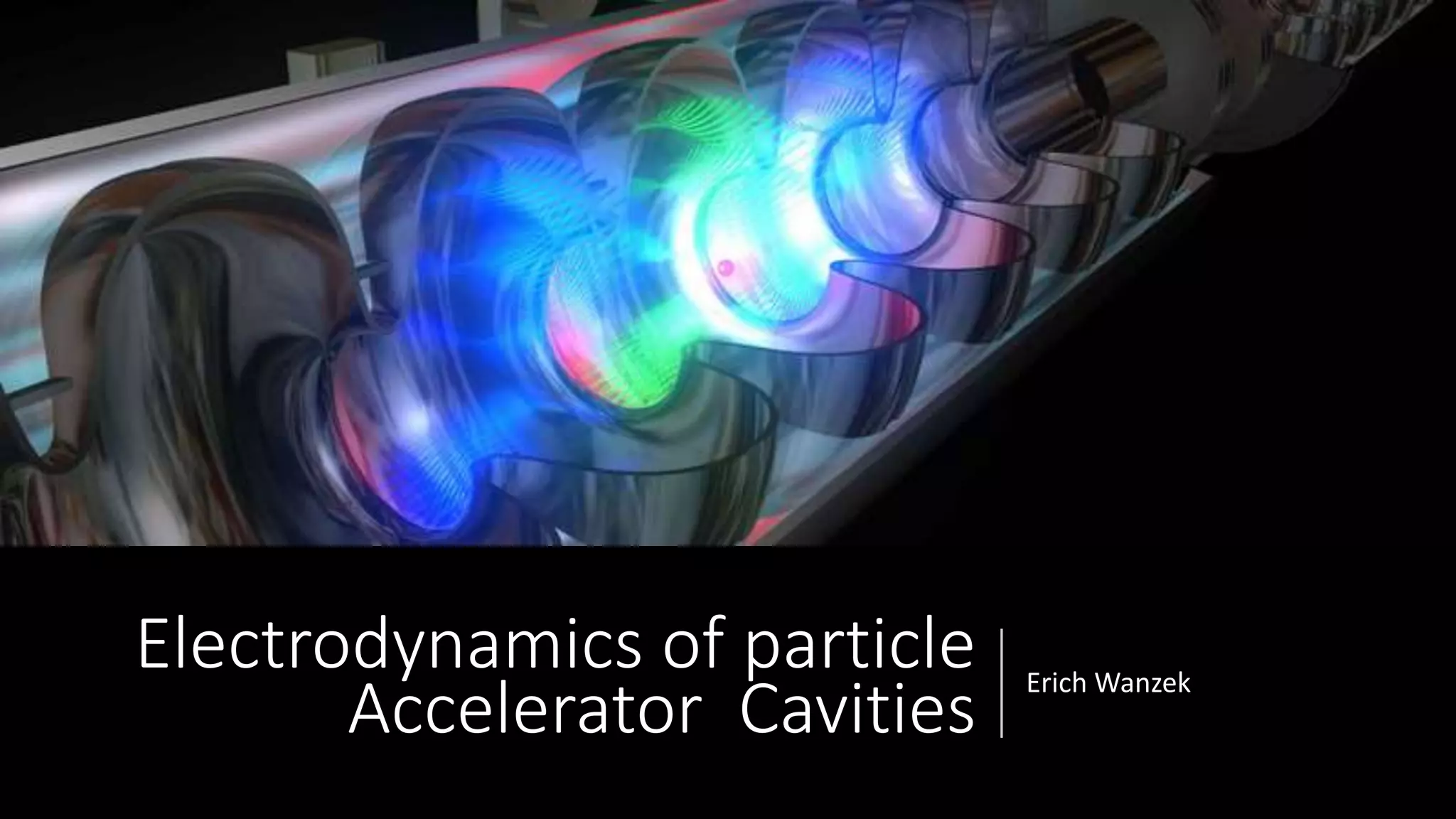
Electrodynamics of particle
Accelerator Cavities
Erich Wanzek
Particle Accelerator basics
• Electromagnetism is the basis of the design of particle accelerators.
• Beams of Charged particles can be:
• Accelerated by electric field
• An steered and focused using magnetic fields
• Use Electric Field to do work on particle beam
• Use magnetic field to steer particle beam
• Electrostatic Accelerator use electrostatic fields to accelerate particles
• Achievable energies Limited by electrical breakdown of high E field Gradients at
millions of volts
• Electrodynamic Accelerators use changing (oscillating electric fields) to
accelerate particles
• Higher achievable energies, because beam passes through same field multiple times
instead of just once
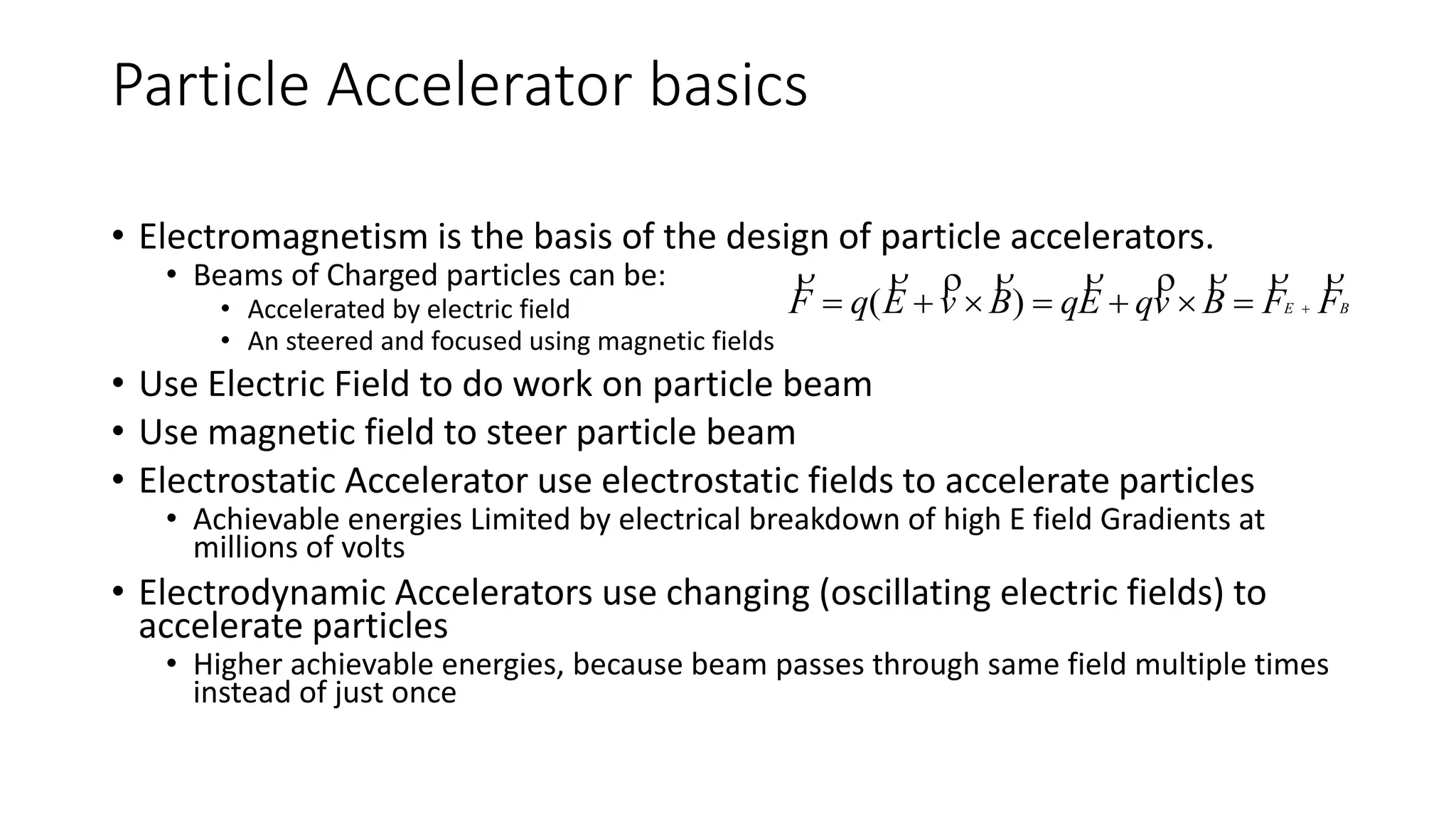
BE FFBvqEqBvEqF

 )(
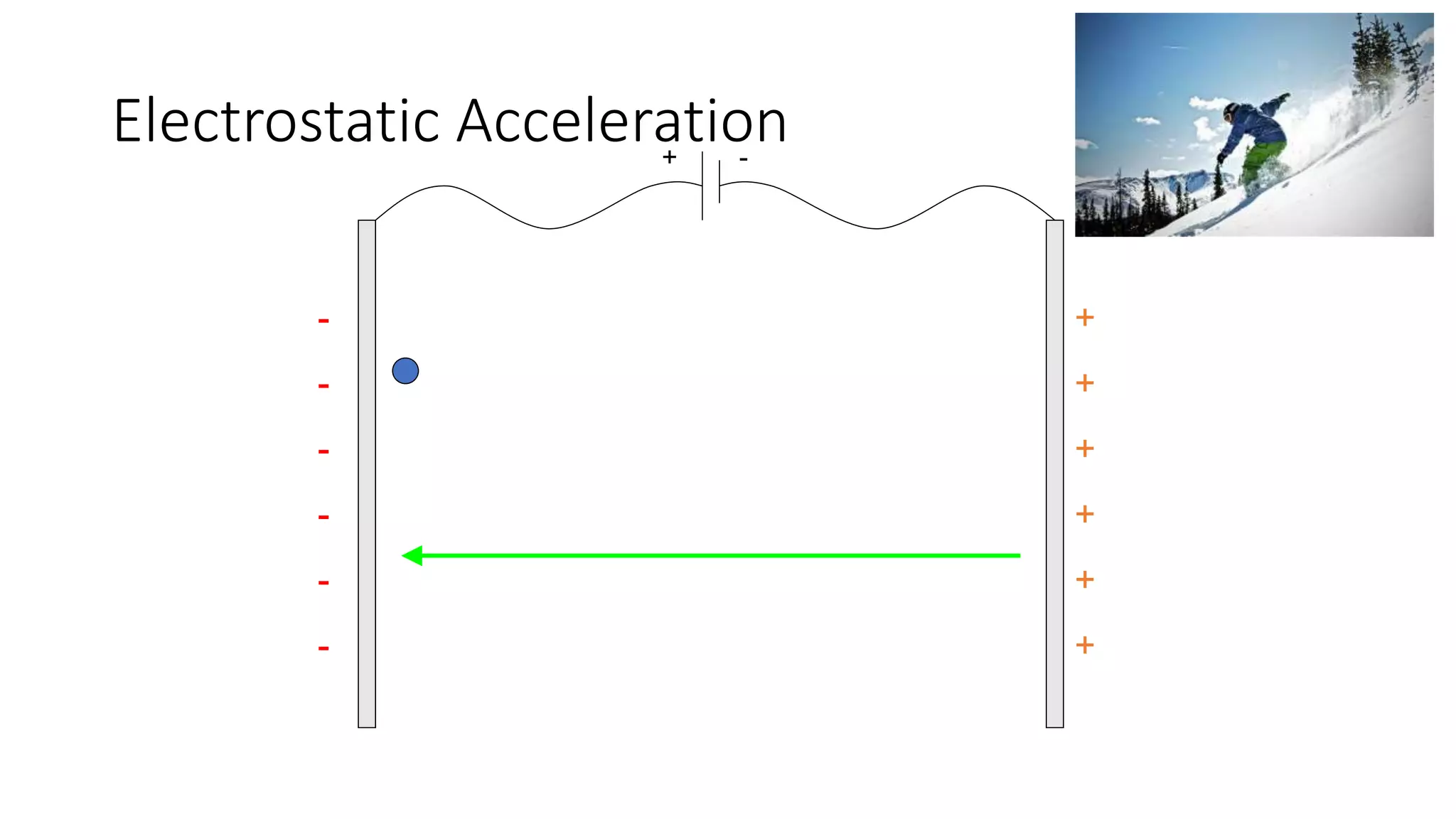
Electrostatic Acceleration
+
+
+
+
+
+
-
-
-
-
-
-
+ -
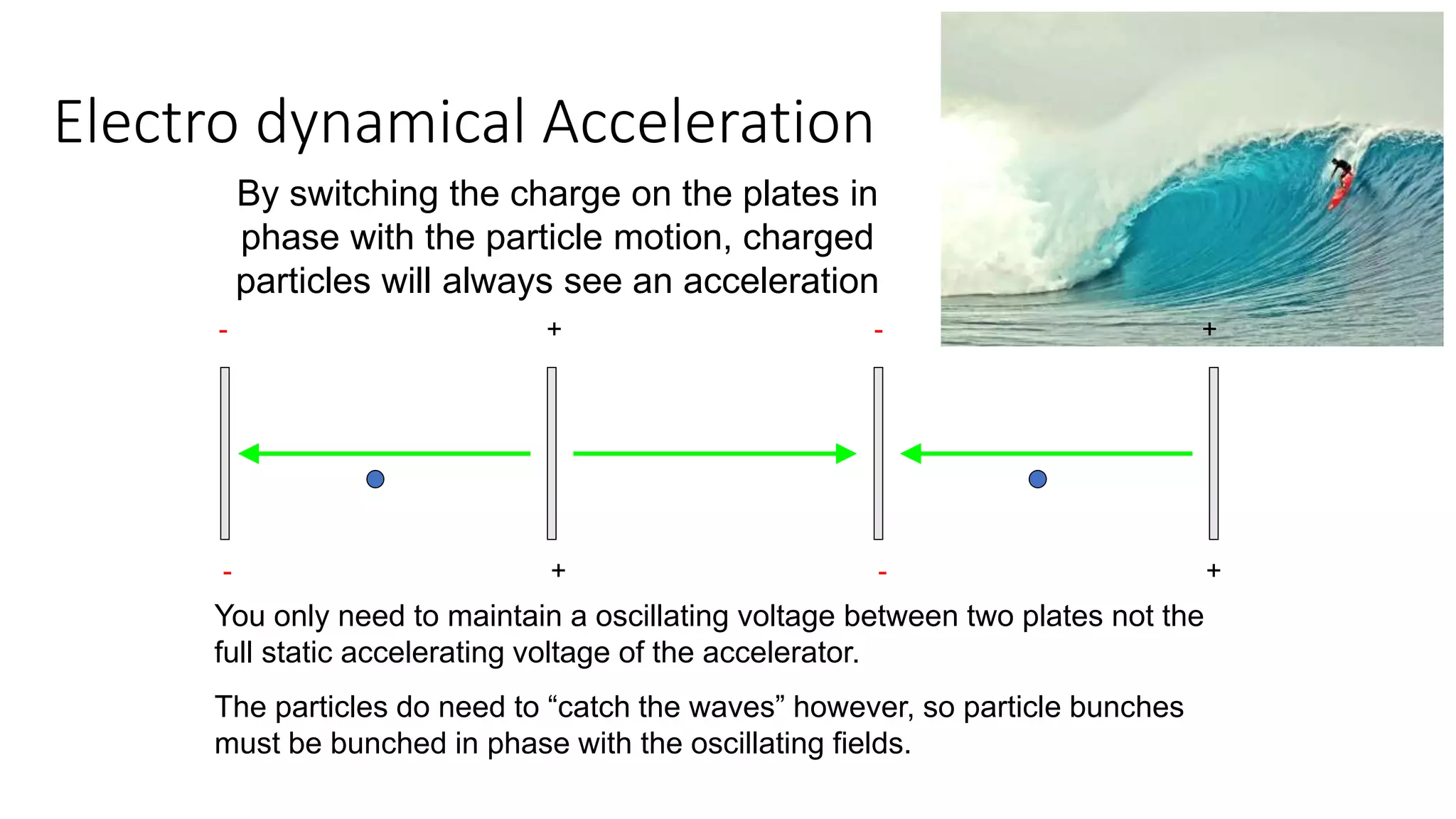
Electro dynamical Acceleration
- + - +
- + - +
By switching the charge on the plates in
phase with the particle motion, charged
particles will always see an acceleration
You only need to maintain a oscillating voltage between two plates not the
full static accelerating voltage of the accelerator.
The particles do need to “catch the waves” however, so particle bunches
must be bunched in phase with the oscillating fields.
Accelerator cavities
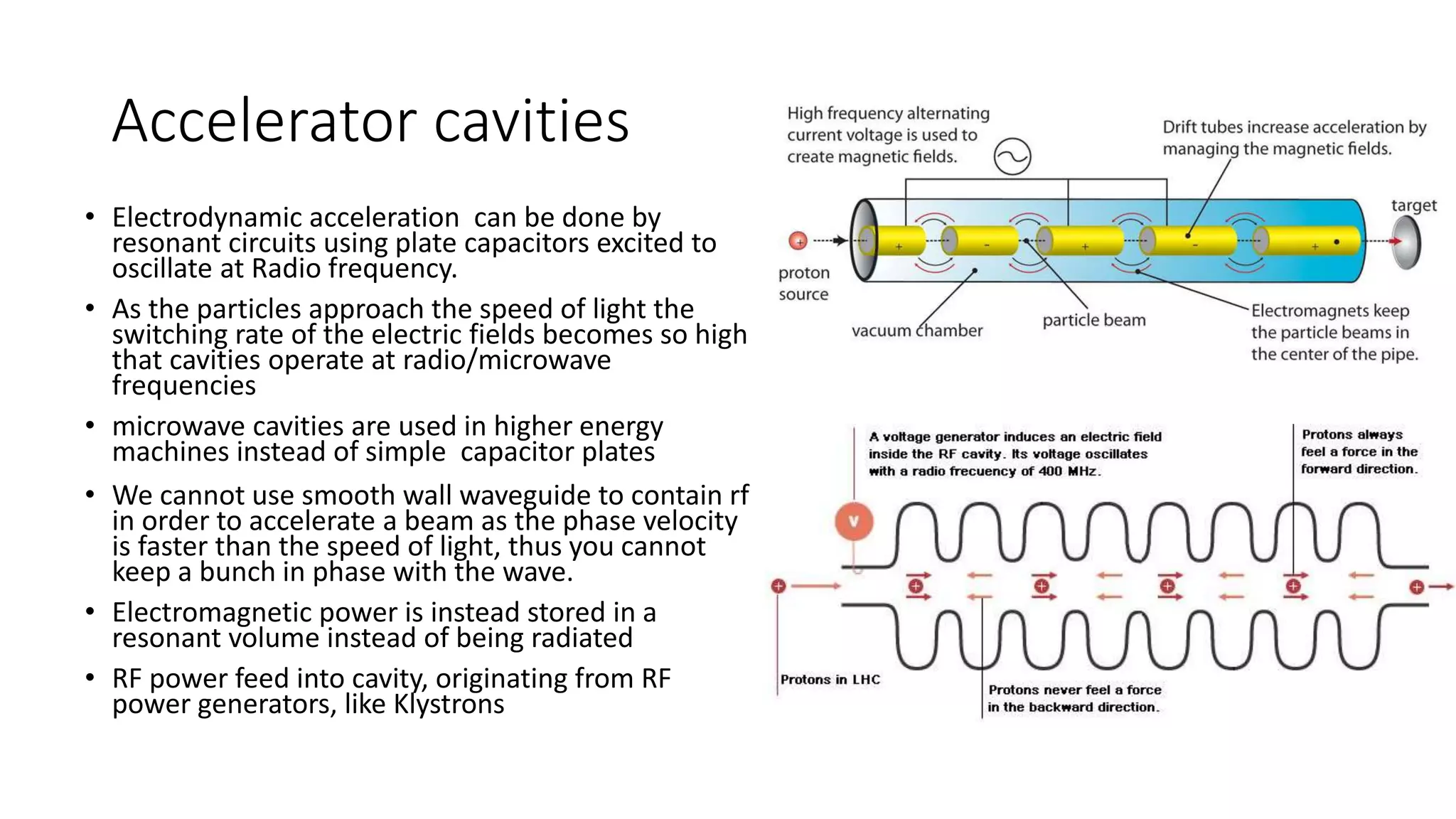
• Electrodynamic acceleration can be done by
resonant circuits using plate capacitors excited to
oscillate at Radio frequency.
• As the particles approach the speed of light the
switching rate of the electric fields becomes so high
that cavities operate at radio/microwave
frequencies
• microwave cavities are used in higher energy
machines instead of simple capacitor plates
• We cannot use smooth wall waveguide to contain rf
in order to accelerate a beam as the phase velocity
is faster than the speed of light, thus you cannot
keep a bunch in phase with the wave.
• Electromagnetic power is instead stored in a
resonant volume instead of being radiated
• RF power feed into cavity, originating from RF
power generators, like Klystrons
Electrodynamics of Micro wave cavities
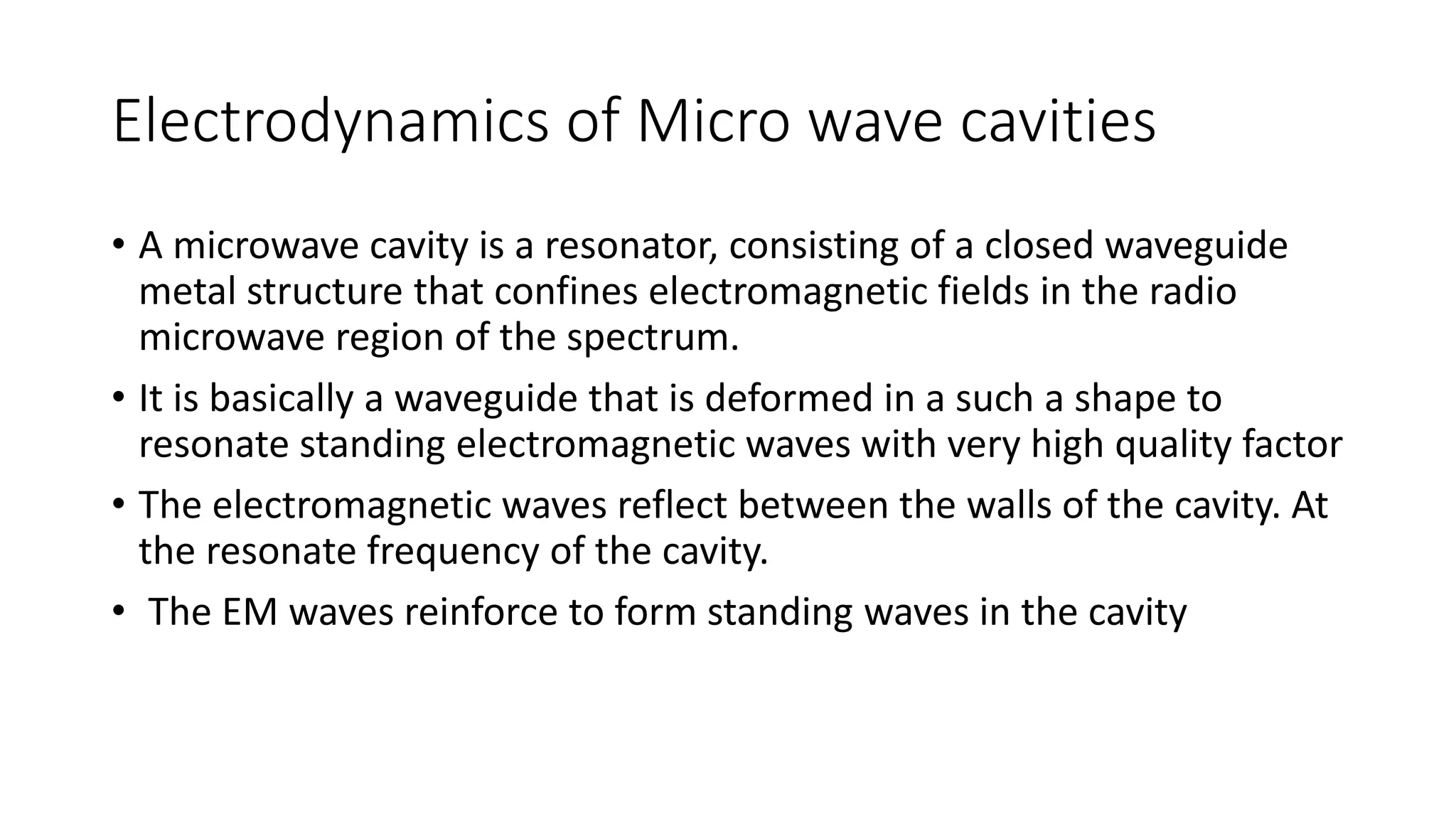
• A microwave cavity is a resonator, consisting of a closed waveguide
metal structure that confines electromagnetic fields in the radio
microwave region of the spectrum.
• It is basically a waveguide that is deformed in a such a shape to
resonate standing electromagnetic waves with very high quality factor
• The electromagnetic waves reflect between the walls of the cavity. At
the resonate frequency of the cavity.
• The EM waves reinforce to form standing waves in the cavity
Microwave cavity
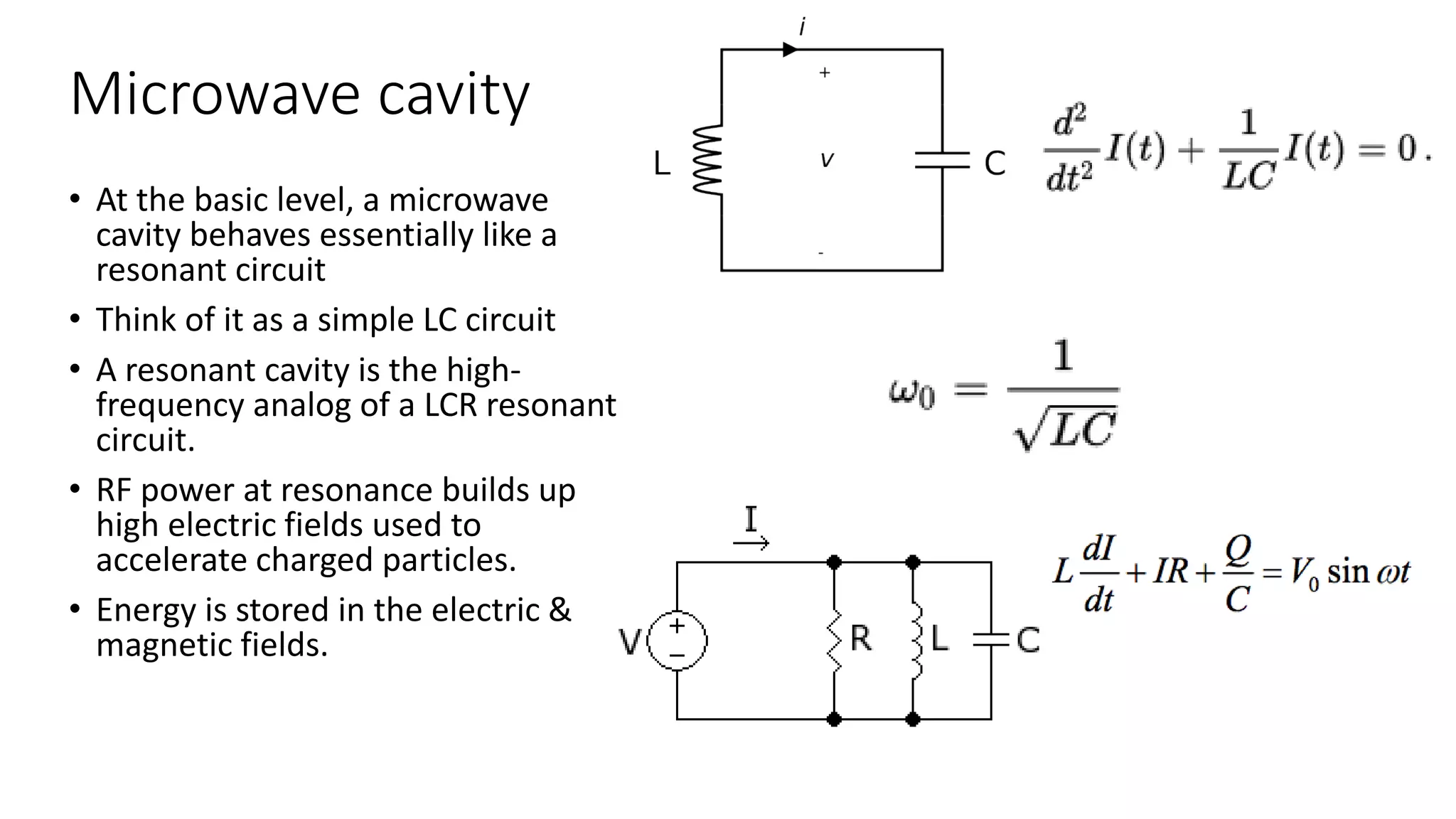
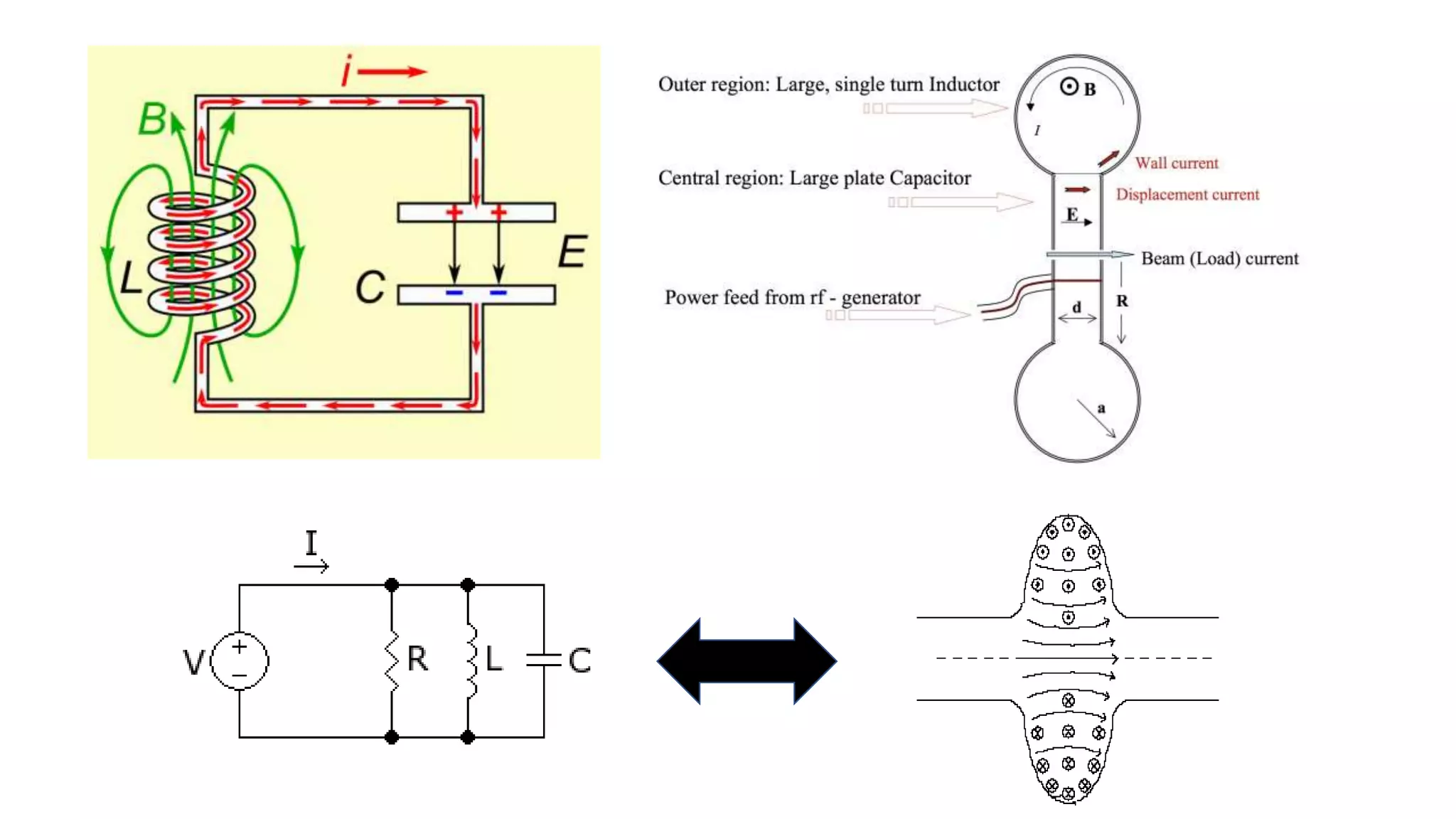
• At the basic level, a microwave
cavity behaves essentially like a
resonant circuit
• Think of it as a simple LC circuit
• A resonant cavity is the high-
frequency analog of a LCR resonant
circuit.
• RF power at resonance builds up
high electric fields used to
accelerate charged particles.
• Energy is stored in the electric &
magnetic fields.
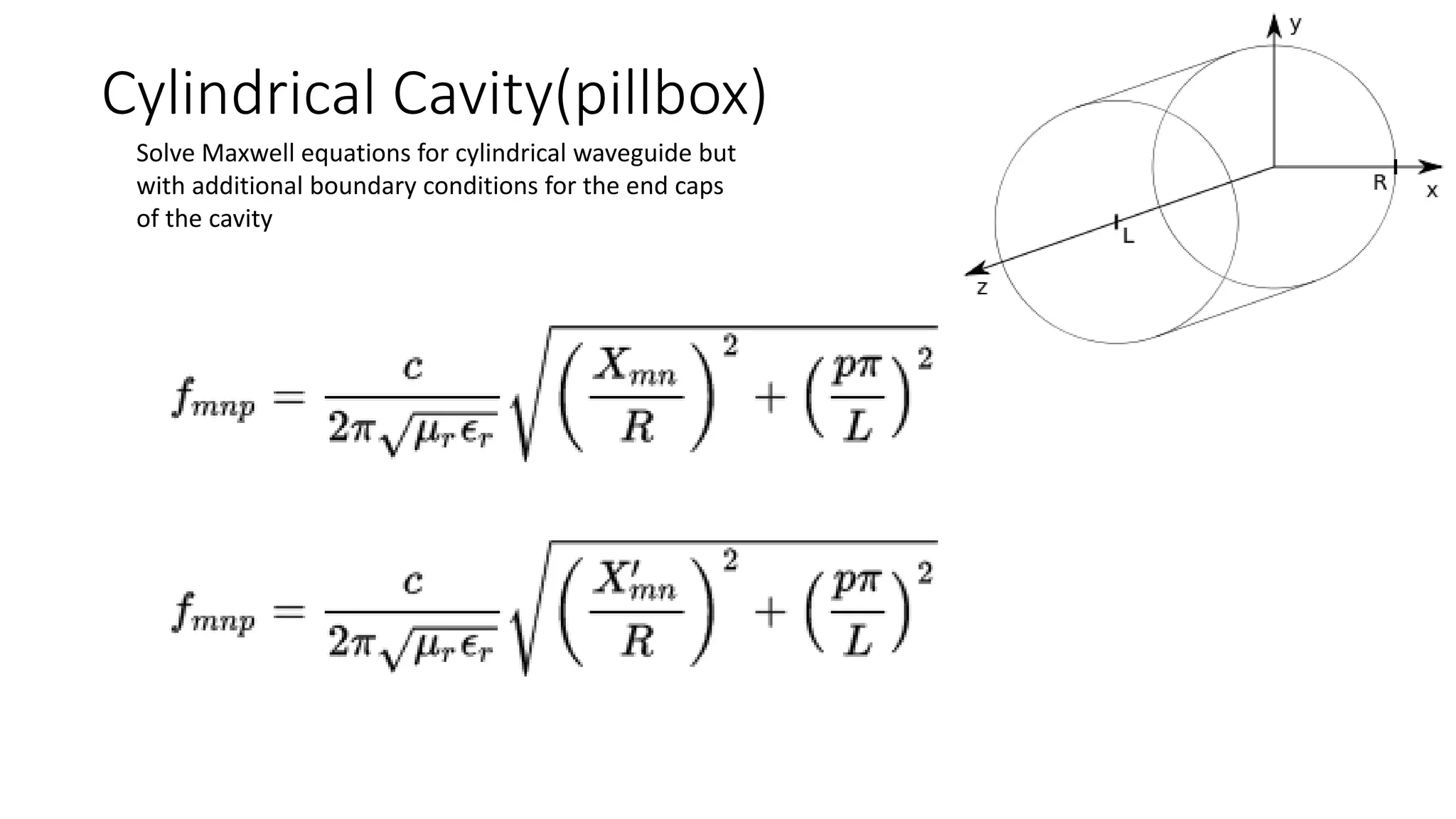
Cylindrical Cavity(pillbox)
Solve Maxwell equations for cylindrical waveguide but
with additional boundary conditions for the end caps
of the cavity
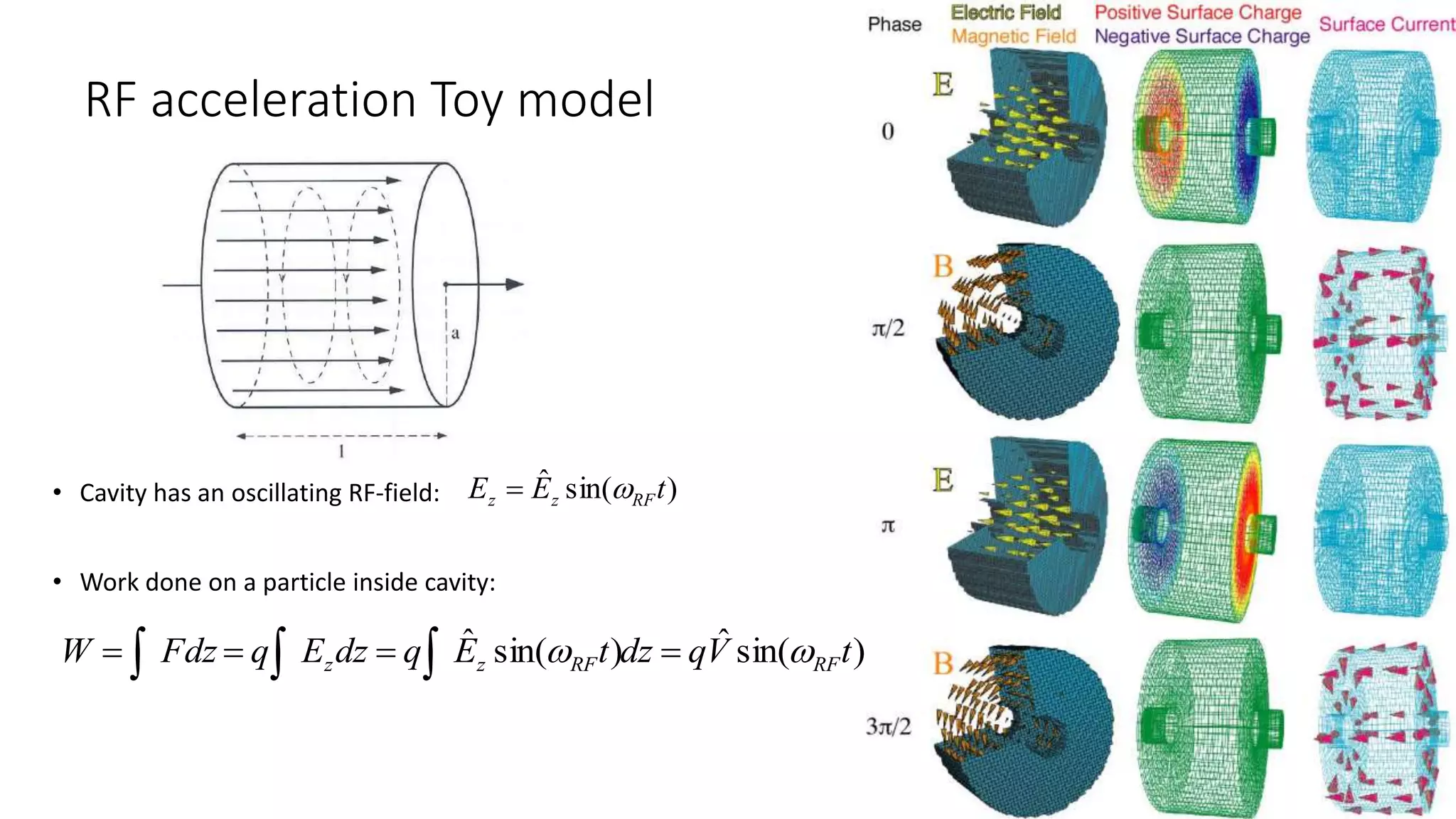
RF acceleration Toy model
• Cavity has an oscillating RF-field:
• Work done on a particle inside cavity:
)sin(ˆ tEE RFzz 
)sin(ˆ)sin(ˆ tVqdztEqdzEqFdzW RFRFzz   
Transverse Magnetic Mode 010 TM010
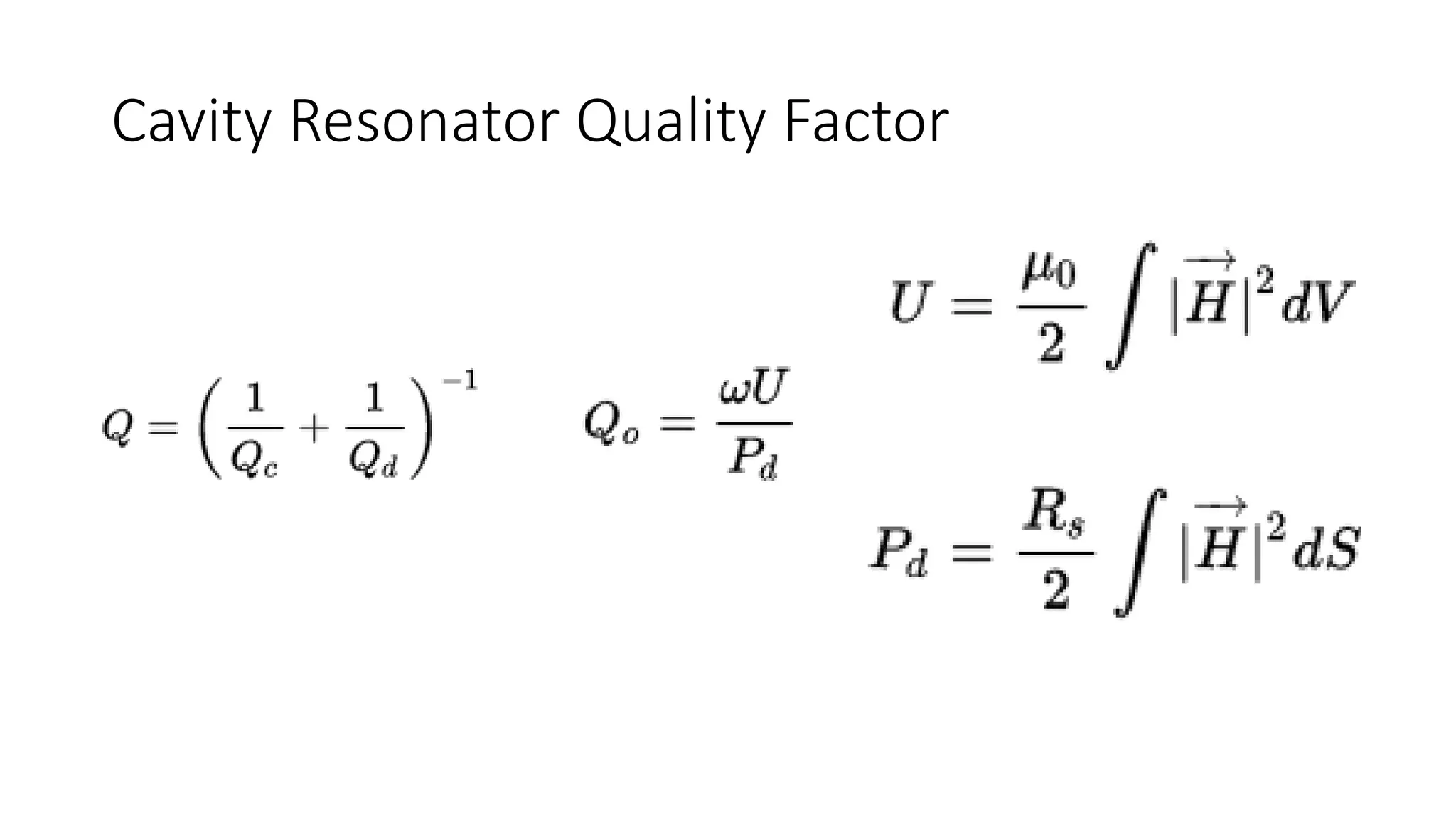
Cavity Resonator Quality Factor
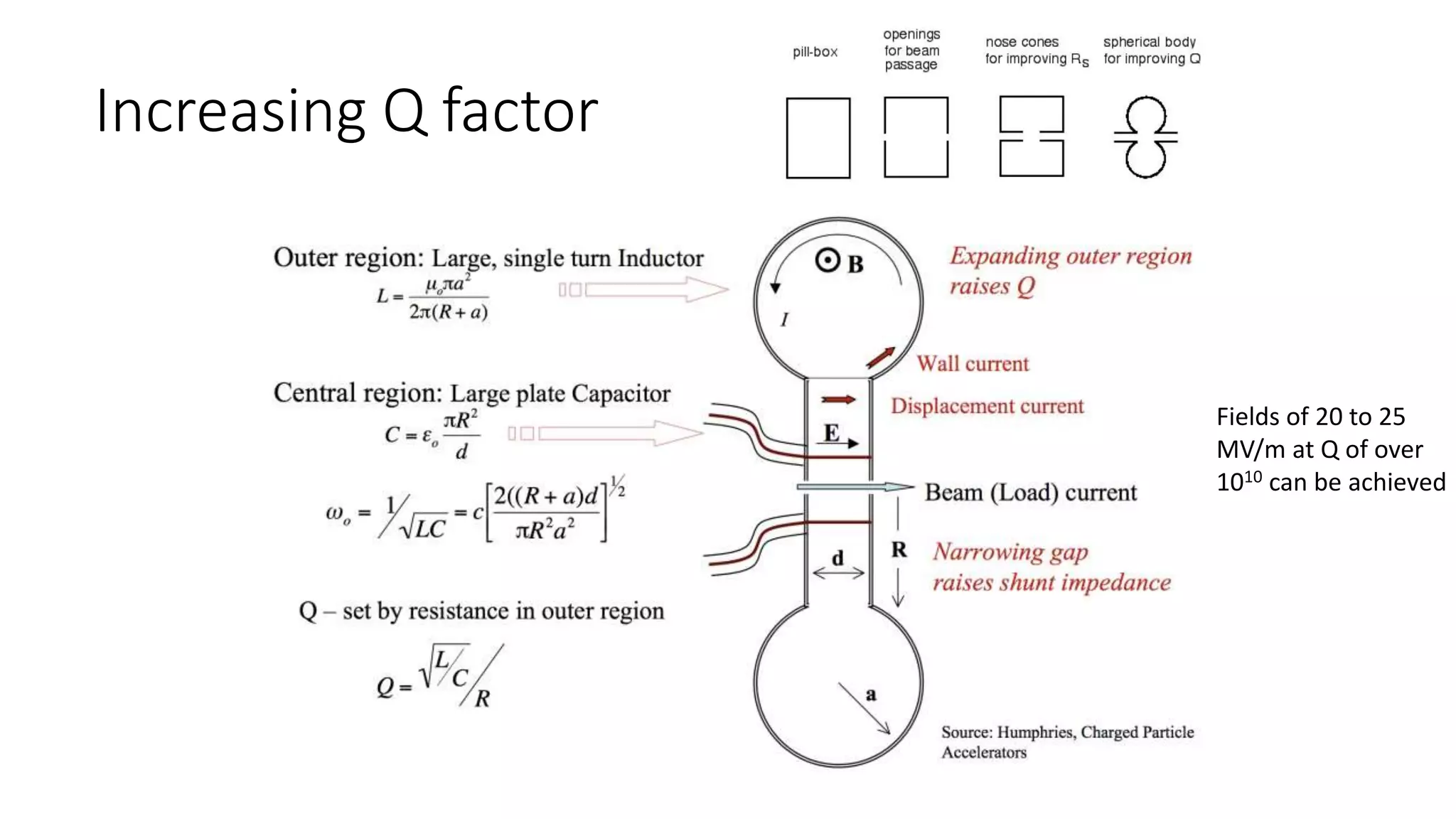
Increasing Q factor
Fields of 20 to 25
MV/m at Q of over
1010 can be achieved
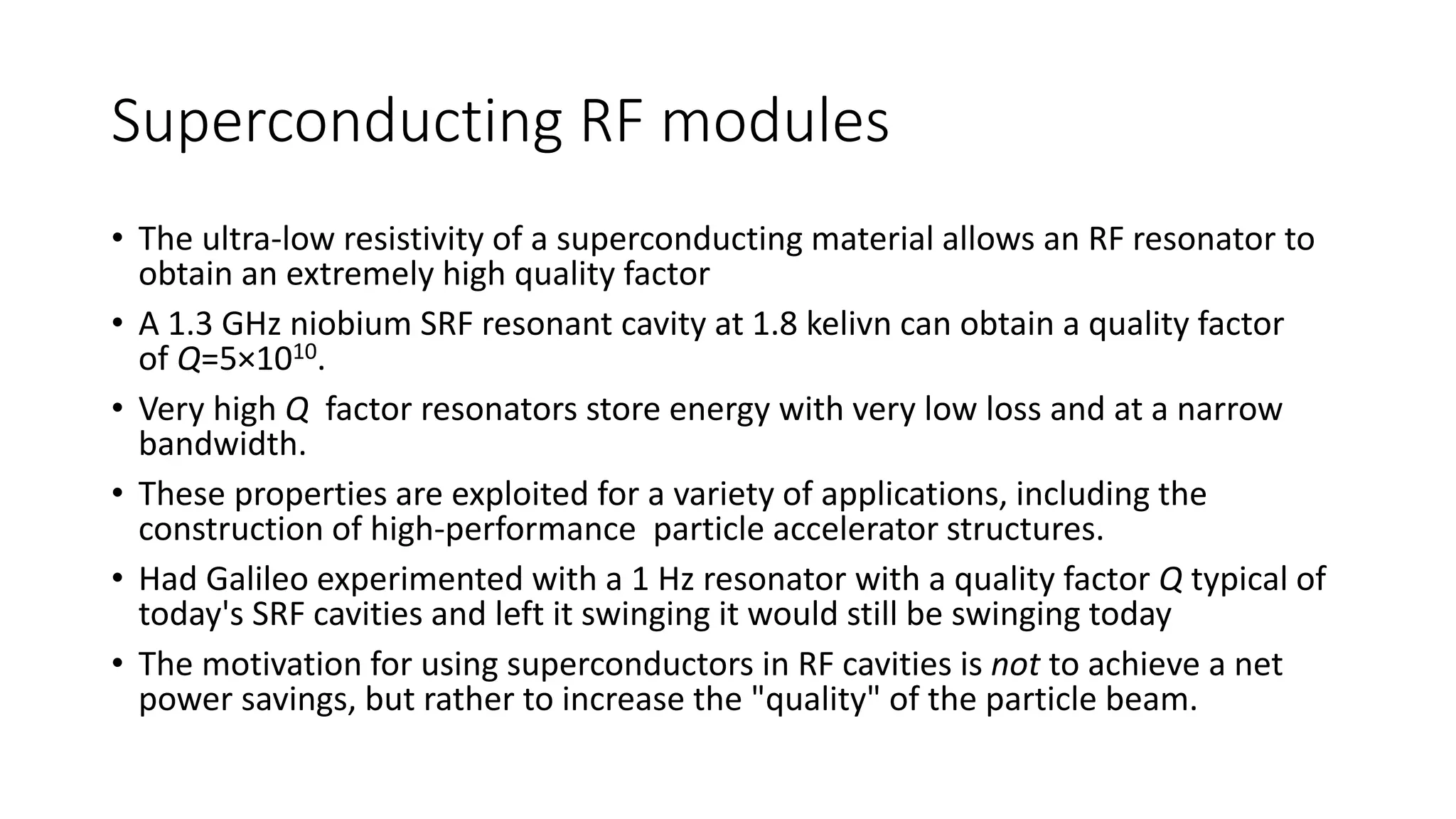
Superconducting RF modules
• The ultra-low resistivity of a superconducting material allows an RF resonator to
obtain an extremely high quality factor
• A 1.3 GHz niobium SRF resonant cavity at 1.8 kelivn can obtain a quality factor
of Q=5×10¹⁰.
• Very high Q factor resonators store energy with very low loss and at a narrow
bandwidth.
• These properties are exploited for a variety of applications, including the
construction of high-performance particle accelerator structures.
• Had Galileo experimented with a 1 Hz resonator with a quality factor Q typical of
today's SRF cavities and left it swinging it would still be swinging today
• The motivation for using superconductors in RF cavities is not to achieve a net
power savings, but rather to increase the "quality" of the particle beam.
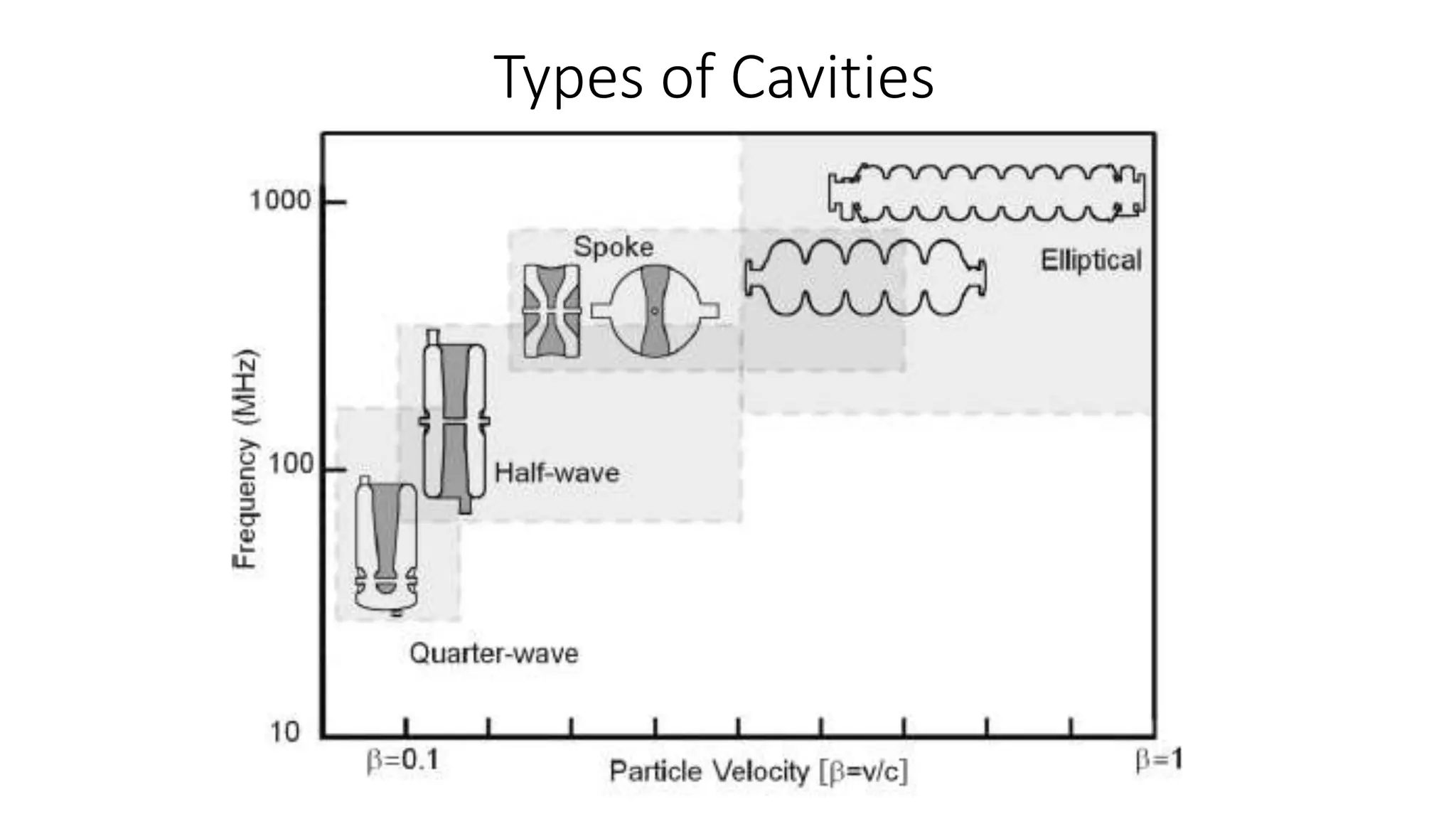
Types of Cavities
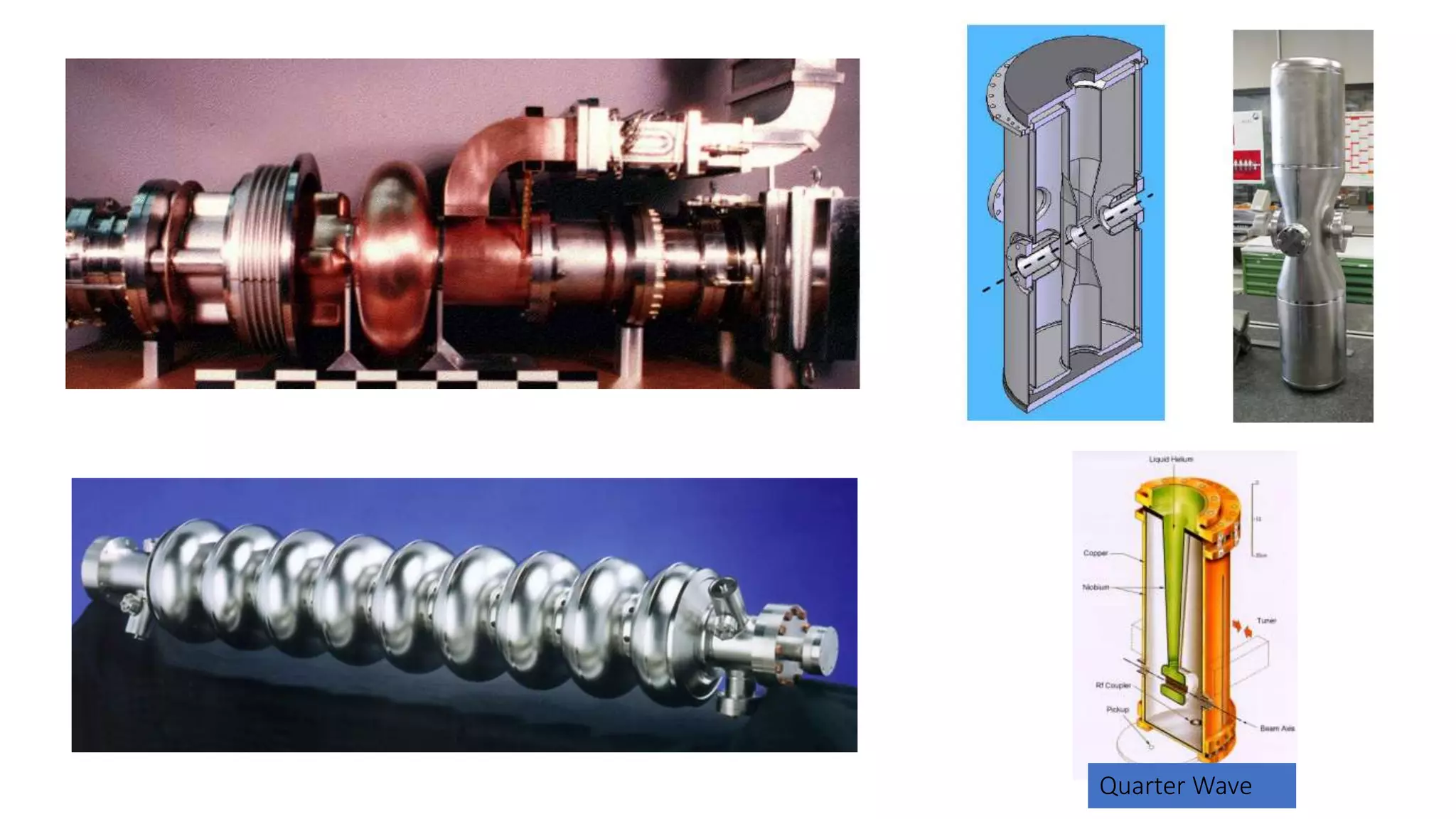
Quarter Wave
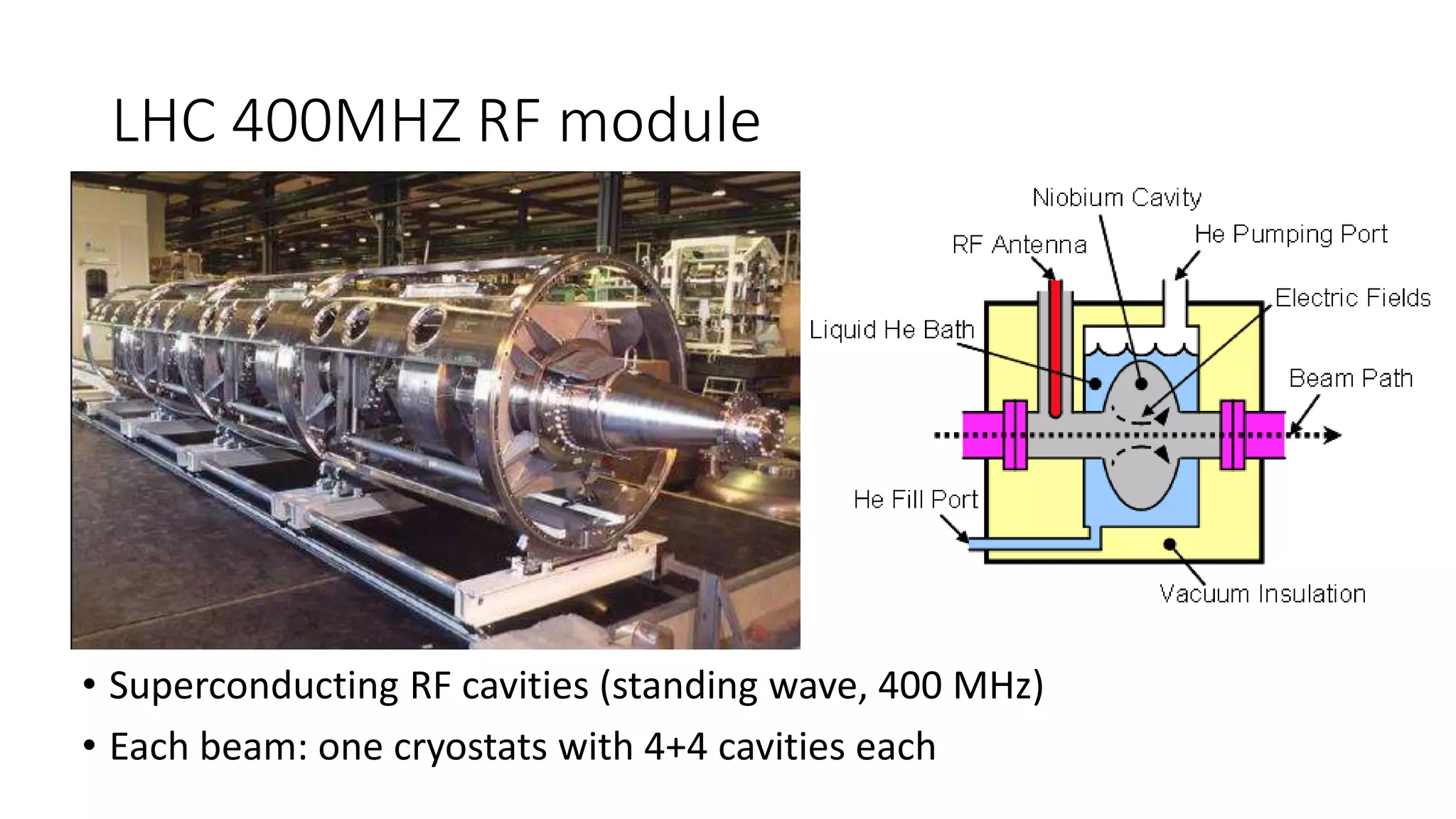
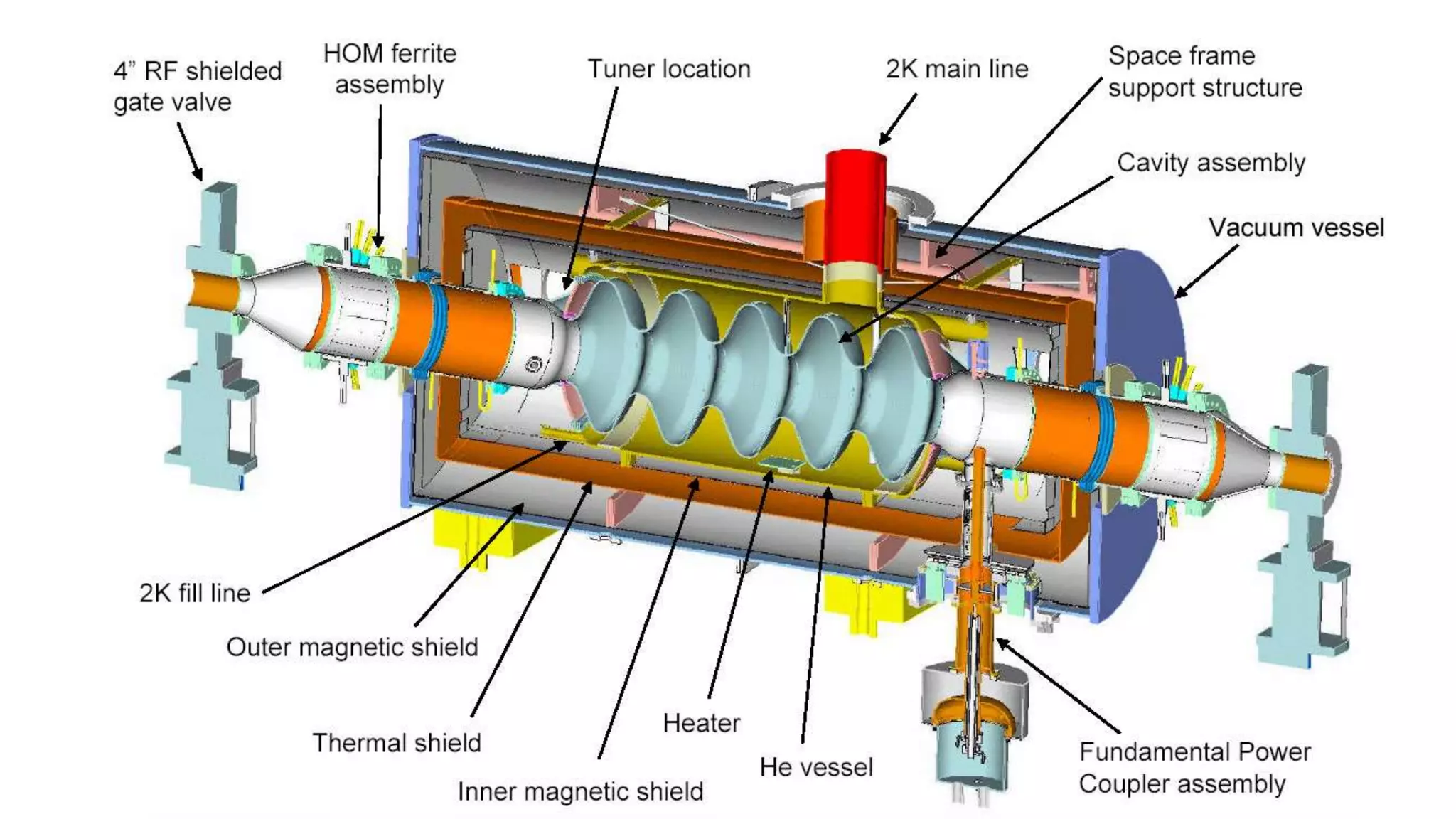
LHC 400MHZ RF module
• Superconducting RF cavities (standing wave, 400 MHz)
• Each beam: one cryostats with 4+4 cavities each
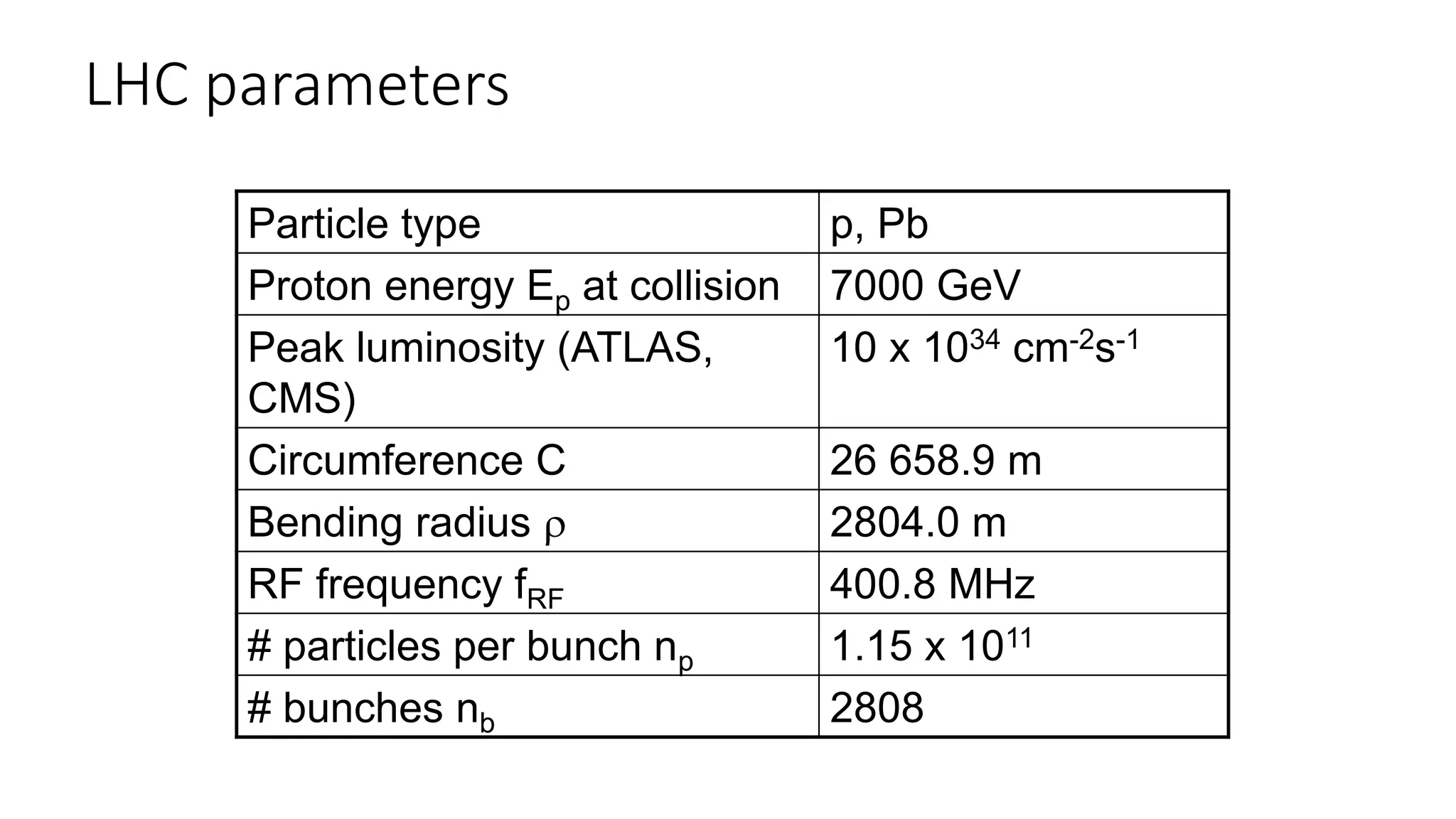
LHC parameters
Particle type p, Pb
Proton energy Ep at collision 7000 GeV
Peak luminosity (ATLAS,
CMS)
10 x 1034 cm-2s-1
Circumference C 26 658.9 m
Bending radius  2804.0 m
RF frequency fRF 400.8 MHz
# particles per bunch np 1.15 x 10¹¹
# bunches nb 2808
Sources
Here is a video
• https://www.youtube.com/watch?v=MTEk39Yt55M

Particle Accelerators

  • 1.
  • 2.
    Particle Accelerator basics •Electromagnetism is the basis of the design of particle accelerators. • Beams of Charged particles can be: • Accelerated by electric field • An steered and focused using magnetic fields • Use Electric Field to do work on particle beam • Use magnetic field to steer particle beam • Electrostatic Accelerator use electrostatic fields to accelerate particles • Achievable energies Limited by electrical breakdown of high E field Gradients at millions of volts • Electrodynamic Accelerators use changing (oscillating electric fields) to accelerate particles • Higher achievable energies, because beam passes through same field multiple times instead of just once BE FFBvqEqBvEqF   )(
  • 3.
  • 4.
    Electro dynamical Acceleration -+ - + - + - + By switching the charge on the plates in phase with the particle motion, charged particles will always see an acceleration You only need to maintain a oscillating voltage between two plates not the full static accelerating voltage of the accelerator. The particles do need to “catch the waves” however, so particle bunches must be bunched in phase with the oscillating fields.
  • 5.
    Accelerator cavities • Electrodynamicacceleration can be done by resonant circuits using plate capacitors excited to oscillate at Radio frequency. • As the particles approach the speed of light the switching rate of the electric fields becomes so high that cavities operate at radio/microwave frequencies • microwave cavities are used in higher energy machines instead of simple capacitor plates • We cannot use smooth wall waveguide to contain rf in order to accelerate a beam as the phase velocity is faster than the speed of light, thus you cannot keep a bunch in phase with the wave. • Electromagnetic power is instead stored in a resonant volume instead of being radiated • RF power feed into cavity, originating from RF power generators, like Klystrons
  • 6.
    Electrodynamics of Microwave cavities • A microwave cavity is a resonator, consisting of a closed waveguide metal structure that confines electromagnetic fields in the radio microwave region of the spectrum. • It is basically a waveguide that is deformed in a such a shape to resonate standing electromagnetic waves with very high quality factor • The electromagnetic waves reflect between the walls of the cavity. At the resonate frequency of the cavity. • The EM waves reinforce to form standing waves in the cavity
  • 7.
    Microwave cavity • Atthe basic level, a microwave cavity behaves essentially like a resonant circuit • Think of it as a simple LC circuit • A resonant cavity is the high- frequency analog of a LCR resonant circuit. • RF power at resonance builds up high electric fields used to accelerate charged particles. • Energy is stored in the electric & magnetic fields.
  • 9.
    Cylindrical Cavity(pillbox) Solve Maxwellequations for cylindrical waveguide but with additional boundary conditions for the end caps of the cavity
  • 10.
    RF acceleration Toymodel • Cavity has an oscillating RF-field: • Work done on a particle inside cavity: )sin(ˆ tEE RFzz  )sin(ˆ)sin(ˆ tVqdztEqdzEqFdzW RFRFzz   
  • 11.
  • 12.
  • 13.
    Increasing Q factor Fieldsof 20 to 25 MV/m at Q of over 1010 can be achieved
  • 14.
    Superconducting RF modules •The ultra-low resistivity of a superconducting material allows an RF resonator to obtain an extremely high quality factor • A 1.3 GHz niobium SRF resonant cavity at 1.8 kelivn can obtain a quality factor of Q=5×10¹⁰. • Very high Q factor resonators store energy with very low loss and at a narrow bandwidth. • These properties are exploited for a variety of applications, including the construction of high-performance particle accelerator structures. • Had Galileo experimented with a 1 Hz resonator with a quality factor Q typical of today's SRF cavities and left it swinging it would still be swinging today • The motivation for using superconductors in RF cavities is not to achieve a net power savings, but rather to increase the "quality" of the particle beam.
  • 15.
  • 16.
  • 17.
    LHC 400MHZ RFmodule • Superconducting RF cavities (standing wave, 400 MHz) • Each beam: one cryostats with 4+4 cavities each
  • 19.
    LHC parameters Particle typep, Pb Proton energy Ep at collision 7000 GeV Peak luminosity (ATLAS, CMS) 10 x 1034 cm-2s-1 Circumference C 26 658.9 m Bending radius  2804.0 m RF frequency fRF 400.8 MHz # particles per bunch np 1.15 x 10¹¹ # bunches nb 2808
  • 20.
  • 21.
    Here is avideo • https://www.youtube.com/watch?v=MTEk39Yt55M