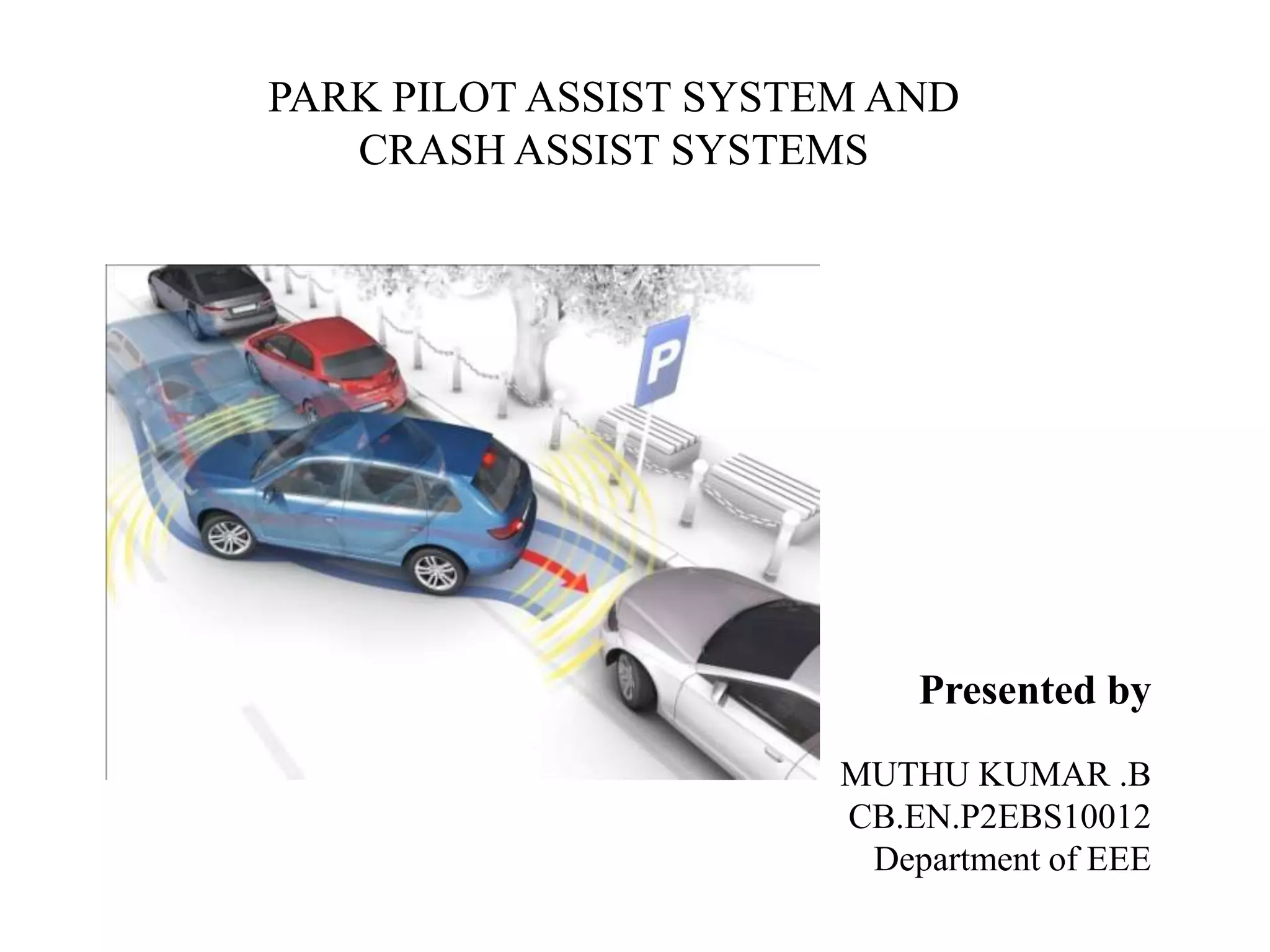
PARK PILOT ASSIST SYSTEM AND
   CRASH ASSIST SYSTEMS


                           Presented by
                       MUTHU KUMAR .B
                       CB.EN.P2EBS10012
                        Department of EEE
INTRODUCTION


• The all-sophisticated automation and electronics & sensors combination
  virtually make us a hi-fi driver. But how it matters when we enter a parking slot
  full of bumps and ramps?


• The driver can manage the front façade view but what about the rear
  escapades. That’s where Park Pilot Assist System comes into play.
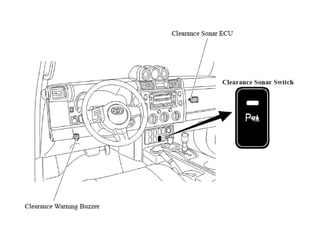
COMPONENTS IN PARK ASSIST


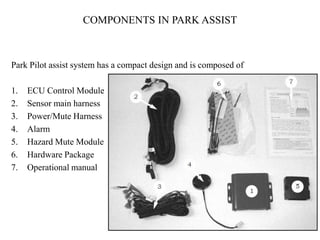
Park Pilot assist system has a compact design and is composed of

1.   ECU Control Module
2.   Sensor main harness
3.   Power/Mute Harness
4.   Alarm
5.   Hazard Mute Module
6.   Hardware Package
7.   Operational manual
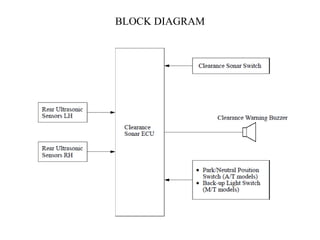
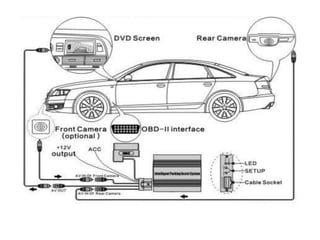
BLOCK DIAGRAM
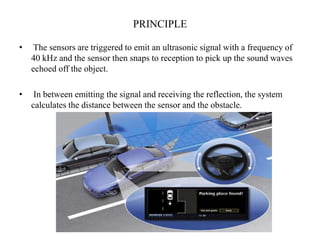
PRINCIPLE

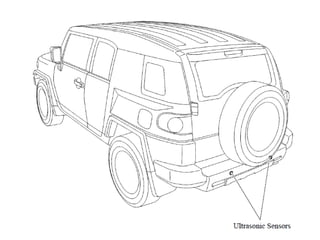
•    The sensors are triggered to emit an ultrasonic signal with a frequency of
    40 kHz and the sensor then snaps to reception to pick up the sound waves
    echoed off the object.

•    In between emitting the signal and receiving the reflection, the system
    calculates the distance between the sensor and the obstacle.
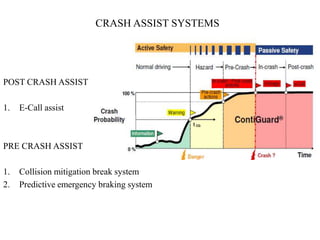
CRASH ASSIST SYSTEMS


POST CRASH ASSIST

1.   E-Call assist


PRE CRASH ASSIST

1.   Collision mitigation break system
2.   Predictive emergency braking system
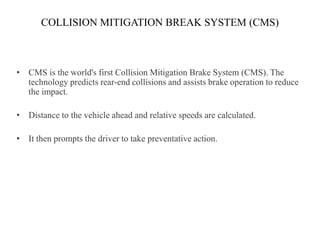
COLLISION MITIGATION BREAK SYSTEM (CMS)


• CMS is the world's first Collision Mitigation Brake System (CMS). The
  technology predicts rear-end collisions and assists brake operation to reduce
  the impact.

• Distance to the vehicle ahead and relative speeds are calculated.

• It then prompts the driver to take preventative action.
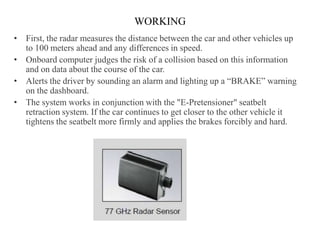
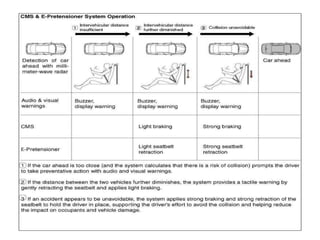
WORKING
• First, the radar measures the distance between the car and other vehicles up
  to 100 meters ahead and any differences in speed.
• Onboard computer judges the risk of a collision based on this information
  and on data about the course of the car.
• Alerts the driver by sounding an alarm and lighting up a “BRAKE” warning
  on the dashboard.
• The system works in conjunction with the "E-Pretensioner" seatbelt
  retraction system. If the car continues to get closer to the other vehicle it
  tightens the seatbelt more firmly and applies the brakes forcibly and hard.
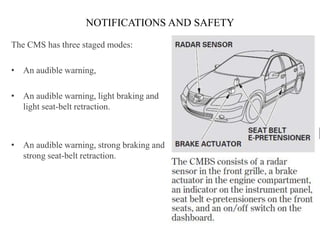
NOTIFICATIONS AND SAFETY

The CMS has three staged modes:

• An audible warning,

• An audible warning, light braking and
  light seat-belt retraction.


• An audible warning, strong braking and
  strong seat-belt retraction.
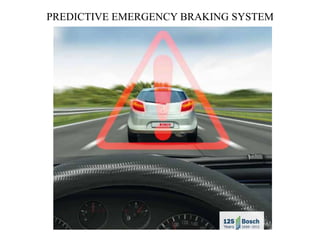
PREDICTIVE EMERGENCY BRAKING SYSTEM
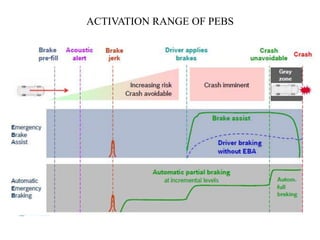
ACTIVATION RANGE OF PEBS
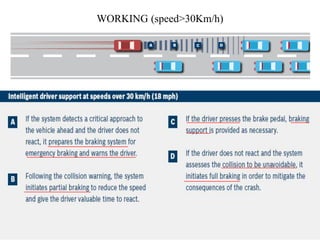
WORKING (speed>30Km/h)
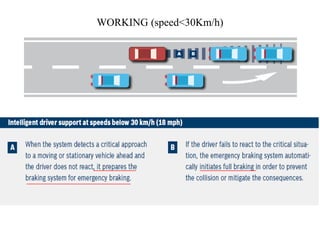
WORKING (speed<30Km/h)
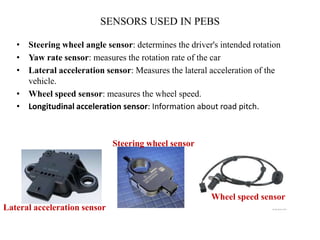
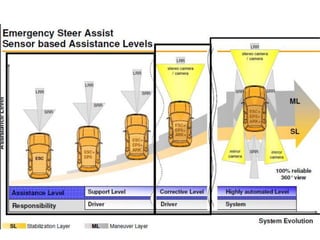
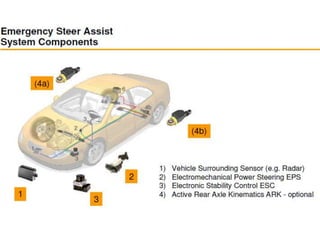
SENSORS USED IN PEBS

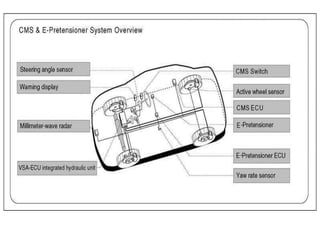
   • Steering wheel angle sensor: determines the driver's intended rotation
   • Yaw rate sensor: measures the rotation rate of the car
   • Lateral acceleration sensor: Measures the lateral acceleration of the
     vehicle.
   • Wheel speed sensor: measures the wheel speed.
   • Longitudinal acceleration sensor: Information about road pitch.


                              Steering wheel sensor


                                                        Wheel speed sensor
Lateral acceleration sensor
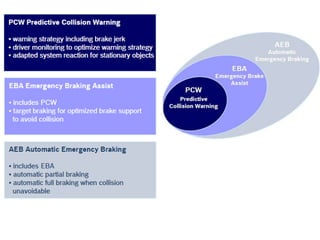
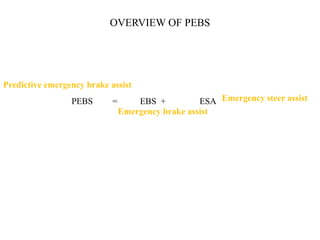
OVERVIEW OF PEBS


Predictive emergency brake assist
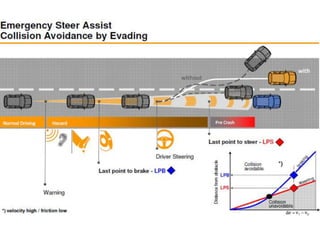
                 PEBS       =       EBS +          ESA Emergency steer assist
                                Emergency brake assist
THANKS !

Park pilot assist system

  • 1.
    PARK PILOT ASSISTSYSTEM AND CRASH ASSIST SYSTEMS Presented by MUTHU KUMAR .B CB.EN.P2EBS10012 Department of EEE
  • 2.
    INTRODUCTION • The all-sophisticatedautomation and electronics & sensors combination virtually make us a hi-fi driver. But how it matters when we enter a parking slot full of bumps and ramps? • The driver can manage the front façade view but what about the rear escapades. That’s where Park Pilot Assist System comes into play.
  • 3.
    COMPONENTS IN PARKASSIST Park Pilot assist system has a compact design and is composed of 1. ECU Control Module 2. Sensor main harness 3. Power/Mute Harness 4. Alarm 5. Hazard Mute Module 6. Hardware Package 7. Operational manual
  • 4.
  • 5.
    PRINCIPLE • The sensors are triggered to emit an ultrasonic signal with a frequency of 40 kHz and the sensor then snaps to reception to pick up the sound waves echoed off the object. • In between emitting the signal and receiving the reflection, the system calculates the distance between the sensor and the obstacle.
  • 11.
    CRASH ASSIST SYSTEMS POSTCRASH ASSIST 1. E-Call assist PRE CRASH ASSIST 1. Collision mitigation break system 2. Predictive emergency braking system
  • 12.
    COLLISION MITIGATION BREAKSYSTEM (CMS) • CMS is the world's first Collision Mitigation Brake System (CMS). The technology predicts rear-end collisions and assists brake operation to reduce the impact. • Distance to the vehicle ahead and relative speeds are calculated. • It then prompts the driver to take preventative action.
  • 13.
    WORKING • First, theradar measures the distance between the car and other vehicles up to 100 meters ahead and any differences in speed. • Onboard computer judges the risk of a collision based on this information and on data about the course of the car. • Alerts the driver by sounding an alarm and lighting up a “BRAKE” warning on the dashboard. • The system works in conjunction with the "E-Pretensioner" seatbelt retraction system. If the car continues to get closer to the other vehicle it tightens the seatbelt more firmly and applies the brakes forcibly and hard.
  • 14.
    NOTIFICATIONS AND SAFETY TheCMS has three staged modes: • An audible warning, • An audible warning, light braking and light seat-belt retraction. • An audible warning, strong braking and strong seat-belt retraction.
  • 17.
  • 18.
  • 19.
  • 20.
  • 21.
    SENSORS USED INPEBS • Steering wheel angle sensor: determines the driver's intended rotation • Yaw rate sensor: measures the rotation rate of the car • Lateral acceleration sensor: Measures the lateral acceleration of the vehicle. • Wheel speed sensor: measures the wheel speed. • Longitudinal acceleration sensor: Information about road pitch. Steering wheel sensor Wheel speed sensor Lateral acceleration sensor
  • 27.
    OVERVIEW OF PEBS Predictiveemergency brake assist PEBS = EBS + ESA Emergency steer assist Emergency brake assist
  • 28.