Pre Anaesthetic
Patient Assessment
Mr Harshad Khade
M.Sc. Medical Technology
Symbiosis International University, Pune
Pre Anaesthetic
Check-up
Fast Overview on Pre Anesthetic check-up.
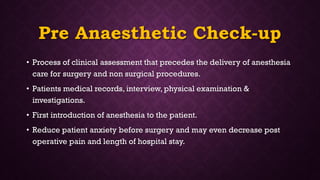
Pre Anaesthetic Check-up
• Process of clinical assessment that precedes the delivery of anesthesia
care for surgery and non surgical procedures.
• Patients medical records, interview, physical examination &
investigations.
• First introduction of anesthesia to the patient.
• Reduce patient anxiety before surgery and may even decrease post
operative pain and length of hospital stay.
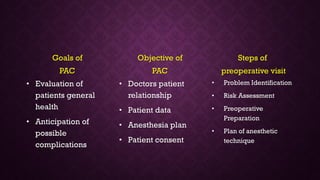
Goals of
PAC
• Evaluation of
patients general
health
• Anticipation of
possible
complications
Objective of
PAC
• Doctors patient
relationship
• Patient data
• Anesthesia plan
• Patient consent
Steps of
preoperative visit
• Problem Identification
• Risk Assessment
• Preoperative
Preparation
• Plan of anesthetic
technique
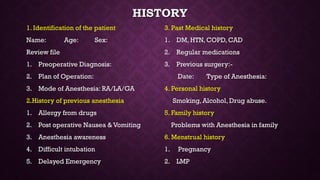
HISTORY
1. Identification of the patient
Name: Age: Sex:
Review file
1. Preoperative Diagnosis:
2. Plan of Operation:
3. Mode of Anesthesia: RA/LA/GA
2.History of previous anesthesia
1. Allergy from drugs
2. Post operative Nausea & Vomiting
3. Anesthesia awareness
4. Difficult intubation
5. Delayed Emergency
3. Past Medical history
1. DM, HTN, COPD, CAD
2. Regular medications
3. Previous surgery:-
Date: Type of Anesthesia:
4. Personal history
Smoking, Alcohol, Drug abuse.
5. Family history
Problems with Anesthesia in family
6. Menstrual history
1. Pregnancy
2. LMP
Examination
1. General examination
• Weight, BMI,
• Pallor, Cyanosis,
• Clubbing, Edema,
• Dehydration.
Vital signs :-
• SPO2, Pulse,
• Blood Pressure,
• Temperature,
• Respiratory rate.
2.Systemic examination
• Chest
• CVS
• CNS
3. Local examination
• Spine:- deformity
• Nasal cavity:- obstruction
• Oral cavity :-
teeth, dentures, tongue
• Peripheral venous access
Airway Assessment
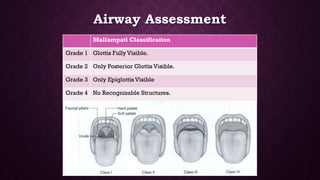
Mallampati Classification
Grade 1 Glottis Fully Visible.
Grade 2 Only Posterior Glottis Visible.
Grade 3 Only Epiglottis Visible
Grade 4 No Recognizable Structures.
Investigations
Basic investigations
• CBC :- Hb,TC / DC
• ABO Rh typing
• RBS
• Urea, Creatinine, Na+, K+, Cl+.
• PT / INR
• ECG
• Chest X-Ray
Other investigations ( if needed )
Echocardiography
TFT
HbA1c
HBsAg, HCV, HIV.
BT / CT
LFT
PFT
Risk Assessment
ASA PS
Classification
Definition
ASA 1 A normal healthy patient.
ASA 2 A patient with mild systemic disease.
ASA 3 A patient with sever systemic disease.
ASA 4 A patient with sever systemic disease,
that is a constant threat to life.
ASA 5 A moribund patient who is not expected to survive
without the operation.
ASA 6 A declared brain dead patient,
whose organs are being remove for donor purposes.
E Denotes Emergency surgery.
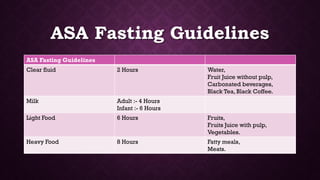
ASA Fasting Guidelines
Clear fluid 2 Hours Water,
Fruit Juice without pulp,
Carbonated beverages,
Black Tea, Black Coffee.
Milk Adult :- 4 Hours
Infant :- 6 Hours
Light Food 6 Hours Fruits,
Fruits Juice with pulp,
Vegetables.
Heavy Food 8 Hours Fatty meals,
Meats.
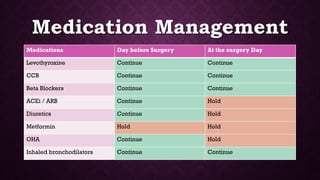
Medication Management
Medications Day before Surgery At the surgery Day
Levothyroxine Continue Continue
CCB Continue Continue
Beta Blockers Continue Continue
ACEi / ARB Continue Hold
Diuretics Continue Hold
Metformin Hold Hold
OHA Continue Hold
Inhaled bronchodilators Continue Continue
Thank You

PAC - Pre Anaesthetic Checkup

  • 1.
    Pre Anaesthetic Patient Assessment MrHarshad Khade M.Sc. Medical Technology Symbiosis International University, Pune
  • 2.
    Pre Anaesthetic Check-up Fast Overviewon Pre Anesthetic check-up.
  • 3.
    Pre Anaesthetic Check-up •Process of clinical assessment that precedes the delivery of anesthesia care for surgery and non surgical procedures. • Patients medical records, interview, physical examination & investigations. • First introduction of anesthesia to the patient. • Reduce patient anxiety before surgery and may even decrease post operative pain and length of hospital stay.
  • 4.
    Goals of PAC • Evaluationof patients general health • Anticipation of possible complications Objective of PAC • Doctors patient relationship • Patient data • Anesthesia plan • Patient consent Steps of preoperative visit • Problem Identification • Risk Assessment • Preoperative Preparation • Plan of anesthetic technique
  • 5.
    HISTORY 1. Identification ofthe patient Name: Age: Sex: Review file 1. Preoperative Diagnosis: 2. Plan of Operation: 3. Mode of Anesthesia: RA/LA/GA 2.History of previous anesthesia 1. Allergy from drugs 2. Post operative Nausea & Vomiting 3. Anesthesia awareness 4. Difficult intubation 5. Delayed Emergency 3. Past Medical history 1. DM, HTN, COPD, CAD 2. Regular medications 3. Previous surgery:- Date: Type of Anesthesia: 4. Personal history Smoking, Alcohol, Drug abuse. 5. Family history Problems with Anesthesia in family 6. Menstrual history 1. Pregnancy 2. LMP
  • 6.
    Examination 1. General examination •Weight, BMI, • Pallor, Cyanosis, • Clubbing, Edema, • Dehydration. Vital signs :- • SPO2, Pulse, • Blood Pressure, • Temperature, • Respiratory rate. 2.Systemic examination • Chest • CVS • CNS 3. Local examination • Spine:- deformity • Nasal cavity:- obstruction • Oral cavity :- teeth, dentures, tongue • Peripheral venous access
  • 7.
    Airway Assessment Mallampati Classification Grade1 Glottis Fully Visible. Grade 2 Only Posterior Glottis Visible. Grade 3 Only Epiglottis Visible Grade 4 No Recognizable Structures.
  • 8.
    Investigations Basic investigations • CBC:- Hb,TC / DC • ABO Rh typing • RBS • Urea, Creatinine, Na+, K+, Cl+. • PT / INR • ECG • Chest X-Ray Other investigations ( if needed ) Echocardiography TFT HbA1c HBsAg, HCV, HIV. BT / CT LFT PFT
  • 9.
    Risk Assessment ASA PS Classification Definition ASA1 A normal healthy patient. ASA 2 A patient with mild systemic disease. ASA 3 A patient with sever systemic disease. ASA 4 A patient with sever systemic disease, that is a constant threat to life. ASA 5 A moribund patient who is not expected to survive without the operation. ASA 6 A declared brain dead patient, whose organs are being remove for donor purposes. E Denotes Emergency surgery.
  • 10.
    ASA Fasting Guidelines ASAFasting Guidelines Clear fluid 2 Hours Water, Fruit Juice without pulp, Carbonated beverages, Black Tea, Black Coffee. Milk Adult :- 4 Hours Infant :- 6 Hours Light Food 6 Hours Fruits, Fruits Juice with pulp, Vegetables. Heavy Food 8 Hours Fatty meals, Meats.
  • 11.
    Medication Management Medications Daybefore Surgery At the surgery Day Levothyroxine Continue Continue CCB Continue Continue Beta Blockers Continue Continue ACEi / ARB Continue Hold Diuretics Continue Hold Metformin Hold Hold OHA Continue Hold Inhaled bronchodilators Continue Continue
  • 12.