PREANAESTHESIA EVALUATION
MODERATOR- Dr. A.B. Roy
Presented by- Dr. Richa Kumar
Definition*
• Preanesthesia evaluation: process of clinical
assessment & optimization of patient
preceeding delivery of anesthesia care for
surgery and for nonsurgical procedures.
FUNDAMENTAL PURPOSE:
• obtain relevant information
• Formulate assessment for perioperative risks
• Ordering preoperative investigations
consistent with medical history and
examination.
• Verify an already known disease, disorder, medical or
alternative therapy that may affect perioperative
anesthetic care
• Formulation of specific plans and alternatives for
perioperative anesthetic care and post operative pain
management.
• Develop plan for any clinical optimization.
• To describe the proposed anesthetic plan and related risks
to the patient.
• give psychological support to patient.
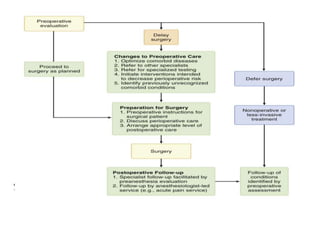
• Fig 38-1 pg 1087
1.DETECTING DISEASES IN
PREOPEARTIVE EVALUATION
HISTORY PHYSICAL EXAM. DIAGNOSTIC
TESTS
HISTORY TAKING
• Not simply asking questions.*
• Use of lay language*
COMPONENTS of MEDICAL HISTORY
• Start with name , age*, sex of patient followed by
indication of surgery and planned procedure.
• Current and past medical problems
• Previous surgical procedures with type of anesthesia
and related complications(if any).
• Simple notation of names disease/s NOT ENOUGH*.
• Prescriptions & over the counter medications with
dosage and schedule.
• Allergies
• Use of tobacco/alcohol/ellicit drugs*(quantitative
record of smoking)
• Day time somnolence/obesity/snoring (airway)*
• Any significant heart burn/ reflux
• LMP in case of females of childbearing age.
• Past History*
• Family history
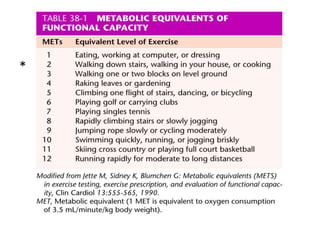
• Status of cardiorespiratory fitness:
quantified in metabolic equivalents of task (METS)-
measure of volume of oxygen consumed during an
activity.
*
CVS
• identify risk factors of CAD ( smoking, hypertension, age,
male sex, hypercholestrolemia, family history)
• chest discomfort (pain , pressure, tightness) –duration,
precipitating factors , associated symptoms and relieving
factors.
• SOB
• Past cardiac procedures
• Goal is identify patients with high perioperative cardiac
risk and who have modifiable risk.
PULMONARY
• Asthma (SOB/recent
exaccerbations/therapy/hospitalization/critical care
unit admission ,endotracheal intubation)
• COPD (smoking,alpha1 antitrypsin def. ,chronic
infection,long standing asthma)
PHYSICAL EXAMINATION
1.Vital signs
2.BMI
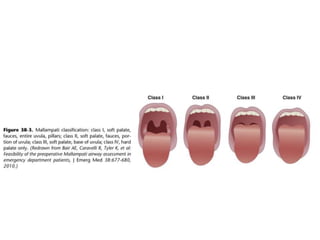
3.Inspection of airway
4. Systemic examination:
5.Inspection of peripheral veins
PREOPERATIVE EVALUATION OF
PATIENT WITH SYSTEMIC DISEASE &
LAB. INVESTIGATIONS REQUIRED
CARDIOVASCULAR DISEASE
• CVS complications are very common serious
perioperative adverse events.
• Role of perioperative evaluation?*
HTN*
In young individuals:
COA, hyperthyroidism, phaeochromocytoma or ellicit drug use
• Long standing severe/uncontrolled HTN:
ECG, BUN, S. creat,
Electrolytes for patients on diuretcs
if LVH on ECG :CAD
Elective surgery delayed if DBP>115 & SBP>200 until BP <
180/110
All long term antihypertensives to continue except ACEI /ARB
• AHA suggests that potential benefits of delaying
surgery to optimize antihypertensive treatment
should be weighed against the risks of delaying the
surgical procedure.*
• The preoperative period :excellent opportunity for
appropriate referrals for future management of
inadequately treated HTN.
• IHD: 4 goals:
1.identify cardiac risks
2. presence and severity
3. need of preoperative interventions
4. modify risk of perioperative adverse effects
AHA suggests postponement of surgery if patient had
acute MI
For recent MI nonemergency surgery should be
postponed.
• The revised Cardiac Risk Index (RCRI) has been
extensively validated for predicting perioperative
cardiac risk in non-cardiac surgery.
SUSPECTED CAD:
INVESTIGATIONS
1. Blood creatinine & Hb concentration
2.KFT (RCRI)
3.ECG
4. cardiac stress test*
5. Echocardiography
6. angiography
CORONARY STENTS:
Recent <30days
(bare metal stents)
<1 year
(drug eluting stents)
Should not
undergo
elective
surgery
HEART FAILURE* (systolic/diastolic/combination)
• NYHA categories for degree of HF*.
• Class III and IV should be evaluated in conjuction with
cardiologist
• INVESTIGATIONS:ECG, electrolytes, BUN, creatinine,
BNP, chest radiography, echocardiography
• Selective continuation & discontinuation of drugs
depending on IV volume ,hemodynamic status, degree
of cardiac dysfunction and anticipated surgical
procedure and IV volume challenges.
• RHYTHM DISTURBANCES:
• SVT and ventricular arrythmias – higher risk of post-op
adverse effects.
• New onset / uncontrolled AF
• Symptomatic bradycardia
• High grade heart blocks
• LBBB more ominous than RBBB
(CAD & HF) (congenital/pulmonary/degeneration/Burguda syndrome*)
Prolonged QT interval: electrolyte disturbances, drugs*,
cardiology reference in patients with H/O syncope and family
H/O sudden death
Warrant
postponement of
elective procedures
and referral to
cardiology
PULMONARY DISORDERS
ASTHMA:
• Can be precipitated by airway intrumentation.
• Risk assessement by further questioning
• Degree of wheeze has no correlation with severity of
bronchoconstriction
• CXR-necessary investigation.
• ABG necessary only in acute exacerbation
• Blood glucose in patients on steroids
• PFTs =no perioperative predictive value
• Beta agonist is most useful prophylactic measure to lower risk of
bronchospasm.
COPD
• COPD severity classified based on spirometery findings.
• Barrel shaped chest and pursed lip breathing suggests advanced
disease
• Degree of disease correlates with degree of hypoxia and
hypercarbia
• Diffusing capacity of lung for CO(DLCO) is decreased
• Preoperative SpO2 is important to establish a baseline.
• ABG is beneficial if patient is hypoxic or requires supplemental
oxygen
• CXR is useful in infection and when bullous disease is
suspected
• ECG: RBBB, peaked P waves suggest RV changes and
pulmonary HTN
• Inhalers and long term medications should be
continued on the day of surgery.
Restrictive Lung Disease
• Characterised by decreased TLC
• Causes can be pulmonary or extrapulmonary- obtain
medical history of associated diseases or symptoms.
• FEV 1 /FVC > 0.7 (both decreased)
DYSPNEA
• Associated with cardiac, pulmonary, hematologic and
neuromuscular diseases
• Onset, progression, precipitating factor, associated
conditions and drug exposure
• Chronic dyspnea: asthma, COPD, ILD, or cardiac
dysfunction.
• Should be classified using NYHA class categories.
• ECG, Hematocrit ABG, thyroid function, CXR, spirometery
and oximetery
• PATIENTS SCHEDULED FOR LUNG RESECTION
• PFT and V/Q scans :helps to predict risk or exclude patients
who lack adequate pulmonary reserve after resection.
• Predicted postoperative FEV1 =
FEV1 X
𝑅𝑎𝑑𝑖𝑜𝑎𝑐𝑡𝑖𝑣𝑒 𝑐𝑜𝑢𝑛𝑡𝑠 𝑖𝑛 𝑛𝑜𝑛𝑜𝑝𝑒𝑟𝑎𝑡𝑖𝑣𝑒 𝑙𝑢𝑛𝑔
𝑟𝑎𝑑𝑖𝑜𝑎𝑐𝑡𝑖𝑣𝑒 𝑐𝑜𝑢𝑛𝑡𝑠 𝑓𝑟𝑜𝑚 𝑏𝑜𝑡ℎ 𝑙𝑢𝑛𝑔𝑠
should be >0.8 or >40%
VO2peak >20mL/Kg/minute =low risk of complications
<15ml/kg/minute =increased risk
<10ml/kg/minute=very high risk
• OBSTRUCTIVE SLEEP APNEA
• Severity based on AHI (apnea-hypopnea index)
• >30 episodes of apnea-hypopnea/hour of
sleep=severe OSA
• Mask ventilation , DL ,endotracheal intubation
and fibro-optic visualization of airway is more
difficult in patients with OSA
• SMOKERS
Increases risk of:
• perioperative complications
• Wound infections
• Respiratory complications
• Severe coughing
• Episodes of ST segment depression (compared to non
smokers)
• Decreases macrophage function
• Negatively affects coronary flow reserve
• Vascular endothelial dysfunction
• HTN
• Ischemia
• Require longer hospital stay
• Peroperative benefits of smoking cessation are evident
only when cessation is atleast for 3-4 weeks before
surgical procedure.
• Soon after patient quits , there is decrease in CO levels,
increase oxygen delivery, decreased nicotine levels lead
to improved vasodilatation, decrease in toxic substances
that impair wound healing.
URTI
• Surgical procedures of patients with severe symptoms
with underlying conditions (significant asthma, heart
disease, immunosuppression) are postponed for at least
4 weeks as the underlying conditions may further
compromise a safe anesthetic regimen.
CYSTIC FIBROSIS
• Optimization of pulmonary status is necessary
• Electrolytes, LFTs, Chest radiographs are useful
• Continuation of most medications is recommended
POST OPERATIVE PULMONARY COMPLICATIONS
Risk factors:
1. History of cigarette smoking
2. ASA-PS score of >2
3. Age >70 years
4. COPD
5. Neck, thoracic , upper abdominal, aortic and neurologic
surgical procedures
6. Anticipated prolonged procedures (>2 hours)
7. Planned GA (especially with ET intubation)
8. Albumin <35 g/dl
9. Inability to walk two blocks on the level or climb one flight
of stairs
10. BMI>30
ENDOCRINE DISEASES
• DIABETES MELLITUS
GOAL IS:
• Optimization of glucose control before surgery
• Avoidance of hypoglycemia
• Avoidance of marked hyperglycemia
• INVESTIGATIONS: Blood glucose, ECG, electrolytes , BUN,
creatinine , HbA1C
• Risk of multiorgan failure , renal insufficiency, stroke, PVD,
autonomic dysfunction, cardiovascular disease (DM is CAD
equivalent)
• Poor control of disease is associated with increased risk of heart
failure, infection and poor outcome.
THYROID DISEASES
• Thyroid function test 6 months before the surgery are
adequate if patient is asymptomatic.
• TSH is best to evaluate hypothyroidism
• FT3, FT4, TSH are best to evaluate hyperthyroidism
• Elective surgical procedures should be postponed until
patient is euthyroid.
• Surgery,stress and illness can precipitate myxedema or
thyroid storm.
• Endocrinologist consultation is necessary if surgery is
urgent in patient with thyroid dysfunction
• CXR and CT is useful to evaluate mediastinal or
tracheal involvement by goitre.
• Medications of thyroid disorder should be continued
on day of surgery.
PARATHYROID DISEASE:
• Hyperparathyroidism :Primary, secondary, tertiary
• Rarely may become large enough to compromise
airway.
• Hypoparathyroidism : can result from total
thyroidectomy
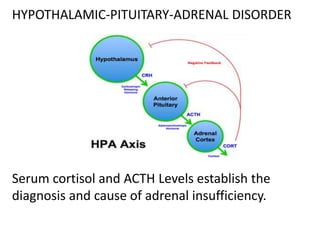
HYPOTHALAMIC-PITUITARY-ADRENAL DISORDER
Serum cortisol and ACTH Levels establish the
diagnosis and cause of adrenal insufficiency.
• MEN SYNDROMES
• Undiagnosed phaeochromocytoma can cause substantial
morbidity and even death. Therefore it is important to
remove this tumor before other endocrine tumors.
Triad of symptoms of
PHAEOCHROMOCYTOMA
• Paroxysmal HTN is classical sign
RENAL DISEASE
It is important to know the type and severity of renal
disease
Associated diseases: HTN, CVS disease, electrolyte
disturbances
CKD : GFR< 60ml/min/1.73m2
CRF:GFR <15ml/min/1.73m2
ESRD: loss of renal function for 3 or more months
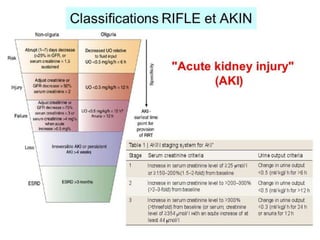
AKI: sudden decrease in renal function (RIFLE criteria &
AKIN)
HEPATIC DISORDERS
• Liver diseases affect hepatocytes, biliary system,
protein synthesis, bile regulation and metabolism of
drugs/toxins.
• Obstructive disorders cause bile stasis
• Drug induced liver diseases affect both hepatocytes
and biliary system.
It is appropriate to delay elective surgery in:
• Acute or fulminant liver
disease(alcoholic/viral/undefined)
• Until acute episode of hepatitis has resolved
The perioperative risk in patients with chronic hepatitis or
cirrhosis is predicted by:
1. Histologic severity
2. Portal HTN
3. LFT
HEMATOLOGICAL DISORDERS
ANEMIA (Hb<13g/dL males, <12g/dL females)
• Determine etiology, duration, stability , related symptoms and
therapy(esp. transfusion)
• Risk factor: colon cancer, GI bleeding, GU bleeding,
menorrhagia, chronic infections, Inflammatory ds, nutritional
deficiencies and prior weight reduction procedures
• Assess for fatigue, palpitations, chest pain , malena, pallor,
murmurs , HS, LNpathy
• Consider type of surgical procedure , anticipated blood loss &
comorbid conditions.
• Transfusion is always indicated if Hb< 6 and rarely indicated if Hb
>10 (report by ASA in 2015)
• ASA Task force on Blood Component Therapy concluded that RBC
should not be transfused solely on the basis of Hb but rather they
should be used to assess risk of complications from inadequate
preoxygenation.
• formula
• Elective procedures should be postponed in patients with
significant anemia regardless of anticipated blood loss during
surgery and meanwhile patient can be treated for anemia
• COAGULOPATHIES
• Hypocoaguable states can be inherited or acquired
• Inquire about: 1. known diagnosis
2. treatments
3.previous bleeding episodes
4.family history
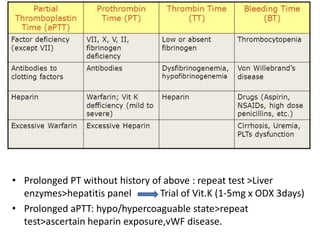
• INVESTIGATIONS: platelet count/CBC/PT/aPTT
(routine screening for coagulopathies is not indicated)
• Prolonged PT without history of above : repeat test >Liver
enzymes>hepatitis panel Trial of Vit.K (1-5mg x ODX 3days)
• Prolonged aPTT: hypo/hypercoaguable state>repeat
test>ascertain heparin exposure,vWF disease.
• THROMBOEMBOLIC DISORDERS
• If prophylaxis is not administered the risk is:
 0.1-0.8 % in elective general surgery
 2-3% after elective hip replacement
 4-7% after repair of fractured hip
• Patients should be stratified preoperatively for the
risks of perioperative venous thromboembolism
ANTICOAGULANT THERAPY
WARFARIN
• May increase perioperative bleeding
• Witheld 4-5 days before surgery( if INR 2-3) to decrease INR <1.5
•
• If INR >3.0 withheld > 4-5 days
• If day before surgery INR >1.8 , a small dose of oral or s/c dose
of Vit. K (1-5 mg) can reverse anticoagulation
• Vit K has effect for 6-10 hours, peak action 24-48 hours.
• High doses of viatmin K can lead to warfarin resistance when
therapy is initiated again.
DECISION OF BRIDGING THERAPY:
• Individualized decision for every patient
• If planned : INR checked 2 days after last dose of warfarin
• if INR <1.5, intravenous Heparin or LMWH can be started
• IV unfractionated heparin is stopped 6 hours before surgery for normal
intaoperative caoagulation
• Therapeutic LMWH witheld 24hours before
• Prophylactic LMWH withld 12 hours before
• Adjustment of LMWH doses are necessary for patients with impaired
renal function ( eGFR < 30ml/minute)
• Epidural catheters are removed 12 hours after last prophylactic dose
and 2 hours before next dose
NEUROLOGICAL DISORDERS
SEIZURE DISORDER
• Document: TYPE OF SEIZURE (e.g., grand mal, absence) and
specific SYMPTOMS (e.g., staring, focal findings).
• Poorly controlled or new-onset seizures entail a consultation
with a neurologist before the patient undergoes anything other
than emergency surgery.
• Continuation of anticonvulsant therapy in the perioperative
period is necessary.
CEREBROVASCULAR DISEASE:
• 1-3 months interval is considered safe between acute
stroke and surgery
• Risk of perioperative cardiac complications should be
evaluated
CANCER AND TUMORS
• Ask about side effects during chemotherapy or
radiotherapy
• Assess hypercoagulable state: thromboembolic events
• Head and neck irradiation: carotid artery disease,
hypothyroidism or difficult airway management
• Irradiation of lung,breast or mediastinum:radiation
pneumonitis
• Mediastinal , chest wall or left breast irradiation:
pericardial abnormalities and premature CAD
• Chemotherapy associated S/E :
cardiomyopathy, pulmonary toxicity, hemorrhagic cystitis,
peripheral neuropathy, myelosupression
• Paraneoplastic syndromes ,difficult airway,mediatinal
masses: lung cancer
• INVESTIGATIONS
CBC, electrolytes, BUN, creatinine , LFTs, ECG, CXR
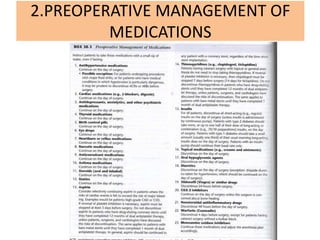
2.PREOPERATIVE MANAGEMENT OF
MEDICATIONS
3.PREOPERATIVE RISK ASSESSMENT
4. PLANNING FOR ANAESTHESIA
1. PREOPERATIVE FASTING STATUS
• clear fluids:2 hours.
• light meal: 6 hours
• fried or fatty foods: 8 hours or more
For neonates/ infants:
• Breast milk: 4 hours
• Formula/solids: 6 hours
2. PLANNING FOR POST-OPERATIVE PAIN
MANAGEMENT
• In Pre-op evaluation we should note baseline opioid use.
• Facilitate early involvement of acute pain service or chronic
pain specialist
• Encourage regional anesthetic techniques
• Plan adjunct analgesics and continue use of regular analgesic
on day of surgery.
• Patients with chronic pain should be informed that care
provider will do everything possible to maintain postop
comfort but patient should not expect to have no pain at all
THANKYOU !
• MURMURS AND VALVULAR ABNORMALITIES
Goals:
1. Location and intensity of murmur
2. cause of murmur
3. Distinguish significant and clinically unimportant
murmurs
4. Grading of murmurs (6 grades)
5. Functional and benign murmurs.
 Effects Valsalva maneuver, standing, squatting.
 INVESTIGATIONS: ECG, ECHO
 Cardiac consultation

Preoperative evaluation

  • 1.
    PREANAESTHESIA EVALUATION MODERATOR- Dr.A.B. Roy Presented by- Dr. Richa Kumar
  • 2.
    Definition* • Preanesthesia evaluation:process of clinical assessment & optimization of patient preceeding delivery of anesthesia care for surgery and for nonsurgical procedures.
  • 3.
    FUNDAMENTAL PURPOSE: • obtainrelevant information • Formulate assessment for perioperative risks • Ordering preoperative investigations consistent with medical history and examination.
  • 4.
    • Verify analready known disease, disorder, medical or alternative therapy that may affect perioperative anesthetic care • Formulation of specific plans and alternatives for perioperative anesthetic care and post operative pain management. • Develop plan for any clinical optimization. • To describe the proposed anesthetic plan and related risks to the patient. • give psychological support to patient.
  • 5.
    • Fig 38-1pg 1087
  • 6.
    1.DETECTING DISEASES IN PREOPEARTIVEEVALUATION HISTORY PHYSICAL EXAM. DIAGNOSTIC TESTS
  • 7.
    HISTORY TAKING • Notsimply asking questions.* • Use of lay language*
  • 8.
    COMPONENTS of MEDICALHISTORY • Start with name , age*, sex of patient followed by indication of surgery and planned procedure. • Current and past medical problems • Previous surgical procedures with type of anesthesia and related complications(if any). • Simple notation of names disease/s NOT ENOUGH*.
  • 9.
    • Prescriptions &over the counter medications with dosage and schedule. • Allergies • Use of tobacco/alcohol/ellicit drugs*(quantitative record of smoking)
  • 10.
    • Day timesomnolence/obesity/snoring (airway)* • Any significant heart burn/ reflux • LMP in case of females of childbearing age. • Past History* • Family history
  • 11.
    • Status ofcardiorespiratory fitness: quantified in metabolic equivalents of task (METS)- measure of volume of oxygen consumed during an activity.
  • 12.
  • 13.
    CVS • identify riskfactors of CAD ( smoking, hypertension, age, male sex, hypercholestrolemia, family history) • chest discomfort (pain , pressure, tightness) –duration, precipitating factors , associated symptoms and relieving factors. • SOB • Past cardiac procedures • Goal is identify patients with high perioperative cardiac risk and who have modifiable risk.
  • 14.
    PULMONARY • Asthma (SOB/recent exaccerbations/therapy/hospitalization/criticalcare unit admission ,endotracheal intubation) • COPD (smoking,alpha1 antitrypsin def. ,chronic infection,long standing asthma)
  • 15.
  • 18.
  • 19.
    PREOPERATIVE EVALUATION OF PATIENTWITH SYSTEMIC DISEASE & LAB. INVESTIGATIONS REQUIRED
  • 20.
    CARDIOVASCULAR DISEASE • CVScomplications are very common serious perioperative adverse events. • Role of perioperative evaluation?*
  • 21.
    HTN* In young individuals: COA,hyperthyroidism, phaeochromocytoma or ellicit drug use • Long standing severe/uncontrolled HTN: ECG, BUN, S. creat, Electrolytes for patients on diuretcs if LVH on ECG :CAD Elective surgery delayed if DBP>115 & SBP>200 until BP < 180/110 All long term antihypertensives to continue except ACEI /ARB
  • 22.
    • AHA suggeststhat potential benefits of delaying surgery to optimize antihypertensive treatment should be weighed against the risks of delaying the surgical procedure.* • The preoperative period :excellent opportunity for appropriate referrals for future management of inadequately treated HTN.
  • 23.
    • IHD: 4goals: 1.identify cardiac risks 2. presence and severity 3. need of preoperative interventions 4. modify risk of perioperative adverse effects AHA suggests postponement of surgery if patient had acute MI For recent MI nonemergency surgery should be postponed.
  • 24.
    • The revisedCardiac Risk Index (RCRI) has been extensively validated for predicting perioperative cardiac risk in non-cardiac surgery.
  • 25.
    SUSPECTED CAD: INVESTIGATIONS 1. Bloodcreatinine & Hb concentration 2.KFT (RCRI) 3.ECG 4. cardiac stress test* 5. Echocardiography 6. angiography
  • 26.
    CORONARY STENTS: Recent <30days (baremetal stents) <1 year (drug eluting stents) Should not undergo elective surgery
  • 27.
    HEART FAILURE* (systolic/diastolic/combination) •NYHA categories for degree of HF*. • Class III and IV should be evaluated in conjuction with cardiologist • INVESTIGATIONS:ECG, electrolytes, BUN, creatinine, BNP, chest radiography, echocardiography • Selective continuation & discontinuation of drugs depending on IV volume ,hemodynamic status, degree of cardiac dysfunction and anticipated surgical procedure and IV volume challenges.
  • 28.
    • RHYTHM DISTURBANCES: •SVT and ventricular arrythmias – higher risk of post-op adverse effects. • New onset / uncontrolled AF • Symptomatic bradycardia • High grade heart blocks • LBBB more ominous than RBBB (CAD & HF) (congenital/pulmonary/degeneration/Burguda syndrome*) Prolonged QT interval: electrolyte disturbances, drugs*, cardiology reference in patients with H/O syncope and family H/O sudden death Warrant postponement of elective procedures and referral to cardiology
  • 31.
    PULMONARY DISORDERS ASTHMA: • Canbe precipitated by airway intrumentation. • Risk assessement by further questioning • Degree of wheeze has no correlation with severity of bronchoconstriction • CXR-necessary investigation. • ABG necessary only in acute exacerbation • Blood glucose in patients on steroids • PFTs =no perioperative predictive value • Beta agonist is most useful prophylactic measure to lower risk of bronchospasm.
  • 32.
    COPD • COPD severityclassified based on spirometery findings. • Barrel shaped chest and pursed lip breathing suggests advanced disease • Degree of disease correlates with degree of hypoxia and hypercarbia • Diffusing capacity of lung for CO(DLCO) is decreased • Preoperative SpO2 is important to establish a baseline. • ABG is beneficial if patient is hypoxic or requires supplemental oxygen
  • 33.
    • CXR isuseful in infection and when bullous disease is suspected • ECG: RBBB, peaked P waves suggest RV changes and pulmonary HTN • Inhalers and long term medications should be continued on the day of surgery.
  • 34.
    Restrictive Lung Disease •Characterised by decreased TLC • Causes can be pulmonary or extrapulmonary- obtain medical history of associated diseases or symptoms. • FEV 1 /FVC > 0.7 (both decreased)
  • 35.
    DYSPNEA • Associated withcardiac, pulmonary, hematologic and neuromuscular diseases • Onset, progression, precipitating factor, associated conditions and drug exposure • Chronic dyspnea: asthma, COPD, ILD, or cardiac dysfunction. • Should be classified using NYHA class categories. • ECG, Hematocrit ABG, thyroid function, CXR, spirometery and oximetery
  • 36.
    • PATIENTS SCHEDULEDFOR LUNG RESECTION • PFT and V/Q scans :helps to predict risk or exclude patients who lack adequate pulmonary reserve after resection. • Predicted postoperative FEV1 = FEV1 X 𝑅𝑎𝑑𝑖𝑜𝑎𝑐𝑡𝑖𝑣𝑒 𝑐𝑜𝑢𝑛𝑡𝑠 𝑖𝑛 𝑛𝑜𝑛𝑜𝑝𝑒𝑟𝑎𝑡𝑖𝑣𝑒 𝑙𝑢𝑛𝑔 𝑟𝑎𝑑𝑖𝑜𝑎𝑐𝑡𝑖𝑣𝑒 𝑐𝑜𝑢𝑛𝑡𝑠 𝑓𝑟𝑜𝑚 𝑏𝑜𝑡ℎ 𝑙𝑢𝑛𝑔𝑠 should be >0.8 or >40% VO2peak >20mL/Kg/minute =low risk of complications <15ml/kg/minute =increased risk <10ml/kg/minute=very high risk
  • 37.
    • OBSTRUCTIVE SLEEPAPNEA • Severity based on AHI (apnea-hypopnea index) • >30 episodes of apnea-hypopnea/hour of sleep=severe OSA • Mask ventilation , DL ,endotracheal intubation and fibro-optic visualization of airway is more difficult in patients with OSA
  • 38.
    • SMOKERS Increases riskof: • perioperative complications • Wound infections • Respiratory complications • Severe coughing • Episodes of ST segment depression (compared to non smokers) • Decreases macrophage function • Negatively affects coronary flow reserve • Vascular endothelial dysfunction • HTN • Ischemia • Require longer hospital stay
  • 39.
    • Peroperative benefitsof smoking cessation are evident only when cessation is atleast for 3-4 weeks before surgical procedure. • Soon after patient quits , there is decrease in CO levels, increase oxygen delivery, decreased nicotine levels lead to improved vasodilatation, decrease in toxic substances that impair wound healing.
  • 40.
    URTI • Surgical proceduresof patients with severe symptoms with underlying conditions (significant asthma, heart disease, immunosuppression) are postponed for at least 4 weeks as the underlying conditions may further compromise a safe anesthetic regimen.
  • 41.
    CYSTIC FIBROSIS • Optimizationof pulmonary status is necessary • Electrolytes, LFTs, Chest radiographs are useful • Continuation of most medications is recommended
  • 42.
    POST OPERATIVE PULMONARYCOMPLICATIONS Risk factors: 1. History of cigarette smoking 2. ASA-PS score of >2 3. Age >70 years 4. COPD 5. Neck, thoracic , upper abdominal, aortic and neurologic surgical procedures 6. Anticipated prolonged procedures (>2 hours) 7. Planned GA (especially with ET intubation) 8. Albumin <35 g/dl 9. Inability to walk two blocks on the level or climb one flight of stairs 10. BMI>30
  • 43.
    ENDOCRINE DISEASES • DIABETESMELLITUS GOAL IS: • Optimization of glucose control before surgery • Avoidance of hypoglycemia • Avoidance of marked hyperglycemia • INVESTIGATIONS: Blood glucose, ECG, electrolytes , BUN, creatinine , HbA1C • Risk of multiorgan failure , renal insufficiency, stroke, PVD, autonomic dysfunction, cardiovascular disease (DM is CAD equivalent) • Poor control of disease is associated with increased risk of heart failure, infection and poor outcome.
  • 44.
    THYROID DISEASES • Thyroidfunction test 6 months before the surgery are adequate if patient is asymptomatic. • TSH is best to evaluate hypothyroidism • FT3, FT4, TSH are best to evaluate hyperthyroidism • Elective surgical procedures should be postponed until patient is euthyroid. • Surgery,stress and illness can precipitate myxedema or thyroid storm.
  • 45.
    • Endocrinologist consultationis necessary if surgery is urgent in patient with thyroid dysfunction • CXR and CT is useful to evaluate mediastinal or tracheal involvement by goitre. • Medications of thyroid disorder should be continued on day of surgery.
  • 46.
    PARATHYROID DISEASE: • Hyperparathyroidism:Primary, secondary, tertiary • Rarely may become large enough to compromise airway. • Hypoparathyroidism : can result from total thyroidectomy
  • 47.
    HYPOTHALAMIC-PITUITARY-ADRENAL DISORDER Serum cortisoland ACTH Levels establish the diagnosis and cause of adrenal insufficiency.
  • 48.
    • MEN SYNDROMES •Undiagnosed phaeochromocytoma can cause substantial morbidity and even death. Therefore it is important to remove this tumor before other endocrine tumors.
  • 49.
    Triad of symptomsof PHAEOCHROMOCYTOMA • Paroxysmal HTN is classical sign
  • 50.
    RENAL DISEASE It isimportant to know the type and severity of renal disease Associated diseases: HTN, CVS disease, electrolyte disturbances CKD : GFR< 60ml/min/1.73m2 CRF:GFR <15ml/min/1.73m2 ESRD: loss of renal function for 3 or more months AKI: sudden decrease in renal function (RIFLE criteria & AKIN)
  • 52.
    HEPATIC DISORDERS • Liverdiseases affect hepatocytes, biliary system, protein synthesis, bile regulation and metabolism of drugs/toxins. • Obstructive disorders cause bile stasis • Drug induced liver diseases affect both hepatocytes and biliary system.
  • 54.
    It is appropriateto delay elective surgery in: • Acute or fulminant liver disease(alcoholic/viral/undefined) • Until acute episode of hepatitis has resolved The perioperative risk in patients with chronic hepatitis or cirrhosis is predicted by: 1. Histologic severity 2. Portal HTN 3. LFT
  • 55.
    HEMATOLOGICAL DISORDERS ANEMIA (Hb<13g/dLmales, <12g/dL females) • Determine etiology, duration, stability , related symptoms and therapy(esp. transfusion) • Risk factor: colon cancer, GI bleeding, GU bleeding, menorrhagia, chronic infections, Inflammatory ds, nutritional deficiencies and prior weight reduction procedures • Assess for fatigue, palpitations, chest pain , malena, pallor, murmurs , HS, LNpathy • Consider type of surgical procedure , anticipated blood loss & comorbid conditions.
  • 56.
    • Transfusion isalways indicated if Hb< 6 and rarely indicated if Hb >10 (report by ASA in 2015) • ASA Task force on Blood Component Therapy concluded that RBC should not be transfused solely on the basis of Hb but rather they should be used to assess risk of complications from inadequate preoxygenation. • formula • Elective procedures should be postponed in patients with significant anemia regardless of anticipated blood loss during surgery and meanwhile patient can be treated for anemia
  • 57.
    • COAGULOPATHIES • Hypocoaguablestates can be inherited or acquired • Inquire about: 1. known diagnosis 2. treatments 3.previous bleeding episodes 4.family history • INVESTIGATIONS: platelet count/CBC/PT/aPTT (routine screening for coagulopathies is not indicated)
  • 58.
    • Prolonged PTwithout history of above : repeat test >Liver enzymes>hepatitis panel Trial of Vit.K (1-5mg x ODX 3days) • Prolonged aPTT: hypo/hypercoaguable state>repeat test>ascertain heparin exposure,vWF disease.
  • 59.
    • THROMBOEMBOLIC DISORDERS •If prophylaxis is not administered the risk is:  0.1-0.8 % in elective general surgery  2-3% after elective hip replacement  4-7% after repair of fractured hip • Patients should be stratified preoperatively for the risks of perioperative venous thromboembolism
  • 60.
    ANTICOAGULANT THERAPY WARFARIN • Mayincrease perioperative bleeding • Witheld 4-5 days before surgery( if INR 2-3) to decrease INR <1.5 • • If INR >3.0 withheld > 4-5 days • If day before surgery INR >1.8 , a small dose of oral or s/c dose of Vit. K (1-5 mg) can reverse anticoagulation • Vit K has effect for 6-10 hours, peak action 24-48 hours. • High doses of viatmin K can lead to warfarin resistance when therapy is initiated again.
  • 61.
    DECISION OF BRIDGINGTHERAPY: • Individualized decision for every patient • If planned : INR checked 2 days after last dose of warfarin • if INR <1.5, intravenous Heparin or LMWH can be started • IV unfractionated heparin is stopped 6 hours before surgery for normal intaoperative caoagulation • Therapeutic LMWH witheld 24hours before • Prophylactic LMWH withld 12 hours before • Adjustment of LMWH doses are necessary for patients with impaired renal function ( eGFR < 30ml/minute) • Epidural catheters are removed 12 hours after last prophylactic dose and 2 hours before next dose
  • 62.
    NEUROLOGICAL DISORDERS SEIZURE DISORDER •Document: TYPE OF SEIZURE (e.g., grand mal, absence) and specific SYMPTOMS (e.g., staring, focal findings). • Poorly controlled or new-onset seizures entail a consultation with a neurologist before the patient undergoes anything other than emergency surgery. • Continuation of anticonvulsant therapy in the perioperative period is necessary.
  • 63.
    CEREBROVASCULAR DISEASE: • 1-3months interval is considered safe between acute stroke and surgery • Risk of perioperative cardiac complications should be evaluated
  • 64.
    CANCER AND TUMORS •Ask about side effects during chemotherapy or radiotherapy • Assess hypercoagulable state: thromboembolic events • Head and neck irradiation: carotid artery disease, hypothyroidism or difficult airway management • Irradiation of lung,breast or mediastinum:radiation pneumonitis
  • 65.
    • Mediastinal ,chest wall or left breast irradiation: pericardial abnormalities and premature CAD • Chemotherapy associated S/E : cardiomyopathy, pulmonary toxicity, hemorrhagic cystitis, peripheral neuropathy, myelosupression • Paraneoplastic syndromes ,difficult airway,mediatinal masses: lung cancer • INVESTIGATIONS CBC, electrolytes, BUN, creatinine , LFTs, ECG, CXR
  • 66.
  • 67.
  • 68.
    4. PLANNING FORANAESTHESIA 1. PREOPERATIVE FASTING STATUS • clear fluids:2 hours. • light meal: 6 hours • fried or fatty foods: 8 hours or more For neonates/ infants: • Breast milk: 4 hours • Formula/solids: 6 hours
  • 69.
    2. PLANNING FORPOST-OPERATIVE PAIN MANAGEMENT • In Pre-op evaluation we should note baseline opioid use. • Facilitate early involvement of acute pain service or chronic pain specialist • Encourage regional anesthetic techniques • Plan adjunct analgesics and continue use of regular analgesic on day of surgery. • Patients with chronic pain should be informed that care provider will do everything possible to maintain postop comfort but patient should not expect to have no pain at all
  • 70.
  • 71.
    • MURMURS ANDVALVULAR ABNORMALITIES Goals: 1. Location and intensity of murmur 2. cause of murmur 3. Distinguish significant and clinically unimportant murmurs 4. Grading of murmurs (6 grades) 5. Functional and benign murmurs.  Effects Valsalva maneuver, standing, squatting.  INVESTIGATIONS: ECG, ECHO  Cardiac consultation