PRE-ANESTHETIC
EVALUATION
ATLAS HOSPITAL
Introduction
is a requisite component to administering any
anaesthetic.
a rapid transformation in hospital practices
from admission on previous night to the
morning of day of surgery.
new approach where anaesthesiologist take
a lead role in assessing and optimising the
patient.
3% of peri-operative adverse events are
attributed to inadequate PAE.
• Evaluate the patient’s medical condition
• Optimise the patient’s medical condition for
anaesthesia and surgery.
• Determine and minimise risk factors for anaesthesia.
• Plan anaesthetic technique and perioperative care.
• Develop a rapport with the patient to reduce anxiety
and facilitate conduct of anaesthesia.
• Inform and educate the patient about anaesthesia,
perioperative care and pain management
• Obtain informed consent for anaesthesia
Objectives
Benefits
• More selective ordering of lab tests.
• Reduced health care costs by specialists referrals
rather than primary care physicians.
• Reduced level of patient anxiety.
• Improved acceptance of regional anaesthesia.
• Shorter duration of hospitalisation.
• Lower hospital costs.
• Clear role of medical consultants to optimise the
medical condition and also co-manage the pt
postoperatively.
Pre-anaesthetic assessment
May be conducted
– as a personal interview in the ward, operating
theatre or pre-anaesthetic clinic or
– using preset questionnaires assisted by trained
nursing or paramedical staff under the supervision
of an anaesthesiologist.
In the case of emergency surgery where early
consultation is not always possible, the anaesthesiologist
is still responsible for the preanaesthetic assessment. If
surgery cannot be delayed in spite of increased anasthetic
risks, documentation to that effect should be made.
6
DETECTING DISEASE AND ASSESSING
SEVERITY
• Medical history
– medical problems
– current medication and allergies
– previous anaesthesia
– family history of anaesthetic complications.
– System review
– Menstrual
• Physical examination
– cardiovascular and respiratory systems (including the
airway)
– other systems i.e. the renal, hepatic and central nervous
systems
Physical Examination
• Minimum requirements
– Airway
– Heart & lungs
– Vital signs including O2 saturation
– Height & weight (BMI)
P.A.C RECORD
Airway Examination
• Teeth and bite
• Ability to protrude lower incisors beyond
upper
• Mouth opening (inter-incisor distance)
• Mallampatti score
• Facial hair
• Thyromental distance
• Length & thickness of neck
• Range of motion of head & neck
Mallampati & Samsoon Score
Mallampati Class 1 !!!!
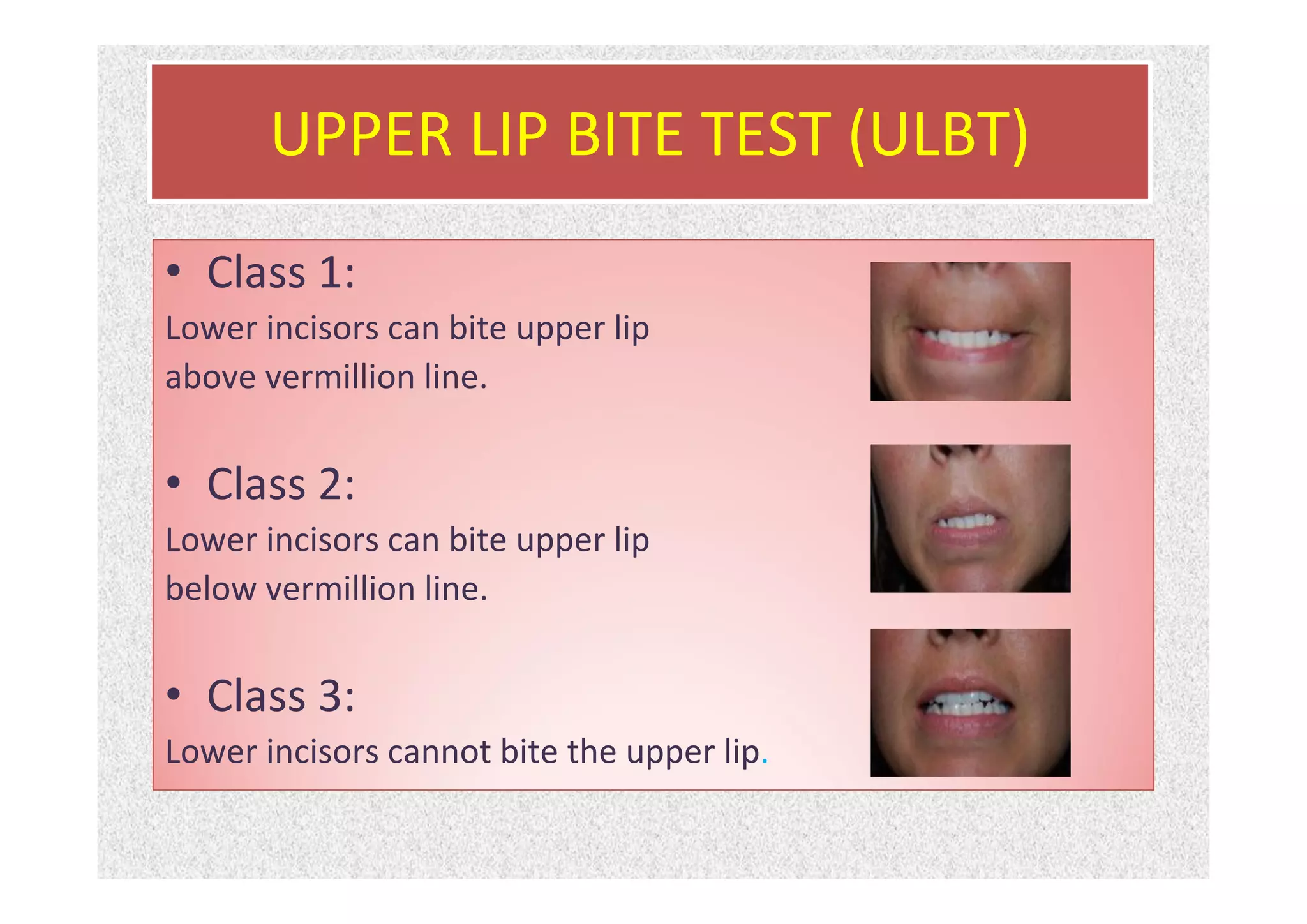
UPPER LIP BITE TEST (ULBT)
• Class 1:
Lower incisors can bite upper lip
above vermillion line.
• Class 2:
Lower incisors can bite upper lip
below vermillion line.
• Class 3:
Lower incisors cannot bite the upper lip.
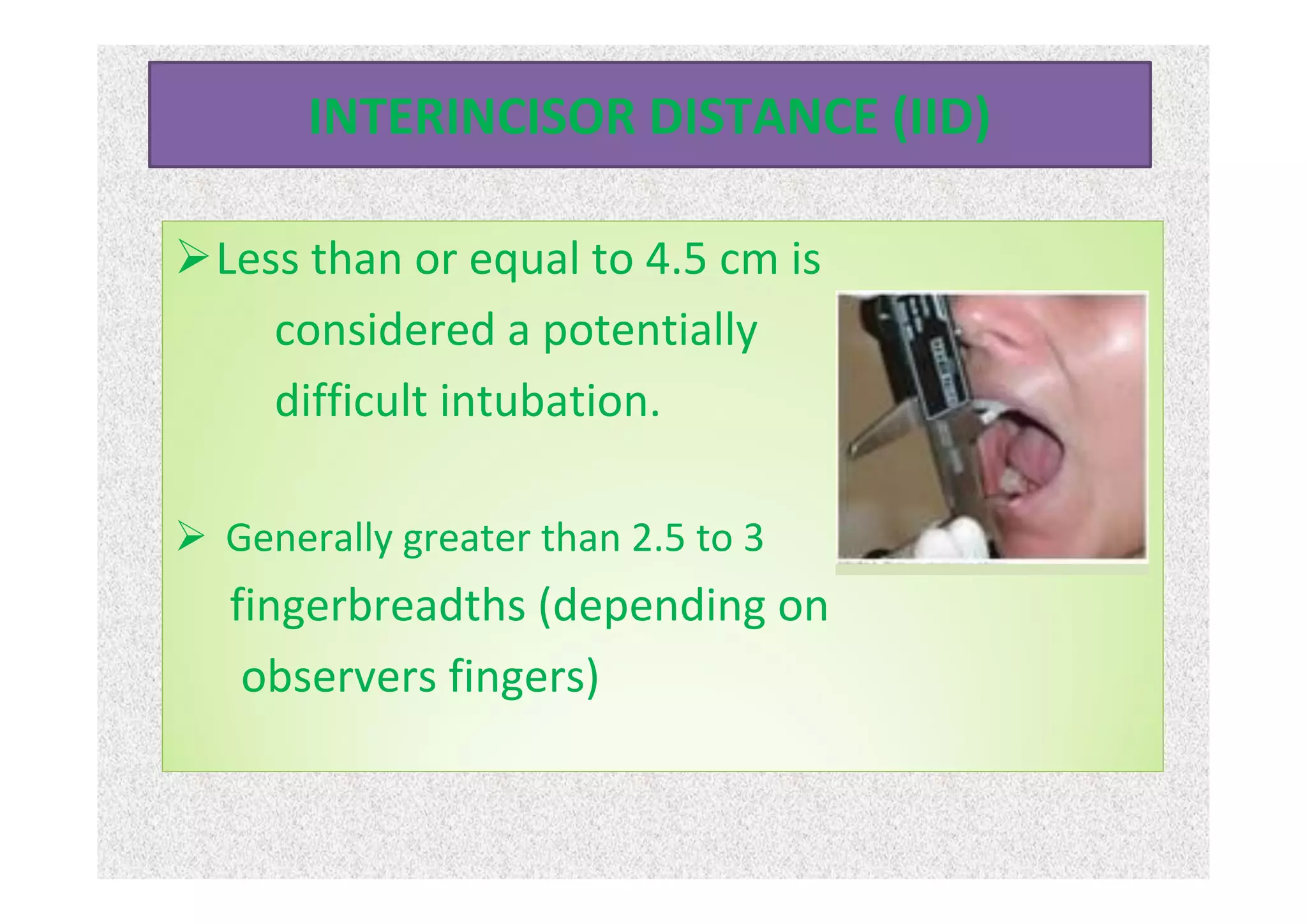
Less than or equal to 4.5 cm is
considered a potentially
difficult intubation.
 Generally greater than 2.5 to 3
fingerbreadths (depending on
observers fingers)
INTERINCISOR DISTANCE (IID)
– Upright
– Full neck extension
– Distance from upper border of
thyroid cartilage (laryngeal prominence), to the
bony point
of the mentum.
– Distance < 6.5cm may be difficult
THYROMENTAL DISTANCE
Thyromental distance
(TMD)
Upright, neck extension, mouth closed, Distance < 6.5cm difficult intubation
Sterno-mental Distance
(SMD)
Extended head and neck, mouth closed, distance
<12.5cm is a difficult intubation
MOVEMENT OF THE NECK
CRANIOFACIAL DEFORMITIES
Pierre Robin Goldenhar'sTreacher Collins
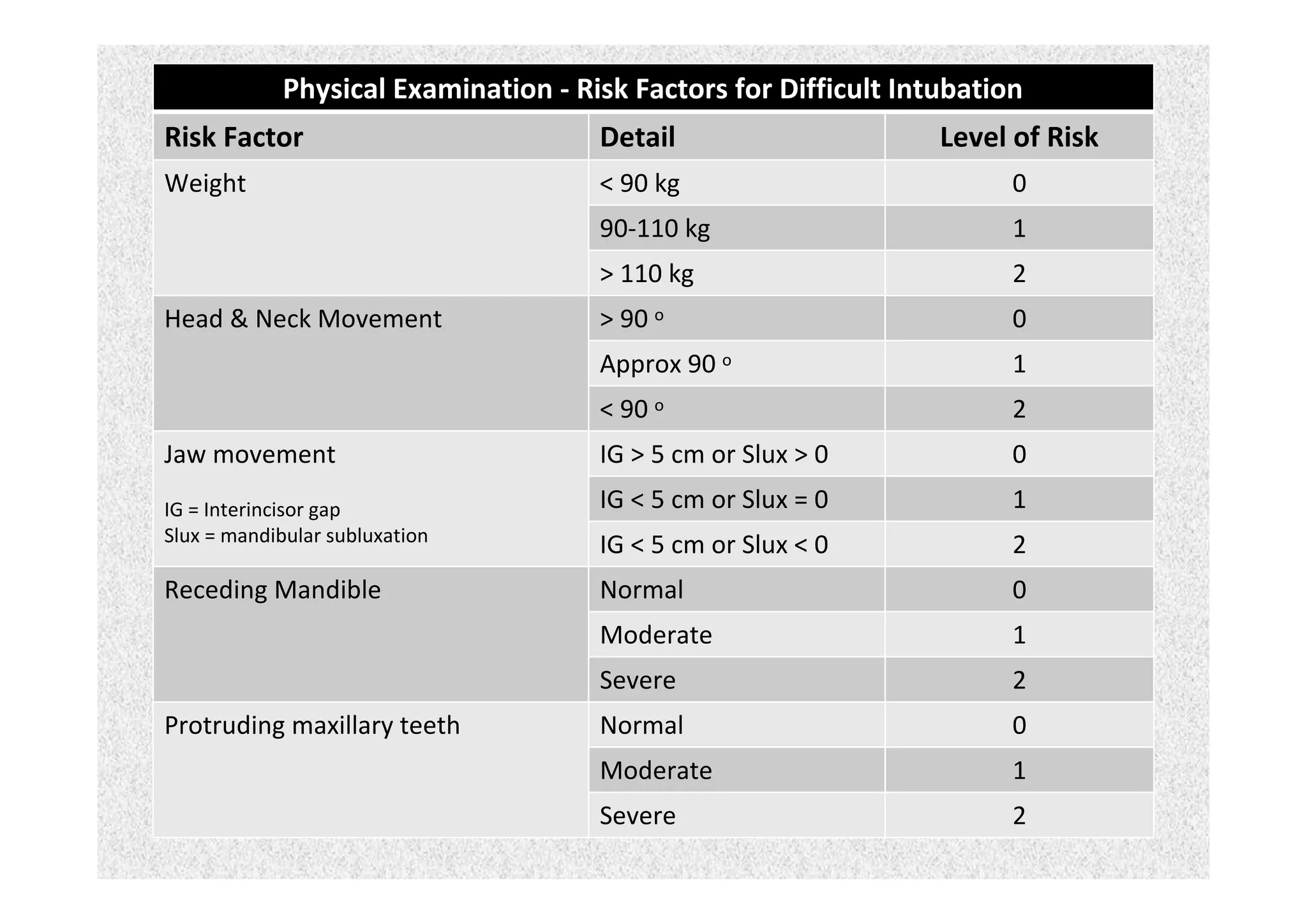
Physical Examination - Risk Factors for Difficult Intubation
Risk Factor Detail Level of Risk
Weight < 90 kg 0
90-110 kg 1
> 110 kg 2
Head & Neck Movement > 90 o 0
Approx 90 o 1
< 90 o 2
Jaw movement
IG = Interincisor gap
Slux = mandibular subluxation
IG > 5 cm or Slux > 0 0
IG < 5 cm or Slux = 0 1
IG < 5 cm or Slux < 0 2
Receding Mandible Normal 0
Moderate 1
Severe 2
Protruding maxillary teeth Normal 0
Moderate 1
Severe 2
Evaluating Cardiac Disease
• Cardiovascular complications are very common serious peri--op adverse
events.
• Accounts for nearly 50 % of all peri-op deaths.
• 8% of patients have serious Myocardial injury during major surgery.
• Goals are to identify the risk factors,severity of the disease,determine the
need for pre –op interventions and modify the risk of peri –op adverse
events.
• In addition to this also categorise the surgery into Low risk,Intermediate
risk and High risk.
NYHA Functional Class
Class I No limitation of physical activity; ordinary activity does not cause fatigue,
palpitations or syncope
Class II Slight limitation of physical activity; ordinary activity results in fatigue,
palpitations or syncope
Class III Marked limitation of physical activity; less than ordinary activity results in
fatigue, palpitations or syncope; comfortable at rest
Class IV Inability to do any physical activity without discomfort; symptoms at rest
Arrhythmias/ECG abnormalities
• Further work-up or therapy needed
– New onset AF
– Symptomatic bradycardia
– High-grade heart block (2nd or 3rd degree)
– Uncontrolled AF
– VT
– Prolonged QT
– New LBBB
– RBBB with right precordial ST elevation (Brugada)
Revised Cardiac Risk Index
• Predicts the cardiac risk in non- cardiac
surgery.
Components of Revised Cardiac Risk
Index
Points Assigned
•High-risk surgery (intraperitoneal,
intrathoracic, or suprainguinal
vascular procedure)
•Ischemic heart disease (by any
diagnostic criteria)
•History of congestive heart failure
•History of cerebrovascular disease
•Diabetes mellitus requiring insulin
•Creatinine >2.0 mg/dL (176 μmol/L)
Revised Cardiac Risk Index
0
1
2
≥3
1
1
1
1
1
1
Score Risk of Major Cardiac Events
0.4%
1.0%
2.4%
5.4%
Evaluating Respiratory Disease
established risk factors for pulmonary complications
Patient factors like h/o cigarete smoking, BMI>30, age >70,
partially or fully dependent ,COPD, Heart failure
Procedure related factors like
neck, thoracic, upper abdominal, aortic or neurological surgery
prolonged procedures (> 2 hours), planned for anesthesia with
ETT tube, emergency surgery
Lab factors like
hypo-albuminaemia (< 30 g/l),Urea >21 ,abnormal CXR
URTI & anaesthesia
• Mild symptoms - can usually proceed
– huge inconvenience to patient if cancelled
• Severe symptoms or underlying disease
– postpone
• Intermediate severity - ?
• ? risk of increased bronchial reactivity
Sleep-disordered Breathing
• 24% of middle aged men (< 15% diagnosed!)
• OSA - complete obstruction for 10s +
• OH (obstructive hypopnoea) > 4% drop in sats
• Severe OSA have >30 episodes of apnoea/hr
• CVS disease common
• Berlin Questionnaire(STOP BANG)
• Snoring
• Daytime sleepiness
• Hypertension
• Obesity
2 or more = high
risk for OSA
RECOMMENDED PREANAESTHETIC
INVESTIGATIONS
ECG
• Age above 50 (female)
• Age above 40 (male)
• Cardiovascular disease
• Diabetes Mellitus
• Renal disease
Subarachnoid/Intracrania
l Bleed, CVA, Head
Trauma
Chest X-ray
• Age above 60
• Significant respiratory
disease
• Cardiovascular disease
Malignancy Major
Thoracic/Upper Abdominal
Surgery
RECOMMENDED PREANAESTHETIC
INVESTIGATIONS
FBC
• Age above 60
• Clinical anaemia
• Haematological
disease
• Renal disease
• Chemotherapy
• Procedures with
blood loss > 15%
RP
• Age above 60
• Renal disease
• Liver disease
• Diabetes Mellitus
• Cardiovascular
disease
• Procedures with
blood loss > 15%
Coagulation
profile
• Haematological
disease
• Liver disease
• Anticoagulation
• Intra-
thoracic/Intra-
cranial
procedures
Random Blood
Sugar
• Age above 60
• Diabetes Mellitus
• Liver dysfunction
Liver Function
Tests
• Hepato-biliary
disease
• Alcohol abuse
ASA Minimum Pre-op Visit Components
• Medical, anaesthesia and medication history
• Appropriate physical examination
• Review of diagnostic data (ECG, labs, x-rays)
• Assignment of ASA physical status
• Formulation and discussion of anesthesia plan
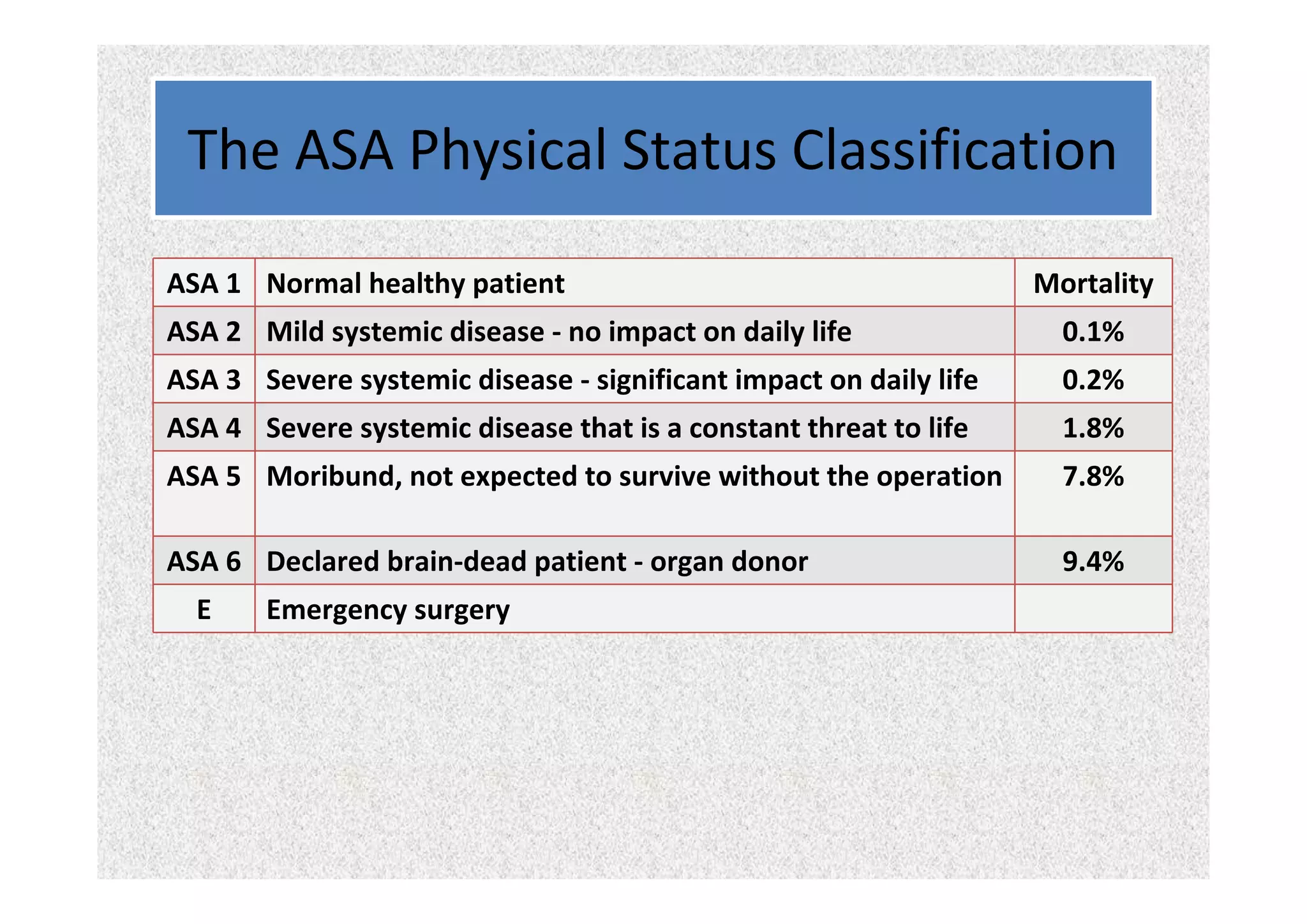
The ASA Physical Status Classification
ASA 1 Normal healthy patient Mortality
ASA 2 Mild systemic disease - no impact on daily life 0.1%
ASA 3 Severe systemic disease - significant impact on daily life 0.2%
ASA 4 Severe systemic disease that is a constant threat to life 1.8%
ASA 5 Moribund, not expected to survive without the operation 7.8%
ASA 6 Declared brain-dead patient - organ donor 9.4%
E Emergency surgery
DOCUMENTATION
• A written summary of the pre-anaesthetic
assessment, orders or arrangements should
be explicitly and legibly documented in the
patient’s anaesthetic record.
Hold on day of surgery
• Diuretics
• unless thiazide for hypertension
• unless severe heart failure
• Insulin & OHA
• Vitamins & iron
• ACEI’s or ARB’s depends on procedure/risk of
hypotension
• MAOI inhibitors
PREOP MEDICINES MANAGEMENT
Stop 48 hours pre-op
NSAIDs
Stop 4 days pre-op
Warfarin (convert to enoxaparin)
Stop 7 days pre-op
Clopidogrel
Aspirin 75 mg usually continued (check with consultant)
Herbal remedies
HRT Estrogens 1 month
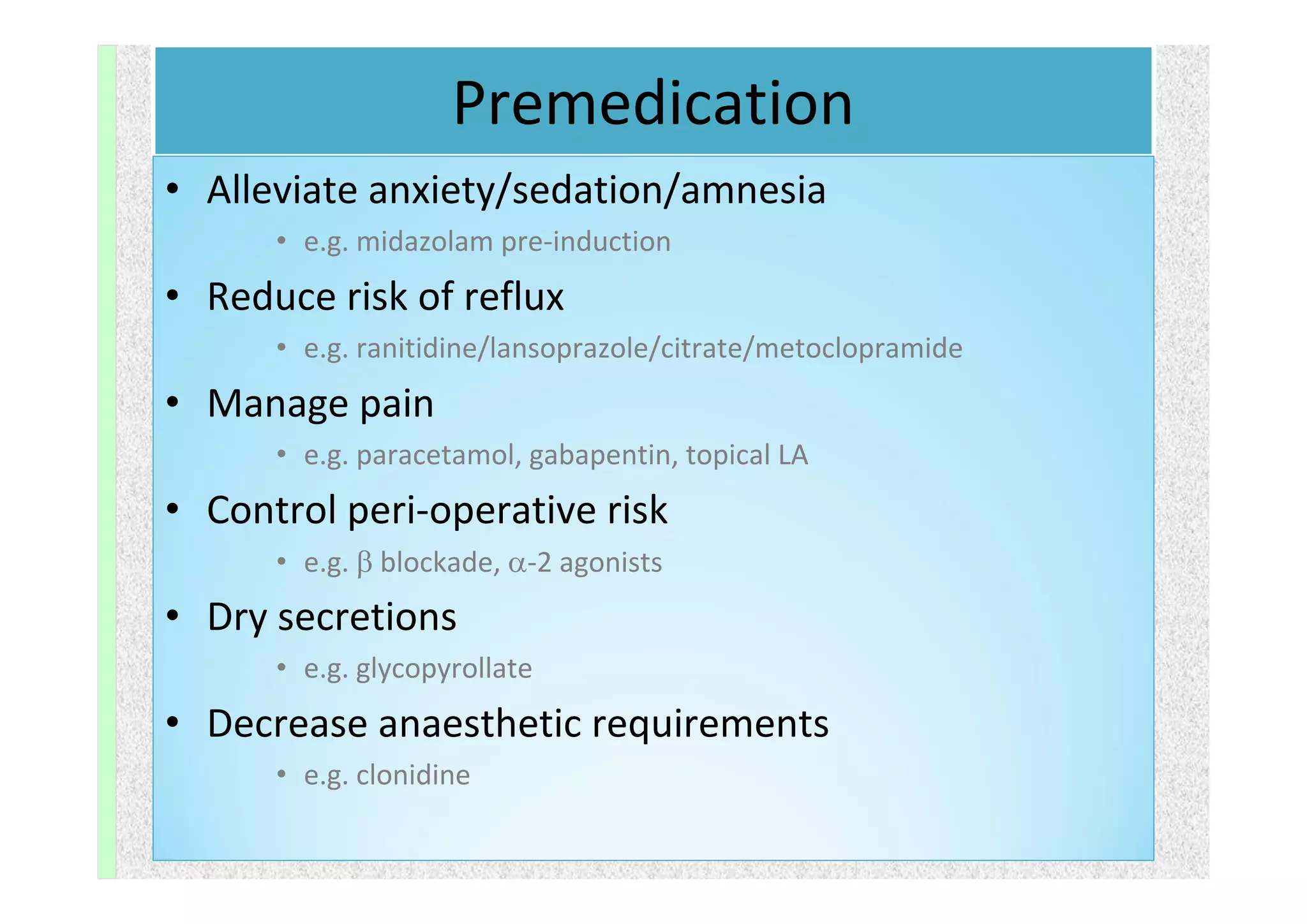
Premedication
• Alleviate anxiety/sedation/amnesia
• e.g. midazolam pre-induction
• Reduce risk of reflux
• e.g. ranitidine/lansoprazole/citrate/metoclopramide
• Manage pain
• e.g. paracetamol, gabapentin, topical LA
• Control peri-operative risk
• e.g.  blockade, -2 agonists
• Dry secretions
• e.g. glycopyrollate
• Decrease anaesthetic requirements
• e.g. clonidine
FASTING GUIDELINES
Time before anaesthesia Food or fluid intake
Up to 8 hours Unrestricted
Up to 6 hours Light meal/Formula milk
Up to 4 hours Breast milk
Up to 2 hours Clear liquids only (no solids, no
fat)
2 hours pre-anaesthesia Nothing permitted
• Primary goal of pre-op fasting is to reduce occurence of Pulmonary aspiration.
•In addition to the recommended guidelines,always assess the airway pre-op
for difficult intubation and increased risk of aspiration.
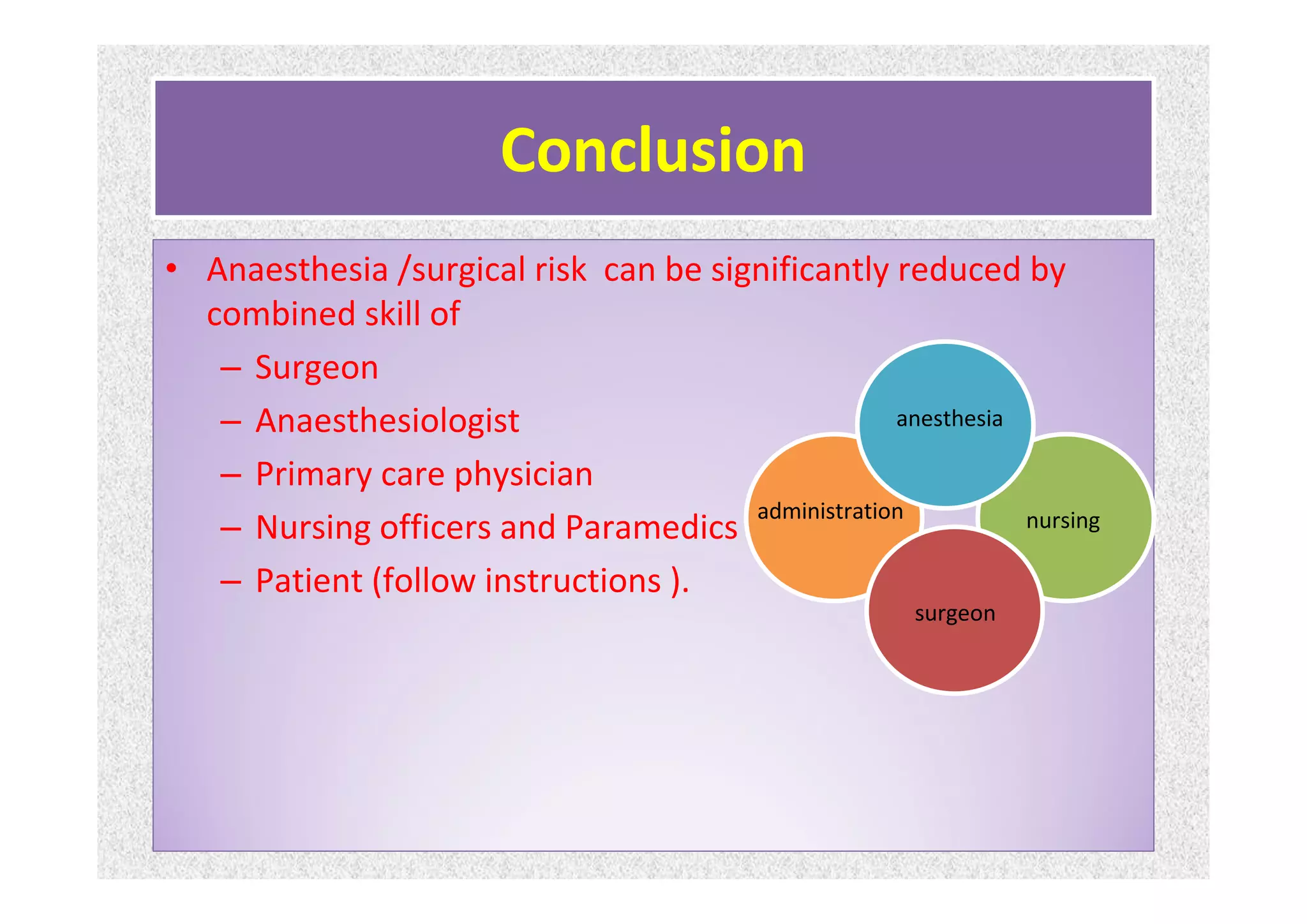
Conclusion
• Anaesthesia /surgical risk can be significantly reduced by
combined skill of
– Surgeon
– Anaesthesiologist
– Primary care physician
– Nursing officers and Paramedics
– Patient (follow instructions ).
anesthesia
administration
surgeon
nursing
THANK YOU!

Pre anaesthetic evaluation.pdfx

  • 1.
  • 2.
    Introduction is a requisitecomponent to administering any anaesthetic. a rapid transformation in hospital practices from admission on previous night to the morning of day of surgery. new approach where anaesthesiologist take a lead role in assessing and optimising the patient. 3% of peri-operative adverse events are attributed to inadequate PAE.
  • 3.
    • Evaluate thepatient’s medical condition • Optimise the patient’s medical condition for anaesthesia and surgery. • Determine and minimise risk factors for anaesthesia. • Plan anaesthetic technique and perioperative care. • Develop a rapport with the patient to reduce anxiety and facilitate conduct of anaesthesia. • Inform and educate the patient about anaesthesia, perioperative care and pain management • Obtain informed consent for anaesthesia Objectives
  • 4.
    Benefits • More selectiveordering of lab tests. • Reduced health care costs by specialists referrals rather than primary care physicians. • Reduced level of patient anxiety. • Improved acceptance of regional anaesthesia. • Shorter duration of hospitalisation. • Lower hospital costs. • Clear role of medical consultants to optimise the medical condition and also co-manage the pt postoperatively.
  • 5.
    Pre-anaesthetic assessment May beconducted – as a personal interview in the ward, operating theatre or pre-anaesthetic clinic or – using preset questionnaires assisted by trained nursing or paramedical staff under the supervision of an anaesthesiologist. In the case of emergency surgery where early consultation is not always possible, the anaesthesiologist is still responsible for the preanaesthetic assessment. If surgery cannot be delayed in spite of increased anasthetic risks, documentation to that effect should be made.
  • 6.
    6 DETECTING DISEASE ANDASSESSING SEVERITY • Medical history – medical problems – current medication and allergies – previous anaesthesia – family history of anaesthetic complications. – System review – Menstrual • Physical examination – cardiovascular and respiratory systems (including the airway) – other systems i.e. the renal, hepatic and central nervous systems
  • 7.
    Physical Examination • Minimumrequirements – Airway – Heart & lungs – Vital signs including O2 saturation – Height & weight (BMI)
  • 8.
  • 10.
    Airway Examination • Teethand bite • Ability to protrude lower incisors beyond upper • Mouth opening (inter-incisor distance) • Mallampatti score • Facial hair • Thyromental distance • Length & thickness of neck • Range of motion of head & neck
  • 11.
  • 12.
  • 13.
    UPPER LIP BITETEST (ULBT) • Class 1: Lower incisors can bite upper lip above vermillion line. • Class 2: Lower incisors can bite upper lip below vermillion line. • Class 3: Lower incisors cannot bite the upper lip.
  • 14.
    Less than orequal to 4.5 cm is considered a potentially difficult intubation.  Generally greater than 2.5 to 3 fingerbreadths (depending on observers fingers) INTERINCISOR DISTANCE (IID)
  • 15.
    – Upright – Fullneck extension – Distance from upper border of thyroid cartilage (laryngeal prominence), to the bony point of the mentum. – Distance < 6.5cm may be difficult THYROMENTAL DISTANCE
  • 16.
    Thyromental distance (TMD) Upright, neckextension, mouth closed, Distance < 6.5cm difficult intubation
  • 17.
    Sterno-mental Distance (SMD) Extended headand neck, mouth closed, distance <12.5cm is a difficult intubation
  • 18.
  • 19.
    CRANIOFACIAL DEFORMITIES Pierre RobinGoldenhar'sTreacher Collins
  • 20.
    Physical Examination -Risk Factors for Difficult Intubation Risk Factor Detail Level of Risk Weight < 90 kg 0 90-110 kg 1 > 110 kg 2 Head & Neck Movement > 90 o 0 Approx 90 o 1 < 90 o 2 Jaw movement IG = Interincisor gap Slux = mandibular subluxation IG > 5 cm or Slux > 0 0 IG < 5 cm or Slux = 0 1 IG < 5 cm or Slux < 0 2 Receding Mandible Normal 0 Moderate 1 Severe 2 Protruding maxillary teeth Normal 0 Moderate 1 Severe 2
  • 21.
    Evaluating Cardiac Disease •Cardiovascular complications are very common serious peri--op adverse events. • Accounts for nearly 50 % of all peri-op deaths. • 8% of patients have serious Myocardial injury during major surgery. • Goals are to identify the risk factors,severity of the disease,determine the need for pre –op interventions and modify the risk of peri –op adverse events. • In addition to this also categorise the surgery into Low risk,Intermediate risk and High risk.
  • 22.
    NYHA Functional Class ClassI No limitation of physical activity; ordinary activity does not cause fatigue, palpitations or syncope Class II Slight limitation of physical activity; ordinary activity results in fatigue, palpitations or syncope Class III Marked limitation of physical activity; less than ordinary activity results in fatigue, palpitations or syncope; comfortable at rest Class IV Inability to do any physical activity without discomfort; symptoms at rest
  • 23.
    Arrhythmias/ECG abnormalities • Furtherwork-up or therapy needed – New onset AF – Symptomatic bradycardia – High-grade heart block (2nd or 3rd degree) – Uncontrolled AF – VT – Prolonged QT – New LBBB – RBBB with right precordial ST elevation (Brugada)
  • 24.
    Revised Cardiac RiskIndex • Predicts the cardiac risk in non- cardiac surgery. Components of Revised Cardiac Risk Index Points Assigned •High-risk surgery (intraperitoneal, intrathoracic, or suprainguinal vascular procedure) •Ischemic heart disease (by any diagnostic criteria) •History of congestive heart failure •History of cerebrovascular disease •Diabetes mellitus requiring insulin •Creatinine >2.0 mg/dL (176 μmol/L) Revised Cardiac Risk Index 0 1 2 ≥3 1 1 1 1 1 1 Score Risk of Major Cardiac Events 0.4% 1.0% 2.4% 5.4%
  • 25.
    Evaluating Respiratory Disease establishedrisk factors for pulmonary complications Patient factors like h/o cigarete smoking, BMI>30, age >70, partially or fully dependent ,COPD, Heart failure Procedure related factors like neck, thoracic, upper abdominal, aortic or neurological surgery prolonged procedures (> 2 hours), planned for anesthesia with ETT tube, emergency surgery Lab factors like hypo-albuminaemia (< 30 g/l),Urea >21 ,abnormal CXR
  • 26.
    URTI & anaesthesia •Mild symptoms - can usually proceed – huge inconvenience to patient if cancelled • Severe symptoms or underlying disease – postpone • Intermediate severity - ? • ? risk of increased bronchial reactivity
  • 27.
    Sleep-disordered Breathing • 24%of middle aged men (< 15% diagnosed!) • OSA - complete obstruction for 10s + • OH (obstructive hypopnoea) > 4% drop in sats • Severe OSA have >30 episodes of apnoea/hr • CVS disease common • Berlin Questionnaire(STOP BANG) • Snoring • Daytime sleepiness • Hypertension • Obesity 2 or more = high risk for OSA
  • 28.
    RECOMMENDED PREANAESTHETIC INVESTIGATIONS ECG • Ageabove 50 (female) • Age above 40 (male) • Cardiovascular disease • Diabetes Mellitus • Renal disease Subarachnoid/Intracrania l Bleed, CVA, Head Trauma Chest X-ray • Age above 60 • Significant respiratory disease • Cardiovascular disease Malignancy Major Thoracic/Upper Abdominal Surgery
  • 29.
    RECOMMENDED PREANAESTHETIC INVESTIGATIONS FBC • Ageabove 60 • Clinical anaemia • Haematological disease • Renal disease • Chemotherapy • Procedures with blood loss > 15% RP • Age above 60 • Renal disease • Liver disease • Diabetes Mellitus • Cardiovascular disease • Procedures with blood loss > 15% Coagulation profile • Haematological disease • Liver disease • Anticoagulation • Intra- thoracic/Intra- cranial procedures
  • 30.
    Random Blood Sugar • Ageabove 60 • Diabetes Mellitus • Liver dysfunction Liver Function Tests • Hepato-biliary disease • Alcohol abuse
  • 31.
    ASA Minimum Pre-opVisit Components • Medical, anaesthesia and medication history • Appropriate physical examination • Review of diagnostic data (ECG, labs, x-rays) • Assignment of ASA physical status • Formulation and discussion of anesthesia plan
  • 32.
    The ASA PhysicalStatus Classification ASA 1 Normal healthy patient Mortality ASA 2 Mild systemic disease - no impact on daily life 0.1% ASA 3 Severe systemic disease - significant impact on daily life 0.2% ASA 4 Severe systemic disease that is a constant threat to life 1.8% ASA 5 Moribund, not expected to survive without the operation 7.8% ASA 6 Declared brain-dead patient - organ donor 9.4% E Emergency surgery
  • 33.
    DOCUMENTATION • A writtensummary of the pre-anaesthetic assessment, orders or arrangements should be explicitly and legibly documented in the patient’s anaesthetic record.
  • 34.
    Hold on dayof surgery • Diuretics • unless thiazide for hypertension • unless severe heart failure • Insulin & OHA • Vitamins & iron • ACEI’s or ARB’s depends on procedure/risk of hypotension • MAOI inhibitors
  • 35.
    PREOP MEDICINES MANAGEMENT Stop48 hours pre-op NSAIDs Stop 4 days pre-op Warfarin (convert to enoxaparin) Stop 7 days pre-op Clopidogrel Aspirin 75 mg usually continued (check with consultant) Herbal remedies HRT Estrogens 1 month
  • 36.
    Premedication • Alleviate anxiety/sedation/amnesia •e.g. midazolam pre-induction • Reduce risk of reflux • e.g. ranitidine/lansoprazole/citrate/metoclopramide • Manage pain • e.g. paracetamol, gabapentin, topical LA • Control peri-operative risk • e.g.  blockade, -2 agonists • Dry secretions • e.g. glycopyrollate • Decrease anaesthetic requirements • e.g. clonidine
  • 37.
    FASTING GUIDELINES Time beforeanaesthesia Food or fluid intake Up to 8 hours Unrestricted Up to 6 hours Light meal/Formula milk Up to 4 hours Breast milk Up to 2 hours Clear liquids only (no solids, no fat) 2 hours pre-anaesthesia Nothing permitted • Primary goal of pre-op fasting is to reduce occurence of Pulmonary aspiration. •In addition to the recommended guidelines,always assess the airway pre-op for difficult intubation and increased risk of aspiration.
  • 38.
    Conclusion • Anaesthesia /surgicalrisk can be significantly reduced by combined skill of – Surgeon – Anaesthesiologist – Primary care physician – Nursing officers and Paramedics – Patient (follow instructions ). anesthesia administration surgeon nursing
  • 39.