COURSE DESIGN
Chapter 2
Ika Maryana B
Josi
Fatmasari
Lidiawati
Nurul
Hasanah
Tita Mirjaniah
Euis
Yayuk N
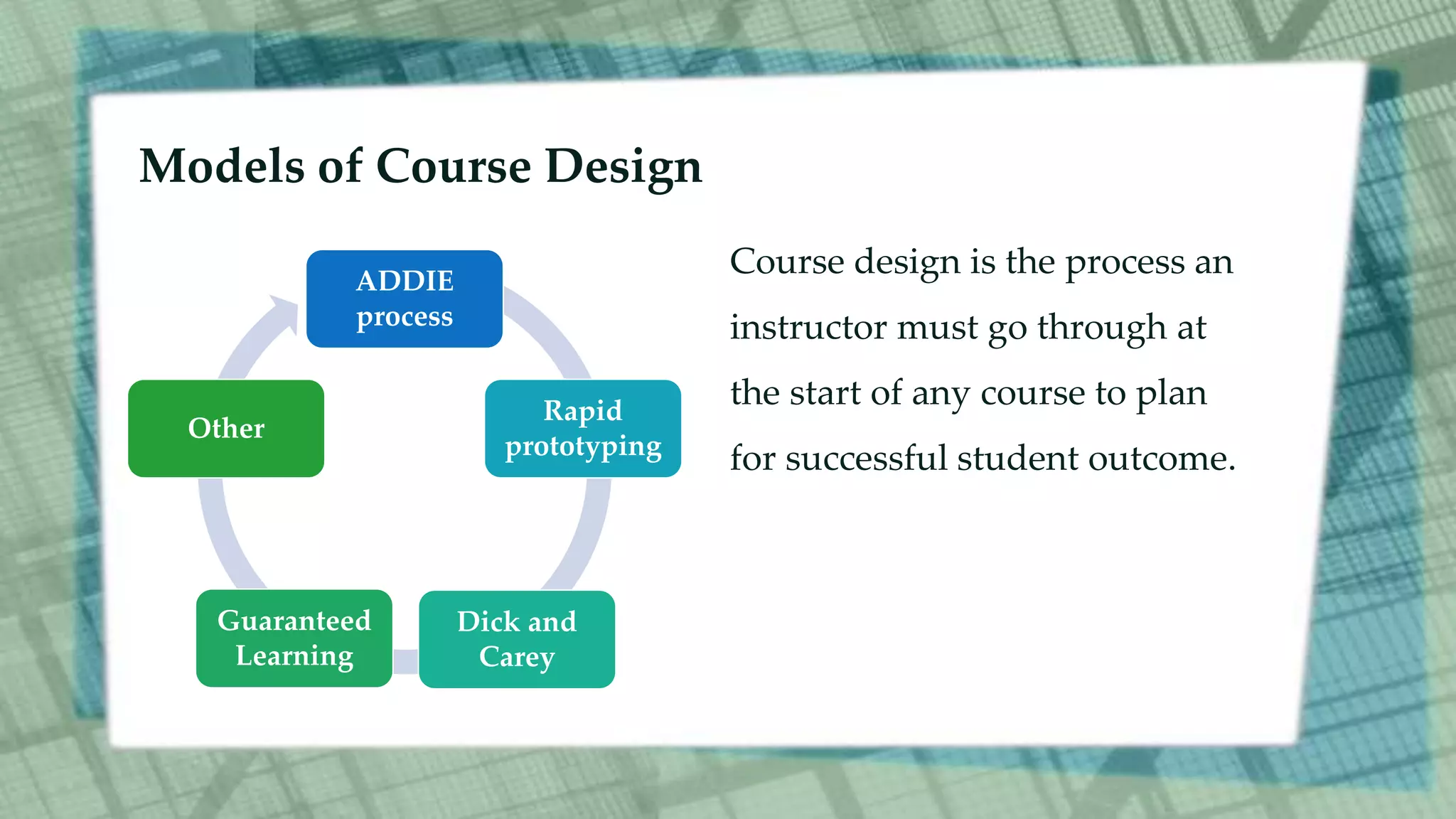
Models of Course Design
ADDIE
process
Rapid
prototyping
Dick and
Carey
Guaranteed
Learning
Other
Course design is the process an
instructor must go through at
the start of any course to plan
for successful student outcome.
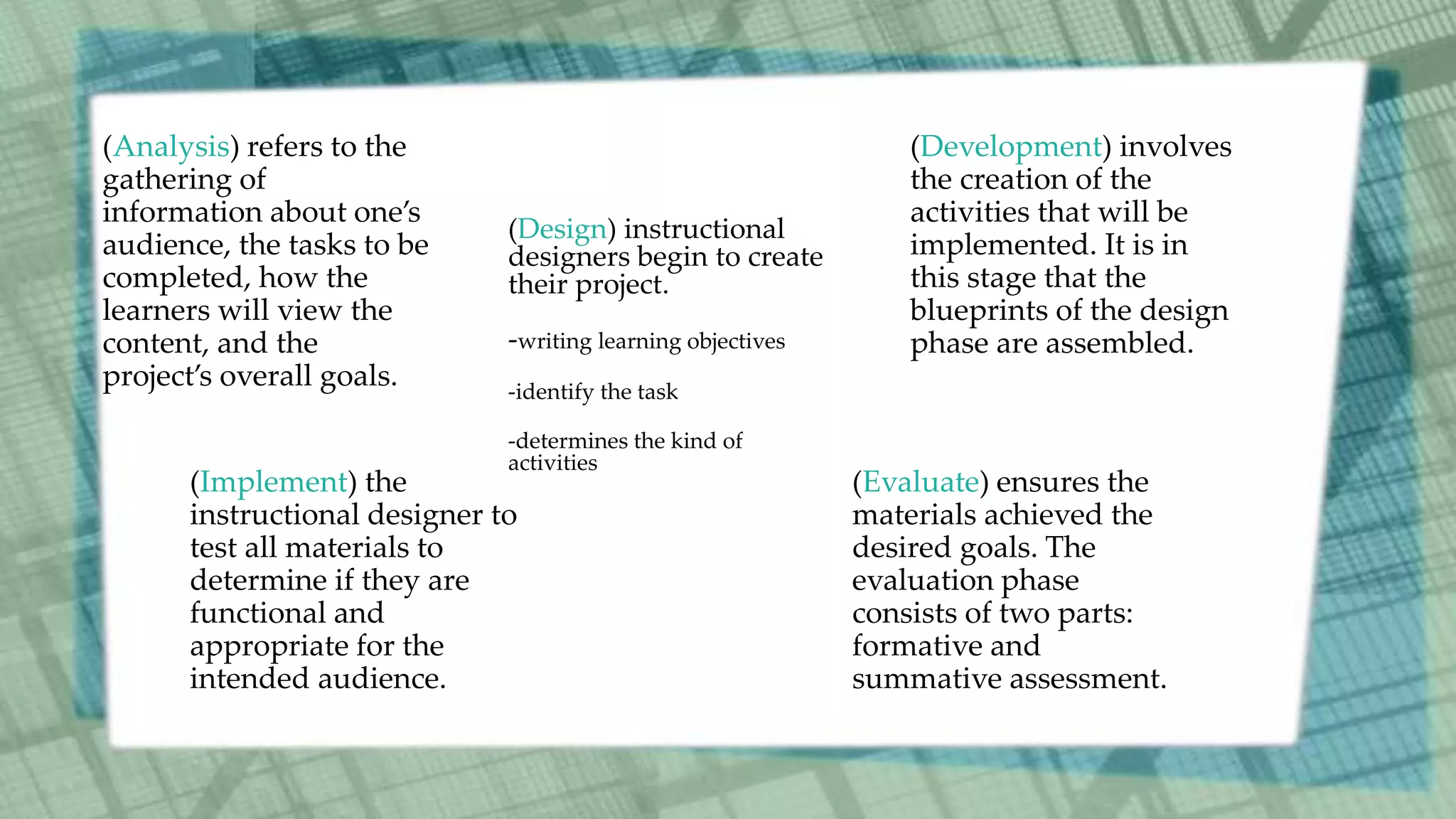
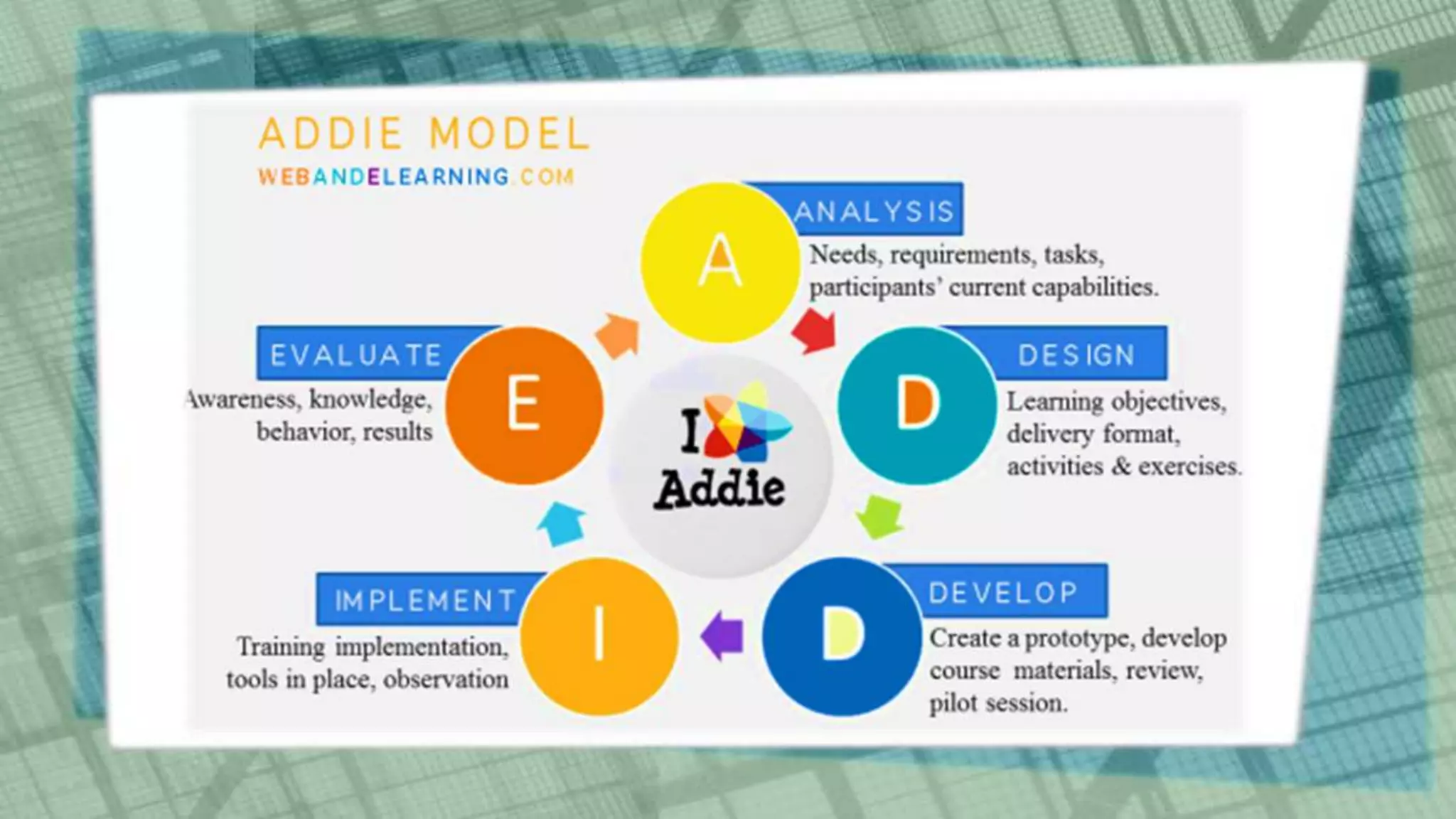
(Analysis) refers to the
gathering of
information about one’s
audience, the tasks to be
completed, how the
learners will view the
content, and the
project’s overall goals.
(Design) instructional
designers begin to create
their project.
-writing learning objectives
-identify the task
-determines the kind of
activities
(Implement) the
instructional designer to
test all materials to
determine if they are
functional and
appropriate for the
intended audience.
(Evaluate) ensures the
materials achieved the
desired goals. The
evaluation phase
consists of two parts:
formative and
summative assessment.
(Development) involves
the creation of the
activities that will be
implemented. It is in
this stage that the
blueprints of the design
phase are assembled.
Rapid prototyping
An adaptation of the ADDIE model, which is used sometimes, is a practice known
as rapid prototyping. Proponents suggest that through an iterative process the
verification of the design documents saves time and money by catching problems
while they are still easy to fix. This approach is not novel to the design of
instruction, but appears in many design-related domains including software
design, architecture, transportation planning, product development, message
design, user experience design, etc. In fact, some proponents of design prototyping
assert that a sophisticated understanding of a problem is incomplete without
creating and evaluating some type of prototype, regardless of the analysis rigor that
may have been applied up front.
In other words, up-front analysis is rarely sufficient to allow one to confidently
select an instructional model. For this reason many traditional methods of
instructional design are beginning to be seen as incomplete, naive, and even
counter-productive.
However, some consider rapid prototyping to be a somewhat simplistic type of
model. As this argument goes, at the heart of Instructional Design is the analysis
phase. After you thoroughly conduct the analysis—you can then choose a model
based on your findings. That is the area where most people get snagged—they
simply do not do a thorough-enough analysis.
The Dick and Carey Systems Approach Model
Dick and Carey made a significant contribution to the instructional design field by
championing a systems view of instruction, in contrast to defining instruction as
the sum of isolated parts. The model addresses instruction as an entire system,
focusing on the interrelationship between context, content, learning and
instruction.
• Identify Instructional Goal(s)
• Conduct Instructional Analysis
• Analyze Learners and Contexts
• Write Performance Objectives
• Develop Assessment Instruments
• Develop Instructional Strategy
• Develop and Select Instructional Materials
• Design and Conduct Formative Evaluation of Instruction
• Revise Instruction
• Design and Conduct Summative Evaluation
The components of the Systems Approach Model, also known as the Dick
and Carey Model, are as follows
Guaranteed Learning
The components of the Guaranteed Learning Model are the following:
• Design a task analysis
• Develop criterion tests and performance measures
• Develop interactive instructional materials
• Validate the interactive instructional materials
• Create simulations or performance activities (Case Studies, Role Plays, and
Demonstrations)
Other
Other useful instructional design models include: the Smith/Ragan Model, the
Morrison/Ross/Kemp Model and the OAR Model of instructional design in higher
education, as well as, Wiggins' theory of backward design.
Learning theories also play an important role in the design of instructional
materials. Theories such as behaviorism, constructivism, social
learning and cognitivism help shape and define the outcome of instructional
materials.
Assafi’iyah
Islamic
University
Faculty of Teaching and
Educational Sciences

pa hatta

  • 1.
  • 2.
  • 3.
    Models of CourseDesign ADDIE process Rapid prototyping Dick and Carey Guaranteed Learning Other Course design is the process an instructor must go through at the start of any course to plan for successful student outcome.
  • 4.
    (Analysis) refers tothe gathering of information about one’s audience, the tasks to be completed, how the learners will view the content, and the project’s overall goals. (Design) instructional designers begin to create their project. -writing learning objectives -identify the task -determines the kind of activities (Implement) the instructional designer to test all materials to determine if they are functional and appropriate for the intended audience. (Evaluate) ensures the materials achieved the desired goals. The evaluation phase consists of two parts: formative and summative assessment. (Development) involves the creation of the activities that will be implemented. It is in this stage that the blueprints of the design phase are assembled.
  • 6.
    Rapid prototyping An adaptationof the ADDIE model, which is used sometimes, is a practice known as rapid prototyping. Proponents suggest that through an iterative process the verification of the design documents saves time and money by catching problems while they are still easy to fix. This approach is not novel to the design of instruction, but appears in many design-related domains including software design, architecture, transportation planning, product development, message design, user experience design, etc. In fact, some proponents of design prototyping assert that a sophisticated understanding of a problem is incomplete without creating and evaluating some type of prototype, regardless of the analysis rigor that may have been applied up front.
  • 7.
    In other words,up-front analysis is rarely sufficient to allow one to confidently select an instructional model. For this reason many traditional methods of instructional design are beginning to be seen as incomplete, naive, and even counter-productive. However, some consider rapid prototyping to be a somewhat simplistic type of model. As this argument goes, at the heart of Instructional Design is the analysis phase. After you thoroughly conduct the analysis—you can then choose a model based on your findings. That is the area where most people get snagged—they simply do not do a thorough-enough analysis.
  • 8.
    The Dick andCarey Systems Approach Model Dick and Carey made a significant contribution to the instructional design field by championing a systems view of instruction, in contrast to defining instruction as the sum of isolated parts. The model addresses instruction as an entire system, focusing on the interrelationship between context, content, learning and instruction.
  • 9.
    • Identify InstructionalGoal(s) • Conduct Instructional Analysis • Analyze Learners and Contexts • Write Performance Objectives • Develop Assessment Instruments • Develop Instructional Strategy • Develop and Select Instructional Materials • Design and Conduct Formative Evaluation of Instruction • Revise Instruction • Design and Conduct Summative Evaluation The components of the Systems Approach Model, also known as the Dick and Carey Model, are as follows
  • 10.
    Guaranteed Learning The componentsof the Guaranteed Learning Model are the following: • Design a task analysis • Develop criterion tests and performance measures • Develop interactive instructional materials • Validate the interactive instructional materials • Create simulations or performance activities (Case Studies, Role Plays, and Demonstrations)
  • 11.
    Other Other useful instructionaldesign models include: the Smith/Ragan Model, the Morrison/Ross/Kemp Model and the OAR Model of instructional design in higher education, as well as, Wiggins' theory of backward design. Learning theories also play an important role in the design of instructional materials. Theories such as behaviorism, constructivism, social learning and cognitivism help shape and define the outcome of instructional materials.
  • 12.