-Robert Hillis
Instructional Design
   Instructional Design is the development,
    implementation, and assessment of
    knowledge curriculums determining if
    they are cost effective, successful, and
    able to be implemented.
Instructional Design
 Instructional Design does not
  encompass or embrace one particular
  method nor does it favor a specific
  method over another
 Instructional Design takes is the practice
  of developing instruction and
  implementing it in the best way possible
  utilizing the best methods available
Instructional Design Models
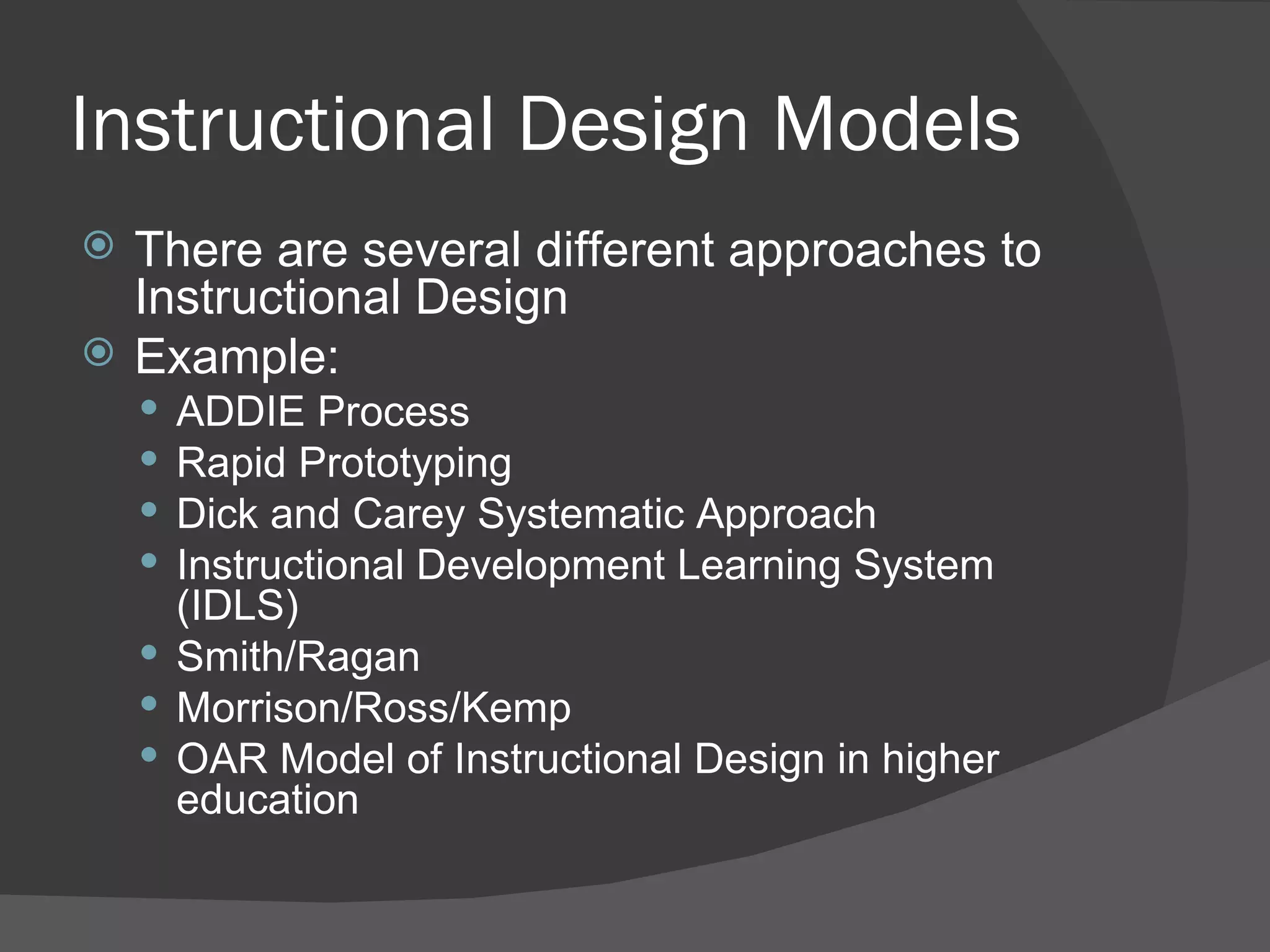
   There are several different approaches to
    Instructional Design
   Example:
     ADDIE Process
     Rapid Prototyping
     Dick and Carey Systematic Approach
     Instructional Development Learning System
      (IDLS)
     Smith/Ragan
     Morrison/Ross/Kemp
     OAR Model of Instructional Design in higher
      education
Dick and Carey Systematic
Approach
 Dick and Carey refers to the model that
  was designed in 1978 by Walter Dick
  and Lou Carey
 Dick and Carey outlined their approach
  in their book “The Systematic Design of
  Instruction”
 Their model addresses instruction as an
  entire system from development to
  assessment of success
Dick and Carey Systematic
Approach
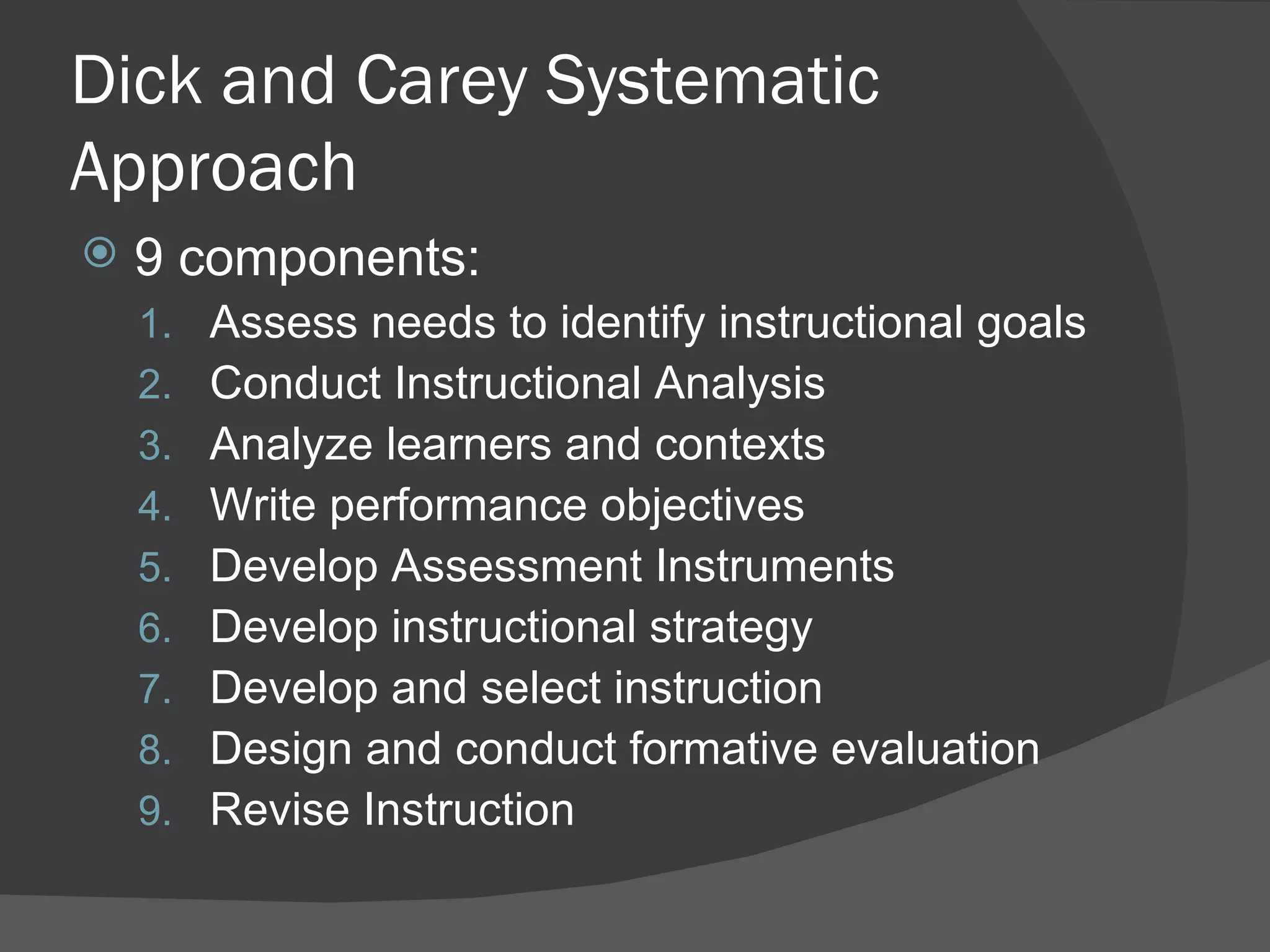
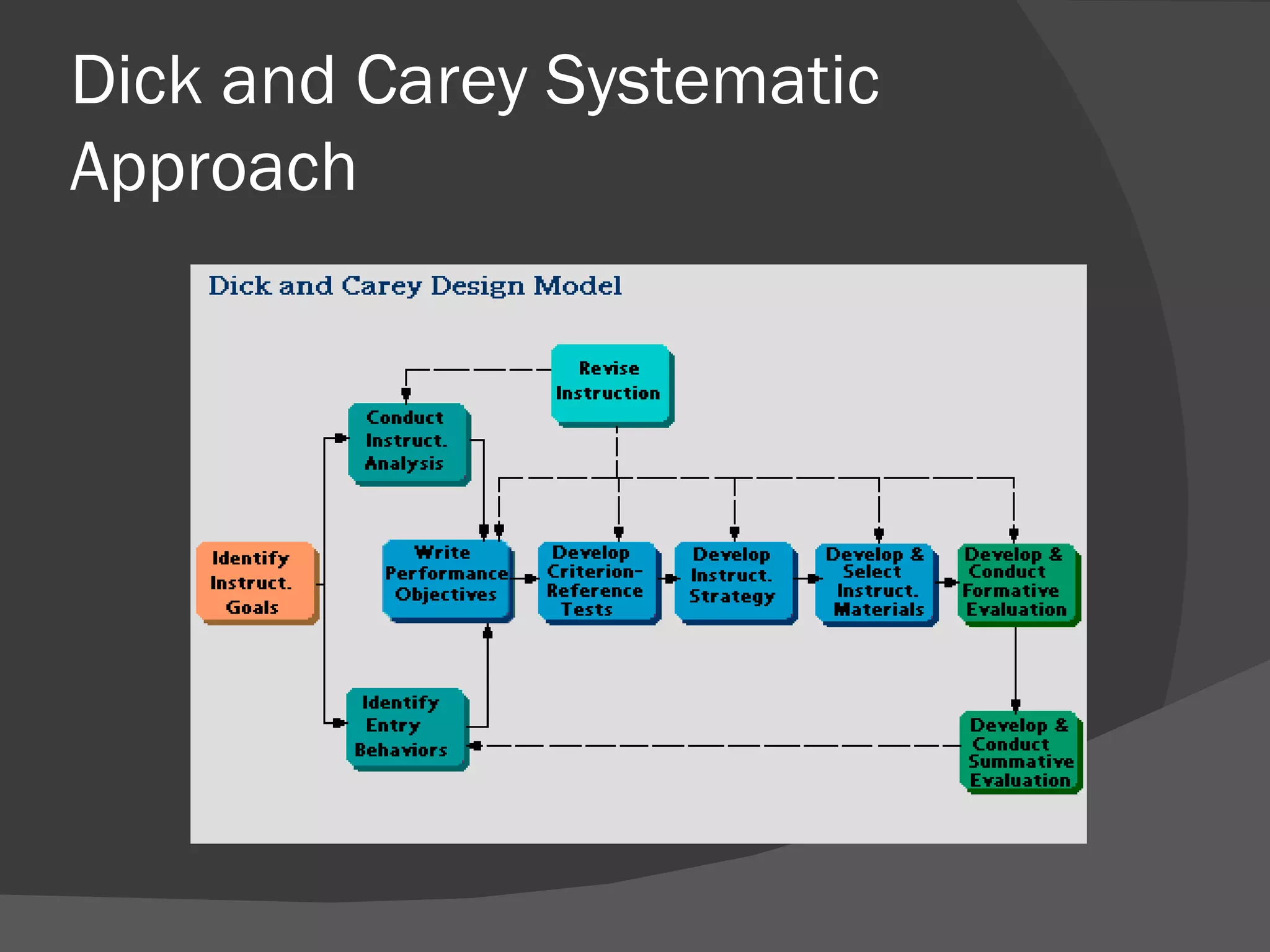
   9 components:
    1.   Assess needs to identify instructional goals
    2.   Conduct Instructional Analysis
    3.   Analyze learners and contexts
    4.   Write performance objectives
    5.   Develop Assessment Instruments
    6.   Develop instructional strategy
    7.   Develop and select instruction
    8.   Design and conduct formative evaluation
    9.   Revise Instruction
Dick and Carey Systematic
Approach
Dick and Carey Systematic
Approach
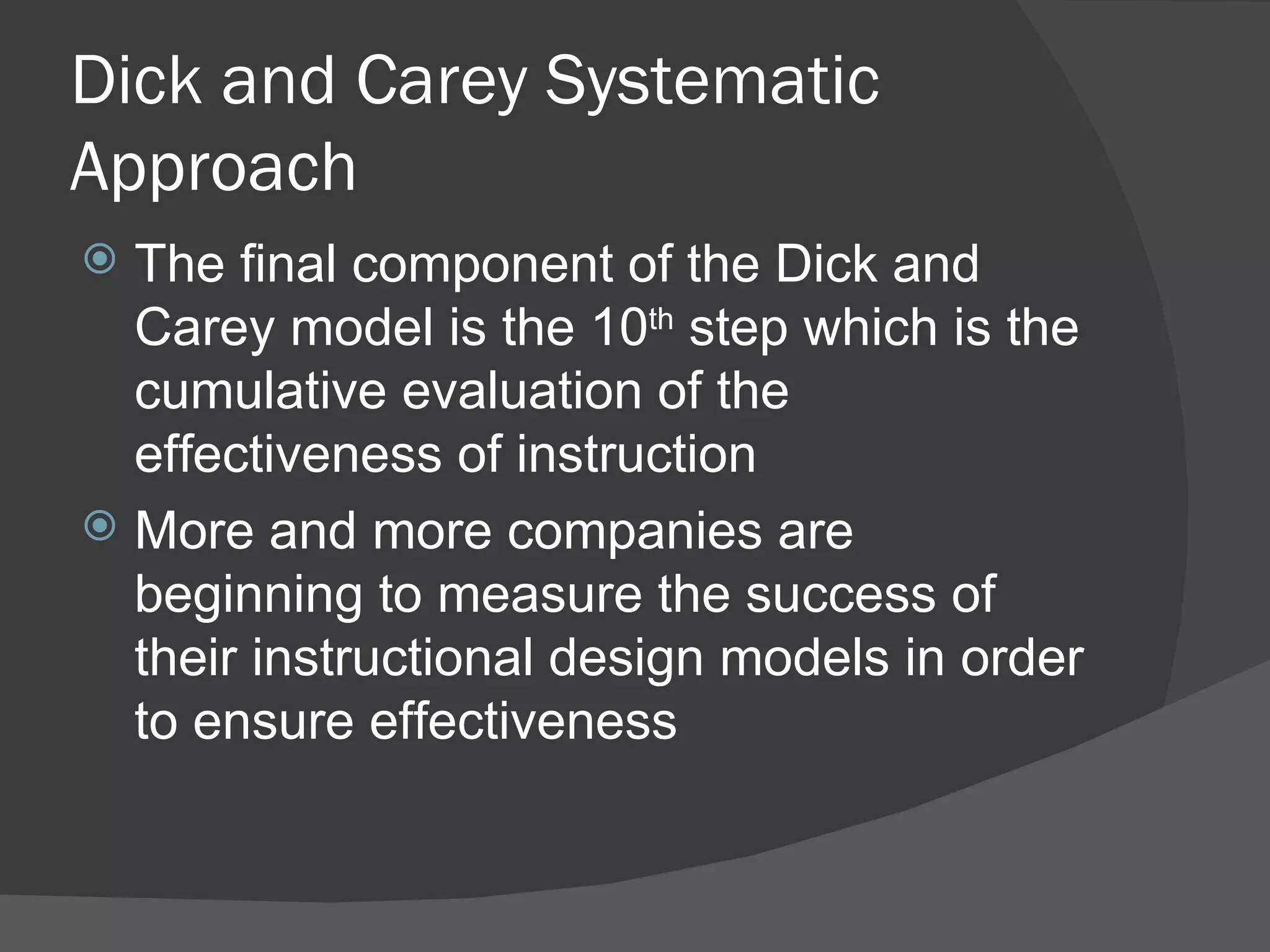
 The final component of the Dick and
  Carey model is the 10th step which is the
  cumulative evaluation of the
  effectiveness of instruction
 More and more companies are
  beginning to measure the success of
  their instructional design models in order
  to ensure effectiveness
Rapid Prototyping
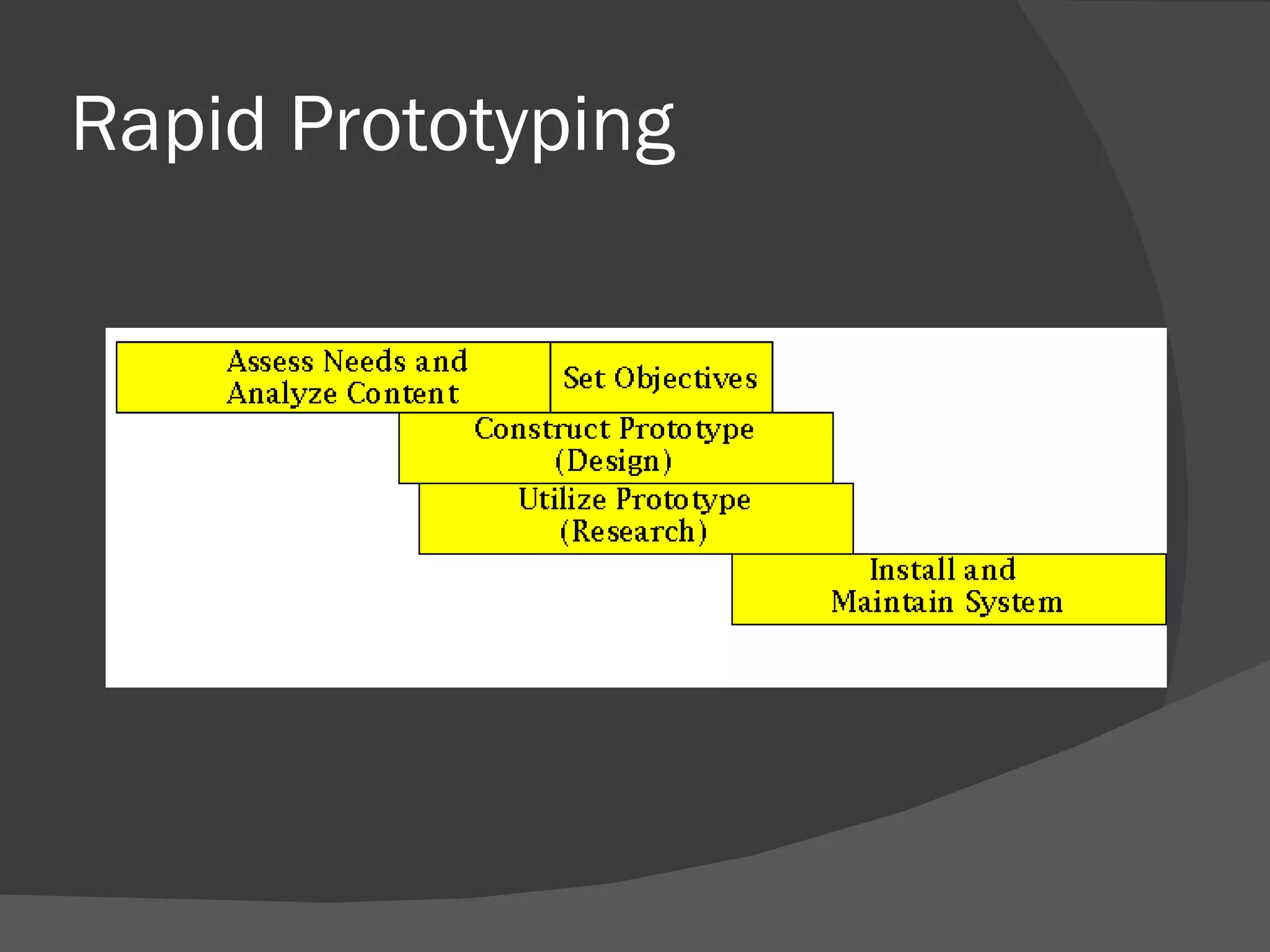
 Rapid Prototyping in reference to
  Instructional Design can be described as
  the continual design-evaluation cycle
  throughout the process
 Utilizing this model means that products
  are continually improved upon as the
  cycle continues
Rapid Prototyping
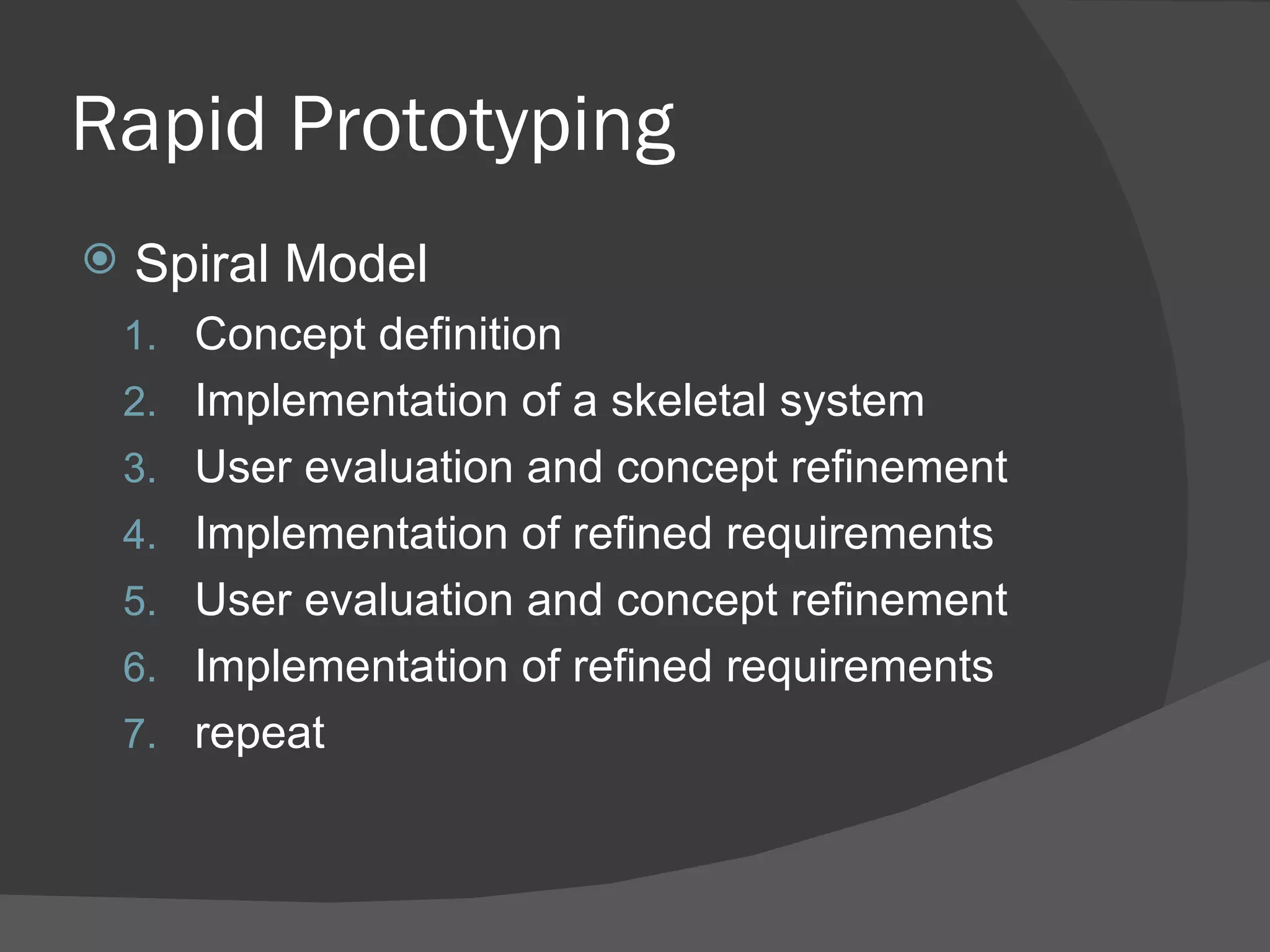
   Spiral Model
    1. Concept definition
    2. Implementation of a skeletal system
    3. User evaluation and concept refinement
    4. Implementation of refined requirements
    5. User evaluation and concept refinement
    6. Implementation of refined requirements
    7. repeat
Rapid Prototyping
Rapid Prototyping
   Advantages:
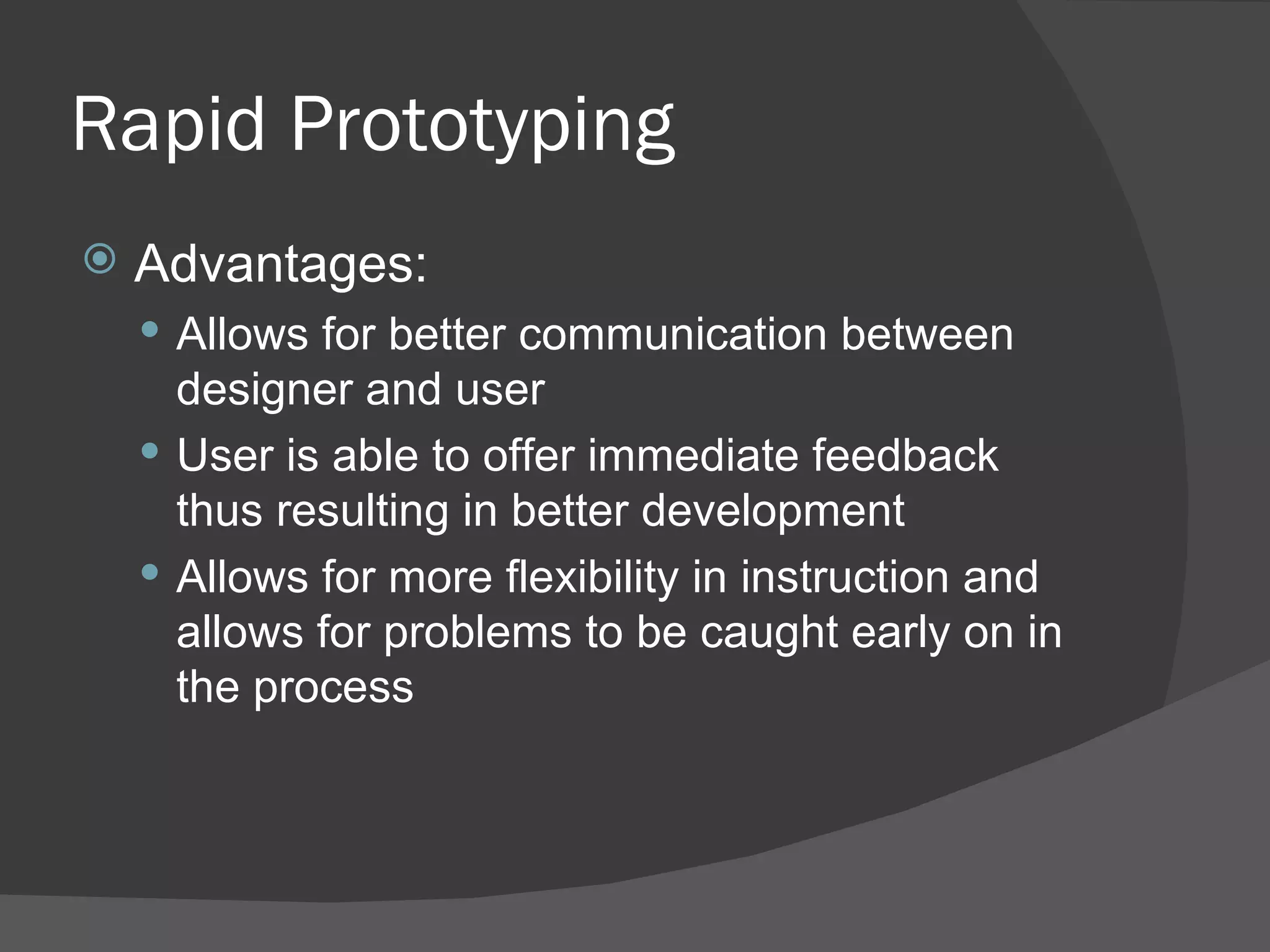
     Allows for better communication between
      designer and user
     User is able to offer immediate feedback
      thus resulting in better development
     Allows for more flexibility in instruction and
      allows for problems to be caught early on in
      the process
Rapid Prototyping
   Disadvantages:
     Some feel that it is not effective because it is
      not utilizing the real product, it is utilizing a
      prototype
     Some feel steps are overlooked due to the
      rapid response of the model and that it can
      lead to endless revisions
Dick and Carey vs. Rapid
Prototyping
 There are strengths with each and there are
  weaknesses with each
 Dick and Carey can be a very tedious, very
  specific styled model where as Rapid
  Prototyping can be very simply and move very
  quickly
 Dick and Carey can involve many facets of
  organization versus Rapid Prototyping where
  there may be only one or two layers that are
  being utilized
 Dick and Carey executes components
  iteratively and in parallel where as Rapid
  Prototyping executes them in a cyclical pattern
Which to Choose
 There is no right or wrong answer just
  as in implementing instruction, it
  depends on the audience, situation, and
  task at hand
 What may work for one situation wont
  work for another. The best thing to do is
  to evaluate what is needed for the
  instructional design and move forward
  based upon that analysis
Sources
   Wikipedia Instructional Design: http://en.wikipedia.org/wiki/Instructional_design
   WikiBooks Instructional Technology/Instructional Design/Rapid Prototyping:
    http://en.wikibooks.org/wiki/Instructional_Technology/Instructional_Design/Rapid_Prototyping
   Instructional Design: http://www.instructionaldesign.org/models/rapid_prototyping.html
   Dick and Carey’s Model: http://www.personal.psu.edu/wxh139/Dick_Carey.htm

Robert hillis instructional_design

  • 1.
  • 2.
    Instructional Design  Instructional Design is the development, implementation, and assessment of knowledge curriculums determining if they are cost effective, successful, and able to be implemented.
  • 3.
    Instructional Design  InstructionalDesign does not encompass or embrace one particular method nor does it favor a specific method over another  Instructional Design takes is the practice of developing instruction and implementing it in the best way possible utilizing the best methods available
  • 4.
    Instructional Design Models  There are several different approaches to Instructional Design  Example:  ADDIE Process  Rapid Prototyping  Dick and Carey Systematic Approach  Instructional Development Learning System (IDLS)  Smith/Ragan  Morrison/Ross/Kemp  OAR Model of Instructional Design in higher education
  • 5.
    Dick and CareySystematic Approach  Dick and Carey refers to the model that was designed in 1978 by Walter Dick and Lou Carey  Dick and Carey outlined their approach in their book “The Systematic Design of Instruction”  Their model addresses instruction as an entire system from development to assessment of success
  • 6.
    Dick and CareySystematic Approach  9 components: 1. Assess needs to identify instructional goals 2. Conduct Instructional Analysis 3. Analyze learners and contexts 4. Write performance objectives 5. Develop Assessment Instruments 6. Develop instructional strategy 7. Develop and select instruction 8. Design and conduct formative evaluation 9. Revise Instruction
  • 7.
    Dick and CareySystematic Approach
  • 8.
    Dick and CareySystematic Approach  The final component of the Dick and Carey model is the 10th step which is the cumulative evaluation of the effectiveness of instruction  More and more companies are beginning to measure the success of their instructional design models in order to ensure effectiveness
  • 9.
    Rapid Prototyping  RapidPrototyping in reference to Instructional Design can be described as the continual design-evaluation cycle throughout the process  Utilizing this model means that products are continually improved upon as the cycle continues
  • 10.
    Rapid Prototyping  Spiral Model 1. Concept definition 2. Implementation of a skeletal system 3. User evaluation and concept refinement 4. Implementation of refined requirements 5. User evaluation and concept refinement 6. Implementation of refined requirements 7. repeat
  • 11.
  • 12.
    Rapid Prototyping  Advantages:  Allows for better communication between designer and user  User is able to offer immediate feedback thus resulting in better development  Allows for more flexibility in instruction and allows for problems to be caught early on in the process
  • 13.
    Rapid Prototyping  Disadvantages:  Some feel that it is not effective because it is not utilizing the real product, it is utilizing a prototype  Some feel steps are overlooked due to the rapid response of the model and that it can lead to endless revisions
  • 14.
    Dick and Careyvs. Rapid Prototyping  There are strengths with each and there are weaknesses with each  Dick and Carey can be a very tedious, very specific styled model where as Rapid Prototyping can be very simply and move very quickly  Dick and Carey can involve many facets of organization versus Rapid Prototyping where there may be only one or two layers that are being utilized  Dick and Carey executes components iteratively and in parallel where as Rapid Prototyping executes them in a cyclical pattern
  • 15.
    Which to Choose There is no right or wrong answer just as in implementing instruction, it depends on the audience, situation, and task at hand  What may work for one situation wont work for another. The best thing to do is to evaluate what is needed for the instructional design and move forward based upon that analysis
  • 16.
    Sources  Wikipedia Instructional Design: http://en.wikipedia.org/wiki/Instructional_design  WikiBooks Instructional Technology/Instructional Design/Rapid Prototyping: http://en.wikibooks.org/wiki/Instructional_Technology/Instructional_Design/Rapid_Prototyping  Instructional Design: http://www.instructionaldesign.org/models/rapid_prototyping.html  Dick and Carey’s Model: http://www.personal.psu.edu/wxh139/Dick_Carey.htm