Presented By
Shubham Sharma
M .Pharm (1sem)
(Pharmaceutical Chemistry)
Roll No-20029
Presented To
Dr. Ashok Kumar Yadav
UGC Assistant Professor
UIPS, Panjab University
CONTENTS
 INTRODUCTION
 MECHANISM ( OF ALKENES)
 REAGENTS USED
OZONOLYSIS OF ALKYNES
TYPES OF OZONOLYSIS
SYNTHETIC APPLICATIONS
INTRODUCTION
Ozonolysis was invented by Christian Friedrich Schönbein in
1840.Ozonolysis refers to the organic chemical reaction where ozone is
employed to cleave the unsaturated bonds of alkenes, alkynes, and azo
compounds (compounds with the functional diazenyl functional group).
1. Oxidation of alkenes with the help of ozone can give alcohols,
aldehydes, ketones, or carboxylic acids.
2. Alkynes undergo ozonolysis to give diketones. If water is present in
the reaction, the diketone undergoes hydrolysis to yield two
carboxylic acids.
3. For azo compounds, the ozonolysis yields nitrosamines.
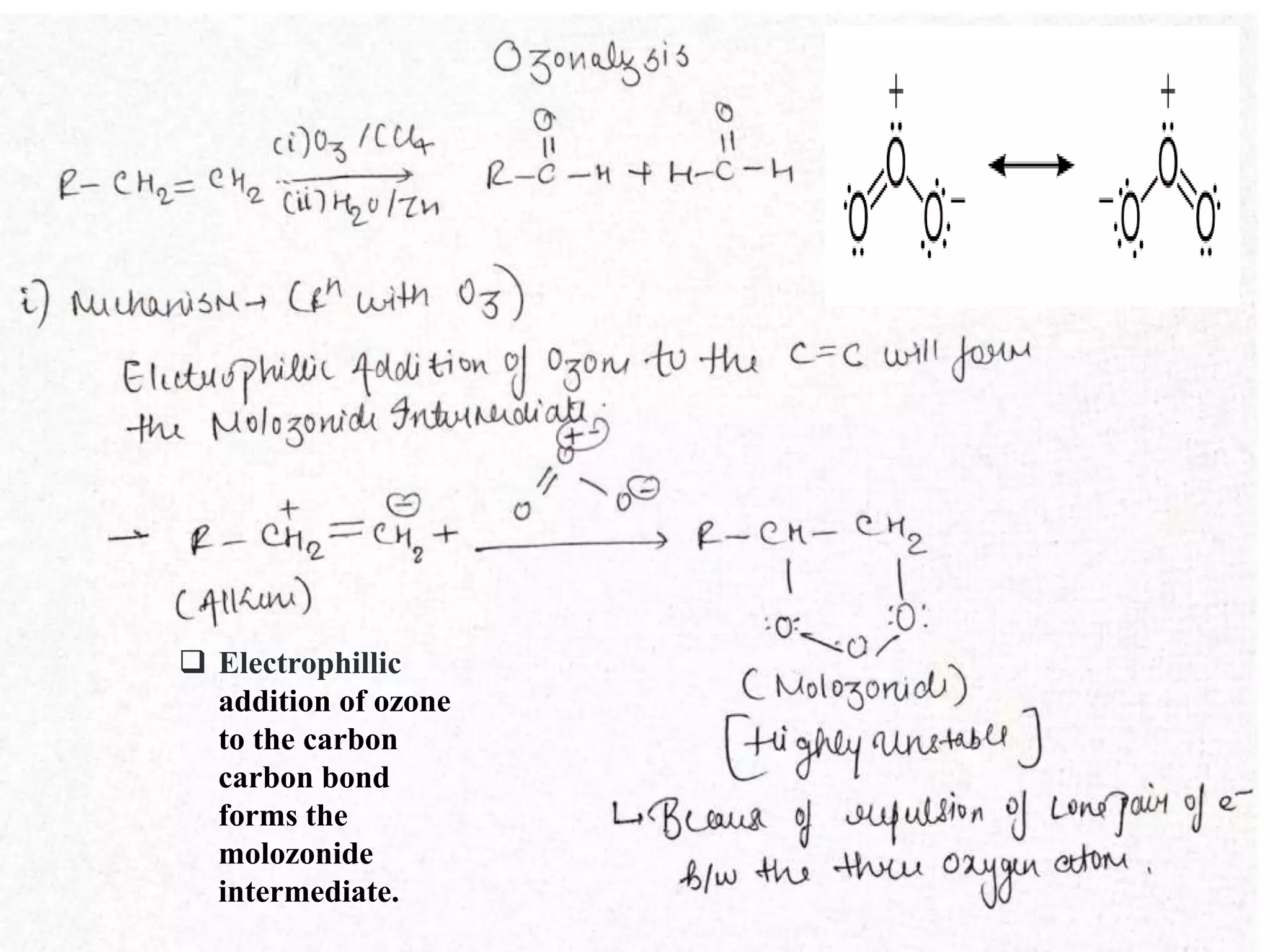
Electrophillic addition of ozone
to the carbon carbon bond
forms the molozonide
intermediate.
 Electrophillic
addition of ozone
to the carbon
carbon bond
forms the
molozonide
intermediate.
reRearrangment
MECHANISM
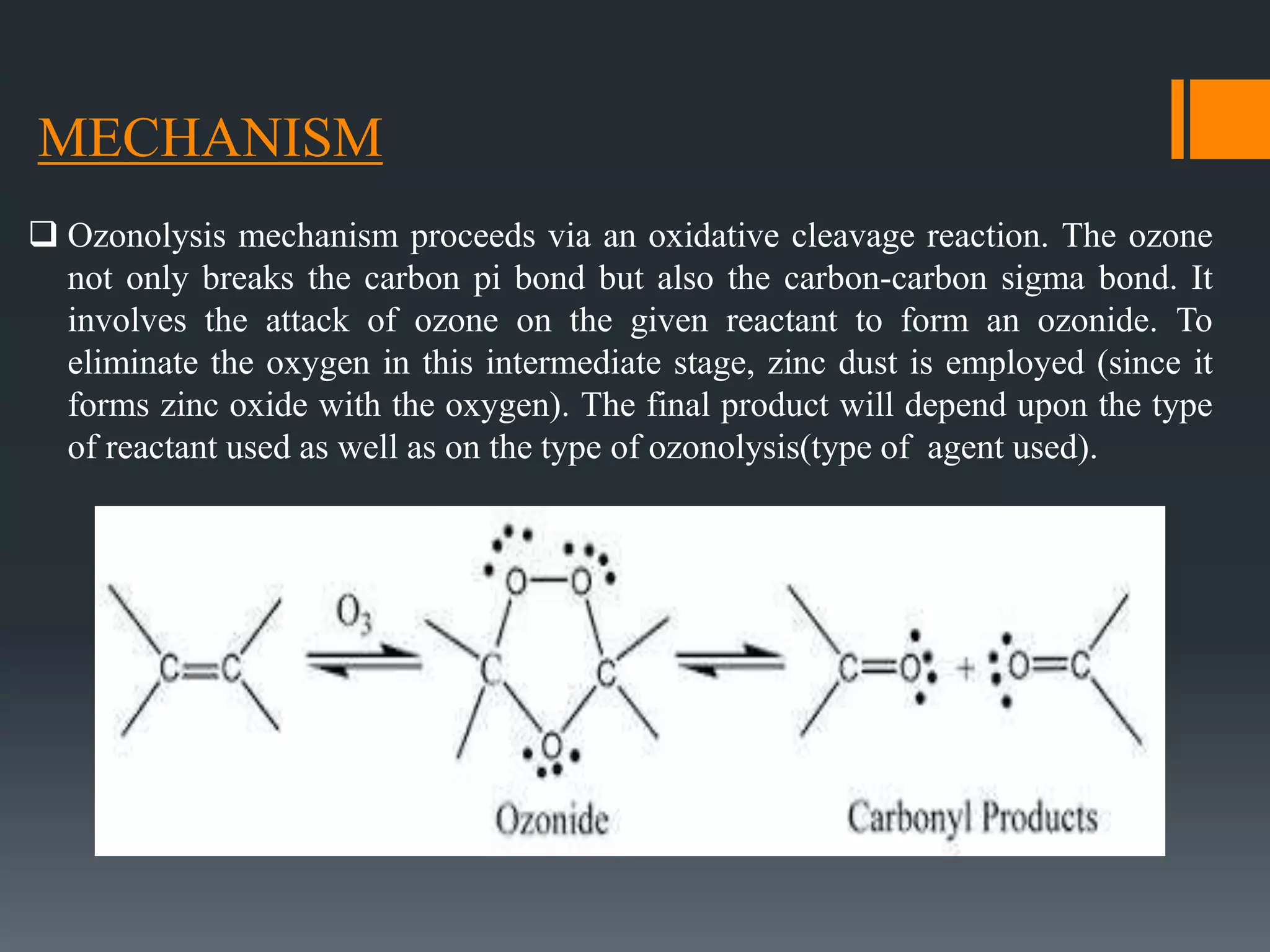
 Ozonolysis mechanism proceeds via an oxidative cleavage reaction. The ozone
not only breaks the carbon pi bond but also the carbon-carbon sigma bond. It
involves the attack of ozone on the given reactant to form an ozonide. To
eliminate the oxygen in this intermediate stage, zinc dust is employed (since it
forms zinc oxide with the oxygen). The final product will depend upon the type
of reactant used as well as on the type of ozonolysis(type of agent used).
OZONOLYSIS
 Oxidative cleavage of carbon carbon double bond using ozone as an oxidizing agent is
called ozonolysis.
 As in these reaction whenever reducing agents (Oxidizing agents can also be used , will
seen in typeS of ozonolysis) such as zinc , dimethyl sulfide is used then such ozonolysis
is termed as reductive ozonolysis.
 Ozone is a very reactive allotrope of oxygen. The reaction of ozone with alkenes and
alkynes causes the oxidative cleaving of the alkene or alkyne.
Oxidizing agent can also
be used however then
product will change
Continued………….
Ozone is produced by passing dry oxygen into ozonisers
(which contains certain electric discharge) .
 Only 5 to 10 percent of oxygen get converted into ozone .
Example of some of the ozonisers are Siemen’s ozoniser,
and Brodie’s ozoniser.
OTHE
ALWAYS USE MILD REDUCING AGNETS DURING OZONOLYSIS
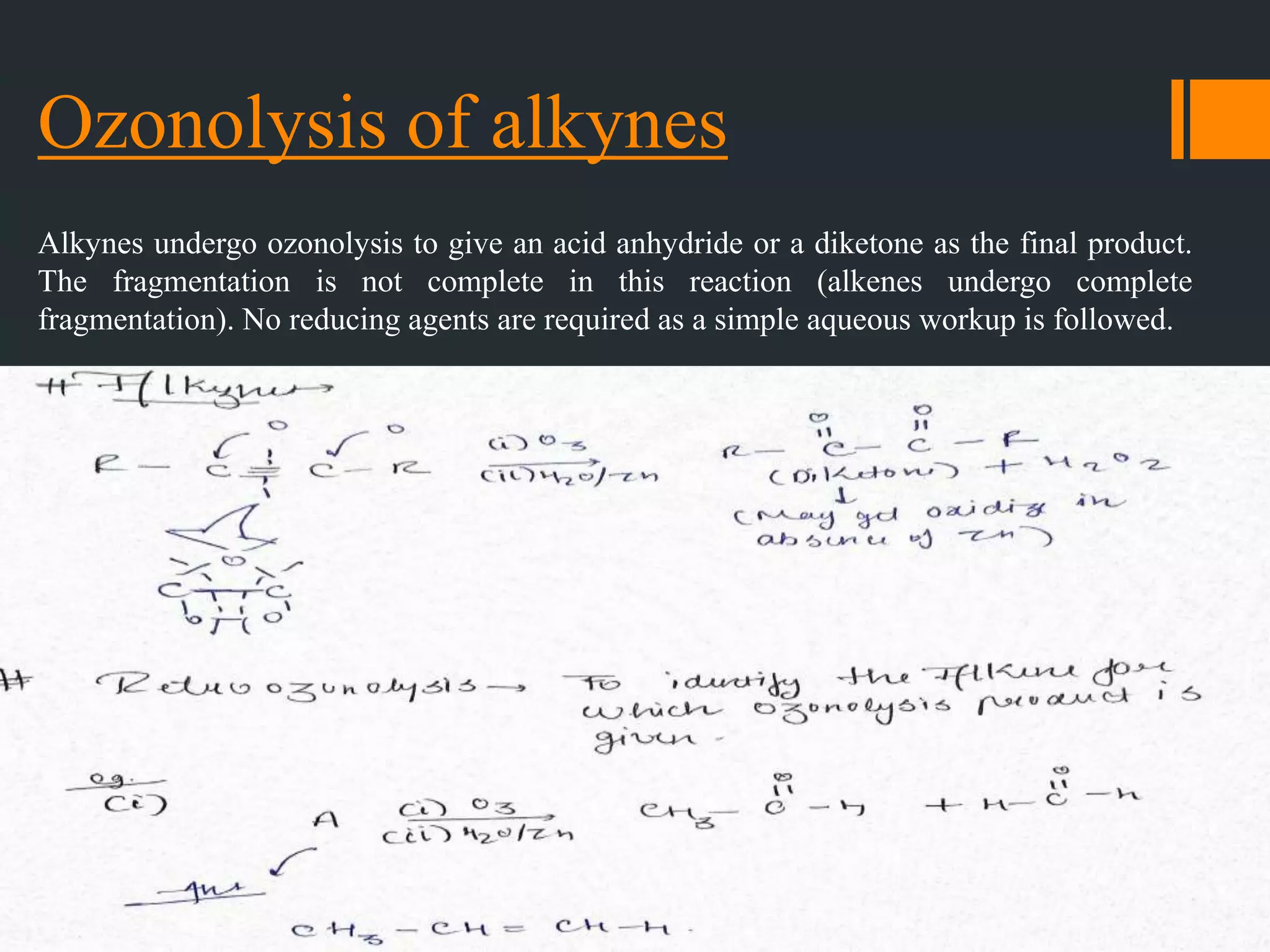
Ozonolysis of alkynes
Alkynes undergo ozonolysis to give an acid anhydride or a diketone as the final product.
The fragmentation is not complete in this reaction (alkenes undergo complete
fragmentation). No reducing agents are required as a simple aqueous workup is followed.
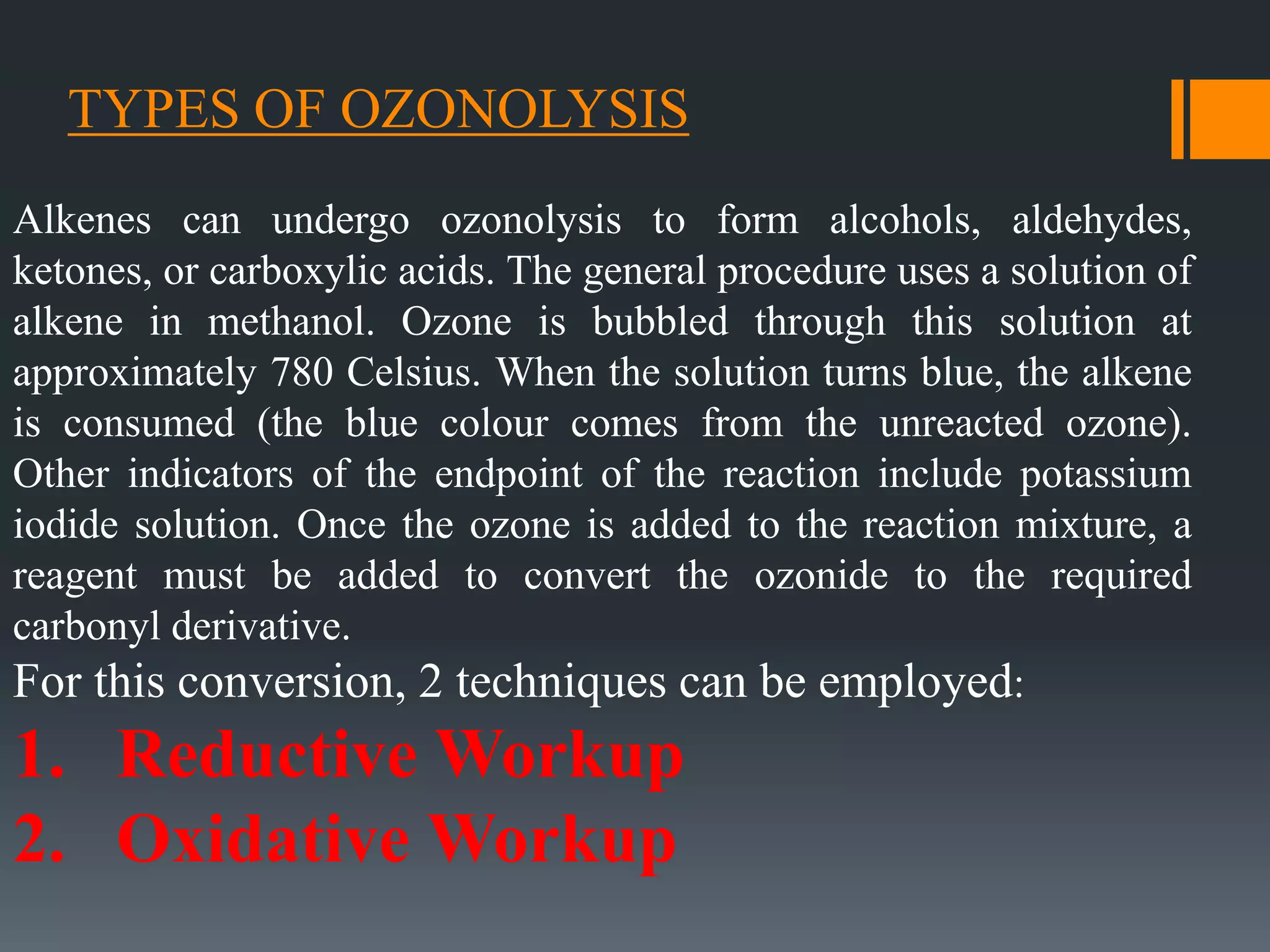
TYPES OF OZONOLYSIS
Alkenes can undergo ozonolysis to form alcohols, aldehydes,
ketones, or carboxylic acids. The general procedure uses a solution of
alkene in methanol. Ozone is bubbled through this solution at
approximately 780 Celsius. When the solution turns blue, the alkene
is consumed (the blue colour comes from the unreacted ozone).
Other indicators of the endpoint of the reaction include potassium
iodide solution. Once the ozone is added to the reaction mixture, a
reagent must be added to convert the ozonide to the required
carbonyl derivative.
For this conversion, 2 techniques can be employed:
1. Reductive Workup
2. Oxidative Workup
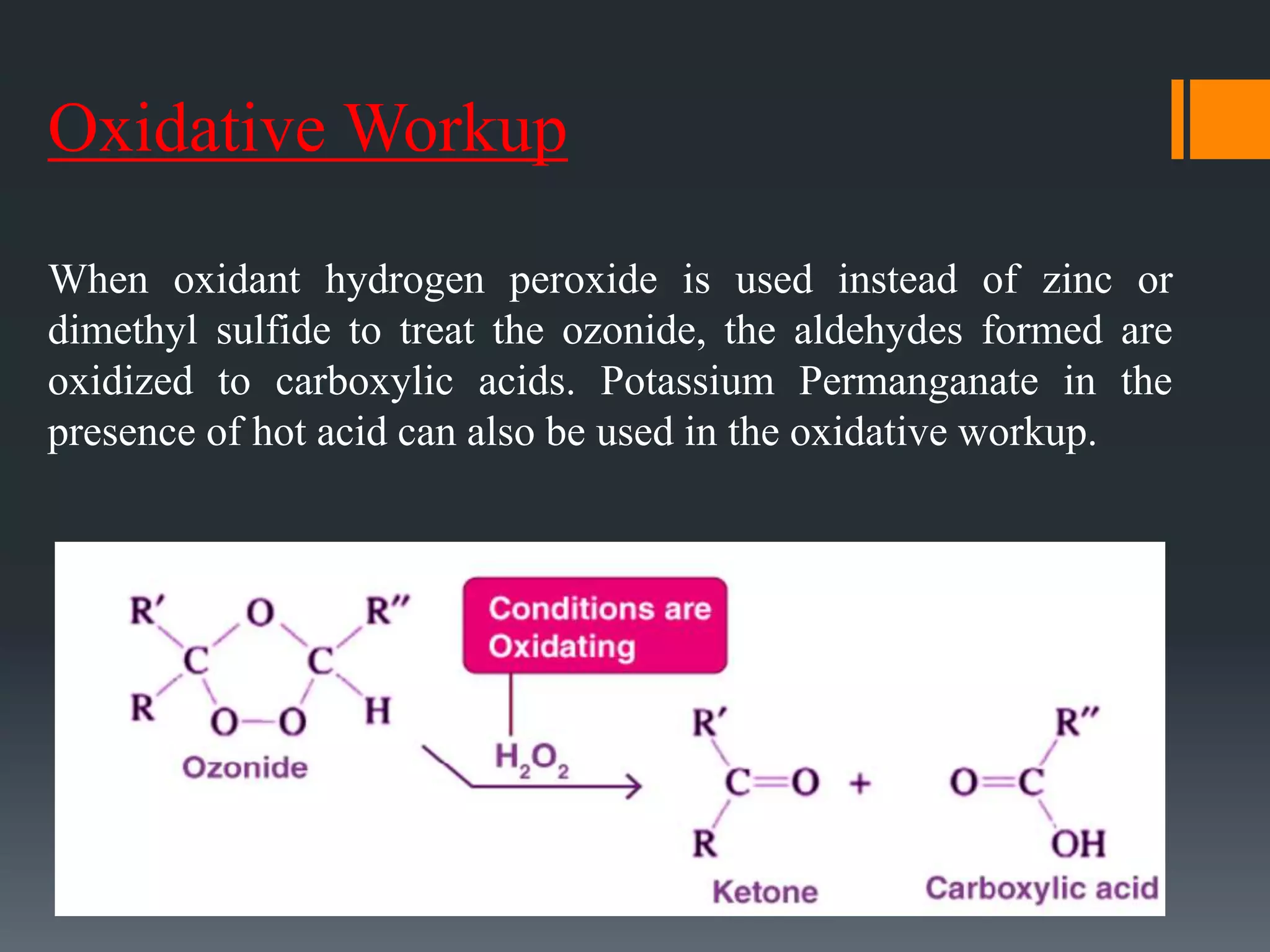
Oxidative Workup
When oxidant hydrogen peroxide is used instead of zinc or
dimethyl sulfide to treat the ozonide, the aldehydes formed are
oxidized to carboxylic acids. Potassium Permanganate in the
presence of hot acid can also be used in the oxidative workup.
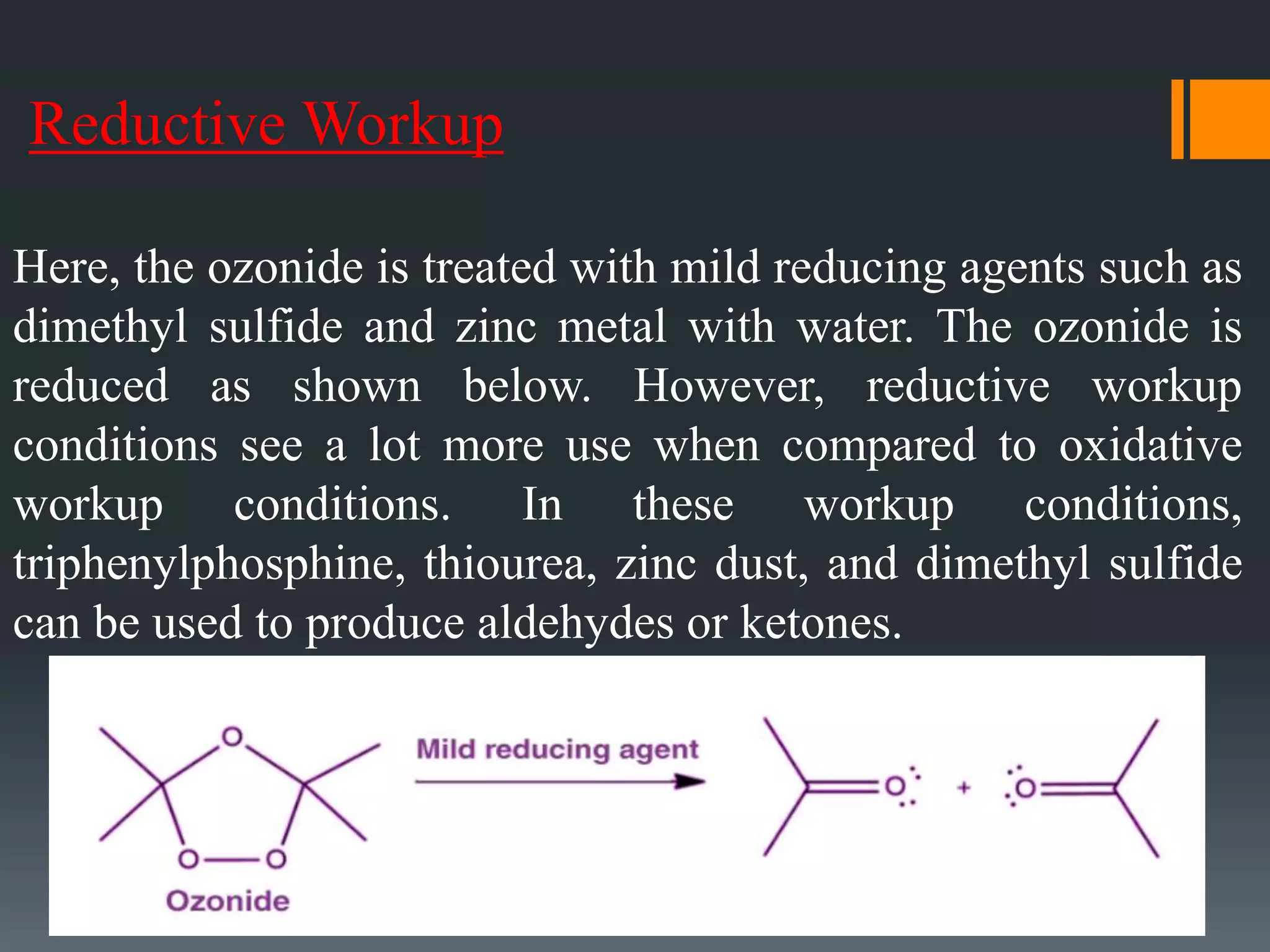
Reductive Workup
Here, the ozonide is treated with mild reducing agents such as
dimethyl sulfide and zinc metal with water. The ozonide is
reduced as shown below. However, reductive workup
conditions see a lot more use when compared to oxidative
workup conditions. In these workup conditions,
triphenylphosphine, thiourea, zinc dust, and dimethyl sulfide
can be used to produce aldehydes or ketones.
SYNTHETIC APPLICATIONS
1. Synthesis of aldehydes and ketones.
2. This is one of the best method for the location of double
bonds in the unknown alkenes.
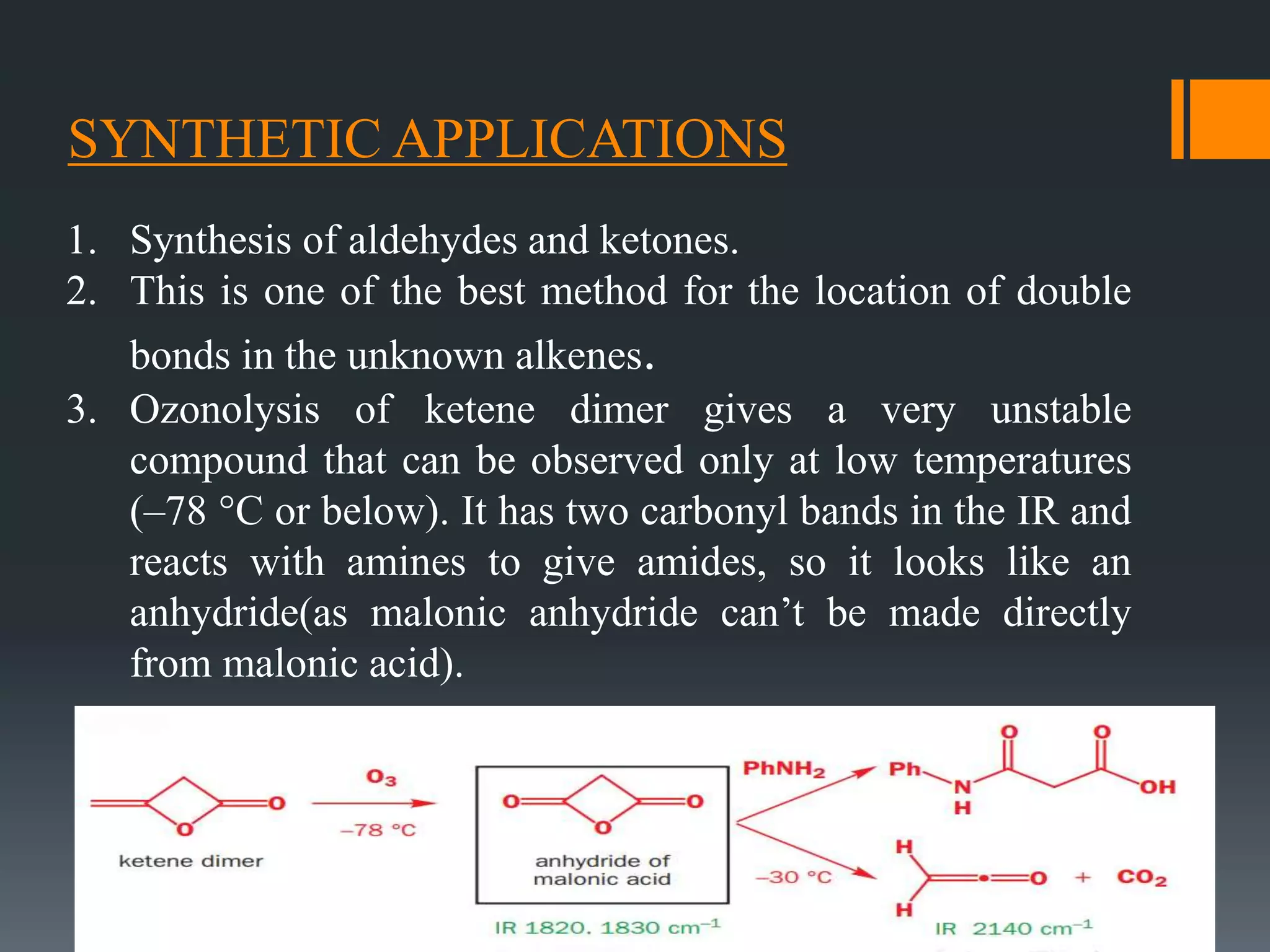
3. Ozonolysis of ketene dimer gives a very unstable
compound that can be observed only at low temperatures
(–78 °C or below). It has two carbonyl bands in the IR and
reacts with amines to give amides, so it looks like an
anhydride(as malonic anhydride can’t be made directly
from malonic acid).
5. Ozonolysis of oleic acid is an important route
to azelaic acid. The coproduct is nonanoic acid.
6. In the synthesis of various other drugs.

Ozonolysis

  • 1.
    Presented By Shubham Sharma M.Pharm (1sem) (Pharmaceutical Chemistry) Roll No-20029 Presented To Dr. Ashok Kumar Yadav UGC Assistant Professor UIPS, Panjab University
  • 2.
    CONTENTS  INTRODUCTION  MECHANISM( OF ALKENES)  REAGENTS USED OZONOLYSIS OF ALKYNES TYPES OF OZONOLYSIS SYNTHETIC APPLICATIONS
  • 3.
    INTRODUCTION Ozonolysis was inventedby Christian Friedrich Schönbein in 1840.Ozonolysis refers to the organic chemical reaction where ozone is employed to cleave the unsaturated bonds of alkenes, alkynes, and azo compounds (compounds with the functional diazenyl functional group). 1. Oxidation of alkenes with the help of ozone can give alcohols, aldehydes, ketones, or carboxylic acids. 2. Alkynes undergo ozonolysis to give diketones. If water is present in the reaction, the diketone undergoes hydrolysis to yield two carboxylic acids. 3. For azo compounds, the ozonolysis yields nitrosamines.
  • 4.
    Electrophillic addition ofozone to the carbon carbon bond forms the molozonide intermediate.  Electrophillic addition of ozone to the carbon carbon bond forms the molozonide intermediate.
  • 5.
  • 6.
    MECHANISM  Ozonolysis mechanismproceeds via an oxidative cleavage reaction. The ozone not only breaks the carbon pi bond but also the carbon-carbon sigma bond. It involves the attack of ozone on the given reactant to form an ozonide. To eliminate the oxygen in this intermediate stage, zinc dust is employed (since it forms zinc oxide with the oxygen). The final product will depend upon the type of reactant used as well as on the type of ozonolysis(type of agent used).
  • 7.
    OZONOLYSIS  Oxidative cleavageof carbon carbon double bond using ozone as an oxidizing agent is called ozonolysis.  As in these reaction whenever reducing agents (Oxidizing agents can also be used , will seen in typeS of ozonolysis) such as zinc , dimethyl sulfide is used then such ozonolysis is termed as reductive ozonolysis.  Ozone is a very reactive allotrope of oxygen. The reaction of ozone with alkenes and alkynes causes the oxidative cleaving of the alkene or alkyne. Oxidizing agent can also be used however then product will change
  • 8.
    Continued…………. Ozone is producedby passing dry oxygen into ozonisers (which contains certain electric discharge) .  Only 5 to 10 percent of oxygen get converted into ozone . Example of some of the ozonisers are Siemen’s ozoniser, and Brodie’s ozoniser.
  • 11.
    OTHE ALWAYS USE MILDREDUCING AGNETS DURING OZONOLYSIS
  • 12.
    Ozonolysis of alkynes Alkynesundergo ozonolysis to give an acid anhydride or a diketone as the final product. The fragmentation is not complete in this reaction (alkenes undergo complete fragmentation). No reducing agents are required as a simple aqueous workup is followed.
  • 13.
    TYPES OF OZONOLYSIS Alkenescan undergo ozonolysis to form alcohols, aldehydes, ketones, or carboxylic acids. The general procedure uses a solution of alkene in methanol. Ozone is bubbled through this solution at approximately 780 Celsius. When the solution turns blue, the alkene is consumed (the blue colour comes from the unreacted ozone). Other indicators of the endpoint of the reaction include potassium iodide solution. Once the ozone is added to the reaction mixture, a reagent must be added to convert the ozonide to the required carbonyl derivative. For this conversion, 2 techniques can be employed: 1. Reductive Workup 2. Oxidative Workup
  • 14.
    Oxidative Workup When oxidanthydrogen peroxide is used instead of zinc or dimethyl sulfide to treat the ozonide, the aldehydes formed are oxidized to carboxylic acids. Potassium Permanganate in the presence of hot acid can also be used in the oxidative workup.
  • 15.
    Reductive Workup Here, theozonide is treated with mild reducing agents such as dimethyl sulfide and zinc metal with water. The ozonide is reduced as shown below. However, reductive workup conditions see a lot more use when compared to oxidative workup conditions. In these workup conditions, triphenylphosphine, thiourea, zinc dust, and dimethyl sulfide can be used to produce aldehydes or ketones.
  • 16.
    SYNTHETIC APPLICATIONS 1. Synthesisof aldehydes and ketones. 2. This is one of the best method for the location of double bonds in the unknown alkenes. 3. Ozonolysis of ketene dimer gives a very unstable compound that can be observed only at low temperatures (–78 °C or below). It has two carbonyl bands in the IR and reacts with amines to give amides, so it looks like an anhydride(as malonic anhydride can’t be made directly from malonic acid).
  • 17.
    5. Ozonolysis ofoleic acid is an important route to azelaic acid. The coproduct is nonanoic acid. 6. In the synthesis of various other drugs.