AMITY INSTITUTE OF PHARMACY
SYNTHETIC REAGENTS AND APPLICATIONS
DIAZOMETHANE
Submitted To Presented by
Dr. Neerupma Dhiman Firuj Ahmed
Department of Pharmaceutical Chemistry Master of Pharmacy
1st Year
Index:
 1. Introduction
 2. Preparation
 3. Applications
 4. Reference
Synthetic Reagents:
Synthetic reagents consist of a broad range of chemicals with many
used in chemical synthesis.
They are the key components used for transforming functional group.
Diazomethane:
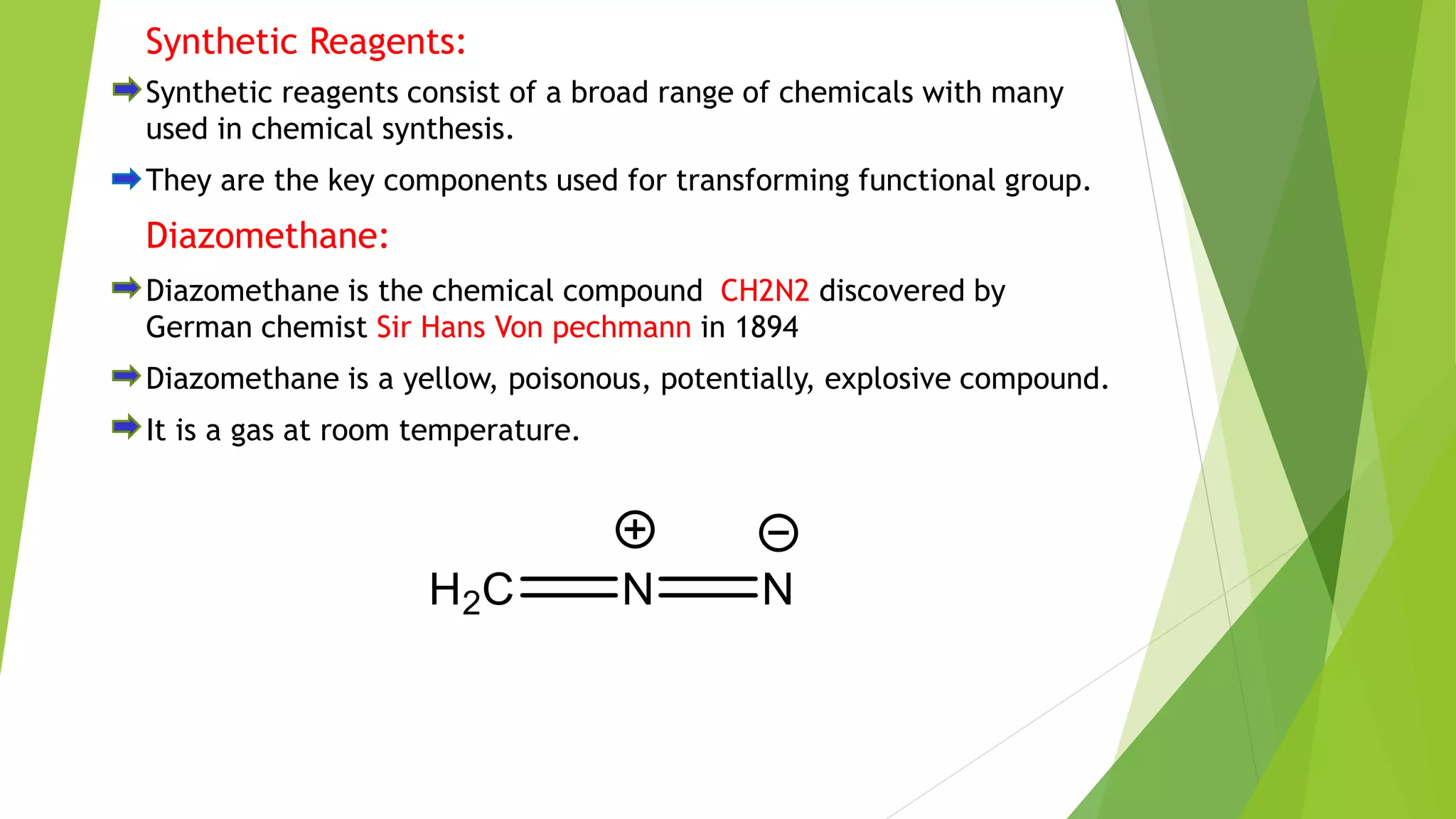
Diazomethane is the chemical compound CH2N2 discovered by
German chemist Sir Hans Von pechmann in 1894
Diazomethane is a yellow, poisonous, potentially, explosive compound.
It is a gas at room temperature.
IUPAC Name: Diazomethane
Other Name: Azimethylene, Azomethelene, Diazirine
Chemical Formula: CH2N2
Molar Mass: 42.04 gm/mol
Appearance: Yellow Gas
Odour: Musty
Solubility: Soluble in water
It is chemically very reactive and is, therefore, of
great value as synthetic reagent.
PREPARATION:
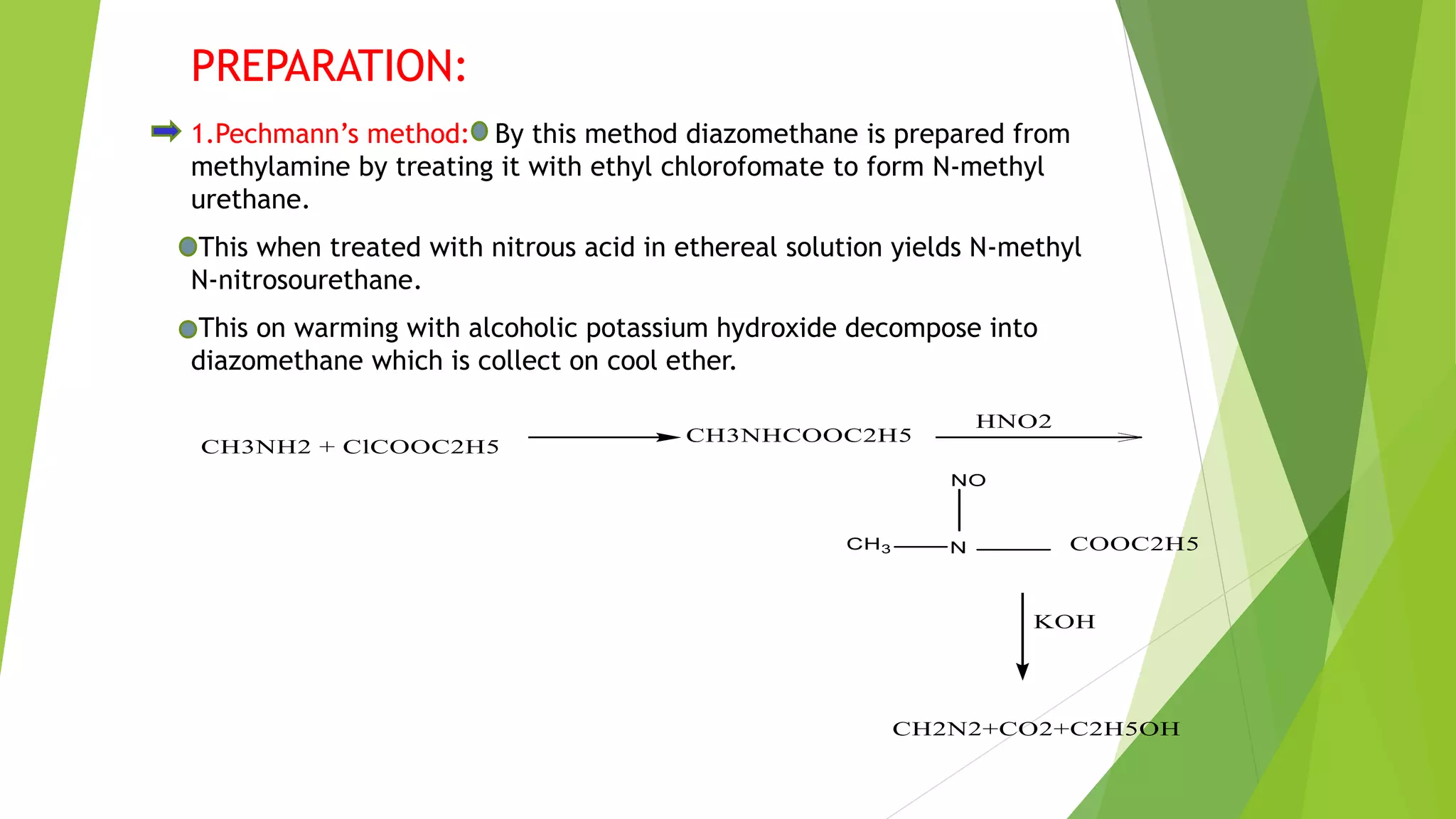
1.Pechmann’s method: By this method diazomethane is prepared from
methylamine by treating it with ethyl chlorofomate to form N-methyl
urethane.
This when treated with nitrous acid in ethereal solution yields N-methyl
N-nitrosourethane.
This on warming with alcoholic potassium hydroxide decompose into
diazomethane which is collect on cool ether.
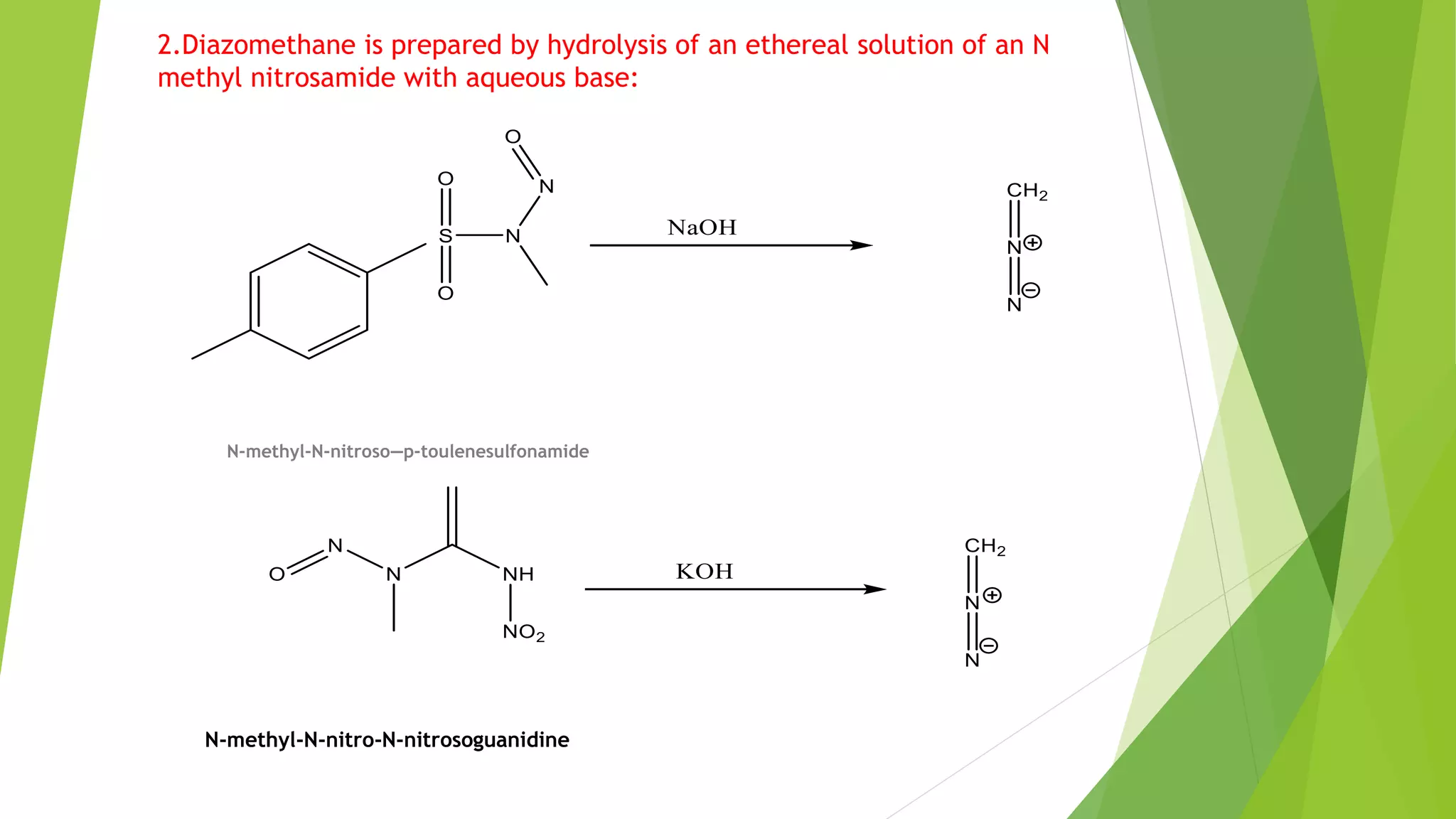
2.Diazomethane is prepared by hydrolysis of an ethereal solution of an N
methyl nitrosamide with aqueous base:
N-methyl-N-nitroso—p-toulenesulfonamide
N-methyl-N-nitro-N-nitrosoguanidine
APPLICATIONS:
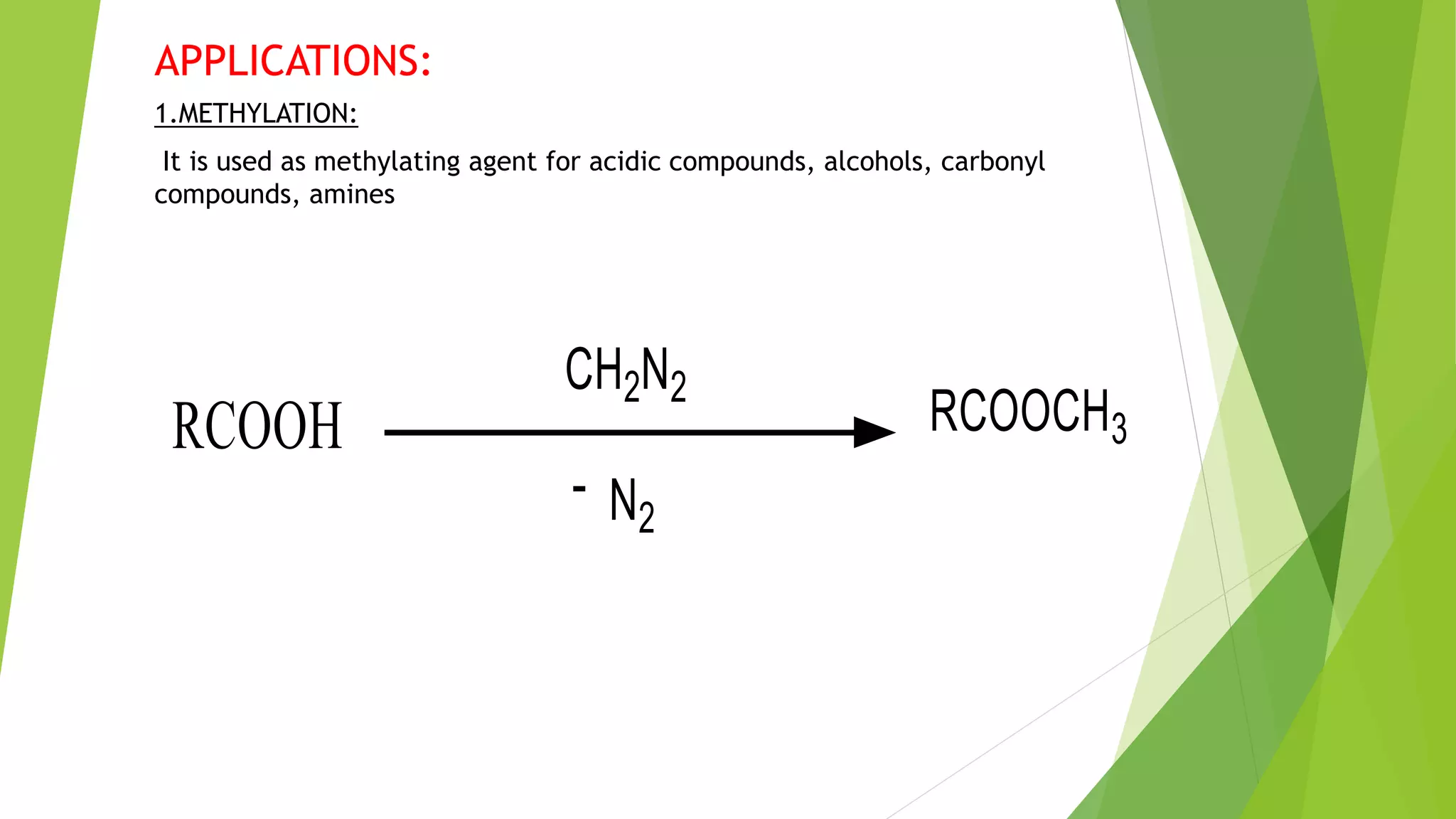
1.METHYLATION:
It is used as methylating agent for acidic compounds, alcohols, carbonyl
compounds, amines
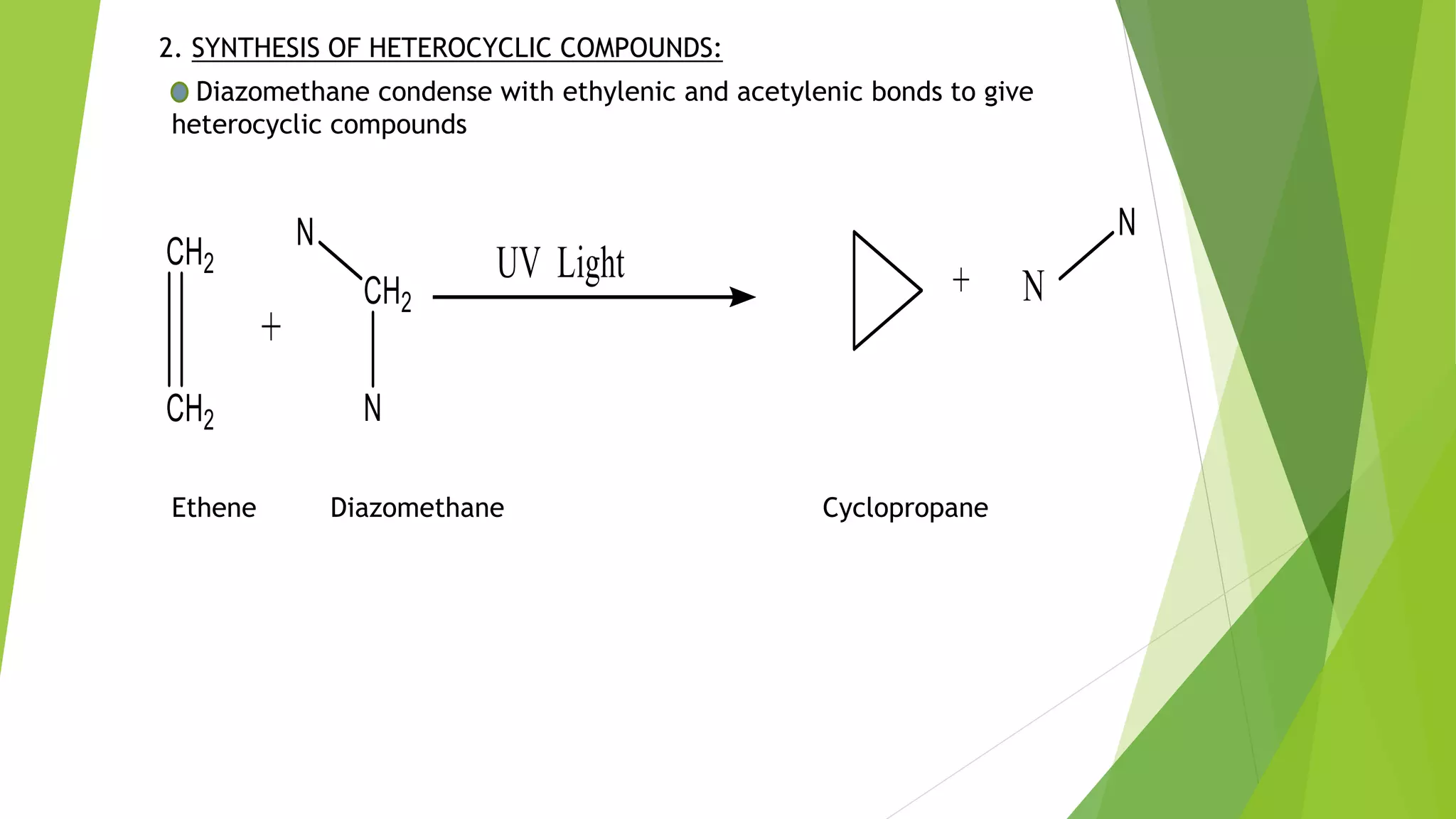
2. SYNTHESIS OF HETEROCYCLIC COMPOUNDS:
Diazomethane condense with ethylenic and acetylenic bonds to give
heterocyclic compounds
Ethene Diazomethane Cyclopropane
REFERENCE:
1. Reaction and reagents by O.P.Agarwal, volume-1,USB
Publication,seventh edition (1995), page no.:840-844
2. Organic Chemistry by Robert Thornton Morrison, Robert Neilson Boyd,
Saibal Kanthi Bhattacharjee, Seventh Edition(2013), Published by Borling
Kinders Ley Pvt Ltd , Page no.: 331-334.
3. Text book of Organic Chemistry by I.L.Finar Volume 1,sixth
edition(1974),page no.392.
4. Textbook of Organic Reactions Reagents and Rearrangements by Sanyal,
published by Bharati Bhawan(2003),fourth edition,page no.:206-206.
THANK YOU

synthetic Reagents and its application Diazomethane

  • 1.
    AMITY INSTITUTE OFPHARMACY SYNTHETIC REAGENTS AND APPLICATIONS DIAZOMETHANE Submitted To Presented by Dr. Neerupma Dhiman Firuj Ahmed Department of Pharmaceutical Chemistry Master of Pharmacy 1st Year
  • 2.
    Index:  1. Introduction 2. Preparation  3. Applications  4. Reference
  • 3.
    Synthetic Reagents: Synthetic reagentsconsist of a broad range of chemicals with many used in chemical synthesis. They are the key components used for transforming functional group. Diazomethane: Diazomethane is the chemical compound CH2N2 discovered by German chemist Sir Hans Von pechmann in 1894 Diazomethane is a yellow, poisonous, potentially, explosive compound. It is a gas at room temperature.
  • 4.
    IUPAC Name: Diazomethane OtherName: Azimethylene, Azomethelene, Diazirine Chemical Formula: CH2N2 Molar Mass: 42.04 gm/mol Appearance: Yellow Gas Odour: Musty Solubility: Soluble in water It is chemically very reactive and is, therefore, of great value as synthetic reagent.
  • 5.
    PREPARATION: 1.Pechmann’s method: Bythis method diazomethane is prepared from methylamine by treating it with ethyl chlorofomate to form N-methyl urethane. This when treated with nitrous acid in ethereal solution yields N-methyl N-nitrosourethane. This on warming with alcoholic potassium hydroxide decompose into diazomethane which is collect on cool ether.
  • 6.
    2.Diazomethane is preparedby hydrolysis of an ethereal solution of an N methyl nitrosamide with aqueous base: N-methyl-N-nitroso—p-toulenesulfonamide N-methyl-N-nitro-N-nitrosoguanidine
  • 7.
    APPLICATIONS: 1.METHYLATION: It is usedas methylating agent for acidic compounds, alcohols, carbonyl compounds, amines
  • 8.
    2. SYNTHESIS OFHETEROCYCLIC COMPOUNDS: Diazomethane condense with ethylenic and acetylenic bonds to give heterocyclic compounds Ethene Diazomethane Cyclopropane
  • 9.
    REFERENCE: 1. Reaction andreagents by O.P.Agarwal, volume-1,USB Publication,seventh edition (1995), page no.:840-844 2. Organic Chemistry by Robert Thornton Morrison, Robert Neilson Boyd, Saibal Kanthi Bhattacharjee, Seventh Edition(2013), Published by Borling Kinders Ley Pvt Ltd , Page no.: 331-334. 3. Text book of Organic Chemistry by I.L.Finar Volume 1,sixth edition(1974),page no.392. 4. Textbook of Organic Reactions Reagents and Rearrangements by Sanyal, published by Bharati Bhawan(2003),fourth edition,page no.:206-206.
  • 10.